Shipping Container Delivery Cost Per Mile 2026: Save Big
Reduce your shipping container delivery cost per mile 2026. Compare local movers and tilt bed truck delivery fees to find the lowest freight rates. Get…
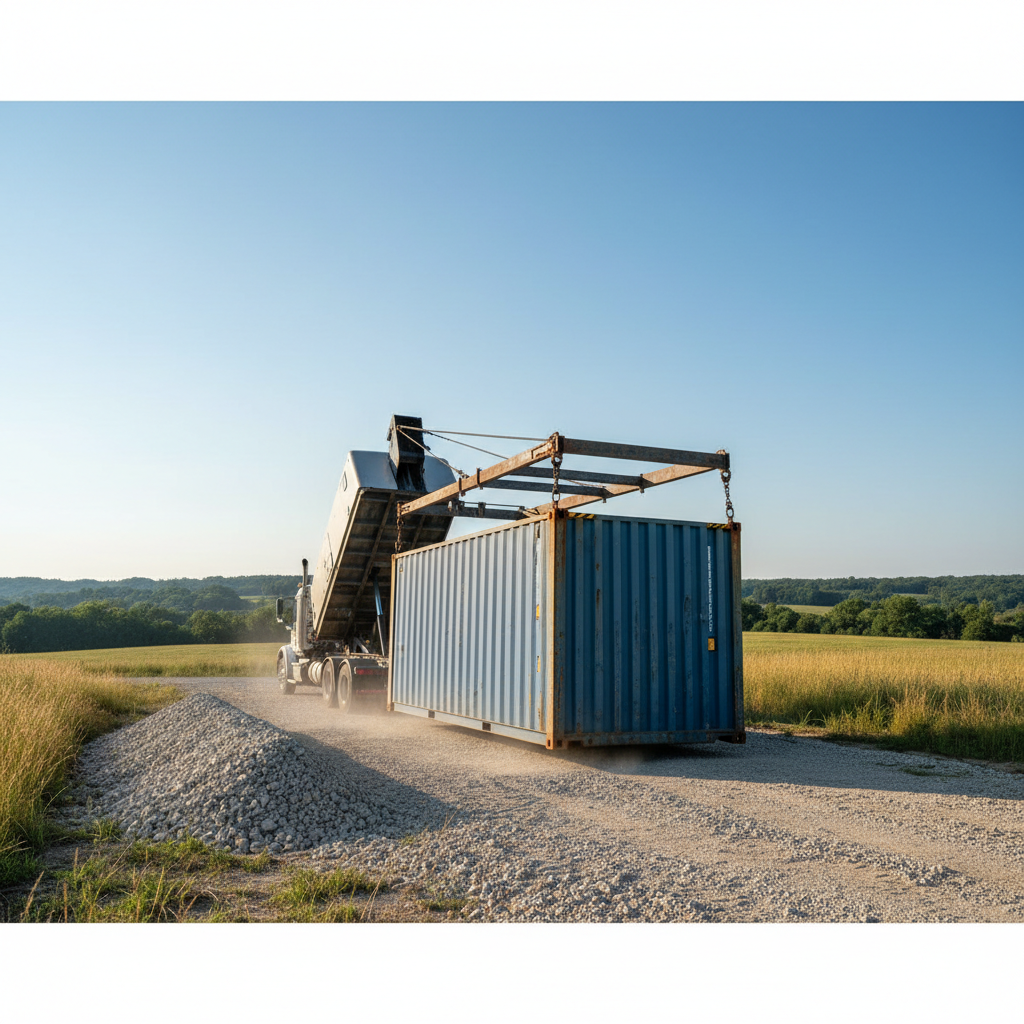
Budgeting for a container project involves more than just the price of the steel. In 2026, the logistics market has shifted significantly due to fluctuating fuel surcharges and a tighter supply of specialized heavy-duty drivers. Understanding the shipping container delivery cost per mile 2026 is critical because transport can represent anywhere from 10% to 40% of your total project spend, especially for remote builds or agricultural storage. While a 40ft used shipping container might look like a bargain at the depot, the distance to your site determines if it stays within budget.
Table of Contents
- Average Shipping Container Delivery Cost Per Mile 2026
- Tilt Bed vs. Flatbed Delivery Price
- Factors That Inflate Your Container Logistics Surcharge
- Zone-Based Pricing Models for 2026 Logistics
- Site Preparation Costs and Their Impact on Final Delivery Invoices
- Fuel Surcharges and Regulatory Compliance in 2026
- Frequently Asked Questions
- Comparing Long Distance Shipping Container Transport
- Explore Related Products & Guides

Average Shipping Container Delivery Cost Per Mile 2026

For 2026, standard shipping container freight rates have stabilized into a two-tiered pricing model: the flat-rate local drop (usually within 50-75 miles) and the long-distance haul. For regional deliveries under 200 miles, you should expect to pay between $4.50 and $7.50 per mile. However, this is rarely a 'pure' mileage rate. Most carriers charge a base mobilization fee that covers the time spent at the depot and the driver's labor for securing the load.
| Distance Range | Est. Cost Per Mile | Typical Base Fee | Equipment Type |
|---|---|---|---|
| 0 - 60 Miles | $6.00 - $10.00 | $250 - $450 | Tilt Bed / Landoll |
| 60 - 200 Miles | $4.50 - $6.50 | $350 - $550 | Tilt Bed / Flatbed |
| 200+ Miles | $3.75 - $5.00 | $500+ | Step Deck / Flatbed |
Tilt Bed vs. Flatbed Delivery Price
One of the most frequent points of confusion for buyers is the difference between flatbed vs tilt bed delivery price. A flatbed truck is significantly cheaper per mile because it is a standard piece of logistics equipment. However, a flatbed requires you to provide a crane or a heavy-duty forklift at your site to offload the container. If you are ordering a 40ft high cube shipping container, you will need a 10,000lb+ capacity forklift to safely handle the unit.
Conversely, tilt bed truck delivery fees are higher because the truck does all the work. The trailer tilts at a 45-degree angle, and the driver slowly backs up as the container slides onto the ground. This specialized equipment carries a premium, often adding $1.00 to $2.00 to the shipping container delivery cost per mile 2026 averages. If you are setting up a mobile office container for job sites, the tilt bed is almost always the preferred choice for its 'drop and go' efficiency.
Important: For 45ft units or specialized mods like a 30 feet freezer container, ensure your provider has confirmed the trailer length. A 45ft container on a standard tilt bed can sometimes exceed rear-overhang limits, requiring oversized load permits for 45ft containers that add $200–$500 to the total.
Factors That Inflate Your Container Logistics Surcharge
Beyond the basic mileage, several variables can trigger a container logistics surcharge. These are the hidden costs that professional buyers account for during the Q3 planning phase. In August, carriers are often booked out 2–3 weeks in advance, and 'hot' or rush deliveries can command a 20% premium.
- Site Access Difficulties: If a driver spends more than 45 minutes trying to navigate a tight gate or soft mud, you will likely see an hourly detention fee ranging from $100 to $175 per hour.
- Fuel Surcharge: Most 2026 quotes include a dynamic fuel surcharge that fluctuates based on national diesel averages. Ask if your per-mile rate is 'all-in' or 'plus fuel'.
- Pilot Cars: If you are moving a 10ft or 12ft wide modified unit, such as a 26x12ft marketing suite, you will require escort vehicles, which can double the per-mile cost.
- Permits: Local shipping container movers cost will include state-specific DOT permits for height or weight, especially for high cube units on standard trailers.
Site Preparation and Drop Off Requirements
Before the truck arrives, you must ensure the shipping container drop off requirements are met to avoid a failed delivery fee. For a 40ft container, you need at least 100 feet of straight-line clearance. The ground must be level and firm; August heat can dry out soil, but a 30,000lb truck will still sink in soft sand or fresh fill dirt. We recommend a gravel pad or concrete footings, especially if you're installing a refrigerated container that requires a perfectly level base for the doors to seal correctly.
Tip: Always have the doors facing the rear of the truck if you want them placed against a wall, or facing the cab if you want them at the 'finish' point of the slide. Re-orienting a container once it's on the ground is an expensive mistake.
Zone-Based Pricing Models for 2026 Logistics
As we move into 2026, the traditional 'flat rate per mile' is being replaced by sophisticated zone-based pricing. For short-haul deliveries—typically within a 50 to 100-mile radius of a major port or rail ramp—haulers are implementing minimum flat fees that effectively raise the per-mile rate to $10 or $15. This covers the driver's time spent in terminal queues, which can often exceed four hours at busy hubs like Long Beach, Savannah, or Houston. Buyers must recognize that the 'per mile' metric only becomes competitive once the distance exceeds the initial 100-mile threshold.
Regional variations are also sharpening due to localized fuel mandates and labor availability. For instance, deliveries originating in California now carry a 'Clean Air' surcharge that can add 15-20% to the base mileage rate. Conversely, in the Midwest and Southeast, competitive density among independent owner-operators keeps the 2026 rates closer to the $3.50-$5.00 range for long-haul moves. Understanding which 'zone' your drop site falls into is more critical for budgeting than simply measuring the distance on a map.
| Delivery Distance | Estimated Rate Per Mile (2026) | Expected Base Fee |
|---|---|---|
| 0-50 Miles | $12.00 - $18.00 | $500 - $750 (Minimum) |
| 51-200 Miles | $5.50 - $8.00 | Varies by Driver |
| 201-500 Miles | $3.75 - $5.25 | Calculated per Mile |
| 500+ Miles | $3.25 - $4.50 | Volume Discounts Apply |
Tip: In 2026, 'Deadhead' miles—the distance a truck travels empty to pick up your container—are increasingly being passed on to the consumer. Always ask if the quote includes the return trip to the yard.
Site Preparation Costs and Their Impact on Final Delivery Invoices
The delivery cost per mile is only one half of the financial equation; the 'time on site' fee is where many 2026 budgets fail. Carriers typically provide 30 to 45 minutes of free offloading time. In 2026, detention fees are projected to rise to $150 per hour, billed in 15-minute increments. If your site is not leveled or if the ground is too soft for a 30,000-pound truck to navigate, the driver may refuse delivery, forcing a 'dry run' fee which often equals 80% of the original delivery cost plus the return mileage.
To avoid these surcharges, buyers must ensure the surface is prepared with crushed stone, concrete, or reinforced pavers. Standard 40ft High Cube containers require at least 100 feet of straight-line clearance for a tilt-bed truck to pull out from under the unit. In tight urban environments or heavily wooded rural areas, you may need to hire a local crane service. While a crane adds a significant upfront cost, it can be cheaper than paying a driver for three hours of failed attempts to navigate a narrow driveway.
- Ground Compaction: Ensure the soil can support 3-4 times the weight of the container to prevent the truck from sinking.
- Overhead Clearance: Check for low-hanging power lines or tree branches below 14 feet.
- Turning Radius: A standard semi-truck needs approximately 50-60 feet of radius to make a 90-degree turn.
- Gravel Foundations: Using a 4-6 inch layer of #57 stone is the 2026 industry standard for preventing moisture trap and sinking.
Important: Never attempt to level a container on raw topsoil. By the 2026 rainy season, your container will likely shift, causing doors to jam and potentially voiding the delivery warranty.
Fuel Surcharges and Regulatory Compliance in 2026
Looking toward 2026, the volatility of diesel and the gradual integration of electric drayage trucks at ports are creating a two-tiered fuel surcharge system. Most carriers now use a weekly index provided by the Department of Energy to adjust their 'Floating Fuel Surcharge' (FFS). When calculating your cost per mile, the base rate might be $4.00, but an additional 25-35% FFS is standard when oil prices fluctuate. This is no longer a 'hidden' fee but a transparent line item in professional logistics quotes.
Furthermore, new Electronic Logging Device (ELD) mandates for 2026 have tightened the 'Hours of Service' (HOS) for drivers. A 400-mile delivery that used to be completed in one day might now spill into a second day if there are delays at the pickup yard. This triggers overnight layover fees. To mitigate this, savvy buyers are scheduling deliveries for Tuesday or Wednesday, avoiding the Monday morning port rush and the Friday afternoon 'get home' premiums that drivers often charge.
- Verify the 'Base Rate' vs. 'All-In' Rate: Ensure the fuel surcharge is included in your written estimate.
- Check Permit Requirements: Oversized loads (like 10ft wide containers) require pilot cars and state permits that can double the per-mile cost.
- Monitor the Weekly Fuel Index: If diesel prices drop significantly the week of your delivery, you may have leverage to renegotiate the surcharge.
- Inquire about Hybrid Hauling: Some carriers offer lower rates for flexible delivery windows where they can 'backhaul' your container on an existing route.
Tip: For the best 2026 rates, book your delivery at least 21 days in advance. Last-minute 'hot shot' deliveries carry a premium of 30% or more over standard scheduled rates.
Container delivery near you
We deliver to every state in the lower 48 plus Alaska and Hawaii. These local pages list pricing, metro coverage and typical lead times for the areas we run into most:
- Shipping containers near me — how we source from the depot closest to your ZIP code
- Shipping containers in Florida — pricing and delivery to Jacksonville and Miami
- Shipping containers in North Carolina — pricing and delivery to Charlotte and Raleigh
- Shipping containers in Arizona — pricing and delivery to Phoenix and Tucson
- Shipping containers in Washington — pricing and delivery to Seattle and Spokane
Frequently Asked Questions
We've compiled the most common questions regarding shipping container delivery cost per mile 2026 to help you budget accurately.
Comparing Long Distance Shipping Container Transport
For hauls exceeding 500 miles, the economics change. We often recommend customers check their shipping container grade price comparison 2026 data to see if buying a unit closer to home—even at a slightly higher price—offsets the freight. However, for specialized units like 20ft domestic reefers or luxury modular container homes, nationwide delivery remains the standard. For these long-haul moves, a step-deck trailer is usually employed, and a crane is arranged at both ends to keep the per-mile rate below $4.00.
If you're ready to compare inventory for your project, our team can pull matching units from our nationwide depots and provide a firm, all-in delivery quote that locks in your 2026 rates before the winter surge. Whether you need a simple used 20ft container or a custom fabrication, we handle the logistics from depot to dirt.
Explore Related Products & Guides
Frequently Asked Questions
How much does shipping container delivery cost per mile?
In 2026, expect to pay between $4.50 and $7.50 per mile for regional tilt-bed delivery. Short local moves under 60 miles often utilize a flat base fee ranging from $250 to $500 rather than a strict per-mile rate.
Why is shipping container delivery so expensive?
Delivery costs include specialized equipment (tilt-bed trailers), high insurance premiums for heavy loads, professional driver labor, and significant fuel consumption. Specialized trucks for containers often get only 5–7 miles per gallon when loaded.
Do I need a crane to deliver a 40ft container?
Only if you are using a flatbed or step-deck trailer. If you use a tilt-bed (Landoll) truck, the trailer slides the container directly onto the ground without the need for additional machinery.
How much space is needed for a tilt bed delivery?
A 40ft container requires approximately 100 to 120 feet of straight-line clearance to allow the truck to pull out from under the unit once it is dropped. A 20ft container requires about 60 to 75 feet.
Is delivery included in shipping container price?
Generally, no. Shipping container prices are quoted 'EXW' (Ex-Works) or depot-pickup. Delivery is calculated as a separate line item based on your specific zip code and site requirements.
Are there extra fees for high cube containers?
While the mileage rate is usually the same, high cube containers (9'6" tall) on standard trailers may exceed the 13'6" legal height limit in some states, requiring a low-boy trailer or specific route permits which add to the cost.
Can a delivery truck drive over my lawn?
We strongly advise against it. A truck carrying a container can weigh over 30,000 lbs. It will likely damage landscaping, septic lines, and may get stuck, leading to expensive towing and detention fees.
What is a container logistics surcharge?
It is a variable fee applied to cover fluctuating costs like diesel fuel, residential area access permits, or extended wait times at the delivery site beyond the standard 30–45 minute window.