Buy a 20ft Container: New or Used?
Buy 20ft container with confidence. Compare new vs used units, grades, dimensions, delivery costs, and inspection tips before you order.
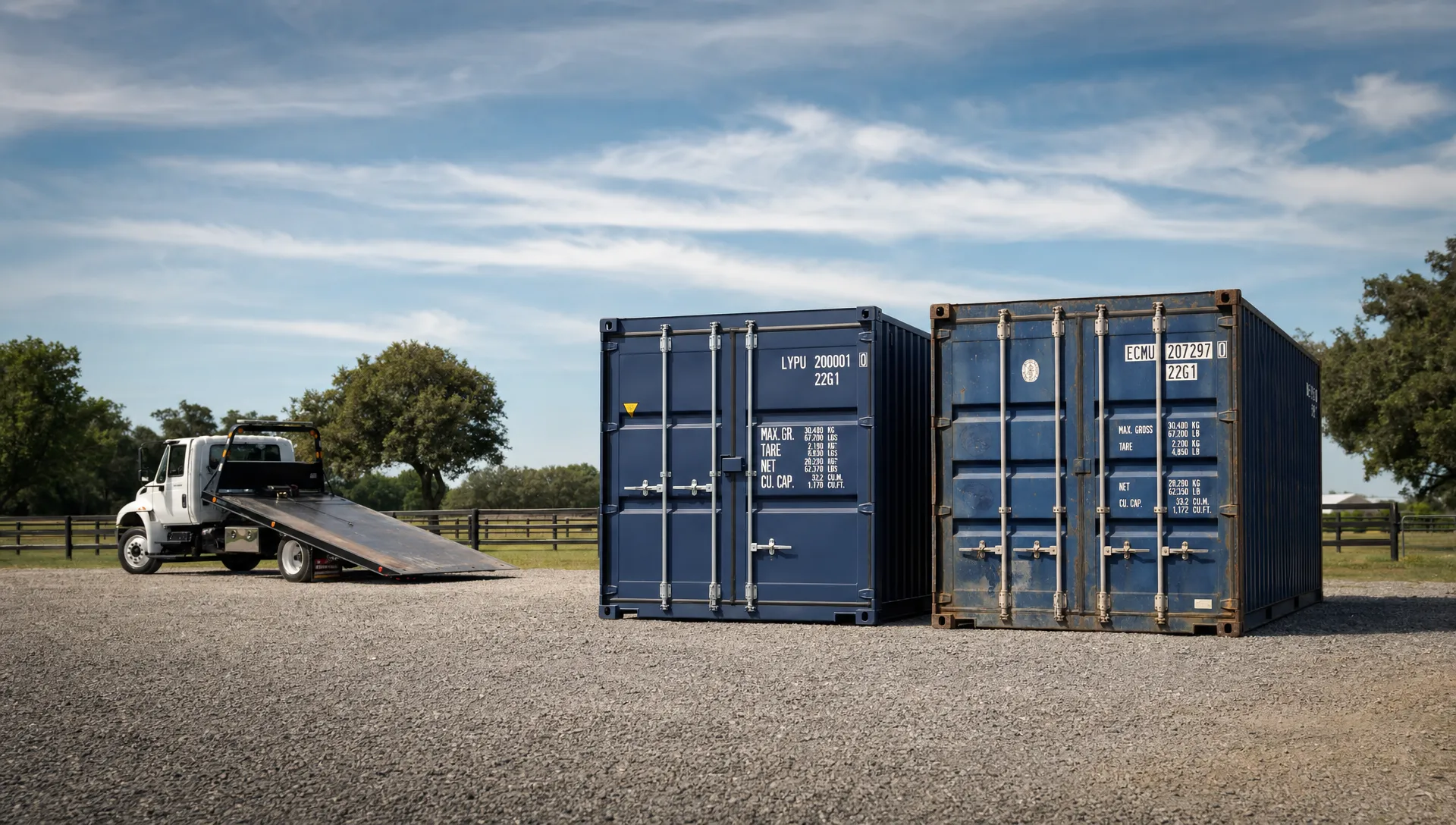
Buy a 20ft Container: New or Used?
If you want to buy a 20ft container, choose a new one-trip unit when appearance, long service life, or a container conversion matters. Choose a used WWT or CWO unit when you need secure storage at a lower upfront cost. For most homeowners, farms, contractors, and small businesses, a certified used wind and watertight 20ft container is the best value unless the project needs a cleaner finish.
Quick Answer: A new 20ft container is best for container homes, offices, retail builds, and long-term use where looks matter. A used 20ft container is best for tools, equipment, inventory, farm supplies, and job-site storage. Always compare the delivered price, not just the container price.
Key Takeaways
- Buy new if you plan to modify the container, display it near customers, or keep it for decades.
- Buy used if you need a tough, secure conex box for storage and can accept dents, faded paint, and cosmetic wear.
- A standard 20ft dry container is about 20 ft long, 8 ft wide, and 8 ft 6 in tall, with roughly 1,170 cubic feet of interior space.
- WWT means wind and watertight for storage. CWO means cargo-worthy and is better if the unit may ship loaded again.
- Delivery, site access, grading, permits, and add-ons can change the true total cost.
Buy a 20ft Container: What "New" and "Used" Really Mean
Shipping container terms can confuse first-time buyers. A “new” container is usually called a one-trip container. It has typically made one loaded trip from the factory to the United States, then entered the resale market. It is not always flawless, but it has far less wear than a container that spent years in freight service.
A used 20ft container has already worked as an intermodal container in the cargo system. It may have crossed oceans, moved by rail, sat in yards, and hauled freight. That history does not make it bad. ISO containers are built for heavy service, and many used units still have years of life left when inspected and graded correctly.
The ISO 668 standard defines key dimensions and ratings for Series 1 freight containers. That is why a 20ft ISO container can move by ship, rail, and truck across many parts of the global supply chain.
New one-trip 20ft containers
A new or one-trip 20ft container usually has cleaner paint, straighter panels, tighter doors, and fewer floor stains. It is the preferred choice for container conversions, including offices, workshops, retail kiosks, cabins, and shipping container home projects.
One-trip containers still may have small scratches, forklift marks, or minor dings from handling. That is normal. They are steel boxes, not furniture.
Used WWT, CWO, refurbished, and as-is containers
Used containers should be described by condition grade, not vague sales language. These are the main terms you will see:
- WWT, wind and watertight: The container should keep out wind and rain under normal storage use. This is common for on-site storage.
- CWO, cargo-worthy: The container is structurally sound for cargo service, subject to inspection needs and valid shipping requirements.
- Refurbished: The container has been repaired and often repainted. The quality depends on the work performed.
- As-is: The container may have leaks, holes, floor damage, or door issues. This is usually risky for first-time buyers.
For storage buyers, WWT is often enough. For loaded transport, export, or intermodal use, ask about cargo-worthy status, the CSC plate, and any inspection documents needed by your carrier.
New vs Used 20ft Container: Side-by-Side Comparison
The right choice depends on how you will use the box. A contractor storing tools has different needs than a homeowner building a backyard office.
| Factor | New or one-trip 20ft container | Used WWT or CWO 20ft container |
|---|---|---|
| Best for | Container conversions, homes, offices, retail, clean storage | Job-site storage, farm storage, tools, equipment, inventory |
| Appearance | Cleaner paint, fewer dents, newer floor | Dents, patches, faded paint, surface rust possible |
| Service history | Very limited cargo use | Several years of freight or storage use |
| Water protection | Strong choice when inspected | Good if certified WWT and doors seal well |
| Modifications | Easier to cut, frame, insulate, and finish | Possible, but inspect rust, floors, and prior repairs first |
| Budget fit | Higher upfront cost | Lower upfront cost in most markets |
| Resale appeal | Usually stronger | Depends on condition, repairs, and local demand |
| Main trade-off | Costs more | More cosmetic wear and more inspection risk |
If the container will sit behind a barn, hold tools, or store seasonal inventory, used often makes sense. If the container will become a guest unit, tiny home, office, or customer-facing build, new usually saves time during prep and finishing.
A used container can still be a smart conversion shell, but you need to inspect it harder. Look for roof dents that hold water, soft floor spots, heavy corrosion near the bottom rails, and strong odors that may be hard to remove.
20ft Container Specs Buyers Should Know
A 20ft container is popular because it gives useful storage space without the footprint of a 40ft unit. It is easier to place on tight lots, rural driveways, construction sites, and small commercial properties.
Exact measurements vary a little by manufacturer and age. Still, most standard 20ft dry containers fall close to these numbers.
| Spec | Typical 20ft dry container measurement |
|---|---|
| Exterior length | 20 ft |
| Exterior width | 8 ft |
| Exterior height | 8 ft 6 in |
| Interior length | About 19 ft 4 in |
| Interior width | About 7 ft 8 in |
| Interior height | About 7 ft 10 in |
| Door opening width | About 7 ft 8 in |
| Door opening height | About 7 ft 5 in |
| Interior volume | About 1,170 cubic feet |
| Tare weight | Often about 4,800 to 5,000 lb |
| Max gross rating | Commonly about 67,200 lb, depending on plate |
The tare weight is the empty weight of the container. Payload capacity is the max loaded weight minus the tare weight. Do not assume you can load the full payload and move it legally by road. Highway limits, axle weights, permits, truck type, and state rules matter.
The Federal Highway Administration provides background on federal truck size and weight rules. Your hauler should confirm what can move safely and legally on your route.
A 20ft high cube container adds one foot of exterior height, for a total height of 9 ft 6 in. That extra height helps with insulation, lighting, garage storage, or taller equipment. But 20ft high cube units can be less common than 40ft high cube units, so availability may vary.
If you are still deciding whether this size is enough, Outback’s guide to 20-foot container size for storage buyers breaks down capacity, footprint, and common storage examples in more detail.
When a New 20ft Container Is Worth It
A new 20ft container is worth the higher upfront cost when the shell quality affects the final result. This is especially true for container homes, tiny offices, workshops, retail units, cabins, and Airbnb-style builds.
Clean walls and floors reduce prep time. Straight panels make framing and finish work easier. Newer doors and gaskets lower the chance of water issues during the build.
Buy new if your project checks any of these boxes:
- You plan to cut doors, windows, vents, or service openings.
- The unit will sit where customers, tenants, or guests can see it.
- You want a cleaner base for paint, cladding, or interior finish work.
- You are building in a humid, coastal, or high-rain area.
- You want the strongest resale appeal later.
For a shipping container home, new is often the safer starting point. You still need engineering, insulation, moisture control, code review, and permits. Local zoning and building rules vary by city, county, and state, so always speak with local authorities before you buy or build.
New is also a strong choice for clean storage. If you are storing furniture, documents, retail goods, household items, or event equipment, the cleaner interior can matter more than the savings from used.
When a Used 20ft Container Makes More Sense
A used 20ft container makes sense when function matters more than appearance. Many buyers just need secure, dry storage that can handle hard use. In that case, paying extra for a one-trip unit may not add much value.
Used WWT containers are common for contractors, ranches, farms, schools, municipalities, equipment yards, and small businesses. They work well for tools, feed, parts, tires, landscaping supplies, generators, and seasonal inventory.
Used can also be the right choice if you expect scratches, forklift contact, mud, or heavy daily use. A new unit on a rough job site can look used within months.
Still, do not buy the cheapest used box you can find without proof of condition. A bargain disappears fast if the roof leaks, doors will not close, or the floor is rotten.
If used storage is your best fit, start with a certified wind and watertight option such as Outback’s 20ft used shipping container for WWT storage. It is a practical middle ground for buyers who want lower cost without taking on unknown as-is risk.
Inspection Checklist Before You Buy
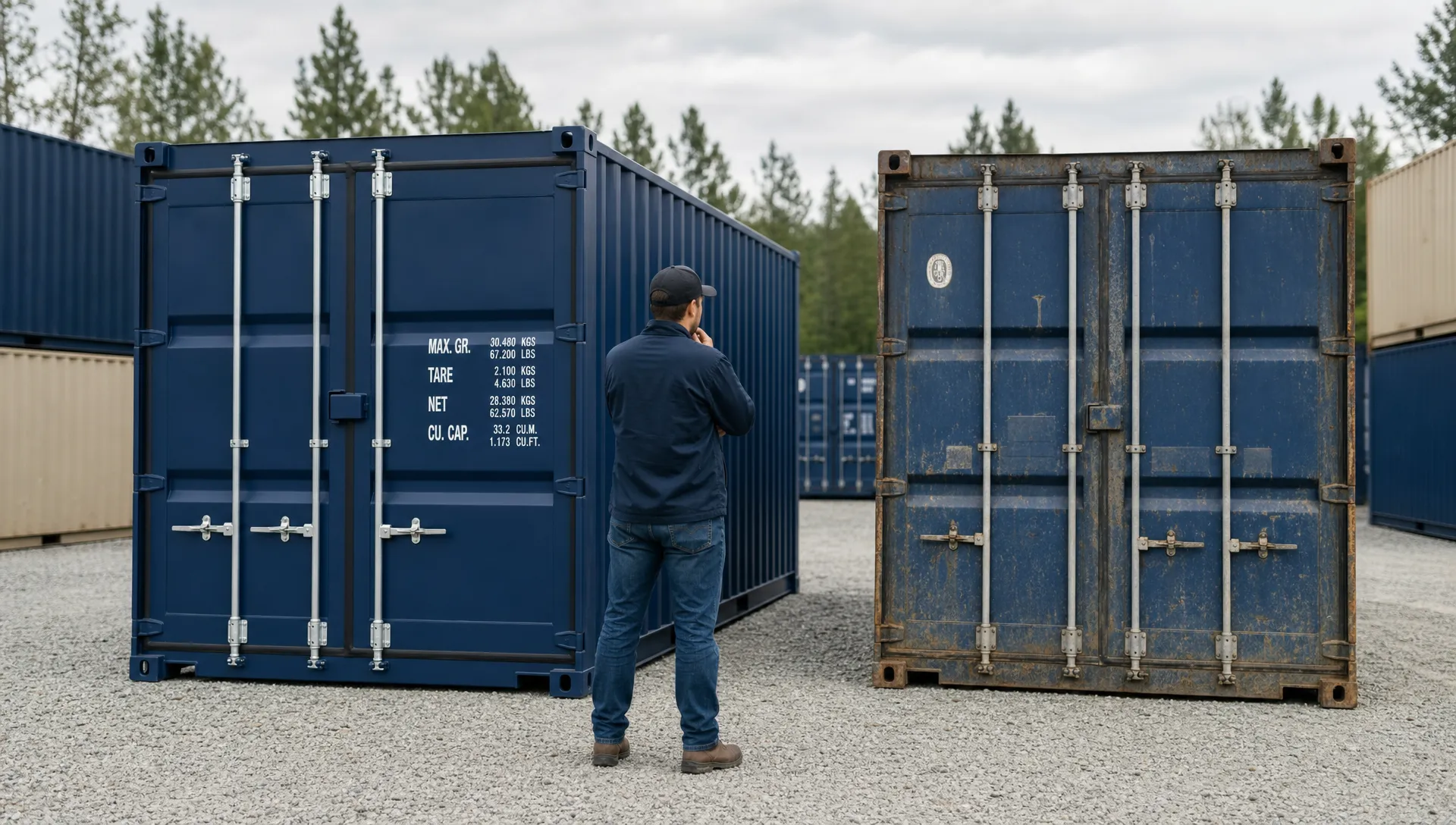
The grade on the quote matters, but the actual box matters more. A good seller should be clear about condition, delivery, and what is included. If possible, review photos of the exact unit or a representative unit from the same grade.
Use this checklist before you commit:
- Roof: Look for deep dents, standing-water areas, holes, and heavy rust.
- Doors: Confirm both doors open, close, latch, and seal correctly.
- Gaskets: Check for cracked, missing, or loose rubber seals.
- Floor: Look for soft spots, oil stains, chemical odors, and broken boards.
- Bottom rails: Inspect for corrosion, bends, and poor patch work.
- Walls: Expect dents on used units, but avoid major bowing or sharp damage.
- Locking rods: Make sure rods turn and cam keepers engage.
- Odor: Strong chemical, fuel, or mold smells can be hard to fix.
- ID markings: Ask for the container number, condition grade, and any inspection notes.
For used units, surface rust is common. Scale rust, holes, and rotten floor sections are different. Those defects can affect service life and water resistance.
For new units, focus on door operation, floor condition, paint scratches, and whether the unit matches the quoted size and type. If you ordered a standard 20ft dry container, confirm it is not a specialty unit with features you did not request.
Scams are also a real issue in the container market. Be careful with sellers who use stolen photos, vague addresses, prices far below the market, or pressure to pay by unsafe methods. A legitimate seller should provide a written quote, clear delivery terms, and a real business presence.
Delivery, Site Prep, and Total Cost
When you compare quotes, compare the total delivered cost, not just the box price. A container that looks cheaper upfront may cost more once delivery, taxes, distance, site access, and add-ons are included.
Outback Shipping Containers offers transparent online shopping, instant quotes, financing options, and nationwide delivery across all 50 states. That matters because container delivery is not just freight. The truck must be able to enter, unload, and exit safely.
Most 20ft containers are delivered by tilt-bed, rollback, or crane-equipped service, depending on location and site conditions. A 20ft unit is easier to place than a 40ft unit, but it still needs room.
Plan for these site factors before delivery day:
- A firm, level surface such as compacted gravel, concrete, asphalt, or prepared pads.
- Enough straight-line space for the truck to back in and unload.
- Overhead clearance away from wires, tree limbs, roof edges, and low branches.
- Dry access that will not trap a heavy truck after rain.
- Support under the corners so the doors stay square and easy to operate.
Many haulers prefer a clear path that is at least 12 ft wide and has overhead clearance around 14 to 16 ft, but requirements vary by truck and site. Confirm this with your delivery team before ordering.
If your property is rural, remote, steep, soft, gated, or off a narrow road, tell the seller early. Remote delivery is often possible, but it must be planned. Outback’s 20 ft sea container guide for storage and delivery covers placement, access, and delivery planning in more depth.
Permits are another local issue. Some areas allow temporary storage containers with few steps. Others restrict placement, screening, setbacks, or time on-site. If you plan to build a container conversion, expect more review. Contact your city, county, HOA, or building department before buying.
If your need is short-term, buying may not be the only choice. LeaseLink Containers is the leasing arm associated with the brand family, and leasing may make sense for temporary job sites or seasonal storage. For long-term use, ownership often gives more control.
Final Decision: Which 20ft Container Should You Buy?
Use the project, not the price tag alone, to decide. A new container costs more upfront, but it can reduce prep work and improve the final result. A used container costs less, but it demands a better inspection and more tolerance for wear.
| Your situation | Better choice | Why |
|---|---|---|
| Backyard office or studio | New one-trip | Cleaner shell, easier finish work, better appearance |
| Job-site tool storage | Used WWT | Secure, practical, lower upfront cost |
| Farm or ranch storage | Used WWT | Good durability for equipment, feed, and supplies |
| Container home shell | New one-trip | Better base for cutting, insulation, and code review |
| Loaded export or intermodal move | CWO with needed inspection | Structural condition and shipping approval matter |
| Retail or customer-facing use | New or refurbished | Appearance affects trust and presentation |
| Tight budget storage | Used WWT | Best balance of cost and function |
| Unknown seller with as-is unit | Avoid unless expert | Higher risk of leaks, floor damage, and hidden repairs |
A 20ft container is a strong all-around size. It gives enough space for most small storage, workshop, and conversion projects while staying easier to deliver than a 40ft cargo container.
Before you buy, get the grade in writing. Ask what “new,” “used,” “WWT,” or “CWO” means for that specific unit. Confirm delivery access. Look at the total cost. If you want a deeper cost-control checklist, read Outback’s guide on how to buy a 20ft shipping container without overpaying.
Frequently Asked Questions
Is it better to buy a new or used 20ft shipping container?
Buy new if the container will become a home, office, shop, or clean customer-facing space. Buy used if you need secure storage for tools, equipment, supplies, or inventory. A certified used WWT unit often gives the best value for basic storage.
How much does a 20ft container cost?
There is no single national price for a 20ft container. Cost changes by condition, location, depot supply, delivery distance, taxes, and add-ons. New one-trip units usually cost more than used WWT units. Always compare current delivered quotes, not old price ranges from another region.
What is the difference between WWT and cargo-worthy containers?
WWT means wind and watertight, so the container should keep out normal rain and wind for storage use. Cargo-worthy means the unit is structurally fit for cargo service, subject to inspection and shipping requirements. For static storage, WWT is often enough. For loaded transport, ask about CWO.
Can I use a used 20ft container for a home?
You can, but inspect it carefully first. Used units may have dents, rust, floor stains, odors, and old repairs. Many builders prefer one-trip containers because they are cleaner and easier to finish. Building codes, engineering, zoning, and permits vary by location, so check locally before buying.
Do I need a permit to put a 20ft container on my property?
Maybe. Rules vary by city, county, state, HOA, and property type. Some places treat containers as temporary storage. Others regulate setbacks, screening, foundations, use, or time limits. If you plan to modify the container or live in it, expect more permit review.
How do I avoid scams when buying a 20ft container?
Avoid sellers with prices far below the market, no business address, stolen-looking photos, or pressure for unusual payment methods. Ask for a written quote, condition grade, delivery details, and clear terms. Work with a supplier that can explain WWT, CWO, delivery logistics, and inspection basics.
If you are ready to compare new and used 20ft options, start with current inventory and delivered pricing from Outback Shipping Containers. You can review certified units, ask about financing, and plan delivery with a team that handles container logistics nationwide.