Buy a 20ft Shipping Container Without Overpaying
By Outback Shipping Containers · Published July 25, 2026 · Last updated October 18, 2026
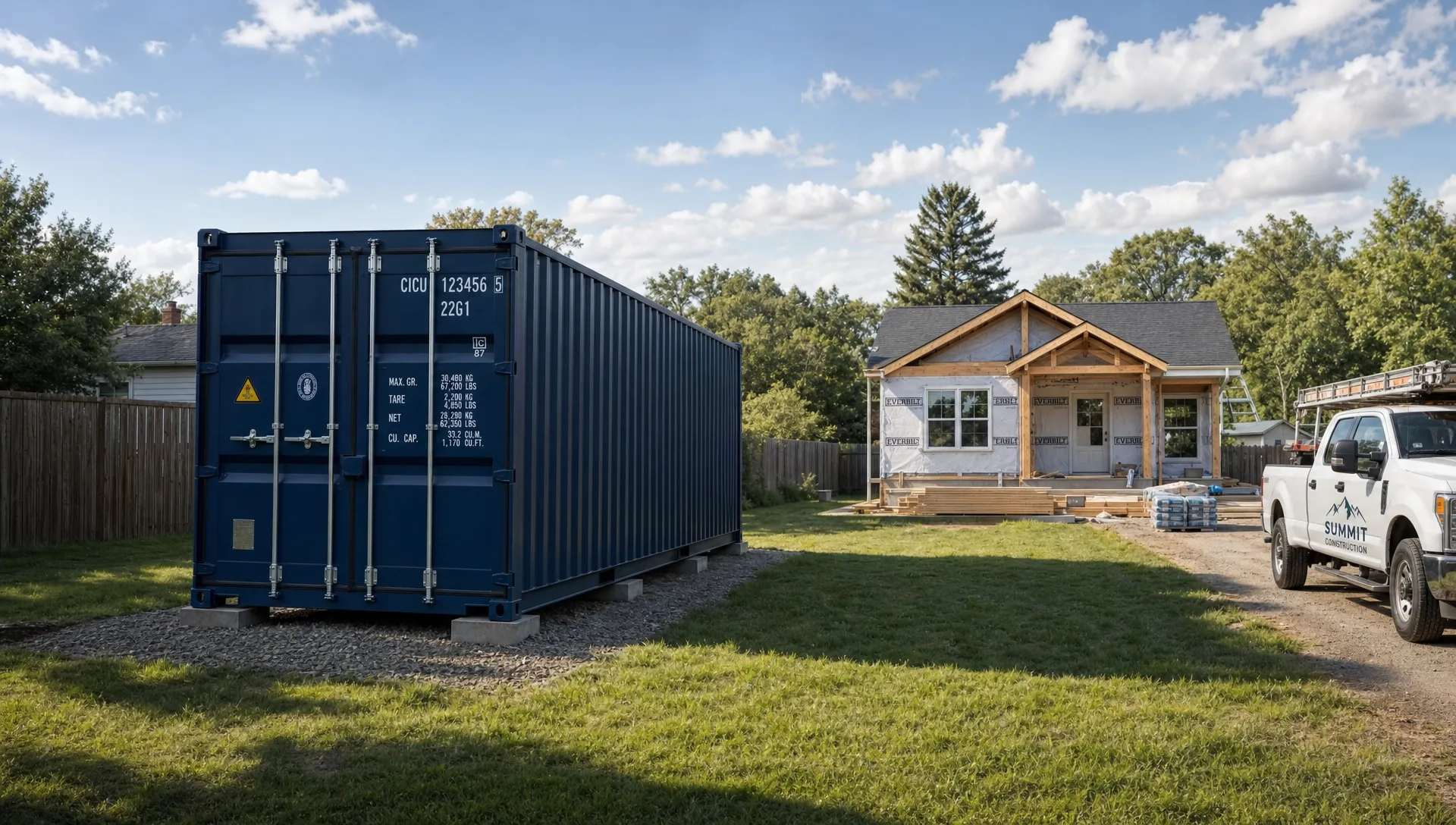
Buy a 20ft Shipping Container Without Overpaying
To buy a 20ft shipping container without overpaying, compare the container grade, delivery cost, seller reputation, and site requirements before you pay. A standard 20ft ISO container is about 20 feet long, 8 feet wide, and 8 feet 6 inches high, giving you about 160 square feet of floor space. For storage, a wind and watertight used unit is often enough. For a container conversion, a one-trip container may save repair work.
Quick Answer: The lowest sticker price is not always the best deal. Ask for an all-in written quote that includes the container, delivery, taxes, lock box, modifications, and any special unloading needs.
Key Takeaways
- Match the grade to the job: WWT works for most storage, CWO matters for cargo use, and one-trip is best when appearance and clean walls matter.
- Delivery can change the real price: Distance, site access, unloading method, and rural routes can add cost.
- Inspect before you buy: Ask for current photos, the container ID, floor condition, door seal condition, and roof photos.
- Avoid vague listings: A real seller should explain condition, dimensions, delivery terms, and payment steps clearly.
- Buy for total value, not just price: A cheap conex box can cost more if it leaks, arrives late, or needs major repairs.
What You Get When You Buy a 20ft Shipping Container
A 20ft container is the most common choice for homeowners, small businesses, farms, ranches, and contractors who need secure storage without taking over a whole site. It is easier to place than a 40ft container, but still large enough for tools, equipment, inventory, furniture, motorcycles, or a small workshop.
Most 20ft dry containers are ISO containers. ISO containers follow global freight standards so they can move by ship, rail, and truck. The ISO 668 standard covers classification, dimensions, and ratings for Series 1 freight containers.
Exact measurements vary by manufacturer, floor repairs, and container type. Still, these figures are a useful buying baseline.
| Spec | Typical 20ft dry container figure | Why it matters |
|---|---|---|
| Exterior length | 20 ft | Fits many residential, farm, and job-site spaces |
| Exterior width | 8 ft | Standard truck and intermodal width |
| Exterior height | 8 ft 6 in | Standard height, high cube units are taller |
| Interior length | About 19 ft 4 in | Affects shelving, furniture, and equipment layout |
| Interior width | About 7 ft 8 in | Useful for pallets, bikes, tools, and storage racks |
| Interior height | About 7 ft 10 in | Important for standing room and stacked items |
| Floor area | About 160 sq ft | Similar to a small shed or compact workshop |
| Empty weight, also called tare weight | About 4,800 to 5,000 lb | Affects delivery planning and placement |
| Max gross weight | Often about 67,200 lb | Matters for freight, not most static storage uses |
| Payload capacity | Often about 62,000 lb | Depends on unit, plate, and condition |
A 20ft high cube container is less common than a 40ft high cube, but it may be available in some markets. High cube units are typically 9 feet 6 inches tall outside. That extra foot helps if you plan to insulate, run utilities, install lighting, or build a container office.
Buy a 20ft Shipping Container: New, Used, or Refurbished?
The biggest pricing mistake is buying the wrong condition grade. A person storing lawn equipment does not need the same container as a business shipping cargo overseas. A builder cutting doors and windows into a future shipping container home may need a cleaner shell than a contractor storing concrete tools.
Here is how the main grades compare.
| Container type | Best for | Cost logic | What to verify |
|---|---|---|---|
| One-trip or new | Homes, offices, retail builds, clean storage | Higher upfront cost, fewer dents, less rust, better appearance | Photos, manufacture date, floor condition, door operation |
| Used WWT, wind and watertight | General storage, farms, job sites, garages | Usually better value for basic storage | No active leaks, intact seals, solid roof, usable doors |
| CWO, cargo-worthy | Freight, export, heavy commercial use | May cost more than WWT due to cargo standards | Valid inspection status, structural condition, CSC plate if shipping |
| Refurbished | Customer-facing storage, resale, cleaner sites | Paint and repairs improve appearance | What was repaired, paint type, rust treatment |
| Refrigerated, also called reefer | Cold storage, food, flowers, events, medical support | Higher cost due to refrigeration machinery and insulation | Power needs, unit function, maintenance history |
| Modified container | Office, cabin, pool, workshop, home conversion | Costs more, but saves build time | Scope of work, utility rough-ins, insulation, code needs |
If you want a clean shell for a conversion or a long-term storage setup, compare a one-trip unit such as the 20ft new shipping container that is wind and watertight. At the time this article was prepared, that listing showed a price of $3,400, before any site-specific delivery or checkout changes.
If your goal is secure storage at a lower upfront cost, a used WWT container is often the better fit. Outback also lists a 20ft used shipping container that is wind and watertight for buyers who care more about function than perfect cosmetics.
Where Buyers Overpay Most Often
The container price is only one part of the deal. Many first-time buyers get surprised by delivery, unloading, and condition issues. This is especially common when a listing looks cheap but leaves out important details.
Paying for the wrong grade
A cargo-worthy container may be more than you need if the box will sit behind a barn and hold feed, tools, or seasonal equipment. A WWT unit can be the better value for that job.
The opposite mistake is also common. If you plan to build a container home, office, cabin, or retail space, a beat-up used unit may cost less on day one but more after sanding, welding, rust treatment, floor repair, and painting.
Comparing sticker price instead of delivered price
A $2,000 container far away may cost more than a $2,700 container closer to your site once trucking is included. Rural delivery, long driveways, soft ground, tight turns, bridges, and special placement can all affect the final price.
Ask for the delivered price in writing. The quote should state whether delivery includes simple tilt-bed placement or only transport to the curb.
Ignoring door and floor condition
Bad doors make a container miserable to use. A door that needs two people and a pry bar is not a deal. Damaged floors can also create safety issues, especially if you store motorcycles, pallet jacks, rolling toolboxes, or heavy racks.
Ask for photos of the floor, door gaskets, locking rods, roof, corner posts, and underside if available. On used containers, surface rust and dents are normal. Holes, active leaks, badly warped doors, and soft floors are not normal for a quality WWT unit.
Buying from a vague or suspicious seller
Container scams often use stolen photos, fake inventory, and pressure to wire money fast. Be careful if the seller cannot provide a business address, clear payment process, container condition, delivery method, or written terms.
A trustworthy supplier should explain the difference between one-trip, WWT, CWO, refurbished, and modified units. Outback Shipping Containers serves all 50 states and focuses on inspected, wind- and watertight units, transparent online pricing, lender financing (only for container homes priced above $72,000, subject to lender approval), and delivery support from purchase through placement.
20ft vs 40ft: Which Size Saves More Money?
A 40ft container often gives more space per square foot. That does not always make it the better buy. A 20ft container can be cheaper to place, easier to move, and better for small sites.
| Factor | 20ft container | 40ft container | Best value choice |
|---|---|---|---|
| Floor space | About 160 sq ft | About 320 sq ft | 40ft if you truly need double the space |
| Typical empty weight | About 4,800 to 5,000 lb | About 8,200 to 8,800 lb | 20ft for easier placement |
| Site access | Easier on tight lots | Needs more room to turn and unload | 20ft for residential and small job sites |
| Common uses | Storage, workshops, small offices, cabins | Bulk storage, large workshops, commercial inventory | Depends on storage volume |
| Delivery complexity | Usually simpler | More planning required | 20ft if access is limited |
| Modification cost | Smaller shell, less material | More wall, roof, and floor area | 20ft for compact builds |
Choose a 20ft unit if you need secure storage, a small workshop, a farm container, a construction site box, or a compact conversion. Choose a 40ft unit if you already know you need large-volume storage and have the room to place it.
The cheapest container is the one that fits the job without forcing extra site work.
Delivery and Site Prep Can Make or Break the Deal
A smooth delivery can save money. A failed delivery can add rescheduling fees, extra equipment, or site work. Before you buy shipping container 20ft units for a home, farm, job site, or business, make sure the site is ready.
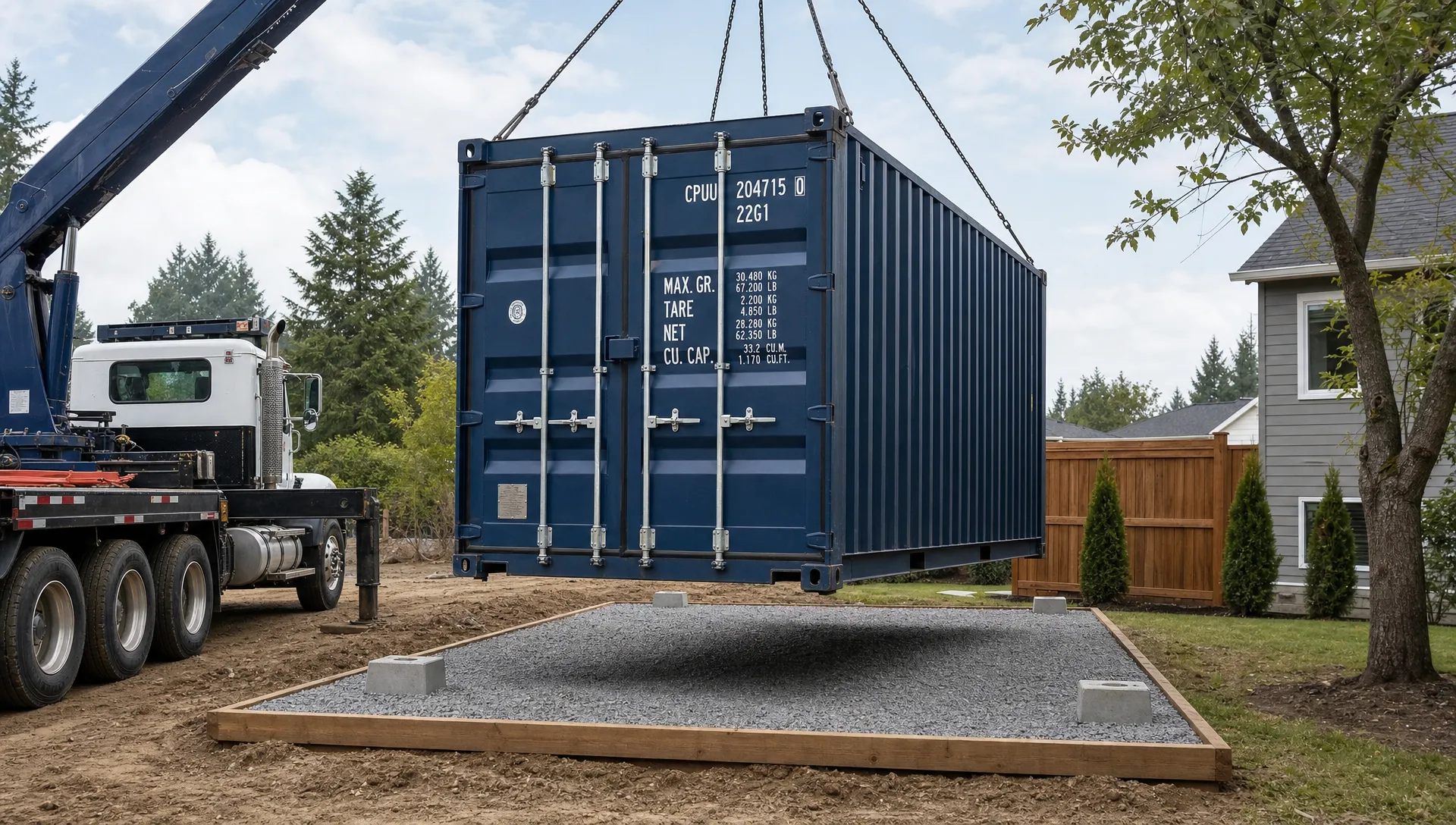
Most 20ft dry containers are delivered by tilt-bed truck, roll-off trailer, flatbed, or crane truck depending on the seller, local equipment, and placement needs. A tilt-bed truck usually needs straight clearance to slide the container off. The exact space depends on the truck, trailer, slope, and driver instructions.
Ask these questions before delivery day:
- Is the route wide enough for the delivery truck?
- Are there low branches, gates, wires, fences, or tight turns?
- Is the ground firm enough for a loaded truck?
- Is the placement area level from corner to corner?
- Will the doors face the right direction when unloaded?
- Are blocks, piers, gravel, or concrete pads ready?
- Does the driver need to cross soft soil, septic lines, culverts, or irrigation?
For truck movement, federal and state rules can affect routes, weights, and permits. The Federal Highway Administration provides a useful overview of commercial motor vehicle size and weight regulations. Your delivery company should handle transport planning, but you still need to provide accurate site information.
For a permanent container home, office, cabin, retail unit, or pool, permits and zoning rules may apply. Requirements vary by state, county, city, and HOA. Always check with local building and planning authorities before you buy or modify a container.
How to Read a Quote Before You Pay
A good quote should be clear enough that you can compare it with another seller line by line. If the quote only shows a container price and a phone number, ask for more detail.
Look for these items in writing:
- Container size, such as 20ft standard or 20ft high cube
- Condition grade, such as one-trip, WWT, CWO, or refurbished
- Container type, such as dry storage, reefer, office, pool, or home shell
- Delivery ZIP code and delivery method
- Whether placement is included or limited
- Taxes, card fees, document fees, or other checkout charges
- Lock box, vents, shelving, ramps, paint, doors, windows, or other add-ons
- Warranty or wind- and watertight guarantee terms
- Estimated delivery timing and site access requirements
- Payment terms, financing terms, and refund policy
This is where transparent pricing matters. A container with a higher listed price may still be the better buy if it includes clearer condition, stronger support, and fewer unknowns.
At about this stage, many buyers also realize they need a workspace, not just storage. If you need a ready job-site room, small office, or cabin-style workspace, compare a purpose-built option like the 20FT Mobile Office/Cabin container office. At the time this article was prepared, that listing showed a price of $16,959, which reflects a much different use case than a basic dry storage container.
Inspection Checklist for a 20ft Container
You do not need to be a marine surveyor to spot common problems. You do need to slow down and inspect the right areas.
Exterior shell
Walk around the container and check the corner posts, side walls, roof line, and bottom rails. Dents are common on used cargo containers. Major bowing, deep corrosion, cracked welds, and holes are bigger concerns.
Pay close attention to the roof. Water sits on low spots and finds weak seams. A seller should be able to provide roof photos on request, especially for used WWT containers.
Doors and seals
Open and close both cargo doors. The locking rods should move without extreme force. The doors should close tight enough for the rubber gaskets to seal.
Look at the bottom door area for rust and daylight. If you can see daylight around the door seals during inspection, water and pests may find the same gap.
Floor and odor
Most dry containers have marine-grade plywood floors. Used containers may have scratches, stains, or patches. That is normal. Soft spots, strong chemical odor, oil saturation, or broken boards are reasons to ask questions.
If you plan to store household goods, furniture, food packaging, clothing, or business inventory, odor matters. A low-cost container that smells bad may not be a bargain.
Certification and plate details
For static storage, WWT condition is usually the key concern. For moving goods by ship or rail, cargo-worthy condition and inspection status matter more. A CSC plate may be required for international cargo movement, but it may not matter for a container used as a shed, workshop, or farm storage unit.
If you are buying for export, ask the seller and freight forwarder what documentation and inspection status you need before you pay.
Best Uses for a 20ft Container
A 20ft container works well when you need a strong, movable structure that can be delivered fast. It is popular because it offers useful space without becoming too large for a residential lot, farm lane, construction site, or small business yard.
Common uses include:
- Home garage overflow for tools, bikes, holiday items, and furniture
- Contractor storage for power tools, materials, and job-site equipment
- Farm and ranch storage for feed, tack, fencing, pumps, and parts
- Small workshop space with added vents, lights, and shelving
- Container conversion shell for a tiny home, studio, cabin, or Airbnb unit
- Retail pop-up, ticket booth, kiosk, or event storage
- Secure inventory storage for small businesses
A basic dry container is the right starting point for many buyers. But if people will work inside the unit every day, plan for ventilation, insulation, power, lighting, and safe access. If people will live inside, the project becomes a building project, not just a container purchase.
Container homes, modular offices, and commercial builds may need engineering, permits, code review, foundations, electrical permits, plumbing permits, energy code compliance, and inspections. Rules vary widely. Check local requirements before you order the container or start cutting steel.
Step-by-Step Buying Process
A simple process helps you stay in control and avoid paying for the wrong unit.
- Define the use first: Decide whether the container is for storage, freight, office space, a workshop, a home shell, a pool, or cold storage. The use determines the grade.
- Pick the right size: Choose 20ft if access is tight or storage needs are moderate. Choose 40ft only if you need the space and have room for delivery.
- Choose the condition grade: Select WWT for basic storage, one-trip for cleaner conversions, and CWO for cargo movement. Ask about CSC needs if you plan to ship.
- Get current photos: Request photos of the actual unit or a clear explanation if inventory is selected from a depot pool. Ask for the container ID when available.
- Confirm the delivered price: Make sure the quote includes delivery ZIP code, unloading method, placement limits, taxes, add-ons, and payment terms.
- Prepare the site: Level the area, create drainage, clear the route, mark the exact door direction, and confirm that the truck can enter and exit safely.
- Inspect at delivery: Check doors, roof, floor, walls, seals, and overall condition before final acceptance when possible.
This process takes a little more time, but it protects your budget. It also helps the seller match you with the right conex box instead of guessing from a short phone call.
FAQ
How much should I pay for a 20ft shipping container?
There is no single fair national price because condition, location, delivery distance, and modifications change the total. Compare delivered quotes, not sticker prices. As a reference point, Outback listed a 20ft new wind- and watertight container at $3,400 when this article was prepared.
Is it better to buy a new or used 20ft shipping container?
Buy used WWT if you need secure storage and can accept dents, faded paint, and surface rust. Buy one-trip if appearance matters or if you plan a container home, office, cabin, or retail conversion. The cleaner shell can reduce repair and prep work later.
Do I need a permit for a 20ft shipping container on my property?
Maybe. Temporary storage may be allowed in some areas, while permanent placement, utilities, foundations, business use, or residential conversion can trigger permits. Rules vary by city, county, state, and HOA. Contact your local building or planning department before ordering.
How much space do I need for 20ft container delivery?
It depends on the truck and unloading method. Tilt-bed delivery often needs a clear, straight approach plus room to pull forward as the container slides off. Ask your carrier for exact clearance requirements. Also check gates, slopes, overhead wires, trees, and ground firmness.
What is the difference between WWT and cargo-worthy?
WWT means wind and watertight at inspection, so the unit should keep normal weather out when used for storage. Cargo-worthy means the container is structurally suitable for cargo transport, subject to required inspections and carrier acceptance. CWO usually matters more for shipping than backyard storage.
Can a 20ft shipping container be used as a home or office?
Yes, but a container home or office is a modified structure and may need permits, engineering, insulation, ventilation, electrical work, plumbing, and code review. A 20ft unit is compact, so layout planning matters. Always confirm zoning and building rules before starting a conversion.
Ready to Compare 20ft Container Options?
Buying a 20ft container is easier when you know the grade, delivered price, and site needs before you pay. If you want help comparing new, used, storage, office, and custom options, start with Outback Shipping Containers and request a quote that matches your site, budget, and intended use.
About Outback Shipping Containers
This guide was prepared by the Outback Shipping Containers team, based on the questions our customers ask us most when buying, modifying and taking delivery of shipping containers. Learn more about us.
Ready to find your container?
Browse our in-stock shipping containers, container homes and custom builds, or ask our team for a free quote with delivery to your site.