What to Check Before You Purchase a Container Home
By Outback Shipping Containers · Published October 21, 2026
What to Check Before You Purchase a Container Home
Quick Answer: Before paying a deposit, confirm that your land allows the home, review the construction plans and get a complete installed-cost quote. If you searched “purchase container home,” these checks will help you separate a workable housing project from an attractive listing with expensive gaps.
A finished-looking container house is not necessarily ready for legal occupancy. You still need to establish who handles permits, foundations, utility connections and final inspections. The safest approach is to request written evidence at each stage, rather than rely on photos or verbal promises.
Key Takeaways
- Confirm the approval path for your specific property and intended use.
- Compare the full installed project cost, not just the advertised home price.
- Request structural, insulation and utility specifications before committing.
- Tie payments and acceptance to clear contract milestones and inspections.
Before You Purchase a Container Home, Confirm Local Approval
Start with the parcel and intended use
Give your local planning department the property address or parcel number and explain exactly how you will use the building. A primary residence, accessory dwelling unit (ADU), short-term rental and seasonal cabin may follow different rules.
Ask about permitted uses, setbacks, minimum dwelling size, height limits and parking requirements. Check deed restrictions and homeowners association rules separately, since local zoning approval does not override private restrictions.
Requirements vary by state, county and municipality. Request written guidance from local authorities, then confirm what formal approvals you need before ordering a home.
Establish how the home will be reviewed
Ask the building department how it classifies the proposed structure. A site-built container conversion, factory-built modular dwelling and manufactured home are not interchangeable categories. Calling a product “prefab” does not establish its legal classification.
Find out which plans require approval, who may submit them and whether factory inspections can satisfy any local inspection requirements. Ask what must happen before officials issue a certificate of occupancy or equivalent authorization.
Before you purchase a container home, identify the person responsible for each submission. If the seller provides drawings but does not handle permits, budget for the local design professionals and application work you may need.
Compare the Complete Installed Cost
Turn the quote into a scope of work
The most useful quote explains both what you receive and what remains your responsibility. “Turnkey” needs a written definition because sellers may use it to describe different levels of completion.
Compare the complete installed cost using the same scope for every proposal. Separate fixed prices from allowances, estimates and exclusions.
| Cost category | What to confirm in writing |
|---|---|
| Home package | Dimensions, finishes, appliances and included building systems |
| Design and approvals | Engineering, permit drawings, application fees and revisions |
| Site work | Clearing, grading, drainage and construction access |
| Foundation | Design, excavation, supports, concrete and anchoring |
| Utilities | Electrical service, water, sewer or septic and connection work |
| Transportation | Freight, route restrictions, permits and delivery equipment |
| Placement | Crane or other unloading equipment, crew and setup work |
| Completion | On-site connections, inspections, taxes and unfinished work |
Ask whether allowances include labor and materials. A utility allowance has little value unless you know the assumed distance to existing services and what happens if actual conditions differ.
Test the budget before committing
For a math-only example, a $100,000 home package plus $25,000 in site and foundation work, $15,000 in utility work and $10,000 in transportation totals $150,000. Those are hypothetical inputs, not market estimates or Outback Shipping Containers prices.
The point is to expose missing costs before you purchase a container home. Ask local contractors to price the excluded work, then add a contingency based on unresolved site conditions rather than an arbitrary promise that everything will fit the budget.
Set a maximum project budget that includes land costs, financing charges and temporary housing when applicable. Do not treat an incomplete quote as an affordable project.
Check Usable Space, Shell Condition and Structural Plans
Measure the finished rooms, not just the outside
Standard freight container dimensions help you compare starting footprints. However, some prefab homes use purpose-built modular frames rather than an ISO container, so verify the actual product dimensions.
| Common container type | Nominal exterior dimensions | Approximate exterior footprint |
|---|---|---|
| 20ft standard | 20 ft long × 8 ft wide × 8 ft 6 in high | 160 sq ft |
| 40ft standard | 40 ft long × 8 ft wide × 8 ft 6 in high | 320 sq ft |
| 40ft high cube | 40 ft long × 8 ft wide × 9 ft 6 in high | 320 sq ft |
These are nominal exterior measurements, not finished living areas. Insulation, interior walls, service cavities and finishes reduce usable space.
Request a dimensioned floor plan showing finished ceiling heights, clear room widths, door swings and furniture. Check whether the bedroom, bathroom and emergency escape openings meet local requirements. An extra foot of exterior height in a high cube provides more room for assemblies, but it does not guarantee a compliant finished ceiling.
Separate freight credentials from residential approval
For a converted cargo container or conex box, request its identification, condition records and available use history. One-trip, cargo-worthy (CWO) and wind and watertight (WWT) describe aspects of the shell, not residential code compliance.
The International Maritime Organization’s container safety guidance explains the freight-safety role of the Convention for Safe Containers. A CSC plate is not a building permit or proof that later residential modifications are safe.
If you plan to purchase a container home made from a used shell, ask how the builder assessed flooring, coatings, corrosion and possible contamination. Our shipping container inspection checklist covers the underlying shell checks, but a dwelling also needs review of its completed conversion.
Ask for engineering that matches the actual design
Large openings and removed sidewalls can change how an intermodal container carries loads. Request drawings that show reinforcement around windows, doors and connections between modules.
Confirm that the structural design addresses your site's applicable wind, snow, seismic and foundation conditions. The plans should match the home being supplied, including any changes made after the original design.
Verify Insulation, Utilities and Product Fit
Look beyond an insulation label
Ask for the complete wall, roof and floor assemblies, including insulation thickness, specified R-values and thermal breaks. Steel can conduct heat through the enclosure, so an insulation product’s rating alone does not describe the performance of the finished assembly.
Request details for air sealing, moisture control and ventilation. The U.S. Department of Energy’s air-sealing guidance explains why controlling air leakage matters for comfort and energy use.
Before you purchase a container home for year-round occupancy, confirm how the design handles your climate. Vapor-control placement, cooling demand and freeze protection need project-specific answers, not a claim that one insulation package works everywhere.
Verify what “ready” includes
Request equipment specifications for heating, cooling, hot water and electrical service. Ask whether kitchen and bathroom ventilation exhaust outdoors, where plumbing connections terminate and what work must happen after placement.
The High Quality 20ft Prefab Shipping Container House is presented as a quick-assembly option with customization available. When evaluating that type of package, confirm the assembly tasks, required crew and exact completion level in the written quote.
Quick assembly does not automatically include foundations, local utility connections or occupancy approval. Those responsibilities should appear beside the product specifications, not emerge during delivery planning.
Match the package to the intended use
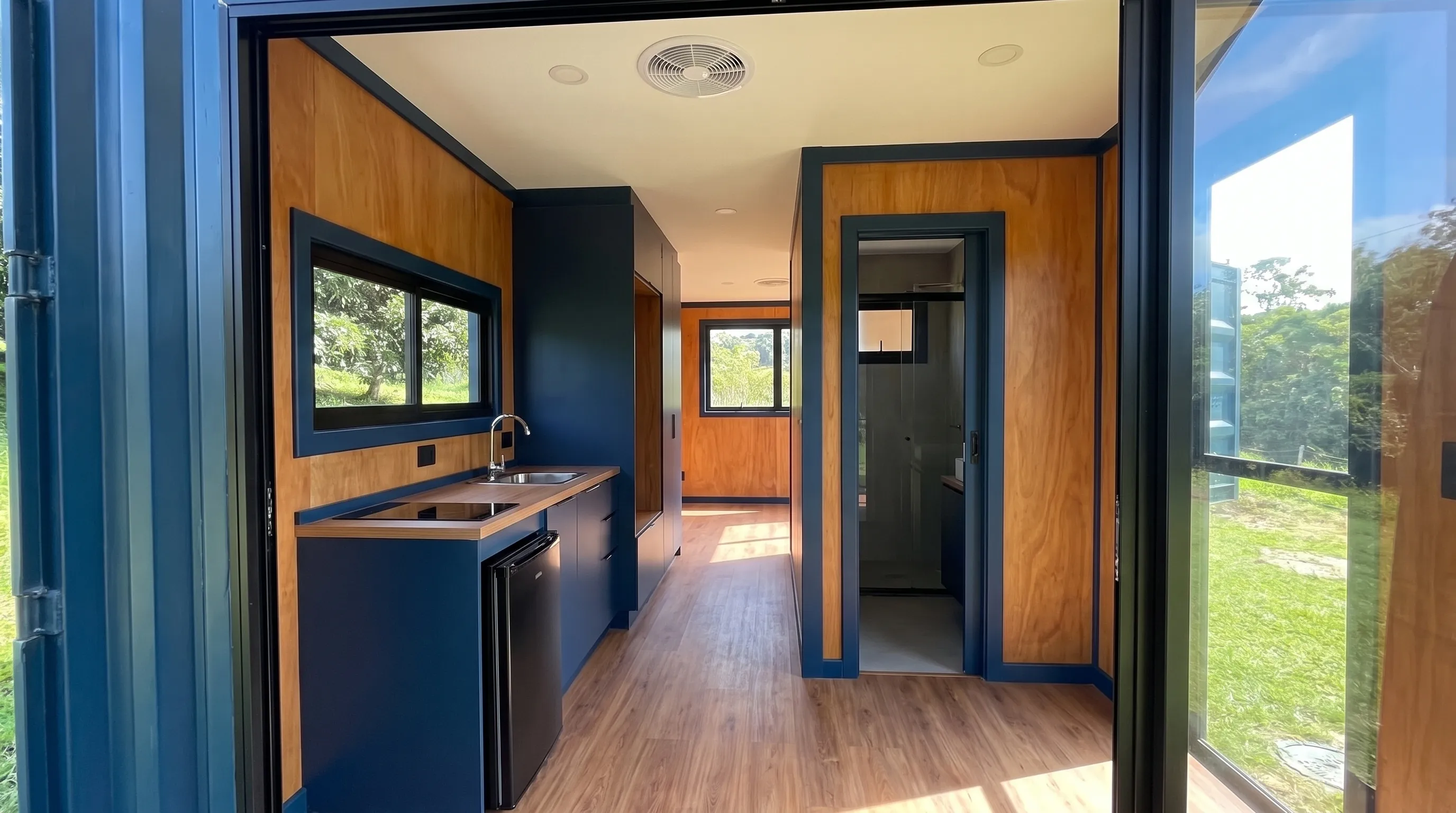
For a more complete living-space package, compare the Custom 20ft Cozy Cabin Container House. It is described as fully insulated and turnkey, with a kitchenette, private bathroom and living area, making it relevant to buyers considering a cabin, guest house or rental.
Use those listed features as the starting point for a written specification request. Confirm included fixtures, insulation details, utility connections and suitability for your local approval process before choosing a configuration.
Ask for a quote tied to your intended use and delivery location. That makes the comparison more useful than comparing photos of two homes with different completion levels.
Confirm Delivery, Foundation and Financing
Have the delivery plan reviewed before ordering
A truck reaching your street does not mean it can reach the installation point. Provide driveway measurements, entrance photos, slopes, overhead obstructions and details about bridges, culverts or soft ground.
Ask the delivery provider to identify the unloading method and required working area. Confirm who supplies lifting equipment, prepares the staging area and pays for waiting time or a failed delivery.
If you plan to purchase a container home for a remote property, resolve access questions before the unit ships. Outback Shipping Containers serves all 50 states, but each site still needs a practical delivery assessment.
Match the foundation to the completed home
Have the foundation design coordinated with the home’s support points and anchoring requirements. Soil conditions, drainage, frost depth and local loads can affect the design, so consult the relevant local authorities and qualified professionals.
Request the completed transport weight and lifting instructions. Tare weight is not finished-home weight: it describes the empty container, while insulation, equipment and finishes add weight. A freight container’s payload capacity also does not replace residential structural calculations.
Confirm financing and insurance eligibility
Ask your lender whether it can finance the specific home, foundation arrangement and property ownership structure. Clarify appraisal requirements, construction draws, required inspections and whether the loan covers site work.
Outback Shipping Containers offers financing options, but confirm current terms, eligibility and the costs covered by any proposal. Obtain an insurance indication for the actual project as well, including coverage during transport and installation.
Put Inspection and Acceptance Terms in the Contract
Tie payments to verifiable work
Before you purchase a container home, obtain a contract naming the legal seller and defining the exact unit or build specification. Verify payment instructions through a trusted contact, especially if bank details change during the transaction.
The agreement should explain deposit terms, cancellation rights, change-order pricing and what happens if approvals are denied or delayed. Where available, ask about payment methods that provide appropriate buyer protection.
Use the contract to establish these checkpoints:
- Approved specifications and drawings before fabrication begins.
- Inspection access before important work becomes concealed.
- Documented completion criteria before shipment or the next payment milestone.
- Delivery responsibilities, damage reporting and acceptance procedures.
- Warranty coverage, exclusions and the process for correcting defects.
A factory inspection can help identify problems before shipping makes repairs more difficult. Ask who may inspect the home and how the builder will document corrections.
Define a successful handover
Request a handover package with final drawings, inspection records, equipment manuals and warranty information. If concealed work cannot be inspected later, ask for dated photographs or other records before walls and floors are closed.
At delivery, document visible damage and compare the home against the agreed specification. Follow the contract’s reporting deadlines and record any incomplete work on a punch list.
Delivery acceptance is not occupancy approval. Before moving in or accepting guests, complete the required site connections and obtain the authorization required by your local jurisdiction.
Frequently Asked Questions
Is it really cheaper to build a container home?
It can be, but the shell price alone does not establish savings. Engineering, insulation, foundations, utilities and delivery can narrow the difference. Compare a container proposal with a conventional or modular alternative using the same finished area, site conditions, quality level and complete installed scope before deciding which costs less.
How much would a 2,000 sq ft container home cost?
There is no reliable nationwide price without a design and location. Seven nominal 40ft containers provide about 2,240 sq ft of exterior footprint before walls and finishes, not 2,000 sq ft of guaranteed living area. Request a site-specific quote covering structural connections, foundations, building systems, permits and delivery.
What is the downside of container homes?
Common challenges include narrow room layouts, heat transfer through steel, moisture control and structural work around large openings. Delivery access and financing can also limit options. These issues do not make every project unsuitable, but they require documented solutions and a realistic installed budget before construction begins.
Are container homes legal in the US?
They can be legal, but approval depends on the property, intended use and applicable state and local requirements. Zoning permission and building-code approval are separate checks. Contact your planning and building departments before ordering, and review deed restrictions, homeowners association rules and rental regulations when they apply.
Can I put a container home on my land without a permit?
Do not assume private land, a small footprint or off-grid utilities create an exemption. Requirements vary by jurisdiction, and residential use can trigger permits even where some storage structures are exempt. Ask local authorities about the dwelling, foundation, electrical work, plumbing, wastewater system and required approval before occupancy.
Request a Quote You Can Verify
The next step is a project-specific quote, not a rushed deposit. Gather your parcel information, intended use, preferred layout and delivery-site photos so the seller can address the real scope.
When you are ready to purchase a container home, contact Outback Shipping Containers to discuss available options and request written specifications. Compare that proposal with local approval requirements and site-work quotes before making your decision.
About Outback Shipping Containers
This guide was prepared by the Outback Shipping Containers team, based on the questions our customers ask us most when buying, modifying and taking delivery of shipping containers. Learn more about us.
Ready to find your container?
Browse our in-stock shipping containers, container homes and custom builds, or ask our team for a free quote with delivery to your site.