Is a 20 Ft Conex Right for Secure On-Site Storage?
By Outback Shipping Containers · Published October 21, 2026 · Last updated October 23, 2026
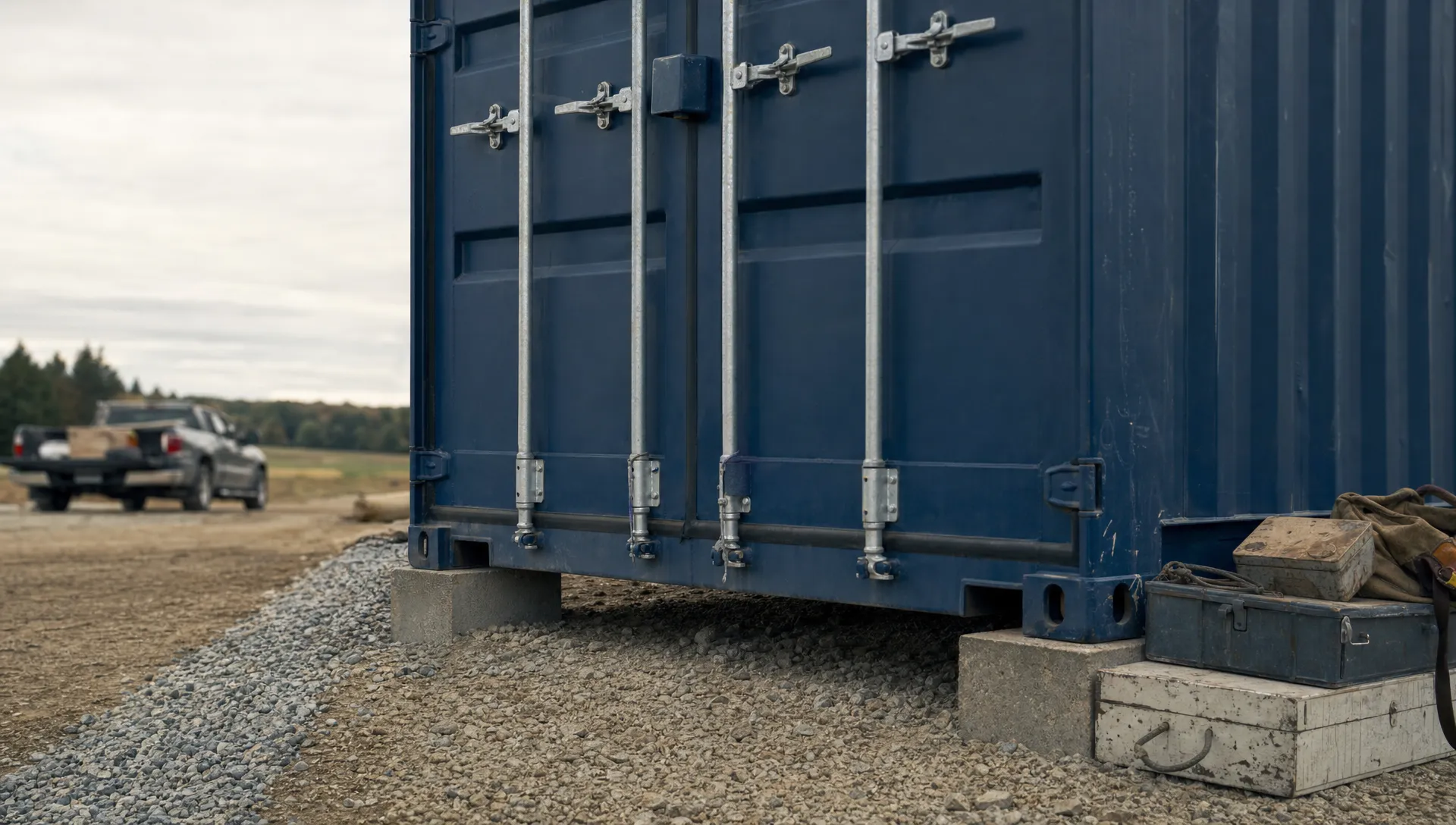
Quick answer: A 20 ft conex is a good choice for secure on-site storage when you need about 148 square feet of usable floor space, can provide truck access and have a firm, level placement area. It works well for tools, inventory and farm supplies. It is less suitable for temperature-sensitive goods without climate control or for sites where delivery access is tight.
The steel shell is only part of the decision. Door access, container condition, locks and moisture control determine whether your belongings stay protected. A sound container placed on a poorly drained site can still create expensive problems.
Key takeaways
- A standard 20-foot container has a nominal 20-by-8-foot footprint, but its usable interior is smaller.
- High cube containers add height, not floor area.
- Wind- and watertight condition does not mean theft-proof, insulated or condensation-free.
- Compare delivered costs, including site preparation and security upgrades, rather than the container price alone.
Start by measuring your largest stored item and sketching how you will reach it. Then check the delivery route before choosing a unit. Those two steps prevent many avoidable buying mistakes.
Is a 20 ft conex the right size for your storage?
For many homes, farms and small job sites, this size balances storage capacity with a manageable footprint. However, the advertised dimensions describe the container's exterior, not the space available between its walls.
Standard dimensions and usable space
A typical standard-height dry container has an interior approximately 19 feet 4 inches long, 7 feet 8 inches wide and 7 feet 10 inches high. That provides roughly 148 square feet of floor area and 1,170 cubic feet of volume.
| Storage consideration | Standard 20-foot | 20-foot high cube | Standard 40-foot |
|---|---|---|---|
| Nominal exterior dimensions | 20 ft × 8 ft × 8 ft 6 in | 20 ft × 8 ft × 9 ft 6 in | 40 ft × 8 ft × 8 ft 6 in |
| Approximate usable floor area | 148 sq ft | 148 sq ft | 302 sq ft |
| Main advantage | Compact general storage | More vertical clearance | More floor space |
| Main trade-off | Limited room for bulky equipment | Taller delivery and placement envelope | Larger footprint and access needs |
Dimensions vary by manufacturer and model. Ask for the specifications of the actual unit, especially if equipment will fit with only inches to spare.
Standard double-door openings are often about 7 feet 8 inches wide and 7 feet 5 inches high. The opening can be lower than the interior ceiling, so checking interior height alone is not enough.
Plan the aisle, not just the square footage
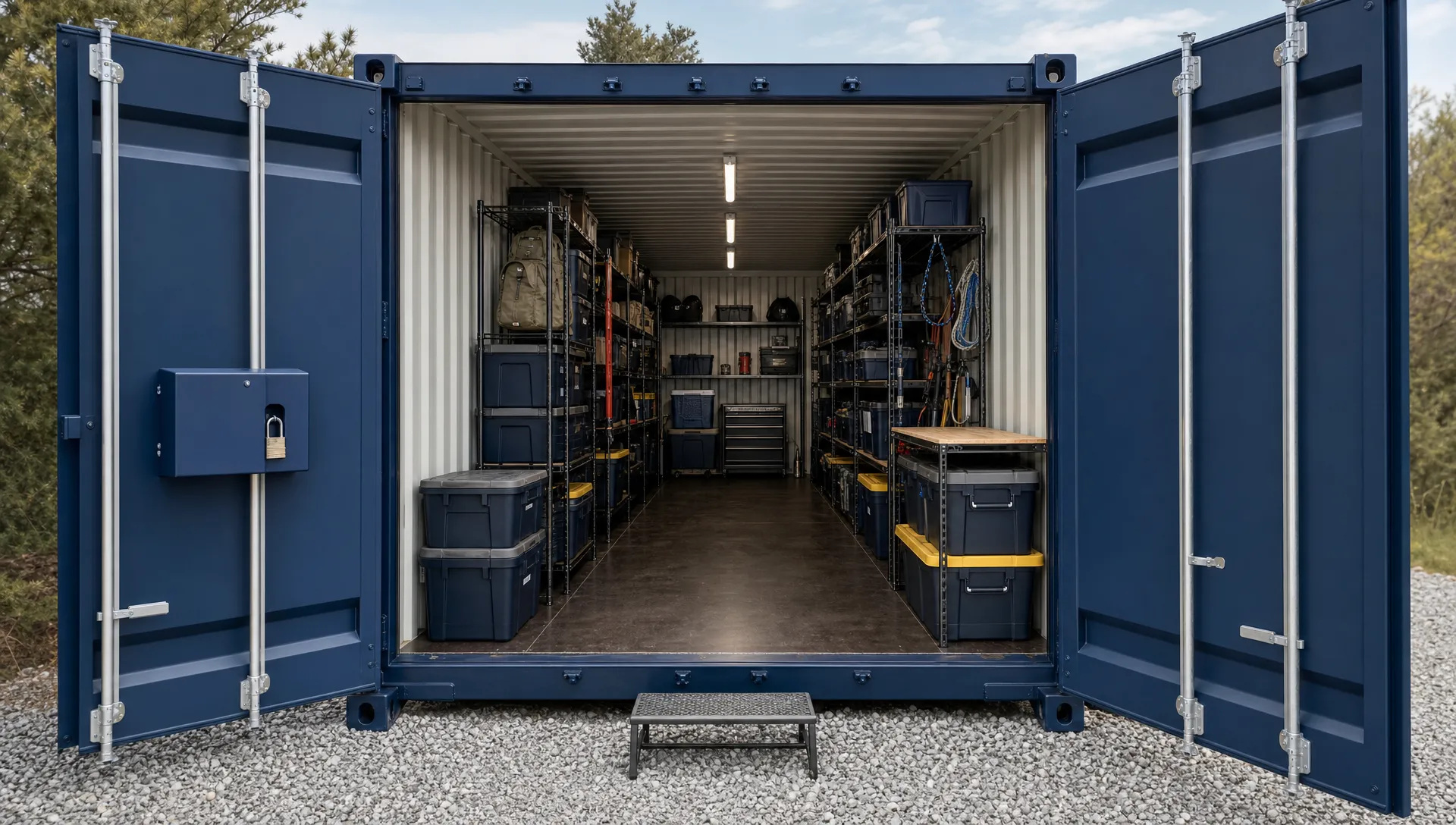
Inside a 20 ft conex, shelving changes how much useful storage you get. Two 18-inch-deep shelving runs along opposite walls leave an aisle approximately 56 inches wide, based on a typical 92-inch interior width.
That layout suits boxes, parts and hand tools. It works less well when you need to move wide equipment through the center or retrieve pallets from the rear every day.
If you need frequent access along the container's length, a 20ft open-side container is worth comparing with standard end doors. Confirm its opening dimensions and required door-swing clearance before ordering.
Check weight and floor loading
An empty standard unit often weighs about 4,500 to 5,200 pounds. This is its tare weight. Payload capacity is a separate figure and depends on the container's rating and condition.
Use the unit's markings and documentation rather than a generic online specification. Heavy machinery, compact stacks of metal and wheeled equipment create concentrated floor loads that require separate assessment.
How secure is a steel container in practice?
A 20 ft conex provides a substantial physical barrier, but security depends on the doors, locking hardware and location. Thin locks, damaged hinges or an isolated placement can undermine an otherwise sound steel shell.
Protect the lock and control access
A lock box shields the padlock from direct access, making some cutting and prying methods harder. Do not assume one is included. Confirm the hardware supplied with the specific container and choose a compatible lock.
Before accepting a unit, check that both doors close without excessive force. Inspect the locking rods, handles, hinges and door-frame welds. Bent components may signal damage or make daily access difficult.
For a practical security setup:
- Position the doors where staff or residents can observe them.
- Use a protected, weather-resistant lock suited to the locking arrangement.
- Add lighting or monitored security where the property's risk warrants it.
- Keep a record of key holders and remove access when staff or contractors leave.
No container is burglar-proof. For high-value inventory, ask your insurer what locking, alarm and recordkeeping requirements apply before storing it on-site.
Separate weather protection from moisture control
A wind- and watertight steel shell should keep ordinary rain out when its doors are properly closed. It does not prevent humid air from condensing on cold steel.
Inside a 20 ft conex, damp equipment, wet packaging and changing temperatures can create moisture even when the roof does not leak. Check stored goods after major weather changes, particularly during the first few weeks of use.
Keep cardboard and moisture-sensitive items off the floor. Leave inspection space around stored goods and avoid loading wet materials. Vents may help air exchange, but they do not provide the same control as a properly designed dehumidification or insulated climate-control system.
Tools, seed, electronics and business records have different storage requirements. Choose the environment around the contents, rather than assuming every item belongs in an unconditioned cargo container.
Can your property handle delivery and placement?
A compact container still arrives on a large vehicle. The truck's approach, turning path and unloading space can matter more than the final footprint.
Confirm access with the delivery team
For a 20 ft conex delivery, ask which truck and unloading method the carrier will use. Tilt-bed, side-loader and crane-assisted deliveries have different access requirements. There is no single clearance figure that works for every property.
Send photos of the entrance, road, turns and placement area. Include gate widths, overhead wires, tree branches, slopes and any soft ground. Ask the carrier to confirm the required working length, width and overhead clearance in writing.
Door orientation also needs a clear instruction. Tell the delivery team which way the container doors must face once unloaded. A unit positioned backward may require another equipment visit to correct.
Do not assume that a truck can cross a septic system, buried utility route, small bridge or landscaped driveway safely. Identify those features before dispatch and arrange an alternative approach if needed.
Prepare a stable site and check local rules
A 20 ft conex needs stable support and drainage. Uneven settlement can twist the frame enough to make doors bind, even when the container itself arrived in good condition.
Compacted aggregate or engineered supports may be appropriate, depending on soil, slope and intended use. Ask the supplier or a qualified local professional about support locations. Do not improvise a foundation from loose blocks on soft ground.
Check flood exposure using FEMA's flood mapping resources, then assess the property's actual drainage. A location outside a mapped high-risk area can still collect surface water.
Permit, zoning, setback and anchoring requirements vary by state, county and municipality. Consult the local planning or building department before delivery. Temporary storage is not automatically exempt, and using an intermodal container as an occupied office or workshop may trigger additional requirements.
Should you buy one-trip, used WWT or cargo-worthy?
Condition determines how much inspection, maintenance and cleanup you may need. Appearance alone does not tell you whether the roof, floor and doors are sound.
Understand what the condition terms mean
For a 20 ft conex used only for stationary storage, wind- and watertight condition is often the main starting point. Still, ask the seller what its inspection and guarantee cover.
A one-trip container generally enters the resale market after one loaded cargo journey. It usually has less wear than a long-service used unit, but handling marks and minor dents can still occur.
A used WWT container is sold for wind- and watertight performance. Cargo-worthy, often abbreviated CWO, addresses suitability for cargo service. Seller grading practices can differ, so request the actual condition description rather than relying on the abbreviation alone.
A CSC safety plate relates to international transport safety approval. Its presence does not establish current condition, guarantee suitability for another shipment or approve the container for a building conversion.
Inspect the actual unit or acceptance standard
Request current photos of the roof, floor, door seals, lower rails and corner posts. Ask about repairs, strong odors, visible contamination and soft flooring. Do not climb onto the roof to inspect it.
If a used unit's cargo history is unknown, avoid treating it as automatically suitable for food, feed or living space. Odors, residues or stained flooring call for further evaluation, not simply a coat of paint.
For buyers who prefer lower wear, Outback's black 20ft new one-trip shipping container is listed as wind- and watertight and cargo-worthy. Confirm the unit's current availability, hardware and delivered quote before purchasing.
If tall shelving or bulky equipment is the limiting factor, compare the beige 20ft new high cube shipping container, also listed as one-trip, wind- and watertight and cargo-worthy. Its extra height can help, but it does not add floor space.
What should you budget beyond the purchase price?
The right comparison is the cost of usable storage on your property, not the lowest advertised container price. Delivery distance, site access, condition and unloading method can change the total.
Build an all-in quote
Before buying a 20 ft conex, request an itemized delivered quote showing the unit, transportation, unloading and applicable taxes. Identify any site-work or accessory costs that fall outside the seller's scope.
Budget for locks, shelving, lighting and a suitable ramp if needed. Ground preparation, drainage work, permits or crane service may also apply. Ask how a failed delivery, waiting time or a later relocation would be charged.
Outback Shipping Containers offers nationwide delivery and financing options. Confirm the terms for your location and purchase rather than assuming a standard delivery charge or financing rate applies.
For construction storage, loading practices matter as well as capacity. OSHA's construction material-storage requirements address issues such as secure stacking and clear aisles. Keep heavy items low and avoid unstable piles near doors.
Compare buying with renting or building a shed
Buying can make sense when you expect several years of use and want control over the unit. Renting may suit a short project or an uncertain storage period. Compare the same duration and include both delivery and removal charges.
A simple planning calculation is purchase price plus delivery, preparation, maintenance and eventual removal, minus any expected resale proceeds. Compare that total with rent and related fees over the same period. Do not treat resale value as guaranteed.
A 20 ft conex is strongest as a durable, movable storage solution. A shed may fit better when you need residential appearance, several entry doors or an interior designed around daily work. Neither option avoids local planning rules.
Frequently asked questions
What are the dimensions of a 20-foot dry container? A standard unit has nominal exterior dimensions of 20 feet long, 8 feet wide and 8 feet 6 inches high. Typical interior dimensions are about 19 feet 4 inches by 7 feet 8 inches by 7 feet 10 inches. Verify the actual unit's dimensions and door opening before buying.
How much does a conex box cost? Cost depends on size, condition, location, available inventory and delivery requirements. Request a current delivered quote rather than using a national starting price as your budget. Include taxes, unloading, ground preparation and security hardware so you can compare sellers on the same basis.
Is a 20 ft conex waterproof? A sound wind- and watertight unit should keep normal weather out when properly closed. It is not a floodproof enclosure, and it can still develop internal condensation. Inspect door seals and roof condition, then match ventilation or moisture control to the goods you plan to store.
What sizes do conex boxes come in? Common choices include 10-foot, 20-foot and 40-foot units, with high cube options available in selected sizes. Some suppliers also offer 45-foot high cubes. Length determines much of the floor area, while high cube height mainly increases vertical clearance. Availability varies by supplier and location.
Do I need a permit for a storage container? Possibly. Requirements vary by state, county and municipality, including zoning, setbacks, placement duration and anchoring. Homeowners associations may impose separate restrictions. Ask the local planning or building department about your exact address and intended use before ordering, especially if you plan electrical work or occupancy.
Choose the container around your storage and site
A 20 ft conex is a practical choice when your inventory fits, the delivery truck can reach the site and you have a plan for security and moisture. Choose a high cube for vertical clearance, not as a substitute for more floor space.
When you are ready to compare options, explore Outback Shipping Containers' conex boxes for on-site storage. Have your item dimensions, placement photos and delivery address ready so the discussion starts with the right unit and a realistic delivered cost.
About Outback Shipping Containers
This guide was prepared by the Outback Shipping Containers team, based on the questions our customers ask us most when buying, modifying and taking delivery of shipping containers. Learn more about us.
Ready to find your container?
Browse our in-stock shipping containers, container homes and custom builds, or ask our team for a free quote with delivery to your site.