Winterizing a shipping container home 2026 guide: Ultimate…
The definitive winterizing a shipping container home 2026 guide. Master insulation methods, R-values, and 2026 heating systems to ensure total warmth. See.

Living in a CORTEN steel box during a northern winter sounds like a recipe for a frozen nightmare, but the reality in 2026 is far more comfortable. If you are planning a custom shipping container build, your success depends entirely on how you manage the battle between internal warmth and external freezing temperatures. Without a strategic winterizing plan, the high thermal conductivity of steel will turn your home into a condensation magnet. This winterizing a shipping container home 2026 guide details the exact specifications, R-values, and mechanical systems required to thrive in cold climates.
Table of Contents
- winterizing a shipping container home 2026 guide: Thermal Bridging: The Container's Silent Heat Thief
- Shipping Container Insulation Methods Compared
- Preventing Condensation in Container Homes
- Container Home Heating Systems 2026
- Fenestration and Seal Integrity: Beyond Standard Double-Paning
- External Shielding: Skirting and Site-Specific Wind Mitigation
- Redundant Off-Grid Freeze Protection
- Frequently Asked Questions
- Winterization Checklist
- Explore Related Products & Guides
winterizing a shipping container home 2026 guide: Thermal Bridging: The Container's Silent Heat Thief
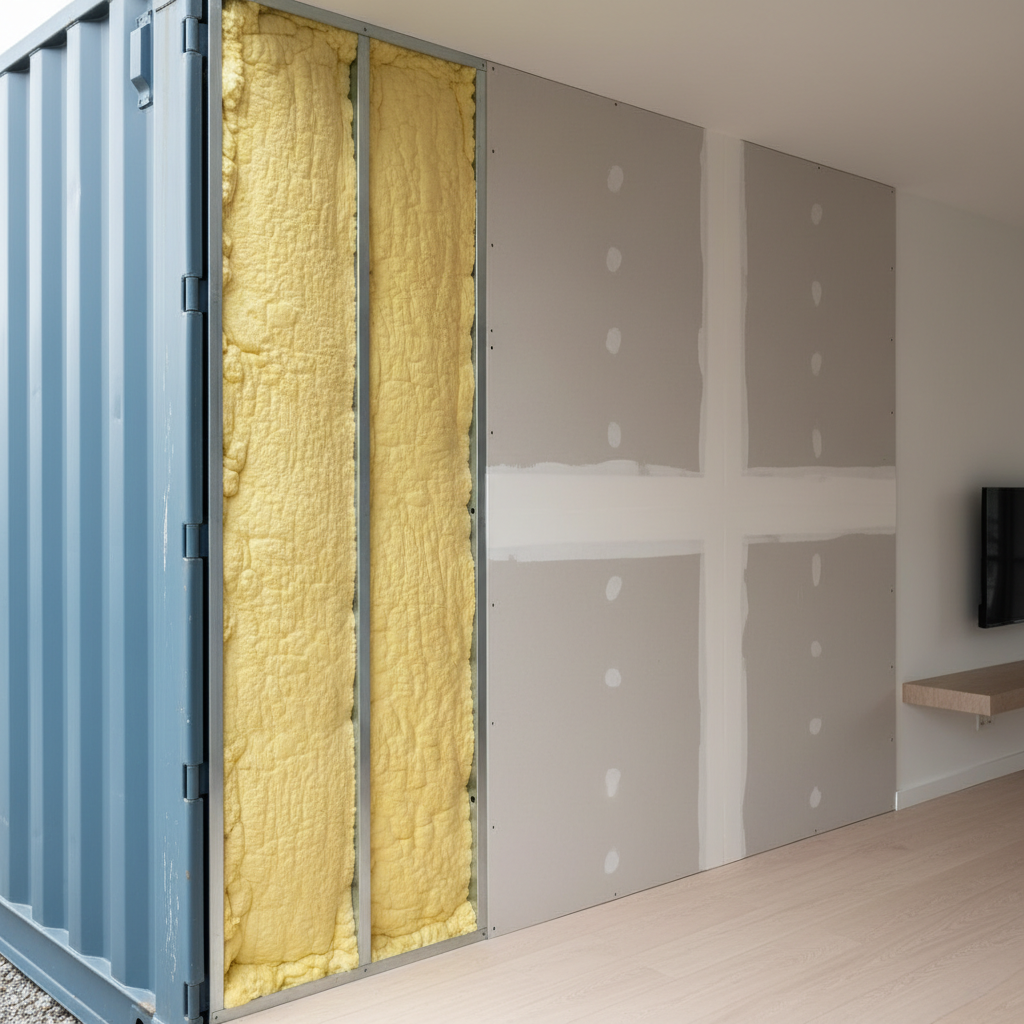
The primary challenge in winterizing is thermal bridging. Steel is an excellent conductor of heat; it will pull warmth from your interior and radiate it outside with brutal efficiency. To combat this, you must create a total thermal break between the steel shell and your living space. When you buy used shipping containers, you're starting with a raw shell that has zero insulating properties.
In 2026, the standard for high-performance container builds is to avoid direct contact between metal studs and the container skin. Using wood furring strips or specialized InSoFast panels creates the necessary gap to stop heat transfer. For those looking at 40ft high cube shipping container dimensions, the extra foot of vertical space is critical because it allows you to insulate the floor and ceiling heavily without sacrificing headroom.
Shipping Container Insulation Methods Compared
Selecting the right shipping container insulation methods is the most important financial decision you’ll make for your build. Here is how the top three contenders stack up for 2026 winter performance.
| Insulation Type | Est. R-Value per Inch | Moisture Resistance | Space Efficiency | 2026 Est. Cost (40ft Unit) |
|---|---|---|---|---|
| Closed-Cell Spray Foam | R-6.5 to R-7.0 | Excellent (Vapor Barrier) | High | $2,800 - $4,200 |
| EPS Rigid Foam Panels | R-3.8 to R-4.2 | Moderate | Medium | $1,200 - $1,800 |
| Mineral Wool / Batts | R-3.0 to R-3.4 | Low (Needs Barrier) | Low | $800 - $1,200 |
Important: Never use fiberglass batts in a shipping container without a flawless vapor barrier. Condensation will form on the steel skin, soak the fiberglass, and lead to hidden mold and rust within 24 months.
Spray Foam vs Rigid Foam for Containers
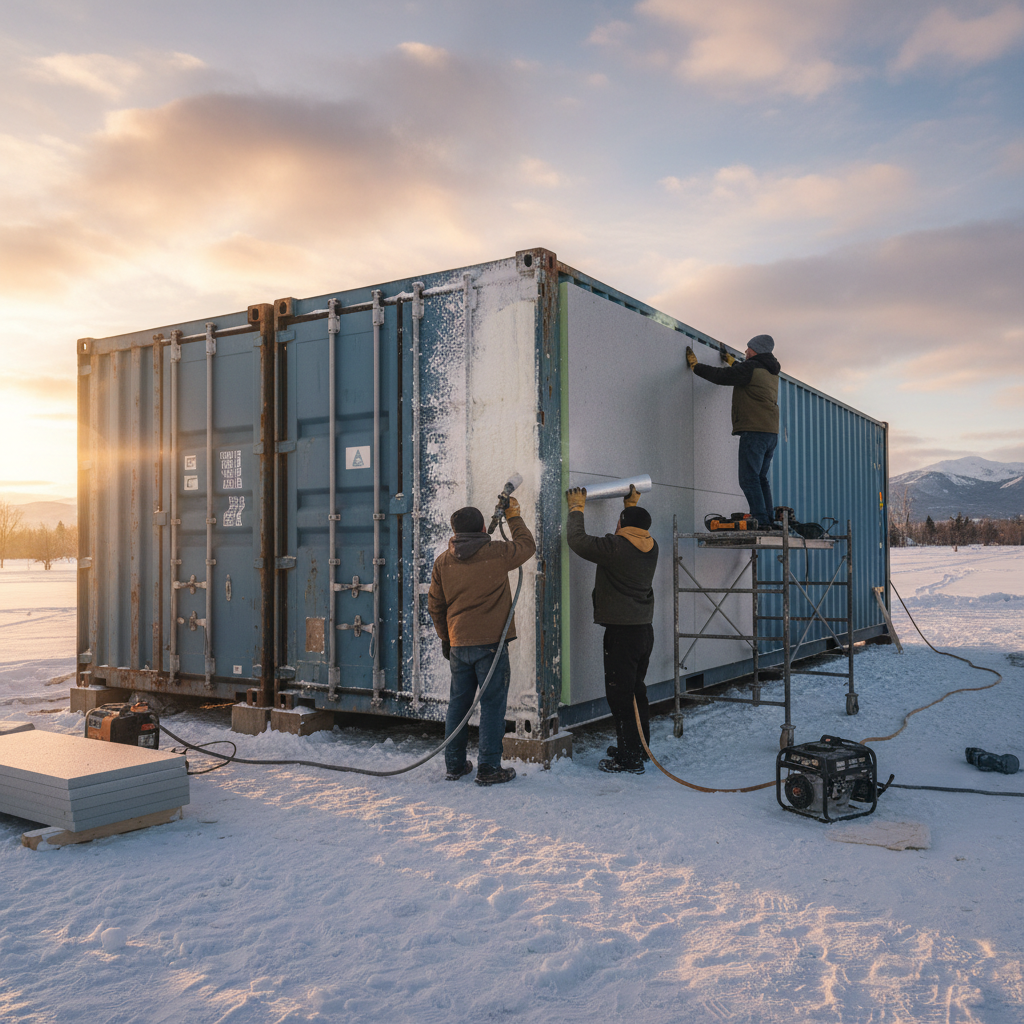
For most professional builders, the debate over spray foam vs rigid foam for containers is settled: closed-cell spray foam wins. It adheres directly to the CORTEN steel, eliminating the air gap where condensation forms. This effectively serves as your shipping container vapor barrier installation and insulation in one step. If you're on a budget, rigid foam panels like the ones found in a 4m x 2m Insulated COSHH Flat Pack Storage Unit offer a great middle-ground, provided you seal every seam with high-quality spray foam cans.
Preventing Condensation in Container Homes
Condensation, often called 'container rain,' occurs when warm, moist interior air hits the cold steel surface. In a winterized home, this usually happens in hidden pockets or around window frames. To prevent this, you must maintain a consistent R-value for container home walls across the entire structure.
- Dehumidification: Keep interior humidity below 45% during winter months.
- ERVs (Energy Recovery Ventilators): These exchange stale indoor air for fresh outdoor air while retaining heat.
- Sealing Penetrations: Every pipe and electrical conduit through the steel must be sealed with marine-grade silicone or expanding foam.
- Exterior Cladding: Adding a rainscreen or siding provides a buffer against the wind, keeping the steel skin slightly warmer.
Container Home Heating Systems 2026
Heating a small, well-insulated space requires different thinking than a traditional stick-built home. Over-sizing your heater leads to short-cycling, which wastes energy and wears out equipment. In modern units like the 40ft Augustine Luxury Container Home, we see a shift toward high-efficiency electric solutions.
Mini-split heat pumps are the 2026 gold standard, providing both heating and cooling. Many cold-climate models now operate efficiently down to -15°F. For off-grid builds, wood stoves remain popular, but ensure you have a dedicated fresh air intake so the stove doesn't deplete the oxygen in your airtight container. If you're managing a larger build like the Trinity 100ft U-Shape Modular Container Home, consider hydronic radiant floor heating for the ultimate in winter comfort.
Windows and Doors: The Weak Links
Glass is a major source of heat loss. The best windows for container homes in 2026 are triple-pane, argon-filled units with non-conductive frames (vinyl or fiberglass). Avoid aluminum frames, as they will frost over on the inside. If you are converting a 40ft used shipping container, ensure your window cutouts are reinforced with steel tubing to prevent the container from sagging and breaking the window seals during thermal expansion.
Fenestration and Seal Integrity: Beyond Standard Double-Paning
In 2026, the weakest link in a shipping container's thermal envelope remains the penetration points—specifically where steel was cut to accommodate windows and doors. Because steel expands and contracts significantly more than timber or vinyl, the interface between the container skin and the window frame is prone to microscopic shifts that compromise airtightness. Standard silicone caulking often fails within two freeze-thaw cycles. Professionals now prioritize high-performance EPDM gaskets and spray-applied liquid flashing to create a flexible, monolithic seal that accommodates the thermal movement of the Cor-Ten steel without cracking.
Selecting the right glazing is equally critical for sub-zero performance. In northern climates, the shift has moved toward triple-pane units with krypton gas fills, which provide superior R-values compared to argon. However, the frame material is just as important as the glass. Aluminum frames, unless thermally broken with a wide polyamide bridge, will act as a secondary thermal bridge, manifesting frost on the interior during extreme cold snaps. Fiberglass frames have emerged as the gold standard for 2026 container builds due to their similar expansion coefficient to steel and inherent insulating properties.
- Low-E Coatings: Use HC (Hard Coat) Low-E on Surface 3 to maximize passive solar heat gain in winter.
- Warm-Edge Spacers: Replace traditional aluminum spacers between glass panes to prevent perimeter condensation.
- Compression Seals: Opt for tilt-and-turn window styles which utilize automotive-grade compression gaskets rather than sliding brushes.
- Over-Insulating Frames: Extend exterior rigid foam insulation over the window frame to reduce the 'thermal bypass' effect at the rough opening.
Tip: When installing windows, do not bolt the frame directly to the steel C-channel. Use a buck made of marine-grade plywood or recycled plastic lumber to create a thermal break between the window unit and the container's metal skin.
External Shielding: Skirting and Site-Specific Wind Mitigation
One of the most overlooked aspects of winterizing a container home is the space beneath the unit. Since most containers are set on pier foundations or footings to prevent moisture wicking from the soil, they are susceptible to 'wind wash'—where cold air strips heat from the underside of the floor assembly. Even with spray foam applied to the undercarriage, a 20 mph wind can significantly increase the heating load by lowering the effective R-value of the floor. Robust skirting is no longer optional for 2026 builds; it is a structural necessity for energy efficiency.
Effective skirting must be both insulated and ventilated to prevent ground moisture from rotting the container’s original bamboo or marine plywood flooring. Using foil-faced polyisocyanurate boards protected by a durable exterior cladding like fiber cement or galvanized steel creates a dead-air space that stays 15-20 degrees warmer than the ambient outside temperature. This buffer zone also protects plumbing lines that are often routed beneath the floor, reducing the reliance on electric heat tape which is prone to failure and high energy consumption.
| Skirting Material | Estimated R-Value | Durability Rating | Best Use Case |
|---|---|---|---|
| Insulated Vinyl | R-3 to R-5 | Moderate | Budget-friendly, mild winters |
| 2" Rigid Foam + Fiber Cement | R-10 to R-13 | High | High-wind, heavy snow regions |
| Stacked Stone/Masonry | R-2 to R-4 | Extreme | Permanent aesthetic, fire-prone zones |
| Structural Insulated Panels (SIPs) | R-15+ | High | Off-grid, arctic climate performance |
Important: Always ensure the skirting includes screened vents. Total enclosure without ventilation can lead to a buildup of radon or methane (depending on soil) and will trap moisture that causes the container's underside to rust prematurely.
Redundant Off-Grid Freeze Protection
For container homes located in remote areas, a power outage during a winter storm can lead to catastrophic pipe bursts within hours due to the high thermal conductivity of the steel walls. 2026 winterization strategies now emphasize 'passive-active redundancy.' This involves integrating a secondary, non-electric heat source such as a direct-vent propane heater or a small high-efficiency wood stove with an external air intake. These systems operate independently of the grid and provide the necessary BTUs to keep the core plumbing from freezing if the primary heat pump or mini-split fails.
Furthermore, the integration of smart monitoring systems has become a standard tool for the modern container owner. Low-power IoT sensors placed in the 'wet wall' cavities and under-floor voids can alert owners via smartphone if temperatures drop below a critical threshold (usually 45°F). In 2026, many owners are also installing automated gravity-drain valves. These systems detect a loss of power or a drop in temperature and automatically shut off the main water supply and drain the interior lines into a greywater tank, effectively 'safing' the home against freeze damage even if no one is present to intervene.
- Install a 12V DC backup for circulation pumps if using a hydronic floor heating system.
- Apply closed-cell spray foam to at least 3 inches of thickness on all exposed plumbing runs.
- Use PEX-a (Engel method) piping rather than copper or CPVC, as it can expand up to 3x its diameter without bursting.
- Integrate a 'winter bypass' switch that allows you to easily drain the exterior hose bibs from an interior manifold.
Tip: If using a wood stove, ensure the chimney flue is double-insulated (Class A) and that the penetration through the container roof is sealed with a high-temp silicone boot and a stainless steel storm collar to prevent leaks from ice damming.
Container delivery near you
We deliver to every state in the lower 48 plus Alaska and Hawaii. These local pages list pricing, metro coverage and typical lead times for the areas we run into most:
- Shipping containers near me — how we source from the depot closest to your ZIP code
- Shipping containers in Florida — pricing and delivery to Jacksonville and Miami
- Shipping containers in Georgia — pricing and delivery to Atlanta and Savannah
- Shipping containers in North Carolina — pricing and delivery to Charlotte and Raleigh
- Shipping containers in Arizona — pricing and delivery to Phoenix and Tucson
- Shipping containers in Washington — pricing and delivery to Seattle and Spokane
- Shipping containers Houston — local yard stock and lead times
Frequently Asked Questions
Common queries regarding winterization and cold-weather container living.
Winterization Checklist
- Apply 2-3 inches of closed-cell spray foam to all interior walls and ceiling.
- Insulate the underside of the container if it is on a pier foundation.
- Install heat tape on all exposed exterior plumbing lines.
- Upgrade to a smart thermostat to monitor temperature drops remotely.
- Check door gaskets on original cargo doors for light leaks and replace as needed.
- Ensure the roof is clear of heavy snow loads if you haven't reinforced the spans.
Winterizing a shipping container home 2026 guide wouldn't be complete without mentioning the foundation. If your container is sitting directly on the ground, the frozen earth will act as a massive heat sink. Elevating the unit on concrete piers or a 20ft bumper pull container chassis allows for air circulation and helps prevent the floor from becoming a block of ice.
If you're ready to compare inventory for your project, our team can pull matching units from our nationwide depots and advise on the best local modification partners to handle your insulation needs. Contact our experts today to secure a winter-ready shell before the seasonal rush.
Explore Related Products & Guides
Frequently Asked Questions
How to stop shipping container condensation in winter?
The most effective way is to use closed-cell spray foam insulation. By applying it directly to the steel, you eliminate the air gap where moisture-laden air can meet the cold metal, which is the primary cause of 'container rain'.
What is the best insulation for a shipping container home?
Closed-cell spray foam is widely considered the best due to its high R-value (R-7 per inch) and its ability to act as a vapor barrier. Rigid polyisocyanurate panels are a secondary choice for DIYers on a budget.
How do you heat a container home efficiently?
A high-efficiency ductless mini-split heat pump is the most efficient method for most container homes. For extreme cold, pairing this with electric radiant floor heating provides maximum comfort with minimal space usage.
Can you live in a shipping container in cold climates?
Yes, provided the home is properly winterized. With adequate R-value (R-21+ for walls, R-30+ for ceilings) and a robust heating system, containers can be as comfortable as traditional homes in USDA Zone 7 and higher.
How to prevent pipes from freezing in a container home?
Keep plumbing localized to interior walls when possible. For lines running underneath the container, use heavy-duty pipe insulation and electric heat trace cables, and consider skirting the foundation to block wind.
Is spray foam insulation worth it for containers?
Absolutely. While the upfront cost is higher than fiberglass or rockwool, the savings in energy bills and the prevention of structural rust caused by condensation make it the most cost-effective long-term solution.