How to Compare Freight Containers Before You Buy
Compare a freight container by size, grade, certification, delivery cost, and inspection points before you buy. Avoid costly mistakes.
How to Compare Freight Containers Before You Buy
A freight container should be compared by size, condition grade, certification, structural condition, delivery cost, and the seller’s proof that the unit is wind and watertight or cargo-worthy. Start with what you need it to do, then compare the exact container, not just the cheapest online price. Photos, data plates, flooring, door seals, roof condition, and delivery access all matter before money changes hands.
Quick Answer: The best freight container is the one that fits your site, load, budget, and intended use with verified condition, clear delivery terms, and no hidden costs. A low sticker price can become expensive if the box leaks, the doors bind, or the delivery truck cannot reach your pad.
Key Takeaways
- Compare the total delivered cost, not only the container price.
- Match the size and height to your use case before comparing grades.
- Ask whether the unit is one-trip, CWO, WWT, refurbished, or as-is.
- Inspect doors, roof, frame, floor, seals, data plate, and underside when possible.
- Confirm delivery access, offload method, permits, and site prep before ordering.
Freight Container Basics: What You’re Actually Comparing
A freight container is also called a shipping container, cargo container, conex box, ISO container, or intermodal container. The names vary by industry, but most buyers are comparing steel containers built for storage, transport, or conversion.
Standard ISO dry containers are designed around common exterior dimensions. The global container system is based on ISO standards such as ISO 668 for Series 1 freight containers, which covers classification, dimensions, and ratings. That does not mean every used box is ready for ocean freight, but it explains why 20ft and 40ft containers are so common.
For a buyer, the main comparison points are simple:
- Size and height
- New, used, or refurbished condition
- Wind and watertight status
- Cargo-worthy status if shipping freight
- Floor, roof, doors, seals, and frame condition
- Tare weight and payload capacity on the data plate
- Delivery cost and offload access
- Seller reputation, warranty terms, and documentation
The key is to compare containers by use case. A farm owner storing feed has different needs than a contractor storing tools, a builder planning a shipping container home, or a business converting a high cube into a mobile office.
Compare Size First: 10ft, 20ft, 40ft, and High Cube
Size is the first filter. If you pick the wrong size, the condition grade will not save the project. A 20ft container may be easier to deliver in a tight driveway, while a 40ft high cube gives more space for equipment, retail storage, or a container conversion.
Most containers are 8 feet wide. Standard height is 8 feet 6 inches. High cube containers are usually 9 feet 6 inches tall, which gives about one extra foot of vertical space. That extra height matters for insulation, overhead lighting, HVAC, shelving, or interior buildouts.
| Container type | Common exterior dimensions | Best fit | What to check |
|---|---|---|---|
| 10ft container | 10' L x 8' W x 8'6" H | Small yards, tools, residential storage | Many are cut-down units, so confirm exact specs |
| 20ft container | 20' L x 8' W x 8'6" H | Home storage, job sites, farms, small workshops | Good balance of space and delivery flexibility |
| 40ft container | 40' L x 8' W x 8'6" H | Bulk storage, equipment, commercial use | Needs more delivery clearance and level ground |
| 40ft high cube | 40' L x 8' W x 9'6" H | Offices, workshops, container homes, tall cargo | Best when interior headroom matters |
| 45ft high cube | 45' L x 8' W x 9'6" H | Large storage and custom builds | Confirm local delivery access and placement space |
A 20ft ISO dry container typically has a tare weight around 4,800 to 5,300 pounds, depending on manufacturer and floor type. A 40ft dry container often weighs around 8,000 to 8,800 pounds empty. Always read the data plate on the exact unit because payload capacity and maximum gross weight can vary.
If you are comparing smaller units for residential storage, tight lots, or a first container purchase, Outback’s guide on how to buy a 20ft shipping container without overpaying is a useful companion to this checklist.
Compare Condition Grade, Not Just Age
Age matters, but condition matters more. A 12-year-old container that was handled well may outperform a younger unit with roof dents, bad seals, or heavy floor damage.
Buyers often make the mistake of comparing “used container” quotes as if every used unit is the same. They are not. A used cargo-worthy container is different from a wind and watertight storage unit. A refurbished container is different from a one-trip container. An as-is unit may be cheap for a reason.
| Condition grade | Best for | What it usually means | Risk level |
|---|---|---|---|
| One-trip | Long-term storage, conversions, container homes, customer-facing use | Used for one cargo move or very limited service, cleaner paint and fewer dents | Low |
| CWO, cargo-worthy | Freight use, storage, durable job-site needs | Structurally fit for cargo transport when properly certified | Low to medium |
| WWT, wind and watertight | Stationary storage, farms, construction sites | Keeps out normal wind and rain, but may not be certified for freight | Medium |
| Refurbished | Retail, office, workshop, visual upgrades | Repaired and usually repainted, scope varies by seller | Medium |
| As-is | Scrap use, noncritical storage, repair projects | No strong condition guarantee | High |
One-trip containers cost more because they are newer, cleaner, and usually have fewer dents and less corrosion. They are often a better fit for container homes, offices, retail units, or projects where appearance matters.
CWO containers are cargo-worthy. If you plan to use the container for shipping goods by rail or ocean, ask for proof that the unit is suitable for that purpose and verify the CSC plate and inspection status. Cargo-worthy does not always mean pretty. It means structurally fit for freight use.
WWT containers are wind and watertight. They are common for secure storage, farm use, and job sites. A WWT unit may have dents, surface rust, patches, or old paint, but it should not leak under normal conditions.
If budget is your main concern, compare grades carefully before deciding. Outback’s breakdown of new vs used shipping containers for every budget explains where one-trip, WWT, CWO, refurbished, and as-is containers usually fit.
Inspect the Roof, Doors, Frame, Floor, and Data Plate
If you can inspect the exact container, do it. If not, ask for current photos of the exact unit, not only sample photos. Photos should show all four sides, both doors, the roof if possible, interior walls, floor, door gaskets, corner castings, and the CSC data plate when relevant.
Roof and upper rails
Roof dents are common on used containers. Small dents may not matter for storage, but deep dents can hold water. Standing water speeds up corrosion and may lead to leaks later.
Check the top side rails and corner posts for bends, heavy rust, or impact damage. The frame is the skeleton of the box. If the frame is compromised, the container may not sit square or close correctly.
Doors, hinges, gaskets, and locking rods
Container doors should open and close without extreme force. Used doors can be stiff, but they should not be warped beyond normal operation. Look at the rubber gaskets around the doors. Brittle, torn, or missing seals are a common source of water intrusion.
Also inspect locking rods, cams, keepers, and handles. If the locking gear is bent or frozen, the container may be hard to secure. For tool storage, equipment storage, or job-site use, door function is not a small detail. It is part of your security plan.
Floors and underside
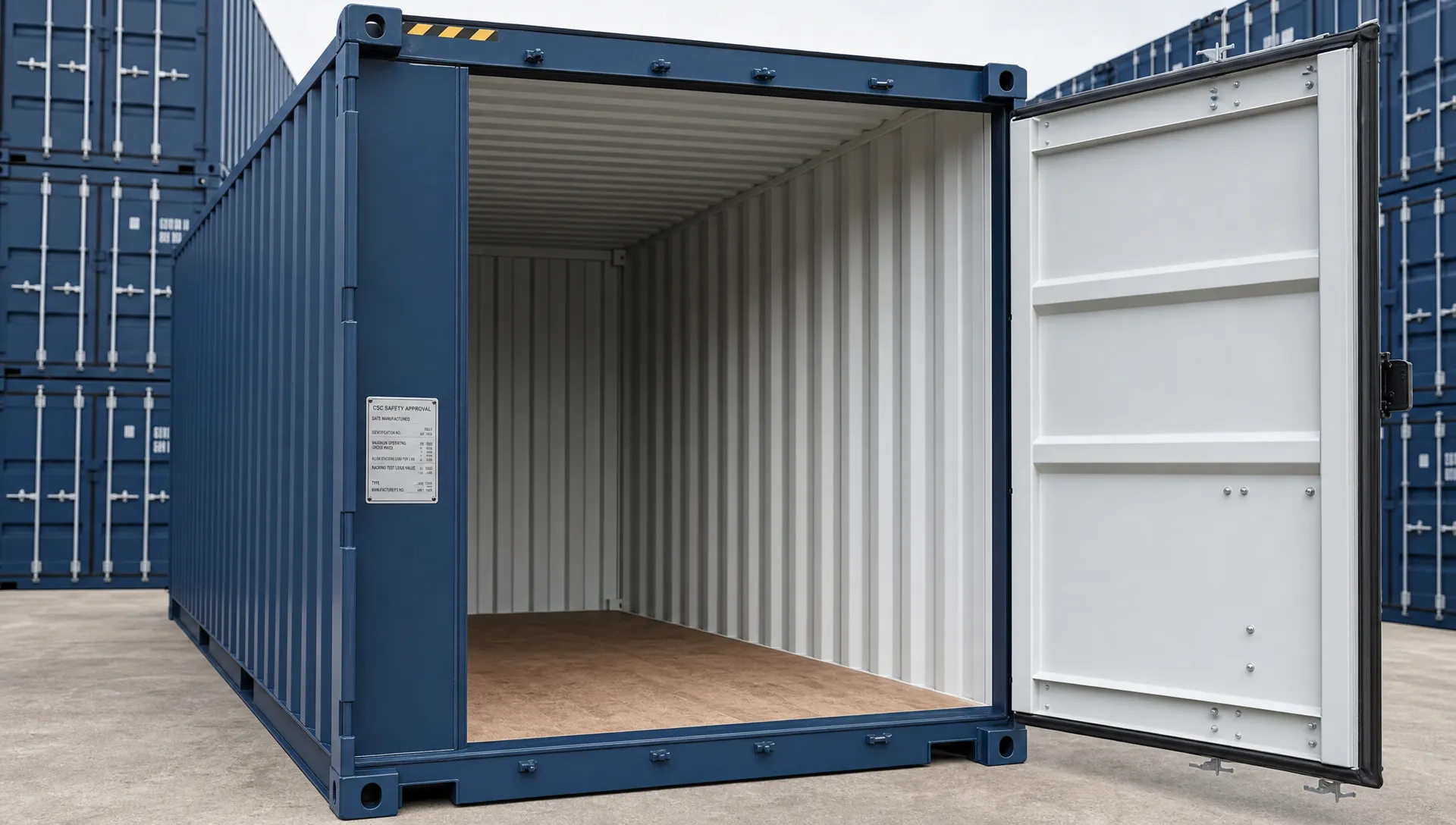
Most standard dry containers use marine-grade plywood flooring over steel crossmembers. Look for soft spots, heavy oil staining, holes, delamination, or water damage. A few surface scars are normal. Soft floors are not.
If the container will hold heavy equipment, pallets, feed, shop tools, or building materials, the floor matters. Ask about floor condition and check payload capacity on the data plate. Never assume all used containers have the same floor strength.
Data plate and identification numbers
A container data plate can show the manufacturer, identification number, maximum gross weight, tare weight, payload capacity, and CSC safety approval information. If you only need stationary storage, the CSC status may not be critical. If you need to ship freight, it becomes much more important.
Compare the number on the container to the paperwork or quote. The quote should identify what you are buying. Vague descriptions such as “40ft used box” are not enough when the unit condition matters.
Compare the Full Delivered Cost, Not the Sticker Price
A freight container quote is only useful if it shows the full delivered cost. The unit price, delivery fee, taxes, site requirements, and optional modifications can change the real number fast.
For example, one quote may look lower because it excludes delivery. Another may include delivery but not offload equipment. A third may include a better condition grade, which lowers repair risk. You need to compare line by line.
| Cost item | Why it matters | What to ask |
|---|---|---|
| Unit price | Base container cost | Is this the exact unit or a representative grade? |
| Delivery | Can be a major part of total cost | Is delivery included to my ZIP code? |
| Offload method | Affects site access and equipment needs | Tilt-bed, roll-off, crane, forklift, or customer-provided equipment? |
| Taxes and fees | Can change final total | Are all taxes and processing fees shown upfront? |
| Site prep | Prevents settling and door issues | Do I need gravel, blocks, footings, or grading? |
| Modifications | Doors, vents, windows, insulation, electrical, paint | Are modifications quoted before delivery? |
| Financing | Helps manage cash flow | What financing options are available and what is the total cost? |
Delivery is not just mileage. It also depends on truck type, route access, bridge limits, turning radius, overhead clearance, and ground conditions. The Federal Highway Administration’s freight size guidance explains federal commercial vehicle size rules, but state and local restrictions can still affect delivery routes.
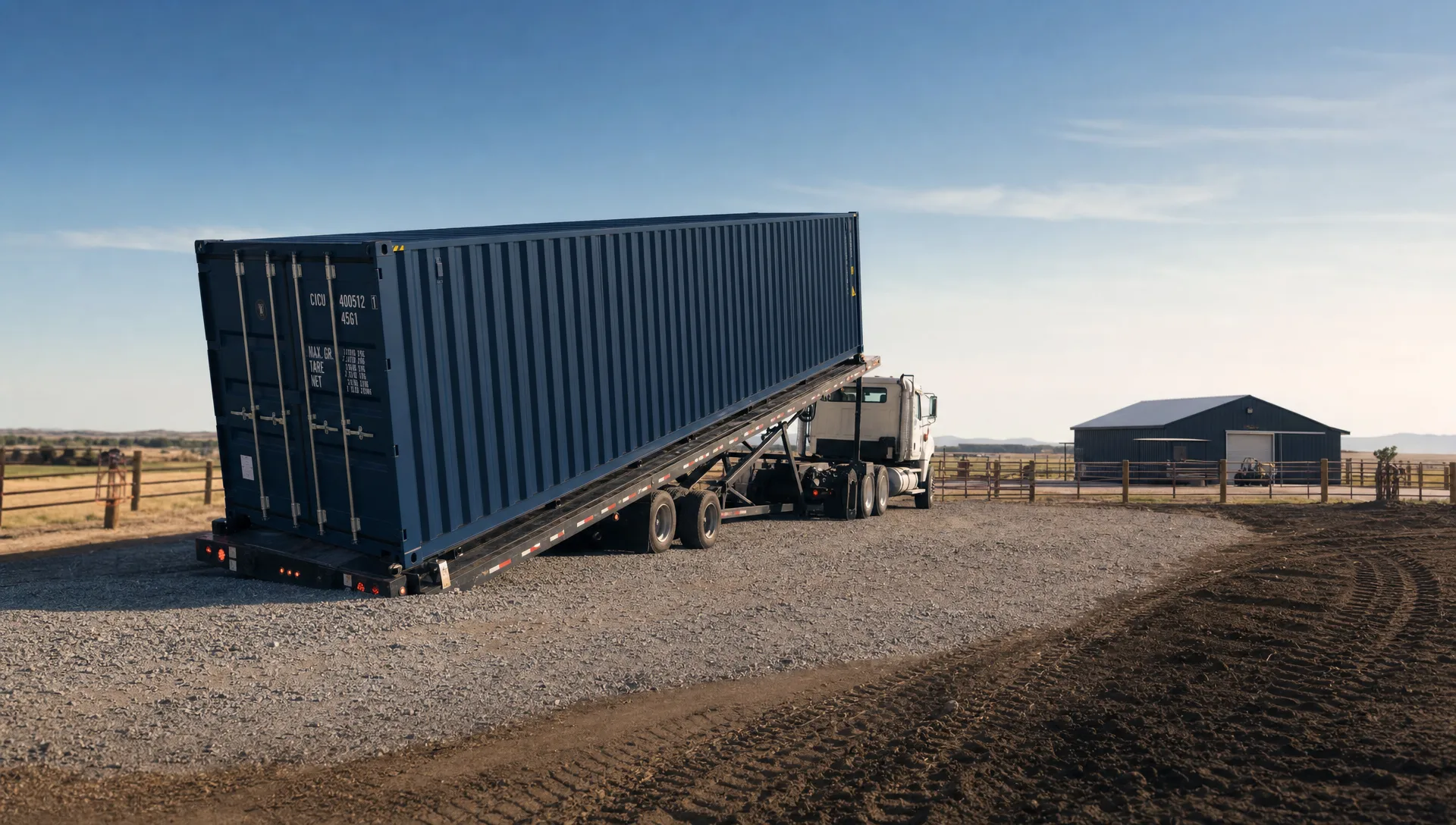
For most residential and rural sites, the biggest issue is placement access. A tilt-bed truck needs room to pull forward as the container slides off. If you order a 40ft container, plan for much more straight-line clearance than the box itself.
Before ordering, confirm:
- Driveway width and gate clearance
- Overhead wires, tree limbs, and rooflines
- Slope, mud, soft soil, and drainage
- Turning radius for a large truck
- Final door direction and placement angle
- Whether the site is ready before the truck arrives
A well-priced container becomes expensive if the driver cannot place it safely. Failed delivery can lead to extra trip charges, rescheduling delays, or equipment rental.
If you are still building your checklist, Outback’s guide on what to know before you purchase a shipping container covers site prep, access, condition, and delivered cost in more detail.
Match the Container to Your Use Case
The right comparison changes based on what the container will do. A secure storage container, a modular office, a workshop, and a shipping container home all have different standards.
For home storage
A WWT 20ft container is often enough for household goods, seasonal equipment, bikes, tools, and supplies. Door seals and roof condition matter most. If the container will sit in a visible area, paint and appearance may matter too.
Ventilation is worth considering. Containers can trap heat and moisture. For long-term storage, ask about vents, lock boxes, shelving, and flooring condition.
For construction and job sites
Contractors usually care about security, speed, durability, and delivery timing. A WWT or CWO unit is common for tool and material storage. A lock box can help protect the padlock from bolt cutters.
If the site changes often, compare buying with renting. Buying may make sense for repeated use across projects. Renting through a leasing option may work better for short-term needs. Outback Shipping Containers is the main sales brand, and LeaseLink Containers is the leasing arm.
For farms and ranches
Farm and ranch buyers often use containers for feed, tack, tools, pumps, fencing supplies, seed, or equipment parts. A 40ft unit may give better cost per square foot, but a 20ft unit can be easier to place near barns, wells, or fence lines.
Moisture control is important. Ask about vents, door seals, roof condition, and whether the unit has any odors or chemical residue.
For container homes and custom builds
For a shipping container home, tiny home, cabin, office, pool house, or Airbnb unit, condition and dimensions are more important than chasing the lowest price. One-trip or high-quality CWO containers are often better starting points because they need less repair and prep.
High cube units are popular for living space because insulation, flooring, ceiling finish, lights, and HVAC can reduce interior height. Before starting any container conversion, check zoning, building codes, setbacks, utility requirements, and permit rules with your local city or county. Requirements vary by state and county.
When you are ready to compare real inventory and delivered pricing, Outback Shipping Containers lists new and used shipping containers for sale with nationwide delivery and financing options available.
Watch for Seller and Quote Red Flags
The container market has many honest suppliers, but first-time buyers should stay alert. Scams and low-quality listings often use vague photos, rushed payment requests, unclear delivery terms, or prices that seem far below the market.
Be careful if a seller will not explain the condition grade. “Good condition” is not a grade. Ask whether the container is one-trip, CWO, WWT, refurbished, or as-is. Ask what guarantee comes with that grade.
Common red flags include:
- No business address, phone number, or clear seller identity
- Only stock photos or photos copied from other listings
- Refusal to provide exact-unit photos when available
- No written quote showing delivery and taxes
- Pressure to pay by wire, gift card, crypto, or cash app only
- No explanation of delivery method or site access needs
- No condition guarantee for a container sold as WWT or CWO
- Prices that are far below similar local or national quotes
A professional seller should be able to explain the difference between a WWT storage container and a CWO freight container. They should also ask about your ZIP code, site access, delivery placement, and intended use. Those questions are not upselling. They help prevent the wrong container from arriving at the wrong site.
Also compare support after the sale. If the container arrives with a door issue, leak concern, or placement problem, you want a supplier that has a process for handling it. Transparent online pricing is helpful, but expert delivery logistics and clear communication are just as important.
A Simple Freight Container Comparison Checklist
Use this checklist before you approve a quote or pay a deposit. It keeps the comparison practical and helps you avoid emotional decisions based only on price.
- Use case: Storage, freight, office, workshop, home, pool, retail, farm, or job site.
- Size: 10ft, 20ft, 40ft, 40ft high cube, or 45ft high cube.
- Condition grade: One-trip, CWO, WWT, refurbished, or as-is.
- Exterior condition: Rust, dents, roof pooling, corner posts, rails, and paint.
- Interior condition: Floor, odor, moisture signs, wall dents, patches, and daylight leaks.
- Doors: Hinges, locking rods, gaskets, handles, and smooth closing.
- Certification: CSC plate and cargo-worthy status if shipping freight.
- Weight ratings: Tare weight, payload capacity, and maximum gross weight.
- Delivery: ZIP code, truck type, offload method, access, clearance, and placement direction.
- Total cost: Unit price, delivery, taxes, modifications, site prep, and financing terms.
- Seller proof: Written quote, condition guarantee, business identity, photos, and support process.
The best comparison is not “Which container is cheapest?” The better question is, “Which container gives me the right condition, size, certification, and delivery plan for the lowest total risk?”
Frequently Asked Questions
What is the difference between a freight container and a shipping container?
A freight container and a shipping container are usually the same type of steel intermodal container. Buyers may also hear cargo container, conex box, or ISO container. The term “freight container” often emphasizes transport use, while “shipping container” is common for storage, homes, offices, and conversions.
What size freight container should I buy?
A 20ft container works well for tight spaces, residential storage, and smaller job sites. A 40ft container gives more storage for bulk materials, equipment, and commercial use. Choose a high cube if you need extra interior height for insulation, shelving, lighting, or a container conversion.
Is it better to buy a new or used freight container?
Buy new one-trip if you want cleaner appearance, fewer repairs, and a better starting point for a home, office, or customer-facing build. Buy used WWT or CWO if you need durable storage at a lower cost. The best choice depends on use, budget, site conditions, and risk tolerance.
How do I know if a used container is wind and watertight?
Ask for a WWT guarantee in writing and inspect the roof, door gaskets, seams, patches, and floor. Inside the container, close the doors during daylight and look for pinholes of light. Light can indicate gaps that may allow water, dust, or pests to enter.
Do I need a permit to put a freight container on my property?
Permit rules vary by city, county, zoning district, and intended use. Some areas allow temporary storage containers with few restrictions. Others regulate placement, setbacks, foundations, utilities, appearance, or residential conversions. Always check with your local building, zoning, or planning office before delivery.
How much does freight container delivery cost?
Delivery cost depends on distance, container size, truck type, offload method, route access, fuel, and site conditions. A quote should show whether delivery is included and what placement requires. The cheapest container price is not always the cheapest delivered price if freight, access, or equipment is excluded.
Compare With Confidence Before You Buy
A good freight container purchase comes down to fit, proof, and total cost. Compare the exact size, condition grade, certification, structure, delivery plan, and seller support before you commit.
If you want help matching a container to your site and use case, start by reviewing Outback Shipping Containers’ new and used shipping containers for sale. You can compare available options, request an instant quote, and plan nationwide delivery with a team that understands storage, job sites, rural properties, and custom container projects.