Shipping Containers: New vs Used for Every Budget
By Outback Shipping Containers · Published July 24, 2026 · Last updated October 18, 2026
Shipping Containers: New vs Used for Every Budget
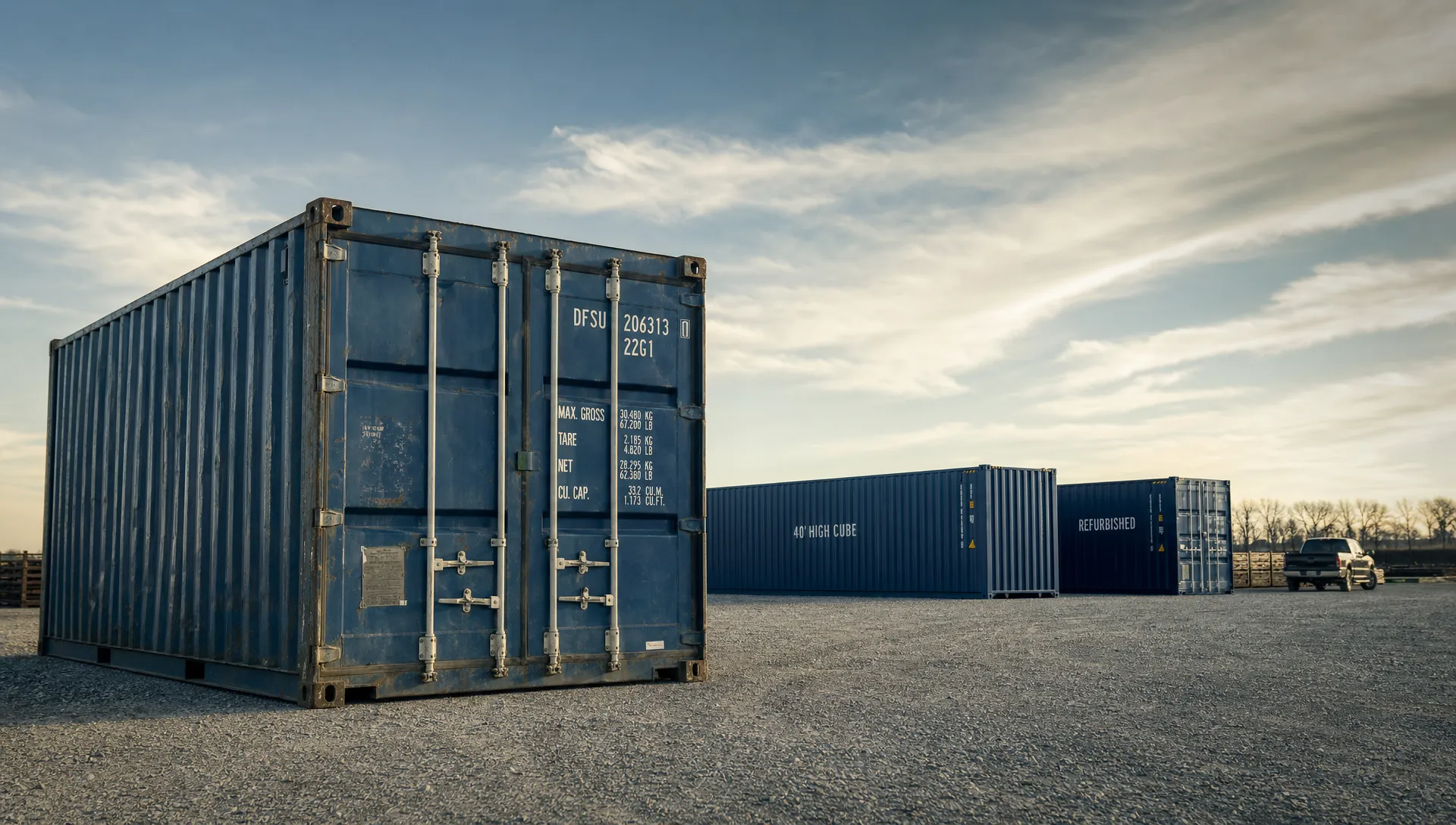
If you need shipping containers for storage, a job site, a farm, or a future container home, buy used when function matters more than looks. Buy new one-trip when appearance, clean floors, longer service life, and easier modifications matter. For most budget buyers, a certified wind and watertight used container gives the best value. For homes, offices, retail units, and long-term property upgrades, new or refurbished units often make more sense over the full life of the project.
Quick Answer: Used WWT shipping containers usually cost less upfront and work well for secure storage. New one-trip containers cost more, but they bring cleaner steel, newer floors, fewer unknowns, and better curb appeal for container conversions.
Key Takeaways
- Best low-budget choice: A used WWT container is usually the smartest pick for tools, equipment, feed, furniture, and general storage.
- Best long-term choice: A new one-trip container is better for container homes, offices, retail units, and clean inventory.
- Best middle ground: A refurbished container can save money while giving you better looks than a typical used cargo container.
- Biggest hidden cost: Delivery can change the final price fast, especially for rural sites, tight access, crane work, or long hauls.
- Most important rule: Match the condition grade to the use case, not just the sticker price.
New vs Used Shipping Containers: Side-by-Side Comparison
New and used containers are not just different price points. They fit different risks, lifespans, and projects. A cheap box can be a great deal for job-site storage. The same unit may be a poor choice for a tiny home or high-end Airbnb build.
Here is the practical comparison most buyers need before they request a quote.
| Container type | Typical condition | Budget level | Best for | Watch-outs |
|---|---|---|---|---|
| New one-trip container | Used for one cargo trip, minor handling marks possible | Higher | Homes, offices, retail, clean storage, visible property use | Costs more upfront, delivery still applies |
| Used WWT container | Wind and watertight, may have dents, rust, patches, and old logos | Lower | Backyard storage, farm storage, job sites, workshops | Cosmetic wear, odor risk, harder doors on older units |
| Used CWO container | Cargo-worthy, structurally sound for cargo use | Lower to mid | Storage plus potential transport needs | Confirm if it has a valid CSC plate if used for international shipping |
| Refurbished container | Used unit repaired and often repainted | Mid | Storage where appearance matters, business sites, rentals | Quality depends on repair scope and paint prep |
| As-is container | No strong condition promise | Lowest | Non-critical uses where repairs are acceptable | Highest risk of leaks, floor damage, door issues, and hidden rust |
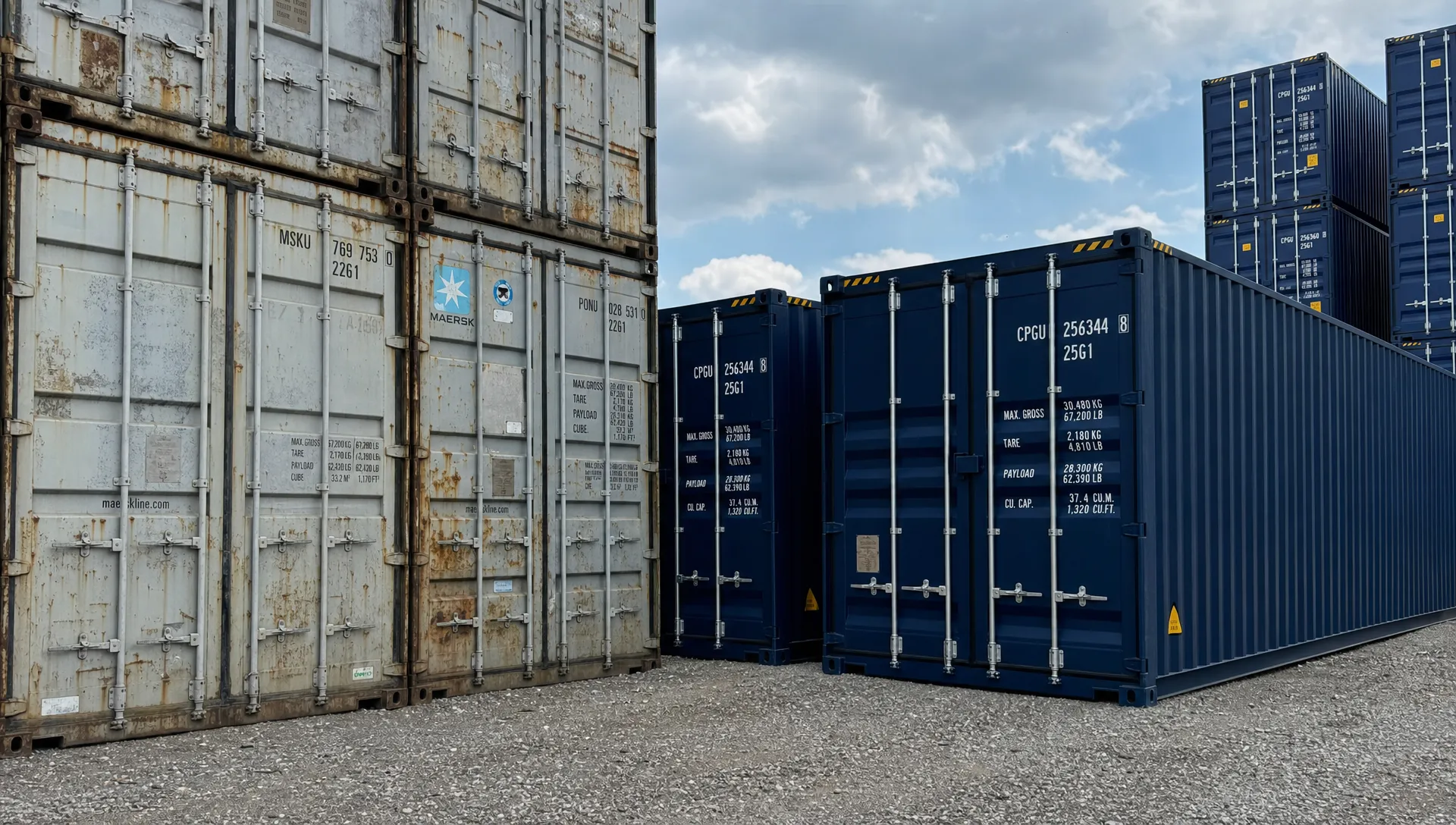
A new one-trip ISO container is not usually “factory perfect.” It has crossed the ocean with cargo. It may have small scratches or forklift marks. Still, it is far cleaner and newer than most used intermodal container inventory.
A used conex box has usually spent years in freight service. Some are excellent for storage. Others need door work, roof patches, new gaskets, floor repairs, or paint. That is why condition grade matters more than age alone.
What “New” and “Used” Really Mean
New one-trip containers
A new shipping container is often called a one-trip container. It is built overseas, loaded once, shipped to the United States, and then sold. That single trip helps keep cost lower than a container shipped empty from the factory.
New one-trip units are the best choice when you care about clean appearance, easier resale, and fewer repairs. They are also a strong choice for a shipping container home, office, workshop, pool shell, or customer-facing retail build.
You still need to inspect the basics. Check the door seals, lock rods, floor, roof, corner castings, and interior smell. New does not mean “never touched.” It means very limited use.
Used WWT containers
WWT means wind and watertight. In plain English, it should keep normal wind and rain out when the doors are closed. This is the grade many homeowners, contractors, ranch owners, and small businesses choose for storage.
A WWT unit can have surface rust, dents, faded paint, welded patches, and old shipping markings. Those are not deal breakers if the box is dry, the doors work, and the structure is sound for your use.
Used WWT containers are popular because they hit the value sweet spot. You get strong steel, secure doors, and many years of service without paying for the clean look of a one-trip unit.
Used CWO containers
CWO means cargo-worthy. A cargo-worthy container should be structurally fit to carry cargo. It may be required if the unit will go back into intermodal transport.
If you plan to use a container for international shipping, ask about the CSC plate and any required survey. The International Maritime Organization explains the CSC safety framework for containers used in transport. For basic ground storage on private property, WWT is often enough.
Refurbished containers
A refurbished container is a used unit that has been repaired, cleaned up, and often repainted. The exact work can vary. Some refurb jobs are basic paint refreshes. Others include gasket work, patching, lockbox installation, and rust treatment.
Refurbished units are worth considering when your container will be visible from a road, customer area, rental property, or commercial site. They are also useful when you want the lower cost of used steel without the roughest look.
As-is containers
As-is containers attract buyers because the upfront price can be low. They also carry the most risk. You may find roof holes, weak floors, bent doors, heavy rust, or old cargo odors.
For most first-time buyers, as-is is only worth it if you can inspect the exact unit and you are ready to repair it. If you need dry storage from day one, choose WWT or better.
Budget Tiers: Best Choice at Each Price Point
Container prices change by size, grade, location, depot supply, steel market conditions, and delivery distance. The numbers below are planning ranges for the container itself in many US markets, before delivery, tax, site work, locks, vents, ramps, or modifications. Always confirm live pricing before you commit.
For a broader look at current cost drivers, Outback’s shipping container cost guide for 2026 explains how size, condition, delivery, and modifications affect the final number.
| Planning budget | Best container choice | Common sizes to compare | Good fit | Main caution |
|---|---|---|---|---|
| Under $2,500 | Used WWT or CWO, when local inventory supports it | 20ft, 40ft, 45ft used | Farm storage, job-site materials, seasonal equipment | Delivery can push the total above budget |
| $2,500 to $4,500 | Better used WWT, CWO, or basic refurbished | 20ft standard, 40ft standard | Tools, business inventory, household storage, workshop shell | Inspect doors, roof, floor, and odor carefully |
| $4,500 to $7,500 | New one-trip or higher-grade refurbished | 20ft, 40ft, 40ft high cube | Clean storage, visible properties, office shells, conversion starts | Modifications add cost fast |
| $7,500 to $15,000+ | New high cube, modified shell, reefer, or office-ready unit | 40ft HC, 45ft HC, reefer, office unit | Workshops, contractor offices, retail, insulated storage | Electrical, HVAC, insulation, and permits can exceed container cost |
| $15,000+ | Custom modular build | Varies by design | Tiny homes, cabins, pools, Airbnb units, commercial builds | Requires design, engineering, site prep, and local approvals |
The cheapest purchase is not always the cheapest project. A low-cost used container may need paint, door repairs, vents, flooring, odor treatment, or rust work. A new one-trip container may save time if you plan to cut windows, install insulation, or build finished interiors.
For budget buyers, the best approach is simple. Price the container, delivery, site prep, and must-have accessories together. Then compare the total project cost, not just the container cost.
Best condition by project type
Backyard storage usually does not need a new unit. A WWT used container with working doors, solid floors, and good gaskets is often enough. Add a lockbox, vents, and a level gravel pad for a better long-term setup.
Construction companies often choose used WWT or CWO containers because they need secure storage fast. Dents and faded paint rarely matter on a job site. Door function, lock security, and delivery timing matter more.
Farm and ranch buyers often get strong value from used 40ft or 45ft containers. They work well for feed, parts, tools, fencing supplies, seasonal equipment, and tack. If you store moisture-sensitive goods, pay closer attention to roof condition and ventilation.
Container home and office buyers should look harder at new one-trip or high-quality refurbished units. Clean steel and straighter walls can reduce prep time. High cube units are popular because the extra foot of height helps with insulation, ceiling space, ducting, and lighting.
Airbnb hosts, developers, and retail users should think about curb appeal from the start. A rough used container can be turned into a beautiful build, but repair and finish costs may erase the upfront savings.
Size, Dimensions, and Capacity by Budget
Condition is only half the decision. Size can change your cost per square foot, delivery method, and site requirements. A 40ft container usually gives more storage value per dollar than a 20ft container, but it needs more room for delivery and placement.
Most standard freight containers follow global ISO sizing concepts. The ISO 668 standard covers classification, dimensions, and ratings for Series 1 freight containers. Exact tare weight and payload capacity can still vary by manufacturer, so always read the container door plate.
| Size | Common exterior dimensions | Approx. interior volume | Typical tare weight | Best budget use |
|---|---|---|---|---|
| 10ft standard | 10ft x 8ft x 8ft 6in | Varies by build | Varies | Tight sites, small tools, backyard storage |
| 20ft standard | 20ft x 8ft x 8ft 6in | About 1,170 cu. ft. | About 4,800 to 5,000 lb | Dense goods, tools, smaller properties |
| 40ft standard | 40ft x 8ft x 8ft 6in | About 2,390 cu. ft. | About 8,000 to 8,400 lb | Best storage volume per footprint cost |
| 40ft high cube | 40ft x 8ft x 9ft 6in | About 2,690 cu. ft. | About 8,600 to 8,900 lb | Homes, offices, workshops, tall equipment |
| 45ft high cube | 45ft x 8ft x 9ft 6in | Varies by unit | Varies | Maximum storage length and commercial use |
A 20ft container is easier to place on many residential lots. It is also better for heavy materials because payload limits do not double when you move to 40ft. If you store tile, stone, seed, engines, or metal parts, a 20ft unit may be safer and easier to manage.
A 40ft container gives more floor space for furniture, equipment, inventory, and job-site supplies. It can be the better value if your site has room for delivery. A 40ft high cube adds height, which matters for conversions and tall storage.
Mid-article buyer tip: If your budget is tight and you want maximum storage volume, compare current used inventory before assuming a smaller container is cheaper. For example, Outback lists larger options such as a 45ft used shipping container, shown at $1,895 at the time of the listing, before delivery and other project costs. Confirm live price, availability, and delivery details before you plan around any listing.
How to Inspect a Used Container Before You Buy
Used containers can be excellent buys, but they need a real inspection. Photos help, but they do not tell the whole story. If you cannot inspect in person, ask for recent photos of the exact unit or representative inventory, plus clear written condition terms.
Outback’s used shipping container inspection guide gives a deeper checklist. The quick version is below.
| Inspection area | What to check | Why it matters |
|---|---|---|
| Doors | Lock rods, hinges, handles, gaskets, smooth closing | Bad doors make daily use frustrating and can cause leaks |
| Roof | Dents, ponding, pinholes, patches, daylight inside | Roof leaks are one of the biggest storage risks |
| Floor | Soft spots, oil stains, rot, holes, heavy odor | Flooring is expensive and time-consuming to replace |
| Walls | Deep rust, major dents, bulging panels, old patches | Cosmetic dents are fine, structural damage is not |
| Corner posts and castings | Cracks, twists, heavy impact damage | These carry loads and matter for safe handling |
| Underside | Crossmember rust, floor support damage | Hidden corrosion can shorten service life |
| Interior smell | Chemical, fuel, mold, or animal odor | Odors can transfer to stored goods and finished builds |
| Door plate | Tare weight, payload capacity, serial number, CSC details if needed | Confirms rating and identity of the unit |
A few dents and surface rust are normal on used cargo containers. Daylight through the roof is not normal for WWT storage. Standing water, strong odors, missing gaskets, and doors that need force to close should lower the price or take the unit off your list.
For first-time buyers, the safest used purchase is a WWT or CWO unit from a supplier that puts the condition grade in writing. That reduces surprises and helps you compare quotes fairly.
Delivery, Site Prep, and Hidden Costs
Delivery is where many budgets go sideways. The same container can have very different final costs depending on distance, road access, equipment, and site conditions. A low container price from a faraway seller may lose to a higher-priced local unit once freight is added.
For detailed freight planning, review Outback’s guide to shipping container delivery cost per mile. It explains why local hauls, long-distance hauls, tilt-bed delivery, flatbeds, and cranes can price differently.
Delivery access questions to answer first
Before you buy, make sure the truck can get in, turn, unload, and get out safely. A tilt-bed truck usually needs a straight, firm path in front of the drop location. A 40ft container often needs much more room than the box itself.
Ask these questions early:
- Is the driveway wide enough for the delivery truck?
- Are there low branches, power lines, gates, fences, or tight turns?
- Is the ground firm enough for a loaded truck?
- Can the driver place the container exactly where you want it?
- Will you need a crane, forklift, or second machine on site?
- Is the site level enough, or do you need grading and blocking?
Rural delivery is possible, but it needs planning. Soft fields, muddy lanes, steep grades, and narrow ranch roads can add cost or require special equipment.
Site prep that protects your investment
Do not set a container directly into wet soil if you can avoid it. A level gravel pad, concrete piers, railroad ties, or engineered footings can improve drainage and help the doors stay square.
The goal is simple. Keep the container level, keep water moving away, and keep the underside from sitting in moisture. This matters for both new and used units.
For homes, offices, pools, cabins, and commercial builds, site prep becomes more serious. You may need engineered foundations, utility trenching, drainage plans, septic or sewer work, and local permits. Requirements vary by state, county, city, and HOA, so talk to local authorities before you order.
Hidden costs to include in your budget
A realistic budget includes more than the steel box. Common add-ons and project costs include lockboxes, heavy-duty locks, vents, ramps, shelving, paint, flooring, insulation, windows, doors, electrical, HVAC, and interior framing.
Delivery-related costs can include fuel surcharges, long-distance freight, crane rental, forklift rental, road permits, failed delivery fees, or extra labor for tight sites. Financing can also affect total cost, even when monthly payments fit your cash flow.
Scam prevention belongs in the budget conversation too. Be careful with prices that look far below the market, wire-only sellers, vague photos, fake depot addresses, and sellers who cannot explain delivery. A real supplier should give clear condition terms, a real quote, and practical delivery guidance.
Frequently Asked Questions
Is it better to buy a new or used shipping container?
Used is better if you need low-cost storage and can accept dents, faded paint, and surface rust. New one-trip is better if you need a cleaner unit for a home, office, retail build, or visible property use. Compare total project cost, not only the container price.
How long do used shipping containers last?
A solid used WWT container can last many years as ground storage, especially on a level, well-drained pad. Service life depends on rust, roof condition, floor condition, climate, and maintenance. Coastal salt air, standing water, and poor drainage can shorten the life of any steel container.
Are used shipping containers waterproof?
A WWT used container should keep normal wind and rain out when the doors are closed and the seals are in good shape. It is not the same as being floodproof. Always inspect the roof, door gaskets, patches, and floor for water signs before storing valuable goods.
What is the cheapest way to buy a shipping container?
The cheapest safe route is usually a local used WWT container from a reputable supplier with clear delivery pricing. Avoid as-is units unless you can inspect them and handle repairs. Also compare delivery, taxes, site prep, and must-have accessories before choosing the lowest sticker price.
Do I need a permit to put a shipping container on my property?
Maybe. Permit and zoning rules vary by city, county, state, and HOA. Temporary storage may be treated differently than a permanent container home, office, cabin, or pool. Before delivery, ask your local building department about setbacks, foundations, appearance rules, utilities, and allowed uses.
What size shipping container is best for storage?
A 20ft container works well for smaller properties, dense materials, and easier placement. A 40ft container usually gives better storage volume for the money if you have room. A 40ft high cube is best when you need extra height for equipment, shelving, or future conversion work.
Ready to compare new and used options? Outback Shipping Containers supplies inspected new, used, high cube, office, home, pool, and custom container builds nationwide. If you want help matching condition, size, delivery, and budget, start with Outback Shipping Containers and request a quote for your site.
About Outback Shipping Containers
This guide was prepared by the Outback Shipping Containers team, based on the questions our customers ask us most when buying, modifying and taking delivery of shipping containers. Learn more about us.
Ready to find your container?
Browse our in-stock shipping containers, container homes and custom builds, or ask our team for a free quote with delivery to your site.