Before You Purchase a Shipping Container, Read This
Before you purchase a shipping container, learn how to compare sizes, grades, inspections, delivery, permits, and red flags.
Before You Purchase a Shipping Container, Read This
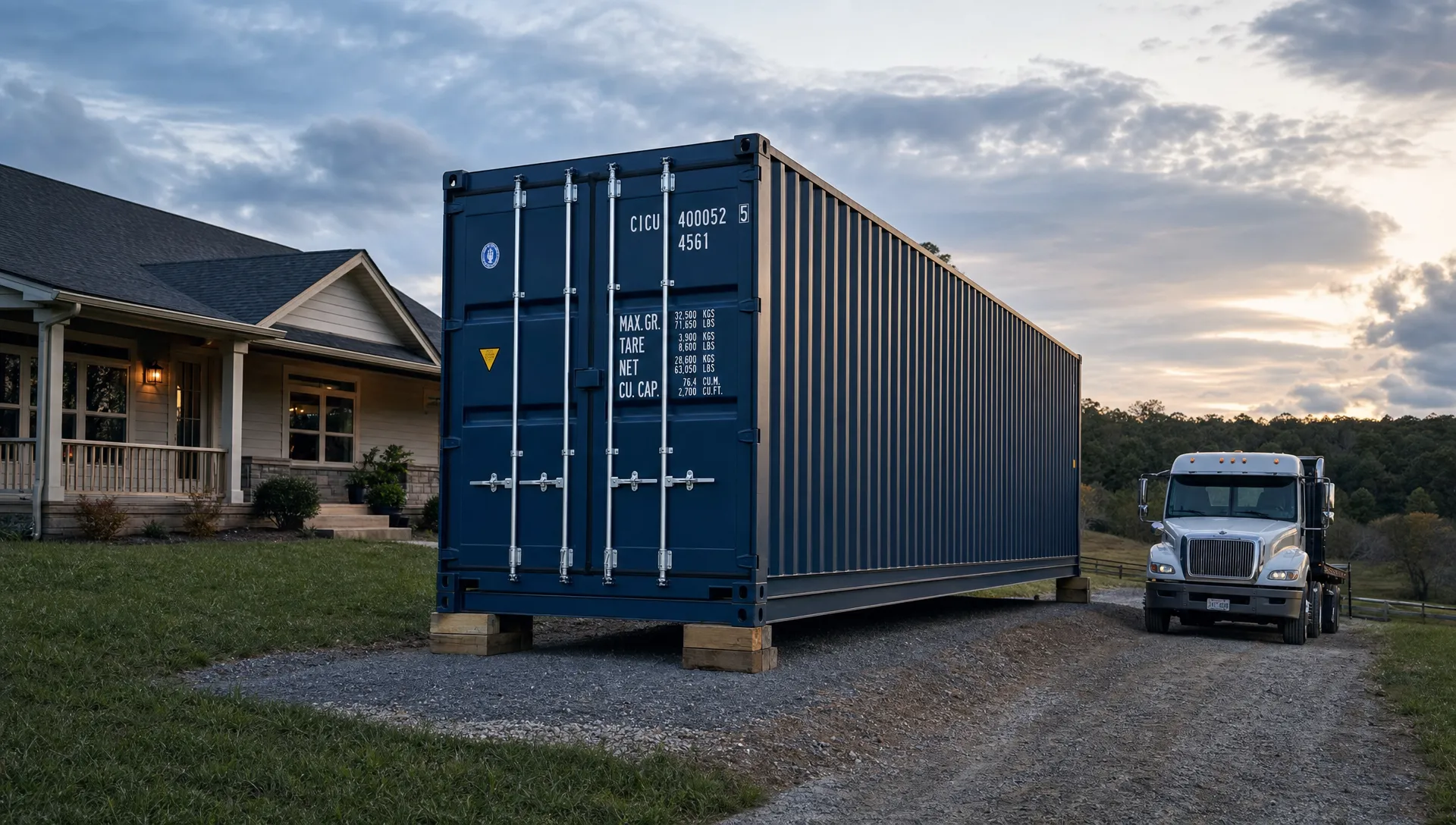
Before you purchase a shipping container, confirm what you need it to do, where it will sit, how it will be delivered, and what condition grade you are buying. The best container is not always the cheapest one. A low advertised price can become expensive if the unit leaks, the doors do not seal, the floor is weak, or the delivery truck cannot reach your site.
Quick Answer: Before you purchase a shipping container, match the container to the job, verify size and condition, inspect the exact unit when possible, confirm delivery access, and get the full delivered price in writing. That one step prevents most expensive mistakes.
Key Takeaways
- A 20ft container is easier to place and move. A 40ft or 40ft high cube gives more space per delivered unit.
- New one-trip containers are cleaner and better for homes, offices, retail, and long-term projects. Used CWO or WWT containers can be a smart choice for storage.
- Always compare the delivered cost, not just the container price shown online.
- Ask for photos, condition details, door and floor checks, and written wind and watertight terms.
- Permits, zoning, foundation needs, and truck access vary by city, county, and state.
Purchase Shipping Container Checklist: Confirm These Basics First
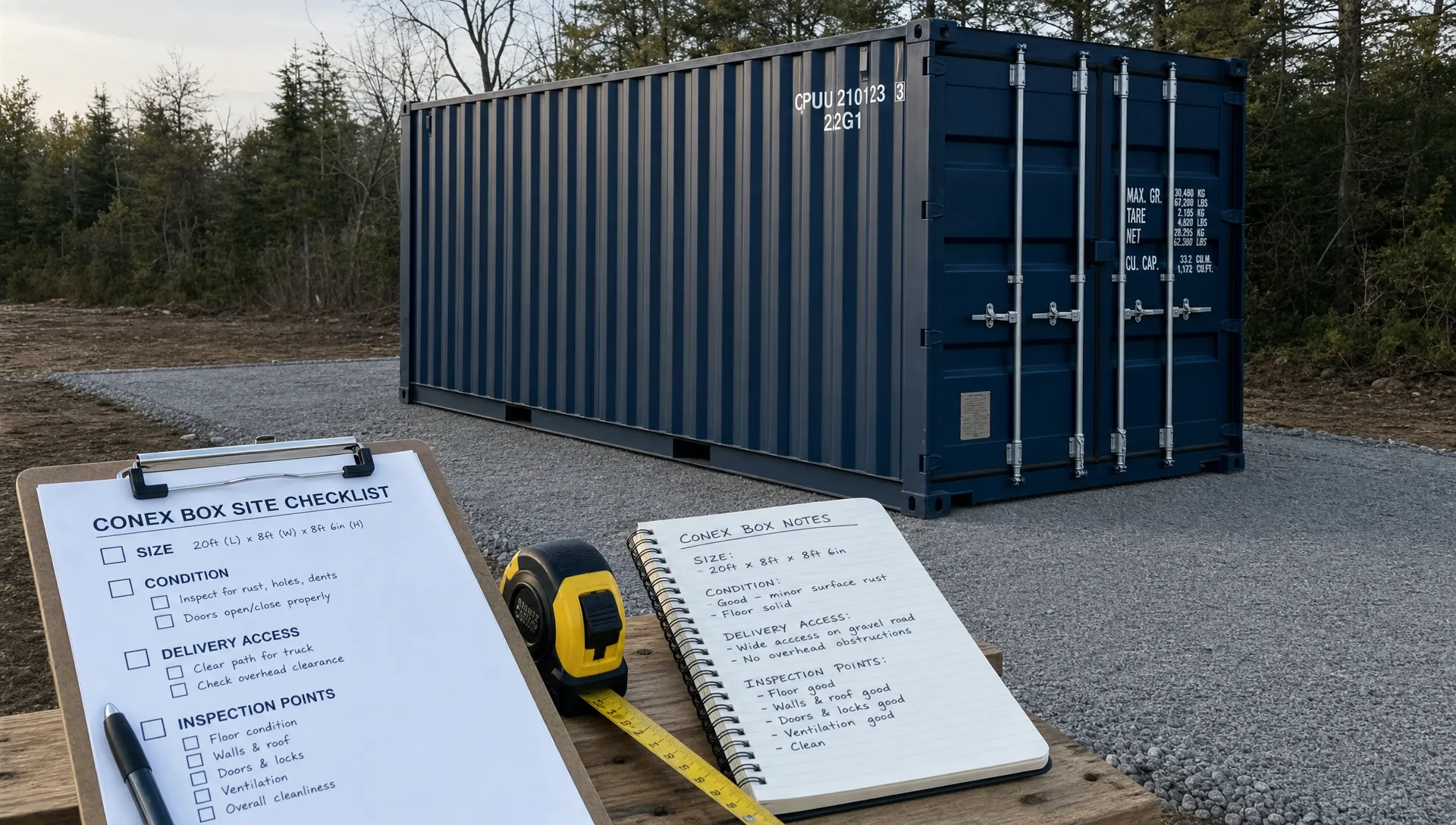
A shipping container is also called a cargo container, conex box, ISO container, or intermodal container. The name changes by industry, but the buying questions stay the same.
Start with the job. A container used for hay storage does not need the same finish as a shipping container home. A job-site office has different needs than a backyard workshop. A container pool or retail unit needs even more planning.
Before you shop, write down these basics:
- The main use: storage, workshop, office, container conversion, tiny home, cabin, pool, or retail space.
- The size you can fit on the property.
- The condition you can accept: new one-trip, cargo-worthy, wind and watertight, refurbished, or as-is.
- The delivery location, including driveway width, slope, trees, wires, and turn radius.
- How long you expect to keep it.
- Whether you need insulation, vents, windows, doors, electrical, plumbing, or interior framing.
This short list keeps you from buying the wrong box. It also helps a supplier quote the right unit without guessing.
If your use is temporary, leasing may be better than buying. Outback Shipping Containers is the main sales brand, while LeaseLink Containers is the leasing arm. For a cost-focused view, compare the break-even point in this guide to renting vs buying shipping containers in 2026.
Choose the Right Size, Grade, and Condition
Most buyers compare 20ft, 40ft, and 40ft high cube containers first. Those are common, easy to source, and practical for many sites. Smaller 10ft units work well where space is tight. A 45ft high cube gives more room, but delivery and placement need more planning.
Container dimensions are based on standard freight container formats. The ISO 668 standard covers Series 1 freight container dimensions and ratings, which is why standard containers can move by ship, rail, and truck across the world. You can review the standard listing through the International Organization for Standardization.
Common shipping container sizes
Use the table below as a planning guide. Exact interior dimensions, tare weight, and payload capacity can vary by manufacturer, age, and container type. Always check the data plate or written spec sheet before you buy.
| Size | Exterior dimensions | Approx. interior volume | Typical tare weight | Best use |
|---|---|---|---|---|
| 10ft standard | 10 ft x 8 ft x 8 ft 6 in | About 560 cu ft | About 2,600 to 2,900 lb | Tight sites, tools, small storage |
| 20ft standard | 20 ft x 8 ft x 8 ft 6 in | About 1,170 cu ft | About 4,800 to 5,100 lb | Homeowners, farms, job sites, workshops |
| 40ft standard | 40 ft x 8 ft x 8 ft 6 in | About 2,390 cu ft | About 8,000 to 8,600 lb | Bulk storage, equipment, long job sites |
| 40ft high cube | 40 ft x 8 ft x 9 ft 6 in | About 2,690 cu ft | About 8,500 to 9,000 lb | Container homes, offices, taller storage |
| 45ft high cube | 45 ft x 8 ft x 9 ft 6 in | About 3,000 cu ft | About 10,000 to 10,800 lb | Large builds, commercial storage, modular projects |
A high cube container adds one extra foot of height. That matters for insulation, ceiling fans, lighting, storage racks, and living space. For container homes and offices, a high cube often feels less cramped after floors, insulation, and ceiling finishes are installed.
A 20ft container is easier to place in a driveway or small rural yard. A 40ft container usually gives a lower cost per square foot of storage, but it needs more straight-line room for delivery.
If you are focused on a smaller unit, this separate guide explains how to buy a 20ft shipping container without overpaying.
New, used, refurbished, CWO, and WWT
Condition grade affects price, appearance, lifespan, and risk. Do not treat all used containers as equal. A clean used unit with good doors and a solid floor may serve for years. A damaged unit with roof rust and poor seals can create problems within the first heavy rain.
| Grade or condition | What it usually means | Good fit | Watch for |
|---|---|---|---|
| New or one-trip | Used for one cargo trip or minimal service | Homes, offices, retail, pools, long-term storage | Higher upfront price than used |
| CWO, cargo-worthy | Suitable for cargo use when certified | Storage, transport needs, business use | Dents, repairs, floor wear, old paint |
| WWT, wind and watertight | Keeps out normal weather when doors and seals are closed | Static storage, farms, job sites | May not be certified for loaded transport |
| Refurbished | Repaired, cleaned, or repainted to a stated scope | Better appearance, customer-facing sites | Ask exactly what was repaired |
| As-is | Sold with limited or no condition promise | Experienced buyers only | Leaks, weak floors, door problems, rust |
For most first-time buyers, WWT or CWO is the lowest safe starting point for used storage. For a container home, office, Airbnb cabin, or finished conversion, one-trip or carefully selected refurbished units are usually easier to work with.
If you are buying used, use a written checklist. Outback has a deeper guide on how to buy used shipping containers with a simple checklist.
Inspect Before You Buy: 10 Checks That Matter
A container can look fine from a distance and still have costly issues. The doors may be hard to close. The roof may have pinholes. The floor may be soft near the threshold. These are common trouble spots.
If you cannot inspect the exact unit in person, ask for clear photos or video. Ask whether the photos show the exact container you will receive or a representative unit from the same grade.
Check these areas before you commit:
- Doors: Both doors should swing, latch, and seal without a forklift or pry bar.
- Door gaskets: Rubber seals should not be missing, crushed, or split beyond use.
- Roof: Look for heavy rust, dents that hold water, patches, and pinholes.
- Floor: Check for soft spots, deep oil staining, rot, chemical odor, and raised boards.
- Corner castings: These steel corners carry loads and matter for stacking and lifting.
- Side walls: Dents are normal, but sharp bends, cracks, or buckling can be a problem.
- Undercarriage: Crossmembers should not be heavily rusted through or bent.
- Light leaks: Stand inside with doors closed. Any daylight can mean water entry.
- Data plate: Check tare weight, max gross weight, payload capacity, and manufacturing details.
- Odor: Strong chemical, fuel, mold, or smoke smells can be hard to remove.
A CSC plate matters if the container will go back into international shipping service. For static storage, buyers often care more about structural condition and WWT performance. Still, the plate can help verify basic weight ratings and age.
For a closer inspection process, use this detailed guide on how to inspect a used shipping container before buying.
Plan the Delivered Cost, Not Just the Container Price
The advertised container price is only one part of the total. The real number is the delivered cost, including freight, taxes, site needs, and any modifications.
A fair quote should make the scope clear. It should state the container size, grade, condition, delivery address, truck type if known, and what happens if the driver cannot place the unit as planned.
Delivery cost depends on distance, fuel, truck access, route limits, and local conditions. Remote land, steep driveways, narrow gates, soft ground, and overhead wires can all change the plan.
For road safety, carriers must secure cargo under federal rules and other applicable requirements. The Federal Motor Carrier Safety Administration provides a plain-language overview of cargo securement rules. Your supplier or carrier handles the transport details, but you still need a site that the truck can safely access.
Delivery access planning ranges
These are general planning ranges, not a promise for every truck. Always confirm the exact delivery method with your supplier before delivery day.
| Container | Common delivery method | Straight clearance often needed | Overhead clearance to plan for | Site surface |
|---|---|---|---|---|
| 10ft | Small tilt bed or rollback | About 40 to 60 ft | About 14 to 16 ft | Firm, level ground |
| 20ft | Tilt bed rollback | About 60 to 75 ft | About 14 to 16 ft | Gravel, concrete, asphalt, or compacted soil |
| 40ft | Tractor trailer tilt bed | About 100 to 120 ft | About 14 to 16 ft | Firm, level, wide access |
| 40ft high cube | Tractor trailer tilt bed | About 100 to 120 ft | About 15 to 17 ft | Extra care with wires and tree limbs |
| 45ft high cube | Tractor trailer or specialty equipment | Often more than 120 ft | About 15 to 17 ft | Large turn radius and stable surface |
A tilt-bed truck slides the container off the trailer. The truck needs room to pull forward while the container comes down. If you do not have enough room, you may need a crane, side loader, or alternate placement plan.
Site prep does not need to be fancy for basic storage. But it does need to be stable. Many owners use compacted gravel, railroad ties, concrete piers, or a slab. The goal is simple: keep the container level, support the corners, and prevent standing water under the steel.
Match the Container to Storage, Work, or Housing
The right container depends on the end use. A farmer storing feed, a contractor securing tools, and a homeowner building a tiny home should not buy the same way.
Storage, farms, and ranches
For storage, focus on security, WWT condition, door function, and site drainage. A used WWT container is often enough for tools, seasonal supplies, hay, feed, fencing material, and equipment parts.
Ventilation can help reduce condensation. Lockboxes add security around the padlock. Shelving and lighting can make the space far easier to use.
If you store chemicals, fuels, animal feed, or valuable tools, ask about odor history, floor condition, and ventilation needs. Also check local fire, environmental, and agricultural rules when storing regulated materials.
Contractors, offices, and workshops
Job-site containers need durability and fast placement. Door function, lock security, and delivery timing matter. For mobile offices and workshops, plan for insulation, windows, personnel doors, HVAC, electrical, and interior wall finishes.
A 20ft unit works for a small crew office or tool room. A 40ft high cube gives more room for benches, storage racks, and office partitions. If employees will work inside the container, comfort and code compliance matter more than a low container price.
If you are ready to compare options, you can review current container types and request pricing through Outback Shipping Containers. The team can help match the unit to storage, office, workshop, or custom modular use.
Homes, cabins, and container conversions
A shipping container home needs more planning than a storage box. You are not just buying steel. You are planning land use, permits, foundation, insulation, ventilation, utilities, egress, structural cuts, moisture control, and final inspections.
Building rules vary by city, county, and state. Some areas allow container homes with normal residential permits. Others restrict them or require special engineering. Always call the local building department and planning office before you buy land or order containers.
For living space, high cube containers are common because they provide more finished ceiling height. One-trip units also reduce unknowns. Cleaner floors, straighter walls, and better appearance can save labor during a build.
Before committing to a home project, read this guide on how to buy a shipping container house the right way. It covers zoning, permits, land, size, condition, and build planning in more detail.
Watch for Red Flags Before You Purchase a Shipping Container
Most container purchases go well when the seller is clear, the quote is written, and the delivery plan is realistic. Problems start when buyers only compare the lowest advertised price.
Be cautious if a seller avoids basic questions. A professional supplier should be able to explain condition grades, delivery terms, size, available photos, and payment steps in plain language.
Common red flags include:
- A price that is far below every other quote without a clear reason.
- No written description of condition, grade, or WWT status.
- Stock photos only, with no statement that they are representative.
- Pressure to pay fast before you can verify the business.
- Vague delivery fees or surprise charges after payment.
- Refusal to discuss truck access, placement limits, or failed delivery terms.
- No clear company name, address, phone number, or order paperwork.
- Confusing claims about certifications, CSC status, or cargo-worthy condition.
Also avoid vague phrases like good shape or storage grade unless the seller defines them. Ask direct questions. Is it WWT? Are the doors functional? Are there holes in the roof? Is the floor solid? Is delivery included? Is the unit new, one-trip, CWO, refurbished, or used as-is?
A good quote should not feel like a mystery. It should let you compare suppliers side by side.
Frequently Asked Questions
What should I know before buying a shipping container?
Know the container size, condition grade, delivery access, site prep, and permit requirements before you buy. Also confirm whether the price includes delivery. Ask if the unit is new one-trip, CWO, WWT, refurbished, or as-is. For used containers, inspect doors, roof, floor, seals, frame, and odor.
How much does it cost to buy a shipping container?
The cost depends on size, condition, location, freight distance, delivery method, and modifications. A current delivered quote is more useful than a generic online average. Compare the container price, delivery fee, taxes, site prep, and any add-ons such as vents, lockboxes, doors, windows, or insulation.
Is it better to buy a new or used shipping container?
Buy new one-trip if you want cleaner appearance, fewer unknowns, and a better starting point for homes, offices, retail, or long-term projects. Buy used CWO or WWT if your main goal is secure storage at a lower upfront cost. Avoid as-is units unless you can inspect them well.
Do I need a permit to put a shipping container on my property?
You may need a permit, but rules vary by city, county, HOA, and state. Some areas allow containers for temporary storage. Others regulate placement, setbacks, screening, foundations, or residential use. Always contact your local planning office, building department, and HOA before scheduling delivery.
How can you tell if a shipping container is wind and watertight?
Check the roof, door gaskets, seams, floor edges, and corner areas. Stand inside with the doors closed during daylight and look for light leaks. Also ask for written WWT terms from the seller. Wind and watertight means normal weather should stay out when the doors are sealed.
What size shipping container should I buy?
Choose 20ft if you need easier placement, driveway storage, or smaller site access. Choose 40ft if you need more storage volume and have enough delivery space. Choose 40ft high cube for container homes, offices, workshops, or taller cargo. Always confirm site access before selecting the size.
Buying a container is easier when the basics are clear. Match the unit to the job, inspect the condition, confirm the delivered cost, and prepare the site before the truck arrives.
If you are ready to purchase, Outback Shipping Containers can help you compare new, used, refurbished, and custom container options with nationwide delivery, transparent online pricing, financing options, and support from quote through delivery.