How to Inspect a Used Shipping Container Before Buying
By Outback Container Experts · Published July 14, 2026 · Last updated October 18, 2026

Buying a used container in 2026 often feels like a gamble, especially when regional inventory levels fluctuate and secondary market 'deals' appear on social media. A used 20ft unit might look solid in a filtered photo, but without knowing how to inspect a used shipping container before buying, you risk spending thousands on a unit with compromised structural integrity or toxic floor contamination. At Outback Shipping Containers, we've walked thousands of depot floors, and we know that a container is only as good as its frame and seal.
Table of Contents
- how to inspect a used shipping container before buying: Step 1: The Essential Used Shipping Container Inspection Checklist
- Identifying Rust on Cargo Containers: Surface vs. Structural
- Shipping Container Structural Integrity and Light Leaks
- Assessing Shipping Container Floor Condition
- Checking Doors, Locking Bars, and Gaskets
- Buying Used Containers Safely
- Frequently Asked Questions
- Professional Summary
- Explore Related Products & Guides
Before you sign off on a delivery, you need to verify the unit meets ISO 668 standards. Whether you are looking at used 20ft shipping containers for farm storage or sourcing a base for one of our luxury container homes, this technical inspection framework ensures you get what you pay for.
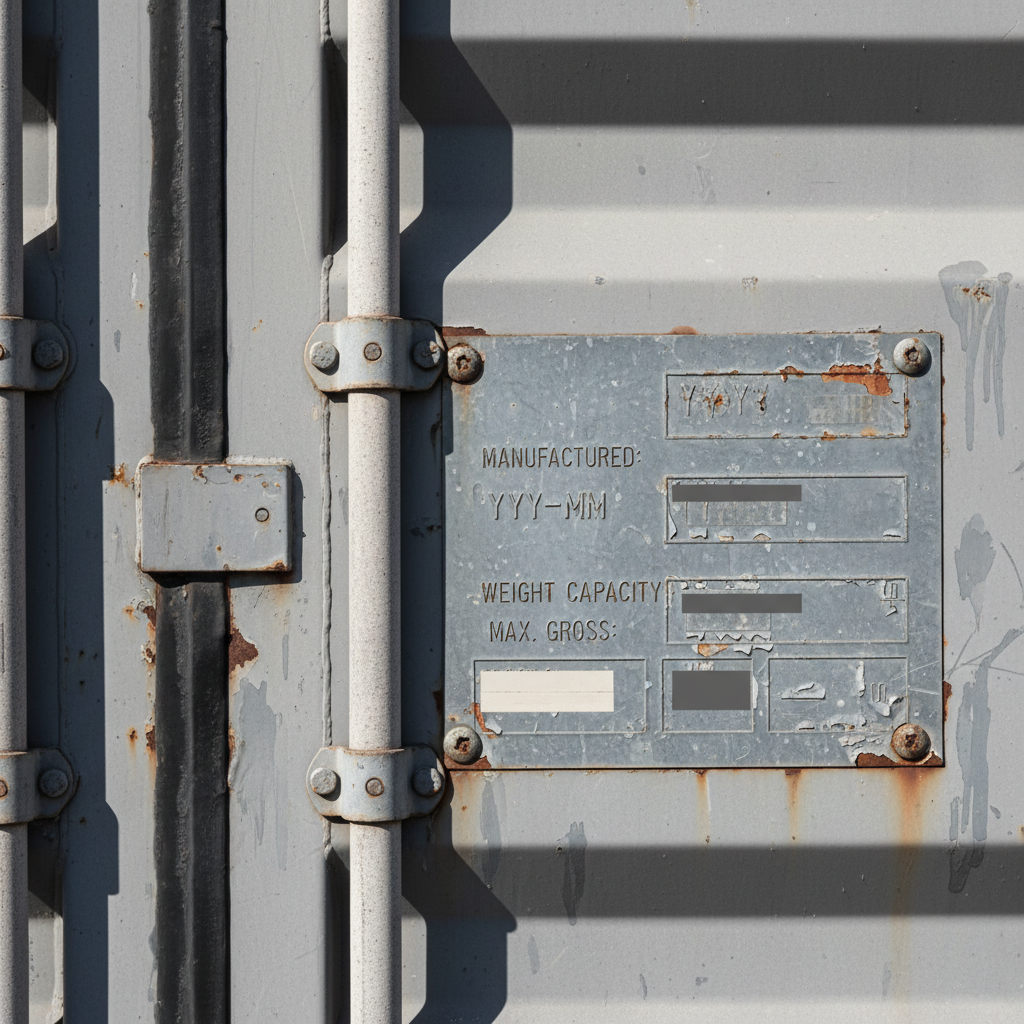
how to inspect a used shipping container before buying: Step 1: The Essential Used Shipping Container Inspection Checklist
A formal used shipping container inspection checklist begins before you even step inside. You are looking for 'straightness.' Containers are designed to bear weight on their four corner castings. If the roof bows or the side rails are kinked, the container's ability to safely stack or move is compromised.
| Component | What to Look For | Red Flag |
|---|---|---|
| Corner Castings | No cracks or significant ovaling | Twisted or sheared metal |
| Roof & Side Panels | Minor dents (under 1 inch deep) | Large patches or deep gouges |
| Floor Crossmembers | All present and straight | Rust-through on the support beams |
| Door Gaskets | Pliable rubber that meets flush | Cracked, dry-rotted, or missing seals |
Identifying Rust on Cargo Containers: Surface vs. Structural
Every used container has rust. These units are made of Corten steel (weathering steel), which forms a protective oxide layer. When identifying rust on cargo containers, you must distinguish between 'patina' and 'scaling.' Surface rust is cosmetic; however, if the rust is flaking off in large chunks (delamination), the structural wall thickness is decreasing.
Tip: Bring a small hammer. Tap areas of heavy rust. A solid 'clink' means the steel is healthy; a dull 'thud' or the hammer punching through suggests complete oxidation.
Common Rust Hotspots
- Bottom side rails where water pools if not leveled.
- The header above the doors where water drips.
- Corner posts where lifting equipment often scrapes off protective paint.
- Underneath the door seals where moisture gets trapped behind the rubber.
Shipping Container Structural Integrity and Light Leaks
The fastest way to perform a wind and water tight inspection is the 'Light Test.' Step inside the container and have someone close the doors. Wait 30 seconds for your eyes to adjust. If you see pinpricks of light, you have holes. While small holes can be patched with JB Weld or a weld-on plate, daylight at the floor line often indicates the bottom rail is rotted—a much more expensive shipping container door seal repair or rail replacement.
Understand that cargo worthy vs wind and water tight are different standards. A Wind and Water Tight (WWT) unit is guaranteed to keep rain out but may have structural bows that disqualify it from sea travel. A Cargo Worthy (CW) unit must meet stricter shipping container structural integrity standards to be loaded onto a vessel.
Assessing Shipping Container Floor Condition
Most containers use 1-1/8 inch marine-grade plywood. When checking the shipping container floor condition, look for 'delamination' (layers of wood peeling up) or soft spots. If the floor feels 'spongy' when you walk on it, the crossmembers below may be rusted out or the wood is rotten from a slow leak.
Be wary of dark staining. While most stains are just oil from pallet jacks, heavy chemical odors can indicate hazardous spills from previous cargo. If you are planning a container office conversion, consider that old floors may need to be sealed with epoxy or entirely replaced to ensure indoor air quality.
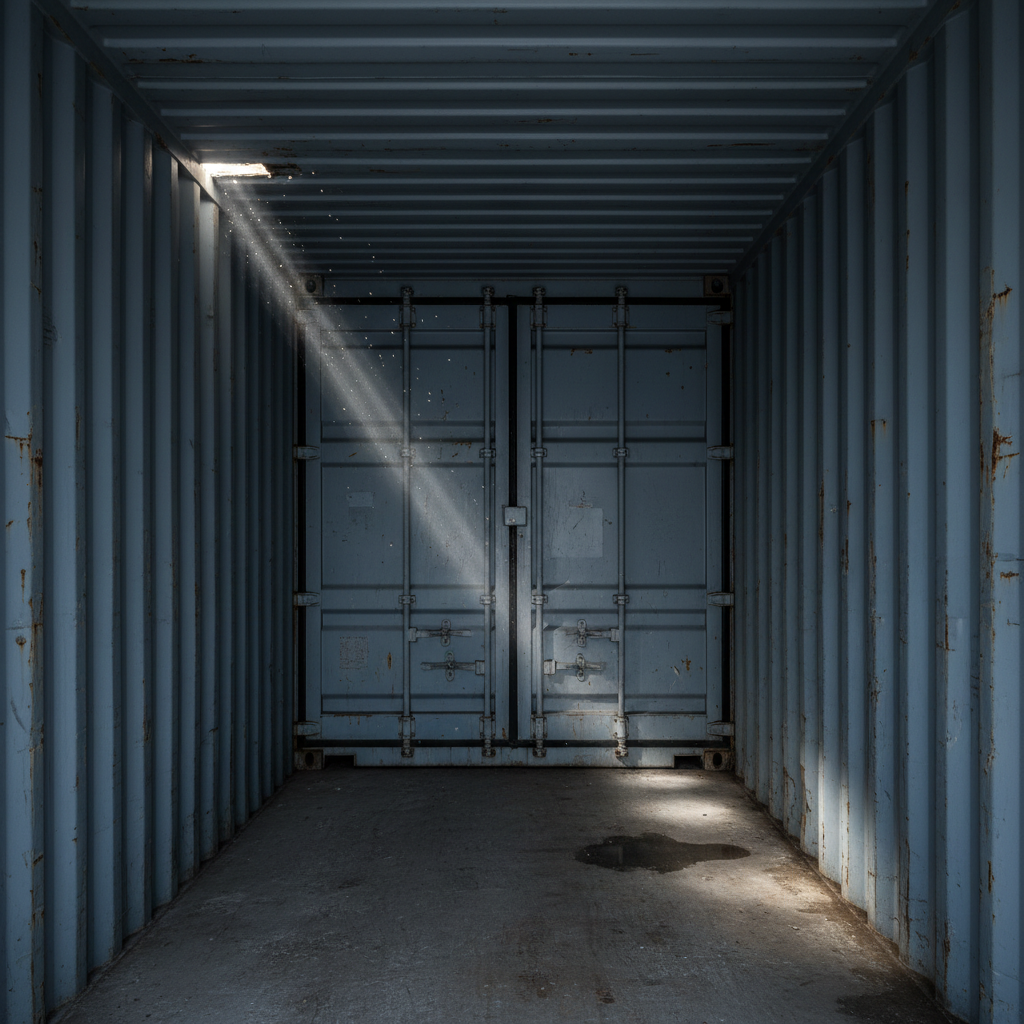
Checking Doors, Locking Bars, and Gaskets
A used shipping container is useless if you can't open it. Test the locking bars. They should rotate freely without excessive force. If the doors are difficult to close, the container may be 'racked' (out of square). This often happens during improper delivery or if the unit was dropped.
Tip: Close the door on a piece of paper. If you can pull the paper out easily, the gasket is not making a tight seal. This will lead to condensation and mold inside your unit. Proper shipping container door seal repair involves cleaning the 'J-bar' and replacing the rubber stripping.
Buying Used Containers Safely
If you are buying from a private seller on a marketplace, watch for 'scam' listings. Real containers are heavy and expensive to move; if the price is 50% below market average, it's likely a scam. For peace of mind, many buyers opt for new (one-trip) containers) to avoid the inspection headache entirely. However, if your budget requires used, stick to reputable depots that provide a WWT guarantee.
Container delivery near you
We deliver to every state in the lower 48 plus Alaska and Hawaii. These local pages list pricing, metro coverage and typical lead times for the areas we run into most:
- Shipping containers near me — how we source from the depot closest to your ZIP code
- Shipping containers in North Carolina — pricing and delivery to Charlotte and Raleigh
- Shipping containers in Arizona — pricing and delivery to Phoenix and Tucson
- Shipping containers in Washington — pricing and delivery to Seattle and Spokane
- Shipping containers in Colorado — pricing and delivery to Denver and Colorado Springs
- Shipping containers in Tennessee — pricing and delivery to Nashville and Memphis
- Shipping containers Houston — local yard stock and lead times
Frequently Asked Questions
Answering common questions about used iso container quality standards and buying practices.
Professional Summary
Inspecting a container before purchase is the only way to protect your investment. Focus on the 'Big Three': the frame's squareness, the roof's integrity, and the floor's solidity. If a unit passes these three checks, it is likely a viable candidate for storage or modification.
If you're ready to compare inventory for your project, our team can pull matching units from our nationwide depots. Whether you need a standard 40ft high cube or a specialized reefer unit, we ensure every used container meets our strict internal quality standards before it leaves the yard.
Explore Related Products & Guides
Frequently Asked Questions
What should I look for when buying a used shipping container?
Focus on 'The Big Three': Structural integrity (straight rails/corners), wind and water tightness (no holes/leaks), and floor condition (no soft spots or heavy chemical odors).
How do I know if a shipping container is structurally sound?
Check if the unit is 'square.' If the doors are extremely difficult to open or the side rails have deep kinks, the frame is compromised. Check for cracks in the corner castings.
How much rust is too much on a used container?
Surface rust is normal for Corten steel. 'Too much' is structural rust where the metal is scaling, flaking off in chunks, or creates holes (rust-through). Avoid units with rusted-through bottom rails.
How to check shipping container door seals?
Visually inspect for cracks or missing rubber. Then, perform a 'light test' inside with doors closed; if you see light around the door frame, the seals are failing and need repair.
What does a cargo worthy inspection include?
A Cargo Worthy (CW) inspection ensures the unit meets international shipping standards, including floor strength, roof integrity, and specific tolerances for dents and frame deformation as per the International Convention for Safe Containers (CSC).
How to spot a shipping container scam?
Red flags include prices significantly below market rates (e.g., $1,000 for a 40ft unit), sellers who refuse to let you see the unit, and requests for payment via untraceable apps like Zelle or wire transfer before a contract is signed.
Frequently asked questions
What should I look for when buying a used shipping container?
Focus on 'The Big Three': Structural integrity (straight rails/corners), wind and water tightness (no holes/leaks), and floor condition (no soft spots or heavy chemical odors).
How do I know if a shipping container is structurally sound?
Check if the unit is 'square.' If the doors are extremely difficult to open or the side rails have deep kinks, the frame is compromised. Check for cracks in the corner castings.
How much rust is too much on a used container?
Surface rust is normal for Corten steel. 'Too much' is structural rust where the metal is scaling, flaking off in chunks, or creates holes (rust-through). Avoid units with rusted-through bottom rails.
How to check shipping container door seals?
Visually inspect for cracks or missing rubber. Then, perform a 'light test' inside with doors closed; if you see light around the door frame, the seals are failing and need repair.
What does a cargo worthy inspection include?
A Cargo Worthy (CW) inspection ensures the unit meets international shipping standards, including floor strength, roof integrity, and specific tolerances for dents and frame deformation as per the International Convention for Safe Containers (CSC).
How to spot a shipping container scam?
Red flags include prices significantly below market rates (e.g., $1,000 for a 40ft unit), sellers who refuse to let you see the unit, and requests for payment via untraceable apps like Zelle or wire transfer before a contract is signed.
About Outback Container Experts
This guide was prepared by the Outback Shipping Containers team, based on the questions our customers ask us most when buying, modifying and taking delivery of shipping containers. Learn more about us.
Ready to find your container?
Browse our in-stock shipping containers, container homes and custom builds, or ask our team for a free quote with delivery to your site.