Shipping container grade price comparison 2026: 2026…
Compare shipping container grade price comparison 2026 data. Save on one-trip container cost 2026 and WWT units for your storage project. Get current rates.

If you are standing in a depot looking at two nearly identical steel boxes—one priced at $2,400 and the other at $4,800—the difference isn't always obvious to the untrained eye. In August 2026, the market for steel remains volatile, making a shipping container grade price comparison 2026 essential for any buyer trying to balance structural integrity against a strict budget. Whether you're purchasing a 40ft used shipping container for farm storage or sourcing a pristine unit for a luxury modular build, understanding the industry's grading hierarchy is the only way to ensure you aren't overpaying for aesthetic 'fluff' or underpaying for a rust bucket.
Table of Contents
- shipping container grade price comparison 2026: The 2026 Shipping Container Grading System Explained
- One-Trip Containers: The Gold Standard for 2026
- Cargo Worthy vs. WWT: Determining Real-World Value
- Refurbished Shipping Containers: The Middle Ground
- 2026 Shipping Container Inspection Checklist
- Specialty Grades: Reefers and Modified Units
- Regional Price Variance and Terminal Logistics in 2026
- Structural Integrity vs. Aesthetic Degradation: The Buyer's Dilemma
- The Future of Container Value: Smart Tracking and Eco-Certification
- Frequently Asked Questions
- Explore Related Products & Guides
shipping container grade price comparison 2026: The 2026 Shipping Container Grading System Explained
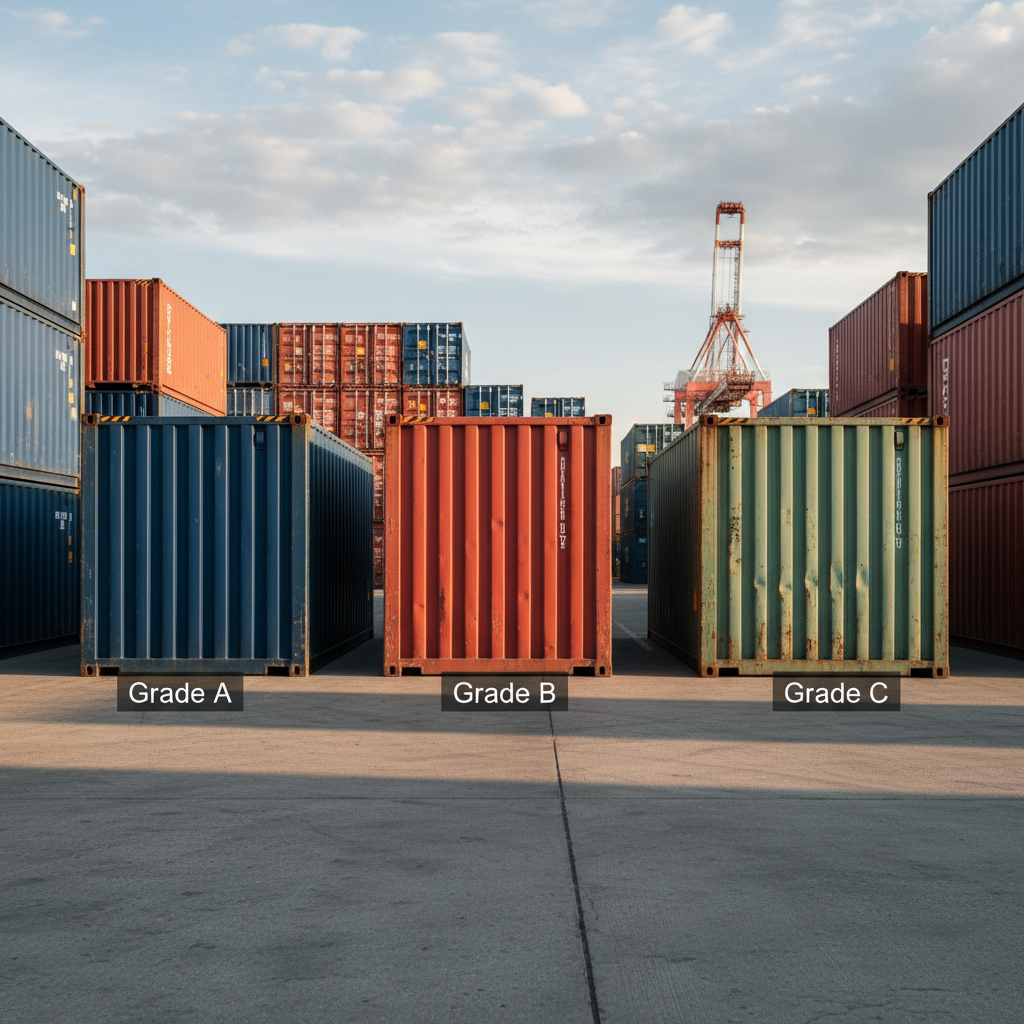
The used shipping container grading system isn't regulated by a single government body, but rather by international shipping standards like ISO 668 and IICL (Institute of International Container Lessors). When we quote a conex box prices by grade, we are looking at specific metrics: floor condition, door seal integrity, and the amount of surface oxidation.
| Grade | Typical Age | Condition | Best For | 2026 Est. Price (20ft) |
|---|---|---|---|---|
| One-Trip (New) | 1-2 Years | Pristine, minor scuffs | Homes, high-end offices | $3,800 - $5,200 |
| IICL-6 | 5-8 Years | Excellent structural | International shipping | $2,800 - $3,400 |
| Cargo Worthy (CWO) | 8-12 Years | Structurally sound | Export, heavy storage | $2,200 - $2,900 |
| Wind & Watertight (WWT) | 12-15 Years | No leaks, visible rust | General dry storage | $1,800 - $2,400 |
| As-Is | 15+ Years | Potential holes/damage | Fencing, scrap, parts | $1,200 - $1,700 |
One-Trip Containers: The Gold Standard for 2026
Many buyers ask, are one-trip containers brand new? Technically, no. They are manufactured in Asia, loaded with cargo once, and shipped to the US. This single trip qualifies them as 'used' in technical terms, but they arrive in near-perfect condition. A 40ft new high cube shipping container is currently the preferred choice for those building a luxury 4-bedroom modular container home because the labor saved on remediation (removing rust or straightening panels) often offsets the higher one-trip container cost 2026.
Cargo Worthy vs. WWT: Determining Real-World Value
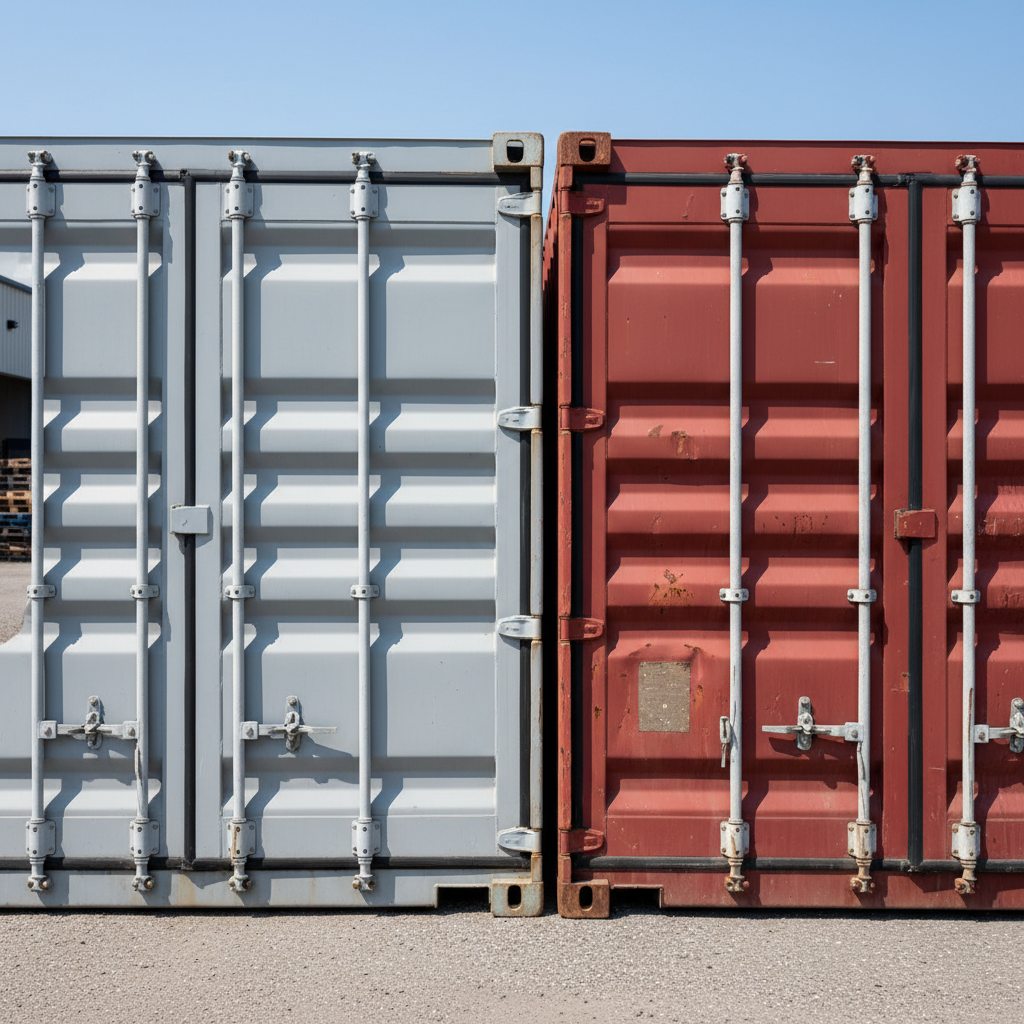
Understanding the WWT container value versus a CWO unit is where most buyers save the most money. A Cargo Worthy container has been inspected and certified for international sea travel. This means the understructure, including the cross members and gooseneck tunnel, is sound. If you are using a 20ft bumper pull container chassis for frequent transport, CWO is the minimum grade you should consider.
Tip: If your container will stay stationary on your property for dry storage, a Wind & Watertight (WWT) unit is the most cost-effective choice. You are paying a premium for a CWO certificate that you do not need for a stationary backyard box.
IICL vs Cargo Worthy: Is the Premium Justified?
IICL containers meet the stringent repair standards of the Institute of International Container Lessors. These units are typically younger and have fewer patches than standard CWO units. For 2026, the price spread between IICL and CWO is roughly $400–$700. We recommend IICL for clients in high-corrosion coastal environments where the original Corten steel thickness is critical.
Refurbished Shipping Containers: The Middle Ground
Refurbished shipping containers are usually WWT units that have been sanded, primed, and repainted. While they look better than a standard used unit, it is important to check if the refurbishment included floor sanding or door hinge lubrication. For instance, our 21ft refurbished secure store undergoes a multi-point inspection to ensure the 'refurb' isn't just a fresh coat of paint over deep rust pits.
2026 Shipping Container Inspection Checklist
Before finalizing any purchase, whether it's a used 40ft cargo container with double doors or a specialized reefer, use this checklist to verify the grade:
- Light Test: Step inside, close the doors, and look for any pinholes of light indicating leaks.
- Door Gaskets: Ensure the rubber seals are supple and not cracked or dry-rotted.
- Floor Condition: Look for delamination in the marine-grade plywood or soft spots near the doors.
- Corner Castings: Inspect for cracks or heavy warping that could interfere with leveling or lifting.
- CSC Plate: Check the date on the Safety Approval plate; a valid plate is required for CWO status.
Specialty Grades: Reefers and Modified Units
Pricing for specialized units like a 40ft HC working refrigerated container follows a different logic. Here, the grade depends more on the 'run time' of the compressor and the R-value of the insulation rather than the exterior aesthetics. For 2026, expect a Cargo Worthy reefer to carry a $5,000–$9,000 premium over a standard dry box due to the machinery and stainless steel lining.
Regional Price Variance and Terminal Logistics in 2026
As we enter 2026, the cost of a shipping container is no longer dictated solely by its structural grade but increasingly by its proximity to major inland rail hubs versus deep-water ports. While a 'Cargo Worthy' unit might carry a standard base price in Los Angeles or Savannah, the same unit in a landlocked state like Nebraska can carry a 40% premium due to secondary haulage costs. Terminal congestion surcharges, which resurged in early 2025, remain a primary factor in the final invoice price for small-scale buyers and container home builders.
Furthermore, the 'Depot Grade' designation has become more granular. In 2026, major suppliers are differentiating between 'IICL-5' standard units—often used for high-end industrial leases—and basic 'Wind and Watertight' units that may have significant floor delamination. Buyers should expect higher volatility in the prices of 40-foot High Cubes, as these remain the highest-demand units for the expanding modular housing sector, often selling for $800 to $1,200 more than standard-height counterparts in the same condition.
| Region / Hub Type | Avg. 20ft WWT Price | Avg. 40ft HC One-Trip | Local Delivery Surcharge |
|---|---|---|---|
| Primary Port (LA/NJ/Houston) | $1,850 - $2,100 | $4,400 - $4,900 | Low ($300 - $600) |
| Inland Rail Hub (Chicago/KC) | $2,400 - $2,750 | $5,200 - $5,800 | Medium ($500 - $900) |
| Rural/Remote (Mountain West) | $3,100 - $3,600 | $6,500 - $7,200 | High ($1,200+) |
Tip: Pro Tip: If you are purchasing multiple units for a large project, look for 'ex-fleet' batches sold directly from leasing companies. These often bypass the aesthetic refurbishment markup found at local retail depots, saving you up to 15% per box if you plan to paint them yourself.
Structural Integrity vs. Aesthetic Degradation: The Buyer's Dilemma
The 2026 market has seen a sharp divide between containers graded for 'Static Storage' and those intended for 'Architectural Modification.' A common mistake among first-time buyers is overpaying for a One-Trip container when a Cargo Worthy (CWO) unit would suffice. A CWO unit is guaranteed to be structurally sound for shipping, meaning its corner castings and main rails are intact, even if the side panels have 'dents and dings' or surface oxidation. For underground storage or structural framing where the skin will be covered, the aesthetic premium of a One-Trip unit—often $2,000 extra—is essentially wasted capital.
Conversely, the 'As-Is' grade has become increasingly risky. With the global fleet aging after the 2021-2022 manufacturing surge, 'As-Is' units in 2026 frequently suffer from severe roof thinning or chemical spills on the marine-grade plywood flooring. While these units are the cheapest on the market, the cost to replace a floor or patch a rusted-through roof rail often exceeds the price gap between an 'As-Is' and a 'WWT' (Wind and Watertight) unit. Buyers must evaluate the total cost of ownership, including remedial welding and floor sanding, before committing to the lowest sticker price.
- Floor Integrity: Check for 'soft spots' or dark staining that indicates forklift damage or hydraulic oil leaks.
- Door Gaskets: Inspect the rubber seals; replacing these on an older unit can cost $200+ in labor and parts.
- Roof Pinholes: Step inside the container and close the doors; any visible light points indicate active leaks that will ruin stored goods.
- Crossmember Health: Ensure the undercarriage isn't severely corroded, as this compromises the unit's weight-bearing capacity.
Important: Beware of 'Flash Rusting' on refurbished units. Some low-tier sellers apply a thin coat of industrial primer over active rust without proper grinding. Ask for the specific paint brand and preparation method used before paying a 'Refurbished' premium.
The Future of Container Value: Smart Tracking and Eco-Certification
Looking toward the latter half of 2026, container value is becoming increasingly tied to digital documentation. Many One-Trip units are now arriving with integrated IoT sensors or 'Smart Grade' certificates that log the unit's humidity and impact history. While these features add a slight premium to the initial purchase price, they provide immense value for buyers looking to repurpose containers into high-value data centers or sensitive climate-controlled labs, as the structural history is fully transparent.
Additionally, 'Eco-Graded' containers—units verified to be free of chromated copper arsenate (CCA) in the flooring—are commanding a higher resale value in the residential market. As building codes in states like California and New York tighten regarding VOC emissions in modular housing, a container with a 'Clean Floor' certification can be priced $500 higher than a standard CWO unit. Buyers should request SDS (Safety Data Sheets) for the floor treatments if the unit was manufactured after 2024, as the transition to bamboo and eco-friendly resins is now nearly complete for top-tier manufacturers.
- Verify the CSC plate expiration date to ensure the unit is still legal for international transit.
- Check for 'IICL' branding on the repair patches, which indicates a higher standard of welding and materials.
- Confirm the presence of a 'Lock Box' for security; adding one post-purchase is a common but avoidable expense.
- Request high-resolution photos of the actual unit ID number to avoid 'bait and switch' tactics common in online marketplaces.
Tip: In 2026, the best value is often found in 'Mid-Life' containers (8-10 years old) that have just been retired from major shipping lines. They offer the best balance between structural longevity and a price point that is significantly lower than new-build units.
Container delivery near you
We deliver to every state in the lower 48 plus Alaska and Hawaii. These local pages list pricing, metro coverage and typical lead times for the areas we run into most:
- Shipping containers near me — how we source from the depot closest to your ZIP code
- Shipping containers in North Carolina — pricing and delivery to Charlotte and Raleigh
- Shipping containers in Arizona — pricing and delivery to Phoenix and Tucson
- Shipping containers in Washington — pricing and delivery to Seattle and Spokane
- Shipping containers in Colorado — pricing and delivery to Denver and Colorado Springs
Frequently Asked Questions
Common questions regarding shipping container grade price comparison 2026 standards.
- What is the difference between WWT and cargo worthy grades? WWT guarantees the unit is dry; CWO guarantees it is structurally sound enough for international shipping.
- Is a one-trip container worth the extra cost? Yes, if you prioritize aesthetics or plan to build a home, as it requires significantly less prep work.
- How much does a CWO container cost in 2026? A standard 20ft CWO unit typically ranges from $2,200 to $2,900 depending on your local depot location.
- Which container grade is best for heavy storage? We recommend CWO or IICL for heavy industrial equipment to ensure the floor cross-members can handle the concentrated load.
- What should I look for in an as-is shipping container? Look for major structural compromises like 'gaping' holes or severely bowed rails that prevent the doors from closing.
- Are one-trip containers brand new? They are 'new' to the market but have made one journey across the ocean, so minor handling scuffs are normal.
- Does the color affect the price? Usually no, but 'One-Trip' units in neutral colors like tan or gray have higher resale value than bright carrier-branded used units.
Navigating the shipping container grade price comparison 2026 landscape requires a clear understanding of your end-use case. If you're ready to compare inventory for your project, our team can pull matching units from our nationwide depots. Whether you need a simple 10x8 steel secure store or a high cube unit for a custom build, we provide transparent grading and photos of the actual units before they leave the yard. Contact Outback Shipping Containers today for a firm quote including delivery to your site.
Explore Related Products & Guides
Frequently Asked Questions
what is the difference between WWT and cargo worthy grades?
Wind and Watertight (WWT) containers are guaranteed not to leak but may have structural wear that prevents them from being shipped overseas. Cargo Worthy (CWO) containers meet all international maritime standards for structural integrity and can be recertified for global shipping.
is a one-trip container worth the extra cost?
For residential use, container homes, or high-visibility retail storage, yes. One-trip containers have minimal rust, no large dents, and much higher resale value compared to used 15-year-old units.
how much does a CWO container cost in 2026?
In the 2026 market, 20ft Cargo Worthy units are pricing between $2,200 and $2,900, while 40ft units typically range from $3,100 to $4,200, depending on depot proximity.
which container grade is best for heavy storage?
Cargo Worthy (CWO) or IICL-6 grades are best for heavy storage. These grades ensure the understructure and floor joists have not suffered significant corrosion, providing the necessary support for heavy machinery or dense pallets.
what should I look for in an as-is shipping container?
When buying 'As-Is', inspect for structural holes, roof damage, and severely bent door hardware. These units are sold without warranties and are best suited for scrap, non-critical storage, or buyers with advanced welding skills.
are one-trip containers brand new?
They are the closest thing to 'new' available in the US. They are manufactured in Asia and used once to transport goods to North America, resulting in a unit with 95%+ of its service life remaining.