As-is vs cargo-worthy shipping container for farm storage:…
Expert guide on as-is vs cargo-worthy shipping container for farm storage. Learn about used container for hay storage and rust inspection criteria. Explore.
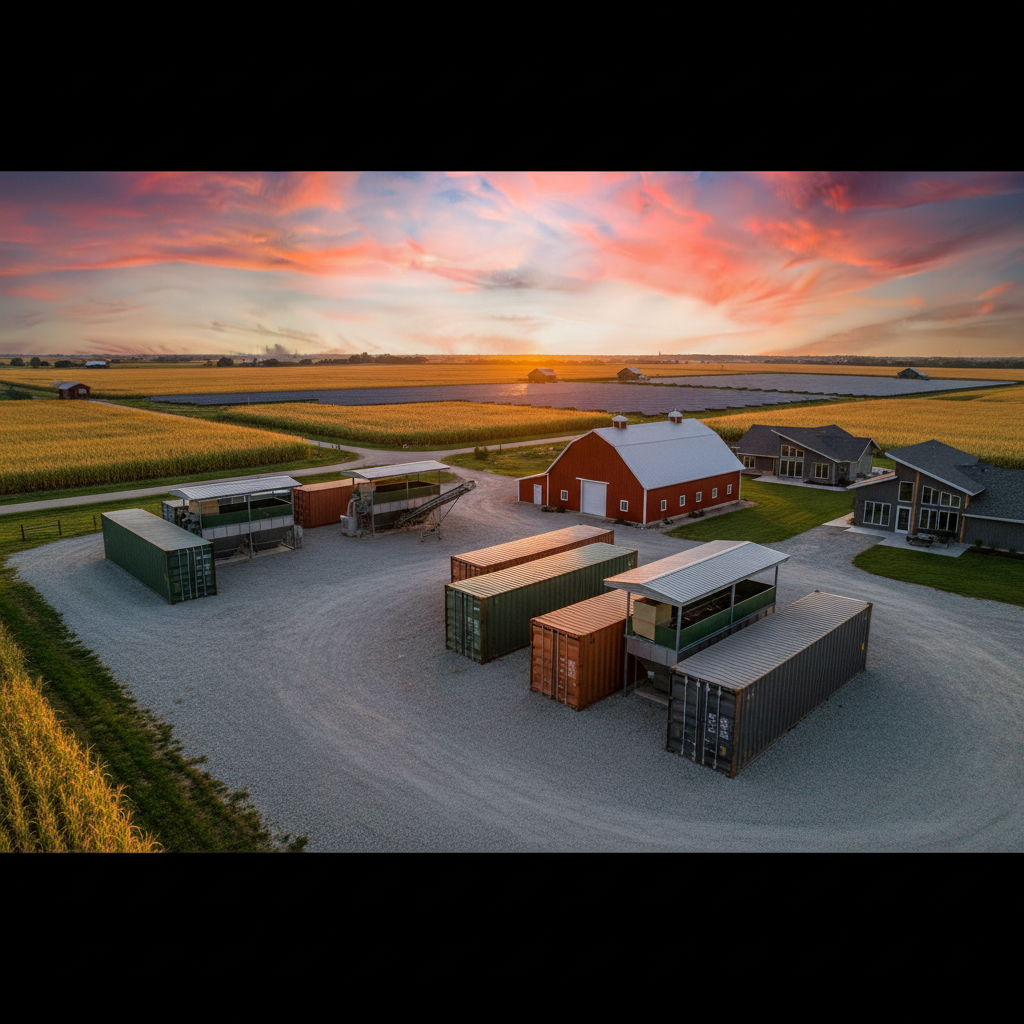
By the time August rolls around, US agricultural operators are staring down the barrel of harvest season. Whether you need to house an extra 500 bushels of seed or keep a $40,000 tractor out of the mud, the speed of shipping container deployment is unmatched. However, the decision between an as-is vs cargo-worthy shipping container for farm storage often comes down to a high-stakes trade-off between immediate savings and long-term asset protection.
Table of Contents
- as-is vs cargo-worthy shipping container for farm storage: Understanding the Grading: As-Is vs Cargo-Worthy
- The Risk of Cheap Storage Containers for Tools and Feed
- Inspecting Used Containers for Farms
- Foundations and Site Prep on Farmland
- Comparative Durability: Wind and Watertight Standards vs. As-Is Deterioration
- Strategic Use Cases: Matching Grade to Inventory Value
- Long-Term Cost Analysis: Maintenance and Resale
- Frequently Asked Questions
- Final Verdict for Your Operation
as-is vs cargo-worthy shipping container for farm storage: Understanding the Grading: As-Is vs Cargo-Worthy
When you browse our Used inventory, you'll see labels that significantly impact the price. An 'As-Is' container is exactly what it sounds like. These are units that have been retired from shipping lines because they no longer meet the rigorous standards for international transport. They may have significant rust, floor damage, or even holes. For simple agricultural shipping container uses like storing fencing scrap or bulk gravel, an as-is unit might suffice.
Conversely, a cargo-worthy (CWO) container has been inspected and certified by a maritime surveyor. This means the structural frame is sound, the doors seal properly, and the floor can support its rated payload. While CWO units are used, they are a step above Wind and Water Tight (WWT) containers. While a WWT container is guaranteed to keep rain out, a CWO unit is guaranteed to be structurally straight enough to be stacked on a ship—providing superior durability for heavy farm equipment.
| Feature | As-Is Container | Cargo-Worthy (CWO) | One-Trip (New) |
|---|---|---|---|
| Typical Price (2026) | $1,800 - $2,400 | $2,800 - $3,600 | $4,500 - $6,200 |
| Structural Integrity | Variable/Low | Certified Sound | Pristine |
| Weather Protection | Likely Leaks | Guaranteed Dry | Guaranteed Dry |
| Pest Resistance | Poor (holes common) | Excellent | Excellent |
| Life Expectancy | 3-7 Years | 15-20 Years | 30+ Years |
The Risk of Cheap Storage Containers for Tools and Feed
Many operators looking for cheap storage containers for tools gravitate toward 'As-Is' units. However, for agriculture, the hidden costs can be devastating. If you are using a used container for hay storage, a single roof leak can lead to mold and spontaneous combustion. Rodents are another factor; grain storage requires a perfectly sealed envelope that only CWO or high-grade WWT units provide.
Important: Never use an 'As-Is' container for pesticide or fertilizer storage without a secondary containment liner. Floor leaks in these units can lead to EPA violations and soil contamination on your property.
Inspecting Used Containers for Farms
Whether you're buying a 40ft used shipping container or a smaller 20ft unit, a shipping container rust inspection is non-negotiable. Look for 'cancerous' rust—flaky, deep oxidation that compromises the Cor-ten steel's thickness. In the context of as-is vs cargo-worthy shipping container for farm storage, check the gaskets on the doors. If the rubber is dry-rotted (common in as-is units), your storage will not be pest-proof.
- Check the 'light test': Go inside, close the doors, and look for pinholes of light in the roof.
- Inspect the floorboards for soft spots or oil staining (hazardous for grain).
- Verify the door locking bars rotate freely; farm use requires frequent access.
- Ensure the corner castings are not cracked if you plan to lift the unit while loaded.
Foundations and Site Prep on Farmland
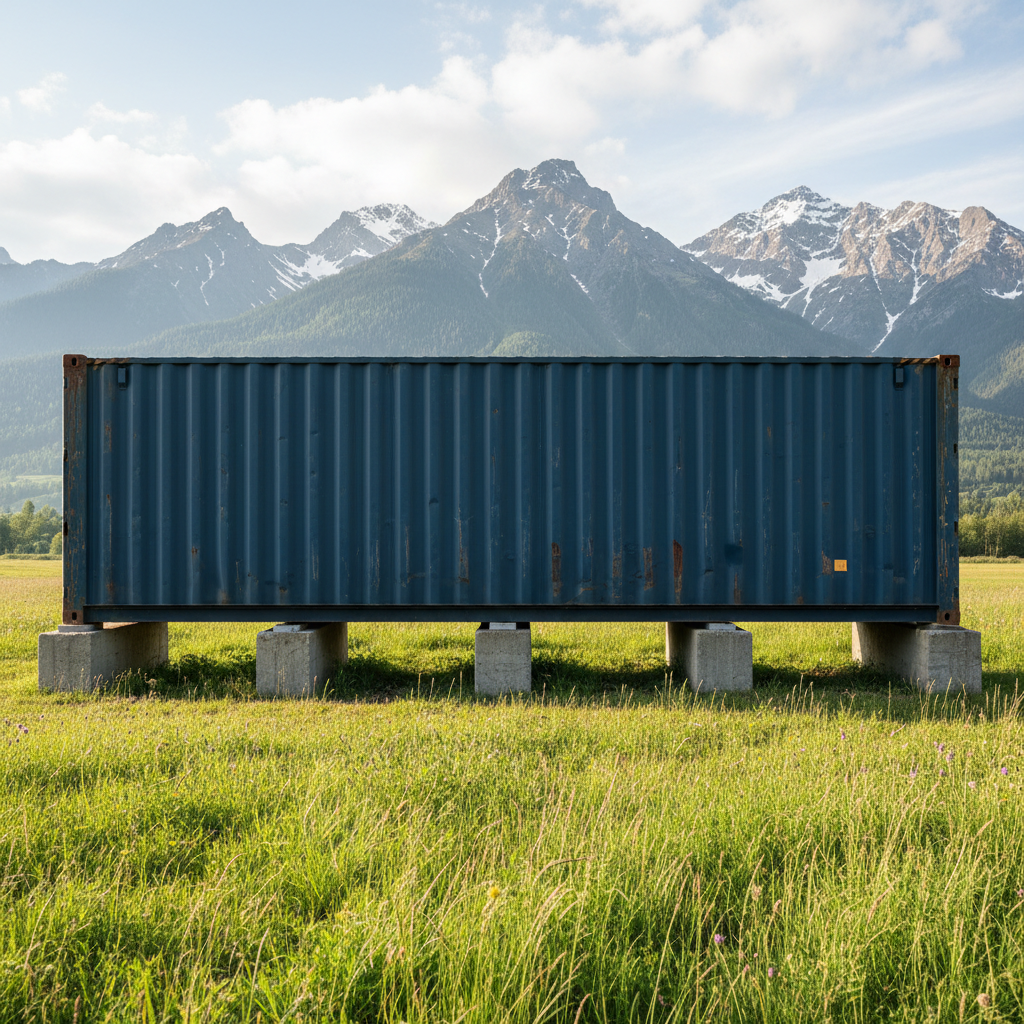
Farmland is notoriously soft, especially after a spring thaw. Even a cargo-worthy shipping container certification won't save your unit if it sinks unevenly. When placing a heavy 45ft used container, you must ensure a level surface. A simple gravel pad or railroad tie foundation is usually sufficient for most As-Is or CWO units to prevent the steel from sitting in standing water.
Comparative Durability: Wind and Watertight Standards vs. As-Is Deterioration
When choosing between As-Is and Cargo-Worthy (CWO) units for agricultural use, the primary distinction lies in the structural integrity of the seals and the 'box' itself. A Cargo-Worthy container is legally certified to withstand the immense pressure of a transoceanic stack, meaning the four corner posts can support over 200,000 pounds of vertical weight. For a farmer, this translates to a roof that won't sag under three feet of wet snow and doors that will remain square even if the ground shifts slightly. These units are tested for air-tightness; if you shut yourself inside, no light should penetrate the gaskets, ensuring that moisture-sensitive items like dry seed or expensive welding equipment remain bone-dry during a torrential downpour.
In contrast, 'As-Is' containers are often retired precisely because they have failed these structural or moisture-barrier tests. While they are significantly cheaper—often by $800 to $1,200 depending on the regional depot—they frequently harbor 'daylight holes' in the roof or thinning metal in the side panels caused by heavy oxidation. On a farm, an As-Is unit is a gamble against the local ecosystem. Rodents can squeeze through holes as small as a quarter, and once a field mouse gains entry to a storage unit filled with grain bags or insulated wiring on a tractor, the resulting damage far exceeds the initial savings of the lower-grade box.
| Feature | Cargo-Worthy (CWO) | As-Is (Retired) |
|---|---|---|
| Door Gaskets | Intact, flexible rubber seals | Often cracked, dry-rotted, or missing |
| Floor Integrity | 1.1-inch marine grade plywood (intact) | May have soft spots or oil contamination |
| Stacking Ability | Fully rated for weight bearing | Structural rails may be bowed or compromised |
| Pest Resistance | High (Vermin-proof if doors closed) | Low (Likely requires patch welding) |
Important: Agricultural chemicals and fertilizers can accelerate corrosion in As-Is units. If you plan to store ammonium nitrate or liquid fertilizers, the thinning walls of an As-Is container will fail much faster than the higher-mil Corten steel thickness found on a Cargo-Worthy unit.
Strategic Use Cases: Matching Grade to Inventory Value
Smart asset management on a farm involves matching the replacement value of your inventory to the quality of the shell protecting it. Cargo-Worthy containers should be the non-negotiable choice for high-value machinery, electronics, and perishables. For example, if you are storing a $40,000 zero-turn mower or a pallet of high-yield corn seed, the $1,000 premium for a CWO unit acts as an insurance policy. These units prevent the internal condensation cycles that occur when moisture seeps through micro-fractures in the roof, which can lead to mold blooms on organic materials or flash-rusting on precision engine parts.
However, As-Is containers do have a legitimate place in the farmyard for low-sensitivity storage. They are excellent for housing heavy metal implements like plow shares, T-posts, rolls of barbed wire, or concrete forms. These items are not susceptible to humidity or minor water ingress. If your goal is simply to create a 'theft deterrent' for heavy iron that usually sits out in the pasture, an As-Is unit provides a lockable, heavy-duty barrier at the lowest possible price point. You can easily apply a secondary roof coating or patch small holes with JB Weld or bituthene tape to extend the life of a 'retired' unit for another five to seven years of secondary service.
- CWO Recommended: Solar battery arrays, dry hay/straw, tack and leather goods, power tools.
- CWO Recommended: Herbicide and pesticide concentrates, seasonal clothing storage, finished lumber.
- As-Is Feasible: Scrap metal, irrigation pipe, firewood (if ventilated), tractor weights.
- As-Is Feasible: Fence posts, gravel bags, heavy hand tools, basic iron attachments.
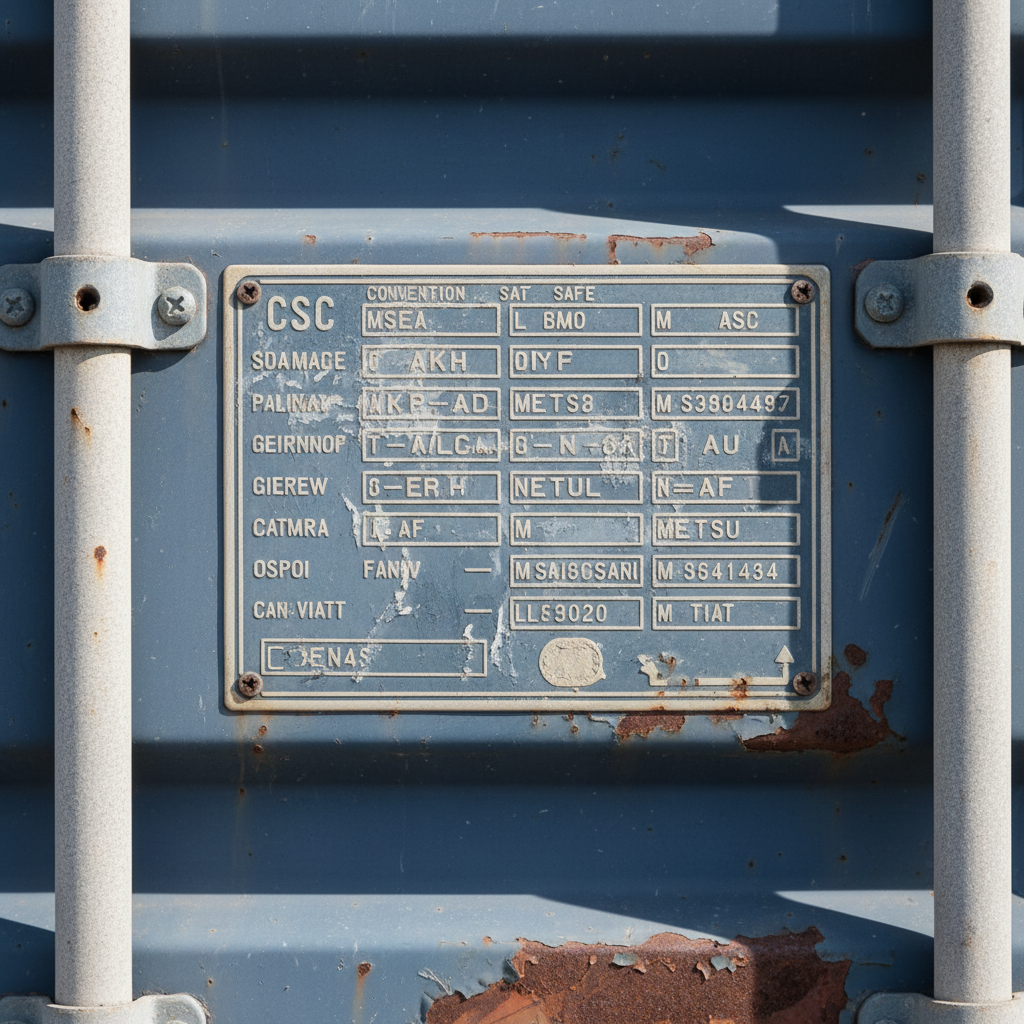
Tip: When buying Cargo-Worthy, always ask for the 'CSC Plate' photo. This plate acts like a VIN for the container; a CWO unit will have a valid date or a recent reinspection sticker, proving it meets international safety standards for structural loads.
Long-Term Cost Analysis: Maintenance and Resale
The total cost of ownership (TCO) for a shipping container on a farm is rarely just the purchase price. A Cargo-Worthy container maintains its resale value remarkably well. Because it remains in a condition that can be recertified for sea travel or high-end modular construction, you can often sell a CWO unit five years later for 70-80% of what you paid for it. The demand for 'clean' used containers in the secondary market remains high, especially for those looking to build tiny homes or workshops. You are essentially paying a small 'rental' fee over the years for the use of a premium asset.
The As-Is unit, conversely, is a depreciating asset with a hard ceiling. Once an As-Is unit develops significant structural rust in the top or bottom rails, it becomes 'scrap' and may eventually cost you money to haul away. Furthermore, the labor hours required to maintain an As-Is unit—sanding down rust blooms, patching roof leaks every spring, and fighting door hinges that have seized due to poor alignment—can quickly erode the initial savings. For the busy farmer, time is a finite resource; the 'set it and forget it' nature of a CWO container often provides a better return on investment than a 'project' container that requires constant vigilance.
- Calculate the value of the goods inside: If >$5,000, buy Cargo-Worthy.
- Assess your welding skills: If you can't patch steel, avoid As-Is.
- Check local zoning: Many counties allow CWO units but consider rusted As-Is units as 'junk blight'.
- Consider the delivery fee: Shipping is expensive; don't pay to ship a 'lemon' to your property.
Tip: A standard 20ft CWO container weighs approximately 5,000 lbs. Ensure your farm equipment (like a heavy-duty tractor with forks) can actually move the unit if you decide to change your site layout later. As-Is units may be slightly lighter due to metal loss, but they are more prone to warping if lifted incorrectly.
Container delivery near you
We deliver to every state in the lower 48 plus Alaska and Hawaii. These local pages list pricing, metro coverage and typical lead times for the areas we run into most:
- Shipping containers near me — how we source from the depot closest to your ZIP code
- Shipping containers in Florida — pricing and delivery to Jacksonville and Miami
- Shipping containers in Georgia — pricing and delivery to Atlanta and Savannah
- Shipping containers in North Carolina — pricing and delivery to Charlotte and Raleigh
- Shipping containers in Arizona — pricing and delivery to Phoenix and Tucson
- Shipping containers in Washington — pricing and delivery to Seattle and Spokane
- Shipping containers Houston — local yard stock and lead times
Frequently Asked Questions
Agricultural buyers often have specific concerns regarding logistics and durability. Here are the answers to the most common queries we receive.
Final Verdict for Your Operation
Choosing an as-is vs cargo-worthy shipping container for farm storage depends on the value of what’s inside. If you are storing hay, feed, or expensive electronics, the 30% price premium for a CWO unit pays for itself in one season of avoided loss. If you just need a windbreak or a place to store scrap iron, save your money and buy As-Is. If you need specialized storage, consider a 30ft reefer for temperature-sensitive supplies.
If you're ready to compare inventory for your project, our team can pull matching units from our nationwide depots. Whether you need a single 20ft CWO for your tack room or a fleet of as-is units for field equipment, we handle the logistics and delivery from start to finish.
Frequently Asked Questions
Is an as-is shipping container safe for farm storage?
It depends on the cargo. As-Is units are safe for non-perishable, low-value items like scrap metal or hand tools. They are not recommended for hay, grain, or expensive machinery due to the high risk of leaks and rodent entry.
What is the difference between cargo-worthy and WWT?
While both are wind and water tight, a Cargo-Worthy (CWO) container has a certified structural frame and can technically be used for international shipping. WWT containers are guaranteed dry but may have minor structural bows or dents that prevent certification.
How long will a cargo-worthy container last on a farm?
With basic maintenance, such as keeping it off the ground and touch-up painting rust spots, a CWO container will last 15 to 20 years in most US climates.
Do I need a foundation for a shipping container on a farm?
Yes. Placing a container directly on dirt leads to moisture trap, which causes the floor joists to rot and the bottom rails to rust. At minimum, use a 6-inch gravel bed or pressure-treated 4x4 timbers.
Are shipping containers rodent proof for grain storage?
Cargo-worthy and WWT containers are rodent-proof if the door gaskets are intact. 'As-Is' containers often have holes in the floor or rusted corners that allow mice and rats easy access.
Can I use an As-Is container for a workshop?
Only if you are prepared to perform significant repairs. For a workspace that stays dry and safe, starting with a 21ft refurbished secure store is much more cost-effective than trying to patch an As-Is unit.