20ft vs 40ft Refrigerated Container Cost Analysis
By Outback Container Experts · Published July 28, 2026 · Last updated October 21, 2026
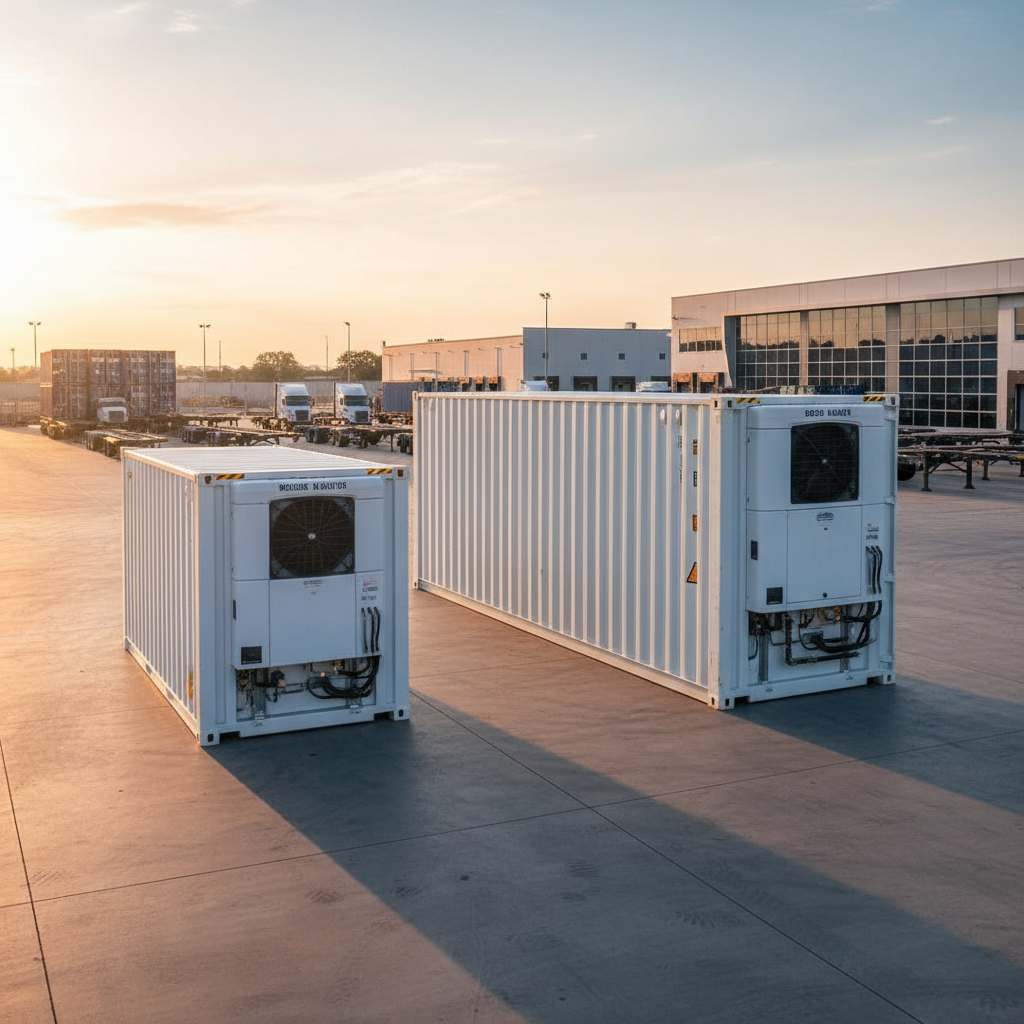
For commercial operators in agriculture, pharmaceuticals, and food service, selecting the right cold storage unit isn't just about square footage—it's about balancing the upfront 20ft vs 40ft refrigerated container cost against long-term operational efficiency. As of July 2026, the market for 'reefers' (industry shorthand for refrigerated units) has stabilized after years of volatility, but the price gap between the two primary sizes remains a critical decision point for procurement managers. Choosing the wrong size doesn't just waste space; it leads to excessive energy bills and complicates logistics.
Table of Contents
- 20ft vs 40ft refrigerated container cost: 2026 Cold Storage Container Price List: Current Market Rates
- Physical Differences: Dimensions and Capacity
- Refrigerated Shipping Container Power Consumption and Operating Costs
- Hidden Factors: Delivery and Permitting
- Maintenance Lifecycle and Resale Valuation Comparison
- Industry-Specific ROI: Choosing Based on Cargo Density
- The 'Reefer' Component Lifespan: New vs. Cargo Worthy
- Frequently Asked Questions
- Explore Related Products & Guides
Understanding the ocean container sizes compared is the first step, but refrigerated units carry a technical premium that standard dry boxes do not. Unlike a basic 20ft shipping container, a reefer includes sandwich-panel insulation and a sophisticated mechanical cooling system, typically from brands like Carrier or Thermo King. This guide breaks down the capital expenditure (CAPEX) and operating expenditure (OPEX) you need to forecast for your 2026 project.

20ft vs 40ft refrigerated container cost: 2026 Cold Storage Container Price List: Current Market Rates

When evaluating the 20ft vs 40ft refrigerated container cost, you must distinguish between 'One-Trip' (new) units and 'Cargo Worthy' (used) units. New units provide the latest energy-efficient technology and full manufacturer warranties, while used units offer a lower entry point for seasonal or temporary storage needs.
| Container Type | Condition | Estimated Price Range (2026) | Primary Use Case |
|---|---|---|---|
| 20ft Standard Reefer | Used (WWT/CW) | $6,500 – $9,500 | Small retail, restaurants, event floral |
| 20ft Standard Reefer | New (One-Trip) | $14,000 – $18,500 | Pharmaceuticals, long-term food processing |
| 40ft High Cube Reefer | Used (Working) | $8,500 – $12,500 | Bulk agriculture, seasonal overflow |
| 40ft High Cube Reefer | New (One-Trip) | $19,500 – $26,000 | Large-scale logistics, industrial chemical |
Tip: Note that used reefer container price guide figures often fluctuate based on the depot location. Units located near major ports like Long Beach or Savannah are generally $500–$800 cheaper than those inland due to reduced repositioning fees.
Physical Differences: Dimensions and Capacity
The reefer container dimensions differ slightly from standard dry boxes because the insulation and machinery take up internal space. A standard 40ft used shipping container has significantly more volume than its reefer counterpart. Most 40ft reefers are 'High Cube' (9'6" tall), which provides necessary vertical clearance for airflow above the cargo.
- 20ft Reefer Interior: ~17' 9" L x 7' 5" W x 7' 5" H. Roughly 900 cubic feet of usable space.
- 40ft High Cube Reefer Interior: ~37' 11" L x 7' 5" W x 8' 2" H. Roughly 2,300 cubic feet of usable space.
- Payload: 40ft units are designed for volume, but their weight capacity is often similar to 20ft units due to road weight limits and the weight of the heavier 40ft chassis.
If you are storing dense, heavy products like frozen proteins, a 20ft domestic refrigerated container is often the more cost-effective choice. However, for lighter palletized goods like leafy greens, the 40ft unit offers more than double the volume for only a 20-30% increase in purchase price.
Refrigerated Shipping Container Power Consumption and Operating Costs
The true cost of ownership isn't just the purchase price; it's the monthly utility bill. A 40ft high cube refrigerated container cost includes a larger cooling demand than a 20ft unit, but the insulation efficiency of the larger box is often superior. Our reefers run on single-phase 220/240V power, and you can also find single-phase refurbished units for smaller applications.
Tip: Running a reefer at -20°F (Deep Freeze) consumes nearly 40% more electricity than keeping it at 35°F (Chilled). Because our reefers run on single-phase 240V power, no step-up transformer is needed, saving you $1,500 to $2,500 on your initial setup cost.
When comparing Carrier reefer vs Thermo King cost, Carrier's ThinLine units are the industry standard for reliability, while Thermo King Magnum Plus units are often preferred for ultra-low temperature requirements. Maintenance on these systems should be budgeted at $500–$800 annually for refrigerant checks and sensor calibration.
Hidden Factors: Delivery and Permitting
Cold storage unit delivery fees are higher than standard containers because reefers are heavier and require more careful handling to avoid damaging the cooling fins. For a 40ft unit, you will typically need a tilt-bed trailer or a crane if space is tight. You can view our shipping container delivery cost per mile 2026 price list to estimate these logistical expenses.
Additionally, check your local AHJ (Authority Having Jurisdiction) for zoning requirements. While a reefer is technically portable, some counties classify them as permanent structures if they are hard-wired into the grid, requiring a permit. This is especially true for businesses using them as a custom prefab container office or workspace extension.
Maintenance Lifecycle and Resale Valuation Comparison
When evaluating 20ft vs 40ft refrigerated container cost, the initial purchase price is only the baseline. Maintenance schedules for the refrigeration units—typically manufactured by Carrier, Thermo King, or Daikin—remain relatively consistent regardless of the box size. However, 20ft units often command a higher resale premium in the domestic market. This is primarily because small-scale farmers, restaurant owners, and event organizers have limited space and prefer the 20ft footprint. A used 20ft 'reefer' often retains 65-75% of its value over five years, whereas 40ft units may depreciate faster due to the smaller buyer pool capable of accommodating a 40-foot footprint.
The structural integrity of the T-grade aluminum flooring and stainless steel interior lining must be inspected annually. In a 40ft unit, there is literally double the surface area for potential floor damage or insulation degradation. If you are storing heavy pallets of frozen protein, the 40ft unit's floor takes more stress over time, potentially leading to higher long-term refurbishment costs compared to the more compact and rigid 20ft frame.
| Maintenance Component | 20ft Reefer Est. Annual Cost | 40ft Reefer Est. Annual Cost | Frequency |
|---|---|---|---|
| Unit Calibration/Service | $450 - $600 | $450 - $600 | Bi-Annually |
| Door Seal Replacement | $150 | $150 | As Needed |
| Interior Steam Cleaning | $200 | $350 | Quarterly |
| Electrical Component Check | $300 | $300 | Annually |
Tip: The refrigeration machinery (the 'reefer unit') is identical on most 20ft and 40ft containers. You are paying for the same compressor and electronics; the only difference is the amount of insulated space the unit must cool.
Industry-Specific ROI: Choosing Based on Cargo Density
Selecting between a 20ft and 40ft refrigerated container should be a calculation of cargo density versus thermal mass. For high-density goods like frozen meat, seafood, or dairy, a 20ft container is often the superior financial choice. This is because these items are heavy; a 20ft container can reach its maximum weight capacity before it is even half-full of dense cargo. Paying the extra $2,000 to $4,500 for a 40ft unit is a wasted investment if the structural weight limits prevent you from utilizing the extra 20 feet of space.
Conversely, for 'low-density' or 'volumetric' goods like floral arrangements, leafy greens, or medical supplies, the 40ft High Cube reefer offers the best cost-per-cubic-foot. These items take up significant space but are relatively light. In the pharmaceutical industry, the 40ft unit is the gold standard because it allows for wide aisles between pallets to ensure uniform airflow—a critical requirement for maintaining the tight +/- 1-degree Celsius tolerances required for vaccines and biologics.
- Best for 20ft: Craft breweries (keg storage), specialty butchers, floral pop-ups, and construction site ice storage.
- Best for 40ft: Industrial food distributors, pharmaceutical stockpiling, large-scale agricultural harvests (apples, onions), and overflow supermarket inventory.
- Logistical Note: A 20ft reefer can be moved by a smaller forklift (15,000 lb capacity), whereas a 40ft unit requires specialized heavy-duty container handlers.
Tip: If your facility has limited 240V single-phase power outlets, one 40ft container is significantly more efficient than running two 20ft containers, as you only maintain one mechanical unit and one electrical connection.
The 'Reefer' Component Lifespan: New vs. Cargo Worthy
The largest variable in the 20ft vs 40ft refrigerated container cost is the age of the machinery. A 'One Trip' (new) reefer will cost between $15,000 and $22,000. While the upfront cost is daunting, these units come with warranties and use modern, R-134a or R-452A eco-friendly refrigerants. For buyers looking to minimize costs, 'Cargo Worthy' used units are available for $6,000 to $9,000. However, the age of the compressor in these used units is the primary risk factor. A 10-year-old unit in a 40ft container is under more strain because it must move air across 2,300+ cubic feet of space.
Buyers should also consider the 'High Cube' factor. Almost all 40ft refrigerated containers are High Cube (9'6" tall), whereas 20ft reefers are commonly Standard Height (8'6"). The extra foot of vertical space in the 40ft HC allows for better air circulation above the cargo line, which can actually reduce the workload on the motor compared to a cramped 20ft standard unit. This can lead to a longer mechanical lifespan for the 40ft unit if used at moderate temperatures (35°F to 45°F).
- Pre-Trip Inspection (PTI): Never purchase a used reefer without a certified PTI report confirming the unit reaches -20°F and +70°F.
- Refrigerant Type: Check if the unit uses R-12 or R-22; these are phased out and will make future repairs extremely expensive.
- Electrical Hookup: No 3-phase service or phase converter is needed at your site, saving you an additional $1,500 to $3,000 regardless of container size.
Important: Used refrigerated containers are sold 'as-is' more often than standard dry boxes. Always verify the status of the 'red-line' (the air return sensors) to ensure the computer isn't throwing bypass codes.
Container delivery near you
We deliver to every state in the lower 48 plus Alaska and Hawaii. These local pages list pricing, metro coverage and typical lead times for the areas we run into most:
- Shipping containers near me — how we source from the depot closest to your ZIP code
- Shipping containers in Georgia — pricing and delivery to Atlanta and Savannah
- Shipping containers in North Carolina — pricing and delivery to Charlotte and Raleigh
- Shipping containers in Arizona — pricing and delivery to Phoenix and Tucson
- Shipping containers in Washington — pricing and delivery to Seattle and Spokane
- Shipping containers in Colorado — pricing and delivery to Denver and Colorado Springs
- Shipping containers Houston — local yard stock and lead times
Frequently Asked Questions
- How much does a 20ft refrigerated container cost? In 2026, a used working 20ft reefer typically ranges from $6,500 to $9,500, while new one-trip units can exceed $16,000 depending on the machinery brand.
- What is the price difference between 20ft and 40ft reefers? Paradoxically, used 40ft reefers are often only $1,500–$2,500 more than 20ft units because 40ft is the standard international shipping size, leading to higher inventory levels.
- Is it cheaper to buy or lease a refrigerated container? Leasing is better for short-term seasonal needs (3-6 months), but if you need storage for more than 18 months, the total 20ft vs 40ft refrigerated container cost is lower if you purchase and resell the unit later.
- What are the operating costs of a 40ft reefer? Depending on ambient temperature and set point, expect to pay between $150 and $450 per month in electricity for a 40ft unit on single-phase 240V power.
- Are used refrigerated containers worth the money? Yes, provided they have a fresh Pre-Trip Inspection (PTI) certificate. A PTI ensures the compressor, evaporator, and sensors are functioning to ISO standards.
- Can I run a reefer on a standard 110V outlet? No. Refrigeration units require significant start-up amperage. They run on single-phase 220/240V power on a dedicated circuit.
- What is the difference between an insulated container and a reefer? An insulated container (non-working reefer) has the foam walls but no cooling machinery. The insulated container vs reefer price difference is usually $2,000–$4,000.
- How long do refrigerated containers last? A well-maintained reefer can last 15–20 years. The container shell (Corten steel) outlasts the mechanical cooling unit, which may need a compressor replacement after 10–12 years.
Deciding between sizes requires looking at your site plan and your throughput. If you have the space, the 40ft high cube working refrigerated container offers the best price-per-cubic-foot ratio in the industry. However, for tight urban locations or smaller inventory footprints, the 20ft unit remains the gold standard for agility.
If you are ready to compare inventory for your project, our team can pull matching units from our nationwide depots to find the most cost-effective balance of condition and location. Contact Outback Shipping Containers today for a specific quote including delivery to your zip code.
Explore Related Products & Guides
- How to Choose Shipping Containers for Local Delivery
- Buy Used Shipping Containers With a Simple Checklist
- Cargo Container Sizes for Storage, Offices and Homes
- Browse 10ft Containers
- Browse 16ft Containers
Frequently Asked Questions
How much does a 20ft refrigerated container cost?
As of July 2026, a used 20ft reefer costs between $6,500 and $9,500, while a new one-trip unit typically ranges from $14,000 to $18,500.
What is the price difference between 20ft and 40ft reefers?
The price difference is surprisingly small, usually only $1,500 to $3,000. This is because 40ft units are more common in global shipping fleets, leading to higher availability in the used market.
Is it cheaper to buy or lease a refrigerated container?
Buying is more cost-effective for projects lasting longer than 18 months. Leasing is preferred for temporary seasonal spikes, such as harvest or holiday inventory, where CAPEX preservation is a priority.
What are the operating costs of a 40ft reefer?
Operating costs vary by temperature setting and local utility rates, but typically range from $5 to $15 per day in electricity consumption for a 40ft High Cube unit.
Are used refrigerated containers worth the money?
Yes, if they are 'Cargo Worthy' and have passed a recent Pre-Trip Inspection (PTI). Buying used can save you over 50% compared to new, provided you budget for minor periodic maintenance.
What is the power requirement for a 20ft vs 40ft reefer?
Both sizes run on single-phase 220/240V power on a dedicated circuit. Some refurbished 20ft models are converted to run on 230V single-phase for easier residential or small-business integration.
Frequently asked questions
How much does a 20ft refrigerated container cost?
As of July 2026, a used 20ft reefer costs between $6,500 and $9,500, while a new one-trip unit typically ranges from $14,000 to $18,500.
What is the price difference between 20ft and 40ft reefers?
The price difference is surprisingly small, usually only $1,500 to $3,000. This is because 40ft units are more common in global shipping fleets, leading to higher availability in the used market.
Is it cheaper to buy or lease a refrigerated container?
Buying is more cost-effective for projects lasting longer than 18 months. Leasing is preferred for temporary seasonal spikes, such as harvest or holiday inventory, where CAPEX preservation is a priority.
What are the operating costs of a 40ft reefer?
Operating costs vary by temperature setting and local utility rates, but typically range from $5 to $15 per day in electricity consumption for a 40ft High Cube unit.
Are used refrigerated containers worth the money?
Yes, if they are 'Cargo Worthy' and have passed a recent Pre-Trip Inspection (PTI). Buying used can save you over 50% compared to new, provided you budget for minor periodic maintenance.
What is the power requirement for a 20ft vs 40ft reefer?
Both sizes run on single-phase 220/240V power on a dedicated circuit. Some refurbished 20ft models are converted to run on 230V single-phase for easier residential or small-business integration.
About Outback Container Experts
This guide was prepared by the Outback Shipping Containers team, based on the questions our customers ask us most when buying, modifying and taking delivery of shipping containers. Learn more about us.
Ready to find your container?
Browse our in-stock shipping containers, container homes and custom builds, or ask our team for a free quote with delivery to your site.