Cargo Container Sizes for Storage, Offices and Homes
By Outback Shipping Containers · Published July 26, 2026 · Last updated October 20, 2026
Cargo Container Sizes for Storage, Offices and Homes
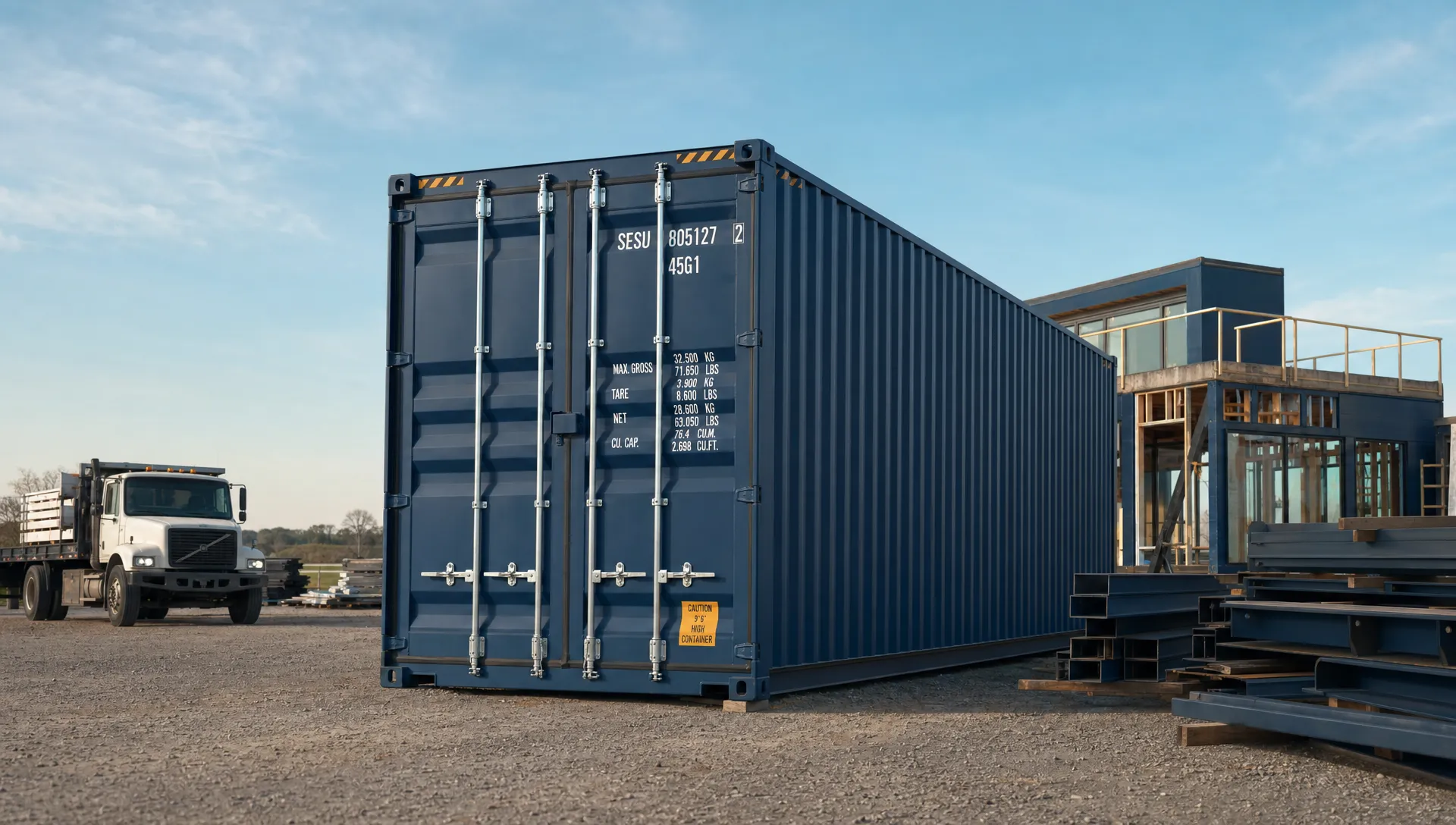
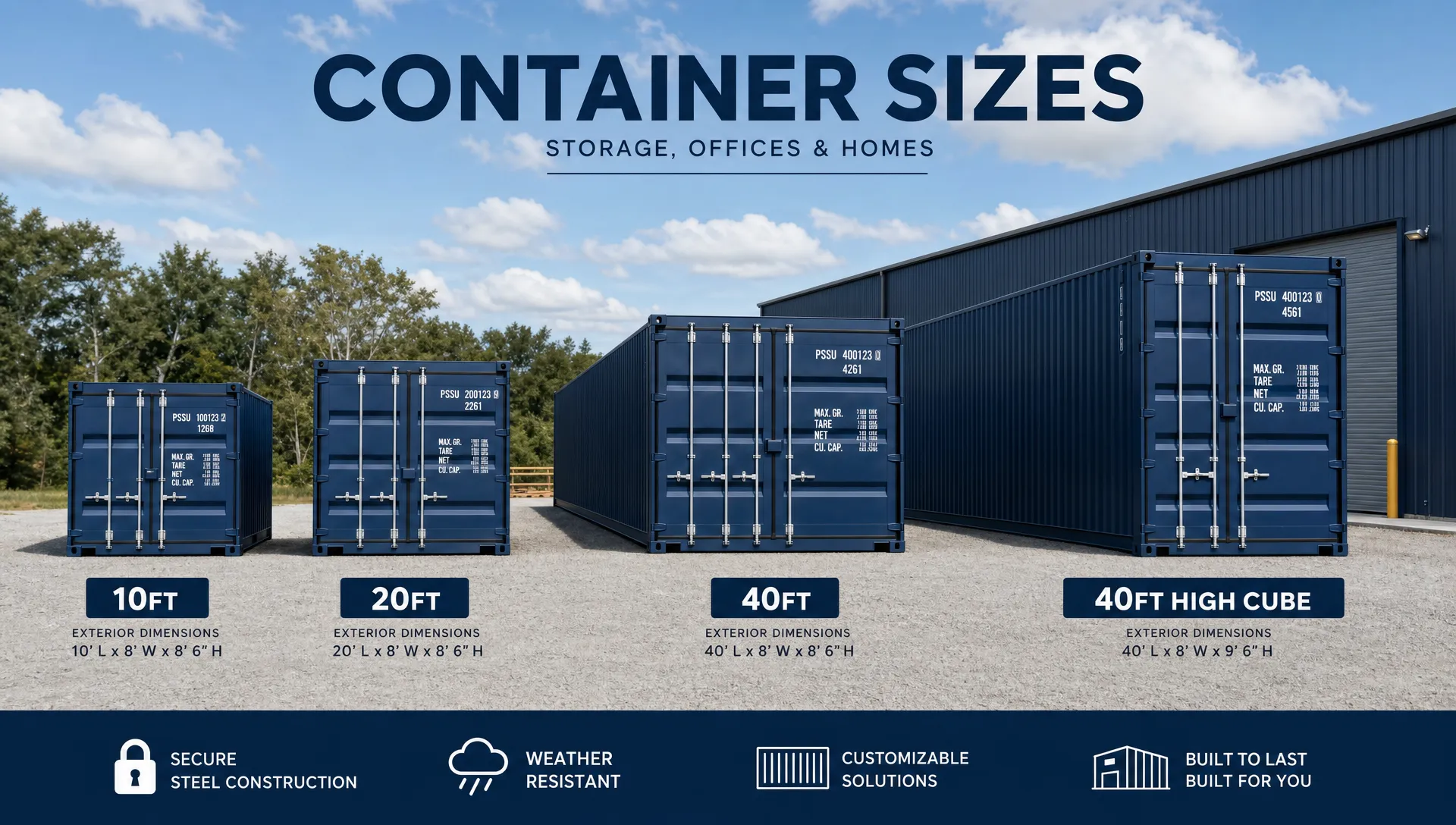
Most buyers should compare four main cargo container sizes first: 10ft, 20ft, 40ft, and 40ft high cube. A 20ft container is the best all-around size for storage and small offices. A 40ft container gives the most floor space for bulk storage, workshops, and home builds. A 40ft high cube is usually the better choice when people will stand, work, insulate, or live inside the unit.
Quick Answer: Choose a 10ft container for tight sites, a 20ft container for general storage or a compact office, a 40ft container for bulk storage and workshops, and a 40ft high cube for container homes, larger offices, and builds that need extra ceiling height.
Key Takeaways
- A standard 20ft cargo container gives about 160 sq. ft. of exterior footprint and is the easiest full-size option to deliver.
- A 40ft container gives about 320 sq. ft. of footprint, which makes it better for equipment, inventory, workshops, and multi-room layouts.
- A 40ft high cube adds 1 ft. of exterior height, which matters a lot after insulation, framing, flooring, and HVAC.
- Used WWT or CWO containers are common for storage, while one-trip containers are often preferred for cleaner office and home conversions.
- Delivery access can decide the size before budget does, especially on farms, rural roads, sloped driveways, and tight urban lots.
Cargo Container Sizes Compared
Most cargo containers, also called conex boxes, ISO containers, or intermodal containers, are 8 ft. wide on the outside. Length and height are the main differences. Standard height containers are 8 ft. 6 in. tall. High cube containers are 9 ft. 6 in. tall.
The dimensions below are common industry figures. Exact interior measurements can vary by manufacturer, floor thickness, wall corrugation, repairs, and custom work. International container sizing is based on ISO standards, including ISO 668 for Series 1 freight containers.
| Container size | Exterior dimensions | Typical interior dimensions | Approx. floor area | Approx. volume | Best common uses |
|---|---|---|---|---|---|
| 10ft standard | 10 ft. x 8 ft. x 8 ft. 6 in. | 9 ft. 3 in. x 7 ft. 8 in. x 7 ft. 9 in. | 80 sq. ft. | 560 cu. ft. | Small storage, tools, events, tight job sites |
| 20ft standard | 20 ft. x 8 ft. x 8 ft. 6 in. | 19 ft. 4 in. x 7 ft. 8 in. x 7 ft. 10 in. | 160 sq. ft. | 1,170 cu. ft. | General storage, small office, farm supplies, retail stock |
| 40ft standard | 40 ft. x 8 ft. x 8 ft. 6 in. | 39 ft. 5 in. x 7 ft. 8 in. x 7 ft. 10 in. | 320 sq. ft. | 2,390 cu. ft. | Bulk storage, workshops, equipment, larger builds |
| 40ft high cube | 40 ft. x 8 ft. x 9 ft. 6 in. | 39 ft. 5 in. x 7 ft. 8 in. x 8 ft. 10 in. | 320 sq. ft. | 2,690 cu. ft. | Offices, homes, gyms, studios, insulated spaces |
| 45ft high cube | 45 ft. x 8 ft. x 9 ft. 6 in. | 44 ft. 5 in. x 7 ft. 8 in. x 8 ft. 10 in. | 360 sq. ft. | 3,040 cu. ft. | Large storage, commercial builds, long home modules |
A 40ft high cube has the same footprint as a 40ft standard container, but it gives roughly 300 more cubic feet of interior volume. That is about 13 percent more volume. For homes and offices, that extra vertical space is often more useful than it sounds.
A 45ft high cube gives about 40 more sq. ft. of floor area than a 40ft container. It can be a strong choice for commercial conversions, but delivery access must be checked first. Not every rural lane, urban lot, or tight driveway can handle the truck and turning radius.
How Size Changes Usable Space, Weight and Delivery
Do not choose a container by length alone. The outside length tells you the footprint. The inside width and height tell you how the space will feel. Door opening height tells you what can actually fit through the end doors.
Most standard containers have a door opening around 7 ft. 8 in. wide and about 7 ft. 5 in. high. High cube door openings are usually taller, often near 8 ft. 5 in. That difference matters if you store tall equipment or plan to move in framed walls, appliances, tanks, shelving, or machinery.
Weight also matters. The tare weight is the empty weight of the container. The payload capacity is how much cargo it can carry when used for transport. For ground storage, you still need to think about weight because it affects delivery, lifting, foundations, and whether the container can sit on gravel, concrete piers, railroad ties, or footings.
| Size | Typical tare weight | Typical payload capacity | Practical note |
|---|---|---|---|
| 10ft | 2,500 to 3,000 lb. | Varies by build | Easier to place, but less common than 20ft units |
| 20ft standard | 4,800 to 5,000 lb. | About 47,000 lb. | Strong choice when loaded with dense items |
| 40ft standard | 8,200 to 8,600 lb. | About 58,000 to 59,000 lb. | Better for bulky items than very dense loads |
| 40ft high cube | 8,600 to 8,900 lb. | About 57,000 to 58,000 lb. | Better headroom with similar footprint to 40ft standard |
| 45ft high cube | 10,000 lb. or more | Often mid-50,000 lb. range | Best only when access and use case justify the length |
Payload numbers are most important if the container will return to intermodal transport by ship, rail, or truck. If that is your plan, ask about cargo-worthy status and the CSC plate. If the container will stay on your land, wind and watertight condition may be more important than active transport certification.
For custom builds, remember that insulation and framing reduce space. A wall assembly can take several inches from each side. A ceiling assembly can take several inches from overhead clearance. That is why high cube containers are so popular for offices, workshops, and shipping container home projects.
Best Cargo Container Sizes for Storage
Storage buyers usually care about security, dry space, and delivery cost. The right size depends on what you are storing, how often you need access, and whether the container will be moved later.
A 10ft container works well when space is tight. Homeowners use it for tools, seasonal equipment, remodeling supplies, and small business inventory. Contractors use 10ft units when a job site has limited room but still needs lockable storage.
A 20ft container is the most flexible storage size. It fits many driveways, small lots, farms, ranches, and construction sites. It is long enough for shelving on both walls with a center aisle. It is also a better fit than a 40ft container when you need to load heavy items such as tile, feed, parts, tools, or machinery.
A 40ft container is the better choice for bulky storage. Think lumber, pipe, staging materials, landscape equipment, furniture, retail overstock, event gear, and farm supplies. You get twice the footprint of a 20ft container, but placement takes more room.
A 40ft high cube is useful when you want pallet racking, tall shelves, stacked totes, or large equipment. The extra height can help you use vertical space, but only if you have a safe way to access it.
For storage, condition is often more important than appearance. A WWT container should keep out wind and water. A CWO container is built to a higher transport-focused standard. A one-trip container is newer and cleaner, often with fewer dents, newer door seals, and better paint.
If you want a deeper size-only breakdown before comparing conditions, Outback has a separate standard shipping container size guide for storage and builds that focuses on dimensions, volume, and delivery clearance.
Best Sizes for Container Offices and Workshops
Office and workshop buyers need to think beyond square footage. People will spend time inside the container, so ceiling height, ventilation, insulation, lighting, and door placement matter. A size that works for raw storage may feel cramped once it becomes a finished room.
A 10ft office is best for a guard booth, scale house, ticket booth, or small check-in station. It is compact and easy to place. It is not ideal for multiple desks, private meeting space, or storage plus office use.
A 20ft office is the standard compact choice. It can work for one or two desks, a small break area, a site supervisor office, or a simple backyard workspace. Many buyers like 20ft offices because they balance usable room with easier delivery.
A 40ft office is better when you need separate zones. You can divide the layout into office space and storage, two private work rooms, or a workshop with a small admin area. For construction companies, this size often makes more sense than renting a trailer over a long project timeline.
A 40ft high cube office is usually the best container office size when comfort matters. After insulation, ceiling panels, lights, and HVAC, the extra foot of height helps the room feel less tight. It also gives more room for ductless mini-split placement, overhead lighting, and finished ceilings.
For a ready-made example of a compact workspace, see this 20-foot container office option from Outback Shipping Containers. It is a useful reference point if you are comparing office size, layout, and delivery needs.
Workshops need a little more planning. A 20ft workshop can handle a bench, tools, and small equipment. A 40ft workshop is better for fabrication, repair work, storage racks, and a clear walkway. If you plan to add power tools, dust collection, compressed air, or climate control, make sure the electrical plan matches the final use.
Best Sizes for Shipping Container Homes
For container homes, high cube units usually win. A standard container can work, but interior height gets tight after subfloor, insulation, plumbing runs, ceiling finish, and lights. A 40ft high cube gives the best balance of length, height, availability, and layout flexibility.
A single 20ft container has a 160 sq. ft. exterior footprint. It can work for a tiny cabin, studio, guest room, office, or short-term rental add-on. The layout must be simple because the width is fixed. After interior walls, the finished width may feel closer to a narrow room than a typical apartment.
A single 40ft container has a 320 sq. ft. exterior footprint. It can hold a compact studio layout with a sleeping area, small kitchen, bathroom, and living area. Many buyers use one 40ft high cube as the core module for a cabin, ADU, Airbnb unit, or hunting property shelter.
Multiple containers create more livable homes. Two 40ft containers can create about 640 sq. ft. of exterior footprint before cutouts, connectors, stairs, decks, or mechanical areas. Four 40ft containers can create about 1,280 sq. ft. of footprint. The design becomes more complex, but the space feels more like a conventional home.
Container home planning must include structure. Cutting large wall openings can weaken the steel shell if it is not reinforced. Roof loads, snow loads, wind loads, foundation design, moisture control, and egress must be handled by qualified professionals. Building code, zoning, septic, utility, and permitting rules vary by state, county, and city, so check with local authorities before buying or modifying a unit.
One-trip containers are often preferred for homes because they start cleaner and usually need less cosmetic repair. Used containers can still work, but you should inspect flooring, door seals, corrosion, prior cargo concerns, roof dents, and structural rails. If you are comparing finished builds, this guide on how to compare shipping container homes for sale covers build quality, insulation, permits, and delivery questions in more detail.
Condition, Pricing and Modifications
The right size is only half the decision. Condition and modifications can change the best value fast. A cheaper container is not always cheaper after repairs, repainting, doors, vents, framing, insulation, windows, or crane placement.
Common condition grades include one-trip, used cargo-worthy, used WWT, and refurbished. A one-trip container has usually made one ocean trip from the factory to its destination market. It tends to have better paint, fewer dents, cleaner flooring, and newer seals. It is often chosen for offices, homes, retail units, and customer-facing builds.
A CWO container is cargo-worthy. It should be structurally sound for cargo transport when properly certified. A WWT container is wind and watertight, which is usually enough for static ground storage. A refurbished container has been repaired and repainted to improve function and appearance.
Prices change with market supply, steel costs, port availability, container condition, distance from depot, delivery method, and modifications. That is why a firm written quote matters more than a generic price range. Ask whether the quoted total includes the container, delivery, taxes, lift fees, site delays, and modifications.
For budget planning, use this rule: a 40ft container gives twice the floor area of a 20ft container, but it may not double the raw container cost. However, custom work often scales with square footage and complexity. More windows, doors, insulation, electrical work, plumbing, and finish materials will raise the final project cost.
For offices and homes, size also affects heating and cooling. A 40ft high cube has more interior volume than a 40ft standard container, so HVAC sizing should be based on the finished design, local climate, insulation level, window area, and occupancy. Do not guess. Oversized and undersized systems both cause comfort and moisture problems.
If you need the unit only for a short job, renting may be better than buying. Outback Shipping Containers is the main sales site, while LeaseLink Containers is the leasing arm. For long-term storage, a permanent office, or a home build, buying often gives more control over modifications and placement.
Delivery and Site Prep Checklist
Delivery is where many first-time buyers get surprised. The container size may fit on paper, but the truck still needs room to enter, turn, set the container down, and leave safely. This is especially important for rural sites, farms, wooded lots, sloped driveways, and city alleys.
A tilt-bed truck slides the container off the back. It needs straight-line clearance because the truck and container stretch out during unloading. A crane or forklift may be needed when the container must be placed over a fence, across a ditch, beside a building, or into a tight pad.
| Container size | Planning clearance for tilt-bed delivery | Site notes |
|---|---|---|
| 10ft | Often 40 to 60 ft. | Good for tighter sites, but truck access still matters |
| 20ft | Often 100 ft. | Works for many homes, farms, and small job sites |
| 40ft | Often 120 ft. | Needs more straight space and a wider turn path |
| 40ft high cube | Often 120 ft. plus height clearance | Watch tree limbs, wires, gates, and roof overhangs |
| 45ft high cube | Often more than 120 ft. | Requires careful access review before ordering |
These are planning ranges, not a substitute for a delivery review. Ground conditions matter too. Soft soil can trap trucks. Steep grades can make placement unsafe. Low branches, overhead wires, narrow gates, septic fields, culverts, and tight turns can stop delivery even when the pad itself is large enough.
The federal width limit for many commercial vehicles is commonly 102 inches on the National Network, according to the Federal Highway Administration size and weight rules. A standard ISO container is 96 inches wide, but delivery still depends on truck configuration, route, bridge limits, local rules, and site access.
Prepare the site before the truck arrives. The container should sit level and should be supported at the corners or along strong bearing points. Gravel pads, concrete strips, piers, and compacted stone are common choices. Keeping the container off wet ground helps reduce corrosion and makes the doors easier to operate.
For home and office builds, plan utilities before placement. Electrical conduit, water lines, sewer, septic, internet, and HVAC penetrations are easier to plan before the container is set. If the container will be inspected as a building, coordinate with your local building department before major work begins.
Frequently Asked Questions
What are the standard cargo container sizes?
The most common cargo container sizes are 10ft, 20ft, 40ft, 40ft high cube, and 45ft high cube. Most are 8 ft. wide outside. Standard containers are 8 ft. 6 in. tall, while high cube containers are 9 ft. 6 in. tall.
Is a 20ft or 40ft container better for storage?
A 20ft container is better for general storage, heavy items, and tighter sites. A 40ft container is better for bulky items, business inventory, equipment, and long-term storage. If you need shelving, aisles, and room to sort materials, 40ft may be more practical.
What size shipping container is best for a home?
A 40ft high cube is usually the best single-container size for a shipping container home. It gives 320 sq. ft. of exterior footprint and extra ceiling height. A 20ft container can work for a tiny cabin or guest room, but layouts are more limited.
How much space do you lose when insulating a container?
Most insulated container builds lose several inches from the walls and ceiling. The exact loss depends on the insulation type, framing depth, vapor control, wiring, and finish material. This is why many office and home buyers choose high cube containers instead of standard height units.
Can a cargo container be delivered to a rural property?
Yes, many cargo containers can be delivered to rural sites, farms, and ranches, but access must be checked first. The truck needs safe roads, enough turning room, firm ground, and overhead clearance. Remote delivery may require special planning, especially for 40ft and 45ft units.
Do I need a permit for a shipping container office or home?
Permit rules vary by state, county, and city. A storage container may have different rules than an office, workshop, ADU, or home. Always check zoning, building code, utility, septic, and foundation requirements with local authorities before ordering or modifying a container.
Choosing the right cargo container size comes down to use, access, condition, and finish level. If you are comparing storage units, offices, homes, or custom modular builds, Outback Shipping Containers can help you review inspected options, delivery logistics, and current pricing. Start by exploring Outback Shipping Containers and request a quote that matches your site and project goals.
About Outback Shipping Containers
This guide was prepared by the Outback Shipping Containers team, based on the questions our customers ask us most when buying, modifying and taking delivery of shipping containers. Learn more about us.
Ready to find your container?
Browse our in-stock shipping containers, container homes and custom builds, or ask our team for a free quote with delivery to your site.