Shipping Container With Delivery: What to Expect
By Outback Shipping Containers · Published September 8, 2026 · Last updated October 20, 2026
Shipping Container With Delivery: What to Expect
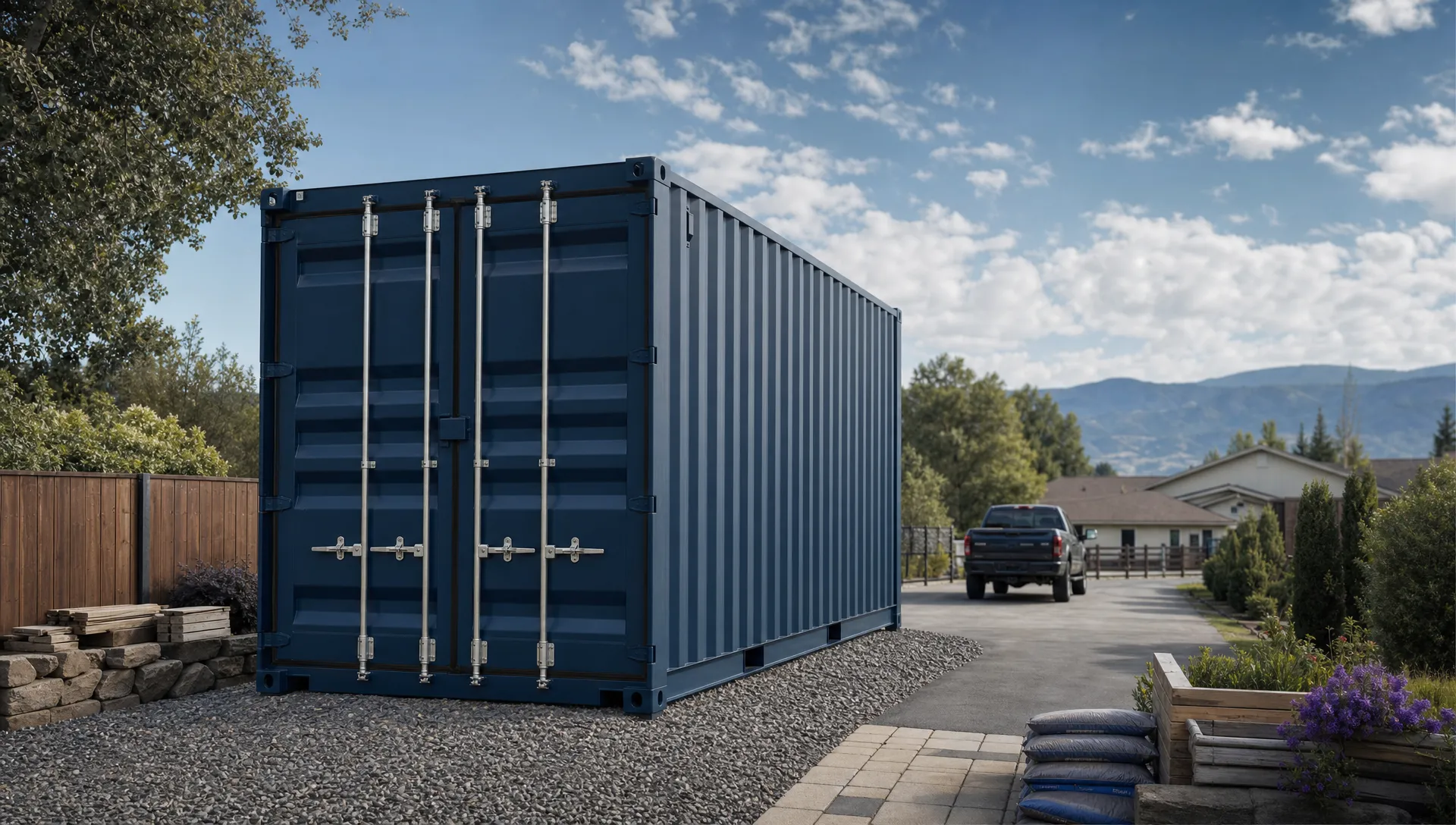
When you buy a shipping container with delivery, expect more than a truck showing up with a steel box. A good seller confirms the container size, condition grade, delivered price, delivery method, site access and placement plan before dispatch. On delivery day, the driver needs safe clearance, firm ground and a prepared spot so the container can be set level without damage.
Quick Answer: A shipping container with delivery usually includes the container, route planning, trucking, offloading and basic placement on your prepared site. It does not usually include grading, tree trimming, foundation work, permits, crane rental or moving the container after it has been placed unless those services are quoted in writing.
Key Takeaways
- Get a delivered price, not just a container price plus a vague freight estimate.
- Confirm the unit grade before purchase, such as one-trip, WWT or CWO.
- Match the delivery method to your access, soil, slope, overhead clearance and final placement.
- Prepare the site before the truck arrives, including a level pad, clear route and marked door direction.
- Inspect the container before the driver leaves and document any issues right away.
What a Shipping Container With Delivery Includes
A shipping container with delivery quote should spell out what you are buying and how it will get to your property. The best quotes separate the container type, delivery address, delivery method, taxes if applicable and any access-related charges. If the quote only lists a low container price, ask what happens next.
Most buyers are shopping for one of three broad uses. Homeowners and ranch owners often need secure storage. Contractors need job-site storage, tool rooms or quick office space. DIY builders, Airbnb hosts and developers may be planning a shipping container home, tiny cabin, pool, workshop or other container conversion.
The same cargo container can serve many purposes, but the delivery plan changes by use. A basic 20 ft conex box for farm storage may be placed on blocks with a tilt-bed truck. A 40 ft high cube unit for a future container home may need a stronger pad, more careful orientation and sometimes a crane if it must land on a permanent foundation.
A standard delivery often includes these pieces:
- The container you selected, with size and condition confirmed
- Carrier scheduling and route coordination
- Trucking from depot, yard or modification shop to your site
- Offloading by the truck method quoted
- Basic placement within the safe reach and limits of that equipment
It usually does not include excavation, gravel, concrete, utility work, building permits, zoning approvals, removing fences or towing a stuck truck. Those are site responsibilities unless your written scope says otherwise.
Outback Shipping Containers supplies new, used and custom containers with nationwide delivery. That matters because remote and rural sites often need more planning than a simple urban drop. A good delivery team should ask about road width, driveway turns, slope, trees, power lines and the exact spot where the doors should face.
Step-by-Step: From Quote to Drop Off
Ordering a shipping container with delivery is easier when you know the normal order of events. The process is not complicated, but skipping one step can create delays or surprise costs.
- Choose the container type: Start with size, height, condition and intended use. A 20 ft WWT storage container is a different purchase than a 40 ft high cube one-trip unit for a build.
- Share the delivery ZIP code and site details: The seller needs the address, road type, driveway conditions and any access limits before giving a reliable delivered quote.
- Review the delivered quote: Confirm whether freight, offloading, taxes, permits, waiting time, special equipment and crane service are included or excluded.
- Approve photos or unit specs when available: For used containers, ask about rust, dents, floors, door function and wind- and watertight condition.
- Prepare the site: Clear the route, level the pad, mark the placement area and decide which way the cargo doors should open.
- Schedule delivery: The carrier confirms the time window, truck type and any special instructions for gates, contacts or rural directions.
- Meet the driver and inspect the container: The driver places the unit where safe. You inspect it before signing final paperwork.
For first-time buyers, the biggest mistake is treating delivery as an afterthought. Container trucks are large, heavy and limited by physics. If the driver cannot safely reach the drop zone, the container may need to be placed somewhere else or rescheduled with different equipment.
That is why your quote should include questions before payment, not after. If you are still deciding what to buy, Outback also has a helpful guide on what to check before you purchase a shipping container, including size, condition, access and total delivered cost.
Delivery Methods, Truck Clearance and Site Access
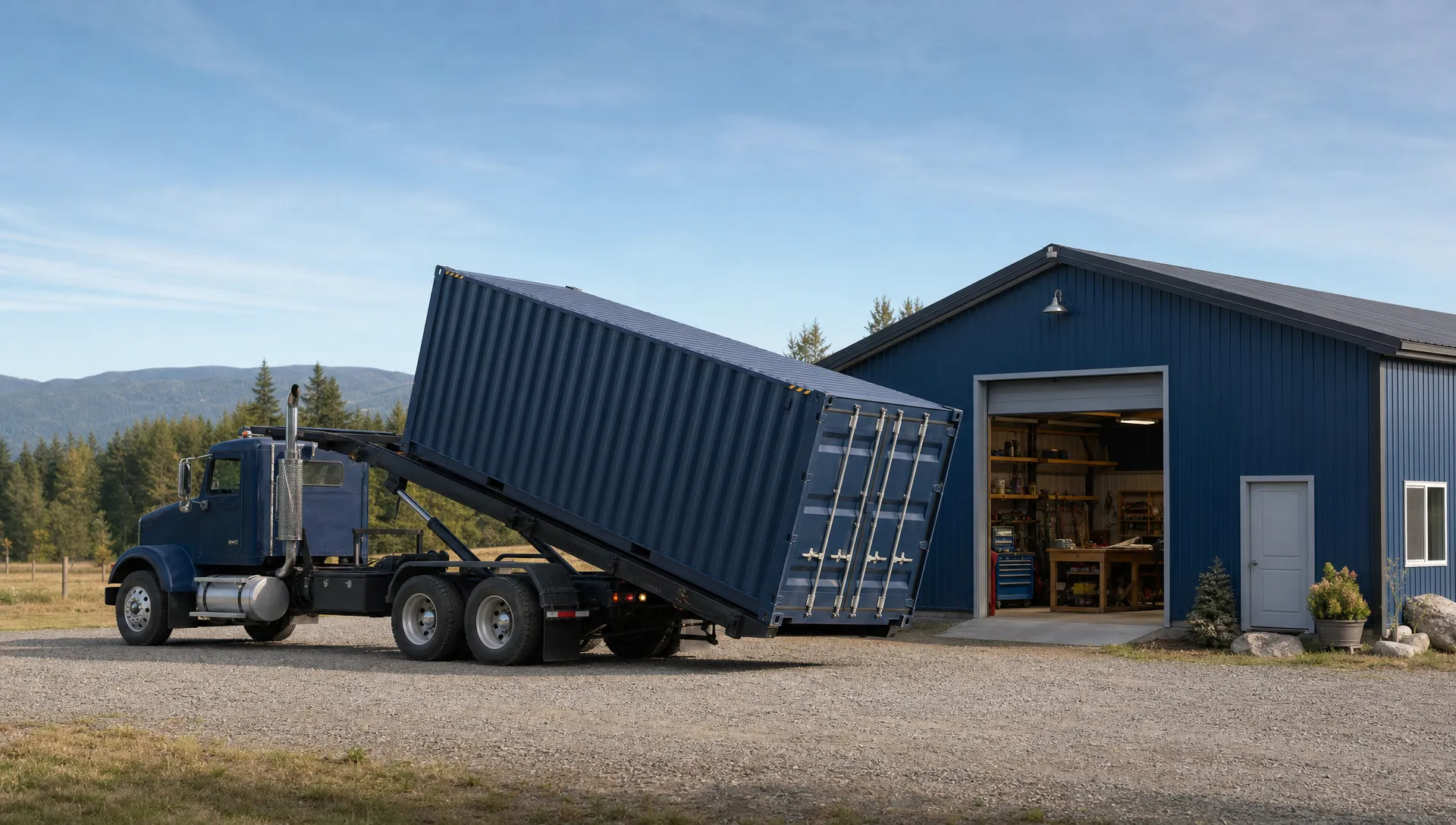
The delivery method affects cost, access and how accurately the unit can be placed. Most residential and farm deliveries use a tilt-bed truck when the route is clear and the ground is firm. Tight sites, urban lots, multiple containers or permanent foundations may need a side-loader, flatbed with crane support or other specialized equipment.
For a deeper look at truck types, road conditions and safety rules, see Outback Shipping Containers' guide to shipping container transport options and site rules.
| Delivery method | How it unloads | Best fit | Site notes |
|---|---|---|---|
| Tilt-bed truck | Trailer tilts and the container slides off the rear | Common storage drops, farms, homes and job sites | Needs a mostly straight approach, firm ground and room to pull forward |
| Side-loader truck | Hydraulic arms lift the container from the side | Tighter lots where rear unloading does not work | Needs side clearance and level ground beside the truck |
| Flatbed or step-deck | Container rides on a trailer and is lifted off by separate equipment | Long hauls, multiple units and some custom builds | Requires a crane, forklift or reach stacker at the site |
| Crane-assisted delivery | Crane lifts and sets the unit into place | Foundations, pools, obstacles and tight urban sites | May require permits, lift planning and a safe set-up area |
As a rough planning rule, a 20 ft tilt-bed delivery may need about 100 ft of straight clearance. A 40 ft unit often needs about 120 ft. Exact needs vary by truck, driver approach, slope and surface.
Overhead clearance matters too. Trucks carrying ISO containers can be tall, especially with high cube units. Low branches, wires, carports, signs and tight gate headers can stop a delivery before the container reaches the pad.
Professional carriers also have cargo securement duties while the container is in transit. The Federal Motor Carrier Safety Administration publishes cargo securement rules for commercial motor vehicles. Buyers do not need to manage the straps and chains, but they should work with sellers that use qualified carriers and proper equipment.
Choosing Container Size, Weight and Condition for Delivery
Shipping containers may look simple, but size and weight drive much of the delivery plan. Standard intermodal container dimensions are based on Series 1 freight container standards such as ISO 668. Real-world specs can vary by manufacturer, especially tare weight and interior dimensions, so always confirm the actual unit details before purchase.
| Container type | Common uses | Typical outside dimensions | Approx. empty weight | Delivery notes |
|---|---|---|---|---|
| 10 ft standard | Small storage, tight residential sites, kiosks | 10 ft x 8 ft x 8 ft 6 in | About 2,800 lb | Easier to place, but availability can vary by market |
| 20 ft standard | Storage, tools, farm supplies, small workshops | 20 ft x 8 ft x 8 ft 6 in | About 4,800 lb | Often the easiest full-size container to deliver |
| 40 ft standard | Bulk storage, equipment, long job sites | 40 ft x 8 ft x 8 ft 6 in | About 8,200 lb | Needs more driveway length and turning room |
| 40 ft high cube | Container homes, offices, workshops, taller storage | 40 ft x 8 ft x 9 ft 6 in | About 8,800 lb | Adds interior height, but increases overhead clearance concerns |
| 45 ft high cube | Larger builds, commercial storage, specialty projects | 45 ft x 8 ft x 9 ft 6 in | About 10,000 lb or more | Requires careful route and placement planning |
Tare weight is the empty weight of the container. Payload capacity is the maximum cargo weight it can safely carry when used for transport. For storage buyers, tare weight affects trucking and site bearing more than payload capacity. For freight users, payload capacity, door seals, floors and the data plate matter more.
Condition grade also matters. A one-trip container is usually newer, with less cosmetic wear. A WWT container is wind- and watertight, which makes it a common choice for static storage. A CWO container is cargo-worthy and may be suitable for shipping if it has the right inspection status and documentation.
If you plan to export cargo, ask about CSC plate status and inspection requirements before buying. If you only need on-site storage, an active CSC plate may not be needed, but the container should still close properly and keep out rain, wind and pests.
For container homes, offices, cabins and other conversions, many buyers prefer one-trip or refurbished units because the starting shell can affect build time and finish quality. Used units can still work well, but dents, corrosion and floor condition need a closer look before you invest in modifications.
Site Prep Before Delivery Day
Good site prep is what makes the delivery feel easy. Poor site prep turns a normal drop into a delay, a stuck truck or a container sitting in the wrong spot.
Start with the route. Walk from the public road to the final pad and picture the truck making every turn. Look for soft shoulders, steep driveways, narrow gates, low branches, overhead wires, septic fields, irrigation lines and tight fence corners.
Then prepare the pad. A container should sit level with good drainage under and around it. Bare soil can work for short-term storage if it is firm and well drained, but gravel, concrete piers, railroad ties or engineered foundations are often better for long-term use. For homes, offices and pools, talk with local building officials or a qualified contractor before setting the unit.
Use this simple pre-delivery checklist:
- Mark the exact container corners and door direction before the truck arrives.
- Clear vehicles, trailers, equipment and debris from the access route.
- Trim branches and confirm safe overhead clearance.
- Make sure the ground is firm enough for a heavy truck.
- Set blocks, gravel or foundation supports before delivery if they are part of your plan.
- Confirm local zoning or permit rules for long-term placement, business use or residential conversion.
Permits vary by city, county and state. A temporary storage container on a construction site may be treated very differently from a permanent shipping container home, office, pool or retail unit. Always check with local authorities before assuming a container can stay where it is placed.
Outback has a full shipping container delivery site prep checklist that covers truck clearance, foundations, drainage and access constraints in more detail.
Costs, Timing and Questions to Ask
The total price depends on the container, delivery distance, truck type, fuel costs, carrier availability, access difficulty and any special equipment. A local tilt-bed delivery is usually simpler than a crane-assisted placement at a tight urban lot or a remote ranch road with limited turnaround space.
Avoid comparing sellers by container price alone. A low advertised price can become expensive if delivery, offloading, taxes, lift equipment or rural access fees are added later. A higher quoted price that includes the correct truck and placement scope may be the better deal.
Common cost drivers include:
- Distance from the container yard, rail ramp or modification shop
- Container size and weight
- Delivery truck type
- Road conditions, bridges, gates and steep grades
- Waiting time if the site is not ready
- Crane, forklift or escort needs
- Failed delivery or rescheduling fees
For mileage-based cost planning, Outback's guide to shipping container delivery cost per mile in 2026 explains how distance, truck type and access can affect the final number. Use it as a planning tool, then request a written delivered quote for your exact ZIP code and site.
Timing also varies. In-stock standard units near major hubs may schedule faster than custom modular builds, container pools or remote deliveries. Weather can affect timing too. Wet ground may be unsafe for a heavy truck even if the road is open.
Ask these questions before paying a deposit:
- Is the quote for the container only or the full delivered price?
- What truck type will deliver the unit?
- Is offloading included?
- What site conditions could create extra charges?
- What happens if the truck cannot safely access the placement area?
- Will I receive photos, unit specs or inspection details before delivery?
If you are comparing options now, you can start with Outback Shipping Containers' nationwide container selection to review new, used and custom options with delivery support across all 50 states.
Delivery Day Inspection and Common Problems
Be on site when the container arrives if possible. A driver can follow your placement instructions more accurately when you are there to confirm the final spot, door direction and spacing from buildings or property lines.
Before the driver leaves, inspect the unit in daylight. Take photos of all sides, the roof if safely visible, the doors, lock rods, gaskets, floor and any dents or rust you are concerned about. Used containers are expected to have cosmetic wear, but they should match the condition grade you purchased.
Check these items before signing final delivery paperwork:
- Container size and height match the order.
- Doors open, close and latch without major force.
- Door gaskets are present and seated.
- Floors feel solid underfoot.
- Roof and walls do not show obvious holes.
- The unit sits level enough for doors to work properly.
- CWO, CSC or other requested documentation is present when required.
Some delivery problems are preventable. Soft ground is one of the most common. A loaded truck can sink into a lawn, pasture or fresh fill, especially after rain. If the driver says the ground is unsafe, take it seriously. Towing a stuck truck can cost far more than rescheduling.
Tight access is another issue. A truck that can drive down your street may still fail to make the turn into your driveway. Send photos or videos to your seller before delivery if access is questionable. Include gate widths, turns, slopes and the final placement area.
Wrong orientation is also easy to avoid. Mark the door end with cones, paint, flags or stakes. If the container will become a workshop or office, think about sun exposure, drainage, future utilities and where people will walk.
Once the container is set, do not assume it can be nudged by hand or moved with a small pickup. Even an empty 20 ft ISO container weighs thousands of pounds. If you need it moved later, plan for proper equipment.
Frequently Asked Questions
How much does it cost to deliver a shipping container?
Delivery cost depends on distance, truck type, container size, fuel, access and whether special equipment is needed. A nearby tilt-bed drop usually costs less than long-distance hauling or crane-assisted placement. Ask for a written delivered quote that lists freight, offloading, taxes and possible access-related fees.
Can a shipping container be delivered to my backyard?
Yes, if the truck can safely reach the area or place the container from an accessible position. The driver needs enough width, height, turning space and firm ground. If backyard access is blocked by fences, trees, wires or slope, you may need a side-loader, crane or alternate placement.
What size shipping container is easiest to deliver?
A 20 ft container is usually the easiest full-size unit to deliver because it needs less straight clearance and turning room than a 40 ft container. A 10 ft unit can fit tighter sites, but availability may vary. Bigger high cube units need more overhead clearance and planning.
Do I need a permit for a shipping container delivery?
Permit rules depend on local zoning, use and how long the container will stay. Temporary storage may have fewer requirements than a permanent office, pool or shipping container home. Check with your city, county or homeowners association before delivery, especially for residential, commercial or modified units.
What is the difference between CWO and WWT containers?
WWT means wind- and watertight, which is common for storage use. CWO means cargo-worthy, often used when the container may be moved with freight. A CWO unit may also need a valid CSC plate for international shipping. Always confirm the documentation required for your use.
How long does shipping container delivery take?
Timing depends on inventory, location, route, truck availability, weather and whether the container is standard or modified. Remote sites and custom builds usually need more planning. Your seller should provide a scheduling window after confirming the unit, delivery address, access details and payment terms.
Buying a container is much easier when the delivery plan is clear before the truck starts rolling. If you need help matching size, condition and delivery method to your property, start by reviewing new, used and custom shipping containers from Outback Shipping Containers or request a quote for your exact delivery site.
About Outback Shipping Containers
This guide was prepared by the Outback Shipping Containers team, based on the questions our customers ask us most when buying, modifying and taking delivery of shipping containers. Learn more about us.
Ready to find your container?
Browse our in-stock shipping containers, container homes and custom builds, or ask our team for a free quote with delivery to your site.