Shipping Container Rent to Own Monthly Cost & Savings
Save on shipping container rent to own monthly cost with no down payment options. Compare used container financing plans and low monthly rates today. Compare
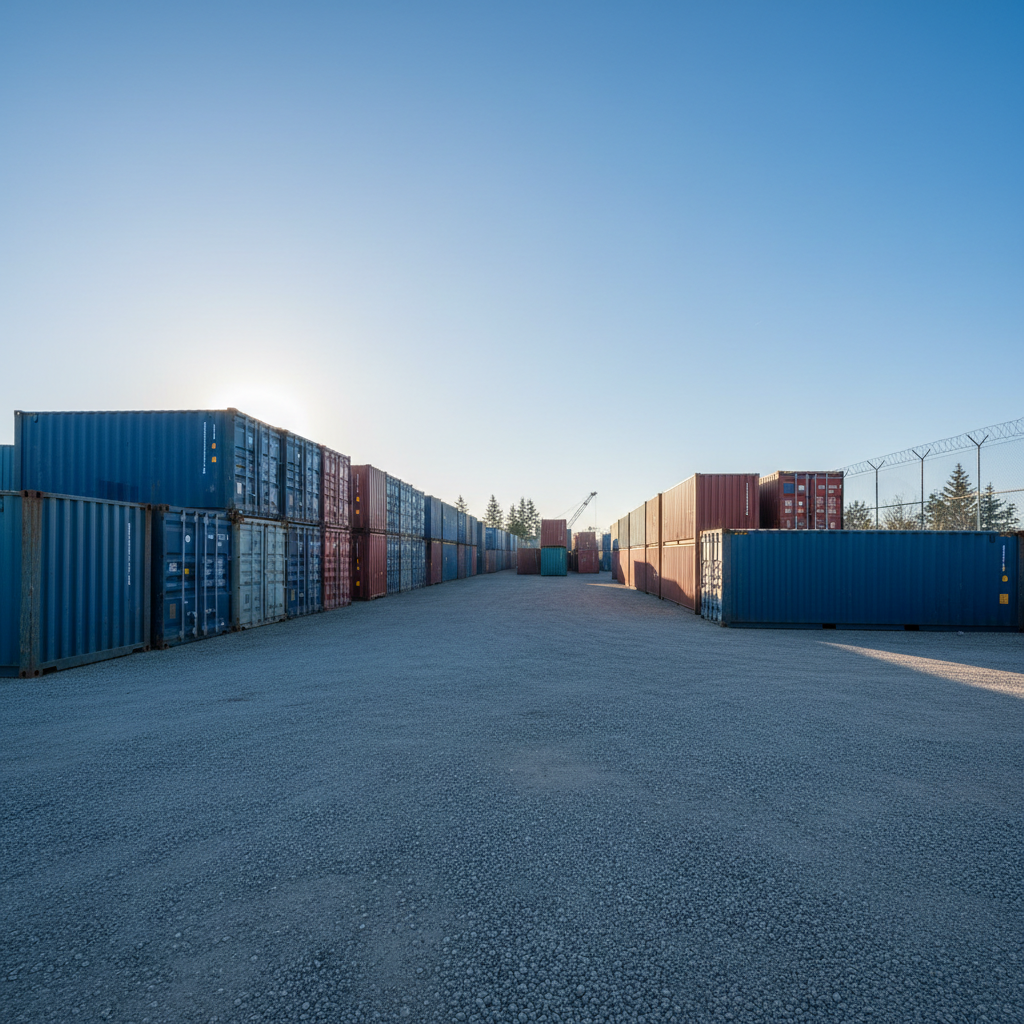
For many businesses and homeowners in August 2026, the barrier to securing high-quality steel storage isn't the utility of the unit—it is the upfront capital. As traditional lending rates remain elevated, the shipping container rent to own monthly cost has become the most critical metric for cash-flow-conscious buyers. Unlike a standard rental, where payments vanish into a landlord's pocket, rent-to-own (RTO) or lease-purchase programs allow you to build equity in a tangible asset while keeping your liquid reserves for operations or site prep.
Table of Contents
- Average Shipping Container Rent to Own Monthly Cost in 2026
- How Rent to Own Shipping Container Payments are Calculated
- Buy vs Rent Shipping Container Cost: Which Is Better for You?
- Hidden Costs in Lease Purchase Agreements
- Detailed Breakdown of Rent-to-Own Monthly Cost by Container Size
- Impact of Geographic Location and Delivery Surcharges
- Evaluating the Total Cost of Interest vs. Direct Purchase
- Frequently Asked Questions
- Finalizing Your Rent-to-Own Strategy
- Explore Related Products & Guides
Average Shipping Container Rent to Own Monthly Cost in 2026
The monthly payment for an RTO contract is typically higher than a standard monthly rental but lower than most short-term unsecured personal loans. For a standard used 20ft shipping storage container, expect to pay between $120 and $185 per month, depending on the contract term (typically 24, 36, or 48 months). Larger units, such as a 40ft used shipping container, generally range from $190 to $275 per month.
| Container Type | Estimated Monthly Payment (36 Mo) | Down Payment (Avg) | Typical Ownership Path |
|---|---|---|---|
| 20ft Used (WWT) | $135 - $165 | 1st & Last Month | Lease-Purchase |
| 20ft New (One-Trip) | $175 - $210 | $250 - $500 | Rent-to-Own |
| 40ft HC Used | $210 - $260 | 1st & Last Month | Lease-Purchase |
| 40ft HC New (One-Trip) | $280 - $350 | $500 - $1,000 | Rent-to-Own |
Tip: Most RTO programs do not require a formal credit check, making them an excellent 'no credit check container financing 2026' option for new businesses or individuals rebuilding credit. However, always confirm if the provider reports positive payments to bureaus.
How Rent to Own Shipping Container Payments are Calculated
When you use a shipping container payment calculator or receive a quote from a dealer, three primary factors drive your monthly rate. First is the unit's base price—a 40ft high cube shipping container costs more than a standard 20ft unit, and new vs used shipping containers carry significantly different price tags. Second is the term length; longer terms lower the monthly payment but increase the total interest paid. Third is the 'rental factor,' which covers the risk and depreciation the dealer assumes.
- Origination Fees: Small administrative fees charged at the start of the contract.
- Delivery Logistics: Usually paid upfront or rolled into the first few payments. Check shipping container transport options to estimate this.
- Early Buyout Options: Most reputable contracts allow you to pay off the remaining balance early for a discount on the remaining 'rent' portion.
Buy vs Rent Shipping Container Cost: Which Is Better for You?
The decision to search for 'storage container financing near me' instead of a straight purchase often comes down to the duration of need and tax strategy. If you plan to keep the unit for more than five years, buying outright is the lowest total cost of ownership. However, for a 2-3 year project, shipping container lease purchase options offer a balance of ownership and flexibility. Furthermore, many commercial users can deduct the monthly lease payments as an operational expense (OpEx) rather than a capital expenditure (CapEx), depending on their local AHJ and IRS guidelines.
Pros of Rent-to-Own Financing
- Capital Preservation: Keep your cash for inventory or construction.
- No Credit Impact: Many programs utilize 'soft' pulls or no credit checks at all.
- Instant Asset: You get the unit immediately, unlike saving up for months.
- Flexibility: If your needs change, many contracts allow you to return the unit (subject to terms).
Hidden Costs in Lease Purchase Agreements
While the shipping container rent to own monthly cost is the 'sticker price,' savvy buyers look at the total contract cost. You must account for state sales tax on every monthly payment, not just the initial transaction. Additionally, since the container is technically 'rented' until the final payment, you may be required to maintain insurance on the unit or pay a 'damage waiver' fee. If you are looking at specialized equipment like a used 40ft refrigerated shipping container, maintenance of the cooling unit is often the buyer's responsibility even during the lease phase. Review the reefer electrical requirements before committing to a monthly lease.
Detailed Breakdown of Rent-to-Own Monthly Cost by Container Size
The monthly payment for a shipping container lease-purchase agreement is primarily dictated by the container's physical dimensions and its current condition grade. In the 2026 market, 20-foot standard units remain the entry point for most small businesses and residential storage users. These units typically command a lower monthly installment because the underlying asset value is lower. However, when you step up to a 40-foot High Cube (HC) unit, the monthly cost does not simply double; it reflects the higher logistics costs of delivery and the increased market demand for 9'6" vertical clearance.
It is also critical to distinguish between 'One-Trip' units and 'Wind and Watertight' (WWT) used units. A one-trip unit under a rent-to-own contract will carry a premium monthly price, often $50 to $85 higher than a used counterpart, because the depreciation curve is shallower and the residual value remains high. Used units may offer a lower monthly entry point, but buyers must ensure the contract allows for structural inspections before the title transfers at the end of the term.
| Container Type | Estimated Monthly Payment (36-mo) | Down Payment Range | Typical Residual Buyout |
|---|---|---|---|
| 20' Standard (Used WWT) | $115 - $145 | $250 - $400 | $1.00 - $100 |
| 20' Standard (One-Trip) | $165 - $195 | $400 - $600 | $1.00 |
| 40' High Cube (Used WWT) | $185 - $225 | $500 - $800 | $100 - $250 |
| 40' High Cube (One-Trip) | $260 - $310 | $800 - $1,200 | $1.00 |
Tip: Check if your provider offers a '90-day same as cash' clause. Many national rent-to-own firms allow you to pay off the remaining principal within the first three months to avoid the built-in rental surcharges, effectively turning the lease into a standard sale.
Impact of Geographic Location and Delivery Surcharges
While the base monthly payment is a fixed figure in your contract, the total cost of ownership is heavily influenced by your proximity to a major intermodal hub or port. In the US, regions like the Gulf Coast (Houston) or the West Coast (Long Beach) often see lower monthly lease rates due to higher inventory density. Conversely, if you are located in a landlocked state like Nebraska or Montana, your initial 'delivery and set' fee will be significantly higher, and some companies may bake a portion of this logistics cost into your monthly premium to lower the upfront barrier.
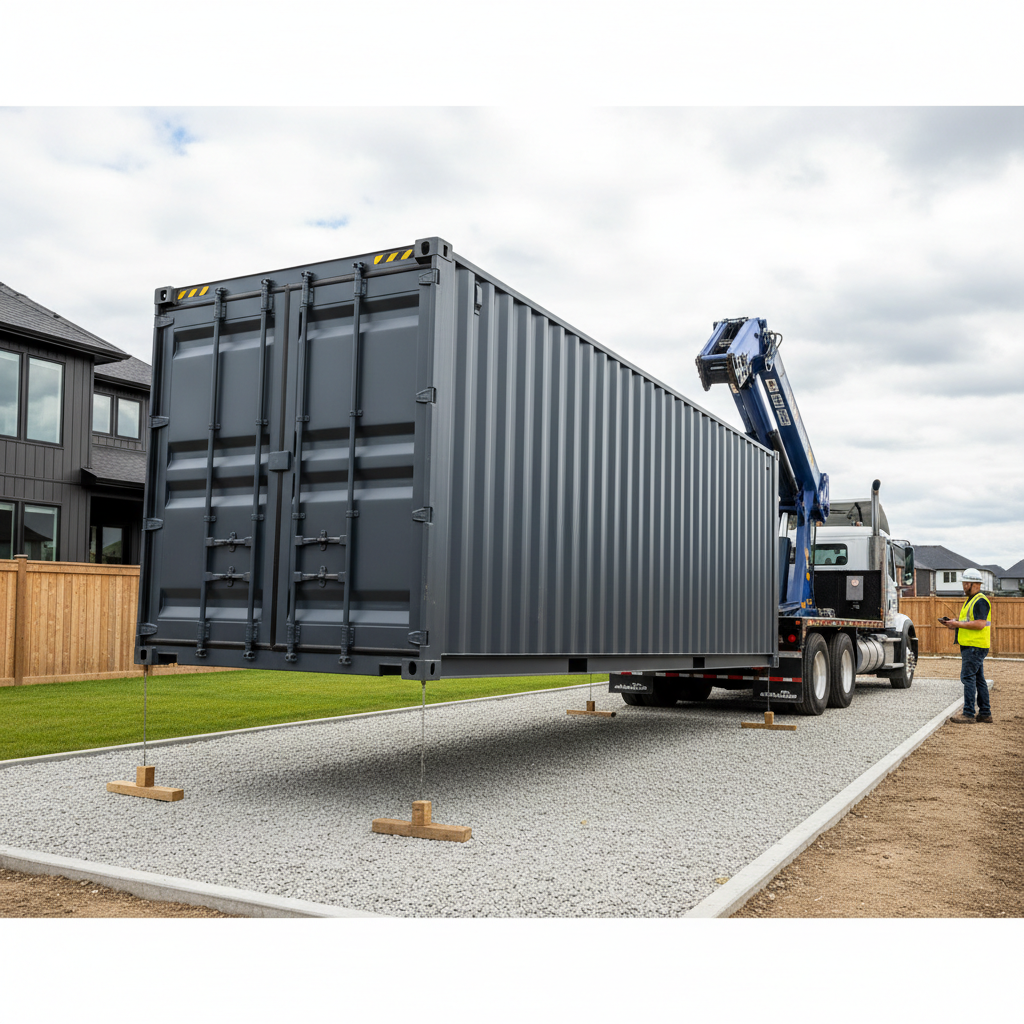
Delivery logistics for rent-to-own units involve tilt-bed trailers or specialized roll-off trucks. If your site requires a crane or has difficult access, these one-time fees can exceed $500, which is often not rolled into the monthly payment but required as an upfront 'origination' or 'delivery' fee. You must ensure the ground is leveled with gravel or railroad ties prior to delivery, as the contract terms usually hold the renter liable for any structural warping (door misalignment) caused by settling on soft ground during the rental period.
- Port Proximity: Units within 50 miles of a port usually feature 10-15% lower monthly rates.
- Zoning Permits: Many municipalities require a temporary placement permit for RTO units, costing $50-$200 annually.
- Site Preparation: Adding a gravel pad adds $300-$700 to your total first-year cost but prevents floor rot.
- Tilt-Bed Delivery: Standard for 20ft units; 40ft units may require more expensive heavy-duty chassis.
Important: Avoid placing rent-to-own containers directly on grass or dirt. Moisture trapped beneath the unit will accelerate cross-member corrosion, which could void your ability to return the unit if you choose to terminate the lease early.
Evaluating the Total Cost of Interest vs. Direct Purchase
The convenience of rent-to-own comes at a premium that functions similarly to an interest rate, though it is legally classified as a rental service. When you calculate the 'shipping container rent to own monthly cost' over a typical 36-month or 48-month term, you will often find that you are paying 1.5 to 2.2 times the original cash price of the container. For a business with strong cash flow, a direct purchase is always more economical. However, for those needing to preserve liquid capital for operations, the 'rent premium' is essentially a cost of convenience.
To determine if the RTO monthly cost fits your budget, you must look at the 'Total Cost to Own' (TCO). This includes the sum of all monthly payments, the down payment, the delivery fee, and the final buyout fee. If your TCO for a used 20-foot unit exceeds $5,500 in a market where the cash price is $2,800, you are paying nearly 100% in 'interest' over three years. For many, this is still preferable to off-site self-storage, which offers zero equity and requires monthly travel to a facility.
- Calculate the Cash Price: Get a quote for the same unit as a straight purchase.
- Sum the Lease Payments: Multiply your monthly payment by the term length (e.g., 36 months).
- Add Upfront Costs: Include the security deposit and the delivery fee.
- Compare to Storage Units: Compare the monthly RTO cost to a local 10x20 climate-controlled storage unit ($180-$250/mo).
Tip: Unlike traditional financing, RTO agreements are typically 'no-credit-check.' This makes the higher total cost a trade-off for accessibility for new businesses or individuals with rebuilding credit scores.
Container delivery near you
We deliver to every state in the lower 48 plus Alaska and Hawaii. These local pages list pricing, metro coverage and typical lead times for the areas we run into most:
- Shipping containers near me — how we source from the depot closest to your ZIP code
- Shipping containers in Georgia — pricing and delivery to Atlanta and Savannah
- Shipping containers in North Carolina — pricing and delivery to Charlotte and Raleigh
- Shipping containers in Arizona — pricing and delivery to Phoenix and Tucson
- Shipping containers in Washington — pricing and delivery to Seattle and Spokane
- Shipping containers in Colorado — pricing and delivery to Denver and Colorado Springs
Frequently Asked Questions
Based on real queries from our 2026 customers, here are the most common questions regarding portable storage container monthly rates and financing.
How much is a monthly payment for a shipping container?
In 2026, a 20ft used unit typically costs between $130 and $170 per month on a 36-month RTO plan. A 40ft High Cube typically ranges from $220 to $300 per month.
Does rent to own affect my credit score?
Generally, no. Most container rent-to-own programs are considered rental agreements rather than debt, so they do not appear on your credit report, though some providers may perform a soft inquiry during approval.
Can you pay off a rent to own container early?
Yes, most professional contracts include an Early Purchase Option (EPO) that allows you to buy the unit at a discount—usually 55% to 75% of the remaining payments—saving you significant money in the long run.
What is the interest rate for container financing?
RTO programs don't use 'interest rates' in the traditional sense; they use a rental factor. When calculated as an APR, it is often higher than a bank loan (typically 18-25%), reflecting the no-credit-check nature and flexibility of the program.
Is it cheaper to rent or buy a shipping container in 2026?
It is cheaper to buy outright if you have the cash. Renting is cheaper for needs under 12 months. Rent-to-own is the best middle ground for long-term ownership without a large initial capital outlay.
Are there no down payment container rental options?
While rare, some programs allow for just the first month's payment and delivery fee upfront. Most will require at least one month's rent as a security deposit or down payment.
Finalizing Your Rent-to-Own Strategy
Before signing any agreement, ensure you understand the permit requirements by state for your location. A rent-to-own unit is still subject to local zoning and placement laws. If you're ready to compare inventory for your project, our team can pull matching units from our nationwide depots and provide a transparent breakdown of your monthly costs, delivery fees, and payoff options.
Explore Related Products & Guides
Frequently Asked Questions
How much is a monthly payment for a shipping container?
Monthly payments for a shipping container range from $130 for a used 20ft unit to over $350 for a new 40ft high cube, depending on the length of the lease-purchase term.
Does rent to own affect my credit score?
Most rent-to-own programs for containers are treated as rental agreements and do not require a hard credit pull, meaning they typically have no impact on your credit score.
Can you pay off a rent to own container early?
Yes, reputable dealers offer an Early Purchase Option (EPO) that allows you to pay off the remaining balance at a discounted rate, usually saving you on future rental fees.
What is the interest rate for container financing?
Because RTO is a lease, there is no stated interest rate. Instead, a rental factor is applied. Effectively, this can equate to an APR between 15% and 30% depending on the provider.
Is it cheaper to rent or buy a shipping container in 2026?
Buying is cheaper long-term, but rent-to-own is more cost-effective for businesses needing to preserve cash flow or those who cannot qualify for traditional bank financing.
What happens if I can no longer afford the payments?
Most RTO contracts allow you to terminate the agreement and return the container to the dealer, which protects your credit score but results in the loss of any equity built.