Cold-storage-container-for-restaurants-cost: Cold Storage…
Compare cold storage container for restaurants cost for purchase vs rental. Learn pricing for outdoor walk-in cooler alternatives and reefers. Compare.
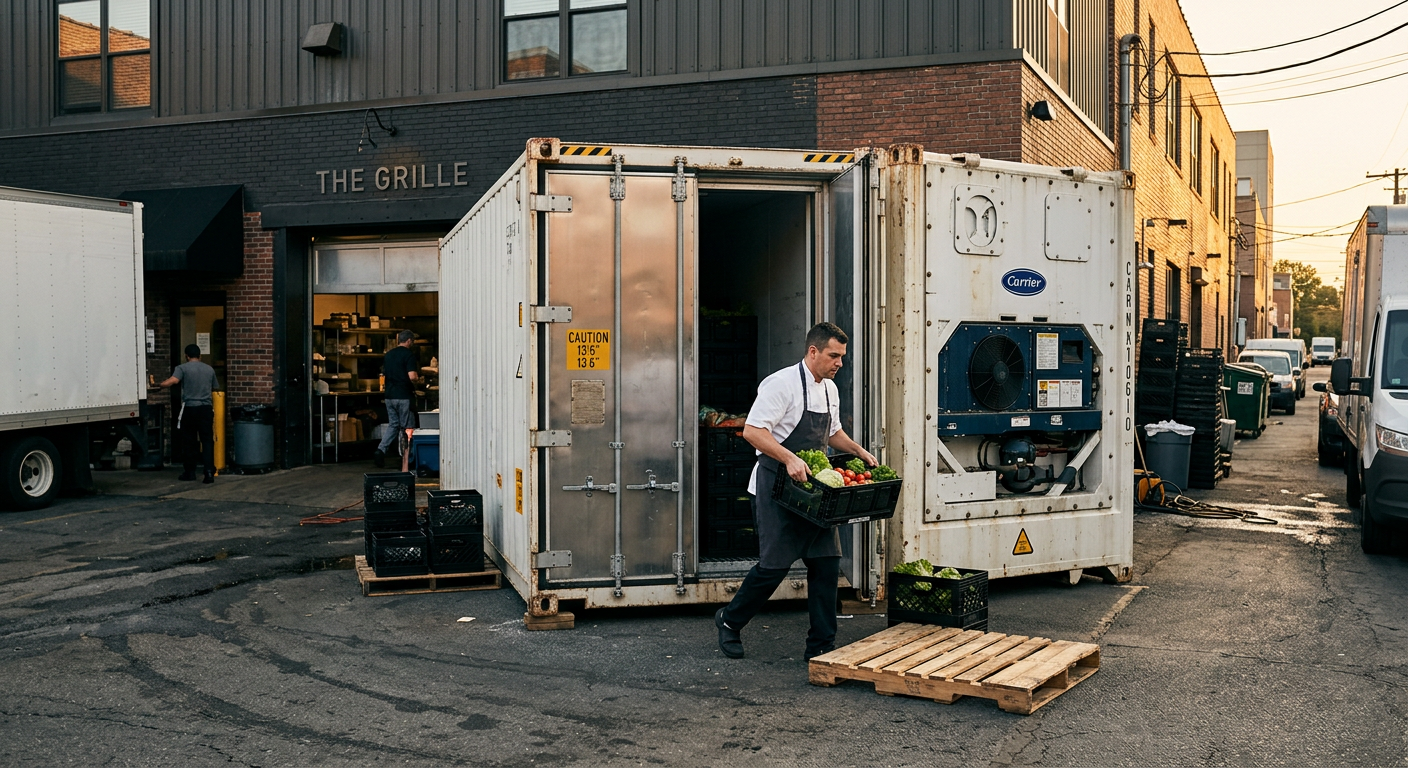
cold-storage-container-for-restaurants-cost — When your restaurant's walk-in freezer hits capacity during the August harvest or the lead-up to the Q4 holiday rush, the bottleneck isn't just frustrating—it's expensive. You're forced to turn away bulk protein buys or pay for daily small-batch deliveries. Many owners assume permanent construction is the only fix, but a cold storage container for restaurants cost analysis usually reveals a more efficient path. These units, often called reefers, provide instant, scalable, and portable commercial kitchen cold storage solutions without the $80,000 price tag of a permanent brick-and-mortar expansion.
Table of Contents
- cold-storage-container-for-restaurants-cost: 2026 Price Breakdown: Cold Storage Container for Restaurants Cost
- Refrigerated Container Rental vs Purchase for Restaurants
- Critical Specs: Why Reefers Excel as Outdoor Walk-in Cooler Alternatives
- Permits and Compliance for Restaurant Cold Storage
- Energy Efficiency and Operating Expenses: Calculating TCO
- Modifications That Impact Restaurant Utility and Price
- Site Preparation and Hidden Delivery Logistics
- Frequently Asked Questions
- Explore Related Products & Guides
cold-storage-container-for-restaurants-cost: 2026 Price Breakdown: Cold Storage Container for Restaurants Cost
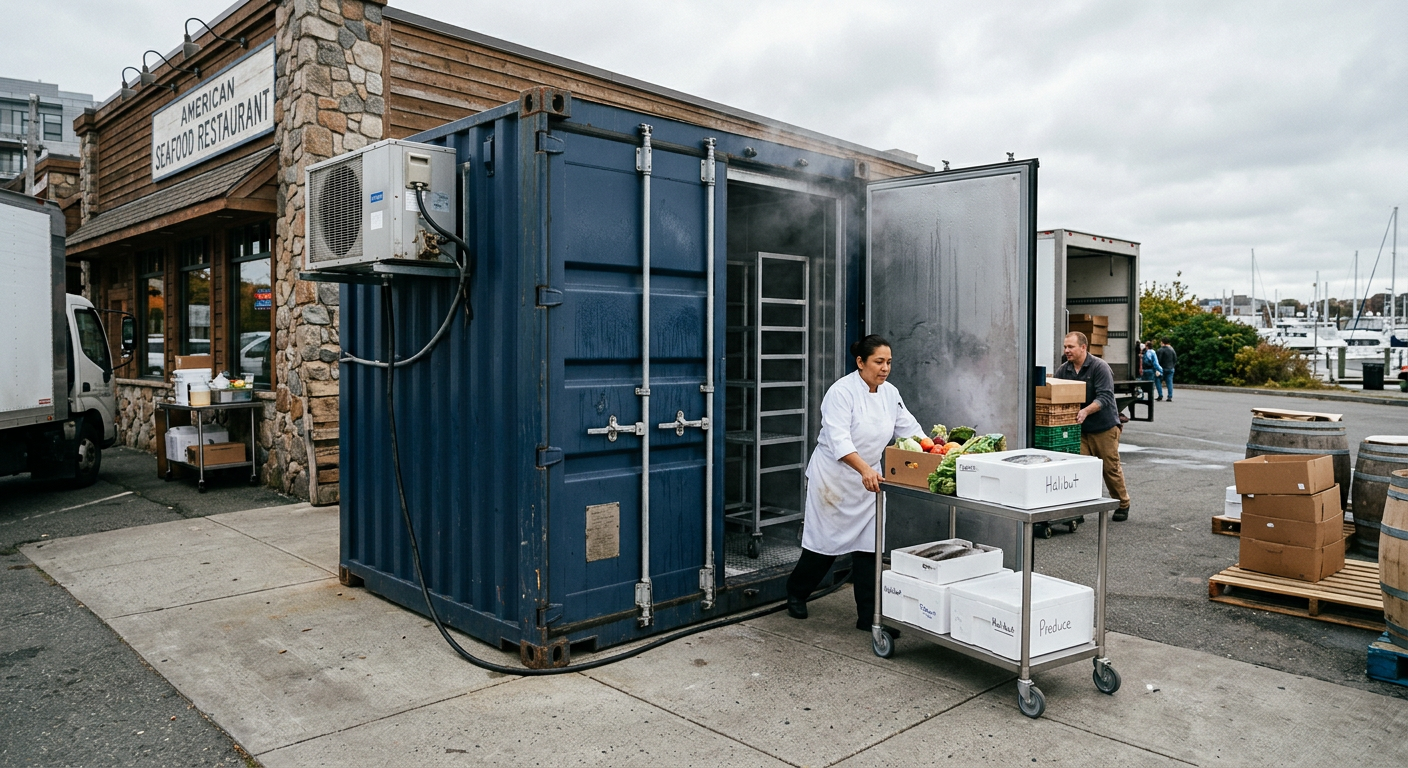
In 2026, the cold storage container for restaurants cost is driven primarily by unit size, age (new vs. refurbished), and the specific refrigeration motor (Carrier vs. Thermo King). Because these units are complex machines—not just steel boxes—the cost of a shipping container for cold storage is significantly higher than standard dry storage.
| Unit Type | Purchase Price (Used/Refurbished) | Purchase Price (One-Trip/New) | Monthly Rental Est. |
|---|---|---|---|
| 10ft Mini Reefer | $7,500 - $9,500 | $12,000 - $14,500 | $650 - $850 |
| 20ft Standard Reefer | $8,800 - $12,000 | $16,500 - $19,000 | $750 - $1,100 |
| 40ft High Cube Reefer | $11,500 - $15,000 | $22,000 - $26,000 | $950 - $1,400 |
For smaller footprints, a single-phase 20ft refurbished refrigerated container low temp is often the sweet spot for restaurants, as it simplifies the electrical hookup while providing ample space for palletized inventory. If you are debating between size options, our 20ft vs 40ft refrigerated container cost analysis provides a deeper dive into the price-per-cubic-foot metrics.
Refrigerated Container Rental vs Purchase for Restaurants
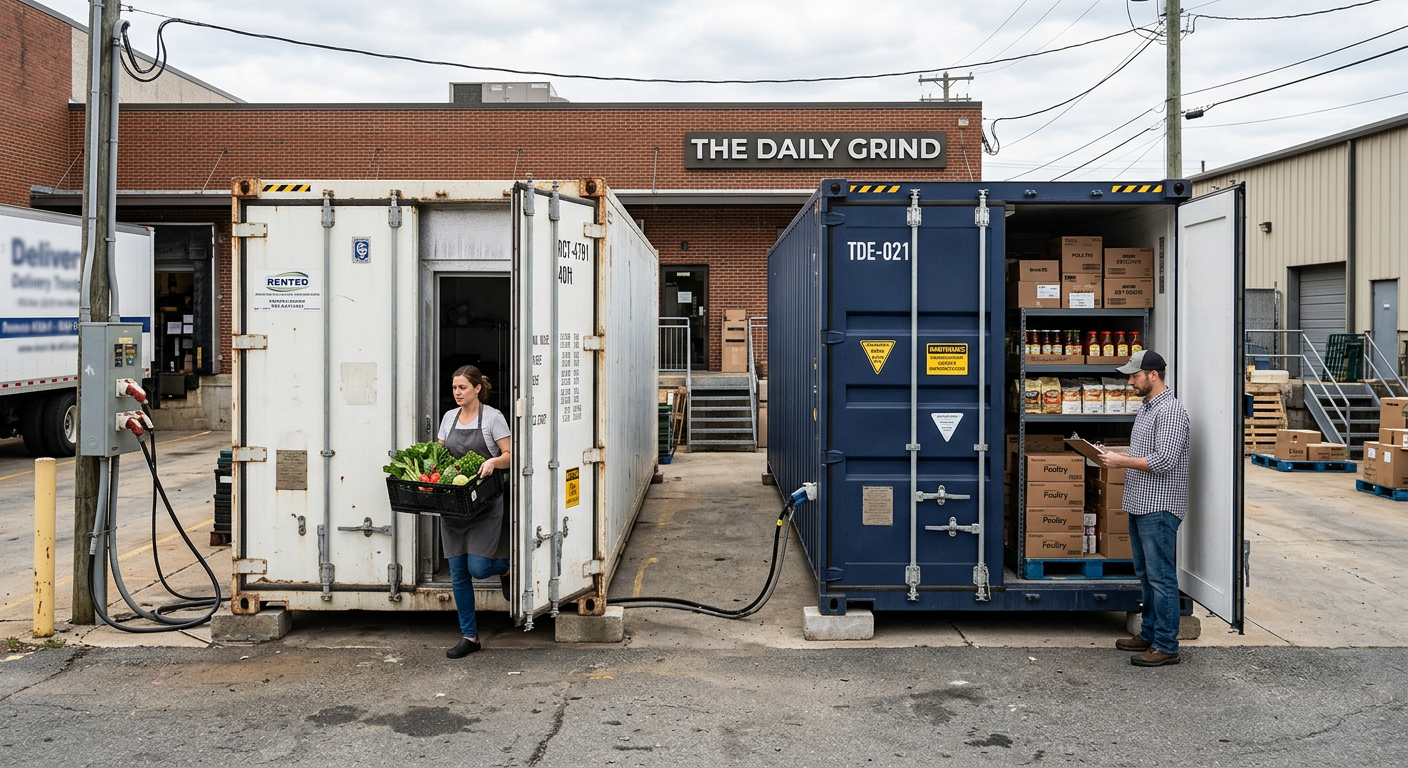
Deciding between a refrigerated container rental vs purchase depends on your financial horizon. If you only need overflow for the November-December holiday peak, renting is the logical choice. However, for year-round restaurant freezer storage expansion, purchasing is almost always better for long-term ROI.
- Purchasing: Typical ROI is reached in 14-18 months compared to rental fees. You own the asset and can resell it later.
- Renting: Low upfront cost and the provider usually handles maintenance. Ideal for seasonal pop-ups or catering events.
- Financing: Many businesses utilize shipping container business loan options to preserve cash flow while securing a permanent storage asset.
Important: Check the CSC Plate: If purchasing a used reefer container for sale for food storage, ensure the CSC (Convention for Safe Containers) plate is valid. This confirms the unit's structural integrity, which is vital if you ever plan to transport it while loaded.
Critical Specs: Why Reefers Excel as Outdoor Walk-in Cooler Alternatives
Standard shipping containers are made of Corten steel, but reefers are a different beast entirely. They feature high-density polyurethane foam insulation sandwiched between aluminum or stainless steel skins. This design makes them superior outdoor walk-in cooler alternatives because they are built to maintain sub-zero temperatures even in 100°F+ ambient heat.
- Temperature Range: Most units can maintain from -20°F up to +80°F, making them versatile for either frozen goods or produce.
- Airflow: Unlike dry units, reefers use T-bar floors designed to circulate air under and through the product—crucial for food safety.
- Cleanability: Stainless steel interiors meet most health department requirements for food-grade refrigerated shipping containers.
- Portability: If your restaurant moves or you need on-site cold storage for food trucks, these units can be relocated via 20ft bumper pull container chassis.
Electrical and Utility Requirements
One of the hidden aspects of the cold storage container for restaurants cost is the electrical installation. Most industrial reefers, like a Maersk used 40ft reefer, require 460V 3-phase power. If your restaurant only has 230V single-phase power, you will need a transformer or a specifically modified single-phase unit. For a complete technical breakdown, see our reefer container electrical requirements guide.
Permits and Compliance for Restaurant Cold Storage
Before delivery, you must consult your local AHJ (Authority Having Jurisdiction). While many view a container as 'portable equipment,' some cities classify them as permanent structures if they are on-site for more than 90 days. You may need a zoning permit, and in some cases, a foundation permit if you are placing the unit on a permanent slab. We maintain a shipping container permit guide by state to help you navigate these local regulations.
Tip: While many containers are technically food-grade, always look for units that are easy to sanitize. If you are storing open food products, ensure the unit meets NSF-certified refrigerated container standards or local health codes by adding plastic strip curtains and interior lighting.
Energy Efficiency and Operating Expenses: Calculating TCO
When evaluating the cold-storage-container-for-restaurants-cost, initial capital expenditure is only half the story. Total Cost of Ownership (TCO) is heavily dictated by the container's energy consumption. Modern 20ft and 40ft refrigerated containers (Reefers) typically utilize Carrier or Thermo King machinery, which has evolved to use variable-speed compressors. These units are significantly more efficient than older 'cycling' models, but they still require a dedicated 460V or 230V three-phase power source. If your restaurant currently lacks a three-phase hookup, you must factor in the $2,500 to $5,000 cost of a phase converter or a dedicated transformer installation from your utility provider.
Electricity costs generally range from $150 to $450 per month depending on the local kilowatt-hour (kWh) rate and the frequency of door openings. In high-volume commercial kitchens, a 'strip curtain' installation is a non-negotiable accessory that pays for itself within three months by retaining the air curtain during loading. Furthermore, unlike indoor walk-in coolers that vent heat into your kitchen—forcing your HVAC to work harder—a container vents heat outdoors, which can actually lower your primary building's cooling costs during peak summer months.
| Component | Estimated Monthly Cost | Impact Factor |
|---|---|---|
| Electricity (Modern Unit) | $150 - $280 | Ambient temperature and door cycles |
| Preventative Maintenance | $45 - $75 | Bi-annual condenser cleaning/checks |
| Monitoring Systems | $15 - $30 | IoT temperature logging and alerts |
| Insurance Premium | $20 - $50 | Business property rider for off-site storage |
Tip: Always ask your supplier for a pre-delivery PTI (Pre-Trip Inspection) report. This ensures the unit has been tested at -20°F and +70°F and has no refrigerant leaks, preventing a costly emergency repair bill in your first month of operation.
Modifications That Impact Restaurant Utility and Price
Standard shipping containers are designed for logistics, not necessarily for a fast-paced line cook's workflow. To make a container a viable extension of your kitchen, several modifications are often necessary, which will influence the final cold-storage-container-for-restaurants-cost. The most common upgrade is the installation of an easy-open butcher door. The heavy, dual-locking cam bars of a standard ISO container are difficult to operate from the inside and require significant physical effort. A pedestrian-style swing door with an internal emergency release is a safety requirement for many health departments and adds roughly $1,800 to $2,400 to the purchase price.
Interior configuration also dictates cost. Food-grade stainless steel or aluminum T-bar flooring is standard in reefers for airflow, but it can be difficult to clean if food debris falls through the slats. Some restaurants opt for flat-floor overlays or specialized drainage systems. Lighting is another critical upgrade; standard containers are dark, and installing vapor-proof LED lighting that can withstand freezing temperatures is essential for inventory management and OSHA compliance.
- Internal Butcher Door: $1,800 - $2,600 (includes safety release)
- Aluminum Ramping: $450 - $900 (for pallet jack or cart access)
- Shelving Packages: $1,200 - $3,500 (NSF-rated wire racking)
- Telematics/Remote Monitoring: $500 - $850 (real-time phone alerts for power failure)
- Exterior Paint/Vinyl Wrap: $800 - $2,000 (for aesthetic compliance in public view)
Important: Standard Reefer T-floors are designed for air circulation, not heavy foot traffic. If your staff will be moving heavy carts, ensure you purchase a 'flat floor' modification or install heavy-duty mats to prevent trip hazards and structural wear.
Site Preparation and Hidden Delivery Logistics
The delivery of a cold storage container is a specialized operation that requires more than just an empty parking spot. Because these units are heavy—a 20ft reefer weighs approximately 6,000 lbs empty—the ground must be perfectly level and compacted. If the container sits on an incline, the cooling unit's compressor may experience uneven lubrication, and the heavy doors will not seal correctly, leading to frost buildup and increased energy bills. Many restaurants choose to pour a small concrete pad or use leveled railroad ties to provide a stable foundation.
Access is the other variable in the cost equation. Delivery via tilt-bed truck (Landoll) usually costs between $300 and $800 for local drops, but if the unit must be craned over a building or fence due to space constraints, costs can easily jump by $1,500 to $3,000 per day. You must ensure there is at least 60 to 100 feet of straight-line clearance for the truck to pull out from under the container after dropping it. Before ordering, measure the height of any overhead power lines or low-hanging tree branches, as a High Cube reefer sits nearly 14 feet high when on the trailer.
- Confirm Three-Phase Power: Ensure 208/230V or 460V availability within 50 feet of the site.
- Level the Surface: Use a laser level to ensure the pad is flat within 1 inch across the 20-40ft span.
- Check Local Zoning: Confirm that your municipality allows semi-permanent shipping containers on-site.
- Clear Delivery Path: Remove all vehicles and debris to provide a 12ft wide path for the delivery truck.
- Set Up Drainage: Ensure the defrost cycle's condensation drain is directed away from building foundations.
Tip: If you are in a high-humidity coastal environment, your reefer will produce gallons of condensate daily during defrost cycles. Plan for a drainage pipe to lead this water to a storm drain to avoid creating ice patches or mud holes near your kitchen entrance.
Container delivery near you
We deliver to every state in the lower 48 plus Alaska and Hawaii. These local pages list pricing, metro coverage and typical lead times for the areas we run into most:
- Shipping containers near me — how we source from the depot closest to your ZIP code
- Shipping containers in Georgia — pricing and delivery to Atlanta and Savannah
- Shipping containers in North Carolina — pricing and delivery to Charlotte and Raleigh
- Shipping containers in Arizona — pricing and delivery to Phoenix and Tucson
- Shipping containers in Washington — pricing and delivery to Seattle and Spokane
- Shipping containers in Colorado — pricing and delivery to Denver and Colorado Springs
- Shipping containers Houston — local yard stock and lead times
Frequently Asked Questions
Common questions about integrating shipping containers into restaurant operations.
How much does a restaurant cold storage container cost?
A used 20ft reefer typically starts around $8,800, while a new one-trip unit can exceed $17,000. These prices do not include delivery or electrical site prep.
Can you use a shipping container as a walk-in cooler?
Yes. Refrigerated containers (reefers) are purpose-built for this. However, a standard 'dry' container cannot be used because it lacks the necessary insulation and airtight seals required for refrigeration.
What permits are needed for a reefer container at a restaurant?
Generally, you need a temporary use permit or a zoning variance. If the unit is connected to permanent power, an electrical permit is almost always required.
How much electricity does a restaurant reefer container use?
Daily consumption ranges from 30 to 70 kWh depending on the ambient temperature and how often the doors are opened. At a rate of $0.15/kWh, expect $150–$350 in monthly energy costs.
Is a refrigerated container cheaper than a walk-in freezer?
Yes, especially when considering the building permit and construction costs of a permanent walk-in. A container is a pre-manufactured, 'plug-and-play' solution that can be 50% cheaper than a traditional addition.
What are the best sizes for restaurant cold storage units?
The 20ft reefer is the industry standard for restaurants. It fits in a single parking space while providing roughly 1,000 cubic feet of storage.
If you're ready to compare inventory for your project, our team can pull matching units from our refrigerated inventory or discuss a 30ft customized cold storage cell to fit your specific loading dock. Investing in reliable cold storage today protects your margins for the seasons to come.