Shipping Container Business Loan Options 2026 Guide
By Outback Container Experts · Published July 28, 2026 · Last updated October 18, 2026
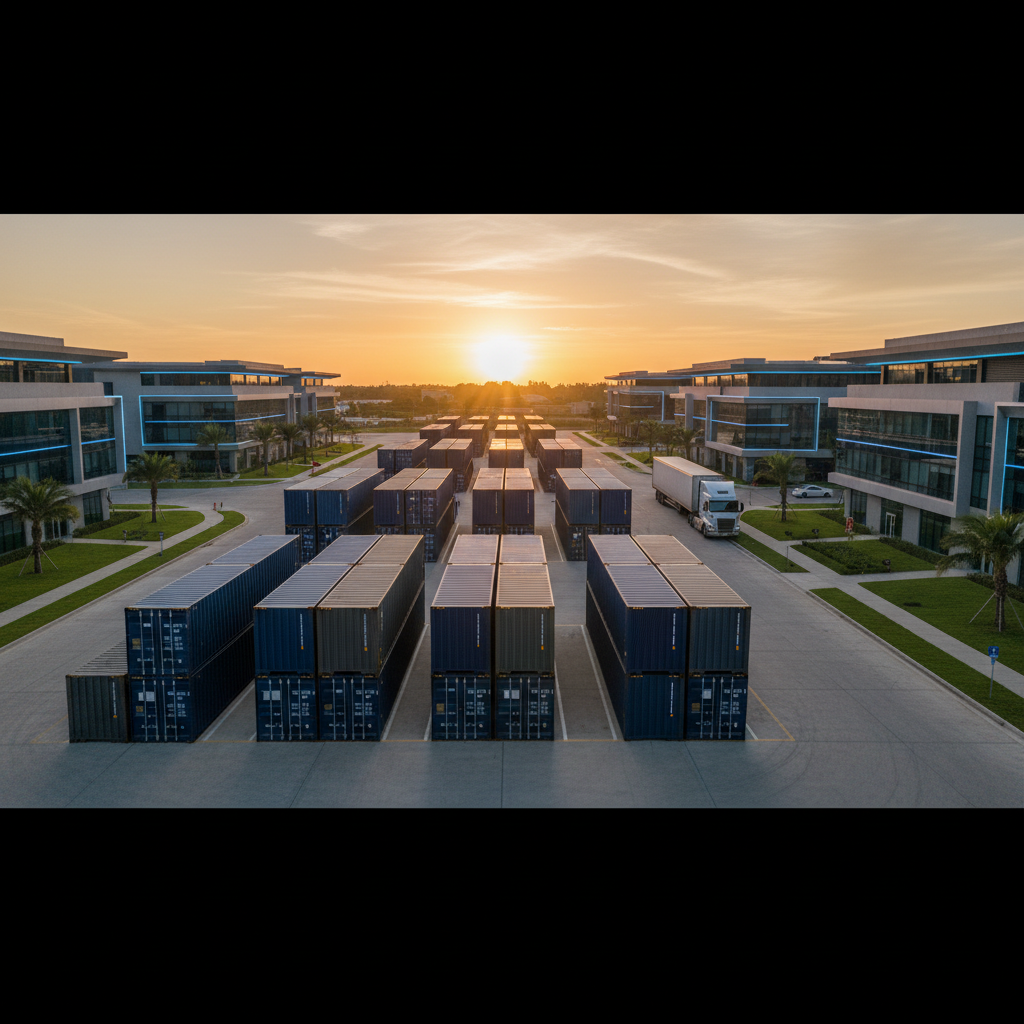
Acquiring a fleet of steel assets shouldn't drain your operational cash flow. As we enter the third quarter of 2026, many US firms are evaluating shipping container business loan options 2026 to scale their logistics or workspace capacity before the Q4 peak. Whether you are adding a 40ft high cube shipping container for dry storage or a specialized Maersk refrigerated reefer, understanding the nuance of commercial credit, collateralization, and federal tax incentives is the difference between a high-interest burden and a strategic investment.
Table of Contents
- shipping container business loan options 2026: Core Financing Pathways for Shipping Containers in 2026
- Maximizing Business Equipment Tax Credits 2026
- Leasing vs. Financing: Which Fits Your Cash Flow?
- Qualifying for Container Financing in 5 Steps
- Specialized SBA 7(a) and 504 Loan Applications for Containerized Infrastructure
- Asset-Based Lending and Inventory Financing for Resale Operations
- Evaluating Non-Bank FinTech Lenders for Rapid Scale-Up
- Frequently Asked Questions
- Shipping Container Financing FAQ
- Explore Related Products & Guides
shipping container business loan options 2026: Core Financing Pathways for Shipping Containers in 2026

The credit landscape for containerized assets has matured significantly. Lenders no longer view Conex boxes as mere scrap metal; they are recognized as high-value, durable equipment with strong resale potential. This shift has opened up several commercial shipping container financing avenues that cater to different business stages, from startups to established logistics firms.

Equipment Financing for Shipping Containers
Equipment financing is the most common route for B2B buyers. In this model, the container itself serves as the collateral for the loan. If your business has a credit score above 650, you can often secure terms ranging from 24 to 72 months. In the current market, 0% down container financing 2026 is becoming a standard incentive for well-qualified buyers purchasing new (one-trip) units, as their depreciation curve is predictable.
SBA Loans for Container Offices and Structures
If you are using units for permanent workspace—such as a converted 40ft shipping container office—you may qualify for SBA 7(a) or 504 loans. SBA loans for container offices are particularly attractive because they offer longer repayment terms and lower down payments than traditional commercial mortgages. These are ideal for businesses that intend to anchor their containers to a foundation as a semi-permanent facility.
| Financing Type | Typical Interest Rate (2026) | Term Length | Best Used For |
|---|---|---|---|
| Equipment Loan | 6.5% – 9.5% | 2–6 Years | Fleet expansion, Reefers |
| SBA 7(a) | Prime + 2.25% | Up to 10 Years | Modified offices, Multi-unit builds |
| Line of Credit | 7.0% – 11.0% | Revolving | Seasonal storage, Quick inventory |
| Container Leasing | Fixed Monthly | 12–48 Months | Short-term projects, Tax off-loading |
Maximizing Business Equipment Tax Credits 2026
One of the most powerful reasons to choose financing over renting is the section 179 deduction for containers. Under current IRS guidelines, businesses can deduct the full purchase price of qualifying equipment—including containers—purchased or financed during the tax year. For a company buying a 40ft Kennedy Luxury Container Home for an employee housing program or a 3+1 toilet block for a construction site, this can result in substantial immediate tax savings.
Tip: Always consult with a tax professional, but generally, containers used for business purposes qualify for accelerated depreciation. This significantly lowers the 'effective cost' of your loan when you factor in the year-end tax break.
Leasing vs. Financing: Which Fits Your Cash Flow?
While shipping container business loan options 2026 offer ownership, container leasing for businesses might be preferable for companies that want to keep debt off the balance sheet. For more on the math behind this decision, read our analysis on renting vs buying shipping containers cost comparison 2026.
- Financing: Best for long-term assets that will last 20+ years, like a refurbished 20ft container.
- Leasing: Best for high-wear environments or when you need to swap units frequently for different project sites.
- Line of Credit: Provides a business line of credit for storage that allows you to act fast when used prices drop unexpectedly.
Qualifying for Container Financing in 5 Steps
Lenders focus on the 'Three Cs': Credit, Capacity, and Collateral. To streamline your application for commercial shipping container financing, follow this checklist:
- Prepare Financials: Have two years of business tax returns and a current P&L statement ready.
- Define the Use-Case: Lenders prefer funding 'revenue-generating' assets. Explain how the container facilitates your business growth.
- Get a Formal Quote: Secure a detailed quote including delivery and modifications from our shop.
- Check Your Business Credit: Ensure your Dun & Bradstreet or Experian Business reports are accurate.
- Review Delivery Logistics: Lenders may ask about the delivery site. Consult our guide on shipping container delivery cost per mile 2026 to ensure your budget covers the final placement.
Specialized SBA 7(a) and 504 Loan Applications for Containerized Infrastructure
In 2026, the Small Business Administration (SBA) has refined its stance on 'movable' versus 'fixed' assets, making it significantly easier to secure SBA 7(a) loans for shipping container modifications. This shift recognizes that high-spec containers—such as those used for modular data centers, urban farming hubs, or mobile medical units—function as critical operational infrastructure rather than mere storage units. The SBA 7(a) program remains the gold standard for many container businesses because it offers repayment terms up to 10 years for equipment, providing much-needed breathing room for startups with high initial overhead.
For businesses acquiring real estate to host a permanent container park or a massive storage facility, the SBA 504 loan program offers a distinct advantage. This program allows for long-term, fixed-rate financing of both the land and the container units themselves, provided they are anchored to a foundation and contribute to local job creation. By leveraging the 504 program, a business can lock in rates that are often lower than conventional commercial mortgages, protecting the venture from the interest rate volatility projected for the mid-2020s.
- SBA 7(a) Loan Cap: Up to $5 million for diverse business needs including inventory and working capital.
- SBA Express Loans: Faster turnaround for amounts under $500,000, ideal for quick-turn container acquisitions.
- CDO Participation: 504 loans require a Certified Development Company partner, ensuring localized economic support.
- Personal Guarantee Requirements: Standard for any owner with 20% or more stake in the container business.
Tip: When applying for SBA funds for container modifications, ensure your contractor provides a detailed 'Scope of Work.' The SBA needs to see that the loan is adding value to the raw steel through HVAC installation, insulation, and electrical compliance.
| Feature | SBA 7(a) Program | SBA 504 Program |
|---|---|---|
| Typical Use Case | Fleet expansion & working capital | Permanent facility construction |
| Max Term (Equipment) | 10 Years | 10-15 Years |
| Down Payment | 10% - 15% | 10% (typically) |
Asset-Based Lending and Inventory Financing for Resale Operations
For container dealerships and modification shops, the primary challenge is managing the 'cost of goods sold' (COGS) in a market where steel prices can fluctuate rapidly. Asset-based lending (ABL) allows these businesses to use their existing inventory of empty or modified containers as collateral for a revolving line of credit. In 2026, lenders have introduced more sophisticated valuation models that account for the residual value of ISO-certified steel, allowing owners to borrow against up to 80% of the containers' liquidated value.
This form of financing is particularly vital for companies engaged in international trade or those participating in 'one-way' lease programs. Because the units themselves are the security, the credit requirements for the business owner are often more flexible than traditional term loans. This creates a bridge for companies that have strong sales pipelines but temporary cash flow gaps due to long lead times for overseas shipping or custom fabrication cycles.
Tip: Maintain an up-to-date 'Unit Registry' including serial numbers and CSC plate photos. Digital inventory management makes it much easier for asset-based lenders to conduct their monthly audits and release funds.
- Inventory Appraisal: A third-party valuator determines the net orderly liquidation value (NOLV) of your container fleet.
- Borrowing Base Calculation: The lender establishes a limit based on a percentage of the NOLV and eligible accounts receivable.
- Drawdown Period: You pull funds as needed to purchase new inventory from domestic ports or international manufacturers.
- Repayment: Funds are repaid as units are sold to end-users or leased out to long-term clients.
Evaluating Non-Bank FinTech Lenders for Rapid Scale-Up
The 2026 landscape for shipping container business loan options is increasingly dominated by FinTech platforms specializing in industrial equipment. Unlike traditional banks, which may take weeks to process a loan for a batch of 20 used High-Cube containers, FinTech lenders utilize API-driven credit assessments that can provide an approval within 24 to 48 hours. These lenders often focus on the 'equipment yield'—the revenue-generating potential of the container—rather than just the borrower's personal FICO score.
While interest rates from these alternative lenders are typically 2% to 5% higher than bank rates, the speed of capital is a competitive advantage. In a market where 'One-Trip' containers sell out quickly at major ports like Savannah or Los Angeles, having a ready line of credit allows a business to snag inventory before competitors can secure traditional financing. These loans are often structured as 'Equipment Finance Agreements' (EFA), where the borrower holds title to the container from day one, which simplifies depreciation claims on tax returns.
| Lender Type | Decision Speed | Cost of Capital | Flexibility |
|---|---|---|---|
| FinTech Platform | 1-2 Days | Moderate-High | High (Algorithm-based) |
| Regional Bank | 3-5 Weeks | Low-Moderate | Low (Strict Covenants) |
| Credit Union | 2-4 Weeks | Low | Moderate (Relationship-based) |
Important: Be cautious of 'Merchant Cash Advances' (MCA) disguised as container financing. These often have daily draws that can cripple the cash flow of a seasonal storage business.
Container delivery near you
We deliver to every state in the lower 48 plus Alaska and Hawaii. These local pages list pricing, metro coverage and typical lead times for the areas we run into most:
- Shipping containers near me — how we source from the depot closest to your ZIP code
- Shipping containers in North Carolina — pricing and delivery to Charlotte and Raleigh
- Shipping containers in Arizona — pricing and delivery to Phoenix and Tucson
- Shipping containers in Washington — pricing and delivery to Seattle and Spokane
- Shipping containers in Colorado — pricing and delivery to Denver and Colorado Springs
Frequently Asked Questions
Understanding the technicalities of container lending helps avoid predatory rates and hidden fees.
Shipping Container Financing FAQ
Explore Related Products & Guides
- 20ft vs 40ft Refrigerated Container Cost Analysis
- How to Choose Shipping Containers for Local Delivery
- Buy Used Shipping Containers With a Simple Checklist
- Browse 10ft Containers
Frequently Asked Questions
Can I get a business loan for a shipping container?
Yes. Businesses can access equipment loans, SBA loans, or commercial lines of credit to purchase containers. Most lenders treat containers as 'equipment' rather than 'real estate,' making the approval process faster than a traditional mortgage.
How do I qualify for shipping container financing?
Qualification typically requires a business credit score of 620+, at least 6 months in business, and a formal quote from a reputable seller like Outback Shipping Containers. Startups may need a personal guarantee from the owner.
Are shipping containers considered equipment for taxes?
Yes, under the IRS guidelines, containers used for storage or as offices are classified as tangible personal property, making them eligible for the Section 179 deduction and accelerated depreciation.
What are interest rates for container loans in 2026?
Rates currently range from 6.5% for prime borrowers to 12% for those with lower credit scores. SBA-backed loans generally offer the most competitive rates for modified container structures.
Is it better to lease or finance a shipping container?
Financing is better for long-term ownership and tax benefits. Leasing is preferred for temporary projects (under 2 years) or when businesses need to preserve their debt-to-income ratio for other large capital expenditures.
Can startups get financing for shipping container storage?
Yes, though startups may face higher down payments (10-20%) or require a larger amount of documentation regarding their business plan and projected cash flow.
Frequently asked questions
Can I get a business loan for a shipping container?
Yes. Businesses can access equipment loans, SBA loans, or commercial lines of credit to purchase containers. Most lenders treat containers as 'equipment' rather than 'real estate,' making the approval process faster than a traditional mortgage.
How do I qualify for shipping container financing?
Qualification typically requires a business credit score of 620+, at least 6 months in business, and a formal quote from a reputable seller like Outback Shipping Containers. Startups may need a personal guarantee from the owner.
Are shipping containers considered equipment for taxes?
Yes, under the IRS guidelines, containers used for storage or as offices are classified as tangible personal property, making them eligible for the Section 179 deduction and accelerated depreciation.
What are interest rates for container loans in 2026?
Rates currently range from 6.5% for prime borrowers to 12% for those with lower credit scores. SBA-backed loans generally offer the most competitive rates for modified container structures.
Is it better to lease or finance a shipping container?
Financing is better for long-term ownership and tax benefits. Leasing is preferred for temporary projects (under 2 years) or when businesses need to preserve their debt-to-income ratio for other large capital expenditures.
Can startups get financing for shipping container storage?
Yes, though startups may face higher down payments (10-20%) or require a larger amount of documentation regarding their business plan and projected cash flow.
About Outback Container Experts
This guide was prepared by the Outback Shipping Containers team, based on the questions our customers ask us most when buying, modifying and taking delivery of shipping containers. Learn more about us.
Ready to find your container?
Browse our in-stock shipping containers, container homes and custom builds, or ask our team for a free quote with delivery to your site.