Shipping Container Delivery Cost Per Mile 2026 Price List
Calculate your shipping container delivery cost per mile 2026. Compare flatbed delivery rates against tilt bed options to find the lowest local prices. Get
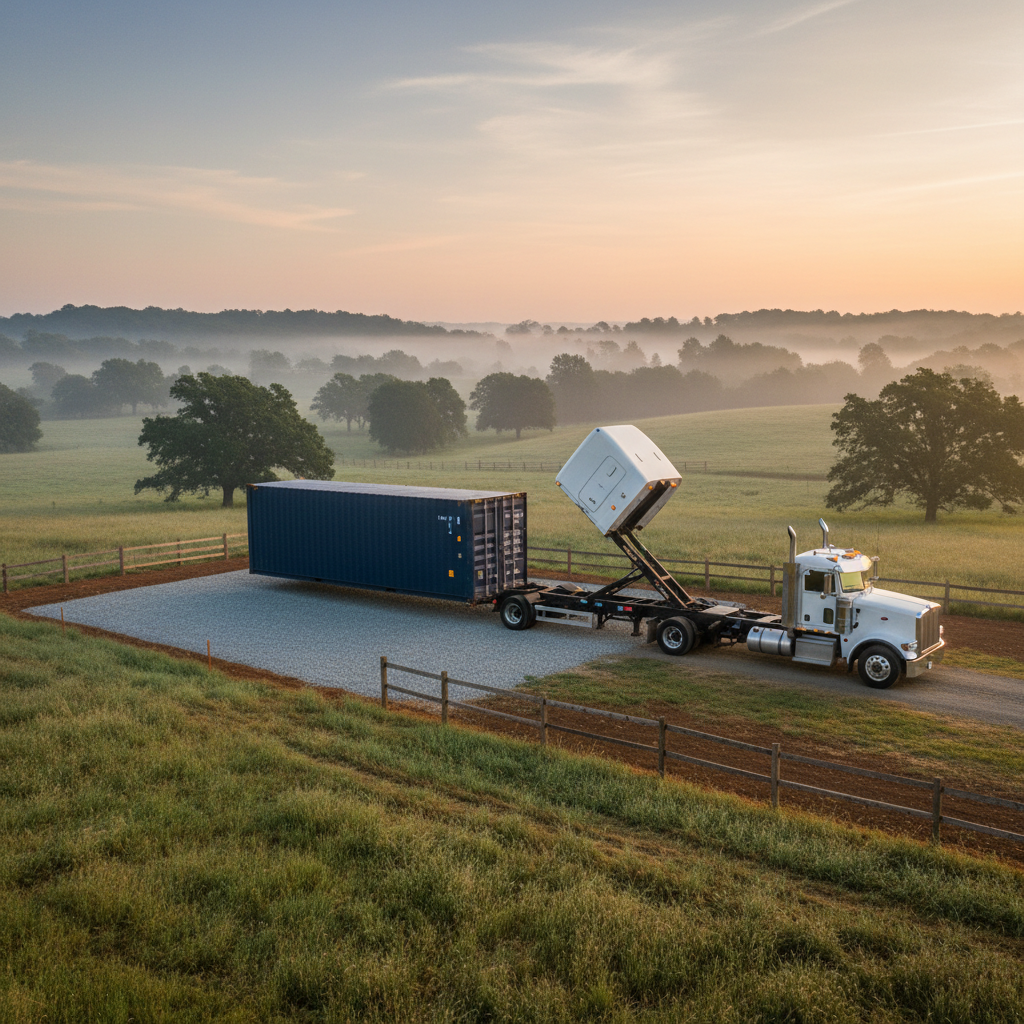
Before you sign a sales agreement for a 40ft used shipping container, there is one number that often dictates the entire feasibility of your project: the landed cost. In July 2026, understanding the shipping container delivery cost per mile 2026 is more critical than ever, as diesel prices and seasonal demand for construction fluctuate across the United States. While a container might look like a bargain at the depot, the distance from that depot to your site can add anywhere from $300 to $3,000 to your final bill.
Table of Contents
- Breaking Down the Shipping Container Delivery Cost Per Mile 2026
- Flatbed vs. Tilt Bed Truck Delivery Cost
- Seasonal Impacts on Shipping Container Lead Times
- Zone-Based Pricing and Regional Variables for 2026
- Permitting and Site Preparation Expenses
- Fuel Surcharges and Infrastructure Fees in 2026
- Frequently Asked Questions
- FAQ
- Making the Final Decision
- Explore Related Products & Guides
Breaking Down the Shipping Container Delivery Cost Per Mile 2026
Logistics companies generally utilize two pricing models: a flat minimum fee for local deliveries (typically within 50-75 miles) and a per-mile rate for longer hauls. For 2026, nationwide container shipping quotes are averaging between $4.00 and $6.50 per loaded mile, though this varies significantly based on the equipment required.
| Truck Type | Base Fee (0-50 Miles) | Rate Per Mile (50+ Miles) | Best For |
|---|---|---|---|
| Tilt-Bed (Roll-off) | $350 - $600 | $4.50 - $6.50 | Ground delivery, no equipment on-site. |
| Flatbed Trailer | $250 - $450 | $3.50 - $5.00 | Sites with a crane or heavy forklift. |
| Step Deck / Lowboy | $450 - $800 | $5.00 - $8.00 | High Cube units with height restrictions. |
Factors Influencing Your Per-Mile Rate
It’s a common misconception that delivery is just about distance. In fact, many shipping container logistics costs are tied to equipment specialized for handling the sheer weight of Corten steel. A 40ft new high cube container weighs approximately 8,700 lbs, requiring heavy-duty hydraulics for a tilt-bed delivery. If you are ordering a heavier specialized unit, like a Maersk 40ft reefer, the added weight of the cooling machinery may require specific permitting for the truck, increasing the cost.
Important: Always verify if your quote includes 'deadhead' miles. Some haulers charge for the return trip to the depot, effectively doubling the shipping container delivery cost per mile 2026 if not clarified upfront.
Flatbed vs. Tilt Bed Truck Delivery Cost
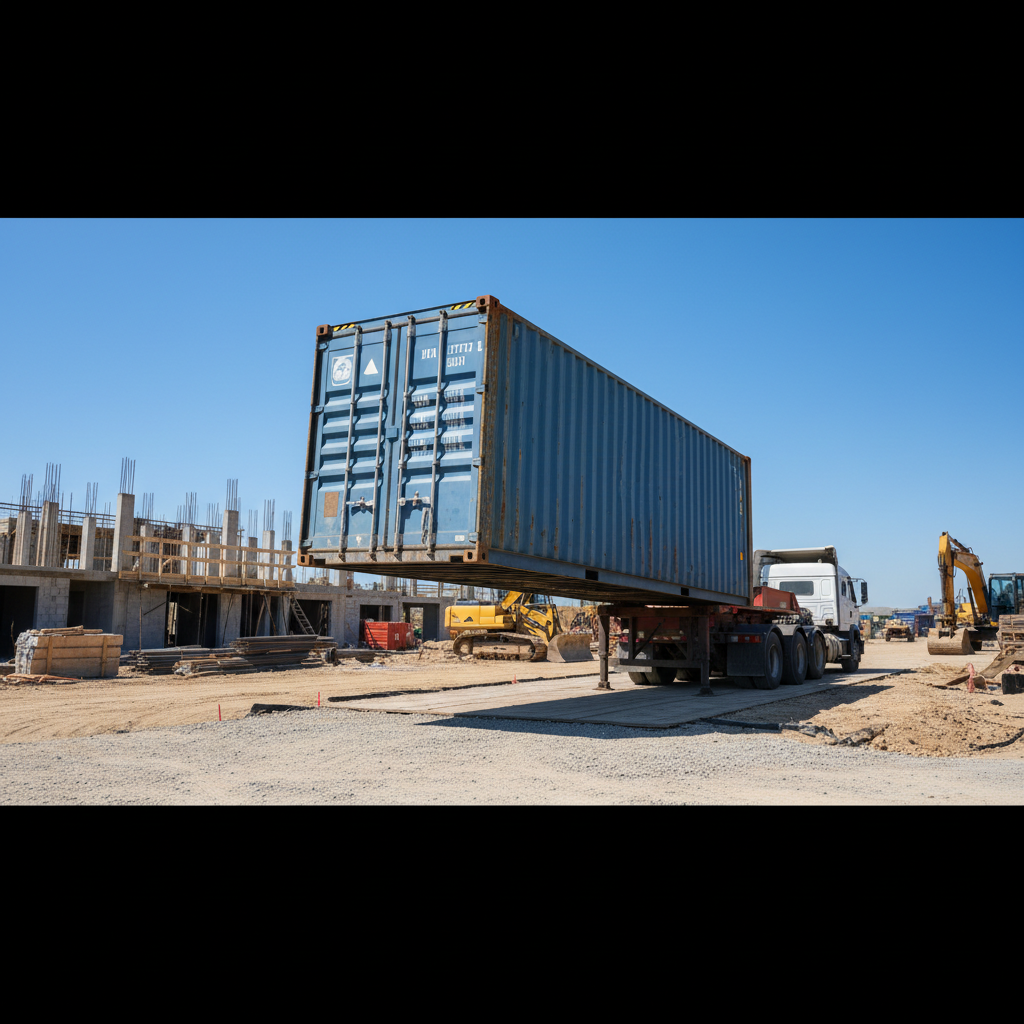
The method of offloading is the biggest variable in your delivery quote. A standard flatbed is the most affordable per-mile option, but it requires the buyer to provide the means to lift the container off the truck. If you don't own a 10,000-lb capacity forklift or haven't accounted for crane delivery fees, the flatbed 'savings' will vanish instantly.
- Tilt Bed (Landoll/Mule): The driver tilts the trailer and slides the container off. Requires 100-120 feet of straight-line clearance for a 40ft unit.
- Flatbed: Cheaper flatbed delivery rates ($3.50-$5.00/mile) but you must lift the container off within the 1-hour grace period to avoid detention fees.
- Side-Loader: A specialized truck with two cranes that drops the container parallel to the truck. Rare in the US but ideal for tight spaces.
Understanding Delivery Zone Surcharges
Regional logistics hubs (like Houston, Newark, or Long Beach) offer lower rates due to high truck volume. If your site is in a remote 'Tier 3' zone, expect a delivery zone surcharge. These flat fees cover the driver’s time and fuel when heading away from profitable freight lanes. For larger projects like a luxury 2-bedroom container home, we recommend coordinating multiple deliveries on the same day to negotiate a volume discount on these surcharges.
Tip: Check your overhead clearance! A container on a tilt-bed trailer can reach 14-16 feet in height while dumping. Low-hanging tree limbs or power lines won't just stop a delivery; they can result in a 'failed delivery' charge, which usually costs the full base rate plus the per-mile fee.
Seasonal Impacts on Shipping Container Lead Times
In July, we see a surge in demand that can stretch shipping container lead times from 5 days to 14+ days. As trucking companies prioritize high-yield freight, container haulers become harder to book. Planning your site prep early is essential. Whether you are installing a 20ft container home with water tank or a simple used 20ft storage unit, ensure your pad is level and cured before the truck arrives to avoid 'detention time' charges, which currently range from $75 to $150 per hour.
Zone-Based Pricing and Regional Variables for 2026
As we look toward 2026, the 'cost per mile' metric is becoming increasingly localized. While the national average for delivery typically hovers between $3.00 and $7.50 per mile, these figures are heavily influenced by regional infrastructure and fuel volatility. In the Pacific Northwest and Northeast, tighter emissions regulations on drayage trucks have pushed the baseline operating cost higher than in the Southeast or Gulf Coast. Buyers should anticipate 'Zone 1' pricing—delivery within 50 miles of a major intermodal hub—to carry a flat-rate minimum rather than a strictly mileage-based fee, often ranging from $250 to $450 regardless of the short distance.
For long-haul deliveries exceeding 200 miles, economies of scale begin to apply. Carriers in 2026 are utilizing more sophisticated route-optimization software to mitigate the impact of rising insurance premiums, which now account for nearly 12% of the per-mile cost. When shipping to rural or mountain locations, the 'deadhead' fee—the cost for the driver to return empty to the yard—is frequently baked into the initial quote. In the Mountain West, for example, high-altitude terrain requires specialized heavy-duty tractors, which can add a 15-20% surcharge over standard highway rates.
| Regional Hub | Short-Haul (0-50 mi) | Mid-Haul (50-150 mi) | Long-Haul (150+ mi) |
|---|---|---|---|
| Houston / Gulf Coast | $250 Flat | $4.25 / Mile | $3.75 / Mile |
| Los Angeles / Long Beach | $400 Flat | $6.50 / Mile | $5.50 / Mile |
| Chicago / Midwest | $300 Flat | $4.50 / Mile | $4.00 / Mile |
| New York / Newark | $450 Flat | $7.00 / Mile | $6.25 / Mile |
Tip: By 2026, many carriers are implementing 'Clean Air Surcharges' for deliveries entering metropolitan areas with strict low-emission zones. Always ask if your quote includes these municipal-specific levies to avoid surprise line items on your final invoice.
Permitting and Site Preparation Expenses
The delivery cost per mile is only one half of the logistical equation; site readiness in 2026 is the most common variable that causes project budgets to spiral. A tilt-bed truck requires approximately 60 to 100 feet of straight-line clearance to drop a 20-foot or 40-foot container safely. If a driver arrives and finds the ground is too soft or the clearance is insufficient, 'rejected delivery' fees can cost the buyer 75% of the original shipping quote. Labor rates for specialized drivers continue to rise, making stand-by time—the time a truck spends waiting for a site to be cleared—a critical expense billed in 15-minute increments.
Oversized load permits are another factor for 10-foot wide containers (High Cubes are standard height, but specialized wide units exist). While a standard 8-foot wide container doesn't require a pilot car, any unit crossing state lines may be subject to varying Department of Transportation (DOT) regulations. In 2026, automated weight stations and digital logging devices have harmonized some of these costs, but interstate transit still incurs 'Permit Filing Fees' that range from $50 to $150 per state line crossed.
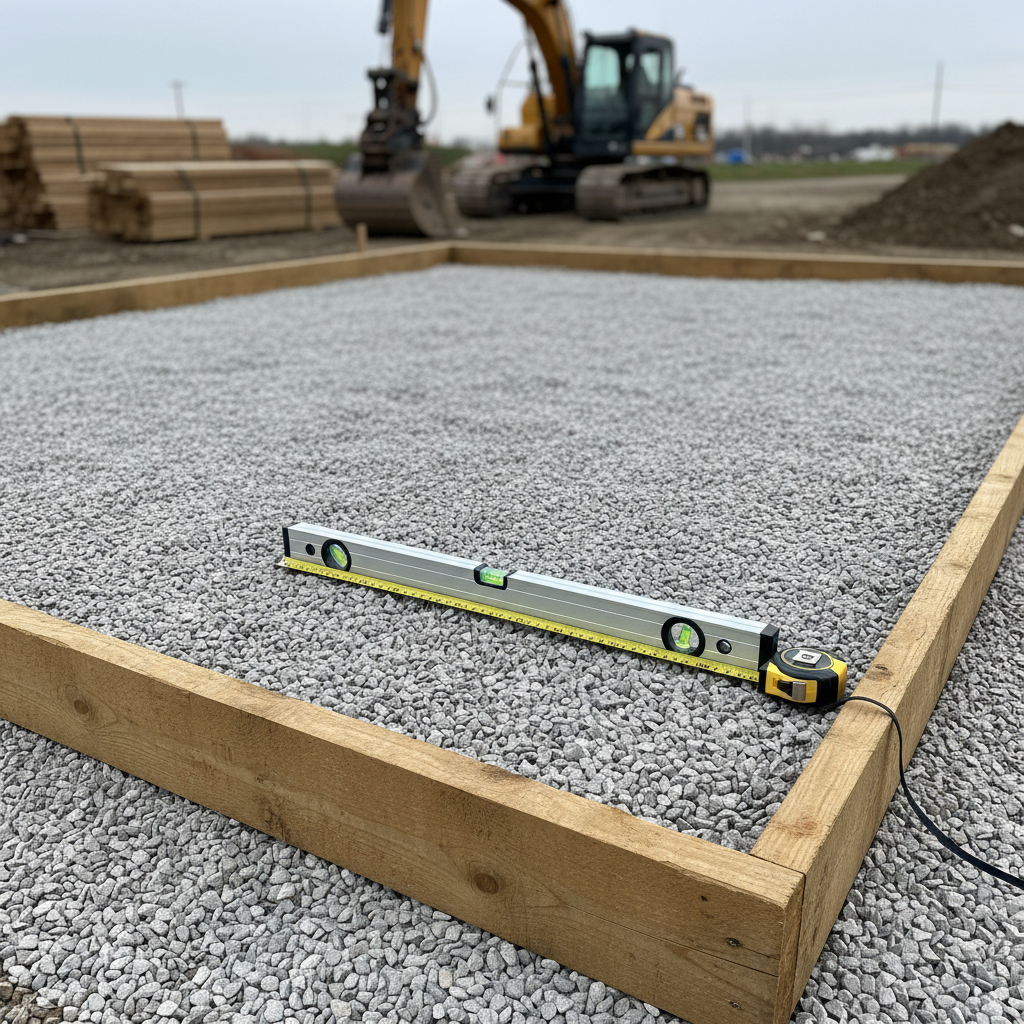
- Ground Leveling: Ensure a 1% or less grade to avoid container racking, which prevents doors from opening.
- Surface Composition: Gravel or concrete pads are preferred. Soft mud will trap a delivery truck, leading to expensive heavy-tow recovery bills.
- Overhead Clearance: A minimum of 14 feet is required for transit, but 20 feet of vertical clearance is needed during the tilt-drop process.
- Turning Radius: For a 40ft container, ensure the truck has at least a 50-foot turning radius to enter the property gate.
Important: Never assume the driver will perform site leveling. If the truck gets stuck due to poor site preparation, the buyer is legally responsible for the towing recovery costs, which frequently exceed $1,000 in heavy-duty recovery scenarios.
Fuel Surcharges and Infrastructure Fees in 2026
Fuel surcharges have evolved from a simple percentage of the base rate into a complex ESG-linked calculation. In 2026, many shipping container logistics firms utilize a 'floating fuel peg' based on the weekly EIA (Energy Information Administration) Diesel Price Index. This means the quote you receive in February might not be the price you pay for a June delivery if the index moves more than 5%. To lock in a price, buyers are increasingly opting for 'Flat-Rate Logistics Packages' which trade a slightly higher initial cost for protection against mid-month fuel spikes.
Beyond fuel, 2026 has seen the introduction of 'Infrastructure Resilience Fees' in states like Florida, Texas, and South Carolina. These fees contribute to the maintenance of bridge and port roads heavily impacted by increased container volume. While these are usually only $15–$50 per trip, they are mandatory and non-negotiable. When evaluating a quote, ensure these are listed as 'all-inclusive' to prevent the base 'per mile' rate from appearing artificially low.
- Request a 'Fuel-Inclusive' quote to hedge against market volatility during the 30-day validity period.
- Identify if your delivery route includes toll-heavy corridors (e.g., I-95 in the Northeast), as tolls for a 3-axle or 5-axle truck are significant.
- Verify if the carrier uses a 'Hub-and-Spoke' or 'Direct-to-Site' model; the latter is faster but usually 15% more expensive.
- Check for 'Peak Season Surcharges' during high-construction months (May through September).
Tip: To reduce the 'cost per mile,' consider a 'Backhaul Delivery.' If a carrier is already delivering a container near your location, they may offer a 20-30% discount to move your container on their return trip rather than driving an empty trailer.
Container delivery near you
We deliver to every state in the lower 48 plus Alaska and Hawaii. These local pages list pricing, metro coverage and typical lead times for the areas we run into most:
- Shipping containers near me — how we source from the depot closest to your ZIP code
- Shipping containers in Georgia — pricing and delivery to Atlanta and Savannah
- Shipping containers in North Carolina — pricing and delivery to Charlotte and Raleigh
- Shipping containers in Arizona — pricing and delivery to Phoenix and Tucson
- Shipping containers in Washington — pricing and delivery to Seattle and Spokane
- Shipping containers in Colorado — pricing and delivery to Denver and Colorado Springs
Frequently Asked Questions
Navigating the logistics of a multi-ton steel box can be daunting. Here are the most common questions regarding container transport in 2026.
FAQ
- How much is shipping container delivery per mile? In 2026, expect to pay $4.50 to $6.50 per mile for tilt-bed delivery and $3.50 to $5.00 for flatbed delivery, with most vendors requiring a $300-$500 minimum fee.
- Does the container price include delivery? Almost never. Because shipping costs vary so widely based on distance from the depot, delivery is quoted as a separate line item. Exceptions are sometimes made for 'Free Local Delivery' within a 25-mile radius.
- How to save money on container shipping? Buy from the nearest depot to reduce mileage, choose a 'doors-facing-cab' or 'doors-facing-rear' orientation that matches your site layout to avoid costly on-site turnarounds, and ensure your site is perfectly prepped to avoid detention fees.
- What is the average delivery fee for a 40ft container? For a delivery within 100 miles of a major port or depot, the average fee is between $600 and $900 for roll-off service.
- Do I need a crane to deliver a shipping container? Only if your site is inaccessible to a large truck or if you are using a standard flatbed trailer. Tilt-bed trucks handle the offloading themselves.
- What are the container offloading requirements? You need a firm, level surface and sufficient clearance—60 feet for a 20ft container and 120 feet for a 40ft container in a straight line.
- Does weather affect delivery cost? While the rate doesn't usually change, mud or soft ground can lead to trucks getting stuck. Towing fees for a stuck semi-truck can exceed $1,000 and are the responsibility of the property owner.
- Can you deliver multiple containers at once? Yes, using a step deck or chassis trailer can allow for two 20ft units to be delivered on one truck, effectively halving your per-mile cost per unit.
Making the Final Decision
When calculating your budget, don't just look at the type of shipping container you need. Consider the total landed cost. A cheaper container 300 miles away is often more expensive than a premium unit 20 miles away. If you’re planning a complex build, like the Trinity 100ft Modular Home, logistics planning should start months in advance to lock in equipment availability.
If you're ready to compare inventory for your project, our team can pull matching units from our nationwide depots and provide a firm, all-in delivery quote. We handle the routing and carrier vetting so you can focus on your build. Contact our logistics specialists today for a detailed breakdown of the shipping container delivery cost per mile 2026 for your specific zip code.
Explore Related Products & Guides
- Shipping Container Homes for Sale: What to Compare
- Conex Containers Explained for First-Time Buyers
- Buy a 20ft Shipping Container Without Overpaying
- Browse 10ft Containers
- Browse 16ft Containers
Frequently Asked Questions
How much is shipping container delivery per mile?
Current 2026 rates for shipping container delivery range from $4.50 to $6.50 per mile for specialized tilt-bed trailers and $3.50 to $5.00 for standard flatbeds, plus a base pickup fee.
Does container price include delivery?
No, container pricing is typically 'Ex-Works' or 'FOB Depot,' meaning the delivery cost is calculated separately based on the distance to your specific site.
How to save money on container shipping?
You can save money by selecting a container from the closest regional depot, providing your own offloading equipment to use a flatbed truck, and ensuring your site is accessible to prevent costly failed delivery attempts.
What is the average delivery fee for a 40ft container?
For most buyers within a 100-mile radius of a major city, the average 40ft container delivery fee is between $650 and $950, depending on diesel surcharges and site complexity.
Do I need a crane to deliver a shipping container?
A crane is only necessary if you are dropping the container over a fence, onto a raised foundation, or if you have opted for a flatbed delivery without a forklift on-site.
What happens if the delivery truck gets stuck?
The buyer is responsible for ensuring the site is firm enough for a 30,000+ lb truck. If a truck gets stuck, the buyer is typically liable for the towing fees and truck downtime.