Backyard Container Office with HVAC: 2026 Price Guide
By Outback Container Experts · Published July 24, 2026 · Last updated October 18, 2026
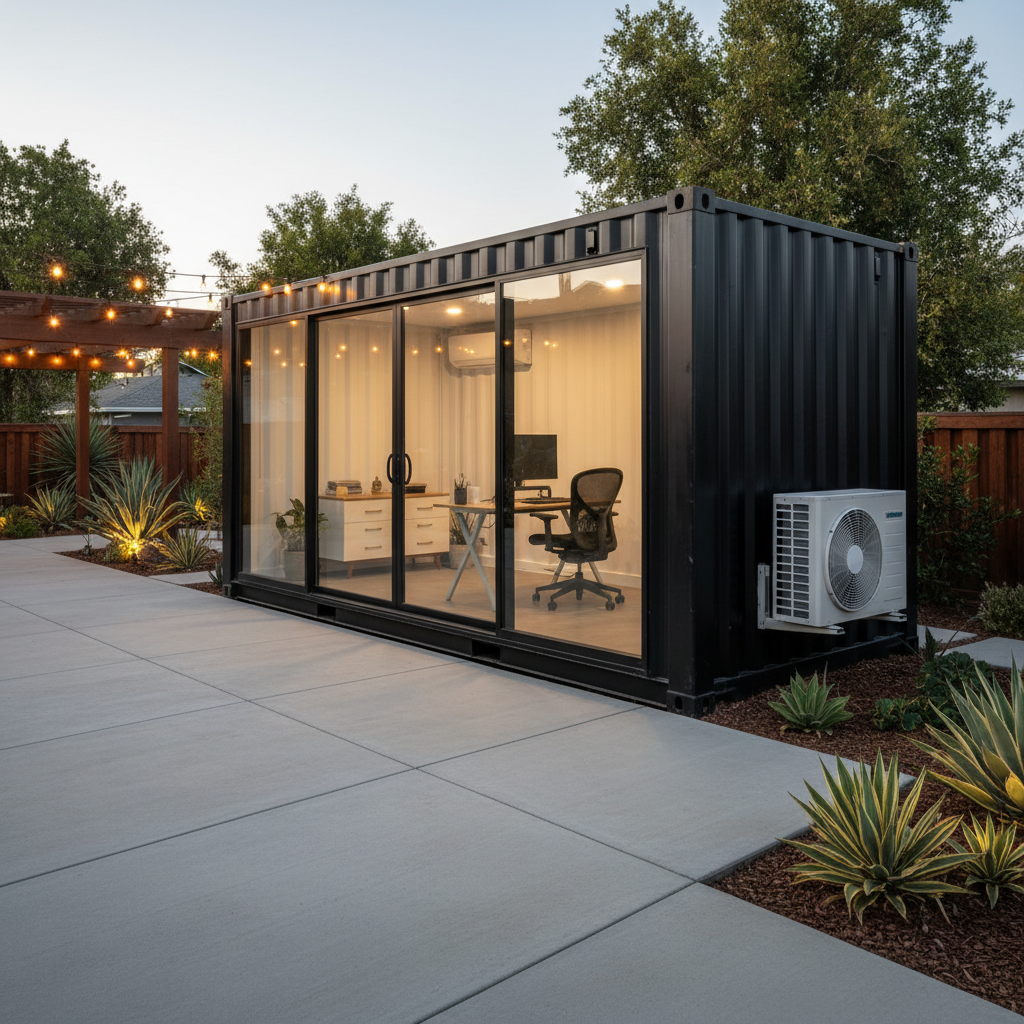
By July 2026, the demand for a permanent, weather-resilient workspace has shifted from a luxury to a logistical necessity. If you are tracking the backyard container office with hvac price 2026, you aren't just looking for a metal box; you're looking for a professional-grade environment that can withstand 100-degree heatwaves and mid-winter freezes. High-performance HVAC is the line in the sand between a humid storage shed and a functional executive suite.
Table of Contents
- backyard container office with hvac price 2026: Total Price Breakdown for Backyard Container Offices in 2026
- Choosing the Best AC Unit for Container Office Productivity
- The Invisible Cost Factor: Insulation Efficiency
- Permits and Compliance for Climate-Controlled Units
- Frequently Asked Questions
- Is a Pre-built Portable Office Worth the Premium?
- Explore Related Products & Guides
backyard container office with hvac price 2026: Total Price Breakdown for Backyard Container Offices in 2026
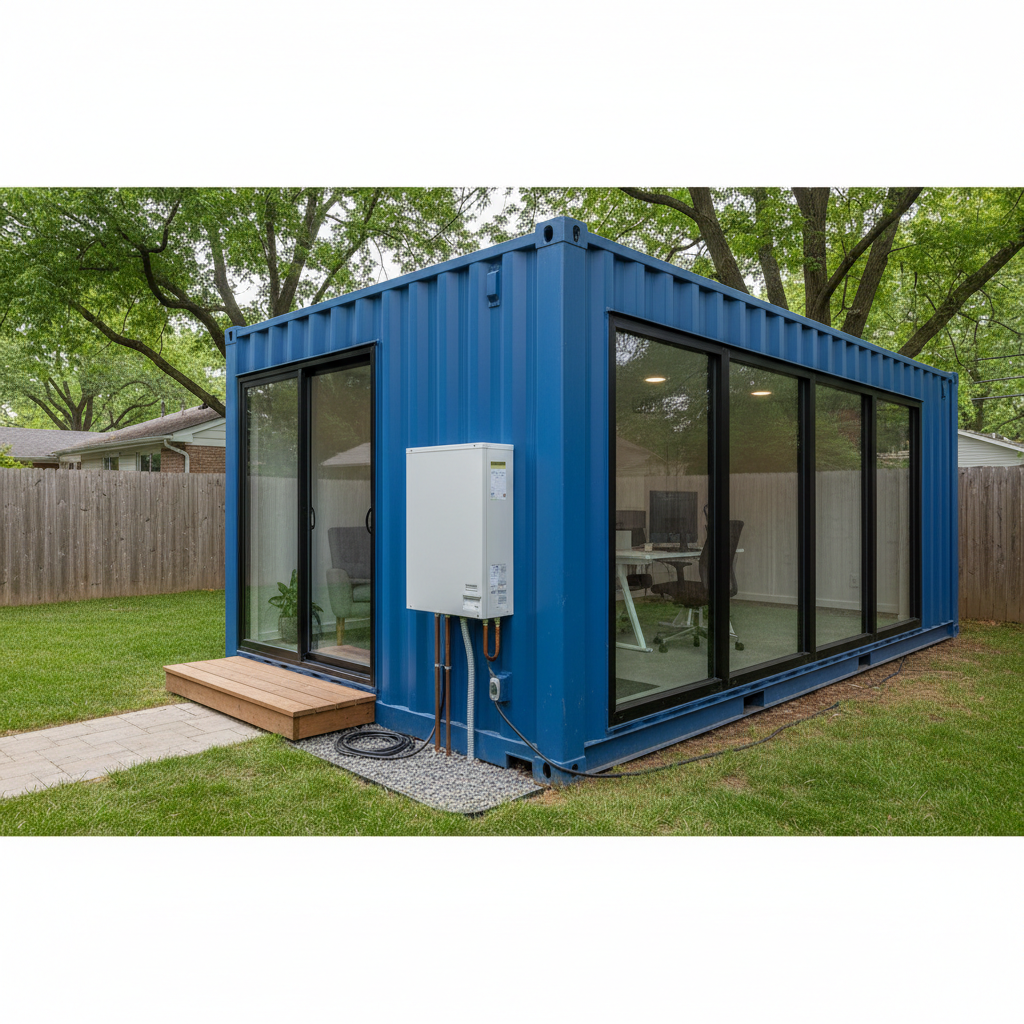
A backyard container office with hvac price 2026 typically lands between $18,500 and $45,000 depending on the level of interior finish and the specific cooling technology chosen. While a basic 20ft container shell is affordable, the conversion into a habitable workspace involves significant labor and material costs.
| Component | Entry-Level (DIY-ish/Used) | Mid-Range (Pro-Modified) | Premium (Prefab/Luxury) |
|---|---|---|---|
| Container Shell | $2,200 - $3,500 (Used CW) | $4,500 - $6,000 (One-Trip) | Included in Build |
| HVAC (Mini-Split) | $1,200 - $1,800 | $2,500 - $3,500 (Mitsubishi/Fujitsu) | Integrated Commercial Grade |
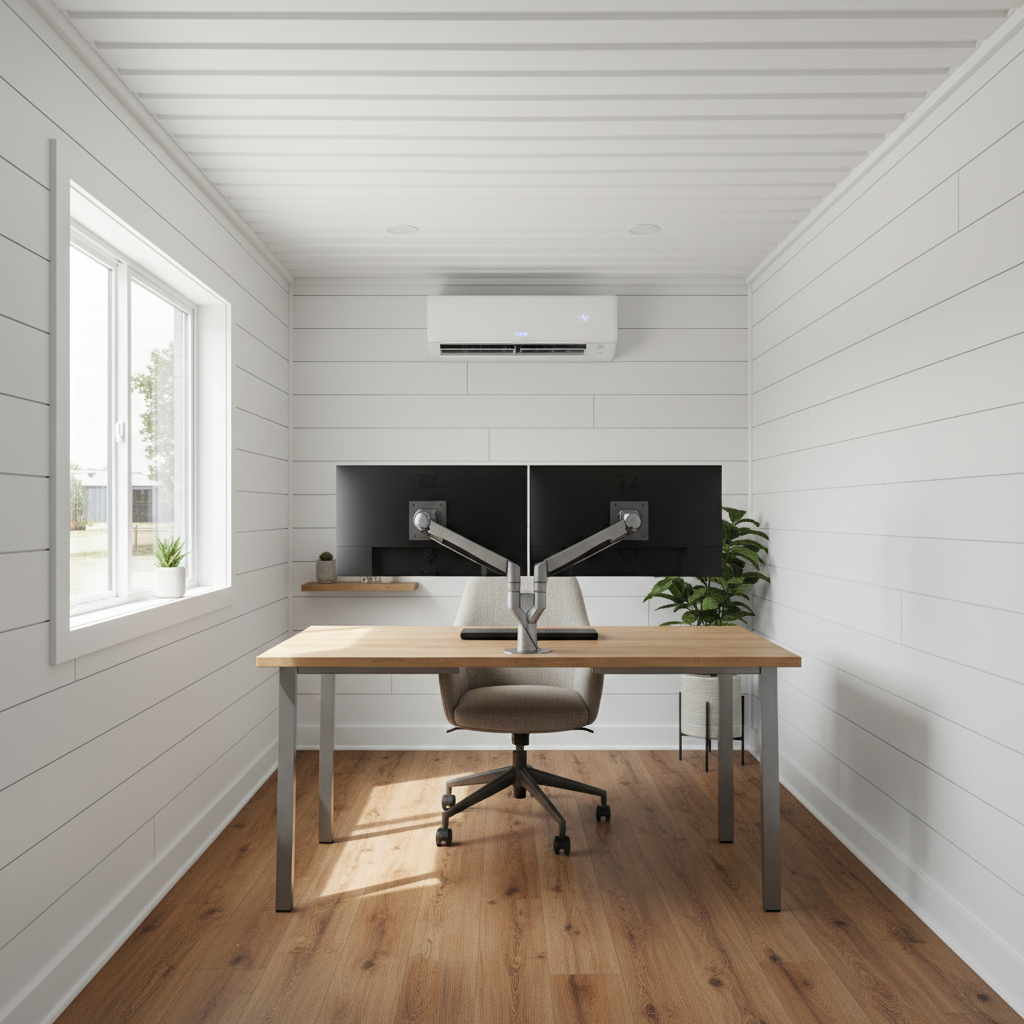
| Insulation/Interior | $3,000 - $5,000 | $7,000 - $10,000 | High-Efficiency Panelized |
| Electrical & Lighting | $1,500 - $2,500 | $3,000 - $4,500 | Smart-Home Integrated |
| Estimated Total | $18,000 - $24,000 | $28,000 - $38,000 | $45,000 - $65,000+ |
Important: Never install a standard window AC unit in a shipping container without reinforcing the frame. The vibration alone can cause seam leakage over time, and the energy efficiency is significantly lower than a dedicated mini-split system.
Choosing the Best AC Unit for Container Office Productivity
The high thermal conductivity of Corten steel means your shipping container workspace 2026 acts like an oven in the sun without active mitigation. A mini split hvac container office system is the gold standard for several reasons: they don't require ductwork, they offer inverter technology for lower electricity bills, and they are incredibly quiet (under 20 decibels).
- 9,000 BTU Units: Sufficient for a standard 20ft container with R-13 or better insulation.
- 12,000 BTU Units: Recommended for south-facing units or 40ft High Cubes.
- Multi-Zone Systems: Essential if you are using a converted 40ft container with divided office sections.
The Invisible Cost Factor: Insulation Efficiency
Climate controlled container office cost is heavily influenced by what's behind the walls. In 2026, we see three primary insulation methods: Closed-cell spray foam, Mineral wool, and Polyisocyanurate (Polyiso) panels. Spray foam is highly recommended as it creates a seamless vapor barrier, preventing condensation on the steel walls—a common failure point in poorly built backyard pods.
If you are comparing a modern backyard studio price, ensure the quote includes a 'thermal break.' This is a layer of insulation that prevents the metal framing studs from touching the outer steel wall, effectively stopping heat transfer. Without it, your AC will run 24/7 without ever reaching the desired temperature. Learn more about how to insulate a shipping container for summer.
Permits and Compliance for Climate-Controlled Units
When you add an ac unit for container office, you are often crossing the threshold from 'temporary storage' to 'habitable structure' in the eyes of your local AHJ (Authority Having Jurisdiction). Most US states follow the International Residential Code (IRC) or International Building Code (IBC) guidelines. You will likely need an electrical permit for the 220V circuit required by the HVAC system and a placement permit for the unit itself. See our shipping container permit requirements by state 2026 guide for specific details.
Tip: If you are concerned about permanent property tax increases, many owners opt for a 20ft bumper pull container chassis. Keeping the office mobile can sometimes classify the structure as 'personal property' rather than 'real estate,' though you must verify this with your local assessor.
Container delivery near you
We deliver to every state in the lower 48 plus Alaska and Hawaii. These local pages list pricing, metro coverage and typical lead times for the areas we run into most:
- Shipping containers near me — how we source from the depot closest to your ZIP code
- Shipping containers in Georgia — pricing and delivery to Atlanta and Savannah
- Shipping containers in North Carolina — pricing and delivery to Charlotte and Raleigh
- Shipping containers in Arizona — pricing and delivery to Phoenix and Tucson
- Shipping containers in Washington — pricing and delivery to Seattle and Spokane
- Shipping containers in Colorado — pricing and delivery to Denver and Colorado Springs
- Shipping containers Houston — local yard stock and lead times
Frequently Asked Questions
These are the most common inquiries our fabrication team addresses regarding backyard office climate control.
Is a Pre-built Portable Office Worth the Premium?
An insulated prefab office pod from a factory can cost $10,000 more than a DIY conversion, but it includes financing and grant options and a manufacturer's warranty. For business owners, the 'plug and play' nature of a fully equipped 20ft home modified into an office means they can begin billing hours immediately rather than spending weekends as a general contractor.
If you're ready to compare inventory for your project, our team can pull matching units from our nationwide depots. Whether you need a raw 40ft High Cube to start your build or a ready-to-ship climate-controlled studio, we handle the logistics from yard to yard. Contact us to discuss your 2026 workspace roadmap.
Explore Related Products & Guides
Frequently Asked Questions
How much does a backyard container office with HVAC cost?
In 2026, a professional-grade backyard container office with HVAC typically ranges from $28,000 to $45,000. This price includes a serviced container shell, high-R-value spray foam insulation, electrical wiring, and a 9,000-12,000 BTU mini-split air conditioning system.
Can you run a mini split in a shipping container?
Yes, mini-split systems are the primary HVAC solution for containers. They require a small 3-inch hole for refrigerant lines and an external condenser mount. Because they are ductless, they don't compromise the ceiling height of the container, which is critical in standard 8'6" units.
What is the best insulation for a summer container office?
Closed-cell spray foam is the best choice for summer cooling. It prevents the steel walls from radiating heat inward and stops condensation from forming when the cold AC hits the hot metal exterior, protecting your interior build-out from mold and rust.
Do I need a permit for a backyard container office with AC?
Most jurisdictions require at least an electrical permit for the HVAC circuit. If the office is over a certain square footage (usually 120-200 sq ft), a structural or placement permit is also required. Local zoning laws vary heavily by county.
Are prefab container offices cheaper than wood sheds?
Initially, a wood shed may be cheaper, but once you account for the structural reinforcement and waterproofing needed to reach the same 25-50 year lifespan as a Corten steel container, the container office often provides better long-term value and higher resale potential.
How much electricity does a container office use in summer?
A modern 12,000 BTU mini-split in a well-insulated 20ft container will use approximately 500-800 watts per hour while the compressor is active. On an average 90-degree day, expect to use 4-7 kWh per workday, costing roughly $0.60-$1.50 depending on local utility rates.
Frequently asked questions
How much does a backyard container office with HVAC cost?
In 2026, a professional-grade backyard container office with HVAC typically ranges from $28,000 to $45,000. This price includes a serviced container shell, high-R-value spray foam insulation, electrical wiring, and a 9,000-12,000 BTU mini-split air conditioning system.
Can you run a mini split in a shipping container?
Yes, mini-split systems are the primary HVAC solution for containers. They require a small 3-inch hole for refrigerant lines and an external condenser mount. Because they are ductless, they don't compromise the ceiling height of the container, which is critical in standard 8'6" units.
What is the best insulation for a summer container office?
Closed-cell spray foam is the best choice for summer cooling. It prevents the steel walls from radiating heat inward and stops condensation from forming when the cold AC hits the hot metal exterior, protecting your interior build-out from mold and rust.
Do I need a permit for a backyard container office with AC?
Most jurisdictions require at least an electrical permit for the HVAC circuit. If the office is over a certain square footage (usually 120-200 sq ft), a structural or placement permit is also required. Local zoning laws vary heavily by county.
Are prefab container offices cheaper than wood sheds?
Initially, a wood shed may be cheaper, but once you account for the structural reinforcement and waterproofing needed to reach the same 25-50 year lifespan as a Corten steel container, the container office often provides better long-term value and higher resale potential.
How much electricity does a container office use in summer?
A modern 12,000 BTU mini-split in a well-insulated 20ft container will use approximately 500-800 watts per hour while the compressor is active. On an average 90-degree day, expect to use 4-7 kWh per workday, costing roughly $0.60-$1.50 depending on local utility rates.
About Outback Container Experts
This guide was prepared by the Outback Shipping Containers team, based on the questions our customers ask us most when buying, modifying and taking delivery of shipping containers. Learn more about us.
Ready to find your container?
Browse our in-stock shipping containers, container homes and custom builds, or ask our team for a free quote with delivery to your site.