Portable Cold Storage for Restaurants: 2026 Cost & Guide
By Outback Container Experts · Published July 24, 2026 · Last updated October 21, 2026
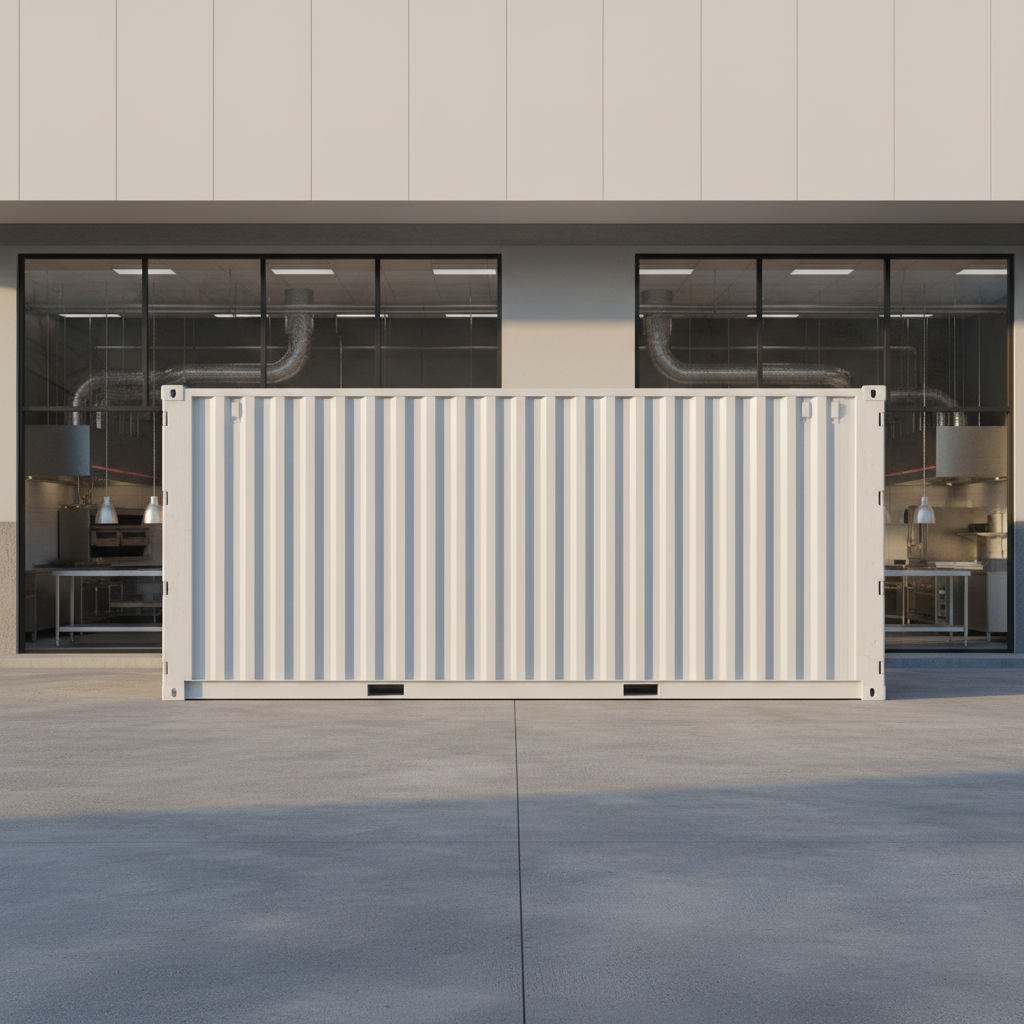
portable-cold-storage-for-restaurants-cost — July heatwaves in the United States don't just stress your staff; they are the primary cause of catastrophic failure for aging commercial walk-ins. When your internal cooling fails or your peak seasonal inventory exceeds your footprint, the portable cold storage for restaurants cost becomes the most critical metric on your balance sheet. Unlike traditional brick-and-mortar extensions, a refrigerated shipping container (reefer) offers a rapid-deployment solution that handles everything from frozen meats to delicate produce at temperatures ranging from -20°F to 70°F.
Table of Contents
- portable-cold-storage-for-restaurants-cost: Understanding the Portable Cold Storage for Restaurants Cost in 2026
- The Walk-in Cooler vs Refrigerated Container Debate
- Critical Specs: Power and Infrastructure
- Hidden Factors Affecting Commercial Reefer Container Price
- Emergency Refrigeration for Restaurants: Rent or Buy?
- Phased CapEx: Breaking Down the Initial Purchase and Retrofitting Tiers
- Operational Monthly Costs: Energy, Maintenance, and Compliance
- Logistics and Site Prep: The 'Day Zero' Expenses
- Frequently Asked Questions
- FAQ
- Explore Related Products & Guides
portable-cold-storage-for-restaurants-cost: Understanding the Portable Cold Storage for Restaurants Cost in 2026
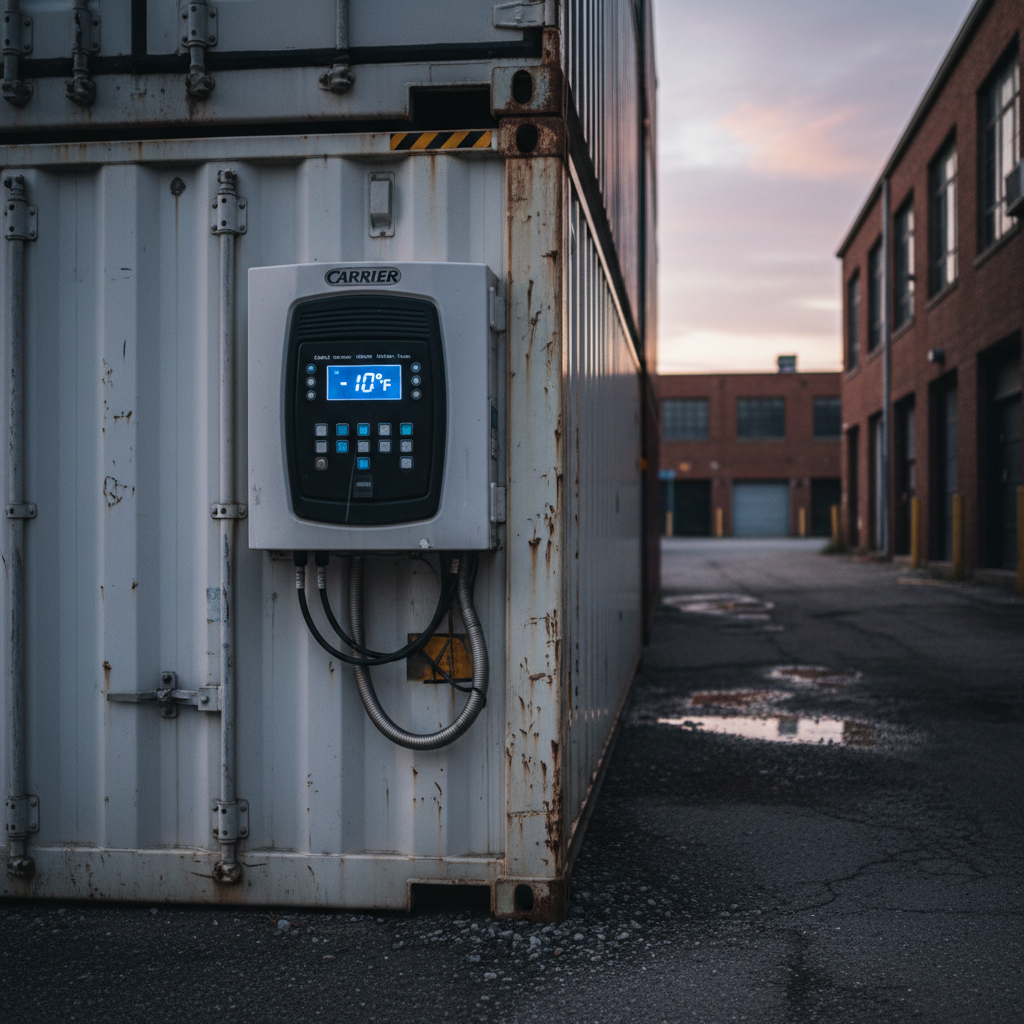
In 2026, the market for refrigerated units has stabilized after the supply chain volatility of previous years. However, restaurant owners must distinguish between 'as-is' maritime units and food-grade refurbished units. For a standard restaurant operation, a 20ft domestic refrigerated container is the most common acquisition. These units typically price between $8,500 and $14,000 depending on the age of the cooling machinery (Carrier or Thermo King) and the condition of the T-grade insulated flooring.
| Unit Type | Purchase Price (Used/Refurbished) | Monthly Rental Range | Primary Application |
|---|---|---|---|
| 10ft Compact Freezer | $7,500 - $11,000 | $500 - $750 | Small urban kitchens / tight alleys |
| 20ft Standard Reefer | $8,500 - $14,000 | $800 - $1,100 | High-volume restaurant overflow |
| 40ft High Cube Reefer | $12,000 - $19,500 | $1,200 - $1,600 | Bulk distributors / long-term storage |
| Single-Phase Modified | $15,000 - $22,000 | Rarely rented | Residential/Small Business (Single-Phase 240V) |
The Walk-in Cooler vs Refrigerated Container Debate
Building a permanent indoor walk-in requires architectural drawings, health department inspections, and expensive contractor fees that can easily exceed $30,000 for a 200-square-foot space. Conversely, outdoor refrigerated storage units provide immediate relief without structural changes to your building. These units utilize high-density polyurethane foam insulation and stainless steel interior linings that meet FDA and USDA standards for food contact.
Tip: Because our reefers run on single-phase 240V power, many restaurant owners opt for a single-phase 20ft refurbished refrigerated container to match standard commercial electrical panels with no 3-phase service or phase converter needed.
Critical Specs: Power and Infrastructure
Before finalizing your restaurant cold storage solutions, you must audit your site’s electrical capacity. A standard 40ft working refrigerated container usually requires a dedicated 30-amp or 50-amp circuit. To power your unit, you will need standard single-phase 220/240V power, with no 3-phase service or phase converter needed. If your restaurant only has 208V/230V, you will require a buck-boost transformer, which adds approximately $1,200 to your initial setup cost.
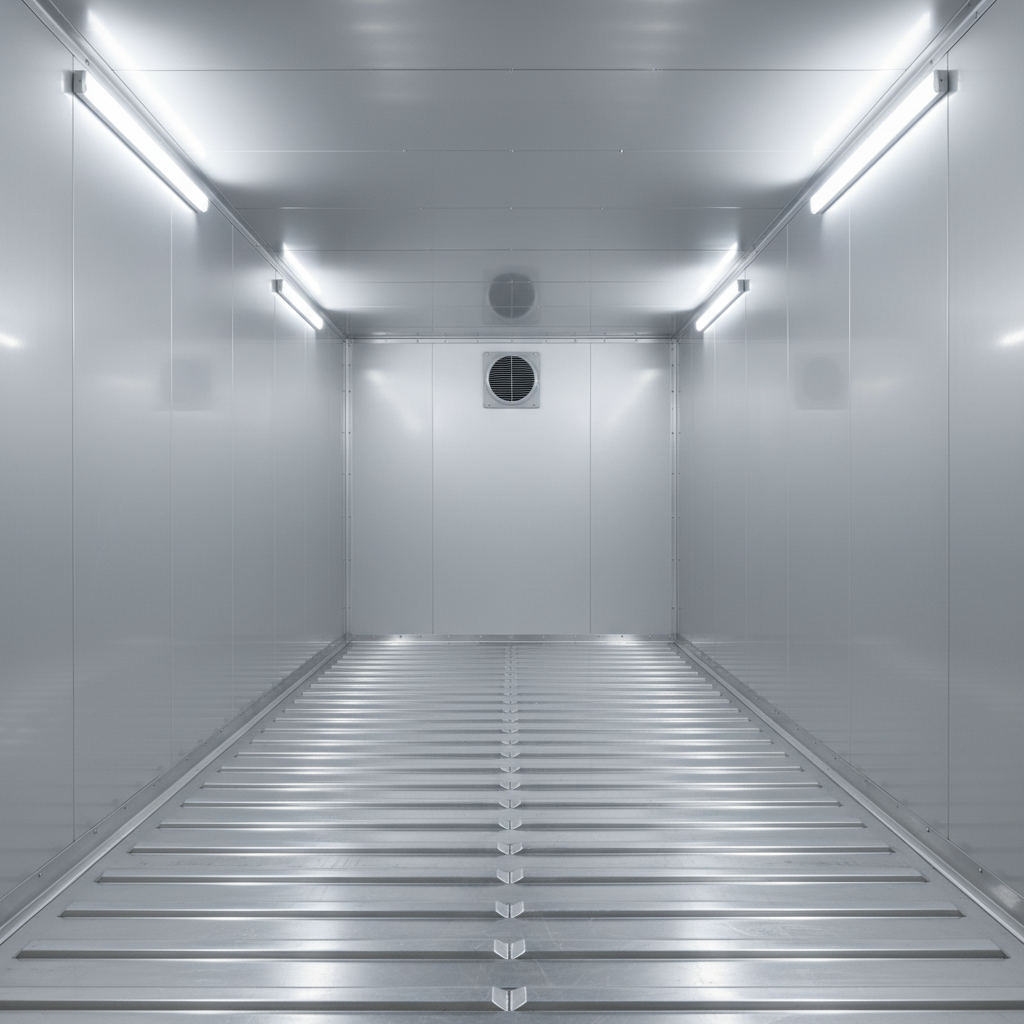
- Floor Type: Ensure the unit has aluminum T-bar flooring for proper airflow beneath pallets.
- Interior Lighting: Most used units lack internal lights; these should be added by a certified electrician.
- Drainage: Check that the 'kazoo' drains are clear to prevent condensation buildup.
- CSC Plate: For safety and insurance, ensure the unit has a valid CSC plate if it will be moved frequently.
Hidden Factors Affecting Commercial Reefer Container Price
The sticker price is only one part of the equation. When calculating the total cost, consider following operational expenses:
- Delivery and Leveling: Unlike used 20ft storage containers, reefers must be perfectly level for the refrigeration compressor to operate efficiently. Expect delivery fees to range from $400 to $900.
- Reefer Container Power Consumption: In summer peaks, a 20ft unit may consume 5-8 kWh. At average US commercial rates, this can cost $200 - $450 per month.
- Maintenance: We recommend a quarterly 'Pre-Trip Inspection' (PTI) style check on the refrigerant levels and condenser coils.
- Permitting: Many municipalities classify these as temporary structures, but others require a shipping container permit if they stay on-site for more than 90 days.
Emergency Refrigeration for Restaurants: Rent or Buy?
If you are facing a mid-July breakdown, renting is often the fastest path. However, our analysis of renting vs buying shows that if you need the unit for more than 14 months, purchasing a used 40ft reefer and maintaining it yourself offers a better ROI. Buying also allows for modifications like side-access doors, which improve ergonomics for kitchen staff retrieving heavy ingredients.
Phased CapEx: Breaking Down the Initial Purchase and Retrofitting Tiers
For restaurant owners in 2026, the portable cold storage for restaurants cost is no longer a flat figure. A used-but-certified 20ft refrigerated container (reefer) typically starts between $8,500 and $12,000, depending on the age of the Carrier or Thermo King refrigeration unit. If your operation requires a 'New' or 'One-Trip' unit specifically for long-term food safety compliance, expect the baseline to jump to $16,000–$21,000. These units feature T-bar aluminum flooring and stainless steel interiors, which are non-negotiable for USDA and local health department inspections.
The price point shifts significantly when you add restaurant-specific modifications. Standard reefer units are built for ocean transit, meaning they are designed to be loaded by forklift. For a restaurant kitchen staff, you will need a flat-floor overlay (often a $1,200 upcharge) to prevent trip hazards and allow for rolling carts. Additionally, internal lighting and easy-open butchery doors are critical for daily operations, as the standard 'cam-lock' container doors are notoriously difficult for staff to open dozens of times per shift.
| Feature Item | Economic Tier (Used) | Premium Tier (New/Modified) |
|---|---|---|
| 20ft Reefer Unit | $8,500 - $11,000 | $17,000 - $22,000 |
| Flat Floor Conversion | Not Included | $1,200 - $1,800 |
| Internal LED Lighting | $300 (DIY) | $850 (Installed) |
| Panic Bar/Easy Exit Door | N/A | $1,400 - $2,600 |
| Local Delivery & Tilt-Bed | $500 - $900 | $500 - $1,200 |
Important: Always verify if the refrigeration unit is Phase 3 or Single Phase. These refrigerated containers run on standard single-phase 220/240V power. Converting to 230V Single Phase for a standard restaurant electrical panel can add $3,500 in transformer costs or unit rewiring.
Operational Monthly Costs: Energy, Maintenance, and Compliance
The true portable cold storage for restaurants cost includes the 'invisible' monthly burn rate. On average, a 20ft refrigerated container consumes between 3kW and 6kW per hour depending on its set point—extraordinarily different for a freezer (-10°F) versus a cooler (35°F). In a high-heat environment like a parking lot in July, the compressor will cycle more frequently. At an average US commercial utility rate of $0.15/kWh, expect to spend $350 to $650 per month just on electricity. This is often 30% higher than an indoor walk-in because of the lack of a secondary thermal envelope.
Preventative maintenance is the second largest operational expense. Unlike a static walk-in, reefer units utilize high-pressure scroll compressors and complex salt-air resistant coils. If you do not schedule twice-yearly service calls to clear the condenser and check refrigerant levels, you risk a 'red line' failure during a peak holiday weekend. A specialized reefer technician usually bills at $120–$180 per hour, and sourcing older R-134a or R-404A refrigerants is becoming increasingly expensive due to 2026 environmental surcharges.
- Annual Refrigeration Service: $800 - $1,200 (includes coil cleaning and sensor calibration).
- Digital Temp Monitoring: $15 - $50/month (Required for HAACP compliance/automated logging).
- Gasket Replacements: $200 per door (Recommended every 24 months to prevent air leaks).
- Potential Property Tax: $100 - $400/year (Check if your municipality classifies containers as 'taxable personal property').
Tip: Position your container on the north side of your building or under a reflective cargo roof-shield. Reducing direct sun exposure can lower your monthly energy consumption by up to 18%.
Logistics and Site Prep: The 'Day Zero' Expenses
Many restaurant owners overlook the site preparation costs which can equal 20% of the unit price. A fully loaded 20ft reefer can weigh upwards of 6,000 lbs empty and over 25,000 lbs when stocked with inventory. Placing this on soft asphalt or unpaved ground will cause the unit to sink, leading to door misalignment and frame racking. To avoid this, you must invest in a level gravel pad or concrete footings. A 4-inch reinforced concrete pad for a 20ft unit typically costs $2,500 to $4,000 depending on your local labor market.
Permitting is another evolving cost center in 2026. Many cities now require an 'accessory structure' permit if the unit stays on-site for more than 90 days. This may involve a site plan review, electrical permits for the hookup, and sometimes even a zoning variance if you are in a high-density urban corridor. Skipping these steps can lead to daily fines that quickly exceed the cost of the container itself.
- Site Survey & Zoning Check: $150 - $500
- Reinforced Concrete Pad or Ballast Blocks: $800 - $3,500
- Dedicated Electrical Circuit Installation: $1,200 - $2,800
- Crane or Forklift Assist (if tight access): $600 - $1,500
Tip: Before delivery, ensure you have 100 ft for a 20ft (120 ft for a 40ft) of straight-line clearance for a tilt-bed truck to drop the unit. If the driver has to spend more than 1 hour on site, standby fees usually kick in at $150/hour.
Container delivery near you
We deliver to every state in the lower 48 plus Alaska and Hawaii. These local pages list pricing, metro coverage and typical lead times for the areas we run into most:
- Shipping containers near me — how we source from the depot closest to your ZIP code
- Shipping containers in Georgia — pricing and delivery to Atlanta and Savannah
- Shipping containers in North Carolina — pricing and delivery to Charlotte and Raleigh
- Shipping containers in Arizona — pricing and delivery to Phoenix and Tucson
- Shipping containers in Washington — pricing and delivery to Seattle and Spokane
- Shipping containers in Colorado — pricing and delivery to Denver and Colorado Springs
- Shipping containers Houston — local yard stock and lead times
Frequently Asked Questions
Below are common queries from restaurant managers regarding mobile cold storage integration.
FAQ
How much does a portable cold storage unit cost?
In 2026, a refurbished 20ft unit typically costs between $8,500 and $14,000 to buy, while monthly rentals range from $800 to $1,100.
Can I use a reefer container for a restaurant?
Yes. Most modern reefer containers feature food-grade stainless steel interiors and aluminum floors, making them ideal for meeting health code requirements provided you maintain proper sanitation.
What are the power requirements for a reefer container?
These units run on standard single-phase 240V power, with no 3-phase service or phase converter needed. However, specialized domestic units can be found or modified to run on 208V/230V single-phase power for easier restaurant integration.
Is it cheaper to rent or buy a refrigerated container?
Renting is better for short-term seasonal needs (3-6 months), but purchasing is more cost-effective for long-term storage, with a typical break-even point at the 14-month mark.
Do I need a permit for a cold storage container?
Requirements vary by local AHJ (Authority Having Jurisdiction). Many cities allow them as temporary equipment for 90 days, while others require a permit if they are hard-wired into the electrical grid.
How long do refrigerated shipping containers last?
The steel shell and insulation can last 20+ years. The refrigeration machinery typically has a lifespan of 10-15 years, but with regular coil cleaning and motor maintenance, many units exceed this.
Protecting your inventory from the summer peak starts with choosing the right hardware. Whether you need a 10ft freezer reefer for a tight parking lot or a new 40ft refrigerated unit for a regional distribution hub, our team can help you navigate the electrical and logistics requirements. If you're ready to compare inventory for your project, our team can pull matching units from our nationwide depots and provide a landed quote including delivery.
Explore Related Products & Guides
Frequently Asked Questions
How much does a portable cold storage unit cost?
A portable cold storage unit costs between $8,500 and $14,000 for a used 20ft unit, while larger 40ft units range from $12,000 to $19,500. Rentals generally cost $800 to $1,600 per month.
Can I use a reefer container for a restaurant?
Yes, reefer containers are widely used by restaurants as outdoor walk-ins. Their stainless steel interiors and precise temperature controls make them suitable for food-grade storage.
What are the power requirements for a reefer container?
Our units run on standard single-phase 220/240V power on a dedicated circuit, so no 3-phase service or phase converter is needed.
Is it cheaper to rent or buy a refrigerated container?
If you need the storage for more than about 14 months, buying is significantly cheaper. For emergency or 3-month seasonal peaks, renting is the preferred lower-capital option.
Do I need a permit for a cold storage container?
In many US jurisdictions, you do need a temporary structure permit if the unit stays on-site for more than 90 days or is permanently connected to the electrical system.
How long do refrigerated shipping containers last?
The insulated structure lasts upwards of 25 years. The mechanical refrigeration units (Carrier/Thermo King) typically provide 10-15 years of reliable service with routine maintenance.
Frequently asked questions
How much does a portable cold storage unit cost?
A portable cold storage unit costs between $8,500 and $14,000 for a used 20ft unit, while larger 40ft units range from $12,000 to $19,500. Rentals generally cost $800 to $1,600 per month.
Can I use a reefer container for a restaurant?
Yes, reefer containers are widely used by restaurants as outdoor walk-ins. Their stainless steel interiors and precise temperature controls make them suitable for food-grade storage.
What are the power requirements for a reefer container?
Our units run on standard single-phase 220/240V power on a dedicated circuit, so no 3-phase service or phase converter is needed.
Is it cheaper to rent or buy a refrigerated container?
If you need the storage for more than about 14 months, buying is significantly cheaper. For emergency or 3-month seasonal peaks, renting is the preferred lower-capital option.
Do I need a permit for a cold storage container?
In many US jurisdictions, you do need a temporary structure permit if the unit stays on-site for more than 90 days or is permanently connected to the electrical system.
How long do refrigerated shipping containers last?
The insulated structure lasts upwards of 25 years. The mechanical refrigeration units (Carrier/Thermo King) typically provide 10-15 years of reliable service with routine maintenance.
About Outback Container Experts
This guide was prepared by the Outback Shipping Containers team, based on the questions our customers ask us most when buying, modifying and taking delivery of shipping containers. Learn more about us.
Ready to find your container?
Browse our in-stock shipping containers, container homes and custom builds, or ask our team for a free quote with delivery to your site.