Shipping Container Permit Requirements by State 2026
By Outback Container Experts · Published July 16, 2026 · Last updated October 18, 2026

shipping container permit requirements by state 2026 — Before you drop as much as $60,000 on a luxury unit like The Huntington, the most critical question is not whether it will fit in your yard, but whether the local Authority Having Jurisdiction (AHJ) will let it stay there. As of July 2026, shipping container permit requirements by state have shifted significantly toward greater inclusion under the International Residential Code (IRC) and International Building Code (IBC), specifically following the widespread adoption of ICC G5-2019. However, the 'rules of the road' change every few miles as you cross county lines.
Table of Contents
- Zoning vs. Building Codes: Why Most Buyers Get Stuck
- Shipping Container Permit Requirements by State 2026: The Regional Landscape
- Steps to Secure Your Local Permit
- Frequently Asked Questions
- State by State Container Laws: A Summary
Zoning vs. Building Codes: Why Most Buyers Get Stuck
The largest hurdle in 2026 isn't the container's structural integrity—it is the destination's shipping container zoning laws. Zoning determines where you can put a container, while building codes determine how it must be modified. For instance, putting a 20ft container on a rural 40-acre lot in Texas is drastically easier than placing an Accessory Dwelling Unit (ADU) in the suburbs of Portland, Oregon.
When you call your local planning department, you must distinguish between two core use cases: temporary storage and permanent structures. Temporary structure permit vs permanent classification is usually determined by the foundation. If you bolt the container to a slab or piers, it is permanent. If it sits on gravel or timber skids, it may be classified as temporary, which often avoids the stringent residential storage container permits required for dwellings.
Shipping Container Permit Requirements by State 2026: The Regional Landscape
While there is no single federal law governing containers, patterns have emerged. Many 'pro-container' states have streamlined ADU permit requirements 2026 to address housing shortages. Check the table below for the current regulatory posture of common states.
| State/Region | Primary Regulation Style | Common Permit Requirement | Ease of Approval |
|---|---|---|---|
| California | State-level ADU Laws | Strict Building Code/Title 24 | Moderate (Pre-approved plans help) |
| Texas | County-led (Laissez-faire) | Minimal outside major cities | High |
| Florida | High-Velocity Hurricane Zone | Engineered Foundations/Wind Anchors | Low |
| Oregon/Washington | Urban Growth Boundaries | Full Utility Hookups required | Moderate |
| Colorado | Municipal Discretion | Snow Load and Insulation Ratings | Variable |
The Rise of ADU Permit Requirements in 2026
States like California and Colorado have passed laws that prevent municipalities from banning ADUs outright. This has opened the door for units like The Ezra to be used as backyard offices or rental units. However, you still need to follow accessory dwelling unit regulations, which often include specific shipping container foundation requirements. We cover specific pad and pier prep in our site checklist guide.
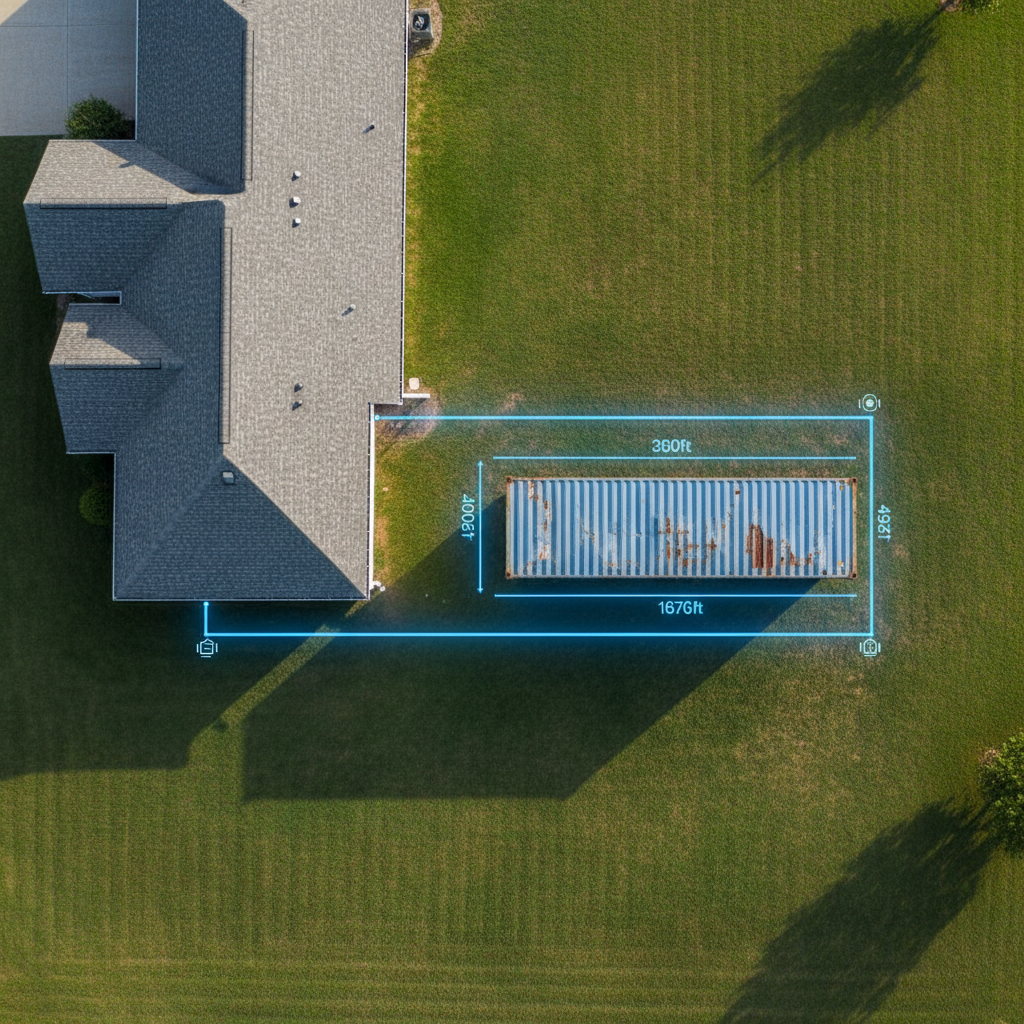
Important: Never buy a container for a home project until you have confirmed your local 'Setback' requirements. This is the mandatory distance between the container and your property line. In many suburban zones, this is 10–20 feet, which can render a small lot unusable for a 40ft high cube.
Steps to Secure Your Local Permit
- Identify Zoning: Check if your land is zoned as R-1 (Residential), AG (Agricultural), or Commercial.
- Determine Use: Is the container for storage, an office, or a home?
- Consult the AHJ: Visit the local building department with a site plan.
- Verify the CSC Plate: Ensure your container has a valid CSC plate for structural proof, especially if buying used inventory.
- Submit Foundation Plans: Most zones require engineered drawings if the unit is permanent.
If you are using a container for a business expansion, such as a mobile office unit, the commercial codes are often more forgiving than residential ones, provided you have adequate fire suppression and egress windows.

Container delivery near you
We deliver to every state in the lower 48 plus Alaska and Hawaii. These local pages list pricing, metro coverage and typical lead times for the areas we run into most:
- Shipping containers near me — how we source from the depot closest to your ZIP code
- Shipping containers in North Carolina — pricing and delivery to Charlotte and Raleigh
- Shipping containers in Arizona — pricing and delivery to Phoenix and Tucson
- Shipping containers in Washington — pricing and delivery to Seattle and Spokane
- Shipping containers in Tennessee — pricing and delivery to Nashville and Memphis
Frequently Asked Questions
Navigating state by state container laws can be confusing. Here are the most common questions our logistics team receives.
Tip: If your local code office is hesitant, point them toward Section R301.1 of the IRC. Since 2021, shipping containers are officially recognized as a structural building material when used in accordance with ISO standards.
State by State Container Laws: A Summary
In 2026, the trend is toward statewide pre-approval for modular units. If you purchase a pre-fabricated home like The Augustine, much of the permit work is handled at the factory level through a 'Gold Seal' state inspection program. This allows the unit to bypass many local inspections because it was built to a recognized modular standard.
Understanding shipping container prices is only half the battle. You must budget for permit fees, which in 2026 average between $500 for a storage permit and $4,500 for full ADU utility impact fees.
If you are concerned about the complexity of your local building department, our team can provide the technical specs for our new one-trip inventory), which often makes the approval process smoother for structural engineers. Ready to see what is available in your area? Contact us today to compare inventory across our nationwide depots.
Frequently Asked Questions
Do I need a permit for a shipping container?
In most cases, yes. Whether it is a temporary storage permit or a permanent occupancy permit depends on your local zoning. Even on private land, many counties require a 'Use Permit' to ensure safety and aesthetic compliance.
Can I put a shipping container in my backyard?
This depends on your local shipping container zoning laws. Most residential areas allow them as 'Accessory Building Units,' but they must meet specific setback requirements and often need to be clad or painted to match the primary residence.
Which states allow shipping container homes?
As of 2026, every state allows them, but several have streamlined the process, including California, Texas, Florida, and Tennessee. Success usually depends on the local building department rather than state-wide bans.
How to get a permit for a storage container?
Start by obtaining a site map of your property. Mark where the container will go, ensuring it doesn't cross easements or setbacks. Submit this to your Planning & Zoning department along with the container's dimensions and intended use.
Are shipping containers considered permanent structures?
They are considered permanent if they are attached to a foundation or have utilities (electricity/plumbing) hooked up. If they are used for mobile storage and sit on the ground, they are often classified as temporary.
What are the setbacks for shipping containers?
Setbacks vary by AHJ but typically range from 5 to 25 feet from property lines. Always check your specific 'Zoning Overlay' before scheduling delivery.
Frequently asked questions
Do I need a permit for a shipping container?
In most cases, yes. Whether it is a temporary storage permit or a permanent occupancy permit depends on your local zoning. Even on private land, many counties require a 'Use Permit' to ensure safety and aesthetic compliance.
Can I put a shipping container in my backyard?
This depends on your local shipping container zoning laws. Most residential areas allow them as 'Accessory Building Units,' but they must meet specific setback requirements and often need to be clad or painted to match the primary residence.
Which states allow shipping container homes?
As of 2026, every state allows them, but several have streamlined the process, including California, Texas, Florida, and Tennessee. Success usually depends on the local building department rather than state-wide bans.
How to get a permit for a storage container?
Start by obtaining a site map of your property. Mark where the container will go, ensuring it doesn't cross easements or setbacks. Submit this to your Planning & Zoning department along with the container's dimensions and intended use.
Are shipping containers considered permanent structures?
They are considered permanent if they are attached to a foundation or have utilities (electricity/plumbing) hooked up. If they are used for mobile storage and sit on the ground, they are often classified as temporary.
What are the setbacks for shipping containers?
Setbacks vary by AHJ but typically range from 5 to 25 feet from property lines. Always check your specific 'Zoning Overlay' before scheduling [delivery](/blog/d7c67eaa-78fb-499b-9a81-f7d2c694f9a0).
About Outback Container Experts
This guide was prepared by the Outback Shipping Containers team, based on the questions our customers ask us most when buying, modifying and taking delivery of shipping containers. Learn more about us.
Ready to find your container?
Browse our in-stock shipping containers, container homes and custom builds, or ask our team for a free quote with delivery to your site.