Cost of a Shipping Container: What Drives the Price
By Outback Shipping Containers · Published July 28, 2026 · Last updated October 18, 2026
Cost of a Shipping Container: What Drives the Price
Quick Answer: The cost of a shipping container is driven by size, condition, certification, location, delivery, and any modifications. A used 20ft WWT conex box usually costs less than a new one-trip 40ft high cube, but the final delivered price can change fast if your site is rural, tight, sloped, or requires special equipment.
Most buyers should budget for more than the container itself. Delivery, site prep, permits, taxes, and upgrades can add real cost. The best way to compare options is to price the full delivered setup, not just the box sitting at the depot.
Key Takeaways
- Size matters, but not always how you expect. A 40ft container often costs more than a 20ft unit, but it usually gives you a lower cost per square foot.
- Condition drives price. One-trip containers cost more than used WWT or CWO units because they have less wear, cleaner interiors, and better resale value.
- Delivery can change the deal. Distance, equipment, fuel, permits, and site access can make a cheap container more expensive once delivered.
- Certifications protect you. WWT, CWO, and CSC status help you understand whether the container is fit for storage, transport, or export use.
- Modifications add up. Doors, windows, insulation, HVAC, electrical, plumbing, and framing can cost more than the base cargo container.
Cost of a Shipping Container: The Main Price Drivers
The cost of a shipping container starts with the steel box, but it does not end there. A container is a large intermodal asset. It has to be inspected, moved, placed, and sometimes modified before it is useful on your property or job site.
For planning, many buyers look at the container-only price first. That is useful, but it can be misleading. A low depot price may not include delivery. It may not include a tilt-bed truck, crane, permits, sales tax, or the site prep needed to place the unit level.
Here are the main factors that move the final number:
- Container size, such as 10ft, 20ft, 40ft, 40ft high cube, or 45ft high cube
- Container type, such as dry van, reefer, open-side, double-door, or office unit
- Condition, including one-trip, cargo-worthy, wind and watertight, refurbished, or as-is
- Location of the container yard and your delivery address
- Delivery method, such as tilt-bed, flatbed, step-deck, crane, or forklift placement
- Market supply, steel prices, port activity, and seasonal demand
- Modifications, including doors, vents, insulation, electrical, plumbing, or build-out work
As a broad U.S. planning range, used standard dry containers often start in the low thousands before complex delivery or modifications. New one-trip units cost more because they have usually made only one cargo trip from the factory to the U.S. market. Specialty units like reefers, offices, pools, and container homes can cost much more because they include mechanical systems or construction labor.
For current nationwide pricing bands, delivery examples, and hidden cost categories, Outback’s 2026 shipping container cost guide is a good companion to this breakdown.
Size and Type: Why 20ft, 40ft, High Cube, and Reefer Prices Differ
Container size is the first cost question most buyers ask. A 20ft ISO container is easier to place on smaller lots. A 40ft unit gives you about twice the floor space, but it needs more room for delivery and turning.
Standard container dimensions are based on international freight standards. ISO publishes the dimensional framework for Series 1 freight containers under ISO 668, which is why most intermodal containers share the same width and corner casting layout.
Common sizes and what they are used for
A 10ft container works well for tight residential storage, tools, or small farm supplies. It is less common than 20ft and 40ft units, so it can cost more per foot.
A 20ft container is one of the most popular choices for homeowners, contractors, farms, and small businesses. It fits many driveways and job sites. It also offers a good balance of storage space and easier delivery.
A 40ft container is common for bulk storage, construction equipment, inventory, hay, feed, furniture, and large workshops. It is harder to place in tight urban lots, but it often gives better value per square foot.
A 40ft high cube has the same footprint as a standard 40ft unit, but it is 9 feet 6 inches tall outside instead of 8 feet 6 inches. That extra foot helps with shelving, insulation, ceiling fans, HVAC ducts, and container conversion projects.
| Container size | Typical exterior dimensions | Approx. floor area | Common uses | Price effect |
|---|---|---|---|---|
| 10ft standard | 10ft x 8ft x 8ft 6in | About 80 sq. ft. | Small storage, tools, residential sites | Higher cost per foot due to lower supply |
| 20ft standard | 20ft x 8ft x 8ft 6in | About 160 sq. ft. | Job-site storage, home storage, farm use | Strong balance of cost and placement ease |
| 40ft standard | 40ft x 8ft x 8ft 6in | About 320 sq. ft. | Bulk storage, inventory, equipment | Better cost per square foot |
| 40ft high cube | 40ft x 8ft x 9ft 6in | About 320 sq. ft. | Workshops, offices, homes, tall storage | Costs more than standard height |
| 45ft high cube | 45ft x 8ft x 9ft 6in | About 360 sq. ft. | Large storage, commercial use | Higher cost and more delivery constraints |
Dry containers vs. specialty containers
A standard dry cargo container is usually the lowest-cost option. It has steel walls, cargo doors, a marine-grade plywood floor, vents, and corner castings. For basic storage, that is often enough.
Specialty containers cost more because they are less common or need more systems. A refrigerated container, often called a reefer, has an insulated shell and refrigeration machinery. A container office adds windows, personnel doors, insulation, electrical, lighting, flooring, and HVAC. A container pool or home adds even more design, welding, waterproofing, utility, and code work.
That is why two containers of the same size can have very different prices. A used 40ft dry box and a modified 40ft office may share a frame size, but they are not the same product.
Condition and Certification: New, Used, CWO, and WWT
Condition is one of the biggest price drivers. It also affects how much work you may need after delivery.
A new, or one-trip, shipping container has usually carried cargo once from the manufacturing region to the destination market. It may still have small handling marks, but it should have less rust, fewer dents, a cleaner floor, and better door seals than most used units.
A used container has spent years in intermodal service. It may show dents, surface rust, faded paint, patches, and floor wear. That does not mean it is bad. Many used containers still make excellent storage units, workshops, and farm containers when inspected correctly.
What WWT, CWO, and CSC mean
WWT means wind and watertight. A WWT container should keep out normal wind-driven rain when doors, seals, roof, and walls are sound. This is a common grade for static storage.
CWO means cargo-worthy. A CWO container is generally suitable for cargo transport, subject to the actual inspection and carrier requirements. It should be structurally sound enough for shipping use.
CSC refers to the International Convention for Safe Containers safety approval plate. If you plan to move a loaded container in international transport, ask about CSC status and whether the inspection is current. If you only need backyard storage, WWT may be enough.
| Condition grade | Typical buyer | What you get | Cost impact |
|---|---|---|---|
| One-trip | Homeowners, offices, homes, premium storage | Newer steel, cleaner look, fewer repairs | Highest dry-container price |
| Refurbished | Buyers who want a cleaner used unit | Used box with repair and cosmetic work | Mid to high, depending on work done |
| CWO | Export, freight, heavier commercial use | Structurally suitable for cargo use when verified | Mid range |
| WWT | Static storage, farms, job sites | Keeps weather out under normal conditions | Often best value |
| As-is | Very budget-focused buyers | Unknown repair needs, possible leaks or damage | Lowest upfront cost, highest risk |
The cheapest unit is not always the cheapest long term. A leaking roof, bad door gasket, rotten floor, or twisted frame can cost more to fix than the money saved upfront.
Ask for current photos. Look at the roof, door headers, corner posts, fork pockets, underside, floor, and door seals. If you cannot inspect in person, buy from a supplier that stands behind the grade.
Delivery, Site Access, and Location Costs
Delivery is where many first-time buyers get surprised. A container is not a shed that arrives on a small trailer. Even an empty 20ft box often weighs around 4,800 pounds. A 40ft unit can weigh more than 8,000 pounds before cargo, depending on the model.
The delivery cost depends on distance, truck type, fuel, driver time, permits, and placement difficulty. It also depends on whether the driver can place the container directly or must transfer it to another machine.
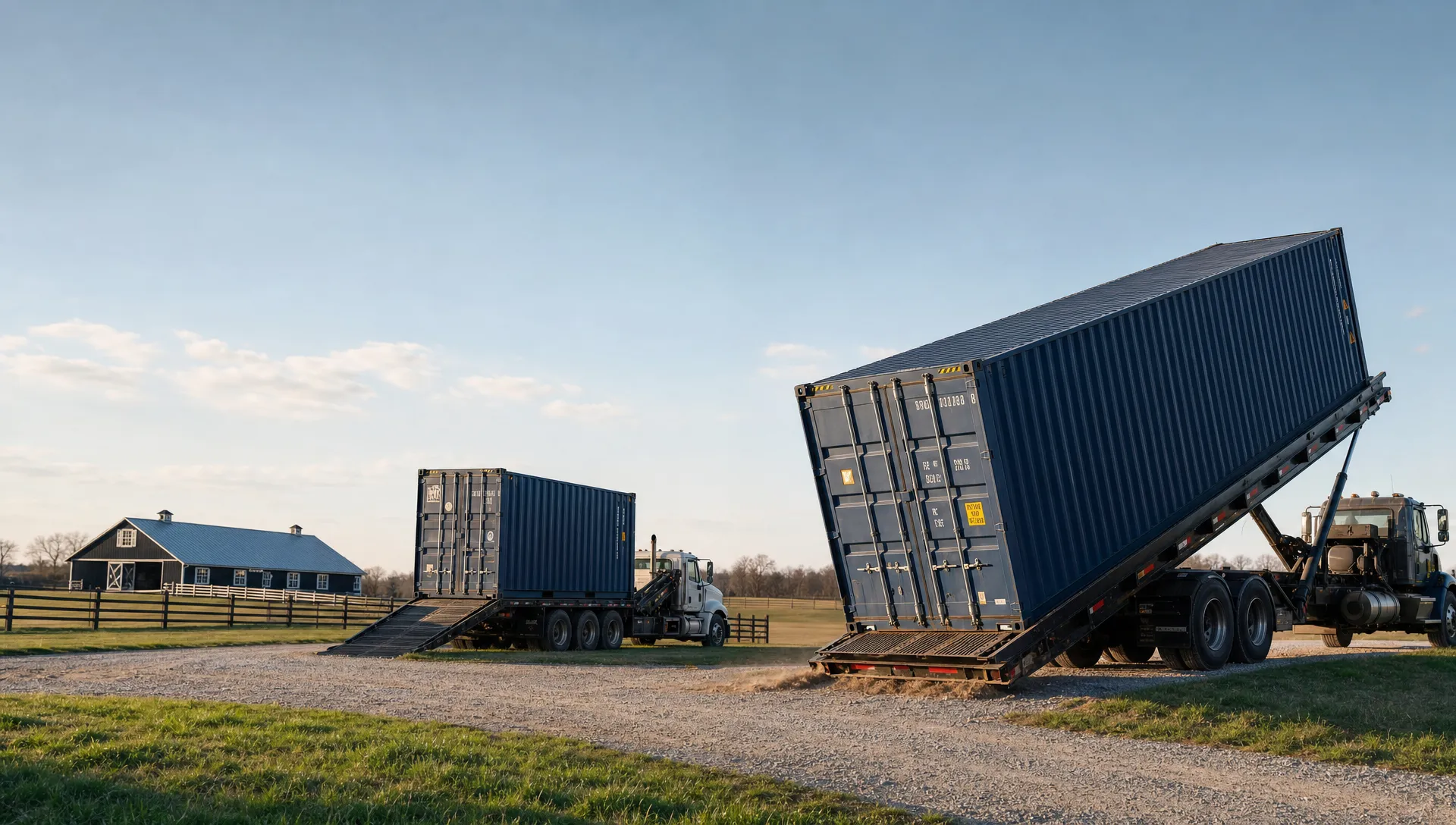
A tilt-bed truck is common for 20ft and some 40ft deliveries. The truck backs into position, tilts the bed, and slides the container off. This method needs a long, straight approach and firm ground.
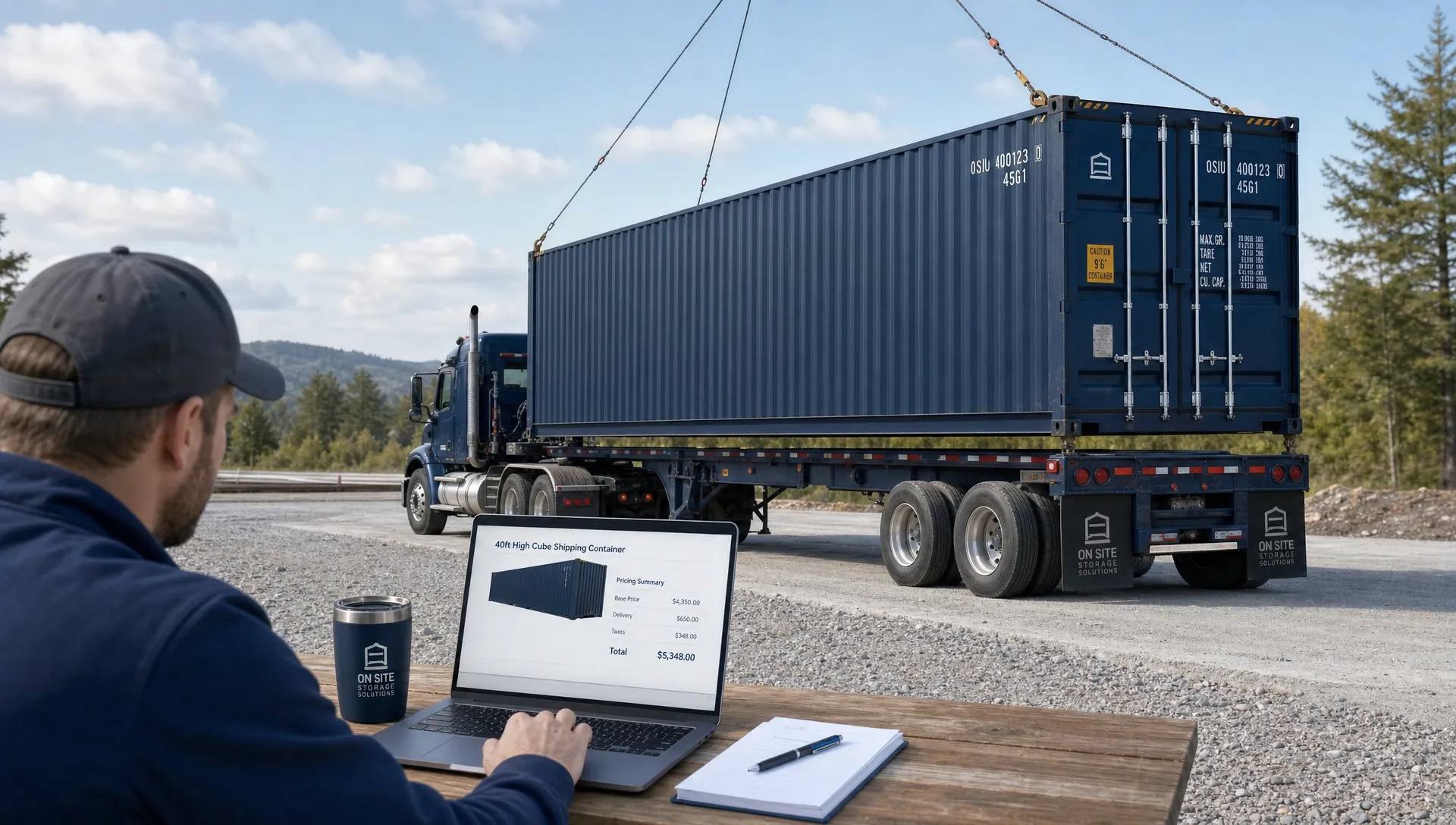
A flatbed or step-deck trailer may be used for longer hauls or larger containers. These often need a crane, large forklift, or other equipment at the site to unload. That adds cost, scheduling, and space requirements.
Site access can raise or lower your total cost
Good access saves money. Poor access can require extra labor or equipment.
Before you order, check these site details:
- Road width, driveway width, and overhead clearance
- Low branches, gates, fences, wires, and tight turns
- Ground firmness, slope, mud, snow, or soft sand
- Space for the truck to pull forward after placement
- Local rules for heavy trucks on private roads or rural bridges
If the container has to cross a ditch, fit through a narrow gate, or sit behind a building, tell your supplier early. Surprises on delivery day can lead to a failed delivery charge or a second trip.
Transportation rules also matter. Carriers must secure cargo correctly under federal rules. The FMCSA cargo securement rules explain the safety framework that applies to many commercial loads on U.S. roads.
For a deeper look at rates, equipment, and mileage planning, review Outback’s guide to shipping container delivery cost per mile.
Modifications, Container Homes, and Long-Term Ownership Costs
A plain ISO container is a strong shell. It is not automatically a home, office, workshop, or retail space. The more you ask it to do, the more cost moves from “container purchase” to “construction project.”
Basic storage modifications may include a lockbox, vents, shelving, roll-up door, lighting, or a personnel door. These can make the unit more useful without turning it into a full build.
A container office or workshop usually needs insulation, wall framing, flooring, electrical service, HVAC, outlets, lighting, windows, and code-compliant entry doors. A shipping container home adds plumbing, kitchen systems, bathrooms, egress planning, fire safety, foundation work, and inspections.
Why container conversions vary so much in price
A small window cut into a steel wall is not just a hole. It may need layout, cutting, steel reinforcement, flashing, finish trim, paint, and water sealing. The same is true for doors, plumbing penetrations, mini-split mounts, and roof penetrations.
Insulation also matters. Steel conducts heat and cold fast. In hot, cold, or humid climates, poor insulation can create condensation, mold risk, and high energy bills. Spray foam, rigid foam, mineral wool, and framed wall systems all have different costs and performance levels.
Permits and zoning can also affect the budget. Rules vary by state, county, city, and even neighborhood. Some areas treat containers as accessory storage. Others treat them as structures. A container home or short-term rental may need full residential code review.
If you are comparing a temporary rental unit against buying, use total time on site as your guide. Short projects may favor renting. Long-term storage, farm use, or permanent business use often favors ownership. Outback’s renting vs buying shipping containers cost comparison explains the break-even factors in more detail.
Mid-article tip: If you already know your size, site access, and intended use, you can compare available shipping container options from Outback Shipping Containers and request help matching the unit to your delivery site.
A Practical Budget Framework for First-Time Buyers
The best container budget is simple and complete. Start with the unit. Then add the real-world costs that make it usable.
A basic storage buyer may only need the container, delivery, a gravel pad, blocking, and a lock. A contractor may add lockboxes, vents, shelving, and interior lighting. A container home buyer needs a much larger planning budget because the container is only the structural shell.
Use this framework before you compare quotes:
| Budget line | Why it matters | Common mistake |
|---|---|---|
| Container price | Base cost of the cargo container | Comparing a WWT used unit to a one-trip unit as if they are equal |
| Delivery | Moves the unit from depot to site | Ignoring distance, truck type, and unloading method |
| Site prep | Keeps the container level and dry | Placing steel directly on soft soil or standing water |
| Permits and approvals | May be required for placement or use | Assuming rural property has no rules |
| Modifications | Makes the unit fit the job | Underpricing doors, insulation, HVAC, or electrical work |
| Maintenance | Protects resale value and contents | Ignoring roof rust, door seals, drainage, and paint |
For storage, a level gravel pad is often a smart low-cost choice. It helps drainage and reduces twisting. Containers like to sit level. If they rack out of square, the doors can become hard to open.
For long-term use, think about airflow. A sealed steel box can trap heat and moisture. Vents, desiccants, insulation, and raised storage can help protect tools, furniture, feed, records, and inventory.
For homes and offices, treat the project like construction. Get local permit guidance early. Ask about zoning, setbacks, foundation requirements, snow loads, wind loads, utility connections, septic, and electrical inspections. Requirements vary widely, so local officials and licensed professionals should guide final design.
How to Compare Quotes Without Getting Burned
Container scams and low-quality listings are common enough that buyers need a process. The safest quote is not always the lowest quote. It is the one that clearly explains what you are buying, where it is coming from, and how it will arrive.
A good quote should identify the size, condition grade, delivery ZIP code, delivery method, taxes or fees, and any included warranty or guarantee. It should also state whether the container is WWT, CWO, one-trip, refurbished, or as-is.
Red flags in container pricing
Be careful when a seller offers a price that is far below the local market, demands unusual payment methods, or refuses to provide photos. Also be careful with vague terms like “new condition” when the unit is clearly used.
A real supplier should be able to discuss delivery access. They should ask about your driveway, site surface, placement direction, and unloading needs. If no one asks how the container will be placed, the quote may be incomplete.
Questions to ask before you buy
Use these questions to protect your budget:
- Is the unit new one-trip, used WWT, CWO, refurbished, or as-is?
- Is delivery included, and what delivery method is quoted?
- Will the driver place the container exactly where I want it, if access allows?
- Are taxes, permits, crane costs, or failed delivery fees included?
- Can I see current photos of the actual unit or a representative unit?
- What happens if the container leaks or arrives in worse condition than described?
Outback Shipping Containers serves buyers nationwide, including remote and rural sites, with inspected units, transparent online pricing, lender financing (only for container homes priced above $72,000, subject to lender approval), and delivery support. That matters because the cheapest depot price is not useful if the unit cannot be delivered correctly.
Frequently Asked Questions
How much does a shipping container cost?
The cost depends on size, condition, location, delivery, and modifications. Used WWT containers usually cost less than one-trip units. A 40ft high cube often costs more than a standard 40ft box. For a real budget, compare the delivered price, not only the container price.
Is it cheaper to buy a 20ft or 40ft shipping container?
A 20ft container usually has a lower upfront price and is easier to place. A 40ft container often gives a lower cost per square foot because it doubles the floor area without doubling every cost. Choose based on space, access, and how long you plan to use it.
Why are used shipping containers so expensive?
Used containers are still large steel assets with transport value. Their price reflects steel, supply, depot location, condition, inspection, repairs, and delivery demand. A clean WWT or CWO unit costs more than an as-is box because it has been checked for storage or cargo use.
How much does it cost to deliver a shipping container?
Delivery cost depends on miles, truck type, fuel, driver time, permits, and site access. A nearby tilt-bed delivery usually costs less than a long-distance haul that needs a flatbed, crane, or special placement. Always give the seller your ZIP code and site details before comparing quotes.
Do I need a permit to put a shipping container on my property?
Maybe. Permit and zoning rules vary by city, county, state, and property type. Some areas allow temporary storage containers with few limits. Others regulate size, placement, screening, foundations, or residential use. Contact your local building or zoning office before ordering.
Is buying a shipping container better than renting?
Buying often makes sense for long-term storage, farms, workshops, or permanent business use. Renting can make sense for short construction projects or seasonal storage. Compare rental term, delivery fees, pickup fees, modification limits, and the resale value of a purchased container.
Final Thoughts: Price the Whole Project, Not Just the Box
The cost of a shipping container is shaped by much more than length and width. Condition, certification, local supply, delivery equipment, site access, and modifications all affect what you will actually pay.
If you want the best value, start with the job the container must do. Then choose the right size, grade, and delivery plan. A well-matched WWT storage unit, one-trip high cube, reefer, office, or custom build can save money over time when it fits the site and use case from day one.
Ready to compare options for storage, job sites, farms, small businesses, or custom builds? Start with Outback Shipping Containers to review nationwide container options and get support from purchase through delivery.
About Outback Shipping Containers
This guide was prepared by the Outback Shipping Containers team, based on the questions our customers ask us most when buying, modifying and taking delivery of shipping containers. Learn more about us.
Ready to find your container?
Browse our in-stock shipping containers, container homes and custom builds, or ask our team for a free quote with delivery to your site.