Container Office Electrical and HVAC Setup Cost Guide
Calculate your container office electrical and HVAC setup cost. Compare 30 amp vs 50 amp service and mini split HVAC for shipping containers today. Compare
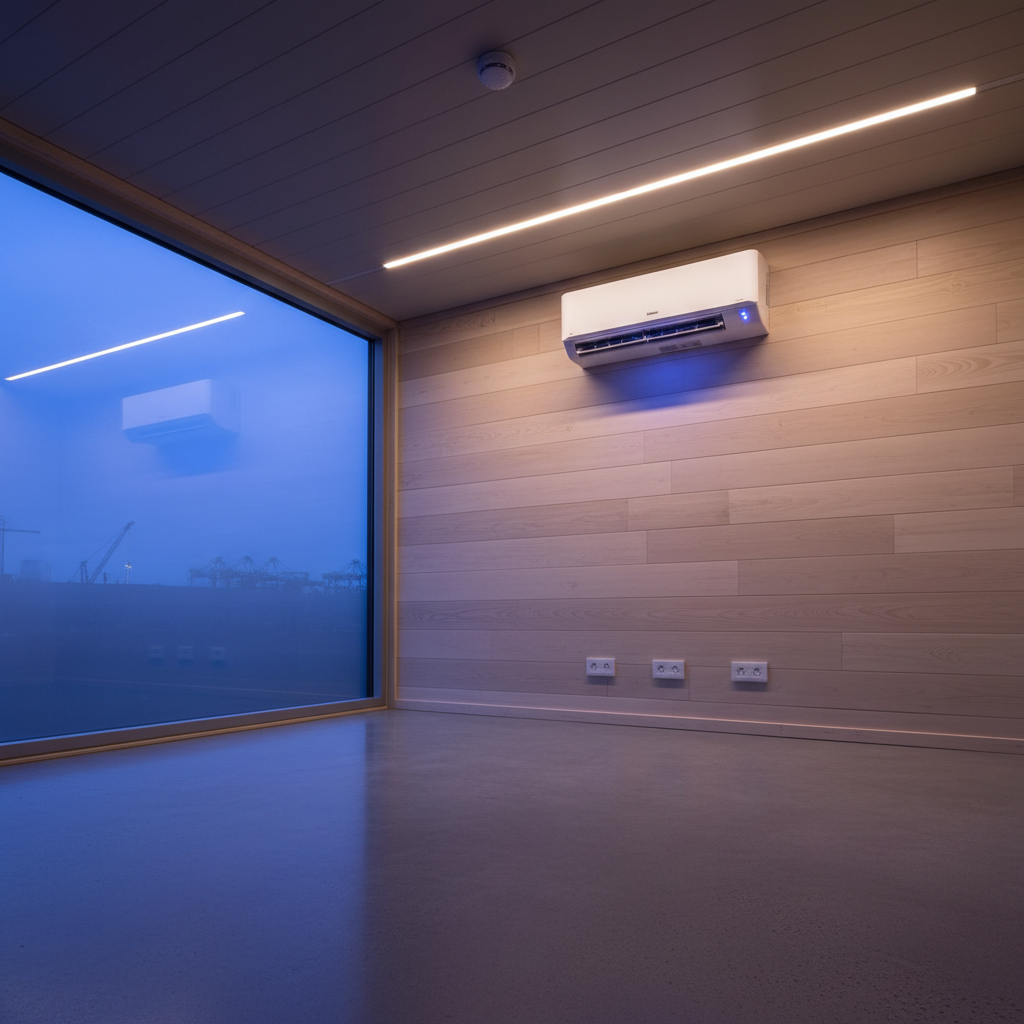
Moving from a raw steel box to a habitable, year-round workspace requires more than just a desk and a chair. As of August 2026, the primary hurdle for most project managers isn't finding the steel—it's budgeting for the container office electrical and HVAC setup cost. Without a climate control strategy and a safe power distribution plan, a container is little more than a solar oven in the summer and a refrigerator in the winter. For a standard 20ft or 40ft unit, these two systems represent the largest portion of your internal fit-out budget.
Table of Contents
- container office electrical and HVAC setup cost: Breaking Down the Electrical Rough-In for Conex Office Units
- Heating and Cooling Shipping Container Costs
- Insulated Container Office Pricing and Thermal Performance
- Total Average Price for a Finished Container Office
- Specific Component Pricing for Power and Lighting Kits
- HVAC System Selection: Mini-Split vs. Thru-Wall AC
- Total Integrated Systems Pricing and Permitting
- Frequently Asked Questions
- FAQ
- Explore Related Products & Guides
container office electrical and HVAC setup cost: Breaking Down the Electrical Rough-In for Conex Office Units
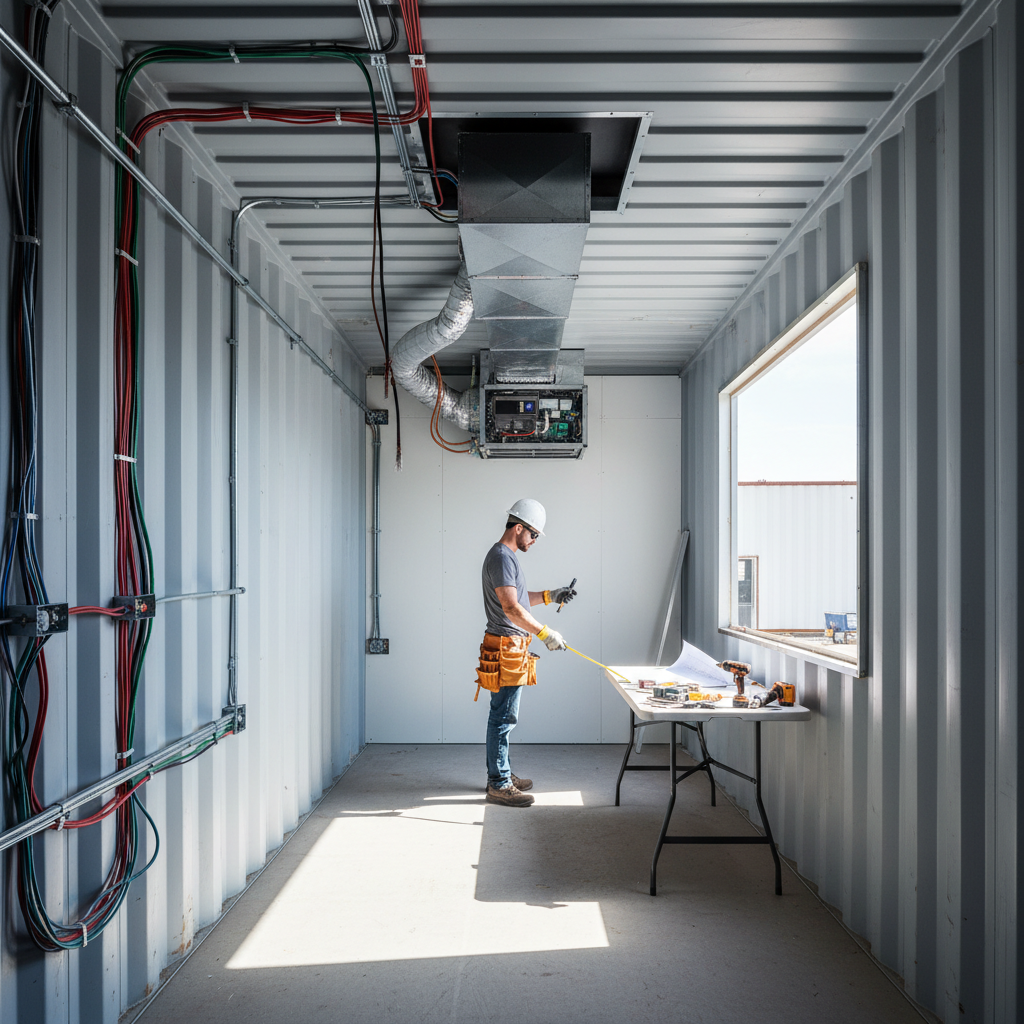
The foundation of your office power is the electrical rough-in for conex office builds. Unlike a traditional home, you cannot simply drill through studs. You are working with Corten steel, which requires precise penetrations and specialized mounting. In 2026, a basic electrical package for a 20ft unit typically ranges from $1,800 to $3,500, depending on whether you choose surface-mounted conduit or behind-the-wall wiring.
- Load Center: Most mobile offices require a 60-amp to 100-amp main lug or main breaker panel.
- Circuit Distribution: Dedicated circuits for the HVAC, general outlets, and pre-installed office container lighting.
- Shore Power Inlet: A twist-lock exterior plug (typically 30-amp or 50-amp) to allow easy connection to a generator or grid power.
- Grounding: Vital for safety in a metal structure, requiring a dedicated grounding rod and lug.
30 Amp vs 50 Amp Container Office: Which Do You Need?
Choosing between a 30 amp vs 50 amp container office depends entirely on your equipment load. A 30-amp service is sufficient for a single laptop, LED lights, and a small 110V heater. However, if you are installing a high-efficiency mini split HVAC for shipping containers and running multiple workstations or a server, a 50-amp 125/250V service is the standard for 2026 builds to prevent frequent breaker trips. For larger units, such as a Converted Shipping Container 40Ft, we always recommend the 50-amp upgrade.
Heating and Cooling Shipping Container Costs
The thermodynamics of a steel box are unforgiving. Without proper heating and cooling shipping container costs being accounted for upfront, the unit will be unusable for six months of the year. The most common solution is the Ductless Mini-Split system, which provides both heat and AC in a single, quiet unit.
| System Type | Typical BTU Range | Estimated Cost (Installed) | Best Use Case |
|---|---|---|---|
| Window AC / Heat Strip | 8,000 - 12,000 | $800 - $1,400 | Budget 20ft storage/office combos |
| Ductless Mini-Split | 9,000 - 18,000 | $2,800 - $4,500 | Professional 20ft-40ft offices |
| Through-the-Wall PTAC | 12,000 - 15,000 | $1,500 - $2,200 | Rugged job site trailers |
| Commercial HVAC (Reefer) | Variable | See Reefers | Lab or specialized cold storage |
Tip: If you are working in extreme climates, consider starting with a 20Ft Domestic Refrigerated Container. These units come pre-insulated with 3-4 inches of high-density foam, significantly lowering your long-term HVAC operational costs.
Insulated Container Office Pricing and Thermal Performance
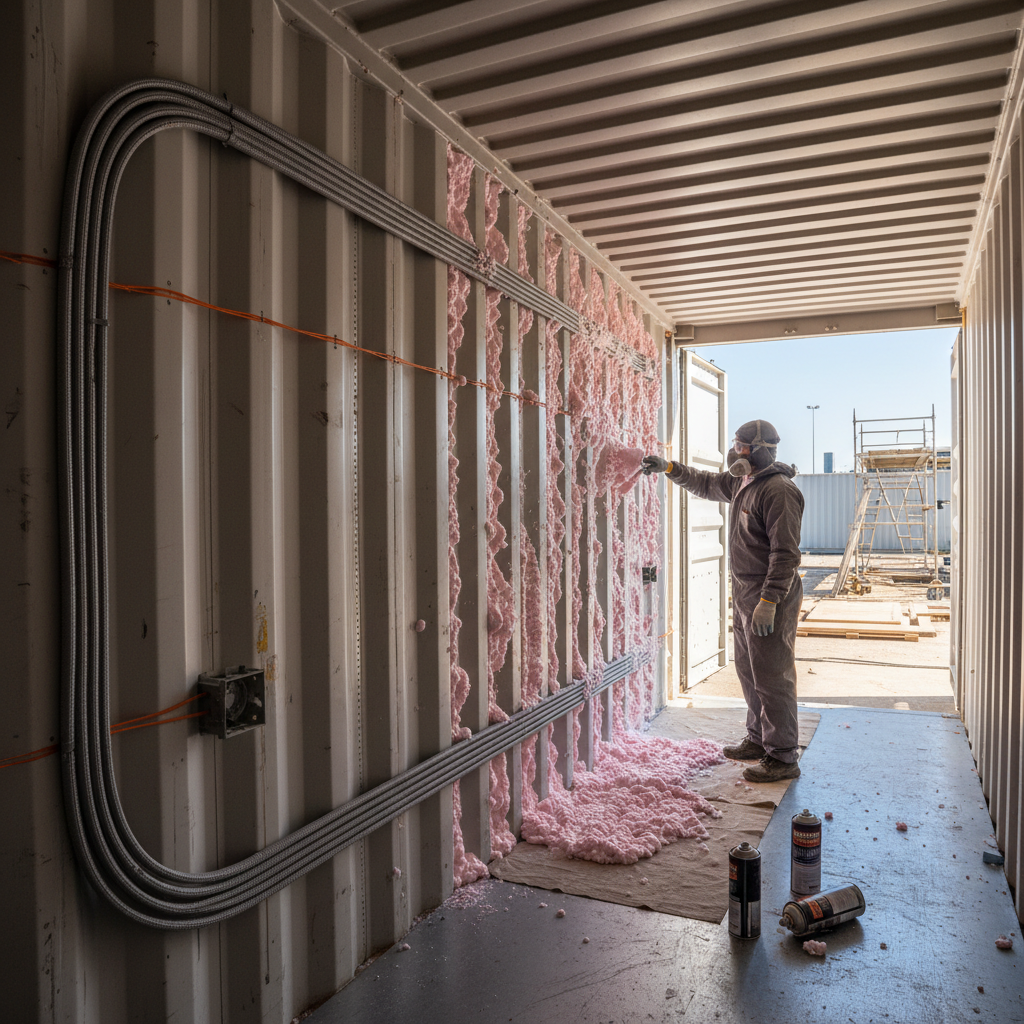
Insulation is the silent partner of HVAC. If you spend $4,000 on a mini-split but fail to insulate, that unit will run constantly, leading to premature failure. Insulated container office pricing varies based on the R-value required for your local building code (AHJ). For a 20ft office, closed-cell spray foam typically costs between $1,800 and $2,600. This provides a moisture barrier and structural rigidity, which is crucial for preventing condensation—a common issue discussed in our guide on planning a custom shipping container build.
Total Average Price for a Finished Container Office
When you aggregate the steel, the electrical, the HVAC, and the interior finishes, the average price for a finished container office in 2026 starts at approximately $15,000 for a basic 20ft unit and can exceed $45,000 for a high-end 40ft New High Cube conversion. For those on a tighter budget, exploring used shipping container grades can save $1,500 to $3,000 on the initial shell cost.
Tip: Does a container office need a separate electrical permit? In most US jurisdictions, yes. If you are tying into a permanent utility grid, you must adhere to the National Electrical Code (NEC). Always consult our state-by-state permit guide before starting your build.
Specific Component Pricing for Power and Lighting Kits
When budgeting for a container office, the electrical rough-in represents about 40% of the total internal build-out labor. A standard 20-foot container office requires a minimum 60-amp to 100-amp load center to safely manage a mini-split system, LED lighting, and high-draw office equipment like servers or laser printers. For a basic setup involving four double-gang outlets and two overhead 4-foot LED strip lights, material costs generally hover between $850 and $1,200. This does not include the master electrician's labor, which typically adds another $1,500 to $2,500 depending on the complexity of the conduit runs.
Surface-mounted EMT (Electrical Metallic Tubing) is the industry standard for shipping containers because it avoids the need to cut into the structural integrity of the steel corrugation for wire runs. While some high-end builds use steel studs and recessed wiring, the surface-mount approach is more cost-effective for commercial sites and mobile field offices. Using 12-gauge THHN wire ensures that the circuit can handle the high startup amperage of HVAC compressors without tripping breakers, a common issue in DIY container builds where undersized wiring is used.
| Electrical Component | Estimated Material Cost | Installation Labor Hours |
|---|---|---|
| 100-Amp Main Lug Panel (Outdoor Rated) | $250 - $400 | 3 - 4 Hours |
| EMT Conduit & Fittings (20ft Unit) | $150 - $300 | 5 - 8 Hours |
| LED Vapor Tight Ceiling Fixtures (x2) | $180 - $280 | 1 - 2 Hours |
| Outlets, Switches, and Data Jacks | $100 - $220 | 2 - 4 Hours |
Important: Never bypass the external disconnect switch. Local building codes in most US jurisdictions require a visible, lockable exterior disconnect for all modular structures to ensure first responder safety during electrical emergencies.
HVAC System Selection: Mini-Split vs. Thru-Wall AC
The choice between a Ductless Mini-Split and a standard Thru-Wall (PTAC) unit is the single largest variable in your HVAC budget. A 9,000 BTU mini-split system is the gold standard for a 20-foot container, offering SEER ratings of 19 to 24. These units are exceptionally quiet and energy-efficient, but they require a specialized mounting bracket on the exterior of the container and a line-set cover to prevent damage during transport. Expect to pay between $1,800 and $3,500 for a professional mini-split installation, including the unit itself.
For temporary job sites where budget is the primary concern, a 12,000 BTU thru-wall AC unit with a heat strip is a viable alternative. These units are significantly cheaper, usually costing between $600 and $900, but they require a precision-cut steel sleeve welded into the container wall. While the upfront cost is lower, these units are much louder and less efficient in extreme climates. They are best suited for containers with high R-value spray foam insulation that can compensate for the unit's lower thermal efficiency.
- Mini-Split Pros: Whisper quiet operation, high energy efficiency, heat pump functionality for sub-zero temperatures.
- Mini-Split Cons: High initial cost, requires specialized HVAC technician for refrigerant charging, outdoor condenser needs protection.
- Thru-Wall Pros: Low cost, easily replaceable by non-specialists, no external footprint beyond the container wall.
- Thru-Wall Cons: High noise levels, significant air leakage if not sealed properly, higher monthly utility bills.
Tip: If your container office will be moved frequently between job sites, choose a mini-split with a 'bolt-down' condenser cage. Vibration during transport can crack copper refrigerant lines if the exterior unit is not properly stabilized.
Total Integrated Systems Pricing and Permitting
When combining electrical and HVAC systems, you must account for the 'Master Build Out' fee, which includes the integration of these systems into the wall cavity before insulation. In a typical 40-foot container office, the total price for a dual-zone mini-split and a full 100-amp electrical package with data ports will range from $7,500 to $12,000. This pricing includes the framing required to support the units and the steel reinforcements for wall penetrations. Using 2x3 or 2x4 steel studs is recommended over wood to prevent warping and to provide a more secure path for electrical conduit.
Permitting is the 'hidden' cost that many buyers overlook. In states like Texas, California, and Florida, a container office may require a state-level modular building insignia. This involves a third-party inspection of the electrical and HVAC systems before the interior walls are closed. Plan for an additional $500 to $1,500 in plan review and inspection fees if your container will be used as a permanent commercial structure rather than a temporary job site trailer.
- Design Phase: Electrical load calculations and HVAC sizing (BTU requirements based on local climate).
- Fabrication Phase: Structural welding for AC sleeves and electrical pass-throughs.
- Rough-In: Installation of EMT conduit, junction boxes, and HVAC line sets.
- Testing: Pressure testing refrigerant lines and circuit continuity checks.
- Finishing: Installation of faceplates, fixtures, and thermostat controls.
Tip: Always request a 'Circuit Map' from your fabricator. Knowing exactly which outlet is tied to which breaker is essential for troubleshooting field issues, especially when running high-load equipment like space heaters or heavy machinery near the office.
Container delivery near you
We deliver to every state in the lower 48 plus Alaska and Hawaii. These local pages list pricing, metro coverage and typical lead times for the areas we run into most:
- Shipping containers near me — how we source from the depot closest to your ZIP code
- Shipping containers in Georgia — pricing and delivery to Atlanta and Savannah
- Shipping containers in North Carolina — pricing and delivery to Charlotte and Raleigh
- Shipping containers in Arizona — pricing and delivery to Phoenix and Tucson
- Shipping containers in Washington — pricing and delivery to Seattle and Spokane
- Shipping containers in Colorado — pricing and delivery to Denver and Colorado Springs
Frequently Asked Questions
Common queries regarding container office electrical and HVAC setup costs.
FAQ
Explore Related Products & Guides
Frequently Asked Questions
How much does it cost to wire a shipping container office?
In 2026, expect to pay between $1,800 and $4,000 for professional wiring. This includes a 60-100 amp panel, outlets, LED lighting, and a shore power inlet. Costs increase if you require explosion-proof fixtures or data/ethernet cabling.
What is the best HVAC system for a 20ft container office?
A 9,000 or 12,000 BTU ductless mini-split is widely considered the best option. It provides quiet, efficient heating and cooling without taking up floor space. Brands like Mitsubishi or Daikin are industry standards for reliability.
Does a container office need a separate electrical permit?
Yes, if the office is intended for commercial use or is being tied into a main building's electrical grid, local AHJs (Authorities Having Jurisdiction) typically require an electrical permit and inspection to ensure NEC compliance.
Can you run AC in a shipping container on solar?
Yes, but it is expensive. A mini-split requires a high startup surge. You would need a significant battery bank and at least 2kW–3kW of solar panels on the roof (typically requiring a 40ft container's surface area) to run AC reliably off-grid.
What is the average price for a finished container office?
A fully finished 20ft office (insulated, wired, with HVAC and flooring) typically costs between $18,000 and $28,000. Large 40ft units or multi-unit complexes can range from $45,000 to over $100,000.
What are the container office electrical panel requirements?
Most offices require a NEMA 3R rated exterior disconnect or an interior sub-panel with at least 8 to 12 spaces. This allows for dedicated circuits for the HVAC, lights, and multiple wall outlets.