Shipping Container Permit Requirements by State: 2026 Guide
Avoid costly fines with our shipping container permit requirements by state 2026 guide. Review 50-state zoning laws and temporary structure permit costs.…
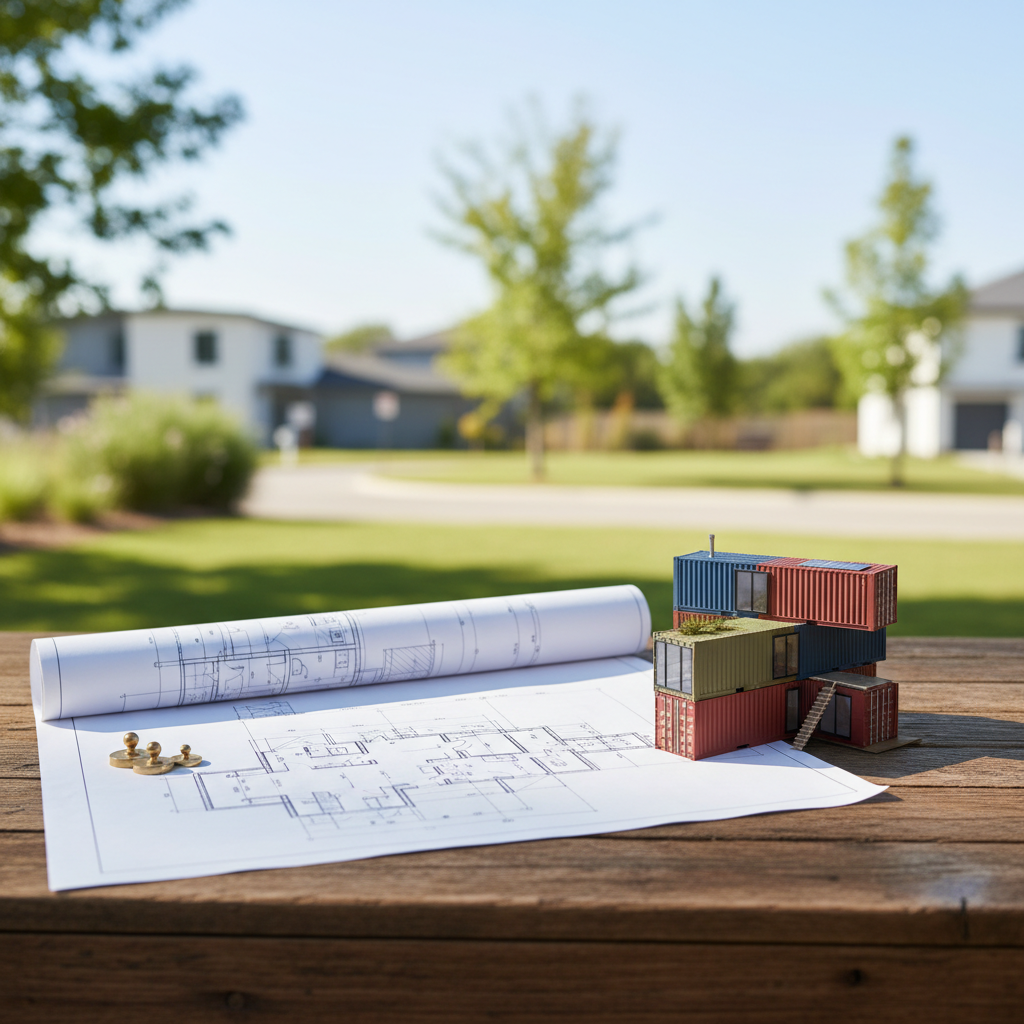
Before you drop $5,000 on a 40ft high cube container or commit to a luxury modular build, you must answer one question: Will the local Authorities Having Jurisdiction (AHJ) let you keep it? In July 2026, the legal landscape for shipping container permit requirements by state 2026 guide has shifted significantly. While the 2024 International Residential Code (IRC) updates paved the way for easier container integration, local zoning laws for shipping containers often vary block by block.
Table of Contents
- shipping container permit requirements by state 2026 guide: Understanding the Three Pillars of Container Legality
- Do I Need a Permit for a Storage Container?
- Shipping Container Building Codes 2026: The State Breakdown
- Steps to Secure Your Conex Box Zoning Ordinances Approval
- Geographic Nuances: Coastal vs. Inland Structural Mandates
- Navigating the 2026 'Tiny Home' vs. 'Accessory Structure' Distinction
- Environmental and Utility Compliance: The New Frontier
- Frequently Asked Questions
- Summary of Permitting Costs and Timelines
- Explore Related Products & Guides
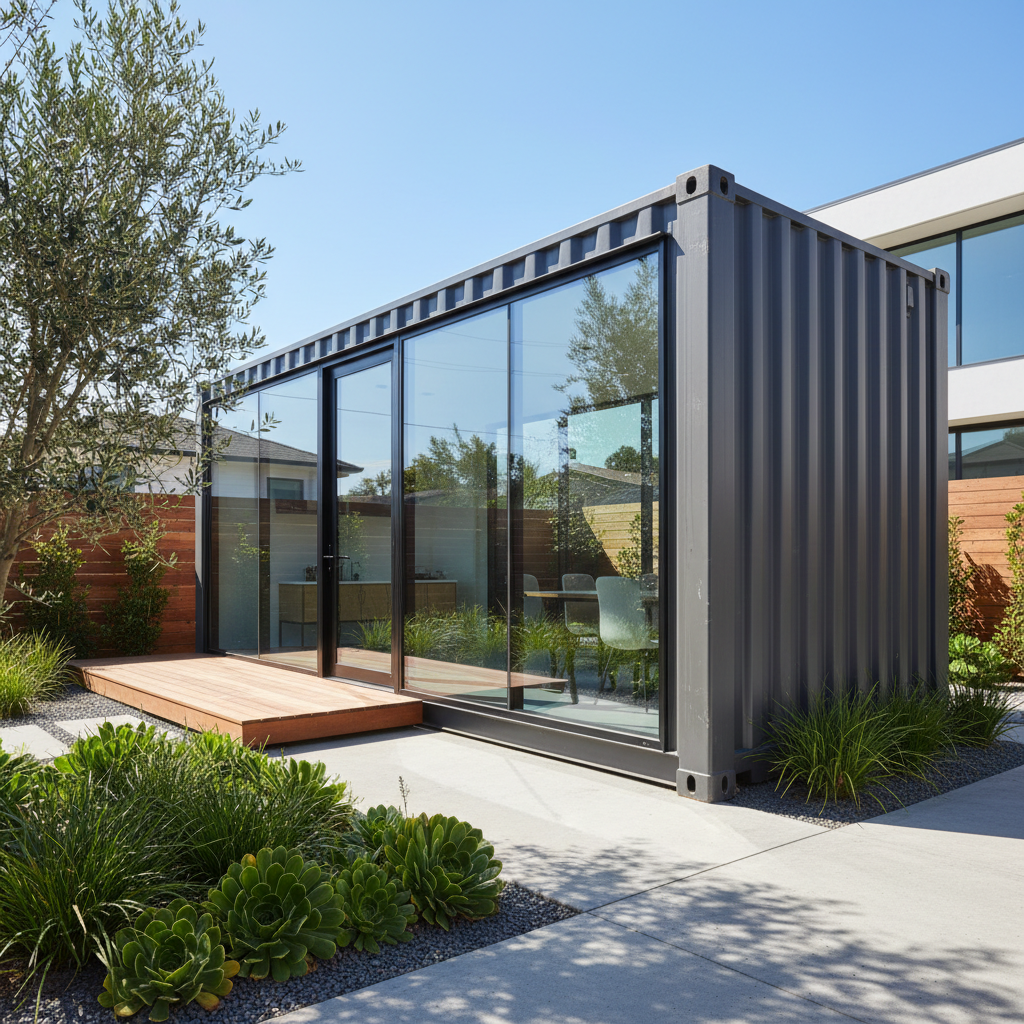
shipping container permit requirements by state 2026 guide: Understanding the Three Pillars of Container Legality
To navigate residential shipping container regulations, you must distinguish between three different types of legal oversight. Failure to understand these is why many projects face 'cease and desist' orders mid-construction.
- Zoning Ordinances: These determine what you can do on your land (e.g., residential, agricultural, industrial). Many cities view a used 20ft container as an 'eyesore' and restrict them to industrial zones.
- Building Codes: If you plan to live in it, the container must meet the IRC or IBC (International Building Code). This covers structural integrity, insulation, and egress.
- HOA Rules: Homeowners Associations can ban containers even if the city allows them. Always check your CC&Rs first.
Do I Need a Permit for a Storage Container?
Whether you need a permit depends primarily on two factors: duration and foundation. A 20ft bumper pull chassis might allow a container to be classified as 'temporary' or 'vehicular,' potentially bypassing some structural permits, but this is a legal grey area in many states.
| Use Case | Permit Likely? | Key Requirement | Est. Permit Cost (2026) |
|---|---|---|---|
| Temporary Storage (<90 days) | Rarely | Placement setbacks | $0 - $50 |
| Permanent Backyard Shed | Yes (in cities) | Foundation & Tie-downs | $150 - $400 |
| Container Office/ADU | Always | MEP (Mech/Elec/Plumb) | $800 - $2,500 |
| Primary Residence | Always | Full IRC Compliance | $2,000 - $5,000+ |
Important: Never assume 'Agricultural Zoning' means 'no permits.' While rural areas are more lenient, many counties now require permits for any structure over 200 square feet to ensure they don't become hazards during high-wind events.
Shipping Container Building Codes 2026: The State Breakdown
In 2026, the US is divided into 'Container Friendly' states and 'Strict Regulation' states. If you are looking at storage container homes pros and cons, where you build is the biggest variable in your budget.
The 'Green Light' States: Texas, Tennessee, and Arizona
These states have historically been more welcoming to alternative construction. Texas is a leader in shipping container home legal states, especially outside major metros like Austin. However, even in Texas, if you're installing a luxury 2-bedroom container home, you must adhere to the Texas Department of Licensing and Regulation (TDLR) standards for industrialized housing.
The 'Strict but Structured' States: California and Florida
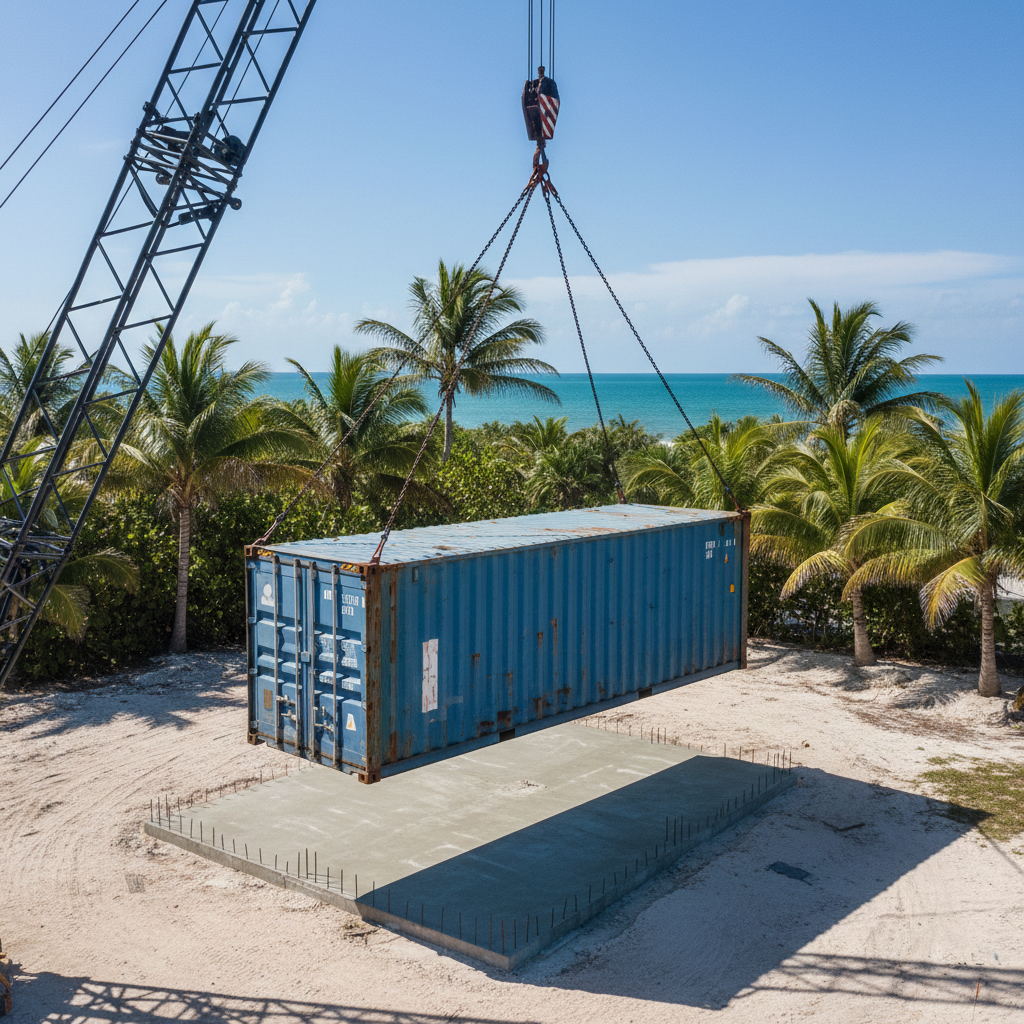
California has pioneered accessory dwelling unit laws 2026, making it easier to put a custom 20ft cabin in your backyard to combat housing shortages. The trade-off? You must meet Title 24 energy efficiency standards. In Florida, the focus is on wind-load. All containers must be anchored to withstand Category 4 hurricanes, often requiring heavy concrete footings and high-strength twist locks.
Steps to Secure Your Conex Box Zoning Ordinances Approval
Getting a permit isn't just about paperwork; it's about proving safety. For container offices, the process usually follows these steps:
- Obtain a Site Plan: Show exactly where the container will sit relative to property lines.
- Engineer Stamped Drawings: Most jurisdictions require a structural engineer to sign off on any modifications (cutting doors/windows).
- CSC Plate Verification: Ensure your container has a valid CSC (Container Safety Convention) plate to prove structural integrity. Learn more about this in our conex containers explained guide.
- Foundation Inspection: The city will likely want to inspect the gravel pad or concrete piers before the container is delivered.
Tip: If you only need storage for a renovation, many cities allow 'temporary structure permits' that last 6 to 12 months. These are significantly cheaper and easier to obtain than permanent zoning changes.
If you are concerned about the shipping container delivery cost, remember that a failed permit inspection can result in 'red-tagging,' requiring you to pay for the container to be hauled away and stored elsewhere while you fight the city.
Geographic Nuances: Coastal vs. Inland Structural Mandates
As we move into 2026, the regulatory divide between coastal jurisdictions and inland rural counties has widened significantly. In states like Florida, South Carolina, and Louisiana, shipping container permits are now inextricably linked to the 'High Velocity Hurricane Zone' (HVHZ) standards. If you are placing a container within 20 miles of the coast, your permit application must include site-specific engineering that proves lateral load resistance against 150+ MPH winds. This often requires heavy-duty helical piers or poured concrete footings with integrated steel weld-plates, moving the project beyond a simple 'drop-and-go' storage solution.
Conversely, inland states like Kansas or Nebraska have shifted focus toward seismic stability and heavy snow load calculations for converted container dwellings. The 2026 International Building Code (IBC) updates, adopted by most inland mid-west states, treat a container as a 'non-traditional structural element.' This means you cannot simply rely on the manufacturer's original ISO rating. You must provide a professional engineer's (PE) stamp verifying that the roof can withstand local snow load minimums, which often reach 30-50 PSF in northern regions, necessitating secondary roof structures or interior reinforcement ribs.
Important: Always verify if your property falls under a 'Wildland-Urban Interface' (WUI) zone. In California and Colorado, 2026 permits may require specific exterior coatings that meet fire-resistance ratings, even for metal containers.
| Region Type | Primary Regulatory Hurdle | Mandatory Documentation 2026 | Estimated Permit Lead Time |
|---|---|---|---|
| Coastal/Hurricane Belt | Wind Uplift & Corrosion | Engineered Foundation & Tie-down Plan | 6-10 Weeks |
| High-Altitude/Snow Zones | Roof Deflection Limits | Structural Reinforcement Schematic | 4-8 Weeks |
| Urban/Metropolitan | Aesthetic & Zoning Blight | Architectural Review & Landscaping Plan | 12-20 Weeks |
| Unincorporated Rural | Minimal (Septic/Well focus) | Site Map & Basic Structural Affidavit | 1-3 Weeks |
Navigating the 2026 'Tiny Home' vs. 'Accessory Structure' Distinction
A critical failure point for many container buyers is misclassifying their unit during the permit application. For 2026, many states have introduced a 'Triple-Path' system for classification. If the container is for storage only, it is an 'Accessory Structure' and avoids most HVAC and plumbing codes. If it is for a home office, it enters a grey area of 'Commercial Occupancy.' If it has a bed and a kitchenette, it is a 'Dwelling Unit.' Attempting to permit a container-studio as a 'storage shed' to save on fees is now met with stiff penalties and mandatory removal orders in states like Oregon and Washington.
The distinction also affects your impact fees. A permanent dwelling unit permit can cost between $2,000 and $15,000 depending on the local utility hookup requirements, whereas a temporary storage permit might be a flat $150 annual fee. Furthermore, 2026 standards in the Northeast (NY, MA, CT) now require that any container used for human occupancy meet strict R-value insulation minimums. This usually forces the use of closed-cell spray foam, which must be inspected by a third-party official before the interior framing is covered by drywall.
- Determine Occupancy: Decide if the unit is purely for storage (Accessory) or living (Dwelling).
- Check Setback Requirements: Ensure the unit is at least 5-15 feet from property lines to meet 2026 fire separation codes.
- Secure a Foundation Permit: Most counties now require a separate permit for the concrete slab or piers before the box arrives.
- Obtain a Logistical Transport Permit: If the delivery truck exceeds standard weight/width limits for your residential street.
- Final Occupancy Certificate: Required for all converted containers before utilities can be legally energized.
Tip: If your local building department is unfamiliar with ISO containers, point them toward 'ICC G5-2019: Guideline for the Use of Shipping Containers.' It remains the gold standard for bridging the gap between steel boxes and residential safety codes.
Environmental and Utility Compliance: The New Frontier
Starting in 2026, environmental impact studies are becoming a standard part of the permitting process for multi-container builds. In states like Arizona and New Mexico, 'Heat Island' effects are being monitored. This means your permit might be contingent on using high-reflectivity (cool roof) coatings on the container's top surface. Additionally, stormwater runoff calculations are now being applied to shipping containers because their corrugated steel roofs create 100% impervious surface area. You may be required to install French drains or rain barrels to mitigate the water shed from the unit's 160 or 320 square foot footprint.
Plumbing and electrical permits for containers have also seen a shift. Because containers are made of Corten steel, traditional grounding methods for electrical systems must be modified. 2026 NEC (National Electrical Code) updates require specific bonding techniques to prevent the entire shell from becoming energized in the event of a fault. For plumbing, many jurisdictions now prohibit 'wet venting' in container builds due to the limited wall cavity space, requiring buyers to plan for more complex Air Admittance Valves (AAVs) or dedicated vent stacks that penetrate the steel roof—a process that must be perfectly flashed to avoid structural rust.
- Permeable Surface Credits: Some counties offer permit fee discounts if you use gravel foundations instead of concrete.
- Off-Grid Exceptions: Research if 'Agricultural Exemptions' apply to your container if it is used on a farm of 5+ acres.
- Lead-Based Paint Testing: For containers manufactured before 2015, some health departments require a certified lead-free report before conversion.
- Solar Ready Mandates: New 2026 residential codes in CA and NV may require container roofs to be engineered for future solar panel weight.
Container delivery near you
We deliver to every state in the lower 48 plus Alaska and Hawaii. These local pages list pricing, metro coverage and typical lead times for the areas we run into most:
- Shipping containers near me — how we source from the depot closest to your ZIP code
- Shipping containers in Georgia — pricing and delivery to Atlanta and Savannah
- Shipping containers in North Carolina — pricing and delivery to Charlotte and Raleigh
- Shipping containers in Arizona — pricing and delivery to Phoenix and Tucson
- Shipping containers in Colorado — pricing and delivery to Denver and Colorado Springs
Frequently Asked Questions
Navigating shipping container permit requirements by state 2026 guide often leads to specific local questions. Here are the most common queries our nationwide team receives.
Summary of Permitting Costs and Timelines
Whether you are buying new one-trip containers or used units, factor an additional 5-10% of your project cost into permitting fees and professional site plans. While a container itself may be affordable, making it 'legal' is where the real investment lies.
If you're ready to compare inventory for your project, our team can pull matching units from our nationwide depots and provide the technical specs your local building department will ask for. Navigating the shipping container permit requirements by state 2026 guide doesn't have to be a solo effort—contact us today to get started with a site-ready unit.
Explore Related Products & Guides
- Prefabricated luxury container homes under $100k: Luxury…
- How Much Is a Shipping Container in 2026?
- Cost of a Shipping Container: What Drives the Price
Frequently Asked Questions
Are shipping containers allowed in my backyard?
In most U.S. cities, containers are allowed as 'accessory structures' if they meet setback requirements (usually 5-10 feet from property lines) and are placed on an approved foundation. However, some strictly residential zones may prohibit them entirely for aesthetic reasons.
Which US states are shipping container friendly?
Texas, Tennessee, Louisiana, and Missouri are generally the most container-friendly due to fewer statewide zoning restrictions. California and Oregon are friendly toward container-based ADUs but have strict building code and energy requirements.
How do I get a permit for a storage container?
Start by visiting your local Building or Zoning Department website to look for 'Accessory Structure' permits. You will typically need a plot map of your property and the container's dimensions to apply.
Can you live in a shipping container in California?
Yes, but it must be permitted as a permanent dwelling. California's 2026 laws require it to meet the California Building Standards Code, including specific insulation and seismic anchoring requirements.
Is a shipping container considered a permanent structure?
If it is removed from its chassis and placed on the ground or a foundation for more than 180 days, most jurisdictions classify it as a permanent structure.
What is the fine for an unpermitted shipping container?
Fines vary but typically range from $100 to $500 per day that the violation exists. In extreme cases, the city may forcibly remove the container at the owner's expense.