How Much Is a Shipping Container in 2026?
By Outback Shipping Containers · Published July 28, 2026 · Last updated October 18, 2026
How Much Is a Shipping Container in 2026?
If you are asking “shipping container how much?” the short answer is this: in 2026, a standard used shipping container often starts in the low thousands before delivery, while new one-trip containers, high cube units, reefers, offices, and custom builds cost more. Most buyers should budget for the container, delivery, taxes, site prep, and any modifications.
Quick Answer: A basic used 20ft or 40ft storage container is usually the lowest-cost option. New one-trip containers cost more but arrive cleaner and with less wear. Delivery can add several hundred dollars to well over $1,000, depending on distance, equipment, and site access.
Key Takeaways
- Used WWT or CWO containers are usually the best value for storage, farm use, job sites, and workshops.
- New one-trip containers cost more but are better for container homes, offices, retail units, pools, and clean storage.
- 40ft containers often offer the lowest cost per square foot, while 20ft units are easier to place on tight properties.
- Delivery is a real budget item, especially for rural sites, crane drops, long hauls, or difficult access.
- A cheap container can become expensive if it has bad doors, hidden rust, floor damage, or unclear certification.
Shipping Container How Much: 2026 Price Ranges by Type
Container prices change by region, supply, steel costs, depot inventory, and delivery distance. The numbers below are broad 2026 planning ranges for buyers in the United States. They are not a final quote.
Use them to compare options before you request current pricing from a supplier.
| Container type | Common 2026 planning range before delivery | Best fit |
|---|---|---|
| 10ft used container | $2,000 to $4,500 | Small storage, tools, tight lots |
| 10ft new one-trip container | $3,500 to $6,500 | Clean residential storage, compact custom builds |
| 20ft used WWT or CWO container | $1,800 to $3,500 | Home storage, job sites, farms, small businesses |
| 20ft new one-trip container | $2,800 to $5,200 | Clean storage, conversions, workshops |
| 40ft used WWT or CWO container | $2,300 to $4,500 | Large storage, equipment, inventory |
| 40ft new one-trip container | $4,500 to $7,800 | Custom builds, clean commercial use |
| 40ft high cube used container | $2,600 to $5,000 | Taller storage, workshops, conversions |
| 40ft high cube new one-trip container | $5,000 to $8,500 | Container homes, offices, premium builds |
| 45ft high cube container | $5,500 to $10,000+ | Large-volume storage and specialty builds |
| Used working refrigerated container | $8,000 to $20,000+ | Cold storage, farms, food businesses |
| Modified office or workshop container | $10,000 to $35,000+ | Job-site offices, field offices, workspaces |
The cheapest listing is not always the cheapest deal. A $2,000 container with bad seals, weak floors, and expensive delivery may cost more than a better unit from a nearby depot.
For a deeper line-by-line breakdown of pricing factors, Outback Shipping Containers also maintains a full 2026 shipping container cost guide with more detail on delivery, condition, and add-ons.
What Changes the Price of a Shipping Container?
A shipping container is a standardized steel box, but two units with the same size can have very different values. Condition, age, grade, location, and intended use all matter.
Size and availability
A 20ft conex box can cost less than a 40ft container in total dollars, but the 40ft often gives you a better cost per square foot. A 40ft unit has about 320 square feet of floor space, compared with about 160 square feet in a 20ft unit.
That does not mean a 40ft is always better. It needs more room for delivery, more level ground, and more turning space for the truck. On a tight residential lot, a 20ft container may be the smarter buy.
Condition and certification
Condition is one of the biggest price drivers. A used ISO container may be sold as cargo-worthy, wind and watertight, refurbished, or as-is.
A cargo-worthy container usually costs more because it meets a higher structural standard. A wind and watertight container may be perfect for static storage, but it may not be certified for ocean freight.
New one-trip vs. used
A new container is often called a one-trip container. It is built overseas, loaded with cargo once, shipped to the United States, then sold.
One-trip containers have fewer dents, cleaner floors, better paint, and less corrosion. That makes them popular for shipping container home builds, container offices, container pools, retail units, and design-focused conversions.
Used containers have more cosmetic wear, but they can be a good value for storage. Many used units still have years of service left when inspected and sold as WWT or CWO.
Location and depot inventory
Container prices are local. A 40ft high cube in Houston may not cost the same as one in rural Montana. Port cities and major rail hubs often have more inventory, while remote areas may have higher delivery costs.
Supply also changes throughout the year. If used container inventory builds up at depots, prices may soften. If trucking costs rise or a certain size becomes scarce, pricing can move up fast.
Delivery distance and equipment
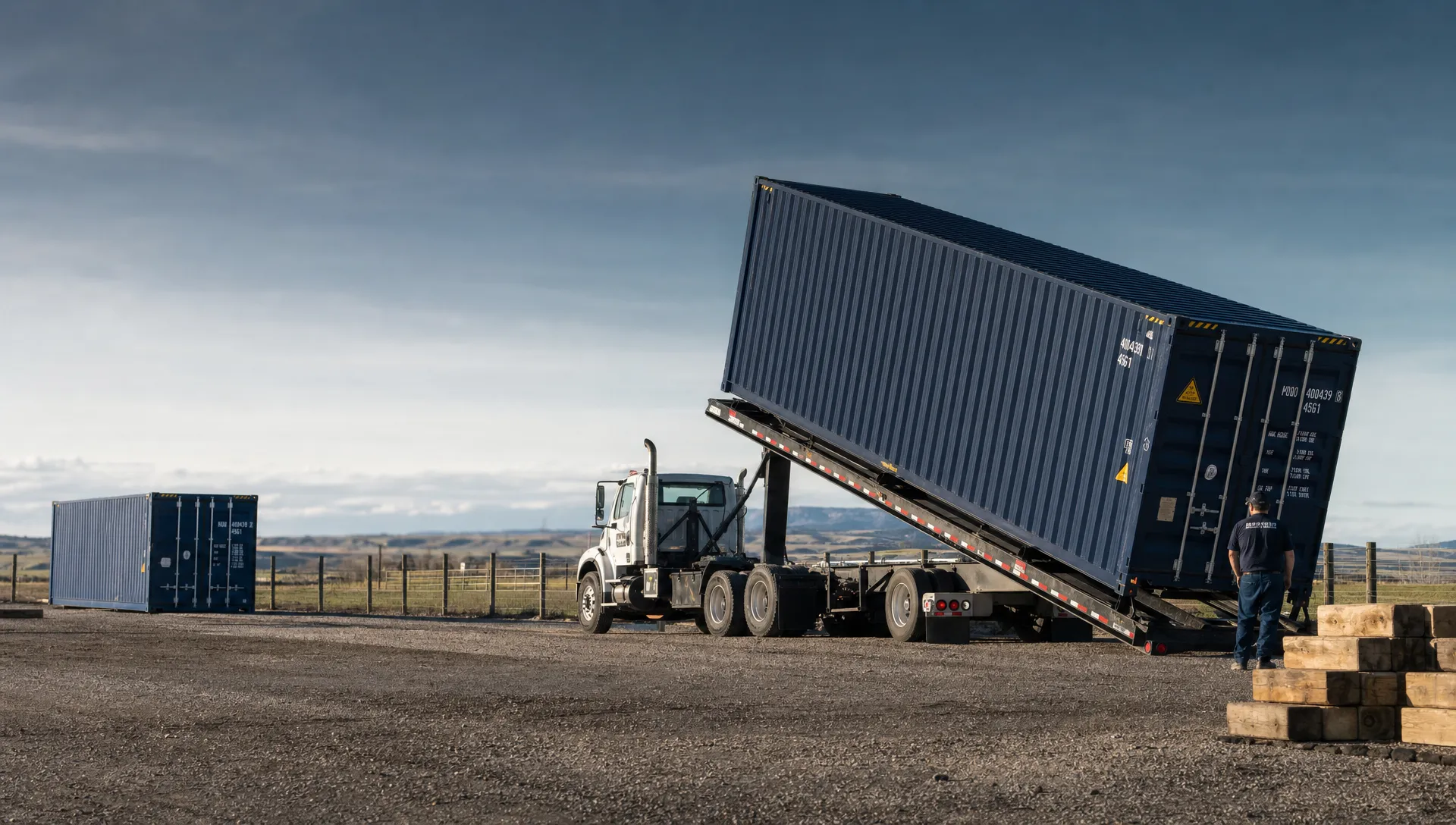
Delivery is not just mileage. The truck type matters. A tilt-bed delivery can place a container directly on the ground, but it needs a long, straight space to slide the unit off. A flatbed may require a crane, forklift, or other lift equipment at the site.
Long driveways, low branches, soft soil, narrow gates, steep grades, and overhead power lines can all change the delivery plan.
New vs. Used Shipping Containers: What Grade Should You Buy?
The right grade depends on what you want the container to do. A contractor storing tools has different needs than a homeowner building a studio or an Airbnb host planning a container cabin.
| Grade or condition | What it means | Good for | Watch out for |
|---|---|---|---|
| New one-trip | Used for one loaded trip, usually very clean | Homes, offices, pools, clean storage, retail builds | Higher upfront price |
| Cargo-worthy (CWO) | Structurally sound for cargo use when properly certified | Export, heavy storage, commercial use | Check CSC plate and inspection status if shipping cargo |
| Wind and watertight (WWT) | Keeps out normal wind and rain, often not cargo certified | Static storage, farms, job sites, household goods | Cosmetic dents and surface rust are common |
| Refurbished | Used unit repaired and often repainted | Buyers who want better appearance | Ask what repairs were completed |
| As-is | Sold with limited or no repairs | Very low-budget uses | Higher risk of leaks, door issues, floor problems |
If you plan to use the container for international cargo, ask about the CSC plate and current cargo-worthiness. CSC refers to the International Convention for Safe Containers, which is different from simply being watertight.
If you plan to use the container for storage on your property, WWT may be enough. You still want working doors, solid seals, good floors, and no daylight showing through the roof or walls.
How Much Container Do You Need? 20ft vs. 40ft vs. High Cube
Most first-time buyers compare 20ft and 40ft containers. That is the right starting point. These are the most common sizes, which usually means better availability and easier pricing.
Standard ISO container dimensions are based on global freight standards. The ISO 668 standard covers classification, dimensions, and ratings for Series 1 freight containers. Actual interior measurements can vary slightly by manufacturer.
| Size | Exterior dimensions | Approx. floor space | Approx. tare weight | Common use |
|---|---|---|---|---|
| 10ft standard | 10ft x 8ft x 8ft 6in | 80 sq. ft. | 2,800 to 3,500 lb | Small storage, tools, residential lots |
| 20ft standard | 20ft x 8ft x 8ft 6in | 160 sq. ft. | 4,800 to 5,100 lb | Storage, workshops, small conversions |
| 40ft standard | 40ft x 8ft x 8ft 6in | 320 sq. ft. | 8,000 to 8,500 lb | Bulk storage, equipment, inventory |
| 40ft high cube | 40ft x 8ft x 9ft 6in | 320 sq. ft. | 8,600 to 9,000 lb | Homes, offices, taller storage |
| 45ft high cube | 45ft x 8ft x 9ft 6in | 360 sq. ft. | 10,000 lb range | Large builds and specialty storage |
Tare weight means the empty weight of the container. Payload capacity means how much cargo it can carry. Always check the container’s data plate because ratings vary by build.
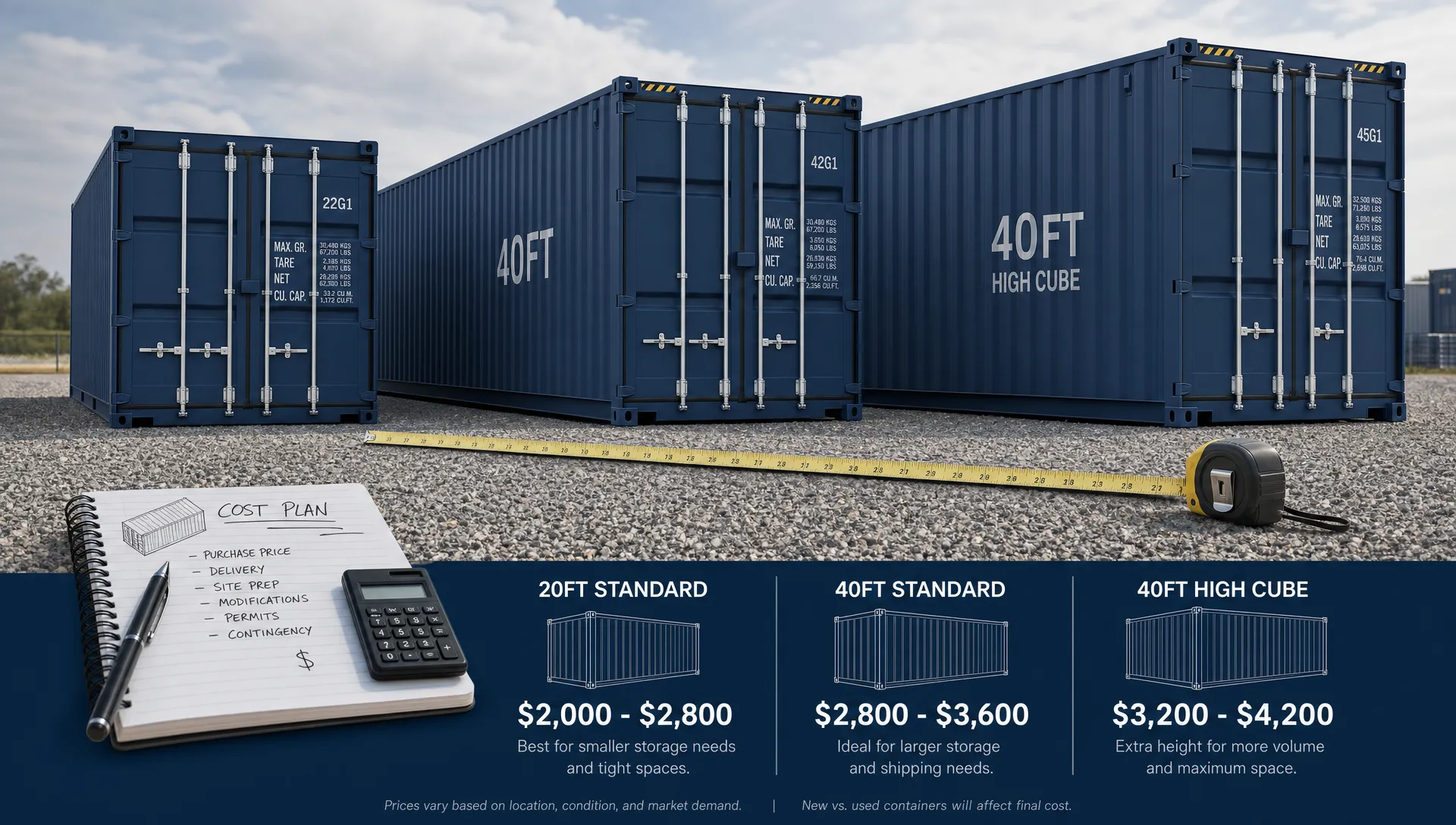
A 20ft container is easier to place and fits many driveways, farms, and job sites. A 40ft container gives more space for the money, but it needs more room. A 40ft high cube adds one extra foot of height, which helps with insulation, lighting, storage racks, HVAC ducting, and finished ceilings.
Delivery, Site Prep, and Hidden Costs to Budget For
A container quote without delivery is only part of the cost. Delivery can be simple, or it can be the hardest part of the project.
Local delivery often starts at several hundred dollars. Longer delivery, special equipment, rural routes, permits, escorts, or crane placement can push the cost much higher. If the driver cannot safely place the unit, you may also pay for a failed delivery attempt or a second trip.
For a more detailed breakdown by distance and truck type, see Outback Shipping Containers’ guide to shipping container delivery cost per mile in 2026.
Common delivery and setup costs
| Cost item | Why it matters | Planning note |
|---|---|---|
| Delivery mileage | Longer hauls cost more | Ask if the quote includes delivery or only the container |
| Truck type | Tilt-bed, flatbed, step-deck, and crane delivery have different costs | Match the truck to your site access |
| Site access | Tight turns, soft ground, gates, and trees can delay placement | Send photos before delivery |
| Foundation or pad | Containers need level support | Gravel pads, piers, railroad ties, or concrete may be used depending on the project |
| Permits | Rules vary by city, county, and state | Call local authorities before buying |
| Sales tax | Tax depends on location and transaction type | Ask for an all-in quote |
| Modifications | Doors, windows, vents, insulation, electrical, and paint add cost | Get scope in writing |
Delivery also has safety and legal requirements. Commercial carriers must follow cargo securement rules, and the Federal Motor Carrier Safety Administration publishes guidance on cargo securement regulations.
Before delivery day, prepare the site. Clear the path. Trim low branches. Mark the exact placement area. Check for overhead wires. Make sure the ground is firm enough for a heavy truck.
If you are not sure whether a tilt-bed can access your site, ask for help before you order. A few photos and measurements can prevent a costly mistake.
Need current pricing instead of broad estimates? You can compare current shipping containers for sale through Outback Shipping Containers and ask for a delivered quote based on your size, grade, and ZIP code.
How Much Are Shipping Container Homes, Offices, and Custom Builds?
A plain cargo container is one cost. A container conversion is a different project.
Once you cut steel, add framing, insulation, windows, plumbing, electrical, HVAC, roofing, siding, or interior finishes, the container shell becomes only one line item. Labor, code compliance, engineering, and site work often cost more than the box itself.
For a shipping container home, budget planning should include:
- Container shell or shells
- Design and engineering
- Land and site preparation
- Foundation
- Crane or placement equipment
- Insulation and moisture control
- Windows and doors
- Electrical, plumbing, and HVAC
- Interior framing and finishes
- Permits, inspections, and utility connections
Permit and zoning rules vary by state, county, and city. Some areas treat a container as an accessory storage structure. Others treat it as a permanent building, especially if it has utilities or a foundation. Always speak with your local building department before you buy.
If you are researching housing, review the dedicated Outback guide to shipping container home prices in 2026. It covers shell costs, turnkey costs, site work, foundations, utilities, and other expenses that do not show up in a basic container price.
Container offices and workshops also vary widely. A simple office with a personnel door, window, insulation, lights, and electrical will cost far less than a finished commercial unit with restroom plumbing, HVAC, cabinetry, and code-specific features.
Container pools are another specialty category. The steel shell is only the start. The build may include structural reinforcement, waterproofing, filtration, stairs, decking, fencing, and local pool code compliance.
How to Avoid Overpaying for a Shipping Container
The best way to control cost is to buy the right grade the first time. Do not shop by price alone. Shop by total delivered value.
Ask for photos of the actual container when possible. Stock photos do not show roof condition, door alignment, floor wear, patches, or rust. If you cannot inspect in person, ask clear questions before paying.
Buyer checklist before you pay
- Confirm the size, height, and grade in writing.
- Ask whether the unit is WWT, CWO, one-trip, refurbished, or as-is.
- Confirm whether the quote includes delivery, tax, and placement.
- Ask where the container is located and how it will be delivered.
- Check door operation, gaskets, locking bars, hinges, roof, corner posts, and floor condition.
- Ask about payment terms and avoid sellers who pressure you to wire money without documentation.
- Make sure the seller can explain the delivery plan for your site.
Be careful with listings that look far below market price. Scams are common in the container industry. Red flags include no physical location, stolen photos, vague inventory, pressure to pay fast, and prices that include “free nationwide delivery” but do not make economic sense.
A reputable supplier should be able to discuss sizes, grades, delivery equipment, lead times, and site requirements in plain language. They should also tell you when a lower-cost option is good enough and when it is not.
Should You Buy, Finance, or Lease a Container?
Buying usually makes sense if you need the container for years. It gives you control over modifications and placement. It may also be the better value for farms, contractors, small businesses, homeowners, and property owners who need long-term storage.
Financing can help if you need a better unit now but want to spread out payments. This is common for offices, workshops, custom builds, and larger projects.
Leasing may make sense for short-term storage or temporary job-site needs. Outback Shipping Containers serves buyers nationwide, and LeaseLink Containers is the leasing arm associated with the brand family. If your need is temporary, ask whether purchase or leasing is the better fit.
The right answer depends on how long you need the container, whether you plan to modify it, and whether the container will support business revenue.
Frequently Asked Questions
How much does a 20ft shipping container cost?
In 2026, a used 20ft shipping container often falls around $1,800 to $3,500 before delivery, depending on grade and location. A new one-trip 20ft container often costs more, commonly around $2,800 to $5,200 before delivery. Final pricing depends on inventory, taxes, and trucking.
How much does a 40ft shipping container cost?
A used 40ft shipping container commonly costs about $2,300 to $4,500 before delivery in 2026. New one-trip 40ft containers often run higher, around $4,500 to $7,800 before delivery. High cube models usually cost more because they offer extra interior height and strong demand for conversions.
Is it cheaper to buy a new or used shipping container?
Used shipping containers are cheaper upfront and often work well for storage, farms, and job sites. New one-trip containers cost more but have less wear, cleaner floors, and better appearance. For homes, offices, pools, and finished builds, the cleaner starting point can be worth the added cost.
How much does it cost to deliver a shipping container?
Delivery can range from several hundred dollars for a simple local move to well over $1,000 for longer distances or difficult placements. Cost depends on mileage, truck type, fuel, site access, and whether crane or forklift support is needed. Always request a delivered quote, not just a container price.
Do I need a permit for a shipping container on my property?
Maybe. Permit rules vary by city, county, state, zoning district, and intended use. Temporary storage may be treated differently than a permanent office or home. Before buying, call your local building or planning department and ask about setbacks, foundations, utilities, time limits, and inspection requirements.
What is the best shipping container size to buy?
For most first-time buyers, 20ft and 40ft containers are the best choices. A 20ft unit is easier to place and works well for smaller storage needs. A 40ft unit offers more space and usually a lower cost per square foot. Choose high cube if you need extra interior height.
Get a Clear Container Price Before You Buy
A shipping container price only makes sense when it includes the right size, grade, delivery plan, and site details. Start with a realistic budget, then confirm the actual delivered cost before you commit.
Outback Shipping Containers supplies new, used, and custom containers nationwide, with inspected wind and watertight units, transparent online pricing, lender financing (only for container homes priced above $72,000, subject to lender approval), and delivery support across all 50 states. When you are ready, request current pricing for shipping containers for sale and compare options for your location, budget, and project.
About Outback Shipping Containers
This guide was prepared by the Outback Shipping Containers team, based on the questions our customers ask us most when buying, modifying and taking delivery of shipping containers. Learn more about us.
Ready to find your container?
Browse our in-stock shipping containers, container homes and custom builds, or ask our team for a free quote with delivery to your site.