How to Compare Freight Containers Before You Buy
By Outback Shipping Containers · Published September 6, 2026 · Last updated October 20, 2026
How to Compare Freight Containers for Sale Near Me Before You Buy
If you searched for freight containers for sale near me, compare the container's size, condition grade, certification, delivery access and total delivered cost before you compare price. A cheap conex box can get expensive fast if it leaks, has weak floors, lacks the right paperwork or cannot be delivered to your site.
Quick Answer: The best freight container is the unit that matches your use, fits your delivery site, has a documented condition grade and comes with a written delivered quote.
Key Takeaways
- Match the container size to the job first. A 20ft unit is easier to place, but a 40ft high cube gives better storage value per square foot.
- Compare condition grades carefully. One-trip, cargo-worthy, wind and watertight, refurbished and as-is containers are not the same.
- Ask for photos of the exact unit, not sample photos from a depot.
- Delivery access can make or break the deal, especially on farms, rural land and tight residential lots.
- Compare the full delivered price, including taxes, delivery, site prep, modifications and financing terms.
Freight containers for sale near me: what to compare first
The phrase freight container can mean a dry cargo container, conex box, ISO container or intermodal container. Most buyers use these terms the same way. In practice, you are comparing steel boxes built for transport, storage or conversion.
Start with the use case. A contractor who needs secure job-site storage has different needs than a homeowner planning a shipping container home. A farm owner storing feed or tools may care most about weather resistance, door function and ground placement. A developer building a cabin or Airbnb unit needs cleaner steel, structural integrity and a clear path for permitting.
Do not start with the lowest advertised price. Start with these five questions:
- What size and height do I need?
- What condition grade fits my use?
- Is the unit wind and watertight, cargo-worthy or one-trip?
- Can the delivery truck reach the final placement spot?
- What is the total delivered cost in writing?
Local sellers can be useful, but near me does not always mean best value. A nationwide supplier with strong logistics can sometimes provide a cleaner unit, clearer paperwork and better delivery planning than a local classified ad. Outback Shipping Containers serves all 50 states, including remote and rural delivery, which matters when the nearest depot is not close to your property.
Choose the right container size and type
Most buyers compare 10ft, 20ft, 40ft and 40ft high cube containers. The best size depends on what you plan to store, how much space your site has and whether you will modify the unit.
A 20ft cargo container is the most flexible size for first-time buyers. It fits many driveways, job sites and farms. It also weighs less than a 40ft container, so delivery access is usually easier.
A 40ft container gives you twice the length, but it needs more room for delivery. A 40ft high cube adds one extra foot of height, which helps with palletized goods, shelving, workshops and container conversion projects.
| Container type | Typical exterior size | Common use | What to watch |
|---|---|---|---|
| 10ft dry container | 10ft L x 8ft W x 8ft 6in H | Small storage, tools, tight sites | Confirm exact build and interior size |
| 20ft dry container | 20ft L x 8ft W x 8ft 6in H | Job-site storage, farm use, garages | Best all-around size for many buyers |
| 40ft dry container | 40ft L x 8ft W x 8ft 6in H | Bulk storage, equipment, inventory | Needs more delivery clearance |
| 40ft high cube | 40ft L x 8ft W x 9ft 6in H | Workshops, conversions, tall storage | Check overhead clearance for delivery |
| Reefer container | Usually 20ft or 40ft | Temperature-sensitive storage | Confirm power needs and equipment condition |
Dimensions are standardized for common ISO freight containers. The International Organization for Standardization maintains the ISO 668 container size and rating standard, which covers Series 1 freight container dimensions and ratings.
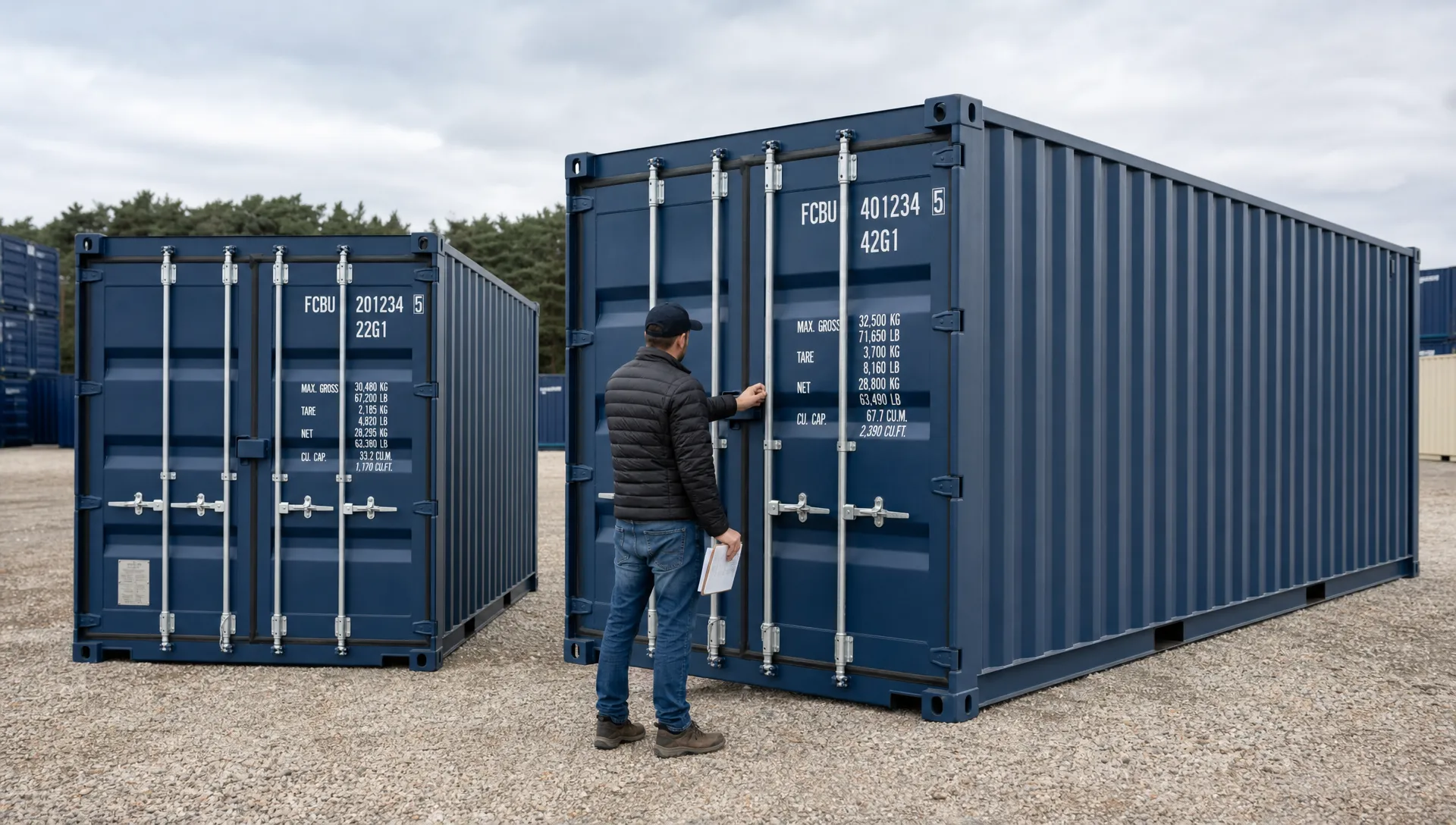
For storage, exterior length and door opening matter most. For transport or heavy loading, ask about tare weight, payload capacity and maximum gross weight. These numbers are usually shown on the container's CSC plate when present.
Typical dry container weights vary by manufacturer, but these ranges are common:
| Size | Typical tare weight | Typical payload capacity | Typical max gross weight |
|---|---|---|---|
| 20ft dry | About 4,800 lb | About 52,000 to 55,000 lb | About 67,200 lb |
| 40ft dry | About 8,000 lb | About 58,000 to 59,000 lb | About 67,200 lb |
| 40ft high cube | About 8,700 to 8,900 lb | About 58,000 lb | About 67,200 lb |
If you are comparing options for budget reasons, this guide to new vs used shipping containers can help you decide when a cleaner one-trip unit is worth the added cost.
Compare condition grades, not just photos
Condition grade is where many buyers get burned. Two containers can both be called used, but one may be ready for secure storage and the other may need door repairs, patching or a new floor.
A good seller should explain the grade in plain English and tie it to the actual unit you are buying. Vague labels like good condition are not enough.
| Grade | What it usually means | Best for | Risk level |
|---|---|---|---|
| One-trip | Built overseas, used for one cargo trip, then sold | Homes, offices, retail, clean storage | Low |
| Cargo-worthy (CWO) | Structurally sound for cargo use when properly inspected | Storage, transport, export needs | Low to medium |
| Wind and watertight (WWT) | Keeps out normal wind and rain, often used for storage | Farm, job-site and business storage | Medium |
| Refurbished | Used unit with repairs and paint work | Cleaner storage and public-facing sites | Medium |
| As-is | Sold with known or unknown defects | Parts, projects, very low-budget use | High |
One-trip containers usually look cleaner and have fewer dents. They are a strong fit for container homes, modular offices, pool builds and custom units because the steel has less wear. Used WWT or CWO containers can be the better value for storage, especially if appearance is not the main concern.
Ask for photos of these areas before you pay:
- Door seals, locking rods and hinges
- Roof panels, especially low spots and rust patches
- Corner posts and corner castings
- Crossmembers under the floor
- Plywood floor condition
- Interior walls, ceiling and light leaks
- Any patch welds, dents or corrosion
A simple light test helps. With the doors closed, stand inside during daylight. If you see pinholes of light through the roof or walls, water can get in. That does not mean the container is useless, but it changes the value and repair plan.
If you are focused on pre-owned units, use a dedicated used shipping container checklist before sending payment.
Check certification, structure and safety details
Certification matters most when a container will move by ship, rail or truck as loaded cargo. It can also matter for insurance, resale and certain commercial uses.
The CSC plate is the metal safety approval plate usually attached to the container door. CSC stands for Convention for Safe Containers. It lists key data such as manufacturer details, approval number, maximum gross weight, tare weight and payload capacity.
For basic on-site storage, you may not need an active CSC inspection. For export, intermodal cargo use or heavy loaded movement, you should ask for cargo-worthy status and the required paperwork before buying.
WWT is not the same as CWO. A WWT container should keep out wind and water under normal conditions, but it may not be approved for loaded transport. A CWO container should be structurally fit for cargo movement when properly certified.
Look closely at the structural frame. The corner posts, corner castings, bottom rails and roof bows carry the real load. Wall dents may look ugly but may not matter much for storage. Bent corner posts, severe corrosion, broken crossmembers or twisted doors are bigger problems.
For container conversions, structure becomes even more important. Cutting large openings for windows, doors or sliding glass panels can weaken the container. A shipping container home, office or retail unit may need engineered reinforcement, local permits and inspections. Requirements vary by city, county and state, so talk with your local building department before starting work.
Compare delivery access before you buy
Delivery is not an afterthought. It is part of the purchase. A container that looks affordable at the depot can become a headache if the truck cannot enter, turn around or unload safely.
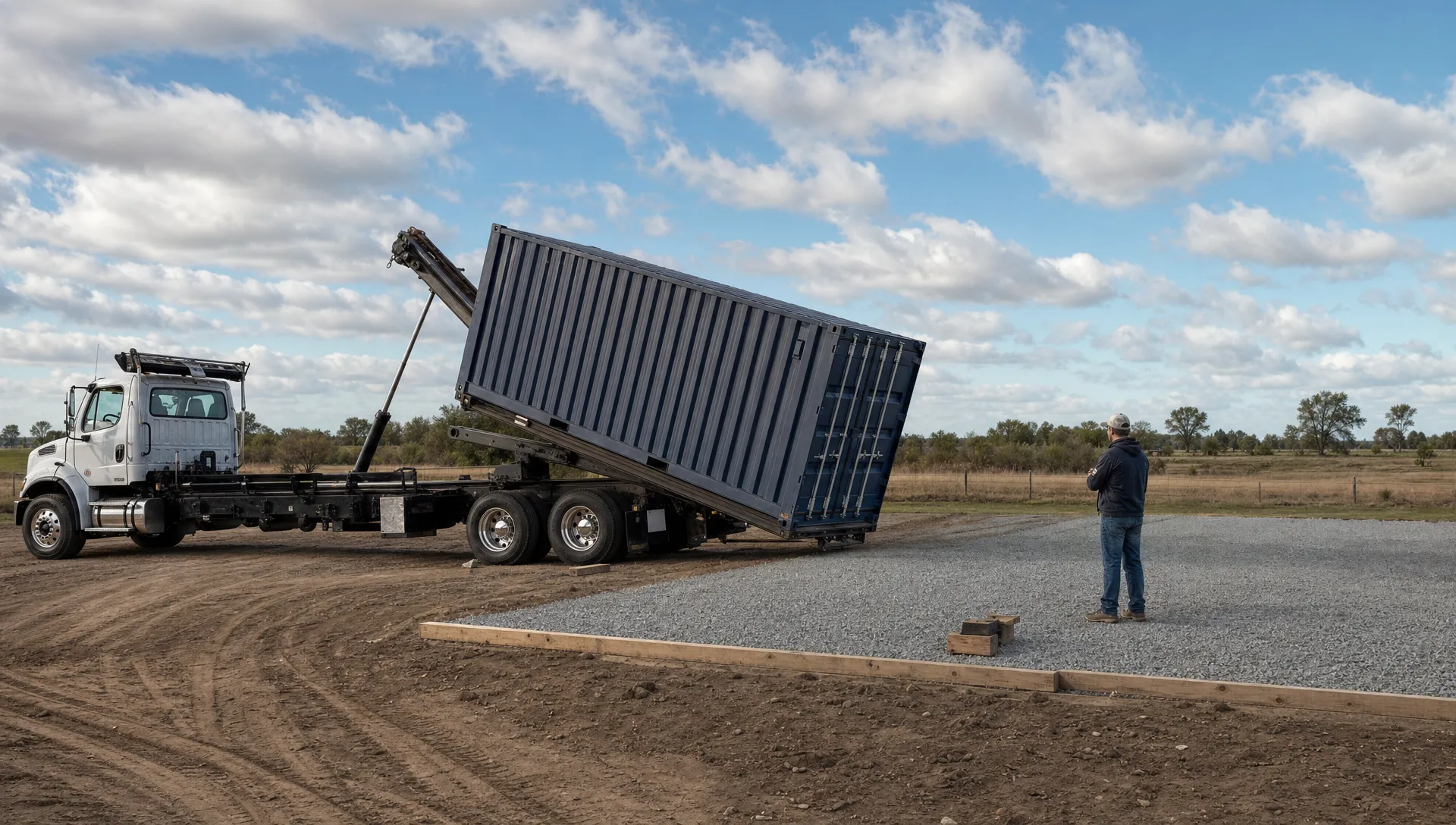
Most residential and rural deliveries use a tilt-bed or roll-off trailer. The driver backs into position, raises the trailer and slides the container into place. This method needs straight clearance in front of the final location.
Typical delivery clearance needs are:
| Container size | Straight-line clearance often needed | Width clearance | Overhead clearance |
|---|---|---|---|
| 20ft | 100 ft | 12 ft | 14 ft |
| 40ft | 120 ft | 12 ft | 14 ft |
| 40ft high cube | 120 ft | 12 ft | 15 ft |
These are planning ranges, not guarantees. Truck type, driveway angle, ground slope and weather can change what is safe. Soft grass, mud, snow, low branches, fences, septic fields and overhead wires can all stop a delivery.
Before you buy, take photos or video of the delivery route. Include the road entrance, driveway, gate, turns and final pad. Measure gate openings and note overhead hazards. If the site is tight, you may need a crane, forklift or local equipment operator.
The Federal Motor Carrier Safety Administration publishes cargo securement rules for commercial transport. Your seller and carrier should know how to move containers safely, but you still need to prepare the site.
Good site prep keeps the container level and helps doors work. A container placed on uneven ground can rack out of square, which makes doors hard to open. Use a firm, level base such as compacted gravel, concrete piers or pressure-treated blocking. Keep the container slightly elevated so water can drain below it.
If you are shopping locally and want a broader planning checklist, this guide on how to shop storage containers in your area covers local delivery and seller comparison points.
Compare total delivered cost and buying terms
Price ads can be misleading because they often leave out delivery, taxes, site costs or modification work. Compare the full delivered price, not just the container price.
Ask every seller for a written quote that shows:
- Container size, height and condition grade
- Exact unit photos or unit number when available
- Delivery cost to your ZIP code or site address
- Taxes and any payment fees
- Warranty or wind and watertight guarantee details
- Estimated delivery window
- Cancellation, return and damage policies
Container pricing changes with steel markets, port inventory, depot location, condition and delivery distance. Because of that, old national average prices can be less useful than a current written quote for your address.
Also compare payment safety. Be careful with sellers who only use stock photos, pressure you to pay fast or ask for unusual payment methods with no invoice. A legitimate seller should provide clear business information, written terms and a delivery plan.
Buying usually makes sense when you need long-term storage, a permanent workshop, a custom build or a container conversion. Leasing can make sense for shorter projects or seasonal needs. LeaseLink Containers is the leasing arm associated with the Outback brand family, so ask about buying versus leasing if your timeline is uncertain.
Mid-project planning tip: If you want current pricing by size and delivery location, you can start with Outback Shipping Containers and compare available new, used and custom container options with nationwide delivery.
Match the container to your project
The right freight container depends on how you plan to use it. Do not overbuy if you only need basic storage, but do not underbuy if you plan to build, insulate or resell the unit later.
For secure storage, a used WWT or CWO container is often enough. Focus on door function, dry interior, strong floors and a working lockbox. A few dents may not matter if the roof is sound and the doors seal well.
For construction sites, durability and delivery speed usually matter most. Contractors should compare lock security, forklift access, roll-up door options, shelving, ventilation and whether the unit can be relocated later.
For farm and ranch use, think about ground conditions, distance from the road and what will be stored. Feed, tack, tools, irrigation parts and equipment all have different ventilation needs. If rodents or moisture are concerns, inspect door gaskets and floors carefully.
For homes, offices, cabins and retail units, start with a cleaner one-trip or high-grade used container. Appearance, structural condition and modification quality matter more. A 40ft high cube is popular for conversions because the extra interior height helps after insulation, flooring and ceiling finishes are installed.
For container pools, reefers and modular commercial builds, treat the purchase like a construction project. Ask about engineering, local code requirements, delivery equipment, utility connections and long-term maintenance. Permits and zoning rules vary by location, so confirm local requirements before placing an order.
Red flags when comparing sellers
A low price is not always a deal. Shipping container scams often target first-time buyers because many people do not know how depots, delivery and condition grades work.
Watch for these warning signs:
- No written quote with delivery included
- No clear condition grade
- Stock photos only
- No business address or verifiable contact details
- Price far below other quotes in your region
- Pressure to pay by wire, gift card, crypto or cash app
- No delivery access questions before payment
- No explanation of WWT, CWO or one-trip status
A trustworthy seller will ask about your site, use case and delivery address. That is not a delay tactic. It is how they avoid sending the wrong truck, wrong size or wrong grade.
Outback Shipping Containers supplies new, used and custom containers nationwide, with inspected units, wind and watertight options, online quotes, lender financing (only for container homes priced above $72,000, subject to lender approval) and delivery support from purchase through placement. The main thing is simple: compare the container, the seller and the delivery plan as one package.
Frequently Asked Questions
What should I check before buying a shipping container?
Check the size, condition grade, roof, doors, floor, corner posts, undercarriage and delivery access. Ask for photos of the exact unit and a written delivered quote. If the container will move as cargo, confirm cargo-worthy status and any needed CSC documentation before you pay.
Is it better to buy a 20ft or 40ft shipping container?
A 20ft container is easier to deliver and works well for residential storage, tools and smaller sites. A 40ft container gives more storage value per square foot but needs more room for delivery. Choose a 40ft high cube if you need extra height for shelving or conversion work.
What is the difference between cargo-worthy and wind and watertight?
Cargo-worthy means the container is structurally fit for cargo movement when properly inspected and documented. Wind and watertight means the unit should keep out normal wind and rain, but it may not be approved for loaded transport. For storage, WWT may be enough. For shipping cargo, ask for CWO.
Do I need a permit for a freight container on my property?
Permit rules vary by city, county and state. Some areas allow temporary storage containers without a permit, while others limit placement, size, duration or appearance. Container homes, offices and permanent structures usually face stricter zoning and building code review. Contact your local building department before delivery.
How much space is needed to deliver a shipping container?
A 20ft container often needs 100 ft of straight clearance for tilt-bed delivery. A 40ft container often needs about 120 ft. You also need enough width, overhead clearance and firm ground. Tight sites may require a crane or other equipment.
Is a one-trip container worth the extra cost?
A one-trip container is often worth it for homes, offices, public-facing businesses and long-term projects where appearance and cleaner steel matter. For basic storage, a good used WWT or CWO container may be a better value. Compare the condition, not just the label.
Ready to compare containers with a real delivered quote?
Buying a freight container is easier when the size, grade, delivery plan and total cost are clear upfront. If you are comparing options for storage, a job site, a farm, a home build or a custom modular project, start with a written quote for your location.
You can review available container options and request pricing through Outback Shipping Containers, with nationwide delivery, inspected units and support from purchase through delivery.
About Outback Shipping Containers
This guide was prepared by the Outback Shipping Containers team, based on the questions our customers ask us most when buying, modifying and taking delivery of shipping containers. Learn more about us.
Ready to find your container?
Browse our in-stock shipping containers, container homes and custom builds, or ask our team for a free quote with delivery to your site.