How to Shop Storage Containers in Your Area
Storage containers for sale near me: learn how to compare sizes, grades, delivered costs, sellers, permits, and site prep before buying.
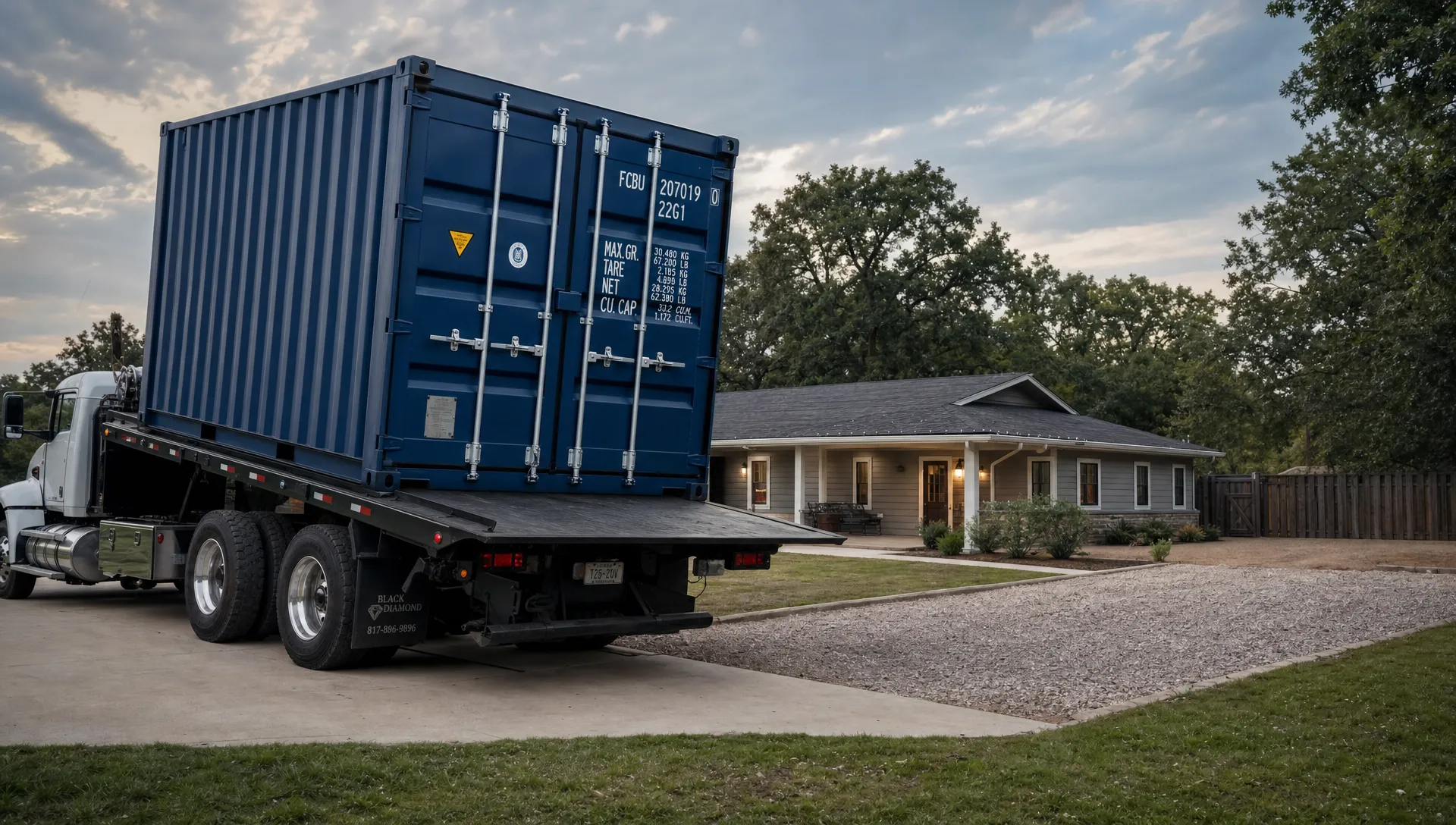
Storage Containers for Sale Near Me: How to Shop in Your Area
If you searched storage containers for sale near me, do not buy from the closest seller just because they are close. The best deal is the container that fits your use, has a clear condition grade, includes delivery in the quote, and can be placed safely on your site. Start with size and condition, then verify the seller, delivery access, permits, and total cost before you pay.
Quick Answer: Shop local storage containers by comparing delivered quotes for the same size and condition. Confirm WWT or CWO status, photos, container ID, delivery method, taxes, fees, and site access. If a price looks too low, ask what is missing: delivery, inspection, warranty, or real inventory.
Key Takeaways
- Compare delivered price, not just the advertised container price.
- Match the container grade to the job: WWT for storage, CWO or CSC for cargo use, one-trip for cleaner appearance.
- A 20-foot container works well for most homes and small sites. A 40-foot container gives better cost per square foot when you have room.
- Ask for photos, a container ID, door and floor condition, and written delivery terms before sending money.
- Check local rules before delivery, especially for long-term storage, business use, or any container conversion.
Storage Containers for Sale Near Me: Start With the Real Use Case
Local shopping gets easier when you know what the container must do. A conex box used for farm tools has different requirements than a container office, shipping container home shell, or job-site material locker.
For basic storage, you usually need a wind and watertight unit. This means the doors close, the roof does not leak, and the container keeps rain and wind out under normal conditions. For shipping cargo again, you may need cargo-worthy status and a valid CSC plate.
Think about the contents first. Furniture, tools, machinery, inventory, hay equipment, and construction materials all load differently. Heavy items may need stronger flooring, forklift access, or a container placed on firm gravel instead of bare soil.
Also think about how often you will enter the unit. A contractor opening the doors daily may want a newer container, a high cube, vents, shelving, or a lockbox. A homeowner storing seasonal items may be fine with a used WWT container as long as it is dry and secure.
A good local search should answer four questions:
- What size do I need?
- What condition grade is enough?
- What is the full delivered cost to my ZIP code?
- Can the truck place it where I want it?
If a seller cannot answer those questions in writing, keep shopping.
Choose the Right Container Size Before You Compare Quotes
The most common storage container sizes are 10-foot, 20-foot, 40-foot, and 40-foot high cube. The right size depends on space, access, budget, and what you plan to store.
Standard ISO containers follow common international dimensions. The ISO 668 freight container standard covers classification, external dimensions, and ratings for Series 1 freight containers. In plain English, this is why most cargo containers fit on trucks, ships, trains, and handling equipment around the world.
Here is a practical comparison for local storage buyers. Exact interior dimensions and weights can vary by manufacturer, floor type, and modifications, so confirm the spec sheet before purchase.
| Container size | Typical exterior size | Typical interior length | Approx. storage volume | Common use |
|---|---|---|---|---|
| 10-foot | 10 ft x 8 ft x 8 ft 6 in | About 9 ft 3 in | About 560 cubic ft | Tight driveways, small tools, backyard storage |
| 20-foot standard | 20 ft x 8 ft x 8 ft 6 in | About 19 ft 4 in | About 1,170 cubic ft | Home storage, farms, small job sites, workshops |
| 40-foot standard | 40 ft x 8 ft x 8 ft 6 in | About 39 ft 5 in | About 2,390 cubic ft | Large inventory, construction materials, ranch equipment |
| 40-foot high cube | 40 ft x 8 ft x 9 ft 6 in | About 39 ft 5 in | About 2,690 cubic ft | Tall items, office builds, container conversion projects |
| 45-foot high cube | 45 ft x 8 ft x 9 ft 6 in | About 44 ft 5 in | About 3,040 cubic ft | Large commercial storage and special builds |
When a 20-foot container makes sense
A 20-foot unit is the safe middle ground. It fits more sites, needs less straight-line delivery room, and is easier to place on small residential lots. It still gives enough space for garage overflow, tools, equipment, and business inventory.
If this is your first container, a 20-foot WWT unit is often the easiest to manage. It gives strong storage without forcing you to redesign your driveway or site layout.
When a 40-foot container is the better buy
A 40-foot container gives about double the floor space of a 20-foot unit. It can be the better value if you have enough room for delivery and placement.
Farm and ranch owners, construction companies, and small businesses often choose 40-foot containers because they store longer materials, pallets, tires, feed, tools, and seasonal inventory. Just make sure the truck has room to unload it safely.
When to consider a high cube
A high cube adds one extra foot of height. That sounds small, but it matters for container offices, workshops, tall shelving, roll-up doors, spray foam insulation, or a shipping container home build.
If you plan a container conversion, ask about high cube options early. The added interior height can make the finished space feel much better after you add insulation, framing, flooring, and ceiling materials.
Compare Container Conditions: New, Used, CWO, and WWT
Condition grade affects price, appearance, service life, and risk. Two containers with the same size can be very different if one is a clean one-trip unit and the other is a heavily dented used unit.
Here are the common terms you will see when shopping.
| Condition term | What it usually means | Best for | What to verify |
|---|---|---|---|
| One-trip | Used once or only a few times in cargo service | Clean storage, offices, homes, retail builds | Photos, door operation, minor dents, paint condition |
| WWT | Wind and watertight for storage | Tools, furniture, farm gear, job-site storage | Roof leaks, door seals, floor condition, rust spots |
| CWO | Cargo-worthy for cargo transport | Export, intermodal use, heavy commercial use | Inspection date, CSC plate, structural condition |
| Refurbished | Used unit repaired and repainted | Buyers who want better appearance | What repairs were done and what warranty applies |
| As-is | No strong condition promise | Low-budget noncritical use | High risk of leaks, rust, bad floors, or door problems |
WWT is usually enough for on-site storage. CWO matters if the unit must move as an intermodal container again. A valid CSC plate matters for international cargo movement, but it is not always needed for a backyard storage container.
For used units, focus on the roof, doors, floors, corner posts, and bottom rails. Rust is normal on used cargo containers, but deep corrosion, holes, soft floors, or doors that will not seal should raise concern.
Before you buy used, compare your seller's claims against a real inspection process. Outback Shipping Containers has a helpful used container buying checklist that walks through size, condition grade, paperwork, and site preparation.
Red flags in used container listings
Be careful with listings that only show stock photos. A real seller should be able to explain the container grade and provide current photos or clear condition details.
Watch for these warning signs:
- The price is far below every other local quote.
- The seller demands full payment by wire, gift card, crypto, or payment app only.
- The listing has no business address, phone number, or real website.
- The photos show different containers in different yards.
- Delivery cost is hidden until after payment.
- The seller cannot explain WWT, CWO, CSC, or one-trip condition.
Scams often use low prices to rush buyers. Slow down and ask for the details in writing.
Price the Total Delivered Cost, Not Just the Box
The container price is only one part of the purchase. The number that matters is the total delivered cost to your property, farm, shop, or job site.
A local quote should show the unit cost, delivery cost, taxes, payment terms, and any add-ons. If the container needs a special truck, crane, escort, or difficult route, that should be discussed before the order is placed.
At the time of writing, Outback Shipping Containers shows a used 40-foot storage container listing with a container price of $1,499 before any delivery costs or options shown at checkout. That kind of visible product pricing helps, but you still need the delivered total for your ZIP code and site.
Delivery can change the real value of a deal. A container that costs less at a faraway depot may cost more after freight. A nearby unit may also be overpriced if it has poor doors, weak flooring, or no written WWT guarantee.
A strong quote should include:
- Container size and condition grade
- New, used, refurbished, WWT, or CWO status
- Delivery ZIP code and placement method
- Sales tax and extra fees
- Lockbox, vents, roll-up doors, or modification costs if added
- Payment schedule and refund terms
- Estimated delivery window
- Who handles delivery coordination
If you are comparing several quotes, keep the size and condition the same. Do not compare a 20-foot used WWT unit against a 40-foot one-trip high cube and call it a price comparison. That will only confuse the decision.
For deeper delivery planning, Outback's guide to choosing containers for local delivery explains size, condition, site prep, and total delivered cost in more detail.
Mid-shop check: compare a real container listing
If you already know you need maximum storage space, review the details on this used 40-foot storage container listing. Use it as a model for what a product page should show: photos, specifications, availability, shipping options, and checkout details.
Vet the Seller and Inspect Before You Pay
A real container seller should be able to explain the product, the grade, and the delivery process without pressure. You do not need a perfect-looking container for basic storage, but you do need honest grading.
Ask direct questions before payment:
- Is this exact unit available, or is it a sample listing?
- Is it WWT, CWO, one-trip, refurbished, or as-is?
- Can you provide photos of the doors, roof, floor, sides, and ID markings?
- Are the door seals intact?
- Does the floor have soft spots, holes, oil stains, or chemical odor?
- Is delivery included in the quote?
- What happens if the driver cannot place the container?
For used storage, a few dents and surface rust are normal. Holes in the roof, daylight through seams, bent door frames, and rotten flooring are different. Those problems can turn a cheap container into an expensive repair project.
What to inspect on delivery
Inspect the container before the driver leaves if possible. Open and close both doors. Check the locking rods, gaskets, hinge movement, and floor. Walk inside during daylight and look for light coming through the roof or walls.
If you see standing water, roof holes, major floor damage, or doors that will not close, document it with photos right away. A reputable seller should have a process for handling delivery issues.
Prepare Your Site and Delivery Access
Many container problems start before the truck arrives. The container may be fine, but the site is not ready.
A tilt-bed or roll-off truck needs room to drive in, tilt the bed, and pull forward as the container slides into place. Exact space depends on the truck and container length, but many deliveries need a straight path, firm ground, and clear overhead space.
Use these planning numbers as a starting point:
| Delivery factor | Practical planning range | Why it matters |
|---|---|---|
| Driveway width | About 12 ft or wider | Gives the truck room to enter and turn |
| Overhead clearance | About 14 ft to 16 ft | Avoids trees, wires, carports, and rooflines |
| Straight unload room for 20-foot | Often 60 ft to 80 ft | Truck must pull forward while unloading |
| Straight unload room for 40-foot | Often 100 ft to 120 ft or more | Longer container and truck need more space |
| Ground surface | Firm, level gravel, concrete, asphalt, or compacted soil | Prevents sinking and door frame twist |
Ask the seller or dispatcher what their truck requires. A rural property, narrow gate, steep driveway, soft field, or low power line can change the plan.
Federal rules also affect transport companies. For example, carriers must follow FMCSA cargo securement rules when moving heavy cargo on public roads. Your job as the buyer is to give accurate access details so the right truck and route can be planned.
Site prep basics
A container should sit level. If one corner sinks, the frame can rack and the doors may become hard to open. Many buyers use a compacted gravel pad, concrete strips, railroad ties, or piers under the corner castings.
Keep the bottom rails off wet soil when possible. Airflow under the container helps reduce corrosion and moisture problems. Also slope the area so water drains away from the doors.
Permits and zoning rules vary by state, county, city, and HOA. A temporary storage container may be allowed in one area and restricted in another. A container used as an office, cabin, retail unit, or home may trigger building code, setback, foundation, utility, and occupancy rules. Always check with your local building or zoning office before delivery.
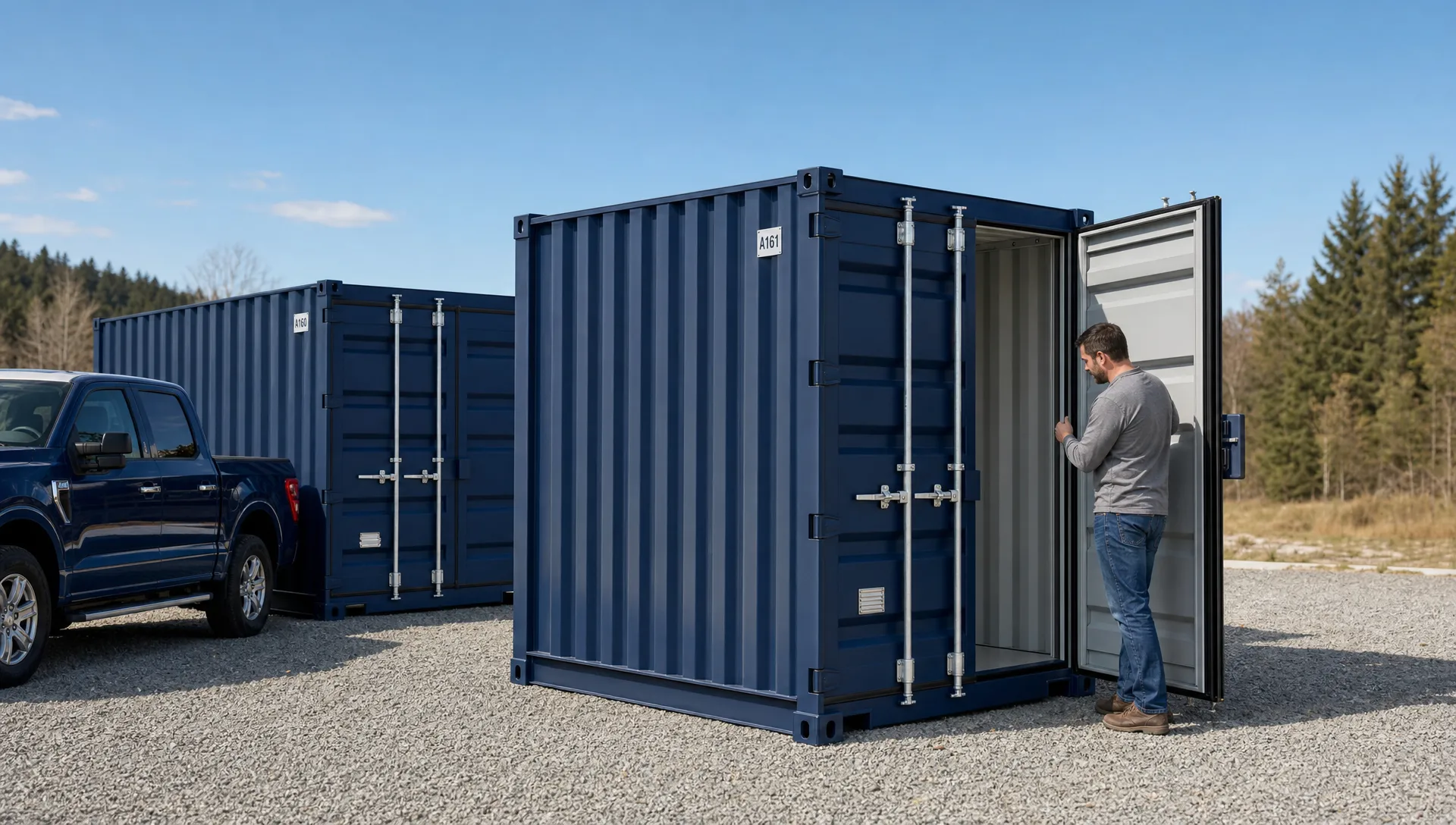
Decide How to Pay: Buy, Finance, or Rent-to-Own
Buying outright is simple if you have the cash and plan to keep the container for years. It can make sense for homeowners, farms, contractors, and small businesses that need long-term storage.
Financing can help when you need the container now but want to spread payments over time. Outback Shipping Containers offers in-house financing options, but you should review the current terms, payment schedule, and total cost before signing.
Rent-to-own can be useful if you want a path to ownership without a large upfront payment. It can also help buyers who need storage fast but are not ready to pay the full purchase price at once. Outback's leasing arm, LeaseLink Containers, supports the broader rental and leasing side of the business.
Renting may fit short projects, but long projects can make ownership more attractive. Compare the total cost over the expected use period, not just the monthly payment.
Here is a simple way to think about it:
| Option | Best fit | Main question to ask |
|---|---|---|
| Buy outright | Long-term use and lower total financing cost | What is the full delivered price? |
| Finance | Long-term need with spread-out payments | What is the total paid over the term? |
| Rent-to-own | Buyer wants ownership but lower upfront cost | When do I own the unit? |
| Rent | Short project or uncertain timeline | At what point does renting cost more than buying? |
Do not sign based only on monthly payment. Ask for the total amount paid, delivery charges, late fees, damage terms, pickup terms, and ownership date if applicable.
Follow This Local Shopping Plan
A clear process helps you avoid rushed choices. Use this plan before you pay for any cargo container, conex box, or container conversion shell.
- Measure your site: Confirm the length, width, overhead clearance, driveway access, turning space, and unload path.
- Pick the size: Choose 20-foot, 40-foot, high cube, or another size based on what you store and the space you have.
- Choose the condition grade: Use WWT for most storage, CWO for cargo use, and one-trip for cleaner appearance or build projects.
- Get delivered quotes: Compare the same size and grade, including delivery, tax, fees, and add-ons.
- Verify the seller: Look for real contact details, clear policies, product photos, and written terms.
- Check local rules: Ask your city, county, or HOA about permits, setbacks, time limits, and allowed uses.
- Prepare the pad: Use firm, level support with drainage and enough room for the truck.
- Inspect on delivery: Check doors, roof, floor, seals, rust, and any damage before the driver leaves.
This process takes a little time, but it protects your money. It also helps the seller match you with the right unit and the right delivery truck.
Frequently Asked Questions
How much does a storage container cost near me?
Storage container pricing changes by size, condition, location, availability, and delivery distance. Always compare the total delivered cost, not only the listed unit price. At the time of writing, one Outback used 40-foot listing showed $1,499 before delivery and checkout options, but live pricing can change.
What is the best size shipping container for storage?
A 20-foot container is best for many homes, farms, and small job sites because it fits tighter spaces and still holds about 1,170 cubic feet. A 40-foot container is better when you need more floor space and have enough room for delivery, placement, and door access.
Do I need a permit to put a shipping container on my property?
Permit rules vary by city, county, state, and HOA. Some areas allow temporary storage containers with few limits, while others restrict long-term placement, commercial use, setbacks, or appearance. Container homes, offices, and workshops often face stricter building code rules. Check local authorities before delivery.
Is it better to buy a new or used storage container?
Buy new or one-trip if appearance, clean floors, and long service life matter most. Buy used WWT if you need secure dry storage at a lower cost. Choose CWO if the container must move cargo again. The best choice depends on use, budget, and condition, not age alone.
How do I avoid shipping container scams?
Avoid sellers who use only stock photos, demand unusual payment methods, hide delivery costs, or cannot explain container grades. Ask for written terms, current photos, business details, delivery information, and a clear refund policy. A real seller should not pressure you to pay before answering basic questions.
Can a shipping container be delivered to a rural property?
Yes, rural delivery is common, but access matters. The truck needs a firm route, enough width, overhead clearance, turning room, and a level unload area. Soft fields, steep grades, low branches, gates, and power lines can create problems. Share photos and measurements before scheduling delivery.
If you are ready to shop with clear pricing and delivery support, start by reviewing current options from Outback Shipping Containers. Compare size, condition, and delivered cost, then ask for help matching the container to your site before you commit.