Container Purchase Checklist for First-Time Buyers
By Outback Shipping Containers · Published August 31, 2026 · Last updated October 18, 2026
Container Purchase Checklist for First-Time Buyers
A safe container purchase comes down to six checks: choose the right size, confirm new or used condition, inspect the exact unit, verify WWT, CWO or CSC status when needed, price the full delivered cost and prepare the drop site. First-time buyers should never judge a cargo container by price alone. The cheapest conex box can cost more if it leaks, cannot be delivered or fails local permit rules.
Quick Answer: A good container purchase starts with the right size, condition grade, inspection proof, delivery plan, site prep and written terms. Do not pay until you know the total delivered cost and have proof the exact cargo container meets your use.
Key Takeaways
- Match the container to its job first: storage, job-site use, farm equipment, office space or a future container conversion.
- Compare condition grades carefully. One-trip, CWO and WWT do not mean the same thing.
- Ask for photos or video of the exact unit, not just stock images of a similar ISO container.
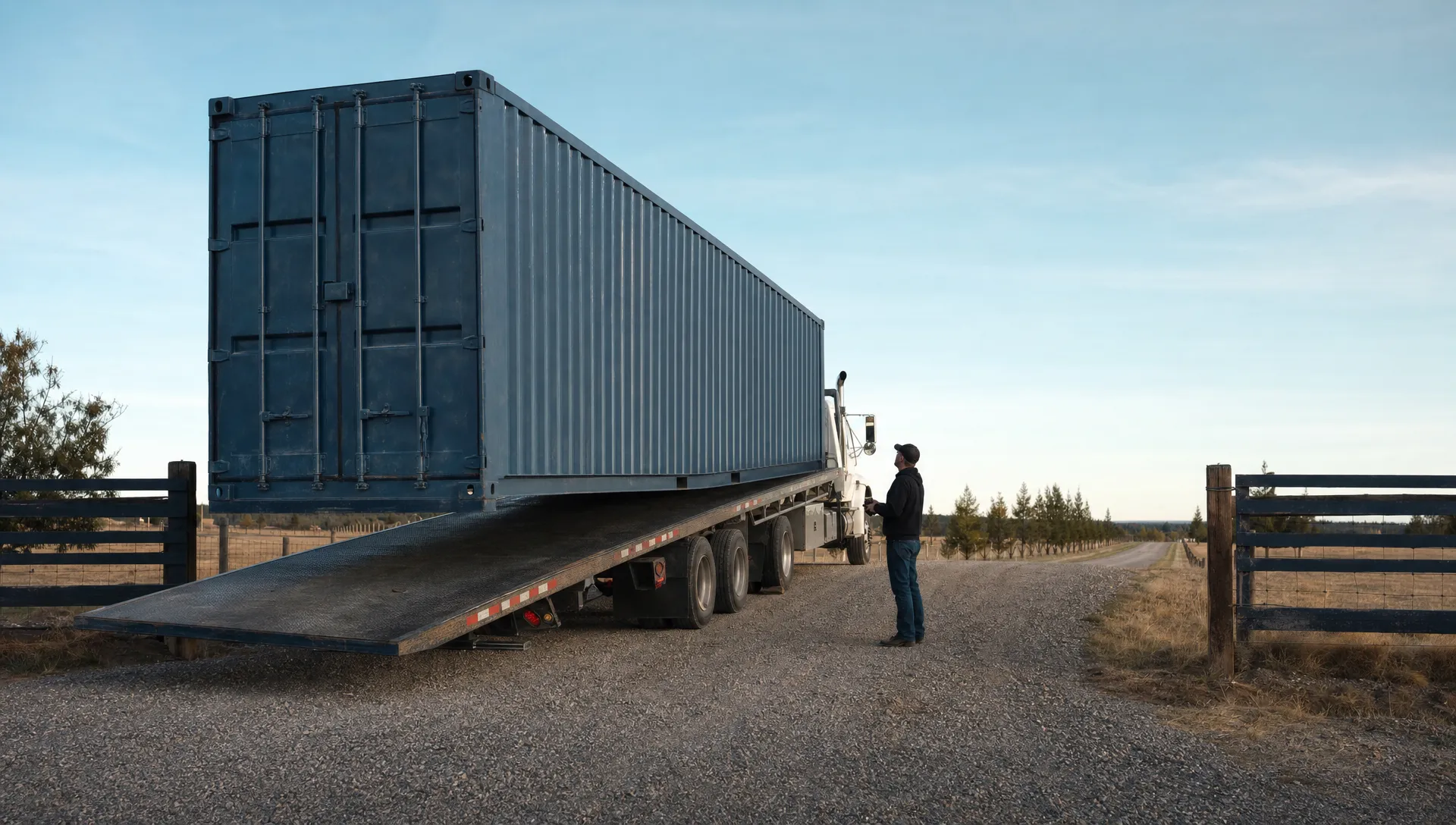
- Confirm delivery access before you buy. A tilt-bed truck needs room to pull straight out after setting the container down.
- Get a written quote that shows the unit price, delivery charge, taxes, options, payment terms and expected delivery window.
Container Purchase Checklist: 12 Checks Before You Pay
A first-time buyer does not need to know every detail of intermodal container design. You do need a clear process. Use this checklist before you send a deposit or sign an invoice.
| Check | What to confirm | Why it matters |
|---|---|---|
| Intended use | Storage, workshop, office, home, pool or cargo | The use drives size, grade, permits and upgrades |
| Size | 10ft, 20ft, 40ft, 40ft high cube or larger | Wrong size creates delivery problems or wasted space |
| Height | Standard 8ft 6in or high cube 9ft 6in | High cube gives more headroom for offices and conversions |
| Condition grade | One-trip, CWO, WWT, refurbished or as-is | Each grade has different cost and risk |
| Exact-unit proof | Current photos, video or inspection report | Stock photos hide dents, rust, odor and floor damage |
| Door operation | Doors open, close, latch and seal | Bad doors are expensive to fix and hard to secure |
| Roof and frame | No major roof dents, holes or twisted corner posts | Structural damage can lead to leaks and unsafe stacking |
| Floor | Solid marine-grade plywood or equivalent floor condition | Soft floors can fail under equipment, pallets or foot traffic |
| Certification needs | CSC plate, CWO status or WWT guarantee | Required needs change by storage, transport and export use |
| Delivered cost | Unit, delivery, taxes, add-ons and site equipment | Delivery can change the real cost of ownership |
| Site access | Truck path, turning radius, overhead clearance and surface | A good container still fails if the truck cannot place it |
| Written terms | Invoice, warranty language, delivery date and payment policy | Reduces scam risk and surprise fees |
Keep this table open while you compare quotes. It will help you ask the same questions of every seller, which makes the answer easier to trust.
Choose the Right Container Size First
Most first-time buyers start by asking what a container costs. Start with size instead. A container that is too small becomes cluttered fast. A container that is too large may not fit the driveway, farm lane, job site or backyard.
Standard shipping containers are built around ISO dimensions. The ISO 668 freight container standard covers classification, dimensions and ratings for Series 1 freight containers. In everyday buying terms, that means most cargo containers share the same exterior width of 8 feet, with common lengths and heights.
| Size | Typical exterior dimensions | Typical interior dimensions | Typical tare weight | Best fit |
|---|---|---|---|---|
| 20ft standard | 20ft L x 8ft W x 8ft 6in H | About 19ft 4in L x 7ft 8in W x 7ft 10in H | About 4,800 to 5,200 lb | Residential storage, tools, small job sites, tight yards |
| 40ft standard | 40ft L x 8ft W x 8ft 6in H | About 39ft 5in L x 7ft 8in W x 7ft 10in H | About 8,000 to 8,800 lb | Business inventory, farm storage, large equipment, bulk materials |
| 40ft high cube | 40ft L x 8ft W x 9ft 6in H | About 39ft 5in L x 7ft 8in W x 8ft 10in H | About 8,600 to 9,200 lb | Workshops, offices, container homes, tall items, better interior headroom |
These are typical figures, not a substitute for the exact spec sheet. Tare weight, payload capacity and interior measurements can vary by manufacturer, build year and floor type.
When a 20ft container makes sense
A 20ft container is easier to place, easier to move later and often a better fit for homeowners. It works well for tools, motorcycles, seasonal storage, remodeling materials and small-business inventory. It also fits more sites where a 40ft truck setup cannot turn or unload.
A 20ft unit is not always the lowest total cost per cubic foot. If you need large-volume storage and have enough space, a 40ft container may give better storage value.
When a 40ft container makes sense
A 40ft container gives roughly twice the floor length of a 20ft unit, but delivery is less forgiving. The driver needs a longer straight path and more room to pull away. For farms, construction companies and logistics teams, that extra length often pays for itself.
If you plan to build a shipping container home, office or cabin, a 40ft high cube is often the better starting point. The extra foot of height helps with insulation, ceiling finish, lighting and HVAC runs.
If you are still learning container terms, Outback’s guide to Conex containers for first-time buyers explains the difference between conex box, cargo container and ISO container in plain language.
Understand New, Used, CWO and WWT Grades
Condition grade is where many buyers get confused. A used container can be a smart buy, but only if the grade matches the job. A storage container for hay does not need the same documentation as a container used for export cargo.
| Grade or term | What it usually means | Best for | What to check |
|---|---|---|---|
| One-trip | Newer unit used for one cargo trip from manufacturer to destination | Homes, offices, retail builds, clean storage, premium sites | Minor handling dents, clean doors, floor condition, exterior finish |
| CWO | Cargo worthy, generally suitable for shipping cargo when approved | Export, intermodal use, higher-grade storage | Valid inspection, CSC plate status, structural frame, doors |
| WWT | Wind and watertight for storage, but not necessarily cargo worthy | On-site storage, farms, job sites, household goods | Roof, gaskets, door seals, floor, pinholes and rust |
| Refurbished | Used unit repaired or repainted to improve condition | Visible business use, storage, customer-facing sites | Scope of repairs, paint quality, rust treatment, warranty language |
| As-is | Sold with limited or no repair promise | Budget projects, non-critical uses, parts | Leaks, holes, bad doors, floor rot, hidden transport costs |
WWT does not mean new. It means the unit should keep out wind and rain when used for storage. A WWT unit can still have dents, surface rust, faded paint and old decals.
CWO does not mean perfect. It means the unit meets a higher use case for cargo, subject to inspection and documentation. If you need to ship goods internationally, ask about the CSC plate and current inspection status before purchase.
For a used unit, focus less on age and more on structure. A 12-year-old container with straight corner posts, tight doors and a dry floor can be a better buy than a newer unit with roof damage or bad seals.
Inspect the Exact Container, Not a Sample Photo
A serious seller should be able to tell you what you are buying. For new one-trip containers, that may be a representative unit from a batch. For used containers, ask for current photos or video of the exact container whenever possible.
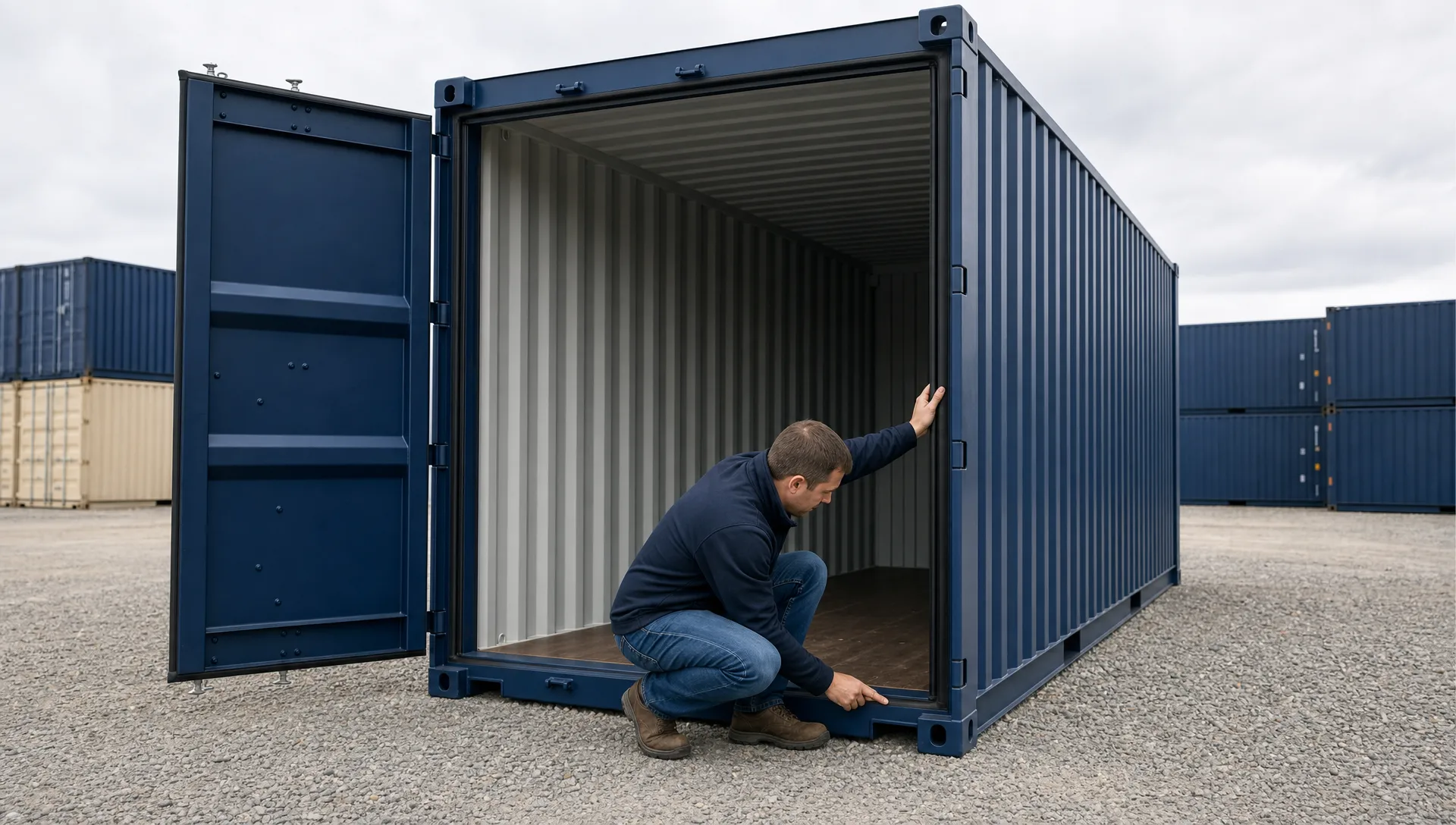
Photos should show all four sides, both door leaves, the roof if practical, the interior, the floor and the CSC plate if the container has one. Ask for close-ups of rust areas, patches, door gaskets and the bottom rail.
Use your eyes first. Look for daylight inside the closed container. If light comes through the roof, wall panels or door seals, water can come through too. Smell matters as well. Strong chemical, mildew or fuel odors can be hard to remove, especially if you plan to use the container as a workshop, office or container home.
For a deeper secondhand inspection process, review Outback’s guide on how to inspect a used shipping container for sale. It covers roof checks, rust patterns, door hardware, flooring and structural warning signs in more detail.
Door and seal checks
Doors are one of the most important parts of a container purchase. If the doors do not work, every use becomes harder. Open and close both leaves if you can inspect in person. If not, ask for a short video showing the doors opening, closing and locking.
Check the rubber gaskets for cracking, missing sections or gaps. Look at the locking rods, cams and handles. Heavy rust around the door frame can keep the door from sealing, even if the rest of the box looks solid.
Roof, floor and frame checks
The roof should not hold water. Dents are common on used containers, but deep roof dents can pond rain and lead to rust. Ask if any holes were patched and how the repair was done.
The floor should feel firm. Most dry containers use thick plywood flooring over steel crossmembers. Soft spots, rot, oil staining and chemical odors are warning signs. For heavy equipment, ask about payload capacity and whether the floor is suitable for your load.
Corner posts and castings matter because they carry structural loads. Avoid containers with twisted frames, crushed corners or major weld repairs unless a qualified person has cleared the unit for your intended use.
Confirm Delivery, Access and Site Prep Before Ordering
Delivery is not an afterthought. It is part of the container purchase. A container may be priced well at the depot but still be a bad deal if delivery requires special equipment, extra handling or a second trip.
Most residential and job-site deliveries use a tilt-bed truck, roll-off truck, flatbed, crane or side loader. Each method has different space needs.
| Delivery method | How it works | Good for | Watch for |
|---|---|---|---|
| Tilt-bed truck | Trailer tilts and the container slides down as the truck pulls forward | Many 20ft and 40ft ground drops | Needs a long, straight path in front of the final location |
| Roll-off truck | Similar to dumpster-style placement for shorter units | Some 10ft and 20ft placements | Limited reach and surface requirements |
| Flatbed | Container rides on a trailer and is unloaded by equipment on site | Commercial sites with forklift, crane or telehandler | Buyer may need to provide lifting equipment |
| Side loader | Truck places container off the side | Tighter sites, parallel placement, some urban jobs | Not available everywhere and may cost more |
Many carriers need about twice the container length or more in straight clearance for a tilt-bed delivery. A 20ft container may require 100 feet of straight space. A 40ft container may require roughly 100 to 120 feet. These are planning ranges only. Your carrier should confirm the exact truck and site requirements before delivery.
Also check overhead clearance. Branches, power lines, gates, roof eaves and low bridges can stop a delivery. Public road limits, bridge rules and oversize requirements are regulated, and the Federal Highway Administration freight size and weight overview is a useful starting point for understanding why routes and equipment matter.
Your site should be level, firm and well-drained. Gravel pads, concrete piers, railroad ties and treated blocks are common support options. The goal is simple: keep the container level, keep it out of standing water and allow air to move under the floor.
If you already know your size, grade and delivery site, you can compare shipping containers for sale with nationwide delivery through Outback Shipping Containers. The team supplies new, used and custom containers across all 50 states, including many rural and remote locations.
Verify Seller Credibility, Documents and Payment Terms
Scams exist in the container market because buyers often shop by photo, price and urgency. Slow down before you pay. A real seller should give you clear business information, written terms and a real quote.
Ask for a quote that lists the container type, size, grade, delivery location, delivery method, taxes, options and payment schedule. If the seller only sends a vague text message with a low price, be careful.
Watch for these red flags:
- Prices that are far below the rest of the market with no clear reason
- Stock photos only, especially for used containers
- Pressure to pay by wire, gift card, crypto or instant transfer
- No written invoice, business name or delivery terms
- Refusal to discuss WWT, CWO, CSC or inspection details
- Claims that permits never apply anywhere
Payment terms should match the risk. Many legitimate sellers require payment before dispatch because trucking is scheduled around paid orders. That does not mean you should accept unclear terms. You should know what happens if the unit is not available, if weather delays delivery or if the driver cannot access the site.
Outback Shipping Containers offers transparent online shopping, instant quotes and lender financing (only for container homes priced above $72,000, subject to lender approval). Financing can help homeowners, contractors and small businesses spread out the cost, but you should still compare the total cost and read the agreement before signing.
Business buyers should also consider whether ownership is the right choice. If your need is seasonal or project-based, leasing may fit better. Outback’s leasing arm, LeaseLink Containers, serves buyers who need a container without long-term ownership.
For commercial storage, job sites and operations teams, Outback’s guide on how to purchase storage containers for business use covers size planning, delivery and cost comparisons from a business buyer’s point of view.
Match the Container to the Project
A container used for lawn equipment does not need the same build quality as a tiny home shell. Before you buy, decide how permanent the container will be and how much work you plan to do after delivery.
For basic storage, WWT condition may be enough. Add a lockbox, vents and a level pad if you want better security and airflow. For tools, inventory and business records, consider a cleaner unit and stronger security hardware.
For farm and ranch use, think about access in bad weather. A container placed on soft ground may settle, twist and become hard to open. Gravel and drainage often matter more than paint color.
For offices, workshops and retail units, plan for insulation, electrical, HVAC, windows, doors and code compliance. A high cube container usually gives more comfortable headroom after ceiling and floor finishes.
For a shipping container home, cabin, Airbnb unit, pool or other custom modular build, talk to local authorities before buying the shell. Zoning, setbacks, foundations, wind loads, snow loads, energy codes, utilities and inspections vary by state, county and city. A container can be strong steel, but a legal dwelling still needs to meet local rules.
If you plan a conversion, ask whether modifications should be done before delivery. Cutting steel changes the structure. Large wall openings, roof decks and stacked designs may need engineering. It is usually cheaper to plan these details before the container is placed on a tight site.
First-Time Buyer Mistakes That Cost Real Money
Most bad container purchases come from rushing. The buyer finds a low price, pays fast and figures out delivery or condition later. That order of events causes problems.
A common mistake is buying a 40ft container because it looks like the best value, then finding out the truck cannot place it. Another mistake is buying a used unit for a future office, then spending more than expected to fix odors, rust or poor doors.
Do not confuse paint with condition. Fresh paint can hide rust for a while, but it does not fix bad seals, soft floors or bent frames. Ask what repairs were made before painting.
Do not skip local rules. A temporary storage container on a construction site may be treated differently from a permanent residential container, office or dwelling. Your city or county can tell you if a permit, setback or screening rule applies.
Do not ignore condensation. Steel containers can sweat when warm, moist air hits cold metal. Vents, insulation, desiccants, raised flooring and HVAC design can help, depending on use. If you will store furniture, paper, feed, tools or electronics, plan moisture control from the start.
Do not buy only on distance. A nearby seller is convenient, but a better-inspected unit with reliable delivery can be worth more. Compare total delivered cost and risk, not just the depot price.
For another pre-payment review, Outback’s article on cargo containers for sale checks before you pay expands on seller verification, inspection and delivery questions.
FAQ
What should I check before buying a shipping container?
Check the size, condition grade, roof, doors, gaskets, floor, frame and delivery access. Ask for exact-unit photos or video, not only stock images. Confirm WWT, CWO or CSC status if it matters for your use. Get a written quote with the delivered cost before paying.
Is it better to buy a new or used shipping container?
Buy new or one-trip if appearance, cleanliness and long service life matter. Buy used WWT or CWO if you need durable storage at a lower cost and can accept dents, faded paint and surface rust. The best choice depends on budget, site visibility, cargo needs and planned modifications.
How much space do I need for shipping container delivery?
For tilt-bed delivery, plan for a long, straight path. Many 20ft drops need about 60 to 80 feet, and many 40ft drops need about 100 to 120 feet. Exact needs depend on truck type, slope, ground firmness and placement angle. Always confirm with the carrier.
Do I need a permit to put a shipping container on my property?
Permit rules vary by city, county and state. Temporary storage, farm use, commercial job-site use and residential placement may be treated differently. If the container becomes a home, office, pool or permanent structure, expect more rules. Contact your local building or zoning office before delivery.
What does WWT mean when buying a container?
WWT means wind and watertight. The container should keep out normal wind and rain when used for storage. It does not mean the container is new, cargo worthy or free from dents and rust. You should still inspect the roof, door seals, floor and walls.
Can I finance a container purchase?
Yes, some suppliers offer financing. Outback Shipping Containers has in-house lender financing (only for container homes priced above $72,000, subject to lender approval) for qualified buyers. Review the payment schedule, total cost, approval terms and delivery timing before you sign. Financing can be useful for businesses, homeowners and builders who need the container now but want to spread out payments.
Ready to Buy With Less Guesswork?
A shipping container is a long-lasting asset when you choose the right size, grade and delivery plan. Use the checklist above, ask direct questions and get all terms in writing before payment.
When you are ready to compare options, start with Outback Shipping Containers for new, used and custom containers with nationwide delivery, inspected units and support from purchase through placement.
About Outback Shipping Containers
This guide was prepared by the Outback Shipping Containers team, based on the questions our customers ask us most when buying, modifying and taking delivery of shipping containers. Learn more about us.
Ready to find your container?
Browse our in-stock shipping containers, container homes and custom builds, or ask our team for a free quote with delivery to your site.