Shipping Containers in Houston: Delivery and Buying Tips
Buying shipping containers Houston TX? Compare sizes, condition grades, delivery access and local permit checks before you order.
Shipping Containers Houston TX: Delivery and Buying Tips
When comparing “shipping containers houston tx” listings, check three things before paying: the actual unit’s condition, the full delivered price and whether the delivery truck can reach your placement area. A low-priced container is not a bargain if it arrives with damaged floors or cannot get through your gate.
Quick Answer: Choose the size and condition grade your project needs, request a written delivered quote and get the carrier’s site-access requirements. Confirm local placement rules before scheduling delivery, especially for occupied buildings or flood-prone properties.
Key Takeaways
- A 20ft container has a smaller footprint, but delivery still requires room for the truck and unloading equipment.
- Wind- and watertight condition does not establish suitability for occupied buildings or international freight.
- Compare the total delivered cost, including site work, unloading and any access-related charges.
- Houston-area permit requirements depend on the property’s jurisdiction and intended use.
Shipping Containers Houston TX: Compare Sizes and Condition Grades
Start with footprint, then check usable space
A cargo container, conex box and intermodal container often describe the same basic steel structure. What matters is the unit’s dimensions, condition and suitability for your intended use.
These are common external dimensions for standard dry containers:
| Container type | External length | External width | External height | Gross footprint |
|---|---|---|---|---|
| 20ft standard | 20ft | 8ft | 8ft 6in | 160 sq ft |
| 40ft standard | 40ft | 8ft | 8ft 6in | 320 sq ft |
| 40ft high cube | 40ft | 8ft | 9ft 6in | 320 sq ft |
The footprint is not usable interior floor area. Steel walls, door assemblies and corrugations reduce the inside dimensions. Insulation and wall finishes reduce them further during a container conversion.
For furniture or equipment, check the door opening as well as the interior dimensions. A machine may fit inside an ISO container but still be too tall or wide to pass through its doors.
A high cube provides one extra foot of external height compared with a standard-height unit. That can help accommodate insulation or overhead services, but it also increases transport height.
Match the condition grade to the job
One-trip containers have generally made one loaded shipping journey before entering the resale market. They can still have handling marks or minor dents.
The 20ft New Shipping Container in Gray is a one-trip option described as wind- and watertight and cargo-worthy. It is worth comparing when appearance and a less-worn starting condition matter. Confirm current availability and the specific unit’s details before ordering.
Used containers can suit tool storage, farm supplies or construction materials. WWT means wind and watertight. CWO commonly indicates cargo-worthy condition. Ask what inspection supports either description and what the seller guarantees in writing.
For shipping containers in Houston, TX, do not treat these grades as interchangeable. WWT is a condition description, not proof of hurricane resistance, safe residential materials or current approval for international transport.
Compare the Full Delivered Cost
Separate the container price from project costs
A useful quote identifies the container, delivery destination, unloading method and included services. Without those details, two advertised prices may cover very different purchases.
Use this budget formula:
Total project cost = container + delivery and unloading + site preparation + modifications + applicable taxes and fees.
Ask whether the delivery amount includes tolls, fuel charges and the equipment needed at your address. Also ask what happens if the driver cannot unload. Waiting time, a failed delivery or a second visit may create charges under the carrier’s terms.
Site work is separate from buying the box. Clearing vegetation, adding compacted aggregate, installing supports or arranging crane placement can change the budget substantially. Get those costs before selecting a larger unit solely for its lower price per square foot.
Get quotes you can compare fairly
When pricing shipping containers in Houston, TX, give every supplier the same destination, condition requirement and access information. A quote for a 20ft used unit delivered to an open commercial yard cannot meaningfully be compared with a one-trip unit requiring crane placement behind a house.
Current inventory and delivery distance affect pricing, so request a dated written quote rather than relying on an old advertised figure. Ask how long the quote remains valid and whether it covers the exact pictured unit or a representative container.
If financing is part of the purchase, compare the total repayment amount and fees, not just the monthly payment. Outback Shipping Containers offers financing options, but the written agreement should establish your actual terms.
Inspect the Container and Verify the Seller
Request evidence for the actual unit
Ask for recent photos of all sides, the roof, the floor and the door hardware. Request the container identification number and confirm whether that number will appear on your order.
A practical inspection should cover:
- Doors that open, close and lock without excessive force.
- Door seals without missing sections or large splits.
- Roof panels without holes, failed patches or deep depressions that retain water.
- Floors without soft spots, major delamination or unexplained stains.
- Corner posts, corner castings and lower rails without major deformation or deep corrosion.
Surface rust and paint wear differ from structural deterioration. Fresh paint can improve appearance without fixing weakened steel. The used shipping container inspection guide explains these checks in more detail.
For a shipping container home or workshop, investigate odors, floor treatments and previous cargo information where available. A wind- and watertight inspection does not establish a safe material history for occupancy.
Check transport claims and payment details
For international freight, have the freight forwarder or carrier confirm the required inspection and CSC documentation. A CSC plate alone does not prove that an older container currently meets every acceptance requirement.
When evaluating shipping containers in Houston, TX, verify the seller’s business identity, written terms and payment instructions independently. A mismatched payment recipient or pressure to bypass the invoice process warrants further checks. Confirm the damage-reporting process and any return conditions before sending funds.
Plan Delivery Around the Truck, Not Just the Box
Confirm the unloading method
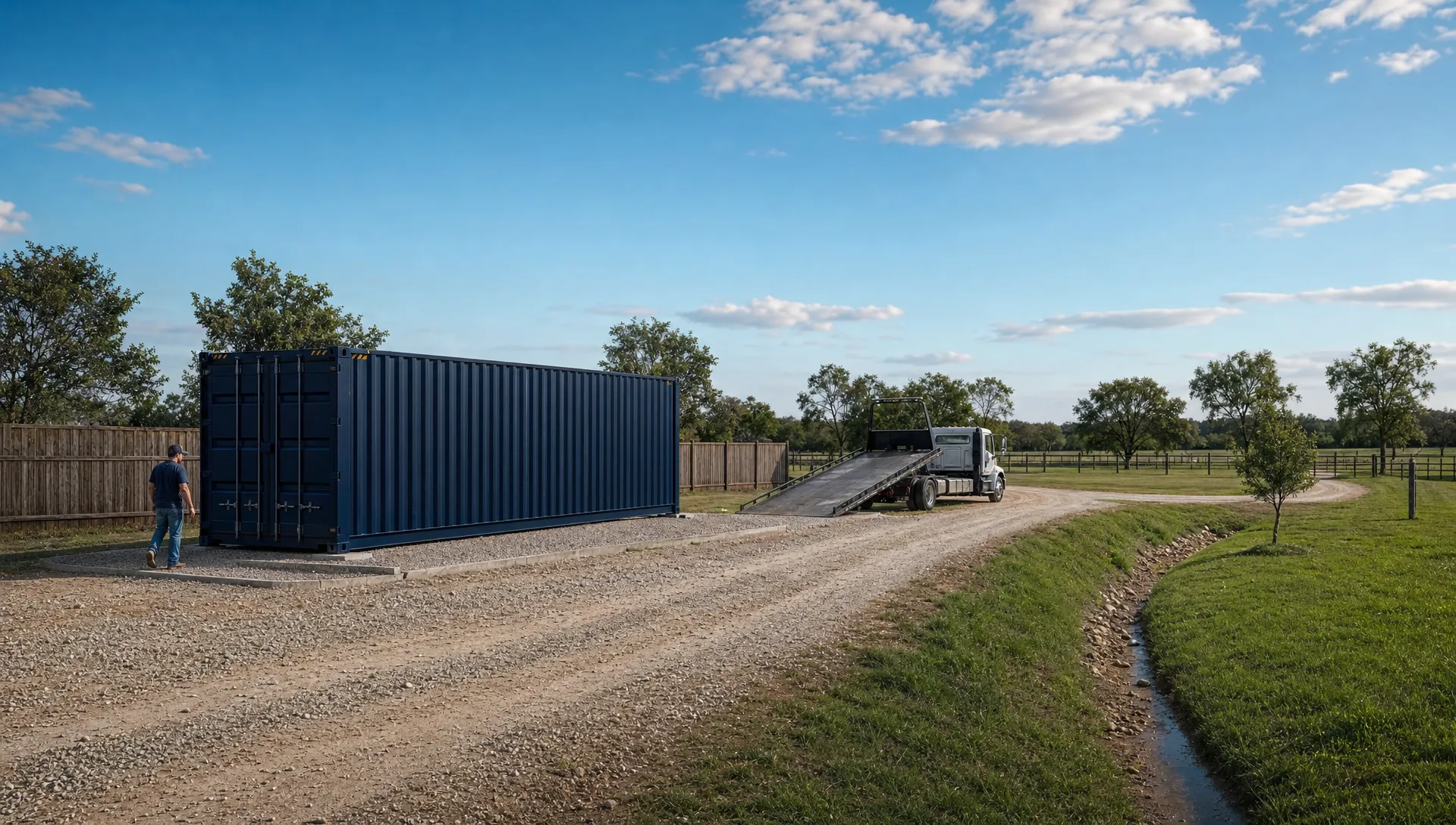
Tilt-bed delivery slides the container from the truck onto the prepared location. It requires a suitable approach, enough unloading space and ground that can support the delivery vehicle.
A flatbed generally requires separate unloading equipment. Crane placement can address some access problems, but it requires a lift plan, suitable setup space and adequate ground conditions. Do not assume the purchase price includes a crane or forklift.
Ask the carrier for its required approach width, overhead clearance, straight-line unloading distance and acceptable grade. These measurements depend on the actual truck and trailer. A single clearance number is not reliable for every delivery.
For example, a 40ft container may fit along a fence while the truck cannot align with that space. The buyer must solve the unloading path, not just reserve a 40ft rectangle.
Send useful access information
Before booking shipping containers in Houston, TX, send photos or video showing the route from the public road to the placement area. Include gate openings, turns, ditches, culverts, trees and overhead wires.
Tell the carrier about gravel lanes, recently filled ground and any bridges or culverts on private property. A driveway that supports a pickup may not support a loaded delivery truck. Do not assume a residential driveway or sidewalk is rated for that load.
Confirm door orientation in writing. State which direction the doors should face after unloading, using a simple site sketch or marked photo. This avoids discovering that the doors face a fence or block the intended equipment route.
Prepare for Houston-area ground and weather
Many Houston-area properties have clay soils that move as moisture conditions change. Rain can also make an otherwise accessible route unsuitable for a heavy truck.
Prepare a stable, drained support area before delivery. Keep runoff from collecting beneath the container and leave access around it for inspection. Ask the supplier or a qualified site professional how the unit should be supported for its load and intended use.
If supports settle unevenly, the container can twist enough to make the doors bind. For occupied buildings, heavy storage or modified units, obtain an engineered foundation design rather than copying another property’s setup.
Use the shipping container site preparation checklist to organize ground preparation and access checks. Agree on weather-related rescheduling terms before dispatch.
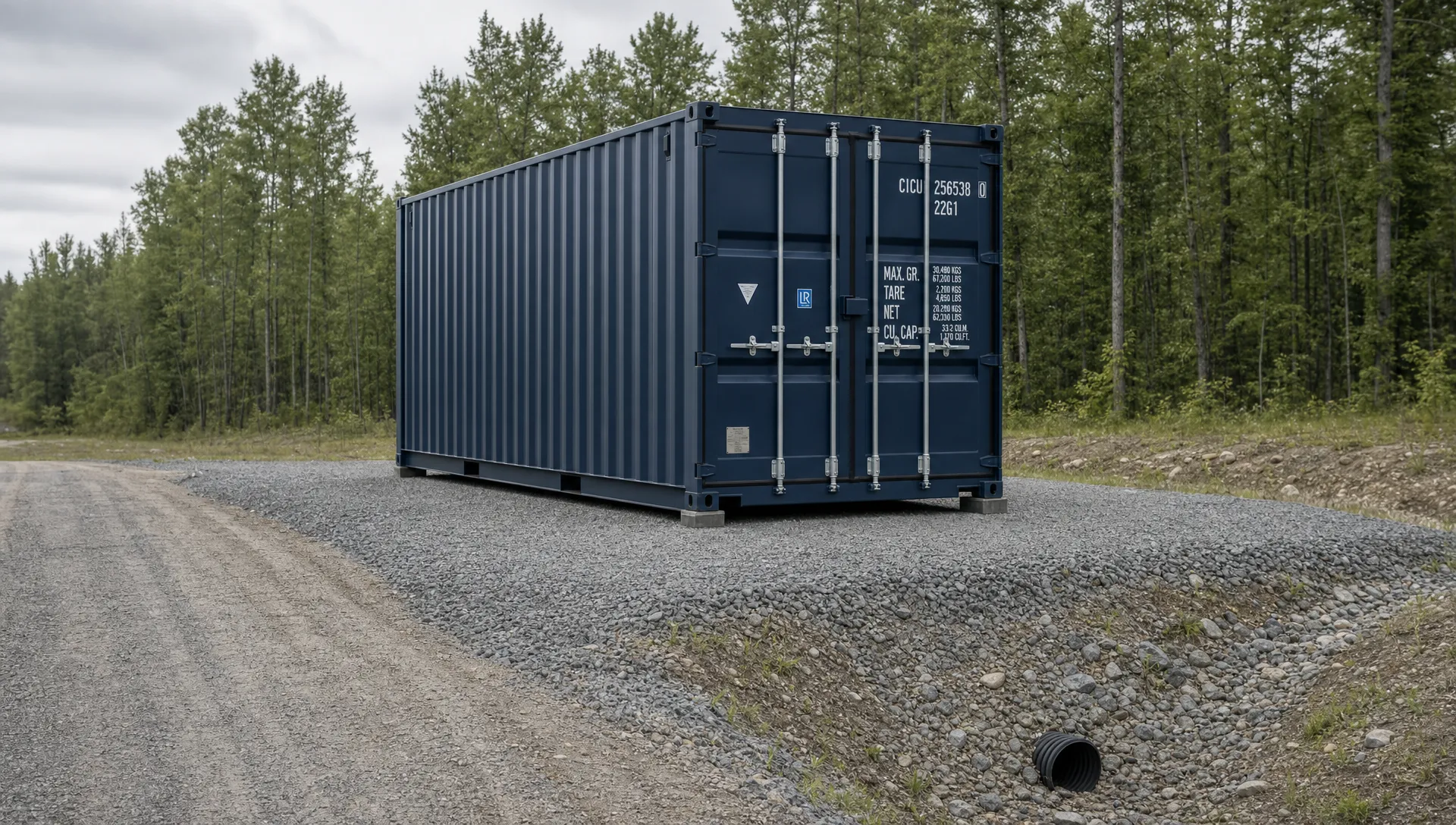
If basic storage is your goal, the 20ft Used Shipping Container in Blue is listed as wind- and watertight, inspected and ready to ship. Ask for its current delivered quote and confirm that the planned truck can reach your prepared site.
Check Houston-Area Placement Rules Before Ordering
Identify the authority for your address
A Houston mailing address does not always mean the property sits within Houston city limits. Your site could fall under another municipality or be in unincorporated Harris County. Nearby communities may also have different requirements.
Houston does not have conventional use-based zoning, but that does not mean containers can go anywhere. Development rules, building permits, floodplain requirements, deed restrictions and private community rules may still apply.
Start with the City of Houston Planning and Development Department if the property is inside the city. Otherwise, contact the relevant city or county office. Ask specifically about your intended use: temporary storage, permanent storage, commercial workspace or residential occupancy.
Permit and code requirements vary by state, county and municipality. The state-by-state container permit guide provides background, but local authorities must confirm the rules for your parcel.
Address flooding, wind and occupied use
Before placing shipping containers in Houston, TX, check the property’s flood information through the FEMA Flood Map Service Center and your local floodplain office. A mapped designation is a starting point, not a guarantee that a site cannot flood.
Wind and watertight does not mean hurricane-proof. Anchorage and foundation requirements depend on the site, structure and applicable code.
A shipping container home or occupied office requires more planning than a storage box. Cutting openings can change structural performance. Insulation, air sealing, ventilation and moisture control also need a coordinated design for Houston’s hot, humid climate. Confirm the approval path before paying for fabrication.
Put the Order and Delivery Handoff in Writing
Once size, condition, site access and local requirements are settled, gather everything into one order record. Phone conversations help, but written details give both parties a clear reference.
Before authorizing dispatch, confirm:
- The unit: Size, condition grade, identification number if assigned and whether the photos show the actual container.
- The price: Container cost, delivery, unloading, taxes and any agreed additional services.
- The site: Delivery address, contact person, access route, support area and door orientation.
- The schedule: Delivery window, weather policy and any waiting-time or failed-delivery terms.
- The handoff: Inspection procedure, damage-reporting deadline and required delivery paperwork.
At delivery, inspect accessible surfaces before the driver leaves when practical. Photograph the unit and record concerns through the seller’s stated process. After placement, check that the doors operate properly and that the container rests as planned.
For shipping containers in Houston, TX, load planning matters too. Tare weight is the empty container’s weight; payload capacity is the permitted cargo weight shown in its specifications. Neither establishes that your foundation or shelving can support a concentrated equipment load. Never arrange loaded-container transport without the carrier’s explicit approval.
Frequently Asked Questions
How much does a shipping container cost in Houston?
The price depends on size, condition, inventory, delivery distance and unloading needs. Request a written quote for your address rather than treating an advertised box price as the total. Compare equivalent condition grades and ask whether taxes, fuel charges, unloading equipment and potential access fees are included.
Do I need a permit for a shipping container in Houston?
You may need approvals depending on the property’s jurisdiction, the placement duration and whether the container serves as storage or an occupied building. Houston’s lack of conventional zoning does not remove other rules. Confirm requirements with the local permitting office and check deed restrictions before ordering.
How much room does a truck need to deliver a shipping container?
The required space depends on the truck, trailer, unloading method and site layout. Ask the carrier for exact width, height, turning and straight-line unloading requirements. Measure the full route, not just the container footprint, and disclose slopes, soft ground, overhead wires and tight turns before scheduling delivery.
Does Houston have a container port?
Yes. Port Houston handles containerized cargo through the Bayport and Barbours Cut container terminals. That does not mean retail buyers can collect a storage container directly from a terminal. Your seller must identify the release location, pickup requirements and transport arrangements for the particular unit you purchase.
How much does a 2,000-square-foot container home cost?
There is no dependable price based on square footage alone. The total includes containers, engineering, foundations, site work, structural modifications, insulation, utilities, finishes and permits. Request a site-specific design and construction estimate. Container purchase prices alone cannot establish whether a finished home will cost less than conventional construction.
Request a Quote That Matches Your Site
Buying shipping containers in Houston, TX works best when the box, delivery method and property are evaluated together. Before requesting a quote, gather your ZIP code, intended use, preferred size, site photos and door orientation.
Ask Outback Shipping Containers to quote a unit that matches those requirements, with delivery and unloading details included. That gives you a practical basis for comparing options before committing to the purchase.