Flat Rack Shipping Containers: When Open Decks Make Sense
When does a flat rack shipping container make sense? Compare open decks, load limits, delivery needs and cost factors before buying.
Flat Rack Shipping Containers: When Open Decks Make Sense
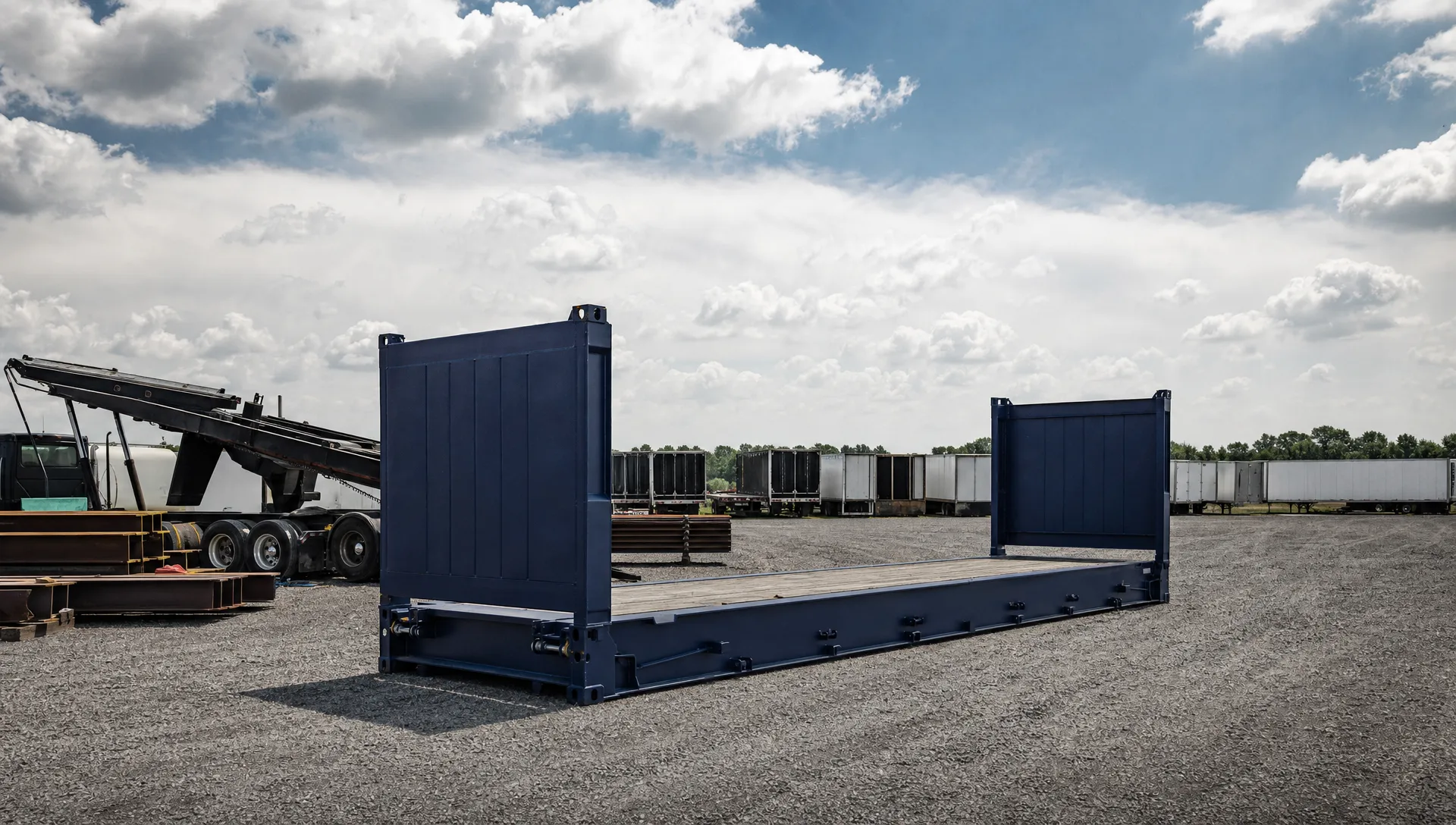
A flat rack shipping container makes sense when machinery, vehicles or industrial materials cannot load through a standard container door or need access from the sides. Its reinforced deck and end frames support suitable cargo without enclosing it. The trade-off is weather exposure, more demanding load securement and potentially higher transport costs.
Quick Answer: Choose an open deck when access or cargo dimensions rule out an enclosed container. Before buying, confirm the usable deck space, load rating, support requirements and delivery method. An open deck is not a weatherproof storage box.
Key Takeaways
- Flat racks suit oversized equipment and awkward loads that need side or overhead loading.
- A 20-foot or 40-foot label does not establish usable deck space or payload capacity.
- Purchase price is only part of the budget. Securement, lifting and oversize transport can change the total.
- For tools, household goods or a container home, an enclosed unit is usually a better starting point.
When a flat rack shipping container makes sense
The strongest reason to choose this equipment is a loading problem that walls and a roof would create. Buying one simply because it looks versatile can leave you paying for access you never use.
Cargo needs side or overhead access
Consider a machine that must be lowered onto its support points by crane. A standard dry container blocks overhead access. An open-top container removes the roof barrier, but its sidewalls still constrain the load.
A flat rack allows access from above and from either side. That can help with wide machinery, fabricated assemblies and equipment that cannot safely drive through a container doorway.
End frames still matter. Fixed ends remain upright, while collapsible models have folding end structures. Do not assume those structures can stay folded during transport; the unit's design and the carrier's requirements govern its permitted configuration.
The load justifies the extra handling
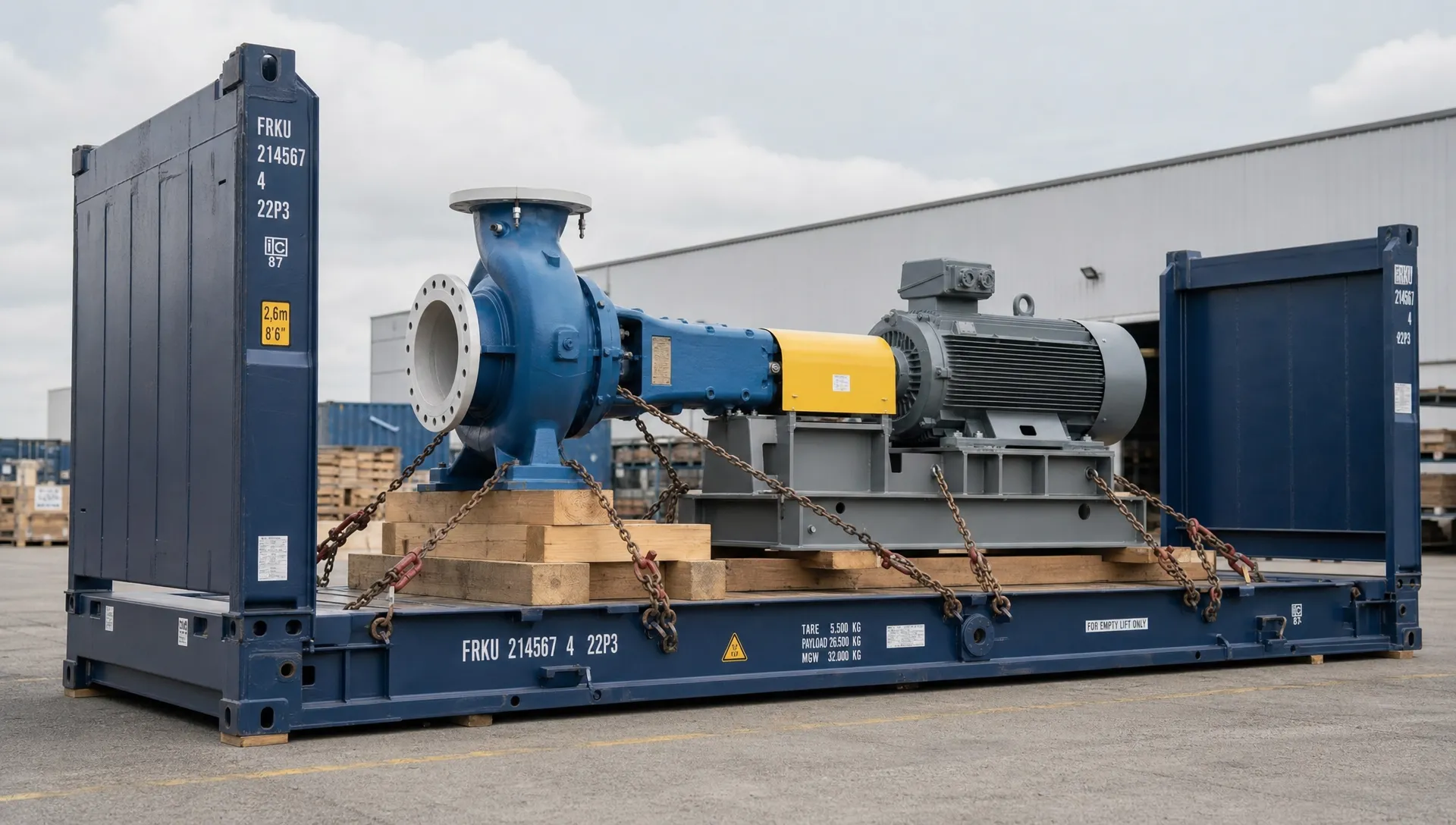
A farm operation moving a large pump assembly may benefit from an exposed deck because a crane can place it directly onto prepared supports. A contractor storing hand tools gains little from that access and loses security and weather protection.
Make the choice around the actual load: its dimensions, weight, lifting points and support locations. A description such as tractor or generator is not enough to specify suitable equipment.
Compare open decks with the alternatives
A flat rack shipping container solves access problems, not every heavy-cargo problem. Sometimes a high cube, open-top container or domestic flatbed trailer handles the job with less preparation.
| Equipment | Typical footprint or configuration | Best reason to choose it | Main limitation |
|---|---|---|---|
| Standard dry container | Commonly nominal 20-foot or 40-foot lengths, 8 feet wide | Secure, enclosed storage and transport | Doors, walls and roof restrict access |
| High cube container | Commonly 40 feet long, with a 9-foot-6-inch exterior height | More enclosed vertical space | Still has doorway and interior clearance limits |
| Open-top container | Roof opening above retained sidewalls | Overhead loading within the available width | Sidewalls can block wide cargo |
| 20-foot flat rack | Nominal 20-foot by 8-foot footprint | Shorter heavy or awkward loads | Exposed cargo and unit-specific deck limits |
| 40-foot flat rack | Nominal 40-foot by 8-foot footprint | Longer equipment and assemblies | Greater site and transport space requirements |
These are equipment categories, not guaranteed loading dimensions. Ask for a drawing of the exact unit, including clear deck length, usable width, deck height and end-frame clearance.
Choose 20 feet or 40 feet by support geometry
A shorter rack is not automatically the economical choice if the machine overhangs its support area. A longer rack is not automatically stronger or better suited to concentrated loads.
Map the machine's wheels, tracks, feet or skid rails onto the proposed deck. Then check whether the support positions and weight distribution meet the manufacturer's requirements. Overhang also needs approval from the transport provider before purchase.
For a domestic move with no ocean or rail segment, ask the hauler to compare a suitable trailer solution. Buying a separate intermodal container may add handling without solving a problem.
Check weight, support and securement before buying
Selecting a flat rack shipping container requires more than comparing the cargo weight with an advertised payload. The deck, supporting structure and tie-down arrangement must all suit the load.
Separate tare weight, payload and gross weight
Tare weight is the empty equipment weight. Payload capacity is the permitted cargo weight, subject to the unit's ratings and loading restrictions. Maximum gross mass covers the equipment and its load together.
For a hypothetical example, a unit rated for 67,200 pounds gross with a 7,200-pound tare would have a calculated payload of 60,000 pounds. That arithmetic does not establish whether its deck can carry a machine on four small feet.
Rated payload is not a point-load approval. Concentrated loads may require properly designed blocking or load-spreading supports. The supports themselves also add weight.
Ask for the unit's identification, legible ratings and applicable loading instructions. For international freight, have the carrier confirm the CSC Safety Approval Plate, examination status and acceptance requirements before committing to the equipment.
Check where the weight actually lands
A flat rack shipping container carrying tracked equipment may distribute weight differently from one carrying a machine on narrow steel legs. Two loads with the same total weight can place very different demands on the deck.
The center of gravity matters too. A tall load can create stability and securement challenges even when its weight falls below the stated limit.
For unusual machinery, have the equipment supplier, carrier or qualified engineer review the support plan. Never treat a timber deck surface as proof that every location can accept the same concentrated weight.
Plan securement before loading day
Inspect lashing points for damage and obtain their ratings where available. Shipping-container corner fittings are not a substitute for a cargo-specific securement plan.
The IMO/ILO/UNECE Code of Practice for Packing of Cargo Transport Units provides guidance on load distribution, packing and securing. For applicable US commercial road movements, the carrier must also meet FMCSA cargo securement rules.
Ask who will provide blocking, rated chains or straps, edge protection and the loading inspection. Settle those responsibilities in writing rather than discovering gaps when the crane arrives.
Budget for the complete move
The purchase price of a flat rack shipping container is only one part of its cost. An inexpensive used unit can become an expensive choice if it needs repairs, specialized lifting or a difficult haul to your property.
A useful quote should distinguish the equipment from the work needed to put it into service:
- Container price, condition and any repairs included in the sale
- Delivery of the empty unit and the unloading method
- Loading, blocking, securement and weather protection for the cargo
- Loaded transport, route review and any required permits or escorts
- Return transport, repositioning or storage after the job
Outback Shipping Containers lists a used 20-foot example at $1,895 and a used 40-foot example at $4,995. These are equipment listing prices, not delivered project totals. Confirm current pricing, availability, taxes and freight before budgeting.
Compare condition, not just age
One-trip equipment generally has less service history than used equipment, but age alone does not settle suitability. Ask for current photographs of the deck, underside, corner fittings, end frames and folding mechanisms where fitted.
Watch for bent structural members, cracked welds, damaged lashing points and repairs without supporting information. Surface rust and structural damage are different issues; photographs alone may not resolve the distinction.
If the shorter footprint suits your load, review Outback's used 20-foot flat rack and request a delivered quote based on your ZIP code and unloading access. For longer equipment, compare the used 40-foot flat rack option against your support layout before choosing by price.
Plan delivery and ground support together
Buying the right unit does not guarantee an easy delivery. The truck must reach the placement area, unload safely and leave without crossing ground that cannot support it.
Measure the loaded combination
The cargo's height above the deck is not the same as the vehicle's overall transport height. Trailer height, the rack's deck structure and the cargo all contribute.
Width and length must include overhangs, protective coverings and other projections. The hauler should review the complete combination, including axle loading and route restrictions, before promising a move.
For a flat rack shipping container delivered to a rural property, send photographs of the access road, gate, turns and placement area. Identify overhead wires, trees, culverts, soft shoulders and slopes. Remote delivery may be available, but the final approach still needs a workable plan.
Support the rack at approved locations
Use a firm, drained and level placement area with supports sized for the actual ground conditions. Follow the manufacturer's support requirements rather than assuming a few loose blocks will carry the load safely.
Poor support can twist the frame, affect folding mechanisms or create instability. Check the ground for the delivery vehicle as well as the rack itself.
If the unit will become a permanent platform or part of a structure, ask a qualified engineer about foundations and anchorage. Permit, zoning and building requirements vary by state and county, so confirm the proposed use with local authorities.
Recognize when an open deck is the wrong purchase
A flat rack shipping container is rarely the best answer for secure tool storage, household belongings or goods that must stay dry. A tarp can reduce some exposure, but it does not turn an open deck into an enclosed cargo container.
Wind- and watertight, or WWT, describes an enclosure condition that an open deck cannot provide. Cargo-worthy, often shortened to CWO in listings, also needs context: ask what inspection supports the description and whether the intended carrier will accept the unit.
For a shipping container home, an enclosed conex box usually offers a more practical starting shell. A flat rack lacks the walls and roof, so a container conversion would need a separately designed enclosure and structural review.
Likewise, a workshop needs more than a strong floor. Weather protection, security, electrical work and occupancy requirements can erase any savings from starting with an exposed platform. Choose the equipment around the finished use, not just the lowest purchase price.
Frequently asked questions
What is a flat rack shipping container used for?
A flat rack shipping container carries cargo that needs open access, such as machinery, vehicles, fabricated steel and industrial assemblies. Its deck and end frames accommodate suitable loads without sidewalls or a roof. Suitability still depends on the specific unit's ratings, cargo support arrangement, securement plan and carrier acceptance.
What are the dimensions of a flat rack container?
Common flat racks have nominal footprints of 20 feet by 8 feet or 40 feet by 8 feet. Usable deck dimensions, deck height and end-frame clearance vary by manufacturer and model. Obtain the exact unit's specification drawing rather than using its nominal size as the available loading space.
How much does a 20-foot flat rack container cost?
Outback Shipping Containers lists a used 20-foot example at $1,895, but current price and availability should be confirmed. Delivery, taxes, repairs and unloading can change the total. Request a written quote for the specific unit and site instead of treating the equipment listing price as your complete budget.
What is best to sit a shipping container on?
Use a level, well-drained base with supports designed for the container, its load and the soil conditions. Suitable solutions may include engineered concrete pads, piers or another approved foundation. Follow the manufacturer's support locations. Permanent installations may need local approval and professional design, depending on the site and use.
What are the three main types of shipping containers?
There is no universal three-type classification. For loading decisions, dry containers, open-top containers and flat racks make a useful comparison: enclosed access, overhead access and open-deck access. Other categories include refrigerated containers, tanks and high cubes. Select by cargo requirements rather than assuming those three cover every application.
Choose the equipment around the load
An open deck earns its place when it solves a specific loading or dimensional problem. Before buying, settle the cargo measurements, support plan, securement responsibilities and delivered cost. If those checks favor a flat rack, explore Outback Shipping Containers' 20-foot and 40-foot flat rack containers and ask which available unit matches your intended use.