Buy Conex Boxes for Storage, Farms, and Job Sites
Learn how to buy conex boxes for storage, farms and job sites. Compare sizes, condition grades, delivery costs and site preparation.
Buy Conex Boxes for Storage, Farms, and Job Sites
Quick Answer: To buy conex boxes for storage, farms or job sites, choose the size around your inventory, confirm the container’s condition and get a written delivered quote. A wind- and watertight used unit can suit general storage. Choose a one-trip unit when appearance and lower wear matter. Before paying, confirm local placement rules, truck access and a level supporting surface.
The cheapest box is not always the lowest-cost purchase. A container that cannot reach your property, fit your equipment or keep stored goods in suitable conditions can cost more to fix than you saved upfront.
Key Takeaways
- Choose by usable interior space and door clearance, not exterior length alone.
- Compare condition grades and inspection evidence rather than paint color.
- Budget for delivery, ground preparation, taxes and security hardware.
- Confirm access and local rules before scheduling the truck.
How to buy conex boxes that fit your daily work
A conex box is a steel cargo container commonly used for ground-level storage. You will also hear it called a shipping container or intermodal container. Many standard units follow ISO container dimensions, but modified and shortened units can differ.
Start with an inventory, not a size preference. Record the largest item’s width, height and length. Then sketch where everything will go, including room to walk, open cabinets and retrieve equipment.
Farms and ranches: separate equipment from sensitive goods
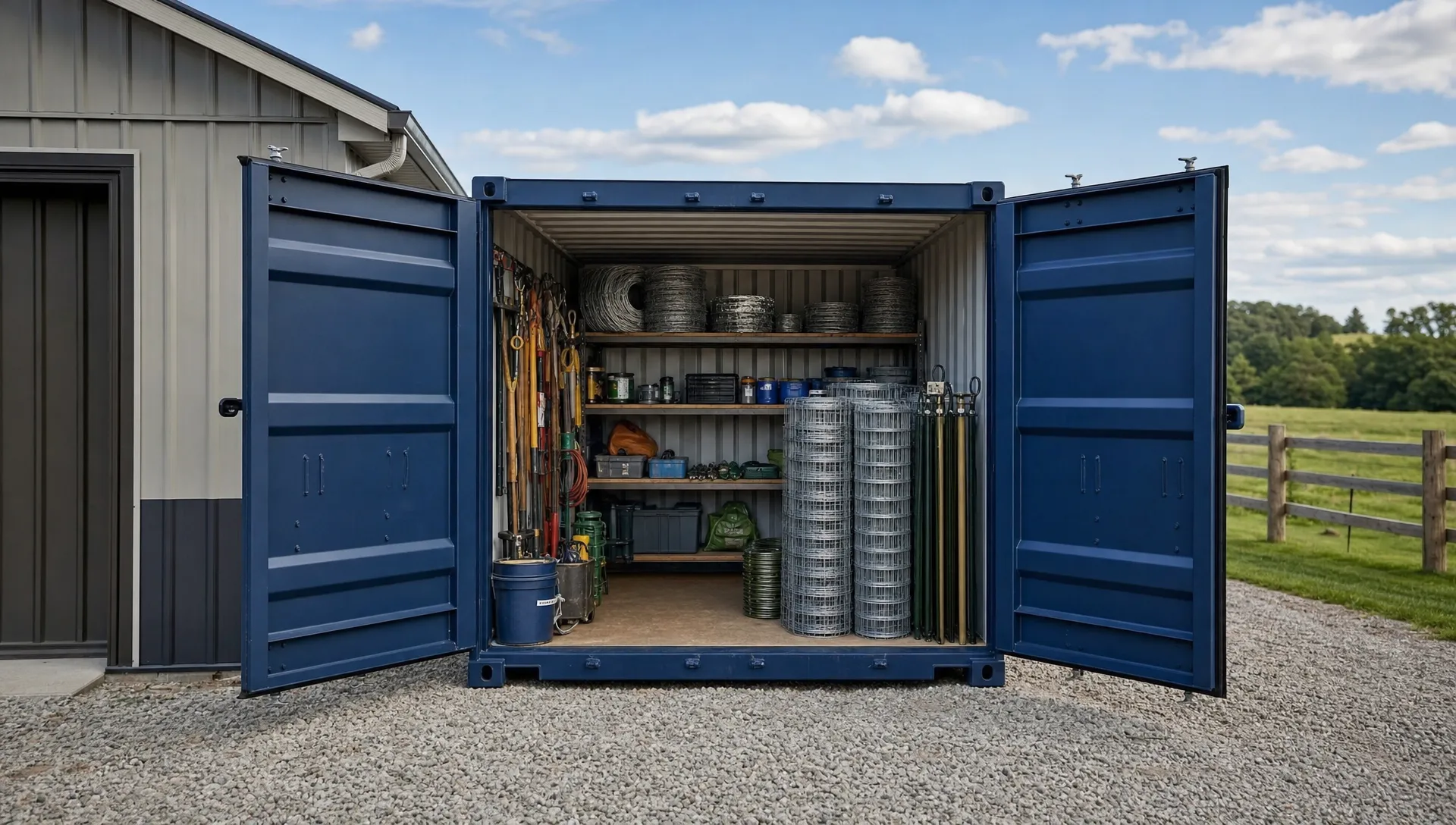
Hand tools, fencing supplies and irrigation parts need different storage conditions from livestock feed or moisture-sensitive seed. A closed steel box provides weather protection, but it does not automatically control heat, humidity or pests.
Before you buy conex boxes for farm use, decide whether you need basic equipment storage or a space with insulation and temperature control. Keep pesticides and other hazardous materials separate from feed, following product labels and applicable storage requirements.
Also plan for mud season. A location that works for a pickup in July may not support a delivery truck after heavy rain.
Job sites and businesses: plan the loading routine
A single-door container can work well when crews retrieve the same tools each day. It becomes less convenient when pallets block materials stored at the far end.
Map the loading order before choosing a box. Double-door or side-access designs may help, but availability, structural details and pricing need confirmation. For frequently moved job-site storage, also budget for later pickup and relocation.
Choose the size by interior space and door clearance
Standard dry containers are typically 8 feet wide outside. Standard-height units are 8 feet 6 inches tall, while high cube units are 9 feet 6 inches tall. That extra foot can help with tall equipment, overhead shelving or a future container conversion.
The table below gives common dimensions. Interior space and weights vary by manufacturer, so request specifications for the actual unit.
| Container type | Typical exterior dimensions | Approximate interior floor area | Practical fit |
|---|---|---|---|
| 20ft standard | 20 ft × 8 ft × 8 ft 6 in | 150 sq ft | Tools, compact equipment and smaller storage sites |
| 40ft standard | 40 ft × 8 ft × 8 ft 6 in | 300 sq ft | Larger inventories, long materials and bulk storage |
| 40ft high cube | 40 ft × 8 ft × 9 ft 6 in | 300 sq ft | Taller equipment and projects needing more headroom |
Check the opening, not just the floor plan
A typical standard container door opening is roughly 7 feet 8 inches wide and 7 feet 5 inches high. A high cube generally offers a taller opening. Verify actual measurements before ordering, especially for tractors, shelving or machinery with overhead components.
When you buy conex boxes for equipment storage, allow clearance around the equipment rather than planning a tight fit. Mirrors, attachments and lifting equipment can change the space needed to load safely.
A 10ft unit can suit a tight property, but some are cut-down or purpose-built containers. Do not assume its specifications or transport approval match those of a standard 20ft ISO container.
Understand weight limits before loading
Tare weight is the empty container’s weight. Payload capacity is the permitted cargo weight, while maximum gross weight includes both the container and its contents.
A 20ft steel dry container often weighs about 5,000 pounds empty. A standard 40ft unit commonly weighs around 8,000 to 9,000 pounds. Check the unit’s markings and documentation rather than treating these estimates as lifting specifications.
A high payload rating does not mean a delivery truck can relocate the container fully loaded. Ground bearing capacity, lifting equipment and road transport limits must also be considered.
Match the condition grade to the storage risk
Container grades describe different things. Cosmetic appearance, weather resistance and suitability for shipping are not interchangeable. Ask the seller to define each condition term in writing.
| Condition | What it generally describes | What to verify |
|---|---|---|
| One-trip | A newer container with limited transport use | Actual dents, paint damage, floor condition and warranty terms |
| Wind and watertight (WWT) | A used unit sold as weather-tight storage | Roof, walls, seals, doors and the seller’s written guarantee |
| Cargo-worthy (CWO) | A unit assessed as suitable for cargo service | Inspection basis and any transport documentation required for your use |
| As-is | A unit sold without a defined repair commitment | Every defect, repair cost and limitation before payment |
Storage condition is not transport approval
You can buy conex boxes for stationary storage without needing the same documentation as an international shipment. However, a seller’s WWT designation does not establish that a container is approved for overseas transport.
The International Maritime Organization’s container safety guidance explains the Convention for Safe Containers, or CSC. If you intend to ship cargo, ask about the safety approval plate, applicable examination status and carrier acceptance. Do not rely on a marketing label alone.
A one-trip container can still have handling marks. A used cargo-worthy unit can look rough while remaining serviceable. Buy the condition you need rather than paying for a label you will not use.
Inspect the parts that affect daily use
Request recent photographs of the actual unit, including the roof, underside where accessible, floor, corner posts and door seals. Representative photos help explain a grade, but they do not document your specific container.
Look for holes, deep corrosion, damaged framing and soft flooring. Check whether the doors open and latch without excessive force. Fresh paint can improve appearance, but it does not prove that underlying damage was repaired.
For food, feed or a future shipping container home, ask about previous use and floor treatments. Visible stains or unexplained odors warrant further investigation. A basic storage inspection is not a contamination assessment.
Compare delivered cost and seller terms
The useful price is the delivered total cost, not the advertised box price. Location, distance from inventory, truck type and unloading conditions can change the final bill.
Before you buy conex boxes from competing sellers, request quotes for the same size, condition and delivery address. Otherwise, a lower quote may simply cover a different grade or exclude trucking.
Ask for a complete written quote
Your quote should identify the container, the delivery method and what happens if the truck cannot complete the drop. Check these cost items:
- Container purchase price and condition grade.
- Delivery, unloading and any special equipment.
- Applicable taxes and payment or financing charges.
- Site preparation, support materials and security hardware.
- Waiting time, failed delivery, cancellation and later relocation charges.
Keep the written quote with the condition guarantee and payment receipt. If financing is involved, compare total repayment, not just the monthly payment.
Verify the business before sending money
Confirm the seller’s business identity, contact details and written order terms. Ask whether you are buying a specific unit or receiving a container selected from an agreed condition grade. Be cautious about pressure to pay immediately through an unfamiliar account.
The guide to comparing conex box sellers before ordering provides a more detailed seller-checking process. Use it before committing to a deposit, especially when the advertised price is much lower than other quotes.
If the need is temporary, compare ownership with leasing through LeaseLink Containers, the leasing arm. Include delivery and return charges in the rental calculation. Ownership costs should include maintenance and eventual removal, with any resale proceeds treated as uncertain rather than guaranteed.
Prepare the site before the delivery truck arrives
Delivery planning should happen before payment, not after dispatch. The carrier needs access to the property, room to unload and a route that can support the truck’s weight.
When you buy conex boxes for a rural property, send the seller clear site photos and accurate access measurements. Include gates, narrow bends, slopes, soft shoulders and overhead obstacles. Describe seasonal ground conditions that photos may not reveal.
Get an equipment-specific access plan
Tilt-bed delivery needs space to position the truck and slide the container into place. Crane unloading requires a separate lifting plan and suitable equipment. There is no single clearance number that works for every truck and site.
Ask the delivery team for its required approach length, width, height clearance and ground conditions. Confirm which way the doors will face. A correctly placed box can still be inconvenient if its doors open toward a fence or steep slope.
For smaller inventories, consider a used 20ft conex storage container as a starting point. The listing shows a $1,095 container price; confirm the current price, condition and full delivered total before ordering.
Provide stable support and drainage
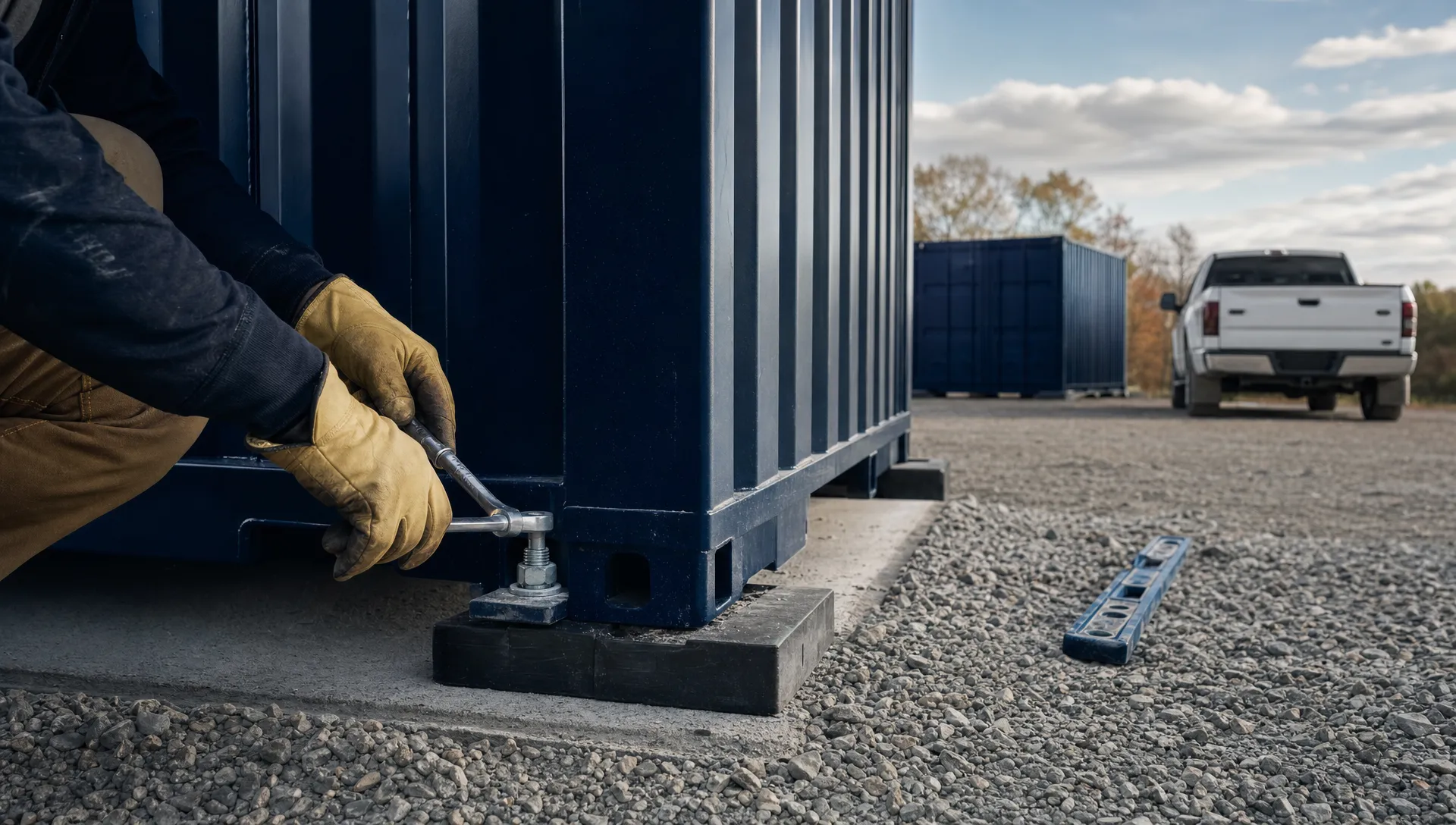
A container should sit level on support suited to the soil and intended load. Common approaches include a properly prepared gravel base or designed concrete supports. The right solution depends on local ground conditions, drainage and how the container will be used.
Uneven settlement can twist the box and make doors difficult to operate. Keep water from collecting beneath it and leave enough room for inspection and maintenance. For poor soils, heavy loads or permanent occupied use, get site-specific advice from a qualified professional.
Do not bury a standard container or stack units without engineering. The loads involved differ from ordinary ground-level storage.
Check the box at delivery
Inspect the unit before the driver leaves, where safe and consistent with the delivery agreement. Compare it with the promised condition and record any concerns promptly.
- Check visible roof, wall and corner damage from the ground.
- Inspect accessible flooring and look for signs of water entry.
- Test the doors, locking bars and seals after placement.
- Photograph discrepancies and follow the seller’s claims process.
Keep clear of the unloading area throughout delivery. Never enter beneath a suspended container or climb onto the roof to complete an inspection.
Plan for security, condensation and local rules
A steel box offers a substantial barrier, but it is not theft-proof or climate-controlled. Your storage plan should address both forced entry and damage that develops slowly inside the container.
Security starts with location and access control
Before you buy conex boxes for valuable tools, plan the lock arrangement and choose a visible location where practical. A compatible lockbox can shield a padlock from direct access. Site lighting, fencing and inventory records provide additional protection.
Check whether your insurance covers tools, equipment or stock stored in a separate container. Coverage for the structure and coverage for its contents may differ.
Watertight does not mean condensation-free
Wind and watertight describes resistance to weather entry. It does not prevent moisture in the air from condensing on cold steel surfaces. Wet equipment, fresh lumber and damp ground can contribute moisture.
Store goods off the floor, avoid loading wet materials and inspect regularly. Ventilation, insulation, vapor control or dehumidification may be needed, depending on climate and contents. A few vents do not automatically create suitable storage for seed, electronics or documents.
Ordinary dry containers also are not automatically approved for fuel or chemical storage. Construction employers should review OSHA’s flammable-liquid storage requirements, along with local fire rules and product-specific requirements.
Check placement rules before changing the use
Permits, zoning, setbacks and screening requirements vary by state, county and city. Ask the local planning or building department how it classifies a storage container and whether temporary placement differs from permanent placement.
Adding windows, personnel doors or large openings can require structural reinforcement. Turning the box into an office, workshop or shipping container home introduces further questions about occupancy, insulation, electrical work and fire safety.
Buy conex boxes with the final use in mind, but obtain local guidance before ordering modifications. A storage purchase does not establish approval for an occupied building.
Frequently asked questions
How much does a conex box cost?
There is no single nationwide delivered price. Size, condition, inventory location and delivery access affect the total. Ask for an itemized quote that includes the container, transportation, unloading and applicable taxes. Compare site preparation and modification costs separately so a low advertised price does not hide a larger project budget.
Is a 20ft or 40ft container better for storage?
A 20ft container suits smaller inventories and properties with limited placement space. A 40ft unit offers roughly twice the interior floor area, but requires a larger site and delivery plan. Choose based on your inventory, loading routine and truck access rather than assuming the larger box is always better value.
Do I need a permit for a conex box?
Permit requirements depend on your state, county, municipality and intended use. Some jurisdictions regulate even unoccupied storage containers through zoning, setbacks or screening rules. Before you buy conex boxes, contact the local planning or building department and describe the size, location, duration of placement and any proposed modifications.
Can I put a shipping container directly on dirt?
Bare soil can settle unevenly and hold moisture beneath the container. A suitable prepared base or designed supports usually provide more reliable drainage and leveling. The correct approach depends on soil conditions, container loading and local requirements. Confirm the support plan before delivery, especially on wet ground or sloping sites.
Are used conex boxes waterproof?
A used container sold as wind and watertight should resist weather entry under the seller’s stated condition terms. That does not mean every used box meets that grade, and it does not prevent condensation. Check the roof, walls, seals and floor, then obtain the weather-tight guarantee in writing before purchasing.
Choose a box you can put to work
The right container fits your inventory, arrives on a truck your site can accommodate and comes with clear condition terms. Settle those details before spending money on paint, shelving or other upgrades.
When you are ready to buy conex boxes, compare Outback Shipping Containers’ conex boxes for sale. Request a delivered quote with your ZIP code, preferred size and site details so you can evaluate the complete purchase rather than the box price alone.