How to Choose a Shipping Container Yard and Avoid Risks
Searching for a shipping container yard near me? Learn how to verify sellers, inspect units and confirm delivery terms before paying.
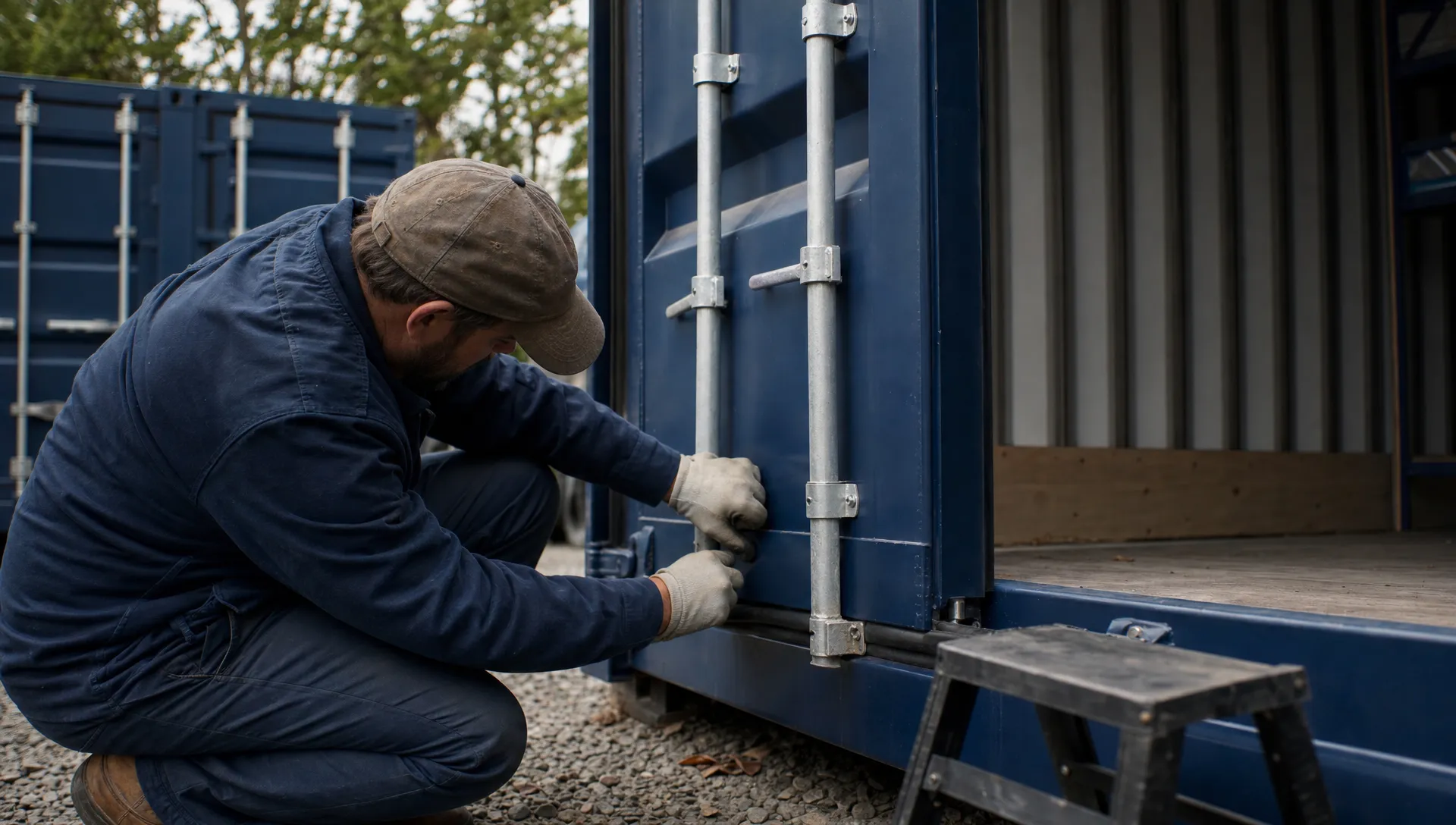
Shipping Container Yard Near Me: How to Choose One and Avoid Risks
Quick Answer: To choose a shipping container yard near me, verify who owns the inventory, confirm that the yard allows inspections and get the container condition, payment terms and delivery responsibilities in writing. A nearby address alone does not prove that a seller has containers available or permission to sell them.
The safest purchase connects three things: a verified seller, a clearly described container and a workable delivery plan. Check all three before paying a deposit. A legitimate supplier may use a third-party depot, but it should explain that arrangement and remain accountable for your order.
Key Takeaways
- Confirm whether you are dealing with a retail yard, storage depot or broker before visiting.
- Inspect the actual container or agree on written condition and substitution rules.
- Treat wind- and watertight condition, cargo-worthiness and transport approval as separate issues.
- Confirm the complete delivered price and what happens if the unit cannot be placed.
- Verify payment instructions through an independently confirmed contact method.
How to Evaluate a “shipping container yard near me” Result
Identify what the location actually does
A container yard can be a sales lot, a repair facility or a depot that stores equipment for other companies. Some locations do not sell directly to the public. Others release containers only after receiving authorization from the owner or seller.
Ask who will issue your invoice, who owns the container and who authorizes its release. Those businesses may be different. That arrangement is not automatically a problem, but unclear answers are.
| Location or seller type | Typical role | What to verify |
|---|---|---|
| Retail container yard | Offers containers directly to buyers | Available inventory, inspection access and sales terms |
| Storage depot | Stores or handles equipment for owners | Whether public sales or buyer inspections are permitted |
| Broker or reseller | Arranges a sale through another inventory holder | Who supplies the unit and handles condition disputes |
| Modification shop | Repairs or converts containers | Whether it also sells base units and what work is included |
A shipping container yard near me search should produce a shortlist, not an automatic buying decision. Call each location before driving there and ask whether the listed address is an office, an operating yard or a pickup point.
Confirm access before visiting
Container yards can have moving forklifts, stacked units and restricted work areas. Ask about appointments, identification requirements and required protective equipment. Do not enter an operating yard without permission.
Also ask whether staff can show you the exact unit you may buy. A container buried in a stack may need to be moved first, which can require advance scheduling.
Verify the Seller Before Discussing Payment
Check identity through independent channels
Start with the legal business name, physical address and a working phone number. Compare those details across the invoice, website and applicable state business registry. Registration supports an identity check, but it does not prove inventory ownership or reliable service.
Call the yard using contact details you found independently. Ask whether the seller works with that location and whether the proposed inspection or pickup arrangement is real. Some depots will limit what they disclose, but the seller should help establish a verifiable connection.
For a remote purchase, request current photos or a live walkthrough. Have the seller show a detail you specify, such as the door markings or a particular wall seam. Stock photos are acceptable for illustrating a product category, not for proving the condition of a specific used unit.
Our guide to buying containers online without falling for a scam explains additional checks for seller identity and payment instructions.
Watch for payment and inventory mismatches
Be cautious when an invoice names one business but payment goes to an unrelated person. Legitimate financing or payment-processing arrangements can involve another company, but the seller should explain and document the relationship.
If bank details change, confirm them through a previously verified phone number. Do not rely on the phone number included in the message announcing the change.
The strongest shipping container yard near me result is one that lets you verify its claims without pressure. An unusually low price, urgent payment demand or refusal to explain inventory access deserves more investigation.
The FTC’s online-shopping guidance explains payment protections and seller checks. Credit cards can offer dispute rights for eligible purchases, but protections depend on the transaction and account terms. Never assume a wire transfer provides the same remedies.
Match the Yard’s Inventory to Your Intended Use
Understand condition labels before comparing quotes
A cargo container, conex box and intermodal container may describe the same basic steel unit. Those names do not establish condition. Ask the yard to define every grade on its quote and explain how it inspected the container.
| Description | What it generally indicates | What it does not establish by itself |
|---|---|---|
| One-trip | A relatively new container that has typically made one loaded trip | Perfect paint, no handling marks or suitability for housing |
| Wind- and watertight (WWT) | Doors, roof and walls protect against wind and water under the seller’s stated criteria | Approval for international transport |
| Cargo-worthy (CWO) | Condition considered suitable for cargo service under applicable inspection criteria | Acceptance by every carrier or a current CSC examination |
| Refurbished | Repairs, repainting or other restoration work | The scope or quality of those repairs |
| As-is | Sale subject to stated limitations, often without condition assurances | Reliable weather protection or economical repair |
When comparing a shipping container yard near me, ask for inspection details rather than accepting a grade label alone. For refurbished units, request a description of repairs and whether replacement parts or patches are included in the condition guarantee.
Check dimensions and ratings
Common nominal exterior dimensions are 20 feet or 40 feet long, 8 feet wide and 8 feet 6 inches high. A 40-foot high cube is nominally 9 feet 6 inches high. Interior dimensions and door openings are smaller and vary by unit, so verify them before buying for oversized equipment.
For transport, distinguish tare weight from maximum gross weight. Tare is the empty container’s weight; rated payload capacity is generally the maximum gross weight minus tare. Actual markings and carrier requirements matter more than a generic specification sheet.
The International Maritime Organization’s container safety guidance explains the Convention for Safe Containers, or CSC. A visible CSC plate does not, by itself, prove that an older ISO container has a current examination or is ready for your proposed shipment.
Inspect the Actual Container, Not Just Its Paint
Walk around the exterior with yard staff
An inspection gives a shipping container yard near me search practical value, but only if you examine the unit’s problem areas. Ask staff to position the container so you can see the doors, sidewalls and accessible structural components safely.
Look for roof dents that could hold water, damaged corner posts, cracked welds and rust around door frames or lower rails. Fresh paint can improve appearance while hiding the condition beneath it. Ask staff to explain patches, welded repairs and areas of heavy corrosion.
Have staff operate both doors. Watch whether the locking rods move normally and whether the seals are continuous. A door that requires excessive force may have hardware problems, frame distortion or support-related misalignment.
Do not climb stacked containers, crawl beneath unsupported equipment or stand under a suspended unit. If the underside needs examination, ask about a safe inspection method or hire an independent inspector.
Examine the interior and document defects
Once staff confirms safe access, check for damp areas, daylight through unintended openings and damaged floor sections. Pay attention to staining, soft spots, persistent odors and repairs near the threshold. Do not have someone close or lock you inside to perform a light check.
Odor alone cannot identify contamination, and a lack of odor does not prove a clean cargo history. For food storage, sensitive goods or a shipping container home, discuss prior use and whether testing or floor replacement is appropriate. Stop the inspection if strong fumes or other unsafe conditions are present.
If your shipping container yard near me inspection reveals defects, photograph them with the unit’s identification markings. Ask whether the seller will repair them, reduce the price or provide another unit before you commit.
For a container conversion, weather protection is only the starting point. Cutting openings can affect structural performance. Housing and commercial projects also need local review for zoning, building codes and permits, which vary by state, county and municipality.
Put the Yard’s Promises Into a Written Order
Identify the unit and set acceptance rules
Whenever practical, record the container identification number on the sales order. Photograph the door markings and inspection findings. If you are buying from pooled inventory, the order should state the size, grade, required features and permitted defects.
Agree on written acceptance criteria before paying. Specify whether substitution is allowed and what approval is required. A promise to deliver “a similar container” leaves too much room for disagreement when condition matters.
Also ask who handles a mismatch: the seller, the depot or the driver. The driver may only transport the unit and may have no authority to approve repairs, refunds or replacements.
Separate price, timing and remedies
Request the total delivered price, including applicable taxes, unloading and any quoted site-specific charges. Ask about waiting time, failed delivery attempts, cancellation and return transportation. These terms matter even when the advertised container price is accurate.
For arithmetic only, a hypothetical $3,200 container plus $650 delivery totals $3,850 before taxes or other stated charges. Those figures are not an Outback Shipping Containers quote or a market-price estimate. Use the same calculation with each seller’s actual written numbers.
Before choosing a shipping container yard near me, distinguish an estimated delivery window from a confirmed appointment. Ask what happens if the container fails the agreed inspection or the seller cannot supply the promised grade.
If you are narrowing the purchase to a used unit, use our used cargo container buying guide to compare condition requirements before requesting a specific offer. Bring those requirements to the sales discussion rather than choosing on price alone.
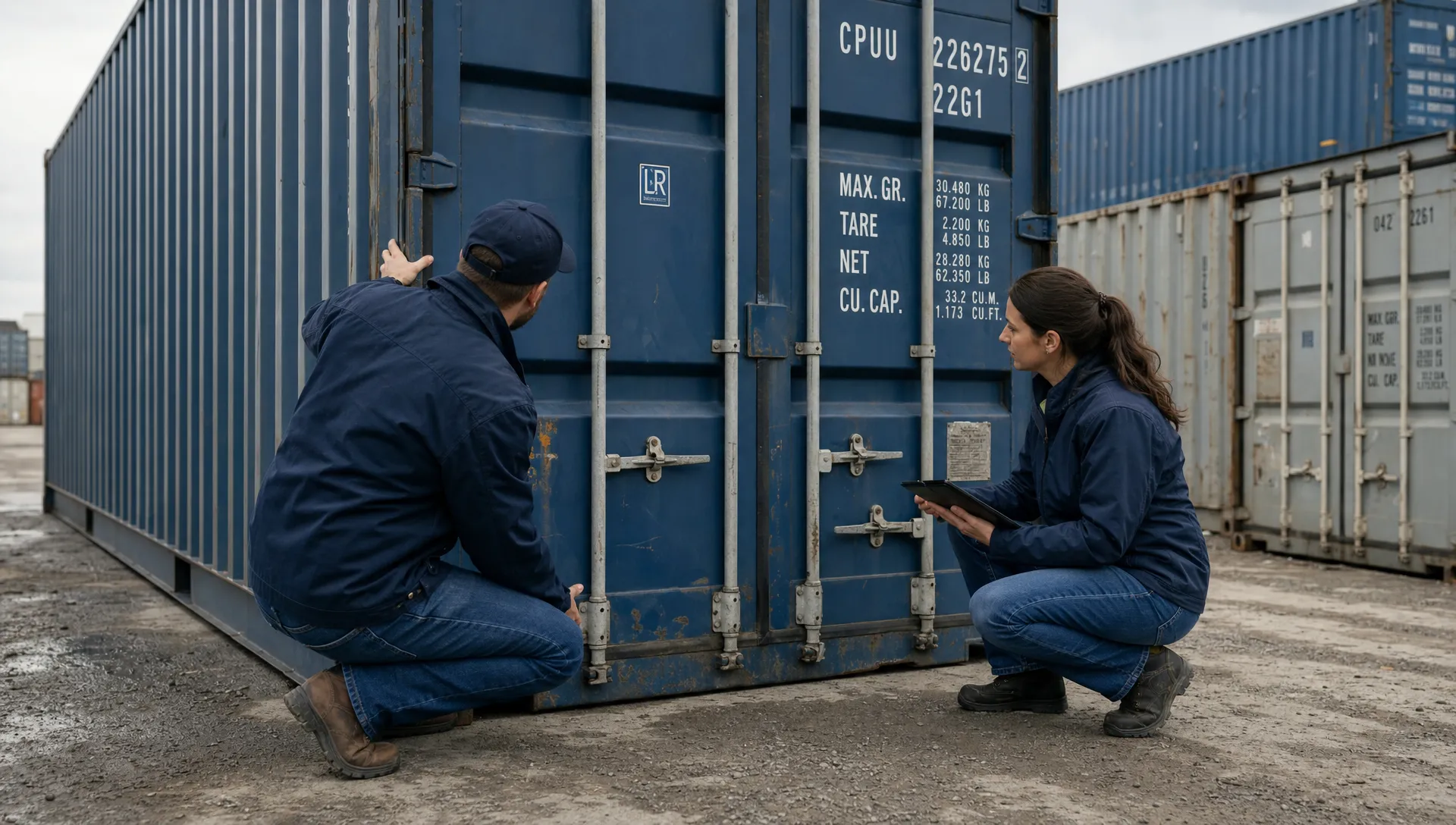
Confirm Release, Delivery and Site Readiness
Establish who controls the handoff
A paid invoice does not always authorize pickup by itself. The depot may need a release number, designated trucking company or scheduled collection appointment. Ask who provides those details and when they become available.
Confirm that the driver will collect the agreed unit or approved inventory grade. If the yard cannot guarantee a specific identification number, get the selection and rejection process in writing. Keep release information secure and share it only with the parties handling your order.
A shipping container yard near me may be convenient for inspection without being the cheapest delivery origin. Compare the complete route, trucking method and placement requirements rather than mileage alone.
Give the delivery team accurate site information
Tell the supplier about narrow gates, sharp turns, overhead wires, slopes and soft ground. Send current photos of the route and placement area. A 40-foot container requires more maneuvering space than its own length, but the actual clearance depends on the truck and unloading method.
Ask whether delivery uses a tilt-bed truck, side loader, crane or another arrangement. Do not assume the quoted service includes lifting the container over a fence or placing it behind a building. Get the needed clearances directly from the delivery provider.
For more detailed access planning, review our guide to choosing shipping containers for local delivery. Confirm permits and placement restrictions with local authorities before preparing the site.
Inspect at arrival and keep records
Stay outside the driver’s work area during unloading. Once the driver says it is safe, check the identification number, visible condition and agreed features. Photograph new damage and note discrepancies using the seller’s required reporting process.
Your shipping container yard near me purchase is not complete until the delivery matches the agreement. If it does not, contact the seller promptly and follow the written acceptance procedure; refusing delivery can create transportation charges depending on the contract.
Keep the invoice, inspection photos, delivery paperwork and warranty terms together. Test door operation after placement because uneven support can twist the frame and affect how the doors close.
Frequently Asked Questions
Can I visit a shipping container yard before buying?
Many sales yards allow visits, but working depots may restrict public access or require an appointment. Call first to confirm inspection availability, safety rules and whether staff can show your intended unit. Do not assume a map listing means walk-in sales or access to every container on the property.
How do I know if a shipping container seller is legitimate?
Verify the business identity, confirm its connection to the inventory location and compare payment details with the sales agreement. Request current unit evidence and clear delivery terms. No single document proves legitimacy, so use several independent checks before paying, especially when the seller operates remotely.
Is it better to buy directly from a container yard or a broker?
Either can work if the arrangement is transparent. Direct yard sales may make inspection easier, while a broker may source inventory from several locations. The key questions are who owns the unit, who guarantees its condition and who resolves problems after payment. Compare accountability and delivered cost, not the seller’s label.
Does wind- and watertight mean a container is cargo-worthy?
No. Wind- and watertight condition addresses weather protection under the seller’s stated criteria. Cargo-worthiness concerns suitability for cargo service, while international transport may also require appropriate CSC examination status and carrier acceptance. Ask for the documentation needed for your actual use rather than assuming one label covers everything.
Can I buy a container from a local yard for a home?
Yes, but a shipping container yard near me can usually establish only the base unit’s condition, not whether your housing project is permitted. Confirm zoning and building requirements with local authorities first. Have qualified professionals assess structural changes, insulation, ventilation and possible floor or contamination concerns before starting the conversion.
Choose a Supplier That Explains the Whole Purchase
The best yard is not necessarily the closest one. Choose a supplier that identifies its inventory arrangement, welcomes reasonable verification and puts condition and delivery commitments in writing. Clear responsibility is more valuable than an attractive listing with unanswered questions.
Outback Shipping Containers offers new and used units, nationwide delivery across all 50 states and financing options. When you are ready, explore shipping containers from Outback Shipping Containers and discuss your intended use, inspection needs and delivery address before selecting a unit.