Heated shipping container pool cost: Heated Shipping…
Learn everything about heated shipping container pool cost, winterized shipping container pools, and energy efficient container pools for any climate.…
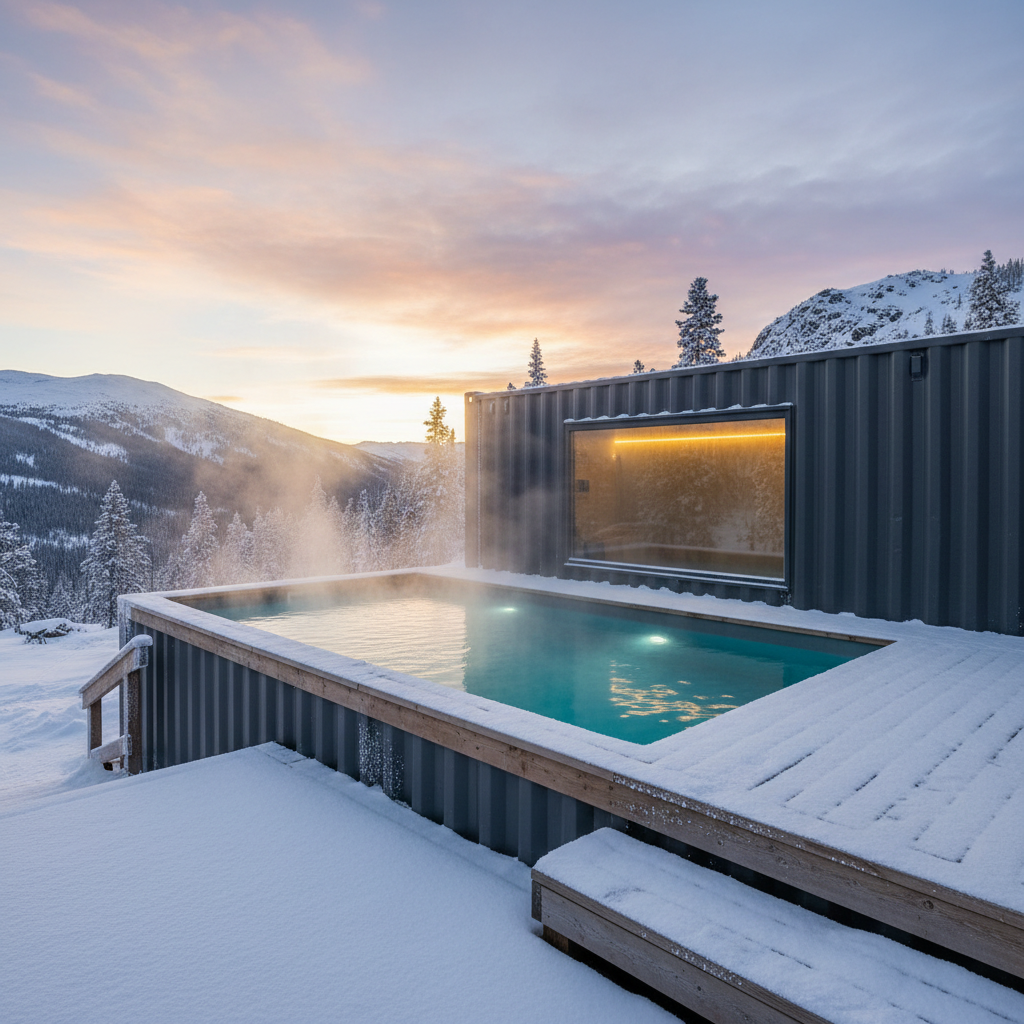
Investing in an all-season aquatic retreat requires more than just a steel box; it requires a sophisticated thermal management system. For a fully turnkey unit, the average heated shipping container pool cost typically ranges from $35,000 to $68,000. This pricing encompasses the structural reinforced shell, a high-efficiency heating system, and professional-grade insulation. While a basic unheated unit might start near $22,000, upgrading for winter use ensures your investment isn't sitting dormant for six months of the year.
Table of Contents
- Typical Heated Shipping Container Pool Cost by Size and Grade
- What Is Included in the All-Season Shipping Container Pool Price?
- Delivery, Crane, and Site-Prep Expenses
- Container Pool Heater Options and Modification Pricing
- Hidden Costs: Permits, Foundations, and Electrical Upgrades
- How to Lower Your Total Cost Without Buying Junk
- More on Food, Catering & Concession Trailers
- Container delivery near you
- Long-Term Operational Costs and Seasonal Maintenance Economics
- Structural Engineering and Climate-Specific Modifications
- Comparison of Heating Technologies and Their Impact on Value
- Frequently Asked Questions
- Explore Related Products & Guides
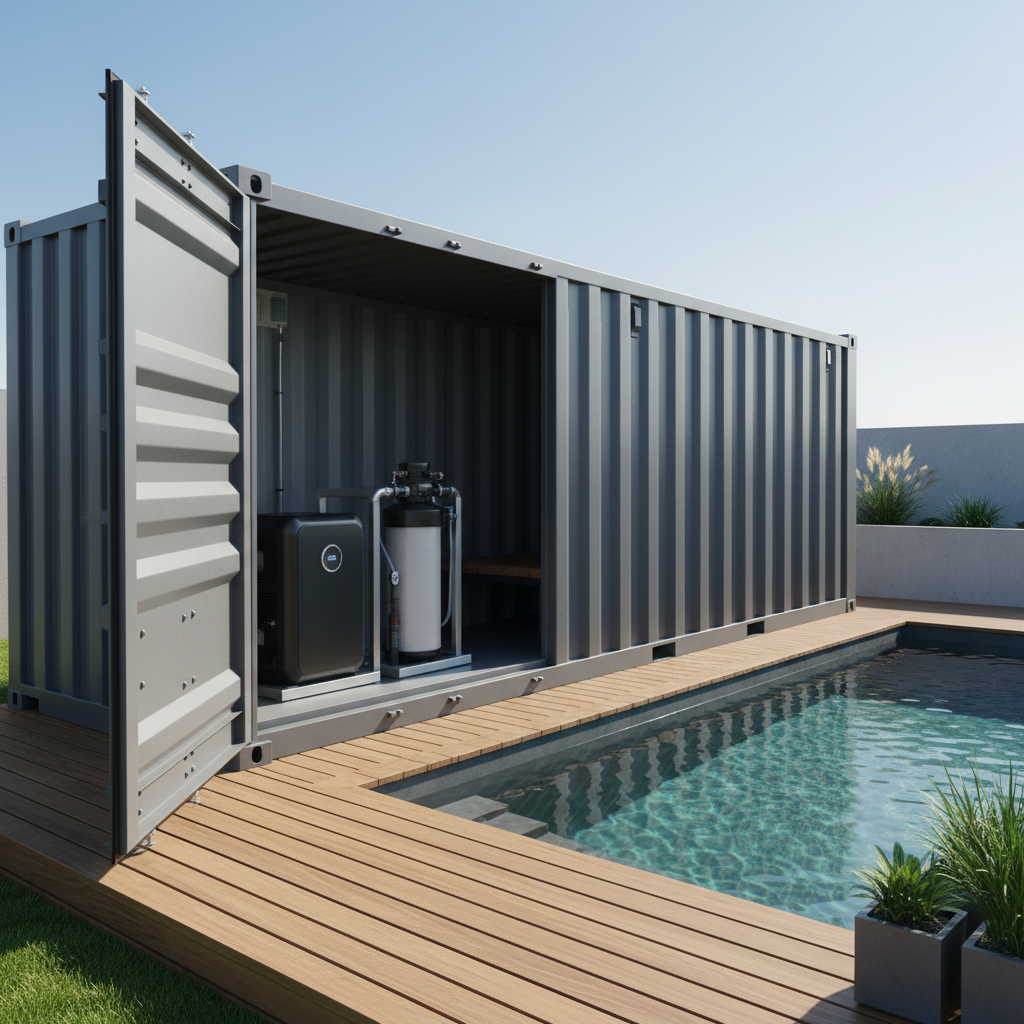
Typical Heated Shipping Container Pool Cost by Size and Grade
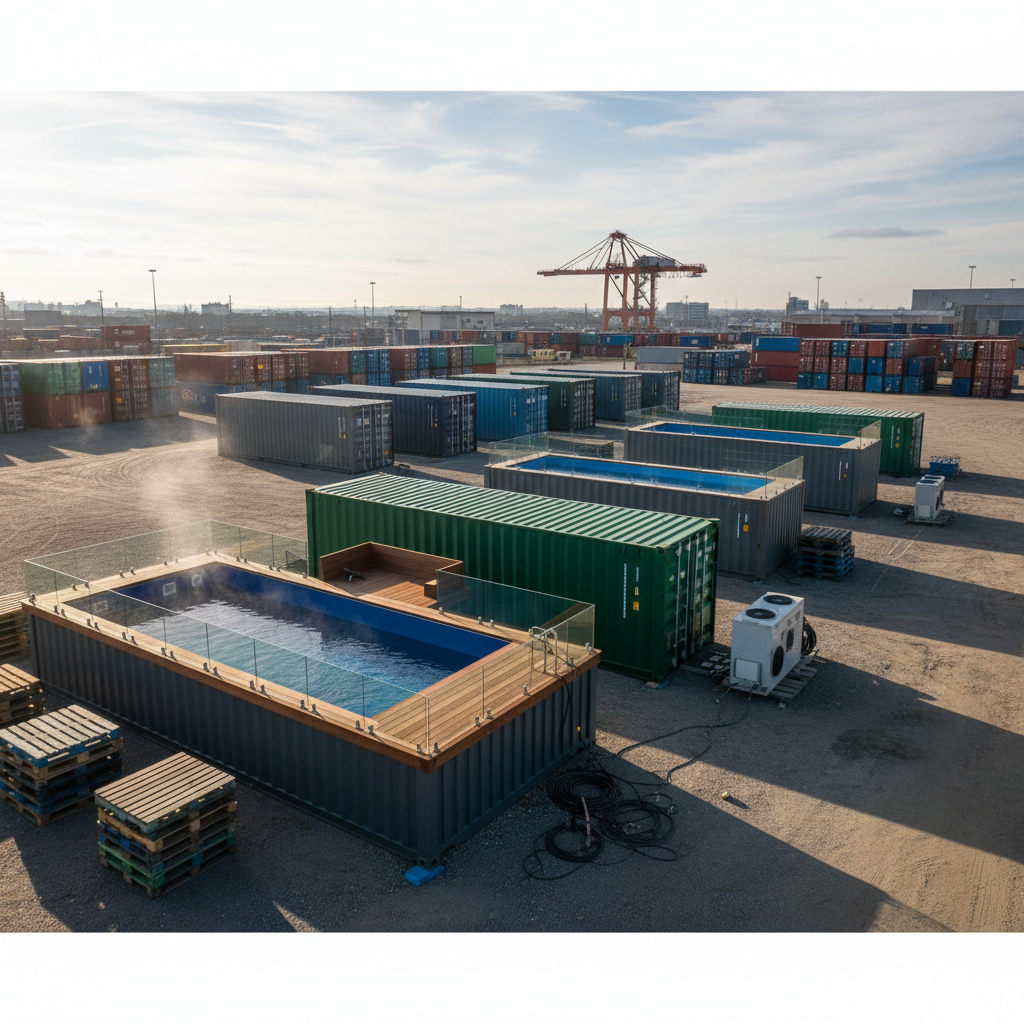
The primary driver of your initial quote is the footprint of the container. Most energy efficient container pools utilize either 20ft or 40ft One-Trip containers to ensure structural integrity and aesthetic appeal. Because these units must hold thousands of gallons of water, starting with a high-quality one-trip shipping container is mandatory to prevent premature corrosion or weld failure under thermal stress.
| Size/Type | Base Pool Price | Winterization Package | Total Estimated Cost |
|---|---|---|---|
| 12ft Plunge Pool | $24,500 | $6,000 | $30,500 - $38,000 |
| 20ft Standard Pool | $32,000 | $8,500 | $40,500 - $52,000 |
| 40ft High Cube Pool | $48,000 | $12,500 | $60,500 - $78,000 |
What Is Included in the All-Season Shipping Container Pool Price?
When comparing insulated container pool prices, you must verify if the quote is 'shell-only' or 'plug-and-play.' A premium winterized unit includes a multi-layer approach to heat retention. This starts with closed-cell spray foam insulation applied between the steel corrugated walls and the interior liner. Without this, your insulated container pool prices will skyrocket due to monthly energy bills.
- Internal Lining: Either a heavy-duty vinyl liner or a custom-fitted fiberglass insert.
- Heating System: A dedicated 50k to 125k BTU heater tailored to the water volume.
- Filtration: UV or salt-chlorine generators designed for high-temperature stability.
- Thermal Cover: An R-value rated safety cover to prevent evaporative heat loss.
- Structural Reinforcement: Internal cross-bracing to handle the weight of water (approx. 8.34 lbs per gallon).
Delivery, Crane, and Site-Prep Expenses
Moving a pool is more complex than a standard all-season shipping container pool. Delivery fees for these units typically run between $3.50 and $6.00 per mile from the fabrication depot. If you are ordering in a major hub like Texas or Georgia, costs are generally lower due to higher carrier availability.
Tip: Unlike a storage unit, a container pool usually cannot be 'slid' off a tilt-bed truck. Most installations require a crane to lift the unit over fences or onto a specific heated shipping container pool cost. Budget an additional $1,500 to $4,000 for a crane rental depending on the reach required.
Container Pool Heater Options and Modification Pricing
Selecting the right container pool heater options depends on your local climate and utility costs. For buyers in colder northern states, we often recommend hybrid systems. While the build process shares some DNA with a heated shipping container pool cost build—specifically in terms of plumbing and electrical complexity—the heating loads for water are significantly higher.
| Heater Type | Installation Cost | Best For | Efficiency Rating |
|---|---|---|---|
| Electric Heat Pump | $4,500 - $7,000 | Moderate climates above 45°F | High (400%+) |
| Natural Gas/Propane | $3,000 - $5,500 | Rapid heating in extreme cold | Moderate (80-95%) |
| Electric Resistance | $2,000 - $3,500 | Small plunge pools/spas | Low (100%) |
Hidden Costs: Permits, Foundations, and Electrical Upgrades
Don't overlook the 'soft' costs that can add 15% to your total budget. Local Authorities Having Jurisdiction (AHJ) often classify these as permanent structures. You will need to consult the all-season shipping container pool to ensure your zoning allows for a steel vessel. Furthermore, a heated pool requires a dedicated 240V sub-panel, which might cost $2,000 to $4,500 if your home's main service is already near capacity.
Important: Always ensure your site preparation includes proper drainage. An all-season shipping container pool generates significant condensation on the exterior steel in winter; without a gravel pad or proper runoff, you risk ground instability.
How to Lower Your Total Cost Without Buying Junk
If the energy efficient container pools price tag seems high, consider a 'staged' build. You can purchase a high-quality Outback Ridge 20 and have a local pool professional handle the liner and plumbing, though this often voids manufacturer warranties. A better way to save is by opting for a 'used' container shell that has been professionally refurbished to WWT (Wind and Watertight) standards, provided the interior is coated with a high-build epoxy to prevent rust.
For those looking for multi-functional spaces, some clients integrate their pool into a larger insulated container pool prices layout, which can consolidate delivery and site-prep costs across multiple units.
More on Food, Catering & Concession Trailers
- Shipping container food truck cost 2026: 2026 Shipping Container Food Truck Cost & Price Guide
- Cold-storage-container-for-restaurants-cost: Cold Storage Container Cost: Pricing Guide for Restaurants
Container delivery near you
We deliver to every state in the lower 48 plus Alaska and Hawaii. These local pages list pricing, metro coverage and typical lead times for the areas we run into most:
- Shipping containers near me — how we source from the depot closest to your ZIP code
- Shipping containers in California — pricing and delivery to Los Angeles and San Diego
- Shipping containers in Florida — pricing and delivery to Jacksonville and Miami
- Shipping containers in North Carolina — pricing and delivery to Charlotte and Raleigh
- Shipping containers in Arizona — pricing and delivery to Phoenix and Tucson
Long-Term Operational Costs and Seasonal Maintenance Economics
When calculating the heated shipping container pool cost, many buyers focus solely on the acquisition price while neglecting the long-term operational overhead associated with thermal retention in a metal vessel. Unlike a traditional concrete or fiberglass inground pool, a container pool is essentially a giant steel conductor. Without proper insulation, the heat energy generated by your electric or gas heater will dissipate rapidly through the sidewalls. Owners should budget for high-density spray foam insulation, which typically adds $1,500 to $3,000 to the build cost but can reduce monthly energy bills by up to 40%. In colder climates like the Pacific Northwest or New England, an uninsulated container pool can cost upwards of $300 a month to keep at a swimmable 82 degrees during the shoulder seasons.
Chemical balance is another recurring cost factor that varies significantly based on your heating choice. Heated water encourages faster bacterial growth and algae blooms compared to cold water, meaning your chlorine or salt-cell consumption will be higher than standard estimates suggest. Furthermore, the interaction between heated, treated water and the epoxy or vinyl liner requires constant monitoring. If the pH levels drift, the heated water becomes more corrosive to the internal steel structure of the container. We recommend investing in an automated chemical dosing system at the time of purchase; while this adds roughly $1,200 to the initial sticker price, it prevents catastrophic structural damage to the container's interior walls over a ten-year horizon.
Seasonal opening and closing procedures for a container pool also differ from standard pool types. Because the water is contained within a structural steel shell, the risks of freeze-thaw cycles are magnified. If you live in an area where the ground freezes, you must decide between keeping the pool heated all winter (an expensive proposition) or winterizing it properly with air-filled compensation pillows to prevent ice expansion from buckling the steel welds. The cost of a professional winterization service for a 40-foot container pool typically ranges from $450 to $700, depending on the complexity of the plumbing and whether you have an integrated hot tub or bench seating area.
Finally, the lifespan of the heating unit itself is a critical part of the total cost of ownership. Most heat pumps designed for shipping container pools have a functional life of 7 to 12 years. Because these units are often tucked into a tight mechanical room at the end of the container, airflow can be restricted, leading to premature compressor failure. You should anticipate a full heater replacement cost of $3,500 to $5,500 every decade. By factoring in these operational realities now, you can build a more accurate five-year budget that accounts for both the pleasure of year-round swimming and the logistical realities of maintaining a climate-controlled aquatic environment.
Tip: Always install a high-quality thermal pool cover. Over 70% of heat loss in container pools occurs through evaporation at the surface. A $2,000 automated cover can pay for itself in energy savings within two years.
| Maintenance Item | Frequency | Estimated Annual Cost (USD) |
|---|---|---|
| Electricity/Gas for Heating | Monthly (Year-round) | $1,800 - $4,200 |
| Water Treatment Chemicals | Weekly | $400 - $600 |
| Filtration Pump Power | Daily | $250 - $400 |
| Professional Winterization | Annually | $450 - $700 |
Structural Engineering and Climate-Specific Modifications
The structural integrity of a heated shipping container pool is predicated on how the metal reacts to thermal expansion. When you fill a 20-foot container with 5,000 gallons of water and heat it to 85 degrees, the steel expands differently than the surrounding soil or the concrete pad it sits on. Engineering these pools requires strategic reinforcement—typically C-channel steel welded horizontally along the exterior ribs—to prevent the 'bowing' effect that occurs when the internal pressure of the heated water meets the external atmospheric conditions. If you are buying a modified unit, ensure the manufacturer provides a structural engineer’s stamp verifying that the container can handle the hydrostatic pressure at varying temperatures without compromising the corner castings.
In humid or coastal environments, the combination of heat and salt air poses a dual threat to your investment. The exterior paint on a heated container pool isn't just for aesthetics; it is a critical moisture barrier. High-end builds use marine-grade epoxy coatings or ceramic-infused paints that reflect UV rays while sealing the steel against oxidation. If you notice a manufacturer using standard house paint or cheap industrial primers, walk away. A proper marine-grade finish adds about $2,000 to the heated shipping container pool cost but prevents the unsightly rust streaks that often plague DIY conversions after just one or two seasons of exposure to the elements.
The mechanical room configuration is another area where climate-specific modifications are necessary. In northern latitudes, the plumbing lines between the heater and the pool must be insulated and, in some cases, wrapped in heat tape to prevent line freezing during power outages. Furthermore, the ventilation of the mechanical cabinet is paramount. A heater produces significant waste heat and moisture; without adequate louvered vents and exhaust fans, the humidity inside the cabinet will corrode the very electronics that control the pool's temperature. High-quality builders will include a stainless steel interior lining for the mechanical room to further mitigate these localized moisture issues.
Lastly, the choice between an above-ground, semi-inground, or fully inground installation significantly impacts how the container retains heat. An above-ground installation is the most cost-effective but loses heat through all four sides and the floor. A semi-inground installation uses the earth as natural insulation, which can drastically lower the cost of keeping the pool heated during the winter months. However, this requires additional exterior waterproofing and a robust drainage system (French drains) to ensure that groundwater does not pool against the steel shell, which would lead to rapid heat transfer away from the water and potential structural corrosion over time.
- Reinforced C-channel steel supports to prevent wall deflection.
- High-density closed-cell spray foam (R-15 to R-28 rating).
- Marine-grade epoxy exterior coating for corrosion resistance.
- Insulated PVC or copper plumbing to minimize thermal loss.
- Automated louvered ventilation for the heater enclosure.
Comparison of Heating Technologies and Their Impact on Value
Choosing the right heater is perhaps the most significant decision affecting both the initial heated shipping container pool cost and its future resale value. Electric heat pumps are the most common choice for shipping container pools due to their efficiency in temperatures above 45 degrees Fahrenheit. They work by extracting heat from the air and transferring it to the water. While they have a higher upfront cost (usually $3,500 to $6,000), they offer the lowest monthly operating costs. However, if you plan on using your pool in sub-freezing temperatures, an electric heat pump will struggle to maintain temperature, often requiring a backup electric resistance heater or a transition to gas.
Gas and propane heaters are the 'heavy lifters' of the pool world, capable of heating a 40-foot container by 10 to 15 degrees in just a few hours. This is ideal for weekend homeowners who only want to heat the pool when they are actually using the property. The trade-off is the fuel cost; propane can be prohibitively expensive, costing as much as $50 to $100 for a single weekend of mid-winter swimming. Additionally, gas heaters require a gas line to be run to the pool site, which can add $2,000 to $5,000 in trenching and plumbing costs depending on the distance from your home's main gas meter or propane tank location.
Hybrid systems and solar thermal panels are emerging as popular upgrades for eco-conscious buyers. A hybrid system utilizes a heat pump for daily maintenance and a gas booster for rapid heating or extreme cold snaps. Solar thermal mats, which can be mounted on a nearby roof or even on the side of the container itself, provide 'free' heat during the day. While a solar setup adds roughly $2,500 to the installation, it can extend your swimming season by two months without adding a penny to your utility bill. When it comes time to sell your home, a container pool with a diversified, energy-efficient heating system is a much stronger selling point than one reliant solely on expensive electric resistance heat.
Beyond the hardware, the control systems integrated with these heaters add both cost and convenience. Modern 'smart' pool controllers allow you to adjust the temperature from a smartphone app while you are at work or traveling. This prevents the wasted energy of heating an empty pool while ensuring it is the perfect temperature the moment you arrive home. These integrated Wi-Fi controllers usually add $800 to $1,500 to the build but are widely considered a 'must-have' for the modern shipping container pool owner. Buyers should look for systems that integrate with home automation platforms like Alexa or Google Home for the ultimate all-season luxury experience.
Important: In regions with high electricity rates (e.g., California, Hawaii), an uninsulated electric-only heater can cost more than a monthly car payment to operate. Always prioritize insulation over heater size.
Frequently Asked Questions
If you are ready to compare inventory for your project, our team can pull matching units from our nationwide depots and provide a detailed quote for a winter-ready build.
Explore Related Products & Guides
Frequently Asked Questions
How much does a heated container pool cost?
A fully heated and winterized shipping container pool typically costs between $35,000 and $68,000, depending on size (20ft vs 40ft), insulation quality, and the BTU rating of the heater.
Can you use a container pool in the winter?
Yes, but it requires closed-cell spray foam insulation and a high-efficiency heater. Without insulation, the steel walls will lose heat rapidly, making it prohibitively expensive to maintain comfortable temperatures.
How to insulate a shipping container pool?
The most effective method is applying 2-3 inches of closed-cell spray foam between the container's steel skin and the interior pool liner or fiberglass shell. This creates a thermal break and prevents condensation.
What is the best heater for a container pool?
For efficiency in moderate climates, an electric heat pump is best. However, for true winter use in freezing temperatures, a natural gas or propane heater is preferred for its ability to generate heat regardless of ambient air temperature.
Are container pools energy efficient in cold weather?
They can be, provided they are built with 'winterized' specs including a thermal cover and R-15 or higher wall insulation. Without these features, they are significantly less efficient than traditional inground pools.
How long does it take to heat a 20ft container pool?
A standard 20ft pool (approx. 5,000 gallons) can be heated by 5-10 degrees per hour with a 100k BTU gas heater. Electric heat pumps are slower, typically taking 12-24 hours to reach swimming temperature from a cold start.
What are the monthly electricity costs for a heated container pool?
Operating costs typically range from $100 to $300 per month depending on your local utility rates and desired temperature. In northern US climates, maintaining an 82-degree pool during autumn can consume roughly 1,500 to 2,500 kWh monthly. Utilizing a high-quality thermal cover when the pool is not in use can reduce these recurring energy expenses by approximately 50% by preventing evaporative heat loss.
Do heated shipping container pools require special foundations for winter use?
Yes, a reinforced concrete pad at least 6 inches thick is standard to prevent shifting during freeze-thaw cycles. Because a filled 20ft container weighs over 30,000 pounds, any ground movement caused by frost heave can stress the interior liner or plumbing connections. In colder regions, engineers often recommend gravel sub-bases for drainage to ensure the heated structure remains level and stable throughout the year.
Is a heat pump or gas heater better for a container pool?
Gas heaters are superior for rapid heating and extreme cold, capable of raising temperatures 2 to 5 degrees per hour regardless of ambient air. However, electric heat pumps are more cost-effective in temperate zones like California or Florida, though they lose efficiency when temperatures drop below 45 degrees. For year-round use in the Midwest or Northeast, a 100,000 BTU propane or natural gas heater is the more reliable choice.
Does adding a heater increase the shipping container pool installation price?
Including a professional heating system generally adds $2,500 to $7,000 to your total project cost. This estimate includes the unit price of a 125k BTU heater, dedicated electrical sub-panels or gas line trenching, and labor. While basic DIY container pools start near $20,000, fully integrated climate-controlled models from premium manufacturers often retail between $35,000 and $50,000 depending on the insulation package and heating technology selected.