How to Buy Containers Online Without Falling for a Scam
Want to buy containers online safely? Learn how to verify sellers, inspect offers, protect payments and avoid shipping container scams.
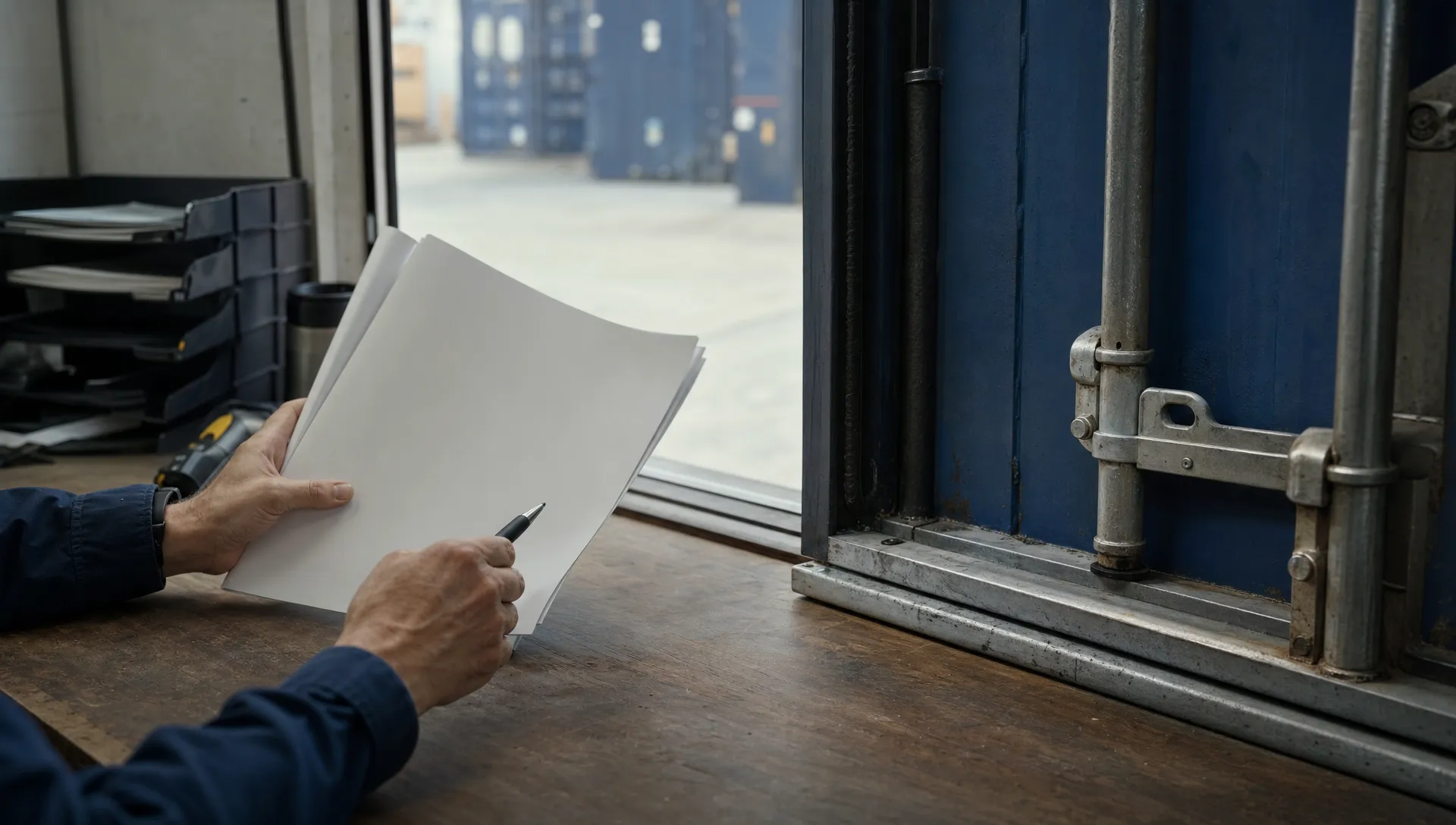
How to Buy Containers Online Without Falling for a Scam
Quick Answer: To buy containers online safely, verify the seller through independent sources, get written condition and delivery terms, confirm who receives your payment and use a payment method with meaningful dispute options. Do not send money based only on attractive photos, a low price or a professional-looking website.
A container scam can involve a nonexistent unit, an impersonated supplier or a fake invoice sent during a legitimate purchase. The strongest protection is a documented chain connecting the business, the container, the payment recipient and the delivery arrangement. A bargain means little if those details do not line up.
Key Takeaways
- Verify the business and its contact information outside the listing or sales message.
- Establish whether photos show your allocated unit or representative inventory.
- Get the total delivered price, condition standard and cancellation terms in writing.
- Confirm payment instructions independently, especially if bank details change.
- Treat unexplained release fees and pressure to pay immediately as reasons to stop.
How to buy containers online from a verified seller
Start with the seller’s identity, not the container’s appearance. A scammer can copy a legitimate supplier’s photos, business address and customer reviews. Your task is to establish that the person taking your order actually represents that business.
Check the legal business and public footprint
Ask for the legal business name, billing address and customer-service number. Compare those details with the invoice, website and relevant state business registry. A registered company exists on paper, but registration alone does not prove the person contacting you works there.
When you buy containers online, look for consistency across several independent records rather than trusting one convincing detail.
Search the company name alongside terms such as “complaint,” “scam” and “non-delivery.” Read reviews for specific information about container condition, delivery problems and how disputes were handled. A cluster of vague reviews deserves more scrutiny than detailed accounts spread over time.
A new business or a small review count does not automatically indicate fraud. It does mean you should rely more heavily on verifiable paperwork and payment safeguards.
Confirm you are talking to the real company
Find the company’s phone number independently, rather than using only the number in an advertisement or text message. Call and ask the business to confirm the salesperson, quote number and payment instructions.
Inspect the website address carefully. Lookalike domains may substitute a letter or add a word to a real supplier’s name. A padlock icon only indicates an encrypted connection, not an honest seller.
Ask whether the business owns inventory, operates as a broker or sources units through depots. These are different business models, and any can be legitimate. A broker should still explain who is responsible for condition, allocation, delivery and refunds.
An office address may differ from the storage depot. That is not automatically suspicious, but an unexplained mismatch between the seller, invoice and payment recipient needs resolution before you proceed.
Spot fraud patterns before you send money
Container scams often depend on getting buyers to act before they verify the offer. A seller may claim that another customer is waiting or that an unusually cheap unit must be paid for immediately.
Price alone cannot prove fraud. Condition, size, location and trucking distance affect legitimate offers. Compare two or three written quotes for the same specifications and delivery address before judging whether a discount makes sense.
Watch for these patterns:
- Impersonation: The listing uses a real company’s name, but the phone number, website or payment account belongs to someone else.
- Inventory bait: The seller advertises a specific container but cannot explain its location, allocation process or inspection options.
- Payment diversion: Bank instructions change shortly before payment, often through an unexpected email or text.
- Fee escalation: After payment, the seller demands an unquoted “release,” “insurance” or “clearance” charge before delivery.
These warning signs matter when you buy containers online because the transaction may happen without an in-person meeting.
Shared photos are not conclusive evidence of a scam. Brokers sometimes advertise representative depot inventory. The problem arises when a seller falsely claims those pictures show your exact unit or refuses to explain what you will actually receive.
Verify the container, not just the photos
Once the seller checks out, establish what you are buying. “Shipping container,” “cargo container” and “conex box” are broad descriptions. None specifies size, condition or suitability for your intended use.
Common nominal external dimensions for standard dry intermodal containers are:
| Container type | Length | Width | Height | Main buying consideration |
|---|---|---|---|---|
| 20ft standard | 20 feet | 8 feet | 8 feet 6 inches | Less site length required than a 40ft unit |
| 40ft standard | 40 feet | 8 feet | 8 feet 6 inches | More storage space, but greater delivery and placement demands |
| 40ft high cube | 40 feet | 8 feet | 9 feet 6 inches | One additional foot of external height |
Internal dimensions and door openings are smaller. Modified units may differ, so get specifications for the product quoted. For a broader size and condition comparison, use the guide to comparing freight containers before you buy.
Understand condition grades and certifications
A one-trip container has generally made one cargo journey before resale. It can still have handling marks or minor dents. “New” does not necessarily mean untouched.
WWT means wind and watertight. It does not, by itself, establish suitability for international cargo transport. CWO means cargo-worthy, but you should ask what inspection documentation supports that description and whether a new survey is required for your planned shipment.
Before you buy containers online, ask the seller to define the promised grade and explain what happens if the delivered unit does not meet it.
The International Maritime Organization’s guidance on container safety explains the Convention for Safe Containers, commonly called CSC. A CSC safety approval plate relates to transport safety. A plate photo alone does not establish current examination status, ownership or suitability for a home conversion.
An ISO container is not automatically ready for residential use. A shipping container home requires separate evaluation of its structure, materials and proposed alterations.
Ask for evidence that matches the sales model
For an allocated unit, request recent exterior and interior photos, door-seal details, floor condition and the container identification number. A short live video can help connect the unit to its surroundings. Identification numbers help track equipment, but a copied number does not prove ownership.
If the seller allocates inventory later, ask for the written selection standard instead. Confirm acceptable dents, rust, floor wear and door operation, plus the remedy for a unit that falls outside that standard.
Check the data plate for tare weight, which is the empty container weight. Payload capacity concerns cargo loading, not proof that the floor can support any workshop machine. Concentrated equipment loads need their own assessment.
Avoid climbing onto a container roof to inspect it. Ground-level photos, professional inspection and safe access are better options.
Get a complete quote and written sales terms
A trustworthy quote should identify the product and explain the entire transaction. You should not have to reconstruct the agreement from scattered texts or verbal promises.
To buy containers online with fewer surprises, require one written document that connects the selected product to the delivery address and total amount due.
The quote or sales agreement should include:
- The legal seller, buyer and delivery address.
- Container size, quantity, grade and whether images are unit-specific or representative.
- Itemized container, delivery, unloading, tax and other applicable charges.
- Payment schedule, estimated delivery window and responsibility for scheduling changes.
- Cancellation, inspection, rejection, repair and refund terms.
Also ask who pays if the truck cannot unload because the site is inaccessible. A failed delivery can create legitimate extra costs. Those terms should be disclosed before dispatch, not introduced after the truck arrives.
Distinguish unclear pricing from outright fraud
An incomplete quote is not necessarily a scam, but it leaves you exposed to disputes. Resolve missing details before paying a deposit.
For a breakdown of common legitimate charges, review where to find used shipping containers without hidden fees. Here, the key fraud check is whether the seller will document the total and honor the stated terms.
If a salesperson promises free delivery or a refund option, ask them to add it to the agreement. Save the final quote, product description and correspondence together.
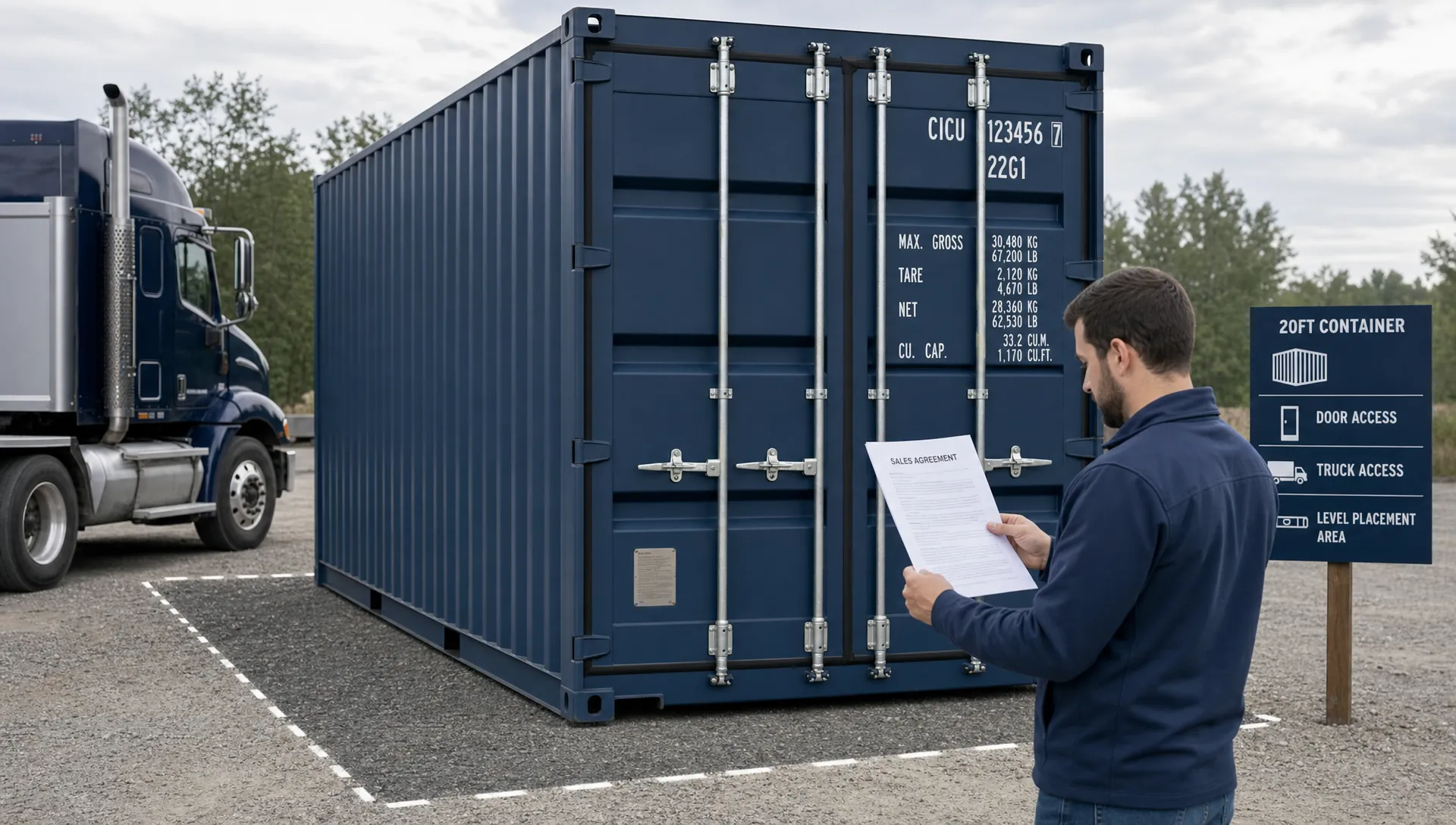
If you are comparing storage options, explore new and used shipping containers from Outback Shipping Containers and request a written quote for your location, selected grade and delivery needs.
Use payment safeguards before placing an order
The payment method affects your options if the seller disappears or the container never arrives. The Federal Trade Commission’s online shopping guidance recommends researching sellers, keeping records and paying by credit card when possible because it offers protections other methods may not.
When you buy containers online, ask about payment options before you commit to the order, not after receiving an invoice.
Credit-card disputes have eligibility rules and deadlines. They are not automatic refunds, and a legitimate supplier may not accept cards for every transaction. Debit cards, bank transfers and financing arrangements have different protections, so check the applicable terms with your provider.
Verify payment instructions independently before sending a wire or ACH transfer. Confirm the recipient’s name and its relationship to the seller. A payment processor or financing company may appear instead of the supplier, but that relationship should be explained in writing.
Gift-card demands are a major warning sign. Cryptocurrency transfers and payments sent through personal-payment channels can be difficult to recover. Do not assume a payment-app logo means your purchase qualifies for buyer protection.
Handle changed bank details and suspected fraud
Treat new bank instructions as a fresh verification task. Call a previously verified company number and confirm the change. Do not simply reply to the email announcing it, since the message or account could be compromised.
If you buy containers online and suspect payment diversion, stop the transaction until the seller and recipient are independently confirmed.
If money has already left your account, contact your bank or payment provider immediately. Ask whether it can stop, recall or dispute the payment. Recovery is not guaranteed. Preserve invoices, messages and transaction records, then report suspected fraud to the FTC and appropriate law enforcement.
Confirm delivery and inspect before acceptance
A real container needs a workable delivery plan. Ask where the unit will ship from, who coordinates transport and how it will be unloaded. The seller may not know the assigned driver at order time, but should explain the process.
Tilt-bed delivery unloads by sliding the container from the truck. A flatbed generally requires separate unloading equipment, such as a suitably rated crane or forklift. Do not assume that “delivery included” also includes placement by crane.
Provide site photos and accurate information about gates, turns, slopes, overhead obstructions and ground conditions. Required clearance depends on the truck, container and unloading method, so obtain the carrier’s specifications rather than relying on a universal rule.
Before you buy containers online for a rural property, resolve access questions and confirm any site-related charges in writing.
Ask local authorities about placement permits, setbacks and other restrictions. Requirements vary by state, county and municipality. Storage use and residential occupancy can trigger different rules.
Use the container purchase checklist for first-time buyers to organize site preparation alongside your fraud checks.
Document the unit before signing acceptance
Review the seller’s inspection and acceptance procedure before delivery day. Some policies require prompt notice of problems, so know the deadline and reporting method.
Compare the delivered unit with the order. Check its size, identification markings when applicable, door operation, seals, floor and visible structural condition. Take photos before and after unloading. Inspect from safe positions and never allow anyone to lock you inside while checking for light leaks.
If the container differs from the agreement, contact the seller immediately and follow the written dispute process. Note visible issues on delivery paperwork where permitted. Do not sign a statement that inaccurately confirms damage-free delivery or full compliance.
Frequently Asked Questions
Is it safe to buy shipping containers online?
It can be safe to buy containers online when you verify the seller, document the product and delivery terms, and confirm the payment recipient. Photos and reviews alone are not enough. Use independent contact information, retain your records and understand the protections attached to your chosen payment method.
How can I tell if a shipping container seller is legitimate?
Compare the seller’s legal name, website, invoice and independently sourced contact details. Check business records and detailed customer reviews, then call to confirm the quote. Ask whether the company owns inventory or brokers units. No single check proves legitimacy, but unexplained inconsistencies are a reason to pause.
Should I pay a deposit for a shipping container?
A deposit is not automatically suspicious, especially when transport or custom work must be scheduled. Before paying, get the amount, purpose, balance schedule and refund terms in writing. Confirm who receives the money and avoid pressure to pay before you have verified the business and reviewed the agreement.
What paperwork should I get when buying a shipping container?
Keep an itemized quote, sales agreement, payment receipt and delivery documentation. The agreement should identify the seller, container specifications, condition standard and remedies for nonconforming delivery. For cargo transport, ask what inspection and CSC examination documentation your intended use requires rather than assuming a plate photo is sufficient.
Can I use a used shipping container to build a home?
A used container may suit a conversion, but WWT or cargo-worthy status does not establish residential safety. Evaluate corrosion, floor materials, prior use where known and structural changes. Building codes, zoning and permit requirements vary by state and county, so consult local authorities and qualified design professionals before purchasing.
Buy with a documented plan
The safest way to buy containers online is to resolve identity, condition, payment and delivery questions before money changes hands. Keep the evidence together so you can compare the delivered unit with the agreement.
Outback Shipping Containers offers new and used containers, inspected wind- and watertight units, financing options and delivery across all 50 states. When you are ready, discuss your container purchase with Outback Shipping Containers and request written details for your intended use and delivery site.