Is a 20ft High Cube Container Worth the Extra Height?
Is a 20ft high cube container worth it? Compare dimensions, usable headroom, delivery needs and costs to decide when the extra foot pays off.
Is a 20ft High Cube Container Worth the Extra Height?
Quick Answer: A 20ft high cube container is worth the extra height when you need room for tall equipment, stacked storage or insulation and ceiling finishes. It adds 12 inches of exterior height without increasing the footprint. For low-profile storage, a standard-height container may offer better value. Compare usable clearance and delivered cost before deciding.
The extra foot can solve a real problem, but only if your project uses it. A taller shell does not add floor space, increase the doorway width or automatically raise the load rating. The right choice starts with what must fit inside, how you will use the space and what it takes to deliver the unit.
Key Takeaways
- High cube containers stand 9 feet 6 inches tall outside, compared with 8 feet 6 inches for standard containers.
- Both 20-foot options occupy roughly 160 square feet of ground space.
- The taller model offers about 13% more enclosed volume, but no additional floor area.
- Finished ceiling height, door clearance and the total delivered quote matter more than exterior dimensions alone.
What a 20ft high cube container actually adds
A high cube is a taller cargo container, not a longer or wider one. Its extra height helps most when vertical clearance limits the project.
The following dimensions are typical for dry steel containers. Interior measurements, door openings and weights vary by manufacturer and unit. Confirm the specifications of the container you plan to purchase.
| Measurement | Standard 20-foot container | 20-foot high cube |
|---|---|---|
| Exterior length | 20 feet | 20 feet |
| Exterior width | 8 feet | 8 feet |
| Exterior height | 8 feet 6 inches | 9 feet 6 inches |
| Typical interior length | About 19 feet 4 inches | About 19 feet 4 inches |
| Typical interior width | About 7 feet 8 inches | About 7 feet 8 inches |
| Typical interior height | About 7 feet 10 inches | About 8 feet 10 inches |
| Typical door opening height | About 7 feet 5 inches | About 8 feet 5 inches |
| Approximate enclosed volume | 1,170 cubic feet | 1,320 cubic feet |
| Exterior footprint | 160 square feet | 160 square feet |
The main benefit of a 20ft high cube container is roughly 150 additional cubic feet within the same footprint. That represents about a 13% increase in enclosed volume. Whether that space has value depends on whether you can use the upper portion safely.
Door clearance can matter more than ceiling height
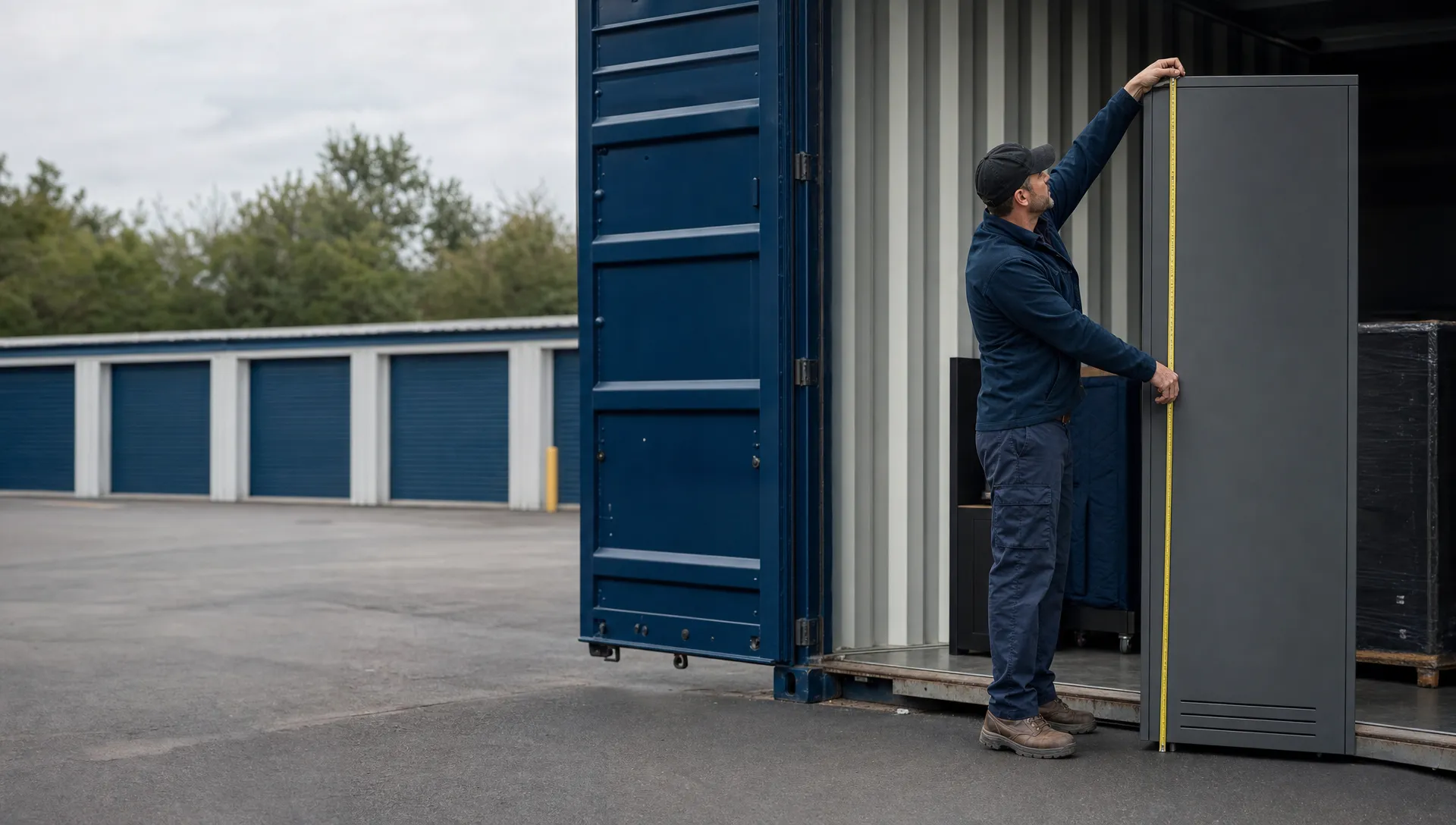
An item can fit beneath the roof and still fail to pass through the doors. Measure the complete load, including its pallet, packaging, lifting equipment or any part that cannot fold down.
For example, an 8-foot-tall load exceeds the typical standard-container door opening. It may fit through a high cube opening, but you still need clearance for the loading method. A sloped approach or raised fork carriage can change the effective height during entry.
Get the actual opening measurement rather than relying on a model name. Also check door width, threshold height and the space needed to swing both doors open.
When the extra height earns its keep
The strongest reason to choose a taller container is a measurable clearance problem. General storage capacity is a weaker reason if your contents stay near the floor.
Tall storage, shelving and job-site equipment
A 20ft high cube container makes sense when a standard doorway blocks equipment or when a planned shelving system needs more headroom. Examples include upright fixtures, tall tool cabinets and bulky inventory that cannot be laid flat.
Measure the highest item first. Then sketch the shelving layout and leave room for access. An extra shelf adds little value if workers cannot reach it safely or retrieve a heavy item without moving everything below it.
Stacking also requires more than available height. Packaging, shelving and stored goods must support the intended load. OSHA’s materials storage requirements require workplace storage to remain stable and secure against sliding or collapse.
For farm and ranch use, distinguish dry storage from chemical or fuel storage. A wind- and watertight steel box does not automatically provide required ventilation, spill containment or fire protection. Review the material’s storage requirements and applicable local rules before placing it inside.
Workshops, offices and container homes
For a conversion, the extra foot protects usable headroom after construction. A shipping container home or office may need floor insulation, ceiling insulation, interior framing, wiring and finishes.
Consider a simple planning example. Starting with a typical interior height of 8 feet 10 inches, a combined 8-inch floor-and-ceiling buildup leaves about 8 feet 2 inches. The same buildup inside a standard unit with a 7-foot-10-inch interior leaves about 7 feet 2 inches.
Those figures illustrate the clearance difference, not a recommended insulation assembly or a statement of code compliance. Your climate, energy requirements and design determine the actual buildup.
A 20ft high cube container gives a builder more room to accommodate these layers. It does not guarantee that the finished room will meet local minimum ceiling-height requirements, especially below ducts, beams or other obstructions.
The extra height also does not fix the narrow interior width. If your floor plan needs more walking space beside a bed, workbench or restroom, you may need a different layout or additional modules.
When standard height is the better buy
Choose standard height when your contents fit comfortably, you will not add substantial interior finishes and the taller shell solves no specific problem. Paying for unused overhead space rarely improves a storage project.
If floor area is the real constraint, compare lengths instead of heights. Outback’s standard container size guide for storage and builds can help separate a headroom problem from a footprint problem.
How to judge the price premium without guessing
A 20ft high cube container is worth its premium when it avoids a larger expense or makes the planned use possible. That could mean accommodating equipment you already own or preserving enough finished headroom for a conversion.
There is no single national premium that applies to every purchase. Condition, depot location, local stock and delivery distance all affect the quote. Compare current offers for equivalent units rather than using an old price range or assuming the high cube costs a fixed percentage more.
Outback’s 20ft New High Cube Shipping Container in Beige is a one-trip option described as wind and watertight and cargo-worthy. It is a useful comparison point when your alternative is another one-trip container, rather than a heavily used standard unit.
Compare the full delivered cost
Ask for quotes built around the same destination and purchasing terms. Otherwise, an apparent height premium may actually reflect different delivery charges or container conditions.
Your comparison should include:
- The container’s condition grade and whether the quote identifies a specific unit.
- Delivery to the exact address, including the proposed unloading method.
- Taxes and any applicable access, waiting or repositioning charges.
- Site preparation and project-specific modification costs.
The useful number is the total delivered cost difference, not just the difference between advertised shell prices. Confirm which charges are included before approving the order.
Use a simple value test
Subtract the standard-height delivered quote from the high cube delivered quote. Then compare that premium with the cost of the problem the taller unit solves.
For volume alone, the high cube provides approximately 13% more enclosed space. If its delivered price is more than 13% higher, its cost per cubic foot is also higher, assuming comparable condition and usable dimensions.
That does not automatically make a 20ft high cube container poor value. Door clearance or finished headroom may be essential even when cost per cubic foot is higher. Conversely, unused upper space provides no practical saving, regardless of the percentage.
Delivery and site checks before you order
A high cube has the same nominal footprint as a standard 20-foot unit, but it creates a taller transported load when carried on the same trailer. The delivery truck also needs much more working room than the container’s final footprint.
Check the full route onto the property. Low branches, overhead wires, entrance structures and tight turns can stop a delivery before the driver reaches the placement area. Soft ground, steep slopes and buried septic components can create separate problems.
The Federal Highway Administration’s vehicle size guidance explains that federal rules do not establish a nationwide commercial vehicle height limit. State limits and route conditions matter. Let the carrier confirm loaded height and route suitability rather than assuming the container will fit beneath every obstruction.
Confirm unloading space and final placement
Ask the delivery team for the truck’s required approach, turning room and unloading clearance. A tilt-bed delivery, crane placement and other unloading methods need different working areas.
For a 20ft high cube container, also check the final roof elevation against nearby structures, branches and property restrictions. The extra foot remains after the truck leaves.
Prepare a level, well-drained support system suited to the soil and intended use. Keep the doors accessible and allow them to swing fully. Container-home foundations and anchoring require project-specific design; local requirements vary by state and county.
If your clearance measurements favor the taller shell, review the 20-foot high cube one-trip container and request delivery details for your address before committing to site work.
What to inspect before buying
Height is only one part of the purchase. A poorly matched condition grade, damaged floor or missing transport documentation can matter more than the extra overhead space.
Separate one-trip, WWT and cargo-worthy condition
A one-trip container has typically completed one loaded journey after manufacture. It is commonly sold as new, but handling marks or minor dents are still possible. Ask for photographs of the actual unit when its appearance matters.
WWT means wind and watertight. It describes protection against weather intrusion, not suitability for habitation. Cargo-worthy, often abbreviated CWO, concerns suitability for cargo service, but buyers should still confirm the inspection scope and required shipping documentation.
For a 20ft high cube container intended as a workshop or home, inspect the interior as carefully as the exterior. Look for roof dents that collect water, damaged door seals, floor deterioration and unexplained odors. Review the floor’s condition and treatment information before deciding how to finish or replace it.
Outback’s guide to what to know before buying a high cube container provides a broader purchasing checklist. Use this article’s clearance and value calculations alongside those condition checks.
Read the weight markings and transport documentation
Tare weight is the empty container’s weight. Payload capacity is the permitted cargo weight. Maximum gross weight combines the container and its contents.
Do not assume that the taller model carries more weight because it holds more volume. Check the specific unit’s markings and documentation. Shelving, tools, interior finishes and installed equipment all add weight.
A 20ft high cube container used for intermodal shipping also needs documentation appropriate to that service. Confirm the CSC safety approval plate and its examination status with the carrier or a qualified inspector. A seller’s WWT description alone does not establish that a unit is ready for international transport.
Road transport introduces separate limits. The truck, trailer, axle loading and route rules can restrict the load even when the container’s own rating allows it.
Treat conversions as construction projects
Weather resistance is not building approval. Cutting windows, doors or large wall openings can affect the shell’s structural behavior. Roof decks, attached canopies and heavy equipment introduce loads that need separate evaluation.
For occupied space, address insulation, condensation, ventilation, emergency exits and electrical work before ordering the shell. Requirements vary by state, county and municipality. Consult local planning and building authorities, then involve qualified designers or engineers where needed.
A taller ISO container gives you useful design room. It does not remove the need for zoning approval, permits or a suitable foundation.
Frequently Asked Questions
How much taller is a high cube container than a standard container?
A high cube is 12 inches taller outside. Standard dry containers typically stand 8 feet 6 inches tall, while high cubes stand 9 feet 6 inches. Interior height and door clearance generally increase by about a foot too, but verify the actual unit because construction details vary.
What are the inside dimensions of a 20ft high cube container?
A 20ft high cube container typically measures about 19 feet 4 inches long, 7 feet 8 inches wide and 8 feet 10 inches high inside. Its usable dimensions shrink after adding insulation, framing and finishes. Request the specific unit’s measurements, including door clearance, before finalizing equipment purchases or floor plans.
Is a 20-foot high cube better for a container home?
It often offers a better starting point because insulation and finishes reduce interior headroom. However, it does not add width or floor area. Whether it suits your home depends on the floor plan, climate, budget and local requirements. Confirm zoning, ceiling-height rules and permit requirements with local authorities before buying.
Does a high cube container hold more weight?
Not necessarily. Extra height increases available volume, but payload depends on the individual container’s rated gross weight and tare weight. Read its markings and documentation. For delivery or shipping, the carrier must also account for truck capacity, axle loads and applicable route restrictions before accepting a loaded container.
Is the extra cost worth it for storage?
It is worth paying more when tall equipment needs the larger opening or a safe shelving layout uses the added height. It is less compelling for low-profile tools and boxes stored near floor level. Compare delivered quotes, then measure whether the extra space eliminates a real limitation rather than remaining unused.
Choose the height your project can use
A 20ft high cube container earns its premium through usable clearance, not its label. Measure the doorway needs, calculate finished headroom and compare equivalent delivered quotes. If none of those checks reveals a height problem, a standard container may be the more economical choice.
If the taller shell fits your plan, consider Outback Shipping Containers’ beige 20ft new high cube shipping container, a one-trip unit described as wind and watertight and cargo-worthy. Request current pricing and delivery confirmation for your address before placing the order.