Construction Shipping Containers for Safer Job Sites
Choose a construction shipping container for a safer job site. Compare sizes, plan delivery and check storage, office and daily safety requirements.
Construction Shipping Containers for Safer Job Sites
Quick Answer: A construction shipping container can improve job-site safety by keeping tools organized, protecting materials from weather and separating storage from active work areas. Choose a sound unit, place it on a stable foundation and keep its doors clear of equipment routes. An occupied office needs additional checks for electrical safety, ventilation, exits and local approval.
The steel box is only part of the solution. Poor placement can create blind spots. Loose shelving can turn stored materials into falling hazards. A modified office can introduce electrical or fire risks if its conversion was not designed for occupancy.
This guide focuses on those safety decisions, from delivery planning through daily use.
Key Takeaways:
- Choose the location before choosing the container size, with space for delivery, open doors and pedestrian access.
- Treat wind- and watertight condition as weather protection, not proof of structural or occupancy approval.
- Keep fuels, compressed gases and incompatible chemicals out of ordinary tool storage unless the setup meets applicable requirements.
- Check the foundation, doors, shelving and access routes throughout the project, especially after storms or site changes.
What makes a construction shipping container safer?
A standard cargo container provides a durable enclosure, but it does not replace a site safety plan. Its value comes from reducing exposure to weather, controlling access and giving equipment a predictable storage location.
Start with the hazards you want to control. Stolen tools require access controls. Water-damaged materials require weather protection. Trips and falling objects require a sensible layout, secured shelving and clear aisles.
Understand condition grades and their limits
A one-trip container usually has less wear than a used unit, although transport marks can still occur. WWT means wind and watertight. CWO means cargo-worthy, a condition designation related to suitability for cargo service.
Neither designation confirms that a container is suitable as an occupied office. Likewise, a CSC safety approval plate relates to transport requirements, not local building approval. When assessing a construction shipping container, review the actual inspection information rather than relying on a grade alone.
Check the corner posts, bottom rails, floor, door hinges and locking bars. Ask about previous cargo and any floor treatment before planning occupied use or storing sensitive materials.
Apply ordinary construction storage rules
OSHA's construction material-storage requirements address stable storage and clear aisles and passageways. Those principles still apply inside a conex box. Moving clutter behind steel doors does not make unstable stacks or blocked access acceptable.
Choose the footprint around people and equipment
Size the unit around the storage layout and the surrounding work area. A larger container may reduce crowding inside, but it also occupies more ground and can restrict visibility around vehicle routes.
The table below compares common nominal dimensions for standard freight containers. Exterior footprint is not usable interior floor area. Verify the specifications of the actual unit before preparing the site.
| Container type | Nominal exterior dimensions | Gross exterior footprint | Job-site planning consideration |
|---|---|---|---|
| 20ft standard | 20ft long × 8ft wide × 8ft 6in high | 160 sq. ft. | Shorter footprint can fit constrained sites, but door access still needs room |
| 40ft standard | 40ft long × 8ft wide × 8ft 6in high | 320 sq. ft. | More storage length requires a layout that avoids obstructed aisles |
| 40ft high cube | 40ft long × 8ft wide × 9ft 6in high | 320 sq. ft. | Adds 12 inches of height, not additional ground-level space |
A construction shipping container should leave enough space for workers to approach, open the doors and move materials without stepping into an equipment lane. Mark that space on the site plan before ordering.
Check weight and storage loads
Read the unit's data plate for tare weight, maximum gross weight and stated payload capacity. Tare weight is the empty container weight. Payload capacity concerns cargo loading within the unit's design limits; it is not a rating for an added mezzanine, roof deck or office conversion.
Heavy equipment feet and dense material stacks create concentrated floor loads. Confirm those loads before installation. Secure racks against tipping and get approval before attaching them to structural members.
Plan delivery, foundations and safe access
Delivery planning starts with the route, not the unloading date. Give the supplier information about gate openings, road conditions, slopes, overhead utilities and the proposed landing area. Photos help, but they do not replace measurements or a site assessment when access is uncertain.
Confirm the unloading method
For a construction shipping container, ask the delivery team to specify the truck type, unloading method and required operating clearance. A tilt-bed truck, side-loader and crane-assisted delivery have different space and ground-bearing requirements.
Do not assume that a truck can cross a muddy field because an excavator has used it. Keep workers outside the unloading area and follow the delivery operator's instructions. Crane placement requires a planned lift with suitable equipment, rigging and qualified personnel.
Use this pre-delivery sequence:
- Confirm the approach route, gate width and overhead clearance with the delivery provider.
- Establish a stable landing area and verify that the delivery vehicle can reach it safely.
- Mark utilities, exclusion zones and the final container position.
- Assign a site contact who can coordinate access without standing in the unloading path.
Support the container properly
Stable support matters more than a flat-looking surface. Ground can settle after rain or repeated equipment traffic. Use a foundation or support arrangement suited to the unit, soil and intended use, with competent advice where needed.
Drain water away from the base. Do not improvise supports from loose stacks of blocks or scrap. Have a qualified professional determine whether anchoring is needed for wind, flood exposure or the approved installation.
Protect the doorway and surrounding routes
A construction shipping container should not block emergency access, fire lanes or sight lines at vehicle crossings. Place its doorway away from reversing equipment wherever possible.
Secure open cargo doors with suitable restraints. Wind can swing a heavy door into a worker. Provide safe footing at the threshold, adequate lighting and an access arrangement suited to the use, especially for an occupied office.
Separate tool storage from hazardous materials
A lockable box can create a false sense of safety. Steel walls do not make every material suitable for storage together, and weather protection does not prevent heat buildup or condensation.
The contents of a construction shipping container determine whether ordinary storage is enough or a purpose-designed arrangement is required. Review safety data sheets, quantities and compatibility before moving chemicals or fuels inside.
Arrange tools to reduce handling injuries
Store frequently used tools near the entrance, without narrowing the aisle. Put heavy items on lower shelves and restrain long materials so they cannot roll or slide. Avoid stacks that workers must climb or dismantle to retrieve one item.
Create separate locations for damaged equipment and items awaiting inspection. If battery charging will occur inside, have the electrical setup and charging area assessed for that use. Keep chargers away from combustible clutter and follow manufacturer instructions.
For lock selection and inventory control, the guide to secure building-site container storage covers those decisions in more detail.
Do not use ordinary storage as a fuel room
OSHA's construction rules for flammable liquids address approved containers, storage arrangements and ignition controls. A standard freight container does not automatically satisfy those requirements.
Have the site safety lead review fuel, solvent and compressed-gas storage. Applicable requirements depend on the materials, quantities and location, so involve the fire authority when needed.
Never run generators, engines or fuel-burning heaters inside. Their exhaust can create a deadly carbon monoxide hazard. Do not allow workers to sleep or shelter in an unapproved storage unit.
Make the office safe for daily occupancy
An office conversion is a different purchase from a storage box. Workers may spend full shifts inside, so comfort, electrical safety, emergency escape and accessibility become part of the design review.
Turning a construction shipping container into an office also changes how the local authority may classify it. Requirements vary by state, county and municipality. Consult the building department before installation, even when the unit is described as temporary or portable.
Use compact offices for a defined purpose
The 7Ft x 7Ft Shipping Container Office is listed as a portable, plug-and-play, anti-vandal building. Its compact format may suit a dedicated site-control point, but verify the usable interior dimensions against the desk, occupants and required access space.
Confirm the electrical supply, connection method and installation requirements before delivery. “Plug-and-play” does not establish compatibility with every site's power supply. An anti-vandal description also does not replace a review of exits, fire safety or building approval.
Review glazing, cooling and escape routes
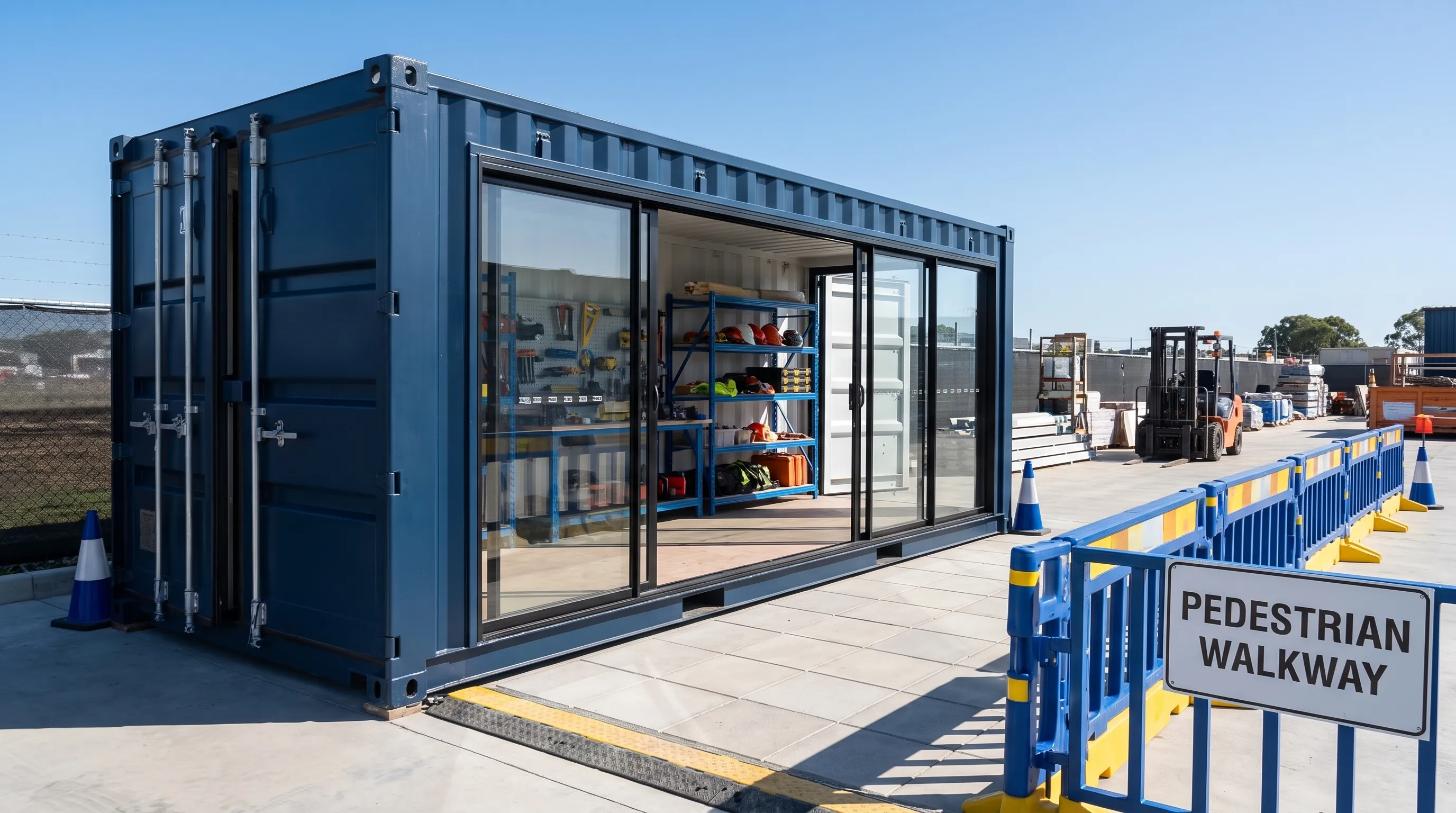
For a larger workspace, compare the Modified 20FT container office with Glass door & AC with your site layout and occupancy needs. The listing identifies a glass sliding door and built-in air conditioning; confirm the remaining specifications before ordering.
Place glazing away from foreseeable vehicle impacts and material-handling hazards. Check electrical demand, insulation, ventilation and emergency escape requirements. Air conditioning controls temperature, but it does not by itself confirm adequate outdoor-air ventilation.
For an occupied construction shipping container, also ask whether an engineer has reviewed structural openings and reinforcement. Cutting an ISO container's walls can affect its structural behavior. The container office setup guide provides additional planning context for preparing the site and utilities.
Inspect the installation and price the complete setup
The container's condition and surroundings will change during the project. Excavation may alter drainage. New material stacks may obstruct its doorway. Equipment traffic may damage barriers or cause settlement around the pad.
Make checks part of the daily routine
Inspect after storms and site changes, not just on delivery day. Door binding, uneven support or fresh corrosion deserves attention before it becomes a larger problem. Remove unsafe equipment from service and assign repairs to a qualified person.
Keep a short checklist at the unit:
- Check doors, hinges, locking bars and open-door restraints for damage or malfunction.
- Confirm that supports remain stable and water is not pooling around the base.
- Keep thresholds, aisles and emergency exits clear.
- Look for leaning racks, loose loads, leaks and damaged electrical equipment.
- Confirm that pedestrian barriers, lighting and emergency access remain effective.
Give a named supervisor responsibility for the construction shipping container. That person should control access, track inspections and confirm who may authorize modifications. A shared key without a clear owner often leads to inconsistent storage practices.
Compare delivered and installed costs
There is no dependable universal purchase price for this setup. Size, condition, modifications, delivery route and site preparation all affect the total. Request a written quote that separates the unit price from freight, unloading and installation work.
Budget for foundation preparation, anchoring when required, lighting, electrical connections, racks and access improvements. For offices, include permitting, utility work and any required design review. The mobile office container cost guide can help you organize those quote categories.
A construction shipping container purchase should be compared with leasing over the expected project duration. Include delivery, removal, relocation and maintenance in that comparison. Outback Shipping Containers is the main supplier; LeaseLink Containers is its leasing arm. Ask about current terms rather than assuming one option will always cost less.
Frequently asked questions
Do I need a permit for a shipping container on a construction site?
Requirements vary by state, county and municipality. Temporary storage, an occupied office and permanent placement may receive different treatment. Ask the local building and zoning departments about placement, setbacks, anchoring, electrical work and fire access before delivery. Approval for storage does not automatically authorize an office or shipping container home.
Can a shipping container sit directly on the ground?
Direct ground placement can create drainage, corrosion and settlement problems, depending on the soil and installation. A construction shipping container needs stable support that keeps it level and allows its doors to operate properly. Confirm the support arrangement with the supplier and a qualified site professional before unloading.
Is a shipping container safe for storing construction tools?
A sound unit can provide weather protection and controlled access, but safe storage also requires secured shelves, restrained materials and clear aisles. Inspect the floor and doors before use. Assess battery charging, fuels and chemicals separately rather than treating them as ordinary tools that can be stored anywhere inside.
Is a high cube container better for a construction site?
A standard high cube is 9 feet 6 inches tall, compared with 8 feet 6 inches for a standard-height freight container. The extra height can help with taller equipment or a planned conversion. It does not increase the ground-level footprint or remove structural, delivery or occupancy requirements.
Are container offices ready to use when they arrive?
Some arrive with installed features, but readiness depends on the model and site. An occupied construction shipping container may still need approved foundations, electrical connections, access provisions and local permits. Verify the supplied equipment, ventilation, insulation, exits and structural documentation before scheduling workers to use the space.
Match the container to your site plan
Choose the location, storage layout and occupancy requirements before placing an order. Then request documentation and a delivered quote for a unit that fits those requirements. Resolve foundation, access and utility questions before the truck arrives.
When you are ready to compare storage units or office options, share your site plan and delivery details with Outback Shipping Containers. The useful starting point is a container matched to the job, with a clear plan for installing and using it safely.