Building Site Containers for Secure Job Site Storage
Building site containers keep tools, materials, and documents secure. Learn sizes, conditions, delivery prep, and security options before you buy.
Building Site Containers for Secure Job Site Storage
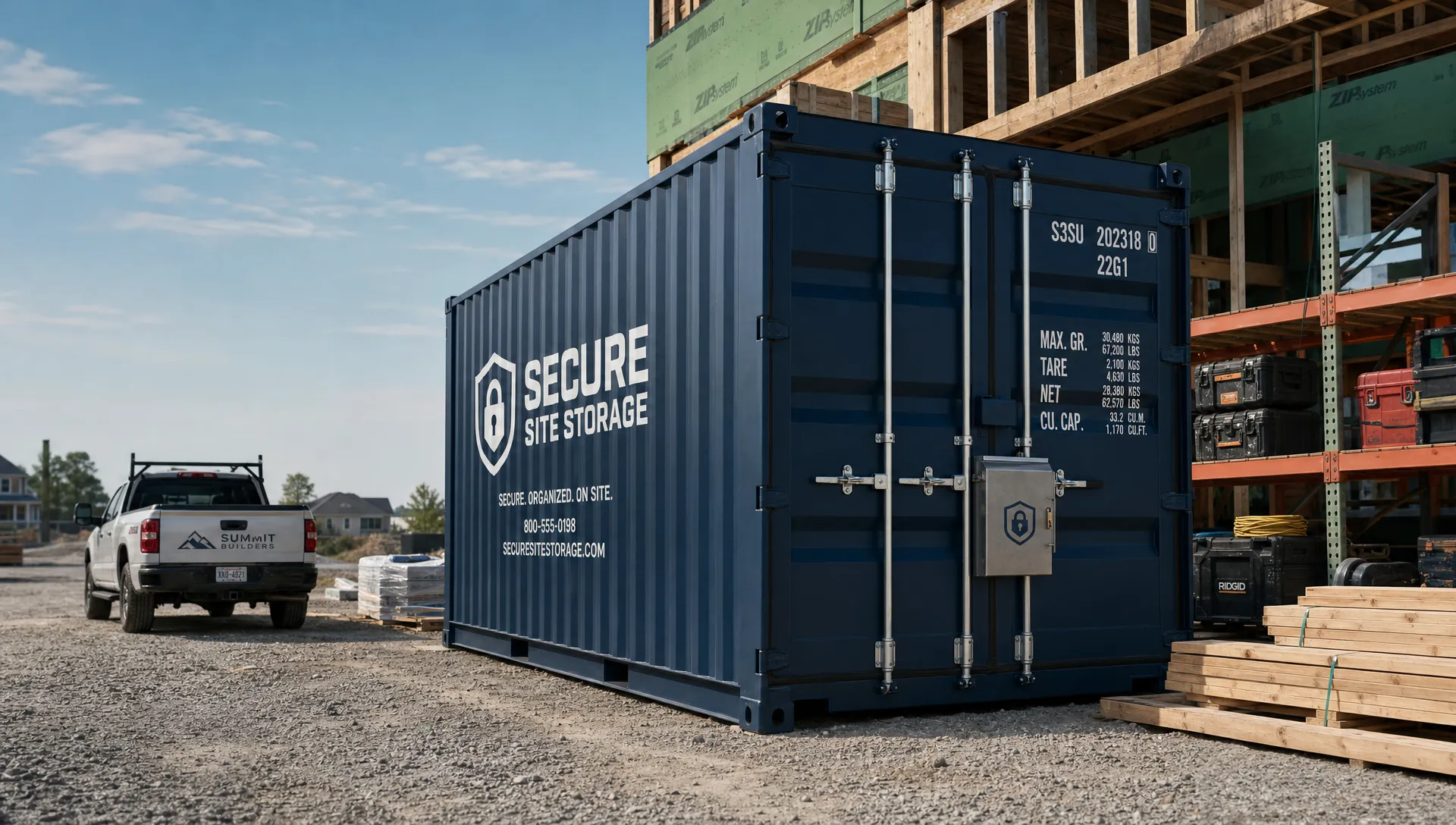
Building site containers are steel shipping containers used to protect tools, equipment, materials, plans, and supplies on active construction sites. For most crews, a 20ft or 40ft wind- and watertight container is the fastest way to add secure job site storage without building a shed or relying on daily tool transport.
Quick Answer: Choose a WWT or CWO 20ft container for compact job sites and high-value tool storage. Choose a 40ft or 40ft high cube container when you need bulk material storage, pallet access, or room for shelving. Place it on a level pad, add a lockbox or heavy-duty puck lock, and confirm delivery access before ordering.
Key Takeaways
- 20ft containers fit most building sites because they hold tools, fasteners, fixtures, small machines, and boxed materials without taking over the lot.
- 40ft containers work better for bulk storage such as lumber, pipe, conduit, cabinets, insulation, and palletized deliveries.
- WWT means wind- and watertight, which is usually enough for static job site storage. CWO, or cargo-worthy, is better if the container may be shipped loaded.
- Security depends on placement and process, not just steel walls. Use good locks, lighting, controlled keys, and a clear inventory system.
- Delivery planning matters because tilt-bed trucks need firm ground, overhead clearance, and enough straight-line space to unload safely.
Why Building Site Containers Work for Secure Storage
Construction sites change every day. Walls go up, deliveries arrive, trades rotate in and out, and weather can turn a clean site into a mess by lunch. A cargo container gives the crew one fixed point for storage, staging, and control.
A standard ISO container is built with corrugated steel walls, heavy steel doors, corner castings, and a marine-grade plywood or bamboo floor. That makes it far stronger than a temporary shed. It also arrives ready to use, with no framing, roofing, or long setup time.
For contractors, the main value is control. You can lock up expensive tools, keep materials dry, reduce daily loading time, and limit access to items that should not be sitting in open air. For owners and developers, a container can reduce site clutter and help crews work faster.
A secure conex box is also useful outside commercial construction. Farm operators use containers for fencing supplies and repair tools. Ranch owners store feed equipment and seasonal gear. Small businesses use them during remodels or property buildouts. If you need a broader look at storage and work uses, Outback Shipping Containers also covers practical shipping container solutions for farms and job sites.
The key is to match the unit to the job. A container that is too small creates clutter. A container that is too large may block traffic, crane access, or emergency routes. Good planning before delivery saves time later.
Choosing the Right Size for Job Site Storage
Most building site containers are 20ft, 40ft, or 40ft high cube units. Smaller 10ft units can work well in tight urban lots, but they are less common and may cost more per square foot of storage because of handling and availability.
Container dimensions are standardized for intermodal transport. The ISO 668 standard covers classification, dimensions, and ratings for Series 1 freight containers. Exact interior dimensions, tare weight, and payload capacity vary by manufacturer, so always check the unit data plate and supplier specifications.
| Container size | Typical exterior dimensions | Approx. floor area | Best job site use | Watch out for |
|---|---|---|---|---|
| 10ft standard | 10ft x 8ft x 8ft 6in | About 75 sq ft | Tight lots, small tool storage, remodels | Limited availability in some markets |
| 20ft standard | 20ft x 8ft x 8ft 6in | About 150 sq ft | Tools, compressors, fixtures, boxed materials | Can get crowded without shelving |
| 40ft standard | 40ft x 8ft x 8ft 6in | About 305 sq ft | Bulk material storage, pallet staging, larger crews | Needs more delivery and placement room |
| 40ft high cube | 40ft x 8ft x 9ft 6in | About 305 sq ft | Tall materials, racking, workshop layouts | Taller profile may affect clearance and visibility |
When a 20ft Container Makes Sense
A 20ft building site container is the default choice for many contractors. It is large enough for table saws, compressors, fasteners, hand tools, safety gear, and boxed finish materials. It is also easier to place on crowded lots than a 40ft unit.
A 20ft unit often works best when the container must sit near a driveway, fence line, or staging area. The shorter length gives you more room for trucks and workers to move around it. For remodels, infill lots, and smaller commercial jobs, that can matter more than total storage volume.
When a 40ft or High Cube Container Makes Sense
A 40ft container is better when you receive full pallets or need to separate materials by trade. Framing crews, electrical contractors, plumbing teams, and finish crews can each have a clear section. This reduces wasted time searching for parts.
A 40ft high cube adds one extra foot of exterior height. That extra height helps if you plan to install racks, store tall doors or panels, or use the container as a mixed storage and workshop space. Check site clearance first, especially near trees, power lines, and roof overhangs.
New, Used, WWT, and CWO: Which Condition Makes Sense?
Container condition affects price, appearance, service life, and confidence. For job site storage, you usually do not need a perfect one-trip unit. You need a dry, secure, structurally sound steel box with working doors and a solid floor.
That said, not all used containers are equal. Ask for clear condition details, photos, and inspection status. Outback Shipping Containers supplies certified inspected units, including wind- and watertight options, with nationwide delivery across all 50 states.
| Condition type | What it means | Good fit for job sites | Key check before buying |
|---|---|---|---|
| One-trip | Newer container used for one cargo move | Clean sites, customer-facing projects, long-term ownership | Confirm dimensions, door operation, and delivery cost |
| WWT | Wind- and watertight for static storage | Most secure job site storage needs | Inspect roof, seals, doors, floor, and vents |
| CWO | Cargo-worthy, suitable for loaded transport when accepted by carrier | Sites that may ship the unit loaded later | Confirm inspection status and CSC plate requirements |
| Refurbished | Used container repaired and often repainted | Contractors wanting better appearance without buying new | Ask what was repaired and whether it is WWT certified |
WWT Is Usually the Job Site Sweet Spot
WWT stands for wind- and watertight. It means the container should keep normal rain and wind out when used for storage. For tools, boxed materials, fixtures, and supplies, that is usually the right standard.
A WWT container may have dents, surface rust, prior decals, or patch repairs. Those cosmetic issues do not always hurt performance. The important points are roof integrity, door seals, floor condition, and door alignment.
CWO Matters If the Container Will Travel Loaded
CWO stands for cargo-worthy. A CWO container is inspected for shipping use, not just static storage. If you plan to load the container with materials and move it by truck, rail, or vessel, a CWO unit may be the better fit.
Do not assume every storage container can move loaded. Payload capacity, floor condition, data plate details, and carrier rules matter. Overloading a container can damage the floor, doors, truck, or lifting equipment.
One-Trip Containers Are Best for Long-Term Owners
A one-trip container costs more than a used unit, but it gives you cleaner paint, fewer dents, and a longer expected service life. That can make sense for property developers, repeat builders, equipment yards, and businesses that plan to keep the unit for years.
One-trip units also look better on customer-facing sites. If the container will sit near a sales office, public road, or finished property, appearance may be worth the extra cost.
Security Features and Placement That Reduce Theft
A steel intermodal container is hard to break into, but no storage setup is theft-proof. The best security plan uses layers. Start with a strong container, then control where it sits, who has keys, and how items are stored inside.
Put the doors where your team can see them, not where the public can work unseen. On many sites, that means facing the doors toward the active work area, camera view, or site trailer. Avoid placing the doors against a blind alley or dark fence line.
Use a lockbox if available, or pair a heavy-duty puck lock with a hardened hasp. Standard padlocks are easier to cut. Keep spare keys under control, and change locks when subcontractor access changes.
Inside the container, use shelves and bins so the crew can find what they need fast. Secure heavy items low. Do not stack materials in a way that can shift, collapse, or block the doors.
The Occupational Safety and Health Administration has construction rules for material storage, including keeping materials stable and not creating hazards. Review OSHA's materials handling and storage standard and follow your site safety plan.
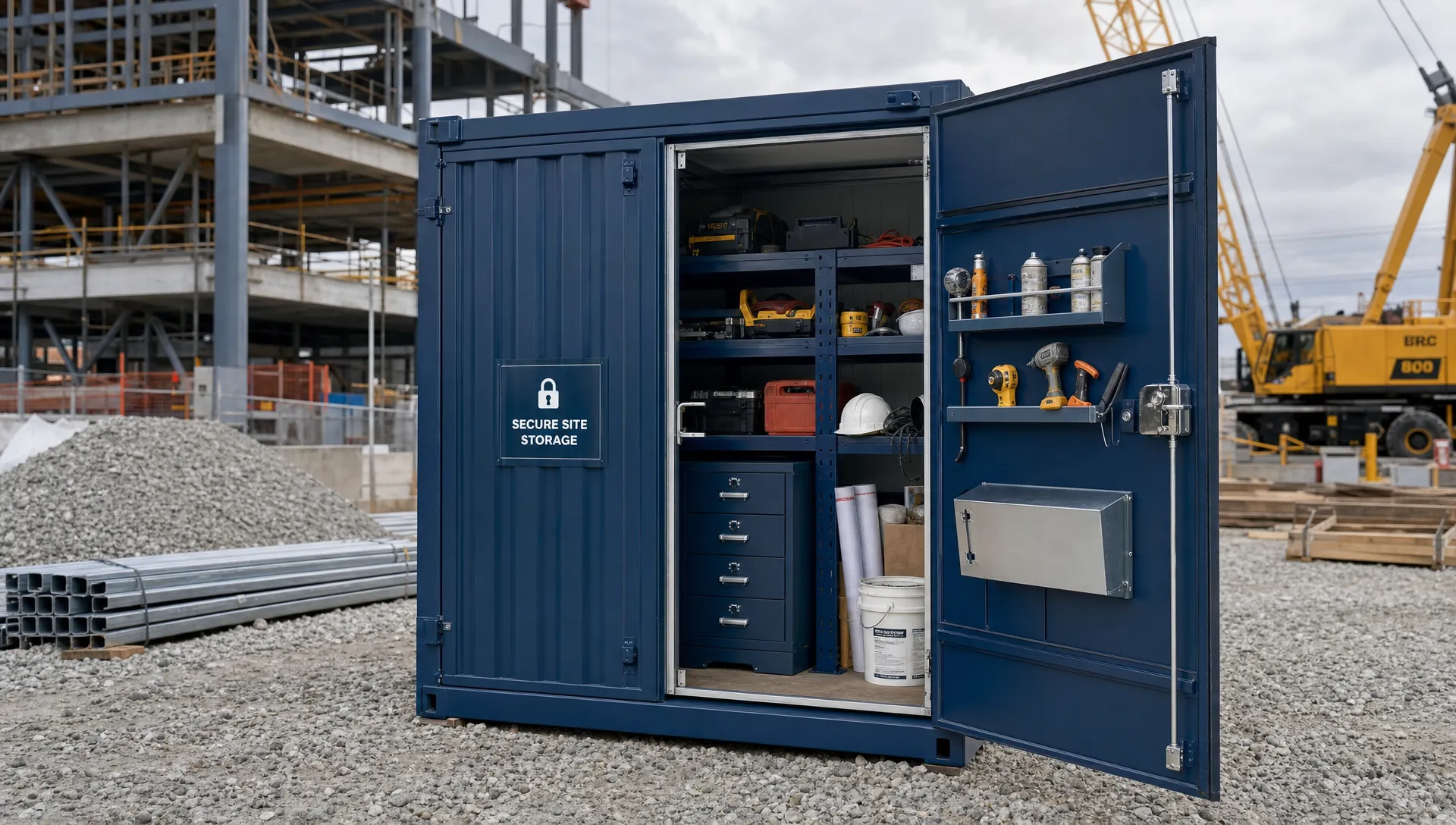
Good security also includes simple habits:
- Keep a daily tool checkout list for high-value items.
- Store copper, wire, fixtures, and small power tools away from the doors.
- Add motion lighting if the site has power.
- Photograph serial numbers for tools and equipment.
- Separate flammable or regulated materials only as allowed by local code and the product safety data sheet.
Do not use a regular shipping container as a shortcut around hazardous material rules. Fuel, solvents, compressed gas, batteries, and chemicals may need special cabinets, ventilation, signage, spill control, or permits. Requirements vary by state, city, insurer, and fire marshal.
Delivery, Site Prep, and Access Checklist
A container is only useful if it can be delivered safely and placed where the crew can use it. Delivery planning should happen before you buy. This is especially true for rural land, tight residential streets, busy commercial sites, and muddy lots.
Most building site containers are delivered by tilt-bed truck, roll-off truck, or crane-assisted truck, depending on location and equipment. The delivery method affects how much space you need. Ask your supplier what truck will be used before you mark the pad.
For tilt-bed delivery, many drivers need a straight approach that is longer than the container itself. A 20ft container may need roughly 75ft of straight-line clearance. A 40ft container may need roughly 100ft to 120ft. These numbers vary, so confirm them for your order.
Site prep should focus on three things: level support, drainage, and access. A container can twist if it sits unevenly. Twisted frames make doors hard to open, even when the container itself is in good shape.
Use this checklist before delivery day:
- Prepare a firm, level base using compacted gravel, concrete, asphalt, railroad ties, or concrete blocks at proper support points.
- Keep the container slightly elevated so water does not sit under the floor.
- Confirm truck access, turning radius, overhead clearance, and gate width.
- Remove low branches, loose debris, parked vehicles, and temporary fencing from the delivery path.
- Mark the door direction clearly before the driver arrives.
- Check local rules for temporary storage containers, especially on residential or public-facing sites.
Door direction deserves special attention. If the doors face the wrong way, the crew may waste time walking around the unit all day. Worse, the doors may open into traffic, mud, a trench, or a blocked work zone.
Drainage matters too. Even a watertight container can have condensation if warm, moist air meets cool steel. Good airflow, vents, desiccants, and smart material storage help protect tools, paper plans, and finish materials.
Mid-project tip: If you need a dedicated anti-vandal unit instead of a basic cargo container, compare options such as a 32 x 10 ft secure storage container before your next material delivery. It is easier to place secure storage early than to reorganize a crowded site later.
Cost Factors, Buying vs Leasing, and Office Add-Ons
The total cost of a job site container is not just the container price. Delivery, distance, condition, size, site access, modifications, taxes, and timing all affect the final number. The most accurate way to compare options is to request a quote with the delivery ZIP code and the exact size you need.
Outback Shipping Containers provides transparent online shopping, instant quotes, financing options, and support from purchase through delivery. If your project is temporary, ask whether leasing through LeaseLink Containers makes more sense than buying.
Buying often fits contractors, farms, developers, and small businesses that will use the container again after the current job. Leasing can fit short projects, seasonal overflow, or one-time remodels. If you expect to need secure storage for many months, compare the lease term against purchase and resale value.
Common cost drivers include:
- Container size, such as 20ft, 40ft, or 40ft high cube.
- Condition, including one-trip, WWT, CWO, or refurbished.
- Delivery distance from the depot to the job site.
- Site access, including difficult turns, poor roads, or crane needs.
- Security upgrades, vents, shelving, roll-up doors, personnel doors, or electrical work.
- Local taxes, permit fees, and any required site improvements.
Some projects need more than storage. A site superintendent may need a dry place for drawings, meetings, timecards, and a laptop. In that case, a storage container can be paired with a mobile office, or you can choose a converted unit with office space and storage space in one footprint.
For crews that need desks, insulation, HVAC, electrical, and secure storage, review the planning points for container offices that fit small teams and job sites. Office conversions may trigger permit, electrical, accessibility, or building code requirements, so check with local authorities before ordering.
Practical Layout Ideas for a Cleaner Job Site
A container works best when the inside is planned like a small warehouse. If workers have to climb over piles, the container will turn into a junk drawer. A few layout choices can prevent that.
Place daily-use tools near the doors. Put long-term materials in the back. Keep heavy items low and use labels on shelves, bins, and trade zones.
A simple 20ft layout might use one wall for shelves, one wall for long tools, and the center aisle for carts or small equipment. Keep at least a clear walking path from the doors to the back. If two people cannot move safely inside, remove clutter or choose a larger unit.
A 40ft layout can be split into zones. For example, the front 10ft can hold daily-use tools, the middle can hold trade materials, and the rear can hold bulk deliveries. This setup works well when the same container supports several crews.
For finish materials, avoid direct contact with damp floors or walls. Use pallets, racks, or dunnage to lift materials and allow airflow. This is important for cabinets, doors, trim, flooring, drywall accessories, and boxed fixtures.
If you plan to add electrical, lights, HVAC, insulation, windows, or a personnel door, treat the container as a container conversion. That work may need permits or licensed trades. Rules vary by state, county, city, and job type.
Frequently Asked Questions
What size container is best for a construction site?
A 20ft container is best for most construction sites because it stores tools, fasteners, boxed materials, and small equipment while fitting tight lots. A 40ft container is better for bulk materials, pallets, and larger crews. Choose a 40ft high cube when extra interior height matters.
Do I need a permit for a storage container on a job site?
Maybe. Permit rules vary by city, county, zoning district, project type, and how long the container stays on site. Temporary construction storage may be allowed under an active building permit, but do not assume. Ask the local building department, zoning office, HOA, or fire marshal before delivery.
Are shipping containers secure enough for tools?
Yes, a sound steel shipping container can be a strong tool storage option when paired with the right lock and placement. Use a lockbox or puck lock, face the doors toward activity or cameras, control keys, and keep high-value tools inventoried. Security is strongest when the process is consistent.
What is the difference between WWT and cargo-worthy containers?
WWT means wind- and watertight for static storage. It is usually enough for job site use. Cargo-worthy, or CWO, means the container has been inspected for loaded transport when accepted by a carrier. Choose CWO if the unit may be shipped loaded later.
Can a building site container be used as an office?
Yes, but an office container needs more planning than a storage container. Common additions include insulation, HVAC, electrical, lighting, windows, and personnel doors. Local codes may apply, especially for electrical work, occupancy, accessibility, and anchoring. Always check local requirements before starting a conversion.
How should I prepare the site before delivery?
Prepare a level, firm pad with good drainage and clear truck access. Confirm gate width, turning radius, overhead clearance, and door direction. Remove vehicles, branches, debris, and temporary obstacles. Ask the supplier what delivery truck will be used because space needs vary by method.
Get Secure Storage for Your Next Job Site
The right container can make a job site cleaner, safer, and easier to manage. Start with the size, condition, and delivery access. Then add the security and layout details that match the way your crew actually works.
If you need storage, office space, or a combined setup, explore Outback Shipping Containers' portable modular office and storage solutions. You can compare options, request an online quote, and plan delivery for jobsites across the United States.