Shipping Container Solutions for Farms and Job Sites
Explore shipping container solutions for farms and job sites, from storage and offices to sizes, certifications, delivery, and site prep.
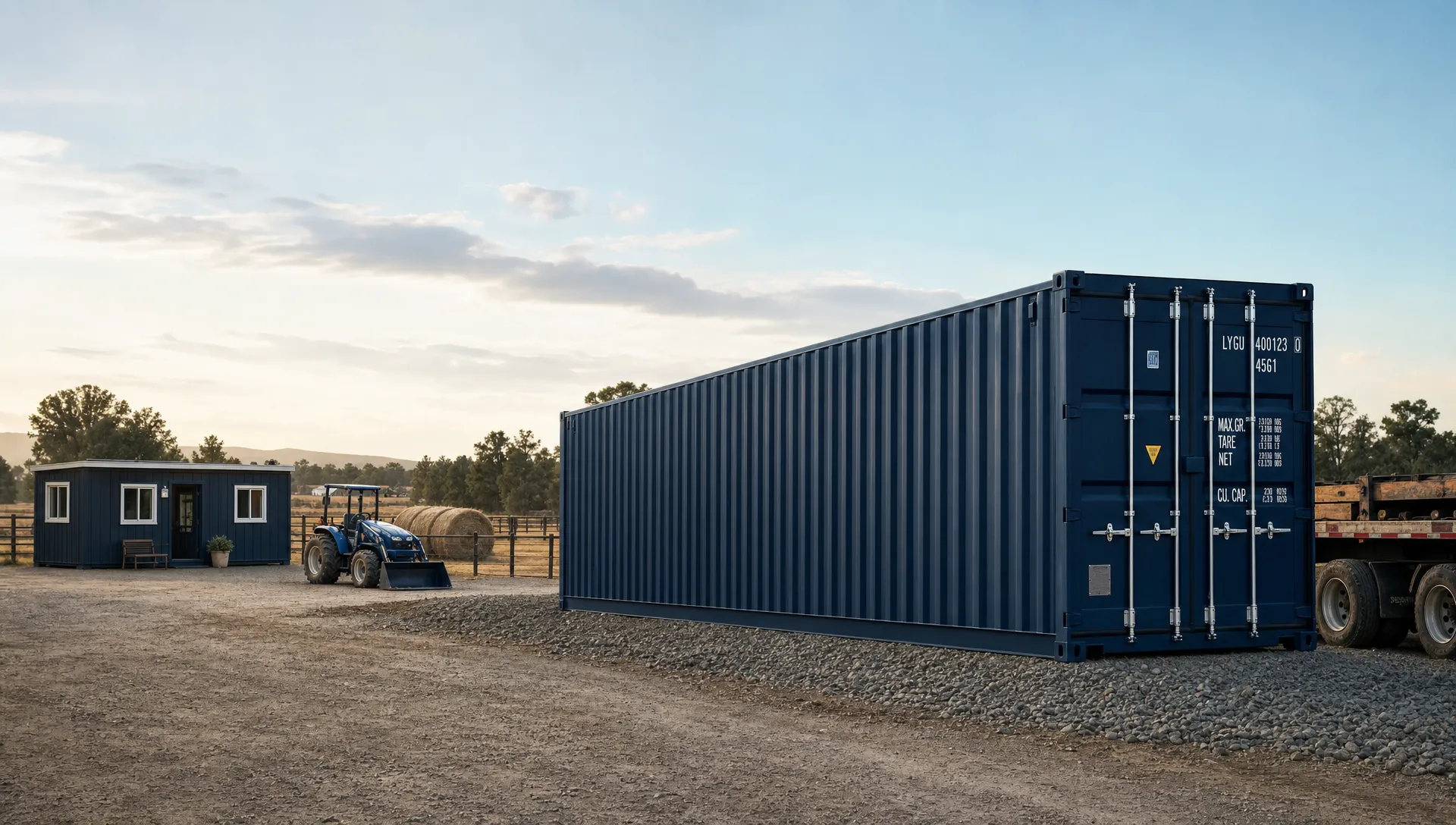
Shipping Container Solutions for Farms and Job Sites
Quick Answer: The best shipping container solutions for farms and job sites are usually WWT or cargo-worthy 20ft and 40ft containers for secure storage, plus modified high cube units for offices, workshops, and equipment rooms. Choose a 20ft unit when access is tight or you need separate storage zones. Choose a 40ft or 40ft high cube when you need more cubic space, pallet storage, or room for workbenches and crew use.
Key Takeaways
- A WWT container is often the right choice for farm storage, tools, feed, job-site materials, and seasonal inventory.
- A cargo-worthy container is better if the unit may be moved often, loaded heavily, or returned to intermodal transport.
- A 20ft container is easier to place on tight sites, while a 40ft high cube gives the best storage volume for large equipment and palletized materials.
- Delivery planning matters as much as the container itself. Grade, overhead clearance, road width, and turning space can make or break the project.
- For offices, workshops, and crew space, plan insulation, ventilation, power, lighting, security, and permits before ordering.
What Farms and Job Sites Need From a Container
Farm and construction sites ask a lot from storage. The unit has to handle weather, dust, pests, theft risk, uneven ground, and rough daily use. A shipping container, also called a conex box, cargo container, ISO container, or intermodal container, fits that work because it is built with a steel frame, corner castings, and heavy-duty doors.
For farms, the main goal is usually protection. You may need a dry place for tools, seed, irrigation parts, fencing, feed equipment, ATV attachments, or seasonal supplies. For ranches and rural properties, the container may sit far from the house or shop, so security and weather resistance matter.
For job sites, the goal is fast deployment. Contractors need secure storage for tools, copper, fixtures, lumber, safety gear, and rented equipment. Many sites also need a field office, plan room, crew break area, or small workshop that can be moved when the project ends.
The best unit is not always the newest unit. It is the one that matches the load, site access, use case, and budget. Outback Shipping Containers supplies new one-trip, used, refurbished, WWT, CWO, high cube, office, and custom units nationwide, so buyers can match the container to the job instead of forcing one size to fit every site.
Best Shipping Container Solutions by Use Case
The right shipping container solutions depend on what you are storing, how often people will enter the unit, and whether the container will stay in one place or move between sites.
| Use case | Best container type | Common size | Condition to consider | Practical notes |
|---|---|---|---|---|
| Farm tools and parts | Standard storage container | 20ft or 40ft | WWT or refurbished | Add shelving, vents, and a lockbox for daily use. |
| Feed, seed, and bagged materials | Standard or high cube storage | 20ft or 40ft high cube | WWT | Use pallets, airflow, and moisture control to reduce condensation risk. |
| Small farm workshop | Modified container | 20ft or 40ft high cube | One-trip or refurbished | Plan doors, windows, power, lighting, and insulation before delivery. |
| Construction tool storage | Standard cargo container | 20ft | WWT or CWO | Easier to move between projects and place on tighter lots. |
| Job-site office | Modified office container | 20ft or 40ft | One-trip or refurbished | Plan HVAC, electrical, insulation, desks, and data needs. |
| Equipment storage | High cube container | 40ft high cube | CWO or WWT | Extra height helps with racks, ladders, attachments, and bulky tools. |
| Retail, ticket booth, or field station | Custom container conversion | 20ft or 40ft | One-trip | Better appearance and fewer repairs before modification. |
A farmer storing hand tools does not need the same unit as a contractor storing heavy equipment. A rural Airbnb host adding a maintenance shed does not need the same layout as a civil crew running a highway project. Start with the use case, then choose the size, condition, and modifications.
Container Sizes, Conditions, and Specs to Compare
Most ISO containers follow standard exterior widths and heights. Standard units are 8 feet wide and 8 feet 6 inches tall. High cube containers are usually 9 feet 6 inches tall, which gives about one extra foot of height inside.
The ISO 668 standard covers key dimensions and ratings for Series 1 freight containers. Actual interior dimensions, tare weight, and payload capacity can vary by manufacturer, age, repairs, and the CSC plate on the unit.
| Container size | Exterior dimensions | Approx. interior volume | Typical empty weight | Best fit |
|---|---|---|---|---|
| 10ft | 10ft x 8ft x 8ft 6in | About 560 cu ft | Varies by build | Small yards, tool storage, tight farms, compact sites |
| 20ft standard | 20ft x 8ft x 8ft 6in | About 1,170 cu ft | About 4,800 to 5,100 lb | Job-site tools, feed, parts, small workshops |
| 40ft standard | 40ft x 8ft x 8ft 6in | About 2,390 cu ft | About 8,000 to 8,800 lb | Bulk storage, materials, seasonal farm supplies |
| 40ft high cube | 40ft x 8ft x 9ft 6in | About 2,700 cu ft | About 8,600 to 9,200 lb | Taller racks, equipment, office conversions, workshops |
| 45ft high cube | 45ft x 8ft x 9ft 6in | About 3,040 cu ft | Varies by unit | Large-volume storage and custom modular builds |
20ft vs 40ft containers
A 20ft container is the most flexible choice for active work sites. It is easier to place, easier to move, and often better when the site has narrow gates, soft ground, or limited turning space. It also works well when you want separate units for different crews, trades, or storage categories.
A 40ft container gives far more space for the footprint. It is often the better long-term value for farms that need seasonal storage or contractors who store bulky materials. The tradeoff is delivery access. A 40ft unit needs more straight-line room, better turning space, and a stronger pad.
One-trip, WWT, and CWO conditions
A one-trip container is usually the cleanest choice for custom builds, offices, retail units, and visible property improvements. It has made one cargo trip and normally has less wear than older used units.
A WWT container is wind- and watertight. It should keep out normal rain and wind when the doors, seals, roof, and walls are in working condition. WWT is a strong fit for static farm and job-site storage.
A CWO container is cargo-worthy. It has the structural condition needed for cargo use, subject to inspection and required documentation. If the container may be shipped, stacked, or moved under heavy load, ask about cargo-worthy condition and verify the CSC plate.
If you are comparing low-cost farm units, it helps to understand the risks of buying too cheap. Outback's guide to as-is vs cargo-worthy containers for farm storage explains why door seals, floor strength, roof condition, and structural repairs matter over the long term.
Farm Applications: Storage, Workshops, Feed, and Equipment
A farm container should be set up around daily use. The doors must open easily. The floor must handle the load. The interior should stay dry enough for the items being stored. The unit also needs to be placed where trucks, tractors, and skid steers can reach it without tearing up the site.
For feed, seed, and bagged supplies, moisture is the main concern. Even a WWT unit can develop condensation if warm humid air hits cooler steel. Use pallets to keep bags off the floor, add vents where needed, and avoid packing goods tight against the walls.
For tools and repair parts, organization matters. Shelving, bins, hooks, and labeled zones make a container much more useful. A 20ft unit can work as a mobile parts room, while a 40ft unit can hold larger inventory, fencing rolls, oil, filters, sprayer parts, and seasonal supplies.
For farm chemicals, fuels, batteries, and hazardous materials, do not treat the container as a simple shed. Follow product labels, safety data sheets, ventilation needs, and local rules. Some materials need spill containment, separation from other goods, or special fire code review.
For workshops, a high cube unit is often worth considering. The extra height helps with lighting, overhead storage, and comfort. If people will work inside for more than short tasks, plan insulation, ventilation, power, and safe exits before the unit is modified.
A container can also support rural property income. Airbnb hosts, hunting property owners, and small ranch venues use containers for maintenance storage, linen storage, equipment rooms, pool support rooms, and small modular cabins. For living space or guest use, permits, insulation, utilities, and local building codes become much more important.
Job Site Applications: Secure Storage, Offices, and Crew Space
On a construction site, theft prevention is often the first reason to buy or lease a container. Tools, copper, wire, fixtures, doors, generators, and rented equipment can be costly to replace. A steel container with a lockbox and quality puck lock creates a stronger barrier than a temporary shed or open trailer.
Material flow is the second reason. A container near the work area reduces wasted walking time and keeps trades from mixing tools and supplies. Large projects may use separate containers for electrical, plumbing, framing, safety, and owner-supplied materials.
Office containers help when a superintendent, project manager, or foreman needs a place for plans, meetings, laptops, files, and daily reports. A 20ft office can fit a small crew. A 40ft office can support a larger team or a split office and storage layout.
For more planning detail, Outback's guide to container offices that fit small teams and job sites covers practical layouts, insulation, HVAC, electrical needs, and sizing choices for crews that need fast setup.
Workshops need a different layout than offices. A workshop may need a roll-up door, personnel door, workbench, tool wall, welding ventilation, lighting, and heavy-duty power planning. Tell your supplier how the space will be used before modifications start, because door placement and electrical layout affect daily workflow.
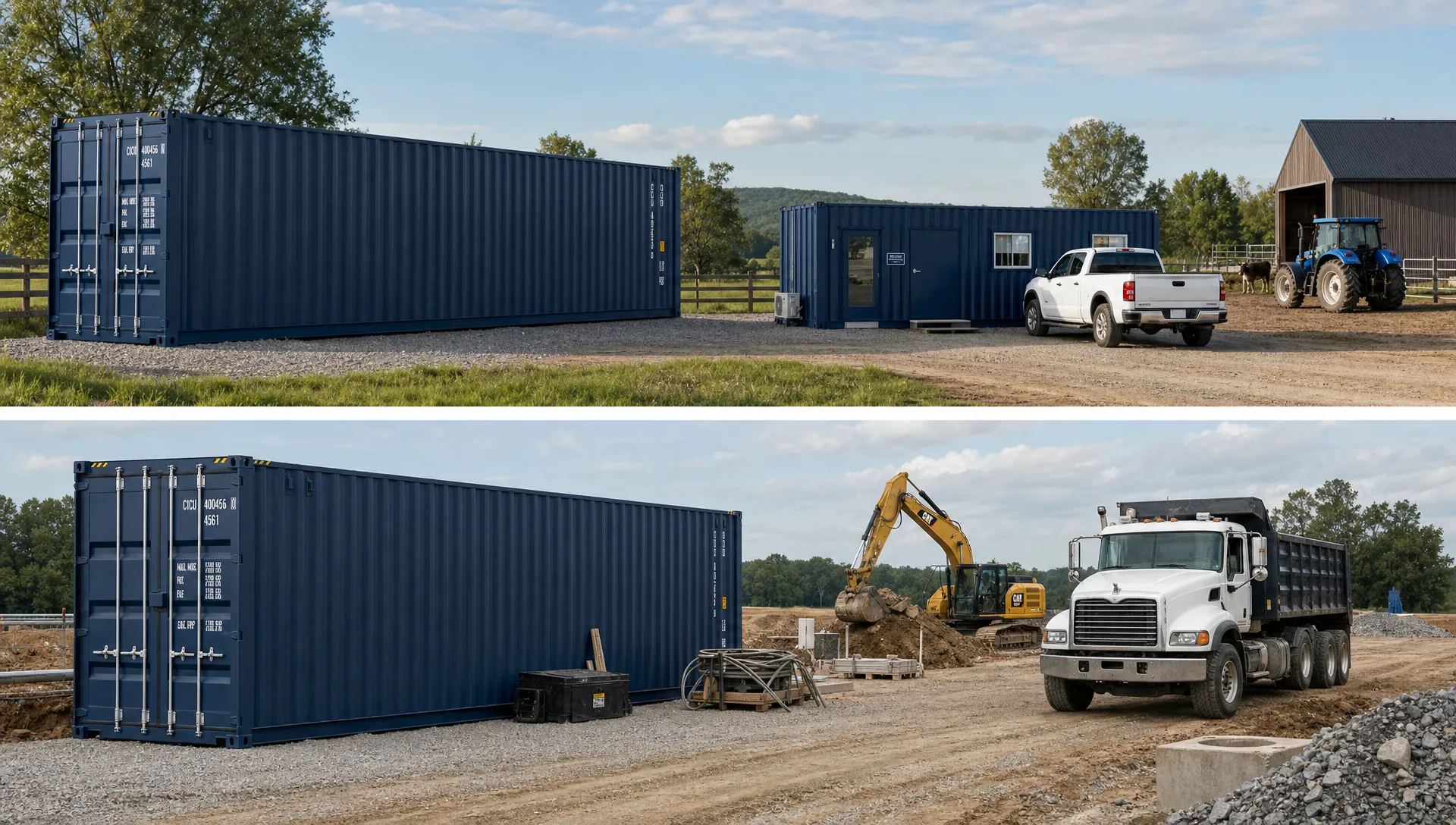
Delivery, Site Prep, Permits, and Safety
A good container purchase can still go wrong if the delivery plan is weak. Rural sites may have narrow drives, soft shoulders, low limbs, cattle guards, gates, slopes, or overhead power lines. Urban job sites may have traffic limits, tight alleys, curb restrictions, and limited unloading windows.
Most farm and job-site deliveries use tilt-bed, flatbed, side-loader, or crane-assisted equipment. The best method depends on container size, access, ground conditions, and the final placement. Before ordering, review Outback's guide to shipping container transport options and site rules so you know what your site must handle.
Prepare the site before the truck arrives. A level compacted gravel pad is often a practical choice because it drains well and reduces sinking. Avoid placing a container directly in mud or low spots where water pools around the steel floor frame.
Confirm these details before delivery day:
- The delivery truck has enough straight-line room to unload the container.
- The driveway, gate, and turn area can handle the truck and trailer.
- The pad is level from side to side and end to end.
- The doors have room to swing fully open.
- There are no low branches, low wires, septic covers, weak culverts, or hidden utilities in the route.
- The container will be supported at key points, including corners, to reduce twist and door problems.
Permits and zoning rules vary by state, county, city, and property type. Some rural areas allow storage containers with few restrictions. Other locations regulate placement, setbacks, appearance, foundation type, duration of use, electrical work, or use as occupied space. Always check with the local building department or zoning office before delivery, especially for office, workshop, retail, or living-space conversions.
Safety also matters after placement. Do not overload shelves, block exits, store incompatible chemicals together, or run temporary electrical cords in unsafe ways. OSHA's materials handling and storage guidance is a useful reference for job sites that store heavy materials, stacked goods, and equipment.
Budget and Buying Checklist
There is no single fair price for every container in the United States. Container pricing changes with location, size, condition, modifications, delivery distance, fuel costs, inventory, and current freight demand. That is why transparent online pricing and instant quotes are more useful than a national average that may not apply to your site.
A complete container quote should show more than the unit price. It should also help you understand delivery, taxes if applicable, modification costs, and any financing terms. If a price looks far below the market, ask for current photos, inspection details, condition class, delivery terms, and payment safeguards.
| Cost item | Why it matters | Questions to ask |
|---|---|---|
| Container unit | Size and condition drive the base cost. | Is it one-trip, WWT, CWO, refurbished, or as-is? |
| Delivery | Distance and equipment type affect the final cost. | Is delivery included, estimated, or billed separately? |
| Site prep | Poor prep can cause door binding, sinking, or water issues. | Do I need gravel, blocking, grading, or access improvements? |
| Modifications | Offices and workshops need planning before cutting steel. | Are doors, vents, insulation, electrical, and HVAC included? |
| Permits | Local rules may affect placement and use. | Does my county regulate storage, offices, or occupied space? |
| Security | Job sites and remote farms need theft protection. | Should I add a lockbox, lighting, cameras, or fencing? |
When cash flow is important, ask about financing options or whether a lease structure through LeaseLink Containers, Outback's leasing arm, fits the project. Terms depend on the unit, location, approval, and current offer, so review the written quote instead of assuming a standard payment.
Use this simple buying checklist before you order:
- Define the main use: storage, office, workshop, feed, equipment, or custom build.
- Pick the size based on access first, then storage volume.
- Choose condition based on risk, not just price.
- Confirm whether you need WWT, CWO, one-trip, or refurbished.
- Ask for photos, inspection details, and door operation notes.
- Plan delivery access, pad, drainage, and door swing.
- Check permits, zoning, setbacks, and electrical rules.
- Add security, ventilation, and shelving before the container fills up.
- Get a written quote that separates unit cost, delivery, and modifications.
For farms and job sites, the best return often comes from avoiding waste. A dry container can protect supplies from weather loss. A secure container can reduce theft and downtime. A job-site office can reduce trips back to the main office. A workshop can keep repairs moving when the nearest service shop is far away.
Outback Shipping Containers serves all 50 states, including remote and rural delivery areas. That matters for farms, ranches, energy sites, road crews, and development projects where the nearest container yard may be hours away.
Frequently Asked Questions
What size shipping container is best for farm storage?
A 20ft container is best for smaller farms, tools, parts, and tight access. A 40ft container is better for bulk feed supplies, seasonal equipment, fencing, and palletized materials. A 40ft high cube is useful when you need taller shelving, more cubic space, or room for bulky attachments.
Do I need a permit for a shipping container on my property?
Maybe. Permit and zoning rules vary by city, county, state, property type, and use. A temporary storage container may be treated differently than a permanent workshop or office. Always check with your local building or zoning office before delivery, especially if you plan utilities or occupancy.
Are used shipping containers waterproof?
A good WWT used container should keep out normal wind and rain when doors, seals, roof, and walls are in working condition. It is better to say wind- and watertight rather than waterproof. Inspect photos, ask about leaks, and plan ventilation because condensation can still happen inside steel containers.
Can a shipping container be used as a job site office?
Yes. A shipping container can be modified into a job-site office with insulation, HVAC, electrical, lighting, windows, personnel doors, and work surfaces. For occupied use, check local code, electrical rules, egress needs, and permit requirements. A 20ft unit often works for small teams, while 40ft units support larger layouts.
How should I prepare my site for container delivery?
Choose a level, well-drained area with enough room for the delivery truck to enter, turn, unload, and exit safely. A compacted gravel pad is often practical. Clear overhead branches and wires, mark underground utilities, confirm door swing, and tell the delivery team about slopes, soft ground, gates, and access limits.
Is it better to buy or rent a shipping container for a job site?
Buy if you expect long-term use, repeated projects, or permanent farm storage. Rent or lease if the need is short-term or tied to one project. Compare total months of use, delivery costs, pickup costs, modification needs, and cash flow before deciding. Financing may also be worth asking about.
Ready to plan a farm or job-site container? Outback Shipping Containers can help you compare storage units, offices, workshops, and custom builds with nationwide delivery and clear quotes. Start with the available portable modular office and storage options, or use them as a baseline for your next farm, ranch, or construction site setup.