How to Purchase Storage Containers for Business Use
Learn how to purchase storage containers for business use, compare sizes and grades, plan delivery, avoid hidden costs, and buy with confidence.
How to Purchase Storage Containers for Business Use
To purchase storage containers for business use, start with the job the container must do. Then choose the right size, condition grade, delivery method, and site setup before you pay. Most businesses compare 20ft and 40ft units first, then decide between new one-trip, used wind and watertight, cargo-worthy, or refurbished containers.
Quick Answer: The safest way to buy a business storage container is to price the full delivered cost, verify the container grade in writing, confirm truck access, and buy from a supplier that can support delivery logistics, financing, and documentation.
Key Takeaways
- Match the container to the use case first: storage, job-site tools, inventory, farm supplies, workshop, or office conversion.
- Compare delivered cost, not just the container price. Delivery, site work, lift equipment, and modifications can change the total.
- Choose WWT for static storage, CWO for units that may re-enter cargo service, and one-trip for cleaner appearance or long-term use.
- Plan site access before purchase. Tilt-bed delivery for a 40ft container can need about 100 to 120 feet of straight clearance.
- Ask for written details on size, condition, delivery ZIP code, payment terms, and any wind and watertight guarantee.
How to Purchase Storage Containers Without Costly Mistakes
Business buyers often make the same mistake: they shop by price before they define the job. A shipping container is a steel asset, not just a box. The right unit for a contractor may not be right for a farm, retailer, school, manufacturer, or event business.
Start by writing down what the container must protect. Tools, feed, furniture, paper files, spare parts, seasonal inventory, and electrical equipment all have different needs. Moisture control, security, floor strength, access doors, and ventilation matter more than a low headline price.
Decide what the container will do
For basic storage, a wind and watertight cargo container can be enough. For higher-value inventory, customer-facing sites, or long-term use, a one-trip or refurbished unit may be worth the added cost. If the container will become an office, workshop, retail kiosk, or shipping container home, start with a cleaner shell and plan modifications before delivery.
Ask these questions early:
- Will the container stay in one place or move between job sites?
- Will employees enter it daily, or will it only store materials?
- Do you need forklift access, shelving, lights, vents, or roll-up doors?
- Will the unit sit in a public-facing area where appearance matters?
- Will you store moisture-sensitive goods, chemicals, fuel, or equipment?
If the container may be moved by ship, rail, or intermodal truck, ask about cargo-worthy status and the CSC plate. Static storage has different needs than an intermodal container that must meet transport requirements.
Know the basic container standards
Most dry shipping containers follow common ISO dimensions, which is why a 20ft or 40ft conex box can move by truck, rail, and ship. The official dimensional standard is covered under ISO 668 for Series 1 freight containers. Exact specs still vary by manufacturer, age, and container type, so always confirm the data plate on the unit.
For business storage, the key numbers are exterior length, door opening, interior height, tare weight, and payload capacity. Tare weight is the empty weight of the container. Payload capacity is the maximum cargo weight the container is rated to carry. For stationary storage, floor condition and support matter as much as the printed payload.
Choose the Right Size for Business Storage
Most businesses compare 10ft, 20ft, 40ft, and 40ft high cube containers. A 45ft high cube can be useful when you need more volume and have room for delivery. Smaller 10ft units are often cut-down or modified containers, so confirm build quality and door operation.
| Container size | Common exterior dimensions | Approx. interior volume | Best business uses | Key buying note |
|---|---|---|---|---|
| 10ft standard | 10ft x 8ft x 8ft 6in | About 560 cu ft | Small tools, retail overflow, tight yards | Easy to place, but often modified from larger units |
| 20ft standard | 20ft x 8ft x 8ft 6in | About 1,170 cu ft | Job-site tools, farm supplies, small inventory | Good balance of space and site access |
| 40ft standard | 40ft x 8ft x 8ft 6in | About 2,390 cu ft | Bulk storage, construction materials, warehouse overflow | Better cost per cubic foot if you have room |
| 40ft high cube | 40ft x 8ft x 9ft 6in | About 2,690 cu ft | Tall equipment, racking, office conversions | Extra height helps with ventilation, insulation, and lighting |
| 45ft high cube | 45ft x 8ft x 9ft 6in | About 3,040 cu ft | Large inventory, commercial conversions, modular builds | Confirm delivery access and local placement rules |
A 20ft unit is often easier to place in tight yards, urban lots, farms with narrow drives, and active construction sites. It also works well when you need dense storage, such as tools, parts, or boxed inventory.
A 40ft unit gives more storage for the footprint. It is common for contractors, logistics firms, retailers, schools, and agricultural operations. The tradeoff is delivery access. A 40ft tilt-bed truck needs more straight-line room to unload safely.
A high cube container adds one foot of exterior height. That sounds small, but it helps when you add insulation, overhead lights, racks, or HVAC. For offices, workshops, and container conversions, high cube units are often easier to work with.
Pick the Right Grade: New, Used, WWT, CWO, or Refurbished
Container grade is where many first-time business buyers get confused. Sellers use terms like one-trip, used, cargo-worthy, WWT, refurbished, and as-is. These terms are not all equal.
A one-trip container is a newer unit that usually made one cargo trip before resale. It tends to have cleaner paint, fewer dents, better door seals, and less floor wear. It is a strong choice for customer-facing businesses, long-term storage, office conversions, and modular builds.
A used wind and watertight container, often called WWT, should keep out normal rain and wind when the doors are closed. It may have dents, surface rust, patches, and cosmetic wear. For many business storage needs, WWT is the practical choice.
A cargo-worthy container, often called CWO, is suitable for cargo transport when properly inspected and documented. If you plan to ship goods in the container, ask for current cargo-worthy condition details and confirm whether the CSC plate is valid for your intended use.
A refurbished container may be repaired, repainted, or upgraded. Ask what refurbishment includes. New paint alone is not the same as structural repair, new door seals, vent work, or floor patching.
For a deeper grade-by-grade breakdown, Outback Shipping Containers explains how buyers should compare used storage container grades before choosing a WWT, cargo-worthy, refurbished, or as-is unit.
| Grade | Typical condition | Good fit for business use | What to verify |
|---|---|---|---|
| One-trip | Newer, cleaner, light handling marks | Retail sites, offices, long-term assets, clean inventory | Door seals, floor, paint, factory specs |
| WWT | Used, weatherproof for storage | Tools, equipment, farm supplies, overflow stock | Written wind and watertight condition |
| CWO | Used but fit for cargo service | Shipping, export, intermodal use | Inspection status and CSC plate details |
| Refurbished | Repaired or repainted used unit | Customer-facing storage, longer service life | Exact repair and repaint scope |
| As-is | No reliable condition promise | Low-risk, noncritical storage only | Holes, floor damage, doors, roof, rust |
For most businesses storing valuable materials, avoid as-is units unless you inspect them in person and can accept the risk. A cheap box with roof pinholes, bad door gaskets, or a soft floor can cost more than a better unit after repairs.
Compare Delivered Cost, Not Just the Container Price
The container price is only one part of the purchase. A clean quote should show the unit type, size, condition grade, delivery location, unload method, taxes if applicable, and any modification costs.
Two suppliers can show very different base prices, but the higher base price may be the better deal if it includes a better unit, clearer delivery terms, and fewer surprises. This is common in rural areas, remote job sites, and locations that need special delivery equipment.
Costs to confirm before you approve the invoice
Ask for these line items in writing:
- Container size and condition grade
- New, one-trip, used, WWT, CWO, or refurbished status
- Delivery ZIP code and unload method
- Any mileage, waiting time, or failed delivery charges
- Lift equipment needs, such as crane, forklift, or tilt-bed truck
- Modifications, including vents, lockbox, roll-up door, windows, insulation, or electrical prep
- Payment schedule, financing option, or lease terms
- Warranty or wind and watertight guarantee language
Do not rely on a verbal promise. If your company needs purchase approval, asset tracking, or insurance records, your invoice should be clear enough for accounting to understand what was bought.
Watch for price red flags
Very low online prices can hide high delivery fees, bait-and-switch inventory, poor-condition boxes, or sellers that do not control the unit they advertise. Be careful with sellers that only accept wire transfers, refuse to identify the container condition, or cannot explain delivery access.
A trustworthy seller should be able to discuss the container ID, condition grade, estimated delivery process, and the practical limits of your site. Outback Shipping Containers supports buyers with transparent online pricing, instant quotes, certified inspected units, financing options, and nationwide delivery across all 50 states.
Vet the Seller Before You Buy
A business container purchase should feel like an equipment purchase. Treat it with the same care you would use for a trailer, forklift, skid steer attachment, or job-site office.
Ask how the seller grades used containers. A good supplier should explain WWT, CWO, one-trip, and refurbished options without pressuring you into the cheapest unit. If you are buying multiple containers, ask whether units can be matched by size, color, condition, or delivery schedule.
Documents and details to request
For static storage, you usually want a clear invoice, condition description, delivery terms, and written WWT guarantee if applicable. For cargo use, ask about cargo-worthy inspection status and the CSC plate. For accounting, you may also need the asset description, purchase date, business name, and delivery address.
Businesses should also consider insurance. If the container will store expensive tools, parts, or inventory, ask your insurance agent how coverage works. Some policies treat the container as business personal property, while others may need a schedule or rider.
Inspect the unit when possible
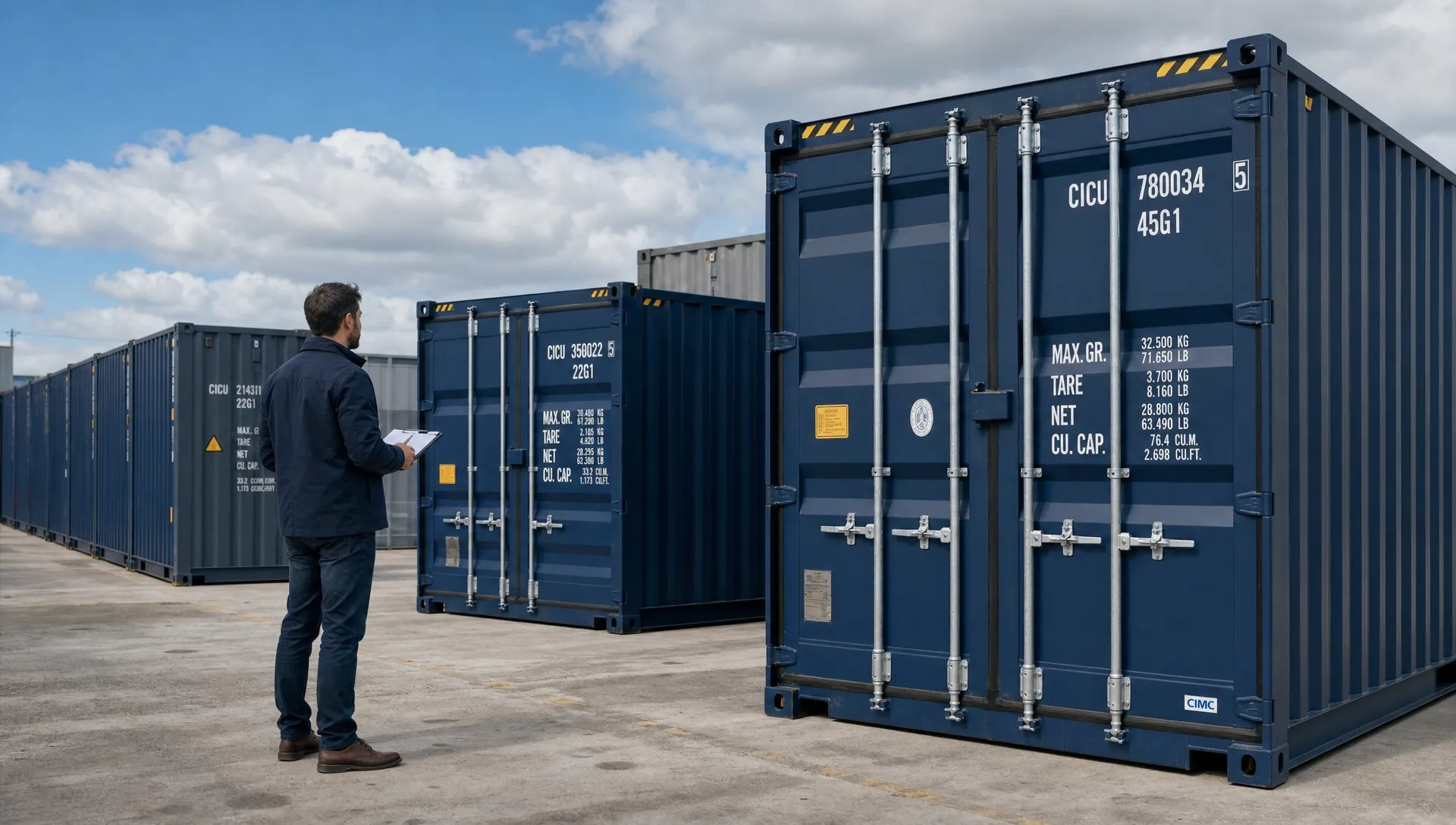
If you can inspect the container, check the roof, corner posts, door gaskets, locking rods, hinges, floor, threshold, underside, and interior walls. Step inside during daylight, close the doors, and look for pinholes of light. Small light leaks often mean water can enter.
If you cannot inspect in person, ask for clear photos or representative condition details. For used containers, minor dents and surface rust are normal. Holes, twisted frames, heavy floor rot, and doors that do not seal are not acceptable for most business storage.
Plan Delivery, Site Prep, and Security
Delivery planning can make or break the purchase. A perfect container is not useful if the truck cannot reach the pad or unload safely.
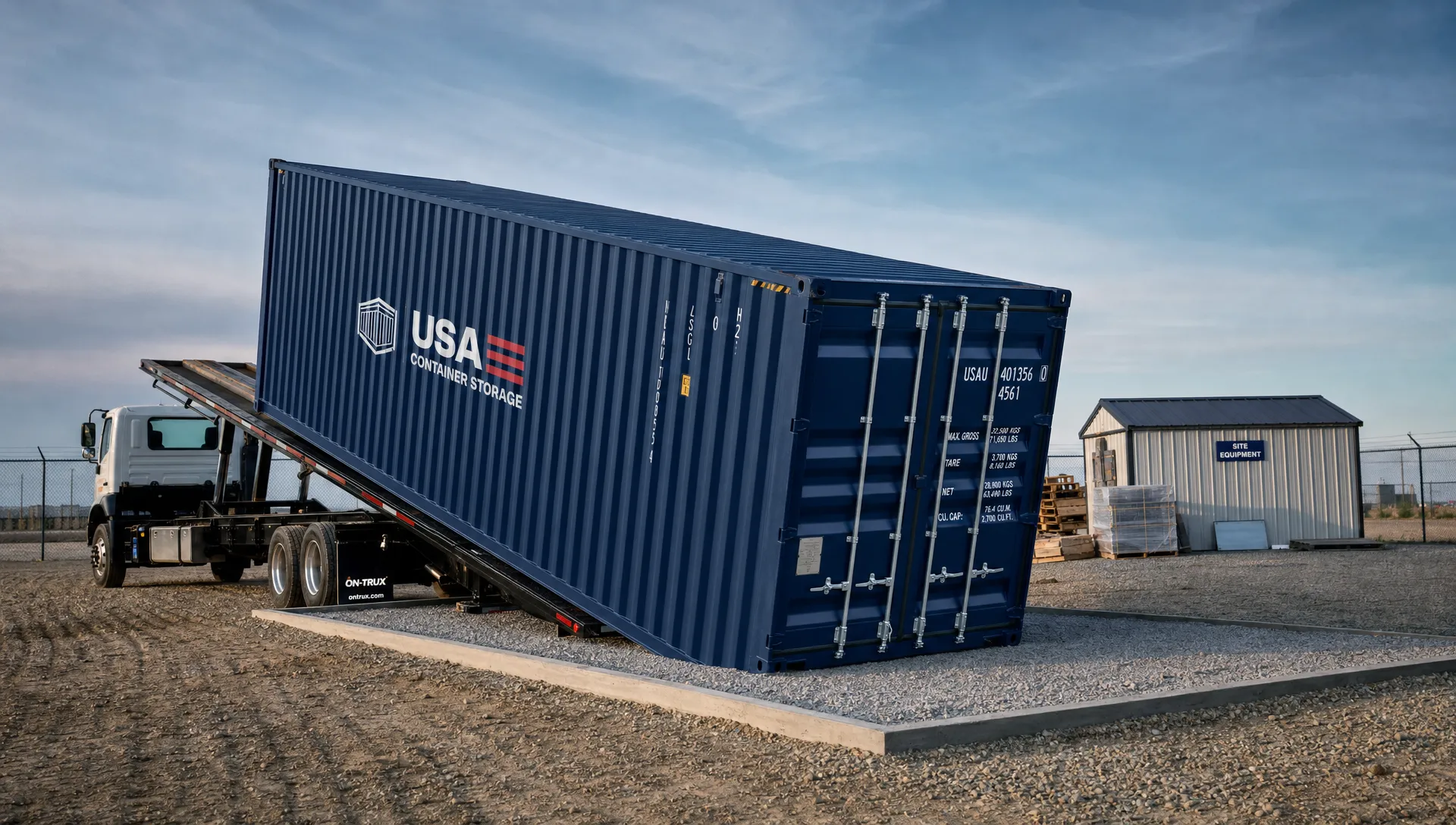
Most single-container deliveries use a tilt-bed or roll-off truck. The truck backs into position, tilts the bed, and slides the container down. This works well when the site is level, firm, and has enough straight clearance.
A 20ft container delivery may need roughly 60 to 75 feet of straight clearance. A 40ft container delivery may need about 100 to 120 feet. These are practical estimates, not universal rules. Tight turns, low branches, gates, slopes, soft soil, power lines, and overhead signs can all change the plan.
Prepare the pad before the truck arrives
Place the container on a level, well-drained surface. Crushed gravel, concrete, asphalt, or properly placed piers can work. Avoid setting the steel directly into mud or standing water. Keeping the container slightly elevated helps airflow under the floor and reduces corrosion risk.
Check door swing before delivery. Standard cargo doors need room to open fully. If the doors face a fence, wall, parked equipment, or loading dock, daily use becomes frustrating fast.
Also plan for site security. Business buyers often add a lockbox, puck lock, interior shelving, motion lights, vents, or a roll-up door. If employees will work inside, talk with local code officials and qualified contractors about electrical, ventilation, fire safety, and egress needs.
Need a secure storage option for a yard, job site, or operations base? Compare a heavy-duty unit like the 32 x 10 ft secure storage container as you plan the right footprint, access, and security level for your business.
Purchase, Finance, or Lease: Choose the Right Model
Buying is usually best when the container will be used for years, modified, or treated as a business asset. Ownership gives you control over repairs, paint, shelving, lockboxes, and custom changes. It also gives you resale value if your needs change.
Leasing can make sense for short-term construction projects, seasonal inventory, disaster response, or temporary warehouse overflow. Outback Shipping Containers is the main site for purchases, while LeaseLink Containers is the leasing arm for buyers who need a different cash-flow model.
Financing can help when you need several containers, a higher-grade unit, or a custom modular build but want to preserve working capital. Options may include equipment financing, SBA-backed loans, rent-to-own structures, or other business credit products, depending on your company profile and lender requirements.
For a deeper look at business funding choices, review the Outback guide to shipping container business loan options before comparing quotes.
Tax and accounting basics
A storage container used for business may need to be recorded as an asset, expensed, depreciated, or handled under a financing agreement. The right treatment depends on your entity, use case, cost, and tax position.
The IRS explains depreciation rules for business property in Publication 946. Do not guess on tax treatment. Ask a CPA or tax professional how your company should classify the container, delivery fees, modifications, and financing costs.
Permits and zoning
Permit rules vary by city, county, and state. Some areas allow temporary storage containers with few restrictions. Others limit placement duration, require screening, regulate setbacks, or treat modified containers as buildings.
Before delivery, call your local building department or zoning office. This is especially important for retail sites, public-facing businesses, farms near road frontage, schools, multifamily properties, and any container conversion with electrical, plumbing, occupancy, or foundation work.
Step-by-Step Buying Checklist for Business Buyers
Use this checklist before you approve the purchase order:
- Define the use case, storage contents, access needs, and expected length of use.
- Choose the size: 10ft, 20ft, 40ft, 40ft high cube, or 45ft high cube.
- Choose the grade: one-trip, WWT, CWO, refurbished, or another documented condition.
- Confirm whether the unit will stay static or be used for cargo transport.
- Ask for a written delivered quote, not only a base container price.
- Verify delivery access, truck clearance, ground conditions, and unload direction.
- Plan site prep, drainage, corner support, and door swing.
- Add needed security and usability features before or soon after delivery.
- Review financing, leasing, or purchase options with your accounting team.
- Check permits, zoning, insurance, and tax treatment before the container arrives.
A good purchase process is simple but not rushed. The more specific you are about use, site, and delivery, the easier it is for a supplier to match the right unit.
Frequently Asked Questions
What size storage container do I need for my business?
Most businesses start with a 20ft or 40ft container. A 20ft unit is easier to place and works well for tools or dense inventory. A 40ft unit gives more volume for bulk storage. Choose a high cube if you need extra height for racking, lighting, insulation, or office conversion.
Is it better to buy or rent a shipping container for business use?
Buying is usually better for long-term storage, custom modifications, or repeated use across projects. Renting can make sense for short jobs, seasonal overflow, or temporary site storage. Compare the full term cost, delivery fees, modification limits, and whether you want resale value at the end.
What is the difference between cargo-worthy and wind and watertight?
Wind and watertight means the container should keep out normal weather for static storage when closed. Cargo-worthy means the unit is suitable for cargo transport when properly inspected and documented. If you only need on-site storage, WWT may be enough. If you plan to ship, ask about CWO status and CSC details.
Do I need a permit to put a storage container on business property?
Maybe. Permit and zoning rules vary by local authority. Some places allow temporary storage containers, while others restrict size, placement, screening, setbacks, or duration. Modified containers used as offices, shops, or occupied spaces often face stricter building code review. Always check locally before delivery.
How do I prepare my site for shipping container delivery?
Choose a firm, level, well-drained surface with enough straight clearance for the truck. Remove low branches, vehicles, debris, and overhead obstacles. Mark the door direction before delivery. Use gravel, concrete, asphalt, or proper corner supports so the container stays level and doors work correctly.
Can I finance a storage container for my business?
Yes, many business buyers use financing to preserve cash flow, especially for multiple containers, higher-grade units, offices, workshops, or custom builds. The best option depends on credit profile, time in business, equipment use, and term length. Compare financing costs against rent, lease, and cash purchase options.
Ready to Buy a Business Storage Container?
If you are comparing sizes, grades, delivery options, or financing, start with a clear delivered quote and a supplier that can explain the details. Outback Shipping Containers offers new, used, and custom container options with nationwide delivery, inspected units, and support from purchase through delivery.
You can browse storage containers and request a quote from Outback Shipping Containers when you are ready to compare the right unit for your business site.