Container Types in Shipping: Sizes, Grades and Uses
Container types in shipping explained: compare sizes, grades, weights and best uses before buying a conex box for storage, work or builds.
Container Types in Shipping: Sizes, Grades and Uses
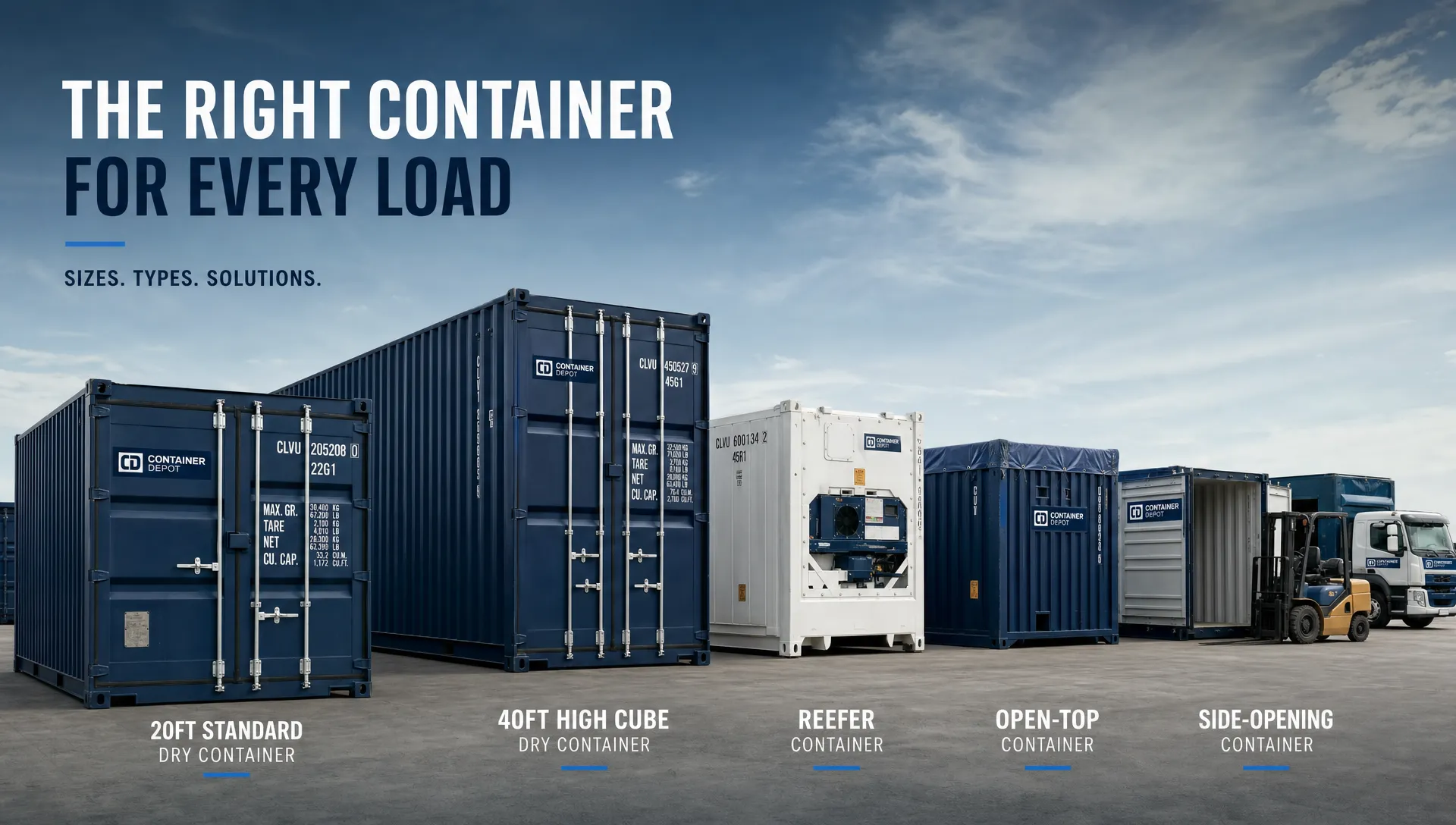
Container types in shipping are usually grouped by size, construction style, and condition grade. Most buyers compare 20ft, 40ft, high cube, refrigerated, open-top, flat rack, side-opening, double-door, and standard dry cargo containers. For storage, a dry conex box is enough for most homes, farms, and job sites. For builds, offices, or taller equipment, a high cube often makes more sense. For active freight, temperature control, or oversized cargo, specialty units may be required.
Quick Answer: Choose a shipping container by matching the size to your space, the grade to your risk level, and the container type to the job. A 20ft WWT container is a strong pick for basic storage. A 40ft high cube one-trip unit is often better for container homes, workshops, and custom conversions.
Key Takeaways
- Most standard ISO containers are 8 feet wide, with 20ft and 40ft lengths being the most common.
- High cube containers are 9 feet 6 inches tall, giving you one extra foot of exterior height.
- One-trip, CWO, WWT, refurbished, and as-is grades describe condition, not size.
- CWO containers are best for shipping freight. WWT containers are usually best for stationary storage.
- Always compare the total delivered cost, not just the container price.
Container Types in Shipping: The 3 Ways to Classify a Box
The phrase container types in shipping can mean three different things. A freight company may use it to describe the physical design of a box. A buyer may use it to compare 20ft vs 40ft units. A seller may use it to describe condition grades like one-trip, CWO, or WWT.
That is why first-time buyers often get mixed answers. A 40ft high cube is both a size and a type. A cargo-worthy container is a grade. A reefer is a specialty type. A container home starts as one of these units, then becomes a container conversion.
Most intermodal container dimensions are based on international standards. ISO 668 covers the classification, dimensions, and ratings for Series 1 freight containers used in global transport. In plain terms, ISO sizing helps a cargo container move by ship, rail, and truck without being rebuilt for each mode.
| Classification | What it tells you | Common examples | Why it matters |
|---|---|---|---|
| Size | Length, width, height, volume, weight rating | 10ft, 20ft, 40ft, 40ft high cube, 45ft high cube | Affects storage space, site access, delivery cost, and build layout |
| Build type | Door layout, roof type, floor type, temperature control | Dry van, reefer, open-top, flat rack, side-opening | Affects loading method and what you can store or ship |
| Condition grade | Age, wear, inspection status, leak risk | One-trip, CWO, WWT, refurbished, as-is | Affects price, lifespan, shipping eligibility, and repair risk |
A good buying decision starts with these three questions: What size fits the job? What physical features do you need? What grade gives you the right balance of cost and risk?
Shipping Container Sizes: Common Dimensions, Weights and Capacity
Most buyers start with size because it affects nearly every other choice. Standard containers are 8 feet wide. Standard-height units are 8 feet 6 inches tall. High cube units are 9 feet 6 inches tall.
Interior dimensions are smaller because of steel walls, corner posts, flooring, and doors. Tare weight is the empty weight of the container. Payload capacity is how much cargo it can carry when used for transport. Always check the data plate on the exact unit because ratings vary by manufacturer and year.
| Size | Typical exterior dimensions | Approx. interior volume | Typical tare weight | Common uses |
|---|---|---|---|---|
| 10ft standard | 10ft L x 8ft W x 8ft 6in H | About 560 cu ft | About 2,800 to 3,300 lb | Small storage, tools, tight residential sites |
| 20ft standard | 20ft L x 8ft W x 8ft 6in H | About 1,170 cu ft | About 4,800 to 5,100 lb | Home storage, farm storage, job-site tools, compact builds |
| 40ft standard | 40ft L x 8ft W x 8ft 6in H | About 2,390 cu ft | About 8,000 to 8,500 lb | Bulk storage, equipment, long materials, workshops |
| 40ft high cube | 40ft L x 8ft W x 9ft 6in H | About 2,690 cu ft | About 8,500 to 8,900 lb | Container homes, offices, retail builds, taller storage |
| 45ft high cube | 45ft L x 8ft W x 9ft 6in H | About 3,040 cu ft | About 9,800 to 10,600 lb | Large storage, commercial builds, long-span conversions |
A 20ft container is easier to place on tighter sites. It is also easier to load with dense items because it can carry heavy cargo in a shorter footprint. A 40ft container gives roughly twice the floor length, which helps with furniture, vehicles, lumber, hay, retail inventory, and workbenches.
A 40ft high cube is often the best starting point for a shipping container home or office. The extra foot of height helps after you add insulation, ceiling panels, flooring, lights, and HVAC. That headroom matters more than many first-time builders expect.
If you want a deeper size-by-size breakdown, Outback Shipping Containers has a separate guide to cargo container sizes for storage, offices and homes with more detail on dimensions and delivery planning.
Main Container Types and What Each One Is Used For
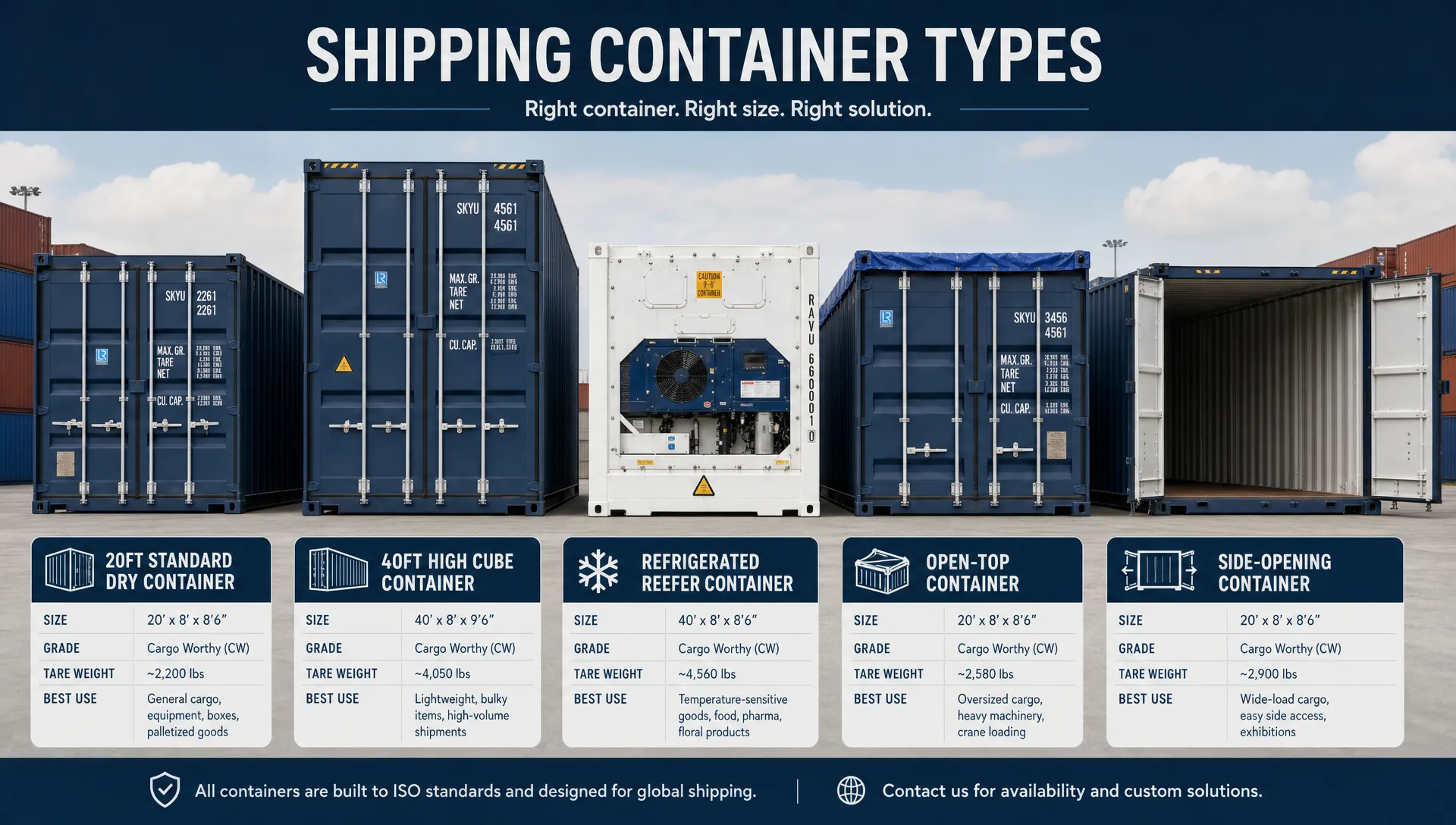
The most common shipping container type is the standard dry container. It is the steel box most people picture when they hear conex box. It has cargo doors on one end, marine-grade plywood or bamboo flooring, corrugated steel walls, and corner castings for lifting and stacking.
Specialty containers solve loading problems. They are not always needed for storage, but they can save labor when you have wide cargo, top-loaded materials, tall machinery, or temperature-sensitive goods. For a broader comparison of specialty designs, see this guide to types of shipping containers and when to use each.
Standard dry cargo containers
Dry containers handle boxed goods, tools, furniture, equipment, retail stock, and household storage. They are the best value for most stationary storage needs because they are common, durable, and easy to modify.
A dry container is not climate controlled. It can still protect against rain and wind when it is in good condition, but it will heat up in the sun. If you plan to store paper files, electronics, wood furniture, seed, or textiles, consider vents, insulation, a dehumidifier, or a climate plan.
High cube containers
High cube containers add one foot of exterior height. The floor footprint is the same as a standard unit, but the vertical space changes how the container feels inside.
That is useful for tall shelving, pallet racking, overhead lighting, mini-split HVAC, and container homes. Many DIY builders choose high cube units because standard-height containers can feel cramped after interior finishes are added.
Double-door and side-opening containers
A double-door container, also called a tunnel container, has cargo doors at both ends. This helps when you need to access tools, pallets, or inventory from either side. It can reduce the need to unload the full box to reach an item at the back.
Side-opening containers have doors along the long side. They are useful for retail displays, event storage, wide equipment, and workshops. They cost more than standard dry units because the door system is more complex and less common.
Open-top and flat rack containers
Open-top containers have a removable top instead of a fixed steel roof. They are used for cargo that must be loaded by crane from above, such as tall machinery, scrap metal, stone, or industrial parts.
Flat rack containers have no full side walls and often use collapsible end walls. They are built for oversized cargo like heavy equipment, vehicles, pipe, and large machinery. They are freight tools first, not typical storage containers.
Refrigerated containers
Refrigerated containers, called reefers, have insulated walls and a refrigeration unit. They are used for food, flowers, pharmaceuticals, and other temperature-sensitive goods. They need a proper power supply and more maintenance than a dry container.
A used reefer can work for some stationary cold storage needs, but buyers should plan for power, service access, drainage, and repair costs. A reefer is not the cheapest way to get a sealed box. It is a specialty tool.
| Container type | Best use | Main advantage | Main caution |
|---|---|---|---|
| Standard dry | General storage, household goods, tools, inventory | Best availability and value | No built-in climate control |
| High cube | Homes, offices, tall storage, workshops | Extra interior height | May need more delivery clearance |
| Double-door | Inventory, job sites, shared access | Access from both ends | Less common than standard dry |
| Side-opening | Retail, events, wide cargo, workshops | Full side access | Higher cost and more door hardware |
| Open-top | Crane-loaded cargo, tall materials | Top loading | Not ideal for basic storage |
| Flat rack | Oversized freight, vehicles, machinery | Handles awkward cargo | Limited weather protection |
| Reefer | Cold storage, food, temperature-sensitive goods | Insulated and temperature controlled | Needs power and maintenance |
Container Grades: One-Trip, CWO, WWT, Refurbished and As-Is
Condition grade is where many buyers make costly mistakes. Two 40ft containers can look similar in photos but have very different lifespans, repair needs, and prices. Grade gives you a shortcut, but it should not replace a proper inspection.
One-trip containers are usually the cleanest option. They have typically carried cargo once from the manufacturing region to the destination market. They may have small dents or handling marks, but they are newer and more uniform than most used containers.
Cargo-worthy containers, often listed as CWO or CW, are used units considered suitable for freight movement after inspection. If the container will move by ocean carrier, confirm the CSC plate and inspection status. A CSC plate alone does not mean every buyer should skip inspection.
WWT means wind and watertight. A WWT container should keep out normal wind and rain when the doors are closed and seals are sound. WWT is a strong choice for stationary storage, but it does not always mean the unit is certified for international cargo shipping.
Refurbished containers are used containers that have been repaired, repainted, or cleaned up. Quality depends on the repairs and the seller. Ask what was done, not just whether it is refurbished.
As-is containers are sold with known or unknown issues. They may have leaks, heavy rust, floor damage, door problems, or structural defects. They can be useful for noncritical projects, but they are risky for secure storage or conversions.
| Grade | Typical condition | Best for | Be careful if |
|---|---|---|---|
| One-trip | Newer, cleaner, minimal wear | Homes, offices, retail, premium storage | You only need short-term rough storage |
| IICL | High repair standard often used in leasing fleets | Freight, high-quality storage, commercial buyers | The seller cannot explain the inspection basis |
| CWO or CW | Used but suitable for cargo movement when properly inspected | Shipping freight, strong storage, job sites | You need proof for ocean or rail movement |
| WWT | Used, weather-resistant, not always cargo certified | Farm, ranch, construction, household storage | You need active freight certification |
| Refurbished | Repaired or repainted used unit | Cleaner storage, customer-facing sites | Repairs are cosmetic only |
| As-is | No condition guarantee | Parts, barriers, low-risk projects | You need dry, secure, long-term storage |
Price should follow grade, size, location, and delivery distance. One-trip units usually sit at the top of the range. CWO and WWT containers are often in the middle. As-is units are cheapest up front, but repairs can erase the savings. For current market examples by condition, use Outback's shipping container grade price comparison 2026 guide.
How to Match Container Types to Storage, Work Sites and Builds
The right container is the one that fits the job with the least wasted space, risk, and modification cost. Start with the use case, then work backward to size, type, and grade.
For home storage, a 20ft WWT container often works well. It is big enough for furniture, seasonal gear, renovation materials, and lawn equipment, but still easier to place than a 40ft box. If the container will sit in a driveway or tight rural lane, delivery access may decide the size before storage volume does.
For farms and ranches, 20ft and 40ft dry containers are common. A 20ft unit handles tools, fencing supplies, feed bags, and tack. A 40ft unit is better for bulky equipment, seed totes, irrigation parts, and long materials. Ventilation matters if you store items that can trap moisture.
For construction companies, CWO or WWT containers are usually the practical range. Job sites need strong floors, working doors, lock boxes, and dry interiors. Double-door units can help crews access tools from both ends. Office containers or workshop conversions may need insulation, electrical planning, and local code review.
For shipping container homes, tiny homes, cabins, and Airbnb projects, one-trip or high-quality CWO containers are usually the safer starting point. You will cut openings, add framing, insulate walls, and invest in finishes. Starting with a cleaner, straighter shell can reduce labor and repair surprises.
For pools and custom modular builds, container condition is only one part of the decision. Engineering, waterproofing, structural reinforcement, site access, permits, and foundation design matter. Local rules vary by city, county, and state, so speak with your building department before ordering.
Mid-project tip: If you already know the size and grade you need, you can compare current options and delivered pricing through Outback Shipping Containers. For temporary needs, ask about LeaseLink Containers, the leasing arm, so you can compare buying vs leasing before you commit.
Delivery, Permits and Site Prep You Should Plan For
A container that fits on paper still has to fit on the truck route and job site. Delivery access is one of the biggest hidden issues for first-time buyers.
Tilt-bed delivery is common for 20ft and 40ft containers. The truck backs into position, tilts the trailer, and slides the container into place. This means the site needs firm ground, overhead clearance, and enough straight-line room for the truck and trailer.
A 40ft container often needs much more than 40 feet of straight access during delivery. Many sites need 100 feet or more, depending on truck type and placement method. Do not guess. Send photos, driveway measurements, gate widths, slope notes, and overhead wire locations to the seller before the truck is scheduled.
Cranes, forklifts, and roll-off equipment may be needed for tight placements. These options can add cost, but they may be the only safe way to place a container over a fence, beside a building, or on a restricted urban lot.
Weight also matters. Empty containers can weigh from about 4,800 lb for a 20ft standard unit to more than 9,800 lb for some 45ft high cube units. Loaded containers can be far heavier. The Federal Motor Carrier Safety Administration publishes cargo securement rules that apply to transport safety, but state weight rules, carrier equipment, and route limits also matter.
For a stationary container, support the corners and keep the base level. Containers are designed to carry loads through the corner posts. If the box twists on uneven ground, doors can bind and seals can wear faster. Gravel pads, concrete piers, and engineered foundations are common options, but the right base depends on soil, drainage, use, and local requirements.
Permits and zoning rules vary widely. Some counties treat a storage container as temporary equipment. Others treat it as an accessory structure. A container home, pool, office, or rental cabin will usually face more review than a farm storage box. Always check local rules before delivery, especially in HOAs, cities, coastal zones, wildfire areas, and flood zones.
Buyer Checklist: Pick the Right Container Without Overpaying
A good container purchase is not just about finding the lowest price. It is about matching the box to the use, confirming condition, and knowing the delivered total before you pay.
Use this checklist before you order:
- Confirm the size, including exterior height and door opening dimensions.
- Ask for the grade in writing, such as one-trip, CWO, WWT, refurbished, or as-is.
- Check whether the listed price includes delivery, taxes, lift-off needs, and special equipment.
- Ask for recent photos of the actual unit or clear sample-photo terms.
- Inspect door gaskets, locking rods, hinges, roof bows, corner posts, and floor condition.
- Look for heavy rust, pinholes, soft flooring, patched roof areas, and daylight around doors.
- Confirm whether the container needs active cargo certification or only stationary storage quality.
- Measure the delivery route, including gates, turns, trees, wires, slope, and soil firmness.
- Check local zoning, permits, HOA rules, and building code requirements before the truck rolls.
- Be cautious with sellers who avoid written grades, refuse delivery details, or push wire-only payment.
Photos help, but they are not the whole story. A container can look clean from one side and still have roof dents, floor rot, or bad door seals. The roof and floor are often more important than paint.
If you are still sorting through delivery, inspection, and total cost, Outback's guide on what to know before you purchase a shipping container is a useful next step.
Frequently Asked Questions
What are the different types of shipping containers?
The main types are standard dry containers, high cube containers, refrigerated reefers, open-top containers, flat racks, double-door containers, and side-opening containers. Buyers also compare condition grades like one-trip, cargo worthy, WWT, refurbished, and as-is. Size, type, and grade should be chosen together.
What is the most common shipping container size?
The most common sizes are 20ft and 40ft standard containers. A 20ft unit is easier to place and works well for dense cargo or smaller sites. A 40ft unit offers about twice the floor length and is popular for bulk storage, workshops, and larger conversions.
What is the difference between CWO and WWT containers?
CWO means cargo worthy and is used for containers that can carry freight when properly inspected. WWT means wind and watertight and is usually meant for stationary storage. A WWT unit may keep rain out, but it is not always approved for ocean or rail shipping.
Is a high cube container better for a container home?
Yes, in many cases. A high cube container gives one extra foot of exterior height compared with a standard unit. That extra height helps after insulation, flooring, ceiling finishes, lighting, and HVAC are installed. Many builders prefer 40ft high cube units for livable space.
Do I need a permit to put a shipping container on my property?
Maybe. Permit rules vary by city, county, zoning district, HOA, and intended use. A short-term storage container may be treated differently from a permanent office, home, pool, or rental cabin. Call your local building or planning office before ordering delivery.
What type of container is best for farm or job-site storage?
A 20ft or 40ft dry container in WWT or CWO condition is usually a strong choice for farm or job-site storage. Choose 20ft for tools and smaller equipment. Choose 40ft for bulky supplies, long materials, and larger inventory. Add ventilation if moisture is a concern.
Choosing the right container is easier when size, grade, delivery, and use all line up. If you want help comparing certified inspected units, current availability, and nationwide delivery options, start with Outback Shipping Containers and request a quote for the container that fits your project.