Types of Shipping Containers and When to Use Each
By Outback Shipping Containers · Published July 18, 2026 · Last updated October 11, 2026
Types of Shipping Containers and When to Use Each
The right type of container depends on what you need it to do: store goods, ship cargo, protect temperature-sensitive items, create a workspace, or become part of a building. Most buyers start with a standard 20ft or 40ft dry container. From there, the best choice depends on access, height, condition grade, delivery site, and whether you need special features like refrigeration, side doors, or open-top loading.
Quick Answer: Use a standard dry container for general storage, a high cube for extra interior height, a reefer for cold storage, an open-top or flat rack for oversized freight, and a converted container for homes, offices, workshops, pools, or retail space.
Key Takeaways
- 20ft dry containers are the most practical choice for home storage, small businesses, farms, and tight sites.
- 40ft and 40ft high cube containers offer the best value per square foot when you have enough space for delivery.
- Reefers, flat racks, open tops, and side-opening containers solve special cargo or access problems.
- One-trip, CWO, and WWT grades matter as much as size when you are buying for storage or conversion.
- Delivery access, permits, and site prep can decide which container works before price does.
Types of Shipping Containers at a Glance
Shipping containers are also called cargo containers, conex boxes, ISO containers, or intermodal containers. The name may change by region, but the basic idea is the same: a steel box built to move, store, and protect goods.
Most standard containers follow international sizing rules, including the dimensional framework in ISO 668. That is why a 20ft or 40ft container can move by ship, truck, and rail in the intermodal freight system.
Use this table as a fast starting point before choosing a specific unit.
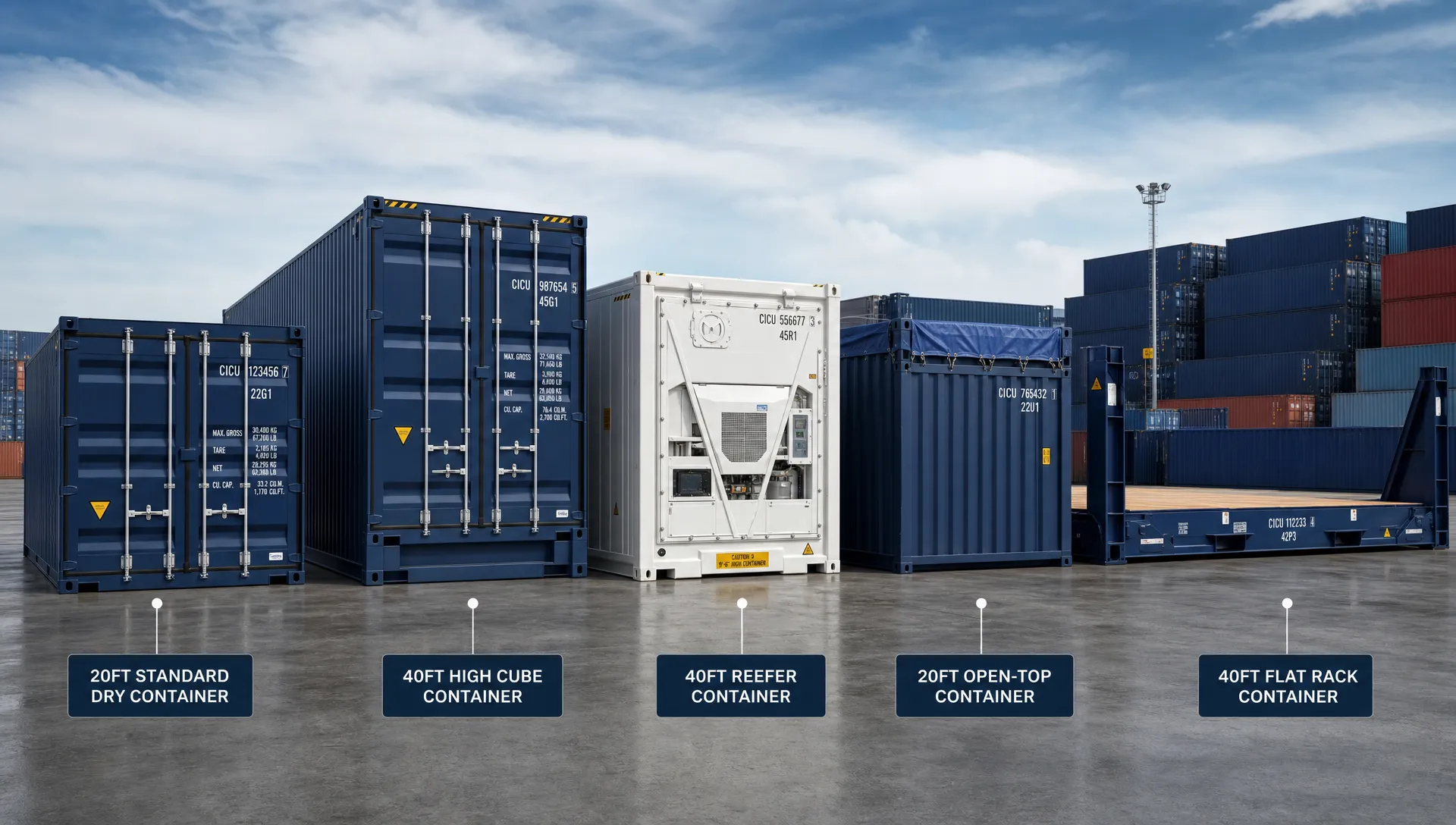
| Container type | Common sizes | Best used for | When not to use it |
|---|---|---|---|
| Standard dry container | 10ft, 20ft, 40ft | General storage, cargo, tools, inventory | Items needing climate control |
| High cube container | 40ft, 45ft | Taller equipment, workshops, homes, offices | Low-clearance delivery routes |
| Reefer container | 20ft, 40ft | Cold storage, food, flowers, pharmaceuticals | Sites without power or generator access |
| Insulated container | 20ft, 40ft | Temperature moderation, dry goods, workshops | Active freezing or cooling needs |
| Open-top container | 20ft, 40ft | Crane-loaded machinery, tall cargo | Long-term outdoor storage without extra cover |
| Flat rack container | 20ft, 40ft | Oversized machinery, vehicles, pipe, lumber | Loose goods that need walls and a roof |
| Side-opening container | 20ft, 40ft | Retail, events, fast loading, wide access | Lowest-cost basic storage |
| Double-door container | 20ft, 40ft | Drive-through access, jobsite storage | Sites with limited clearance at one end |
| Tank container | 20ft frame | Bulk liquids, chemicals, food-grade liquids | Dry storage or general cargo |
| Converted container | 20ft, 40ft, high cube | Homes, offices, cabins, pools, pop-up shops | Buyers who need immediate basic storage only |
Standard Dry Containers: Best for Storage, Cargo, and Simple Builds
The standard dry container is the most common shipping container in the world. It has steel walls, wood or bamboo flooring, cargo doors on one end, and corner castings for lifting and stacking.
If you are a first-time buyer, this is usually where you should start. It gives you the most options, the widest availability, and the easiest resale path later.
10ft containers: tight spaces and small storage needs
A 10ft container is a good fit when space is limited. Homeowners use them for lawn equipment, motorcycles, seasonal items, and renovation storage. Contractors use them for tools on small jobsites.
Many 10ft units are cut down from larger containers rather than built as standard ocean freight units. That does not make them bad, but it does mean you should confirm the condition, door function, floor quality, and delivery method before buying.
Use a 10ft container when:
- You have a short driveway or small yard.
- You need storage, not freight shipping.
- A 20ft container would block access or violate local placement rules.
- You want a smaller footprint for farm, ranch, or backyard use.
20ft containers: the best all-around size
A 20ft dry container is the workhorse for homeowners, small businesses, farms, and contractors. It is large enough to hold tools, furniture, inventory, feed, or equipment, but short enough for many residential and rural sites.
Typical exterior dimensions are 20ft long, 8ft wide, and 8ft 6in tall. A common 20ft dry container has a tare weight around 4,850 pounds and a maximum gross weight around 67,200 pounds, although exact numbers vary by manufacturer and data plate.
Choose a 20ft container when you want a strong balance of cost, capacity, and delivery flexibility. It is also a smart base for a small workshop, storage room, or simple container conversion.
40ft containers: more storage for the footprint cost
A 40ft dry container gives you about twice the floor length of a 20ft unit, but it does not always cost twice as much to buy or deliver. That is why many businesses choose 40ft units for inventory, construction storage, and farm equipment.
Typical exterior dimensions are 40ft long, 8ft wide, and 8ft 6in tall. The tare weight is commonly around 8,000 to 8,500 pounds. Payload capacity depends on the container, so always check the CSC plate or manufacturer plate if weight matters.
Use a 40ft container when:
- You have enough straight-line delivery space.
- You need lower cost per square foot.
- You are storing pallets, building materials, or large equipment.
- You want a base shell for a larger office, cabin, or tiny home.
40ft and 45ft high cube containers: extra height for conversions
A high cube container is 9ft 6in tall outside, which is one foot taller than a standard dry container. That extra height makes a big difference inside.
For container homes, offices, workshops, and retail conversions, high cubes are often worth the upgrade. They give you more room for insulation, ceiling finishes, lighting, HVAC ducts, and a comfortable finished ceiling height.
A 40ft high cube is one of the most popular shells for shipping container homes. A 45ft high cube adds more length, but it can be harder to deliver and place on smaller properties.
Specialty Cargo Containers: When a Standard Box Is Not Enough
Standard dry containers solve most storage problems. Specialty containers solve the problems that standard boxes cannot: height, temperature, loading access, oversized cargo, or liquids.
Reefer containers: cold storage and temperature control
A reefer container has built-in refrigeration equipment and insulated walls. It is used for goods that need controlled temperatures, such as produce, meat, seafood, flowers, and some medical or laboratory supplies.
Reefers are also used on farms, at restaurants, by event companies, and by food distributors that need temporary or overflow cold storage. They are not plug-and-forget units. You need the right power supply, airflow clearance, maintenance access, and temperature monitoring.
Use a reefer when temperature control is the main job. Do not buy a reefer for basic dry storage unless you understand the operating cost and power needs.
Insulated containers: temperature moderation without active cooling
An insulated container helps slow heat transfer. It does not actively cool or heat the interior unless you add HVAC equipment.
This type can be useful for workshops, dry goods, art materials, or supplies that need more temperature stability than a basic steel box can provide. It is also a common starting point for offices and cabins.
Use an insulated container when you want better comfort or product protection, but you do not need freezer or refrigerator performance.
Open-top containers: crane-loaded cargo and tall equipment
An open-top container has removable roof bows and a tarp instead of a fixed steel roof. It is designed for cargo that must be loaded from above, often by crane.
Common uses include machinery, scrap metal, stone, glass, and oversized industrial parts. Open-top containers can also handle cargo that is too tall for a standard door opening, as long as transport rules are followed.
Do not choose an open top for long-term storage of items that must stay dry unless you add a proper cover system and inspect it often.
Flat rack containers: heavy or oversized freight
A flat rack has a floor and end walls, but no fixed side walls or roof. Some have collapsible ends. They are made for freight that is too wide, too tall, or too awkward for a standard container.
Flat racks are often used for tractors, construction machinery, boats, pipe, steel beams, and large vehicles. If this is your category, review a detailed flat rack shipping container guide before buying, because securement, loading, and transport limits matter.
US cargo securement rules are enforced under federal safety regulations. The FMCSA cargo securement rules are a useful starting point if you are moving heavy freight by truck.
Side-opening containers: wide access for loading and retail
A side-opening container has large doors along one long side. This makes it easier to load pallets, display products, or access items without digging through the container from one end.
They are popular for events, pop-up retail, jobsite parts storage, and businesses that need fast access to many SKUs. They cost more than standard dry containers, but they can save time every day.
Choose side-opening when access is worth more than the lowest purchase price.
Double-door containers: access from both ends
A double-door container, sometimes called a tunnel container, has cargo doors on both ends. It is useful when the container sits between two work areas or when you want to separate inventory by end.
Contractors like double-door units because crews can reach tools from either side. Farmers and ranchers use them to separate feed, fencing supplies, and equipment.
Use a double-door container when one-end access would slow you down.
Tank containers: bulk liquids and specialized transport
A tank container is a stainless steel tank set inside a rectangular ISO frame. It is used for bulk liquids, including chemicals, fuels, food-grade liquids, and other regulated materials.
This is a specialized category. Tank containers require proper cleaning records, product compatibility checks, fittings, valves, placards, and transport compliance. They are not a substitute for a dry container.
Converted Containers: Homes, Offices, Workshops, Pools, and Retail
A converted container starts as a steel cargo container, then gets modified for a new use. Common changes include doors, windows, insulation, framing, electrical rough-ins, plumbing, HVAC, paint, and structural reinforcement.
This category matters because the best base container depends on the finished use. A cheap as-is box can become expensive fast if the floor, roof, or frame needs major repair before modification.
Shipping container homes and tiny homes
For shipping container home projects, high cube units are usually the better starting point. The extra height helps with insulation and finished ceilings. A 40ft high cube is common for one-bedroom layouts, studios, guest houses, and short-term rentals.
A 20ft unit can work for a compact cabin, bunkhouse, office, or backyard guest space. It is easier to place, but the layout is tighter. If you want a bathroom, kitchenette, sleeping area, and storage, plan the floor plan before choosing the shell.
Permits and zoning vary by city, county, and state. Always check local building officials before ordering a container home or setting a unit on land.
Modular offices and workshops
Container offices are common on construction sites, farms, industrial yards, and remote properties. A 20ft container works well for a small office or tool room. A 40ft high cube gives more room for desks, storage, restroom space, or workshop equipment.
If people will spend hours inside, do not skip insulation, ventilation, electrical planning, and safe entry steps. A raw steel container can get hot or cold quickly depending on the climate.
Container pools and commercial builds
Container pools, kiosks, coffee shops, retail units, and food service builds need more planning than basic storage. Cutouts, plumbing, electrical, stairs, guardrails, waterproofing, and local code reviews can all affect the design.
This is where buying the right base shell matters. For visible commercial or hospitality projects, many buyers prefer one-trip containers because they have fewer dents, cleaner floors, and better paint condition.
How to Choose the Right Type of Container
Choosing the right type of container is easier when you start with the job, not the size. A 40ft container may look like the best value until you realize the delivery truck cannot turn into your driveway. A reefer may sound safe for inventory until you price the power requirements.
Use this simple decision table to narrow the field.
| Your main need | Best container type | Why it fits |
|---|---|---|
| Backyard storage | 10ft or 20ft dry | Compact, secure, easier to place |
| Contractor jobsite storage | 20ft or 40ft dry, double-door | Durable and easy for crews to access |
| Farm or ranch equipment | 20ft, 40ft, or high cube | Handles tools, feed, tack, and parts |
| Small business inventory | 20ft or 40ft dry | Good balance of cost and capacity |
| Pallet access from the side | Side-opening container | Faster loading and unloading |
| Cold storage | Reefer container | Active temperature control |
| Tiny home or office | 40ft high cube | More height for insulation and finishes |
| Oversized machinery | Flat rack or open-top | Handles cargo that will not fit through doors |
| Retail or event space | Side-opening or custom conversion | Better visibility and customer access |
If your project is basic storage and you want a clean, inspected unit, a one-trip 20ft container is often the safest starting point. For example, Outback lists a 20ft new wind and watertight shipping container with transparent online pricing, including a listed price of $3,400 at the time of this guide.
Ask these questions before you buy
Before you compare quotes, answer the practical questions first. They affect the right size, condition, delivery method, and total cost.
- What will you store or build inside the container?
- Do you need people to work or live inside it?
- Will the unit need insulation, HVAC, power, or plumbing?
- How much room is available for the delivery truck?
- Will the container stay temporary, or become a permanent structure?
- Do local zoning rules allow your intended use?
- Do you need cargo-worthy certification for transport?
Match the container to the site
The delivery site can rule out certain options. A 40ft container needs more room for truck access than a 20ft unit. Tilt-bed delivery also needs clear space in front of the final placement area.
Ground conditions matter too. Soft soil, steep grades, low branches, narrow gates, and overhead wires can delay delivery or require different equipment. Prepare the site before the truck arrives, not while the driver waits.
New vs Used Containers, Condition Grades, and Certifications
Size and type are only half the decision. Condition grade tells you whether the container is suitable for storage, shipping, or conversion.
A new container is often called a one-trip container. It has usually made one loaded trip from the manufacturer to its destination market. It may have minor handling marks, but it is typically cleaner and easier to modify than a used box.
Used containers vary widely. Some are cargo-worthy. Some are wind and watertight. Some are sold as-is. Those labels are not interchangeable.
Common condition terms
- One-trip or new: Best for clean storage, homes, offices, retail, and customer-facing projects.
- CWO or cargo-worthy: Suitable for cargo use if it passes inspection and has proper documentation.
- WWT or wind and watertight: Good for static storage when the roof, walls, and doors keep out weather.
- IICL: A stricter repair standard often used in leasing and shipping fleets.
- As-is: Highest risk. Best only for buyers who can inspect and repair the unit.
For a deeper breakdown of these labels, use this guide to shipping container condition grades before comparing quotes. It can help you avoid paying storage-grade prices for a container that needs major repairs.
CSC plates and payload capacity
A CSC plate is the metal approval plate usually found on the cargo door of an ISO shipping container. It lists key data such as maximum gross weight, tare weight, payload, manufacture date, and approval information.
If you plan to ship loaded cargo internationally, the CSC status matters. If you only need static storage on private land, WWT condition may be enough. Still, the plate is useful because it confirms the container’s original specifications.
Do not rely on paint alone. Fresh paint can hide rust, patches, and poor repairs. Look at door seals, corner posts, roof bows, flooring, underside rails, and the locking gear.
Delivery, Site Prep, and Permit Factors
The best container on paper can become the wrong container if it cannot be delivered safely. Delivery planning should happen before purchase, especially for rural sites, mountain roads, tight neighborhoods, and commercial yards with limited turning room.
Delivery method affects container choice
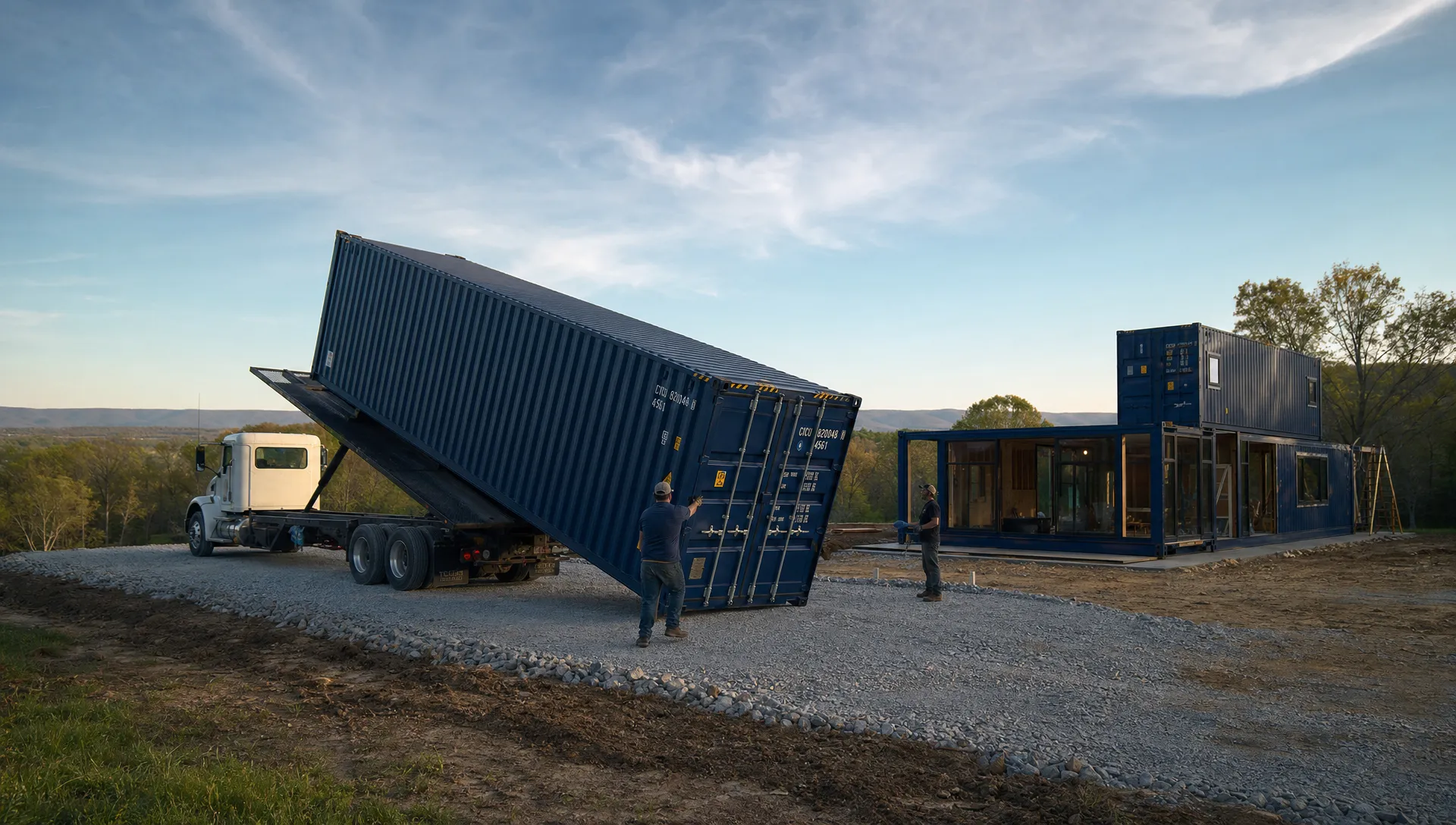
Most local deliveries use tilt-bed trucks, roll-back trucks, flatbeds, or step-deck trailers. A tilt-bed truck can often place a 20ft or 40ft container directly on the ground, but it needs enough straight space to unload.
A flatbed may require a crane, forklift, or other lifting equipment at the site. That can be the right choice for tight placement, stacked containers, or heavy specialty units.
Always confirm:
- Road width and driveway width.
- Gate height and overhead clearance.
- Space to turn around or back in.
- Surface firmness and slope.
- Final orientation of the cargo doors.
Site prep prevents long-term problems
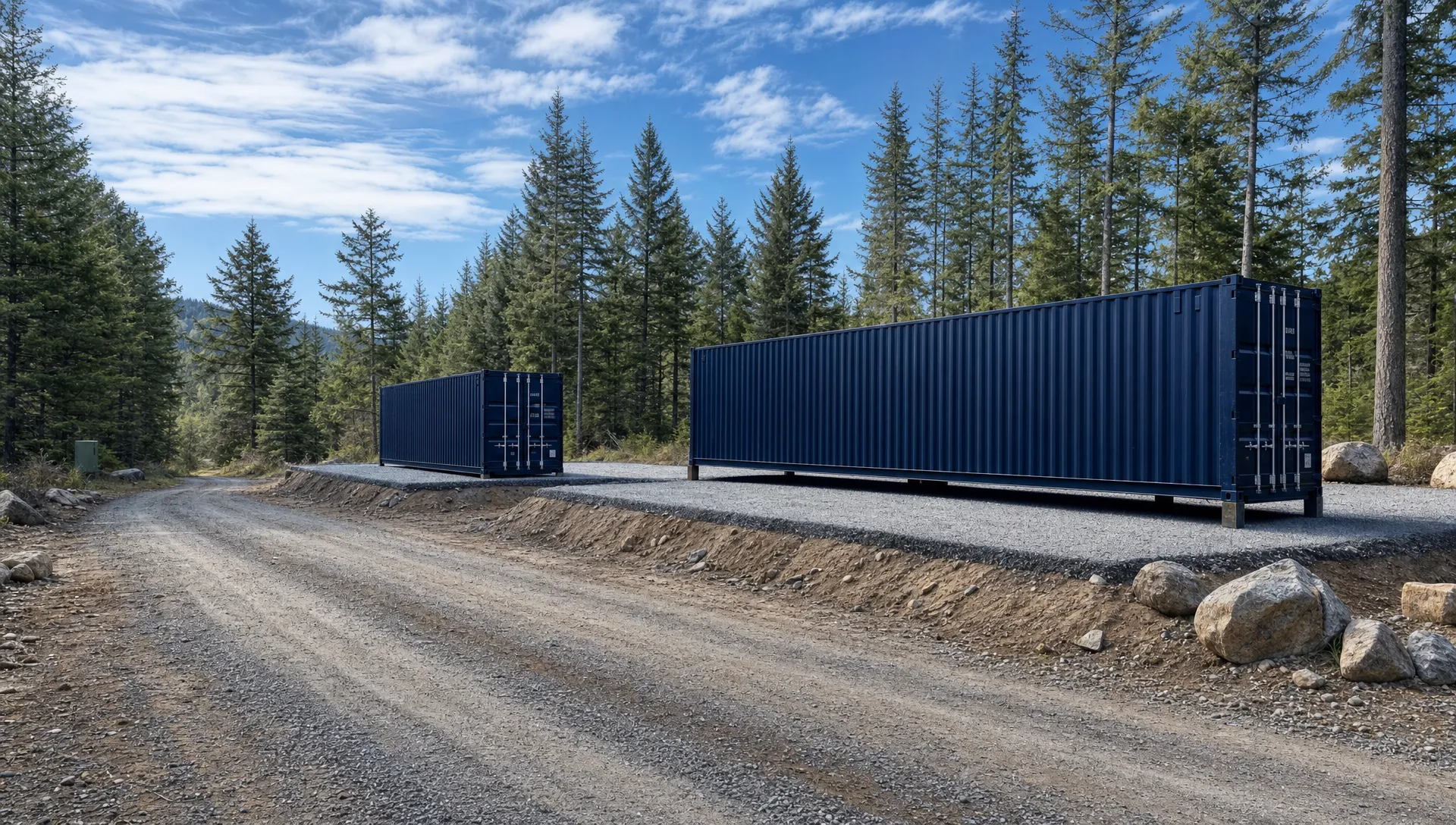
Containers should sit level with support under the corners or structural rails. A poor base can make doors hard to open, trap water under the floor, and increase corrosion.
Gravel pads, concrete piers, railroad ties, and slab foundations are common options. The right choice depends on soil, drainage, climate, budget, and whether the container is temporary or permanent.
If you are placing a unit on raw land, review a practical shipping container site prep checklist before delivery day. A few hours of prep can prevent expensive repositioning later.
Permits depend on use and location
Permit rules vary by state, county, city, zoning district, and intended use. A temporary storage container on a farm may be treated very differently from a container home, commercial kiosk, or pool.
Before ordering, ask local authorities about setbacks, foundations, utilities, fire access, wind loads, snow loads, and occupancy rules. This is especially important for container homes, Airbnb cabins, offices, and public-facing businesses.
Quick Buying Rules by Buyer Type
Different buyers care about different details. A homeowner may care most about appearance and driveway access. A contractor may care about delivery speed and lockbox security. A developer may care about code, design, and return on investment.
Homeowners and DIY buyers
Start with a 20ft dry container if you need storage during a move, remodel, or garage cleanup. Choose a one-trip unit if appearance matters or the container will sit near the house.
For a cabin or tiny home, look at high cube containers first. The extra height gives your build more room for insulation and interior finishes.
Contractors and construction companies
Use 20ft units for tools and small jobsites. Use 40ft containers when storing materials, scaffolding, forms, or equipment. Add lockboxes, shelving, lighting, and vents if the unit will be used every day.
Double-door containers can help crews work faster when the container sits between two active areas.
Farms, ranches, and rural properties
A 20ft or 40ft WWT container is often enough for feed, tack, tools, fencing supplies, and seasonal equipment. High cube units are useful for taller items, ATVs, and workshop setups.
For remote sites, delivery planning matters as much as the container. Check road conditions, soft ground, cattle guards, low limbs, and turning areas.
Developers, Airbnb hosts, and entrepreneurs
For income-producing projects, do not choose the cheapest shell by default. A cleaner one-trip or high cube unit can reduce prep time and improve the finished look.
Container pools, rentals, retail units, and offices need code review, utility planning, and a clear budget. Your container is only one part of the project cost.
Frequently Asked Questions
What are the most common types of shipping containers?
The most common types are standard dry containers, high cube containers, refrigerated reefer containers, open-top containers, flat racks, side-opening containers, double-door containers, tank containers, and converted containers. Standard dry containers in 20ft and 40ft sizes are the most common for storage and general cargo.
What type of shipping container is best for storage?
For most storage needs, choose a 20ft or 40ft standard dry container in WWT or one-trip condition. A 20ft unit is easier to place on tight sites. A 40ft unit gives better capacity when you have room for delivery and long-term placement.
Is a high cube container better than a standard container?
A high cube container is better when you need extra interior height. It is often preferred for container homes, offices, workshops, and tall equipment. A standard-height container may be better when cost, availability, or low-clearance delivery routes are more important.
What is the difference between a conex box and a shipping container?
A conex box and a shipping container are usually the same thing in everyday use. “Conex” is an older military term that many people still use for steel storage containers. You may also hear cargo container, ISO container, intermodal container, or sea can.
Can you use any shipping container for a home?
Not every container is a good home shell. Most builders prefer one-trip or clean cargo-worthy high cube containers because they have better structure, cleaner floors, and fewer repairs. Building codes, zoning, insulation, ventilation, plumbing, and permits vary by location, so check local requirements first.
What type of container should I avoid buying?
Avoid as-is containers unless you can inspect them in person or you are prepared to repair rust, holes, floors, doors, and seals. As-is units can be useful for low-budget non-critical storage, but they are risky for homes, offices, retail builds, or weather-sensitive goods.
Choose the Container That Fits the Job
The best container is not always the biggest or cheapest one. It is the unit that matches your cargo, site, budget, condition needs, and long-term plan.
Outback Shipping Containers supplies new, used, and custom containers nationwide, including storage containers, high cubes, modular offices, container homes, pools, and custom builds. If you are comparing options, start with current inventory and expert delivery guidance at Outback Shipping Containers.
About Outback Shipping Containers
This guide was prepared by the Outback Shipping Containers team, based on the questions our customers ask us most when buying, modifying and taking delivery of shipping containers. Learn more about us.
Ready to find your container?
Browse our in-stock shipping containers, container homes and custom builds, or ask our team for a free quote with delivery to your site.