Cargo Storage Containers: Best Sizes for Tools and Equipment
Choose cargo storage containers for tools and equipment. Compare 10ft, 20ft and 40ft sizes, door clearances, shelving and delivery needs.
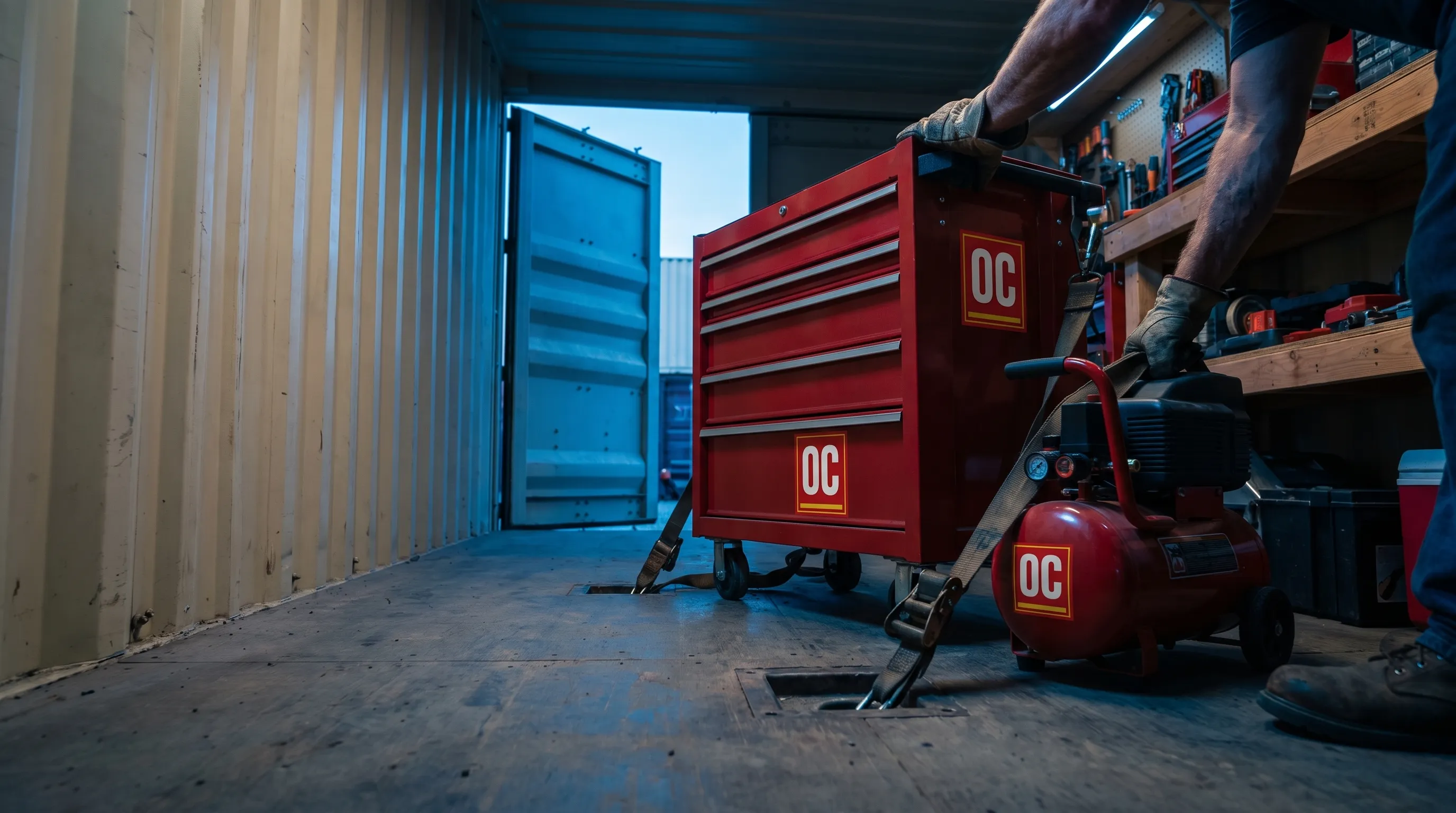
Cargo Storage Containers: Best Sizes for Tools and Equipment
Quick Answer: For most buyers, 20ft cargo storage containers offer the best balance of tool capacity, equipment access and site footprint. Choose 10ft for a small inventory, 40ft for larger collections or long materials and 40ft high cube for taller equipment. Measure the door opening, shelving depth and access aisle before deciding. Interior volume alone does not tell you what will fit.
Key Takeaways
- A 20ft container works well for hand tools, shelving and compact equipment when you plan the layout around access.
- A 40ft container provides roughly twice the floor area of a 20ft unit, but items at the back can become difficult to reach.
- High cube containers add about 12 inches of height, not extra width.
- Door clearance, floor loading and delivery access can rule out a container that looks suitable on paper.
Choosing cargo storage containers by size
The best size depends on how you use your inventory. A homeowner storing seasonal tools has different needs from a contractor unloading equipment every morning. Start with the largest item, then allow room for shelves and movement.
The dimensions below are representative planning figures, not specifications for a particular unit. Manufacturers, flooring and modifications can change the usable space. Smaller storage containers deserve extra checking because their construction can vary.
| Container size | Typical exterior dimensions, L × W × H | Approximate interior length × width | Approximate interior height | Approximate usable floor area | Best fit |
|---|---|---|---|---|---|
| 10ft standard | 10ft × 8ft × 8ft 6in | 9ft 3in × 7ft 8in | 7ft 10in | 71 sq. ft. | Hand tools, garden equipment and limited shelving |
| 20ft standard | 20ft × 8ft × 8ft 6in | 19ft 4in × 7ft 8in | 7ft 10in | 148 sq. ft. | Contractor tools, compact equipment and mixed storage |
| 40ft standard | 40ft × 8ft × 8ft 6in | 39ft 5in × 7ft 8in | 7ft 10in | 302 sq. ft. | Large inventories, long materials and seasonal equipment |
| 40ft high cube | 40ft × 8ft × 9ft 6in | 39ft 5in × 7ft 8in | 8ft 10in | 302 sq. ft. | Taller equipment, taller shelving and bulky stock |
For cargo storage containers, usable floor area often matters more than cubic capacity. Extra height helps only when equipment needs it or shelving can use it safely.
A 10ft unit suits a tight property and modest inventory. However, a mower parked in front of shelving can quickly block access to everything behind it. Choose 20ft when you need separate space for equipment and frequently used tools.
A 40ft unit suits long stock and larger inventories. If height is the limiting factor, consider the 40ft New High Cube Shipping Container in Gray, a one-trip, wind-and-watertight, cargo-worthy option. Confirm its actual dimensions before matching it to your equipment.
Measure equipment, door openings and working clearance
Check the opening before the interior
A machine can fit inside a cargo container yet fail to pass through its doors. Standard dry-container door openings are commonly about 7ft 8in wide and 7ft 5in high. High cube openings are commonly about 7ft 8in wide and 8ft 5in high.
These are approximate dimensions. Ask for measurements of the specific unit, especially if your equipment comes close to either limit.
Measure the door opening, not just the interior height. A machine measuring 90 inches tall may fit beneath a standard container's interior roof but exceed its typical 89-inch door opening. A high cube may solve that height problem without solving a width problem.
Before buying cargo storage containers, measure equipment in the exact configuration used during loading. Include mirrors, handles, rollover protection, attachments and anything else that projects beyond the main body. Do not assume a safety structure can be folded or removed.
Allow room to load and unload
Measure length with attachments installed if you intend to store them that way. A compact tractor with a loader and rear implement can occupy far more space than the tractor alone.
Account for the approach angle, too. A ramp changes the equipment's position as it crosses the threshold. Low-clearance machines can scrape underneath, while tall equipment may approach the door header differently than it does on level ground.
Use a ramp rated for the equipment's weight and intended loading method. Keep it stable and provide a suitable surface outside the doors. Wet soil, loose gravel and a steep approach can make loading unsafe even when the opening is large enough.
Leave access space outside
Container doors need room to swing open. You also need a clear approach for carts, machines and material handling.
A container positioned tightly against a fence may fit the site but work poorly every day. Sketch the door swing and loading area on your site plan before approving its final position.
Plan shelving around how you retrieve tools
Calculate the aisle after adding shelves
The approximately 7ft 8in interior width equals 92 inches. Install 24-inch-deep shelving on both sides and you have about 44 inches left between the shelf faces.
That can support a useful hand-tool layout, but it does not automatically provide enough clearance for equipment or handling carts. Shelf supports, projecting handles and stored items can narrow the aisle further.
The most useful cargo storage containers preserve access after the inventory is loaded. Tape the proposed layout on a garage floor or driveway, then move your largest cart through it. This simple test can expose a poor layout before you buy racks.
For construction workplaces, OSHA's materials storage requirements address clear aisles, safe passageways and stable storage. Your layout should also meet applicable workplace, fire and accessibility requirements. A suggested aisle width is not a substitute for those rules.
Separate daily tools from seasonal equipment
Keep frequently used items close to the doors. Place seasonal equipment farther back only if you can retrieve it without moving several other heavy items.
A practical mixed-storage layout might include:
- Shallow shelving near the entrance for hand tools, fasteners and consumables.
- A designated equipment bay with enough space for safe entry and removal.
- Secured storage for ladders and long stock that does not project into the aisle.
- A clear route from the rear of the container to the doors.
Label shelves and mark parking positions. Otherwise, the aisle often becomes the easiest place to put the next delivery.
Decide whether one long container is practical
A standard end-door 40ft container has one access point at the end. If equipment fills its center aisle, rear inventory becomes difficult to retrieve.
For cargo storage containers used every day, two 20ft units can sometimes provide better separation than one 40ft unit. You might dedicate one to tools and the other to equipment. Compare the combined purchase, delivery and site-preparation costs before choosing that arrangement.
For contractor-specific security and layout considerations, review secure job-site container storage practices.
Choose the right condition and protect tools from moisture
Understand one-trip, WWT and cargo-worthy grades
A one-trip container has typically completed one cargo journey before sale. It usually has less wear than a used intermodal container, but it can still have handling marks. Inspect it rather than treating “new” as a promise of flawless cosmetics.
Wind-and-watertight, or WWT, describes protection against wind and water intrusion. Cargo-worthy, often labeled CWO, describes suitability for cargo service under the seller's inspection criteria. Neither term replaces a review of the actual doors, floor, frame and inspection documentation.
For cargo storage containers that will remain on your property, door operation and weather protection deserve close attention. For international transport, additional requirements apply. The International Maritime Organization's explanation of the Convention for Safe Containers.aspx) covers the CSC safety approval framework. A seller's condition label alone does not establish current transport eligibility.
Check door seals, locking rods, roof damage, floor soft spots and visible corrosion. Ask for photos of the actual container rather than relying only on representative images. Reject unexplained odors or suspicious residue until their source is understood.
Watertight does not mean condensation-free
Watertight is not condensation-free. Moisture trapped inside can condense on cold steel as temperatures change. Wet tools, damp machinery and humid air can all add moisture to the enclosed space.
Let equipment dry before storage when practical. Keep tools off the floor and leave some space between stored goods and the walls. Inspect after major weather changes instead of assuming a closed container stays dry inside.
Ventilation, insulation or dehumidification may help, depending on climate and use. Any dehumidifier needs suitable power, drainage and electrical protection. Plan these details before adding equipment or cutting openings.
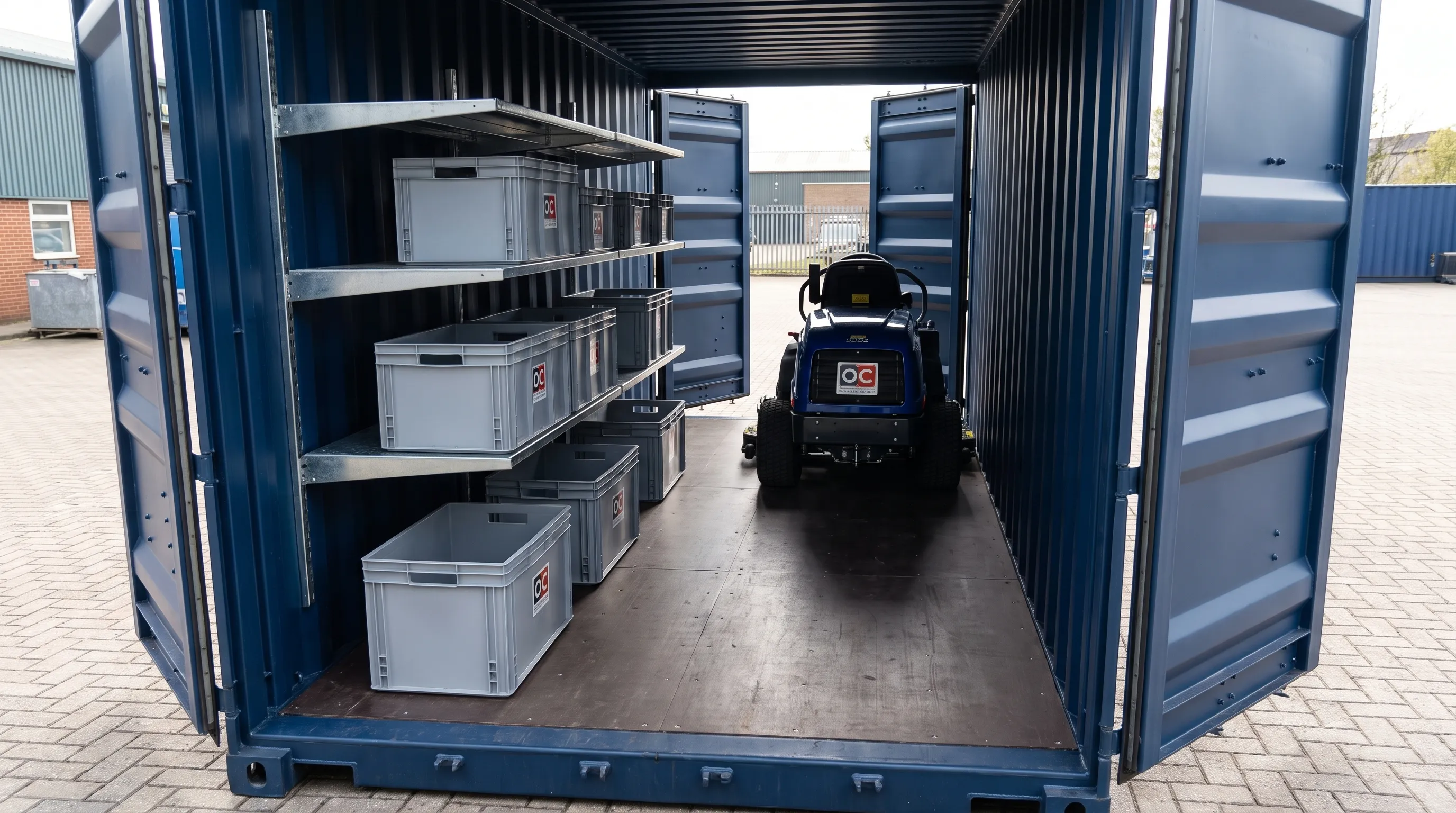
For a balanced tool-storage starting point, compare the 20ft New Shipping Container in Beige. This one-trip unit is described as wind-and-watertight and cargo-worthy. Check the actual opening dimensions and request the delivered total for your site before deciding.
Check floor loading, delivery access and placement
Distinguish payload capacity from floor strength
Tare weight is the weight of the empty container. Payload capacity is the permitted cargo weight under its rated limits. Read the identification markings and documentation for the actual unit rather than borrowing specifications from a similar-looking container.
A typical 20ft dry container weighs roughly 5,000 pounds empty, while a 40ft high cube can weigh roughly 9,000 pounds. These rounded figures help illustrate delivery and foundation planning, but they are not specifications for the products linked above.
Heavy equipment introduces another issue when comparing cargo storage containers: concentrated loads. A machine places weight through its tires or tracks. Heavy shelving transfers weight through small feet, and tool chests can load the floor through narrow casters.
Payload capacity is not a floor point-load rating. Ask about floor condition and equipment suitability. Use manufacturer-approved load distribution or obtain qualified engineering advice where needed. Do not drive a forklift into a container solely because its total weight appears below the payload limit.
Confirm access for the delivery truck
The delivery vehicle needs more space than the container itself. Requirements depend on truck length, unloading method, slope and the driver's ability to approach the placement area.
Send the supplier photos and measurements of your driveway, gate, turns and proposed location. Flag overhead wires, tree branches, soft ground and narrow bridges. Ask the delivery team to confirm the required clearances instead of relying on a generic number.
Prepare a firm, drained support area using a foundation approach suitable for local soil and intended loads. Keep the container level so the frame does not twist and the doors operate properly. Avoid blocking drainage beneath the unit.
Check local rules before delivery
Requirements vary by state, county and municipality. Contact local planning or building officials about zoning, setbacks, permits and placement duration. Commercial sites may face additional fire, access and workplace requirements.
Do this before purchasing cargo storage containers, not after the truck arrives. A temporary storage use may receive different treatment from a permanent workshop or occupied building, but “temporary” does not automatically mean exempt.
Fuel, propane and other hazardous materials need separate storage planning. Do not treat an ordinary sealed tool container as an approved hazardous-material storage room.
Compare the full cost, not just the container price
Request an itemized delivered quote
A low unit price does not establish the lowest project cost. Ask for the container price, delivery charge, applicable taxes and any charges tied to unloading or difficult access. Then budget for site preparation, ramps, shelving, locks and moisture control.
There is no reliable nationwide price that applies to every size, condition and destination. Outback Shipping Containers offers transparent online pricing and delivery to all 50 states, but use the current listing and your destination-specific quote for purchasing decisions.
Compare cargo storage containers using the same scope. A one-trip unit delivered to a prepared pad is not equivalent to a used unit priced for pickup at a distant depot. Record every quote in USD and identify what remains excluded.
For a more detailed purchasing checklist, see how to purchase storage containers for business use.
Compare buying with leasing over your expected use
Buying may suit long-term farm, household or business storage. Leasing can make sense when the need has a defined end date. Ask LeaseLink Containers, the leasing arm, for current availability and terms rather than assuming a rental period or rate.
For a fair comparison, include delivery, pickup, ongoing charges and any site restoration costs. If financing through Outback Shipping Containers, compare the total repayment amount as well as the monthly payment.
If you expect a future container conversion into a workshop or shipping container home, price that project separately. Storage suitability does not establish compliance for an occupied building, and insulation or interior finishes will reduce usable space.
Frequently asked questions
What size shipping container is best for storing tools?
A 20ft container is a strong starting point for mixed tool storage because it offers about 148 square feet of interior floor area. Choose 10ft for a modest inventory or 40ft for larger collections. Measure shelving and equipment first, then preserve a clear route to frequently used items.
How much equipment can fit in a 20ft shipping container?
A typical 20ft container has an interior about 19ft 4in long and 7ft 8in wide. That does not mean every inch is usable for equipment. Door clearance, shelves, attachments and loading space reduce capacity. Use measured equipment footprints and a scaled layout rather than counting machines by category.
Is a high cube container better for equipment storage?
A high cube helps when height limits your layout. It typically adds 12 inches of interior and door-opening height compared with a standard container of the same length. It does not add width or floor area. For cargo storage containers holding low equipment and hand tools, that height may offer little benefit.
Will tools rust inside a shipping container?
Tools can rust when moisture remains inside, even if the container is wind-and-watertight. Condensation, wet equipment and humid air are common concerns. Store dry tools, monitor conditions and choose suitable moisture controls. Inspect the roof and door seals as well, since leaks require repair rather than just dehumidification.
Can I put a storage container on my property without a permit?
Possibly, but you must check locally. Permit, zoning, setback and placement rules vary by state, county and municipality. Temporary storage may have different requirements from permanent placement or a workshop conversion. Contact your local planning or building department before purchasing, and confirm any homeowner association restrictions that apply to your property.
Choose the smallest size that works safely
Start with your largest item's door clearance. Add shelving, a usable aisle and the outside loading area. Then confirm floor suitability, site access and the complete delivered cost.
When your measurements are ready, explore storage options from Outback Shipping Containers and request help matching a unit to your inventory and delivery site.