40ft Container Size: Interior Space, Doors, and Delivery…
Container size 40ft guide with interior dimensions, door openings, weights, site prep, delivery clearance and buying tips for storage or builds.
Container Size 40ft: Interior Space, Doors, and Delivery Room
For container size 40ft planning, expect a standard dry cargo container to measure 40 ft long, 8 ft wide and 8 ft 6 in high on the outside. Inside, most units give about 39 ft 5 in of length, 7 ft 8 in of width and 7 ft 10 in of height, or roughly 300 square feet of floor space. The door opening is usually about 7 ft 8 in wide by 7 ft 5 in high, and tilt-bed delivery often needs about 100 to 120 ft of straight room.
Quick Answer: A standard 40ft dry container gives about 2,390 cubic feet of usable interior volume. A 40ft high cube adds one extra foot of exterior height and about 300 more cubic feet of space. Plan your site around the truck, not just the box.
Key Takeaways
- A standard 40ft ISO container is best for large storage, job-site equipment, farm supplies, workshops and simple container conversion projects.
- A 40ft high cube is usually the better choice when you need standing room, insulation, overhead lights or taller palletized goods.
- Door clearance matters as much as interior space if you load with a forklift, pallet jack, UTV or wide equipment.
- Delivery planning should include driveway width, straight-line unloading space, overhead clearance, ground firmness and drainage.
- Interior dimensions vary slightly by manufacturer, condition and container type, so confirm measurements on the unit listing or CSC plate before final placement.
Container Size 40ft Measurements: Exterior, Interior and Volume
A 40ft container is part of the ISO intermodal container family, which is why the outside footprint is so consistent across ports, rail yards and trucking networks. The ISO 668 standard covers the classification, dimensions and ratings for series 1 freight containers, including the common 40ft length used in global shipping.
The container size 40ft label can still be misleading if you only look at exterior dimensions. The steel walls, corner posts, doors and floor structure reduce usable interior space. If you plan to store machinery, build a workshop or frame out a shipping container home, use interior measurements for your layout.
Standard 40ft dry container dimensions
A typical 40ft dry container has these approximate dimensions:
| Spec | Standard 40ft dry container | 40ft high cube dry container |
|---|---|---|
| Exterior length | 40 ft | 40 ft |
| Exterior width | 8 ft | 8 ft |
| Exterior height | 8 ft 6 in | 9 ft 6 in |
| Interior length | About 39 ft 5 in | About 39 ft 5 in |
| Interior width | About 7 ft 8 in | About 7 ft 8 in |
| Interior height | About 7 ft 10 in | About 8 ft 10 in |
| Floor area | About 300 sq ft | About 300 sq ft |
| Interior volume | About 2,390 cu ft | About 2,690 cu ft |
| Typical door opening | About 7 ft 8 in wide by 7 ft 5 in high | About 7 ft 8 in wide by 8 ft 5 in high |
These are typical industry measurements, not a guarantee for every unit. Small differences are normal between manufacturers, especially on used cargo-worthy containers, refurbished units and specialty equipment.
High cube and reefer differences
A 40ft high cube has the same footprint as a standard 40ft container but adds one foot of height. That extra height is useful for lighting, ceiling insulation, roll-up doors, tall shelving and container home interiors.
If extra headroom matters, Outback Shipping Containers lists a 40ft new high cube shipping container in gray as a one-trip, wind and watertight, cargo-worthy option. It is a fit for buyers who want a newer dry unit and do not want to give up vertical space during a conversion.
Refrigerated containers are different. A reefer has insulated walls, an insulated floor, an insulated ceiling and mechanical equipment, so clear interior space is smaller than a dry container with the same outside footprint. If cold storage is the goal, review the unit-specific listing for the 40ft Refrigerated Shipping Container before you design racks, pallets or aisle space.
For a broader size chart across 10ft, 20ft, 40ft and specialty containers, use Outback Shipping Containers’ shipping container dimensions and sizes guide alongside the unit listing you plan to buy.
Door Opening, Loading Clearance and Real Usable Space
For most buyers, container size 40ft planning fails at the door, not in the middle of the box. The interior may be long enough for your materials, but the door frame limits what can enter as one piece.
A standard 40ft dry container usually has double cargo doors on one short end. Each door swings outward, and both doors must open fully if you need the full width. Leave clear space in front of the container so the doors can swing, latch and stay open in wind.
What fits through the doors
The typical standard 40ft door opening is about 7 ft 8 in wide and 7 ft 5 in high. That is enough for many pallets, furniture pieces, boxed inventory, construction tools, ATVs and compact equipment. Taller machines may need a high cube, an open-side container or a modified door.
If you load with a forklift, measure the load and the mast height. A pallet may fit through the door, but the forklift overhead guard or raised forks may not. For palletized storage, also account for the turning room outside the doors.
Space lost to shelving and build-outs
The raw interior width of a 40ft dry container is about 7 ft 8 in. If you install 18 in deep shelves on both sides, your center aisle shrinks to about 4 ft 8 in. That may work for hand-carried boxes but can be tight for carts, pallet jacks or job-site equipment.
For a container conversion, wall framing and insulation reduce interior width. A modest wall assembly can take several inches on each side, and ceiling insulation lowers headroom. That is why high cube containers are popular for offices, workshops and shipping container home projects.
Delivery Room: How Much Space a 40ft Container Needs
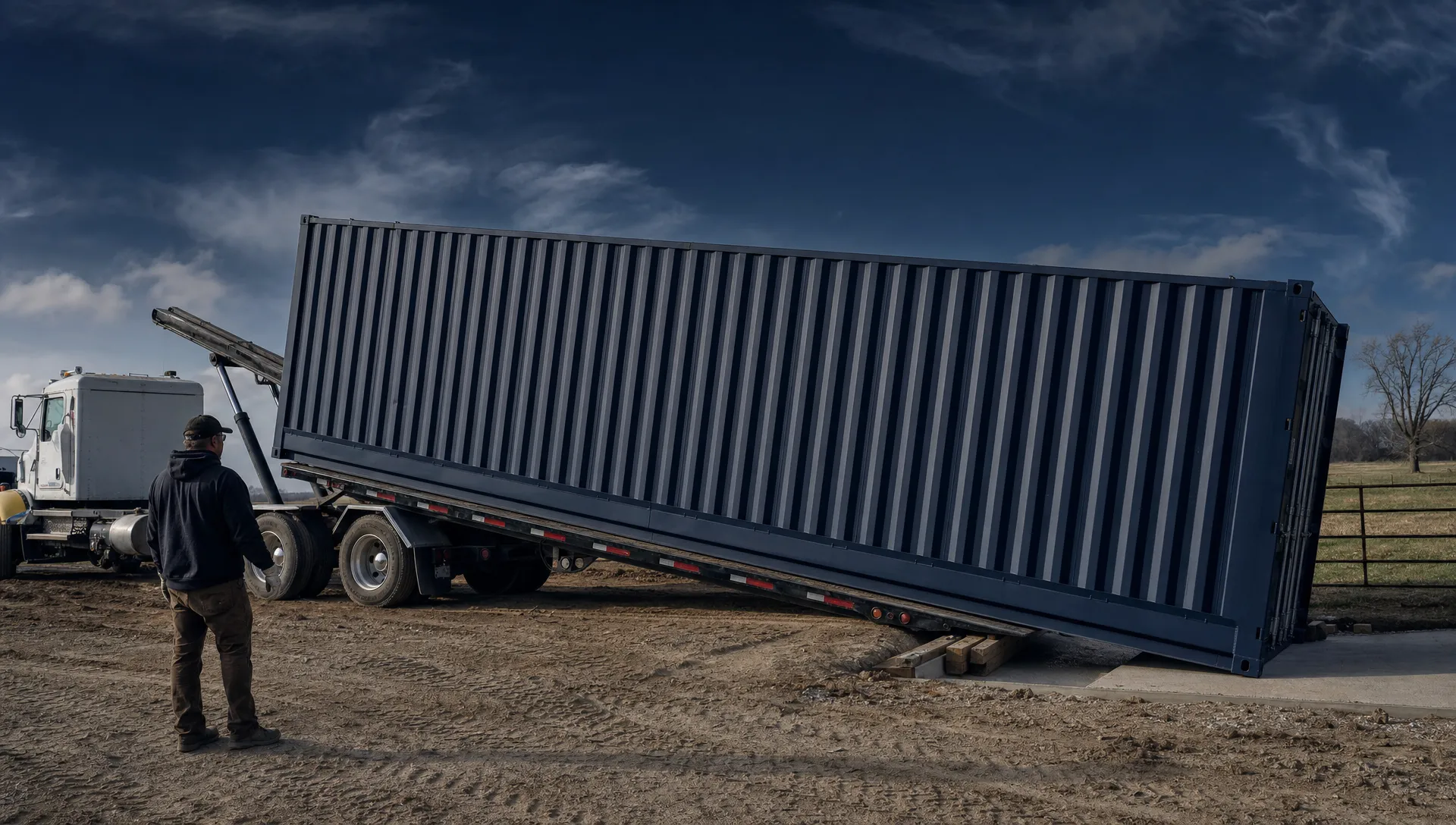
The biggest mistake in container size 40ft delivery is measuring only the final pad. A 40ft conex box can fit on a 40 ft pad, but the delivery truck still needs room to back in, tilt the trailer and slide the container into place.
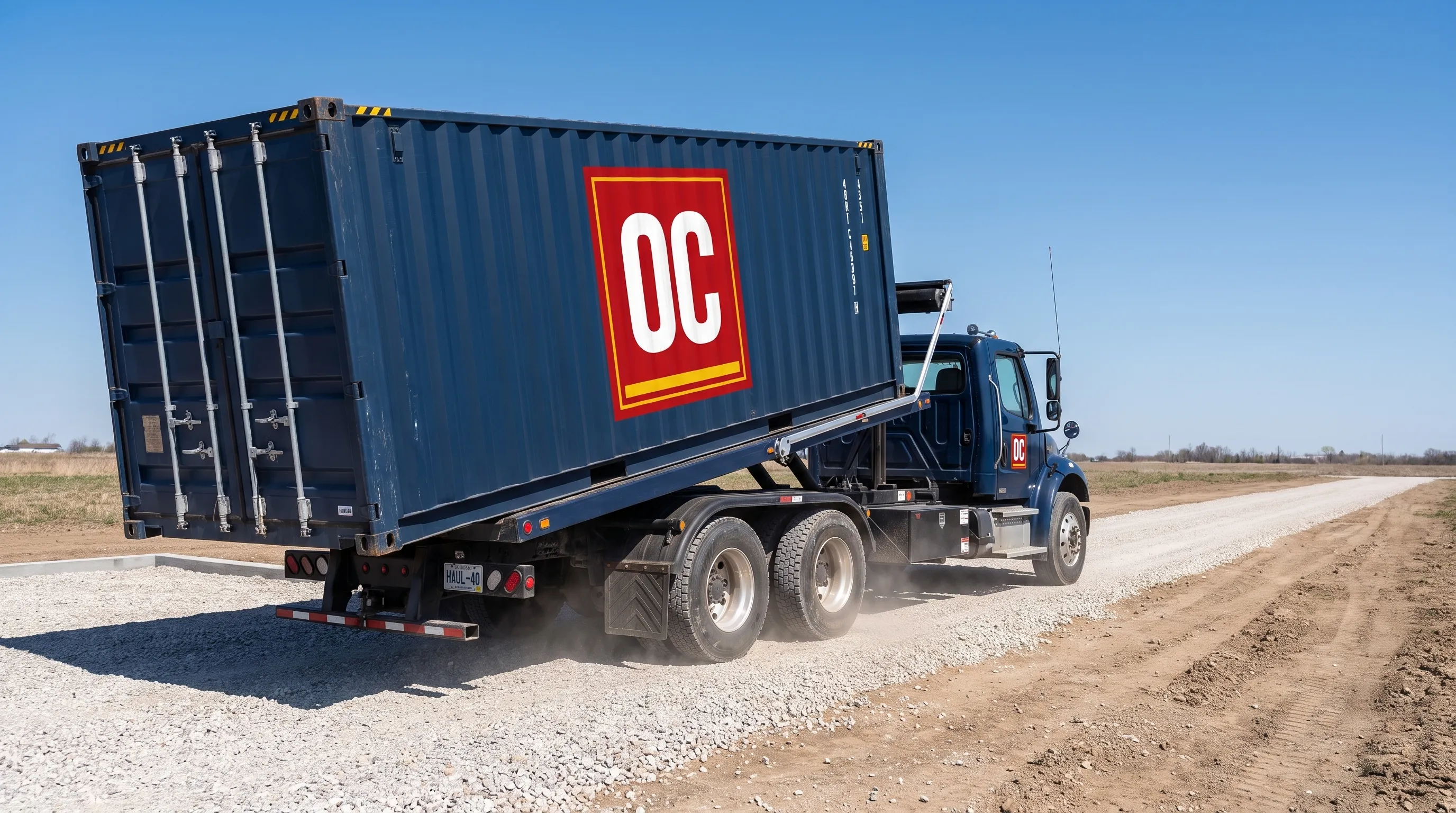
Most 40ft container deliveries use a tilt-bed trailer, landoll trailer, roll-off truck, crane truck or site crane. The best method depends on access, soil, slope, overhead clearance and how precise the placement must be. Rural sites, farms and construction yards often need extra planning because long trucks do not like soft ground or tight turns.
Tilt-bed delivery clearance
For a 40ft container delivered by tilt-bed, plan for about 100 to 120 ft of straight, level approach in front of the final placement area. The truck and trailer must line up with the pad because the container slides off the back. If the truck cannot straighten out, the driver may not be able to place the box safely.
You should also plan for about 12 ft of width and 14 to 16 ft of vertical clearance along the delivery path. Remove low limbs, check power lines and watch for roof overhangs, gates, septic lids, soft shoulders and tight culverts.
The Federal Highway Administration truck size and weight overview is a helpful background source for how truck movement is regulated in the US. Local road limits, bridge limits and private driveway conditions still matter, so your delivery provider should review site details before dispatch.
Site preparation checklist
A 40ft container should sit on a firm, level surface with drainage away from the steel frame. Gravel pads, concrete strips, concrete piers and railroad ties are common options, but the right setup depends on soil and use.
Before delivery, confirm these items:
- The truck can enter and exit without backing across unsafe traffic.
- The driveway is wide enough for the trailer and has enough turning room.
- The pad is level from side to side and end to end.
- The doors face the direction you want before the truck unloads.
- The site is clear of vehicles, debris, trees, wires and underground hazards.
- Water will not pool under the container after rain.
For a more detailed placement checklist, the 40ft container guide for storage, delivery and layout covers foundation choices, access planning and layout details in more depth.
40ft vs 20ft Containers: Which Size Makes More Sense?
Use container size 40ft when you need large storage volume and have enough site access for delivery. A 20ft container is easier to place in tight yards, but it gives about half the floor area. For many buyers, the delivery cost difference is smaller than the storage difference, though actual pricing depends on location, condition, availability and freight.
| Planning factor | 20ft container | 40ft container |
|---|---|---|
| Exterior footprint | 20 ft by 8 ft | 40 ft by 8 ft |
| Approximate floor area | About 150 sq ft | About 300 sq ft |
| Approximate volume | About 1,170 cu ft | About 2,390 cu ft |
| Typical empty weight | Around 5,000 lb | Around 8,000 lb to 8,500 lb |
| Delivery difficulty | Easier in tight spaces | Needs more straight room |
| Best fit | Small lots, tools, seasonal storage | Bulk storage, equipment, workshops, larger builds |
If your site is tight, compare the 40ft plan with Outback Shipping Containers’ 20ft container dimensions for delivery and site planning. The smaller box may be smarter for driveways, city lots and properties with limited truck access.
For container homes, the 40ft length gives more design flexibility. You can fit a bedroom zone, compact bath, kitchenette and living area in one shell, though finished square footage drops once you add framing, insulation, plumbing and electrical systems. Permits, zoning and building code requirements vary by city, county and state, so speak with local authorities before buying a container for housing.
Weight, Floors, Certification and Condition Grades
A container size 40ft purchase should include more than length and width. Weight ratings, floor condition, roof condition and certification status affect how you can use the unit.
Most standard 40ft dry containers have a tare weight around 8,000 lb to 8,500 lb. Tare weight means the empty container weight. Payload capacity is the rated cargo weight the container can carry, but real-world use may be limited by the container condition, road rules, trailer limits and how weight is distributed.
CWO, WWT and CSC basics
CWO means cargo-worthy. A cargo-worthy container is suitable for cargo use based on inspection standards, and it may be appropriate for transport when documentation and the CSC plate are valid. WWT means wind and watertight, which is common for ground storage because the container should keep out rain and wind under normal conditions.
A CSC plate is the metal safety approval plate found on international shipping containers. If you plan to ship the container loaded by rail, vessel or truck as intermodal freight, confirm CSC status with your supplier and carrier. If the unit will sit on your property for storage, WWT condition may be enough.
Floor strength and condition
Most dry containers have marine-grade plywood floors supported by steel crossmembers. Check for soft spots, delamination, chemical odor, heavy gouges and signs of water intrusion. Used containers often have cosmetic dents and surface rust, but the doors should close, the roof should shed water and the floor should support your intended load.
If you plan to store motorcycles, pallets, hay, tools or small machines, ask how the container was inspected. Outback Shipping Containers supplies certified inspected units with wind and watertight guarantees, and delivery support is important because a solid container still needs a solid site.
Layout Ideas for Storage, Offices and Container Builds
The best use of container size 40ft space depends on how often you need access. A 40ft container can hold a lot, but deep storage becomes frustrating if the items you need every week are buried at the back.
For business storage, put fast-moving inventory near the doors and bulk material toward the rear. For construction sites, leave a center aisle and keep high-value tools inside locked cabinets or cages. For farm and ranch use, separate chemicals, feed, parts and equipment so spills or odors do not spread.
Simple layout rules
A 40ft container works best when the layout is planned before delivery. Door direction, sun exposure and drainage all affect daily use. If you are adding electrical service, HVAC, windows or partitions, design the shell before cutting steel.
Keep these layout rules in mind:
- Leave a clear path from the doors to the back wall.
- Put heavy items low and near structural floor supports.
- Use vertical shelving to protect floor space.
- Add vents if temperature swings or condensation are a concern.
- Choose a high cube if people will work inside for long periods.
For buyers focused on headroom, the 40ft high cube shipping container dimensions guide explains the extra height, door clearance and practical benefits of high cube units.
Mid-project buying tip
If you already know you need more vertical clearance for a workshop, office or finished build, compare standard and high cube options before you pay for delivery. A one-foot height change is hard to fix after the container is on-site. The 40ft new high cube shipping container in gray is one relevant example for buyers who want a one-trip dry container with extra headroom.
For cold storage, do not design around dry container measurements. Reefer machinery and insulation change the interior, so use the listed measurements for the 40ft Refrigerated Shipping Container or request confirmation before ordering racks, pallets or temperature-sensitive inventory.
Buying Checklist Before You Order a 40ft Container
Before buying a container size 40ft unit, decide whether your priority is price, condition, height, delivery speed or conversion potential. A first-time buyer often focuses on the lowest listed price, then gets surprised by delivery limits, site prep costs or a container that is too low for the planned use.
Use this checklist before you commit:
- Confirm whether you need standard height, high cube height or refrigerated storage.
- Measure the largest item that must pass through the doors.
- Check the pad, driveway, gate width, turn radius and overhead clearance.
- Ask whether the unit is new one-trip, used, refurbished, CWO or WWT.
- Confirm delivery cost, delivery method and placement limits in writing.
- Review local zoning, HOA rules, building codes and permit needs before using a container as a structure.
- Ask for photos or inspection details if the exact unit matters to your project.
Transparent pricing matters, but the cheapest container is not always the best value. A reliable supplier should help you match the unit type to the job, explain delivery requirements and avoid hidden surprises. Outback Shipping Containers serves all 50 states, including remote and rural delivery areas, with support from purchase through placement.
Frequently Asked Questions
What are the inside dimensions of a 40ft container?
A standard 40ft dry container usually has interior dimensions of about 39 ft 5 in long, 7 ft 8 in wide and 7 ft 10 in high. A 40ft high cube is similar in length and width but gives about 8 ft 10 in of interior height.
How much room do you need to deliver a 40ft shipping container?
For tilt-bed delivery, plan for about 100 to 120 ft of straight room in front of the placement area. You should also allow about 12 ft of width and 14 to 16 ft of overhead clearance along the delivery path. Exact needs depend on truck type and site conditions.
Is a 40ft container big enough for a tiny home?
Yes, a 40ft container can work for a compact tiny home shell, with about 300 gross square feet before insulation and interior walls. Finished space will be smaller. Local zoning, permits, utility rules and building codes vary, so confirm requirements with your city or county before buying.
What is the door opening on a 40ft container?
A standard 40ft dry container door opening is usually about 7 ft 8 in wide and 7 ft 5 in high. A high cube usually has a taller door opening, often about 8 ft 5 in high. Always confirm the exact unit dimensions if loading tall equipment.
Is container size 40ft better than 20ft for storage?
A 40ft container is better when you need more volume, long-item storage or room for aisles and shelves. A 20ft container is easier to deliver on tight sites. The better choice depends on your space, access, budget and how often you need to reach stored items.
How much does a 40ft shipping container weigh empty?
Most standard 40ft dry containers weigh around 8,000 lb to 8,500 lb empty. This is the tare weight. High cube, refrigerated and specialty containers can weigh more. Check the CSC plate or listing for the exact tare weight and payload capacity of the unit you are buying.
If you are planning storage, a job-site office, a farm container or a container conversion, start with the measurements and delivery room first. Then match the condition grade and height to the job. To compare current options, delivery requirements and financing availability, visit Outback Shipping Containers and request help choosing the right 40ft unit for your site.