Side Opening Containers: Uses, Benefits, and Buying Tips
Explore side opening container uses, sizes, costs and buying tips. Learn what to inspect and how to plan safe access and delivery.
Side Opening Containers: Uses, Benefits, and Buying Tips
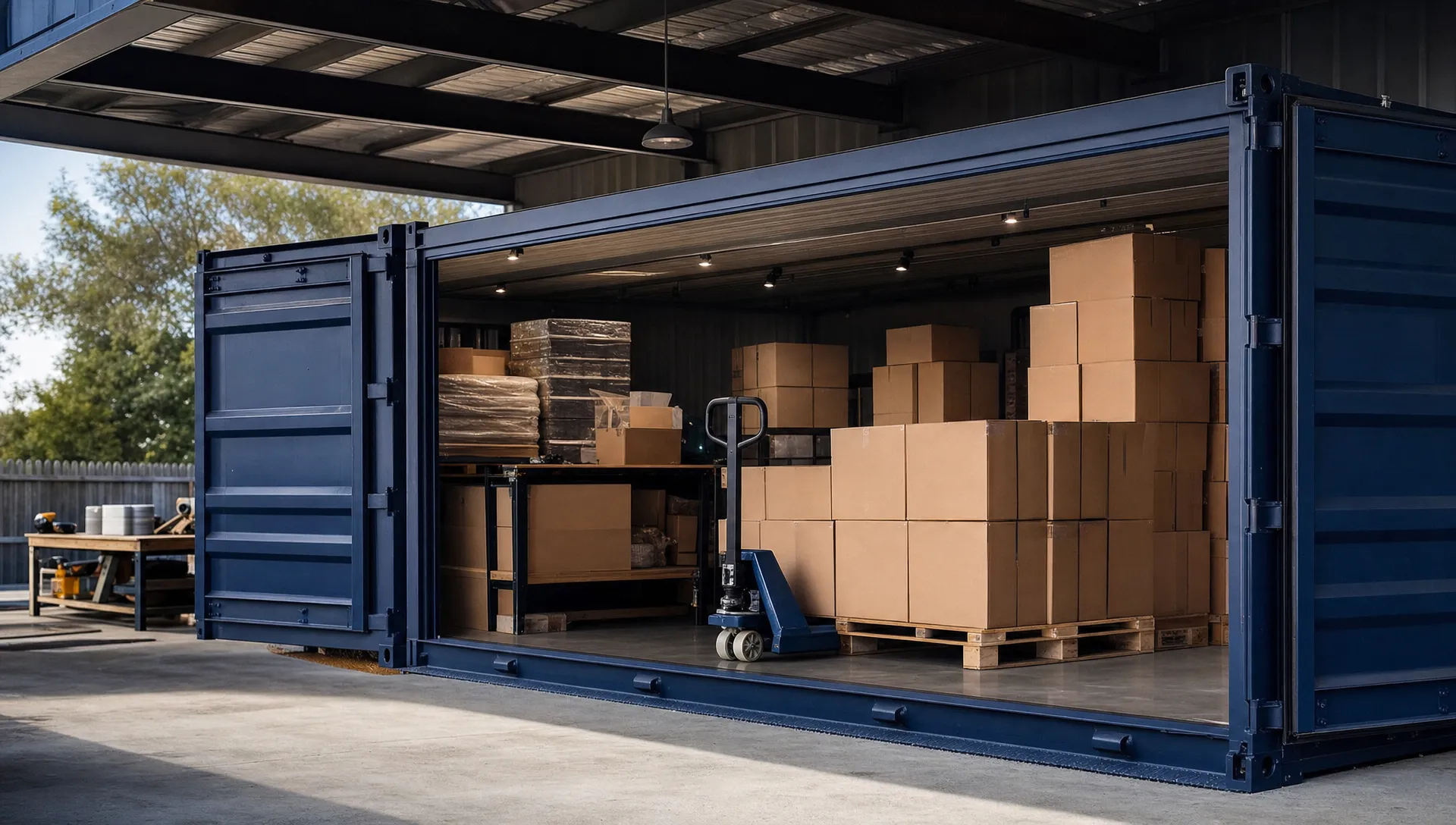
A side opening container has doors along its long side, allowing you to load pallets, equipment and bulky materials without moving everything through the narrow end doors. It suits job-site storage, farm supplies, workshops and businesses that need frequent access to separate items. The main trade-offs are purchase cost, extra door hardware and the clear space needed to open the doors safely.
Quick Answer: Choose side access when reaching individual items or loading wide cargo matters more than getting the lowest-cost storage box. Before buying, confirm the actual opening dimensions, door condition, structural ratings and delivery requirements.
Key Takeaways:
- Full-length side doors improve access, but the usable opening varies by design.
- A level foundation helps long door assemblies align, latch and seal correctly.
- Wind and watertight condition does not establish approval for international freight or residential use.
- Compare the complete delivered cost, not just the container’s advertised price.
How a side opening container works
Most standard cargo containers open at one short end. An open-side model adds doors along a long wall, often using folding or linked door leaves. Some models retain conventional end doors as well, but you should confirm the layout on the unit you plan to purchase.
“Full side access” describes the access concept, not a guaranteed clear opening. Door frames, hinges, folded panels and structural members can reduce the space available for loading.
Factory-built versus modified containers
A factory-built unit has a door system and supporting frame designed for side access. A modified conex box starts with a different configuration and receives new openings, reinforcement and doors.
Neither description alone proves quality. Ask who performed the work, what structural documentation exists and whether the container remains approved for its intended use. Cutting a large opening into a conventional wall can affect structural performance.
For a side opening container, door alignment matters as much as the appearance of the steel shell. Inspect every hinge, locking rod and seal rather than judging the unit from one exterior photograph.
Side access versus doors at both ends
A double-door or tunnel container provides access through both short ends. That helps with long materials, vehicles and stock arranged in a straight aisle. Side access serves a different purpose: reaching items across the length of the container.
Outback’s guide to double-door container benefits and use cases explains that alternative if you need a drive-through arrangement rather than broadside loading.
Where side access provides the most value
The strongest reason to buy this configuration is a recurring access problem. If you rarely enter the container or unload everything at once, standard end doors may be sufficient.
Construction and commercial storage
A side opening container lets crews reach tools, fixtures or palletized supplies without clearing a path from the end. This can work well when several trades share storage and need different materials throughout the day.
Arrange inventory around the door sections you expect to use. Keep frequently needed items near accessible openings and leave room for personnel to move safely. Shelving must not block locking rods, hinges or the door swing.
Retailers and small manufacturers can also use side access for staged inventory. Its value depends on how goods move through the site, not simply how much storage volume the container provides.
Farms, ranches and equipment storage
Wide access can help with fencing supplies, packaged feed, implements and seasonal equipment. It also makes awkward items easier to position when end-door loading would require repeated rearrangement.
Keep moisture-sensitive supplies off the floor and check for condensation. A wind and watertight shell keeps out ordinary wind-driven rain when properly closed, but it does not control interior humidity. Stored contents may need ventilation, pest protection or temperature control.
Workshops and conversion projects
Opening the long side can provide convenient access to a workbench or equipment bay. However, open doors do not replace a planned ventilation system, safe electrical installation or appropriate fire protection.
For a shipping container home, broad access may simplify the build process, but freight doors are not automatically suitable residential openings. Insulation, air sealing, structural design and approved exits still need attention. A container conversion should begin with the intended occupancy and local code requirements, not just a floor plan.
Sizes, dimensions and alternatives to compare
A side opening container is useful only if both the container and its working area fit your site. Check the exterior footprint, clear door opening and space occupied by the doors when fully opened.
Common planning dimensions
The dimensions below are common nominal exterior dimensions for these formats. They are planning references, not specifications for every open-side model or modified unit.
| Container format | Nominal exterior length | Nominal exterior width | Nominal exterior height | Main planning consideration |
|---|---|---|---|---|
| 20ft standard-height | 20 ft | 8 ft | 8 ft 6 in | Compact footprint with broadside access where fitted |
| 40ft standard-height | 40 ft | 8 ft | 8 ft 6 in | More storage length and a larger site requirement |
| 40ft high cube | 40 ft | 8 ft | 9 ft 6 in | Extra height, with side-door availability depending on the model |
A conventional 20ft dry container often has interior dimensions around 19 ft 4 in long, 7 ft 6 in wide and 7 ft 8 in high. Side-door frames, reinforcement and linings can change those measurements. Request the actual specifications before designing shelving or ordering equipment.
Measure the opening, not just the box
Confirm clear opening width and height, threshold height and the location of fixed posts. For folding doors, find out where the panels sit when open and whether they interfere with your loading route.
Do not assume that a 20ft-long container offers a completely unobstructed 20ft opening. Likewise, a high cube’s extra exterior height does not guarantee that a particular machine will pass through its doors.
Read the weight information correctly
Tare weight is the empty container’s weight. Payload capacity is the permitted cargo weight, while maximum gross mass includes both the container and its contents.
Use the unit’s markings and documentation rather than a generic online weight chart. Total payload capacity does not establish whether the floor can accept a concentrated machine load, shelving leg or loaded forklift wheel.
New versus used: condition, price and total cost
A new or one-trip side opening container can be a sensible choice when reliable door operation, appearance and lower initial repair needs matter. “One-trip” generally describes a container that has made an initial cargo journey, so minor handling marks may still be present.
A used unit may offer better value for basic storage, provided the doors, floor and supporting structure remain sound. Compare equivalent configurations rather than comparing a used end-door box with a new full-side-access model.
What condition labels actually tell you
Wind and watertight, often shortened to WWT, concerns protection against weather intrusion. Cargo-worthy, or CWO, generally concerns suitability for cargo service, but you should ask for the inspection basis and documentation behind that description.
Neither label should replace an inspection of the specific unit. If you need an ISO container for intermodal transport, verify its applicable specifications and transport acceptance requirements.
For international freight, review the safety approval plate and examination status. The International Maritime Organization’s Convention for Safe Containers establishes the international framework for container safety approval and inspection. A WWT storage description alone does not establish current CSC compliance or carrier acceptance.
Use advertised prices as references, not final quotes
As a specific reference, Outback’s 20ft one-trip open-side container listing has advertised a price of $3,495. Confirm the current price, availability and delivery terms before relying on that figure.
For a lower-cost option, compare the used 20ft full-side-access container. Ask for current unit photos and condition details so you can judge whether the savings outweigh possible repairs.
Your total budget should account for the container, applicable taxes, delivery, unloading, foundation work and planned modifications. Outback offers financing options, but buyers should confirm eligibility, repayment terms and total financing cost separately.
What to inspect before buying
Inspecting a side opening container means checking a larger door assembly than you would on a standard end-door unit. A clean paint finish does not prove that the doors operate correctly or that the frame is straight.
Door operation and weather seals
Ask for a demonstration of every door leaf opening, closing and latching. Check that locking rods engage properly and that the panels meet without excessive force. Look closely at hinge welds, seals and the points where adjoining panels overlap.
Torn gaskets, bent locking rods and uneven gaps deserve explanation. Fresh paint around a repair is not automatically a problem, but the seller should identify the work performed.
Inspect the container on reasonably level support. Poor support can twist the frame and make otherwise serviceable doors difficult to close. After delivery, check operation again before storing valuable contents.
Floor, frame and previous use
Examine the floor for soft areas, damage, heavy staining and evidence of leaks. Ask about previous cargo when available, particularly if you plan to store food-related supplies or convert the container into occupied space.
Check corner posts, rails and the frame surrounding the side opening for distortion or poorly explained repairs. Do not enter or climb beneath a container while it is suspended or being positioned.
Security and purchase documentation
More doors create more hardware to maintain and secure. Confirm which locking points accept your intended locks and whether any lockbox is compatible with the side-door arrangement.
Verify the exact unit before paying. Request identifying details, recent photos, the written condition description and a clear statement of what happens if the delivered container does not match the order. Keep delivery arrangements and any weather-tight guarantee in writing.
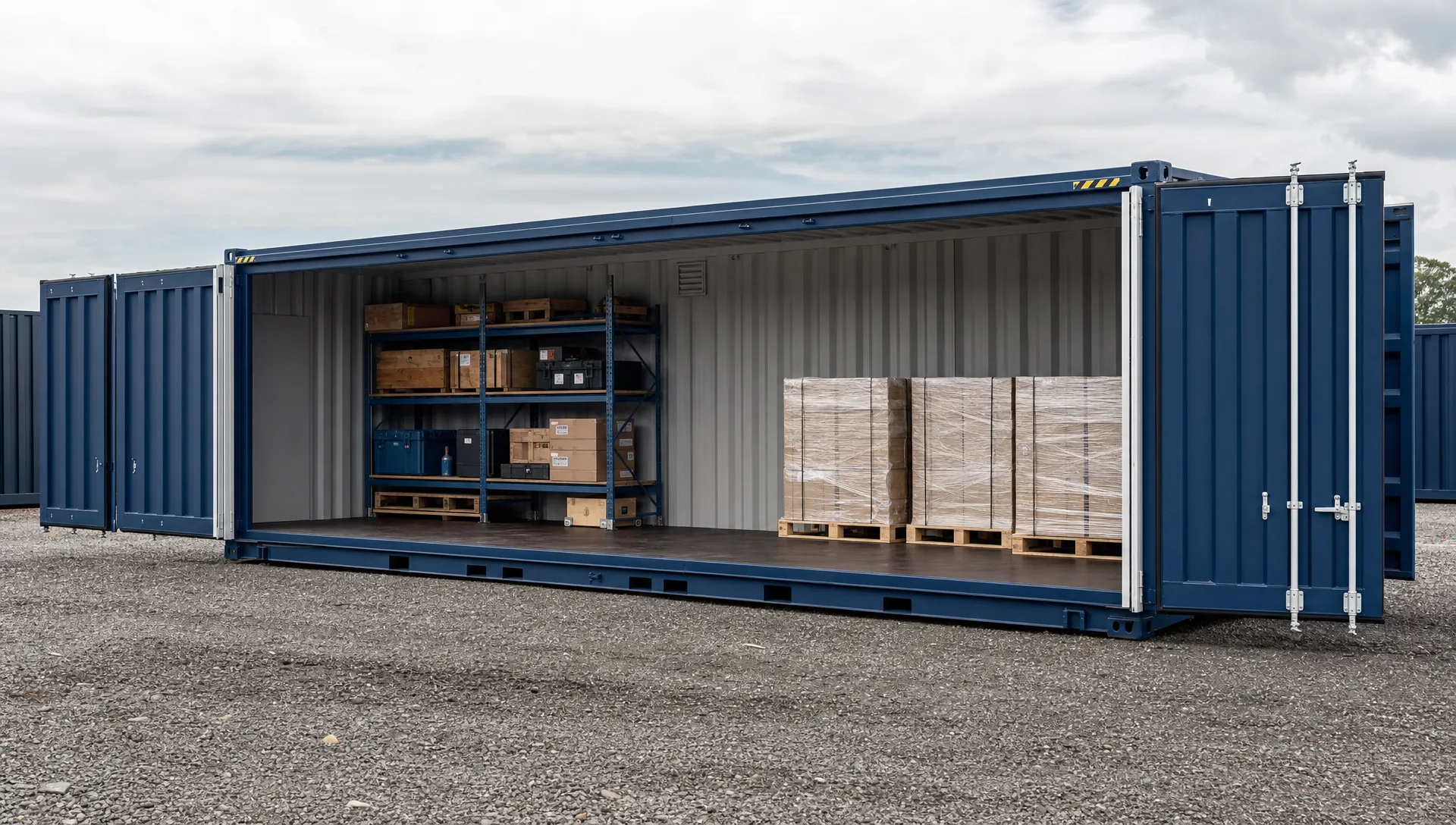
If broadside loading fits your workflow, Outback’s new gray 20ft open-side container with full-length side doors provides a relevant wind and watertight option to discuss. Request the actual opening measurements and a delivery quote for your address before committing.
Delivery, safe loading and conversion planning
Delivery planning should happen before purchase, especially on rural properties and active job sites. A side opening container needs room for both the delivery operation and its everyday door movement.
Prepare the route and resting position
The delivery truck may need substantially more maneuvering room than the container footprint suggests. Ask the supplier about the proposed truck, unloading method and required access clearances.
Describe narrow gates, sharp turns, slopes, overhead wires and soft ground before scheduling. Photos and measurements help the delivery team assess the route, but they do not replace site-specific confirmation.
Prepare a stable, level support system suited to your ground conditions. Position the side doors toward the working area and keep drainage away from the container. Do not place the opening against a fence, building or embankment that prevents normal use.
Plan forklift access without assuming floor capacity
Side doors can let a forklift place loads from outside, depending on the opening and cargo dimensions. That does not mean every container can safely support a loaded forklift driving inside.
Confirm floor loading limits, equipment weight and any ramp or bridge-plate requirements. Account for concentrated wheel loads rather than relying only on the container’s total payload rating.
Workplaces using forklifts must follow applicable OSHA powered industrial truck requirements, including operator training and safe loading practices. Keep pedestrians clear of moving equipment and the door swing area.
Check permits before making permanent changes
Permit, zoning and building-code requirements vary by state, county and municipality. Contact local planning and building authorities before placing a permanent storage unit, operating a business from it or starting a residential conversion.
Ask about setbacks, foundations, occupancy, utilities and fire access. Where work affects the structure, obtain appropriate engineering guidance rather than assuming the container’s original freight design covers the change.
For occupied space, also plan insulation, moisture control and ventilation. Large steel door assemblies can complicate air sealing and create thermal bridges. A low purchase price does not establish the total cost of a compliant workshop or home.
Frequently asked questions
What is a side opening container?
A side opening container has doors along a long wall rather than relying only on doors at one short end. This provides broad access for loading and retrieving cargo. Designs vary, so confirm whether the unit has full-length folding doors, partial side openings, fixed posts or additional end doors.
Are side-opening containers waterproof?
A unit sold as wind and watertight should resist ordinary weather intrusion when properly closed and maintained, subject to the seller’s stated guarantee. It is not designed to be submerged or to eliminate condensation. Check door gaskets, overlapping panels and alignment, then confirm the scope of the condition guarantee.
Can you load a side-opening container with a forklift?
Often, a forklift can place suitable cargo through the side opening while remaining outside. Driving inside requires separate confirmation of floor capacity, equipment weight and safe access. Check opening dimensions, thresholds and concentrated wheel loads. The container’s total payload rating alone does not establish safe forklift floor loading.
Is a new or used open-side container better?
New or one-trip units usually suit buyers who prioritize condition, appearance and fewer initial repairs. Used units can suit budget-focused storage projects if their doors, seals, floors and frames remain sound. Compare current photos, inspection information and delivered prices for equivalent models rather than choosing by condition label alone.
Can you turn an open-side container into a home?
Yes, it can form part of a container-home project, but its freight doors do not establish residential compliance. Structural changes, insulation, moisture control, utilities and approved exits require planning. Requirements vary by location, so consult local authorities and qualified design professionals before purchasing a unit for housing.
Get a quote based on your actual loading needs
Before choosing a side opening container, write down your largest load, required opening dimensions, storage layout and delivery constraints. Those details make it easier to compare units on useful access rather than appearance alone.
You can review Outback’s 20ft Open Side New Shipping Container, Wind & Watertight, Gray and request confirmation of its specifications and delivered cost. Outback Shipping Containers serves all 50 states, with delivery logistics support for evaluating access to your site.