What to Know Before Buying a High Cube Container
Buying a high cube container? Learn sizes, conditions, delivery access, site prep, permits, and inspection tips before you order.
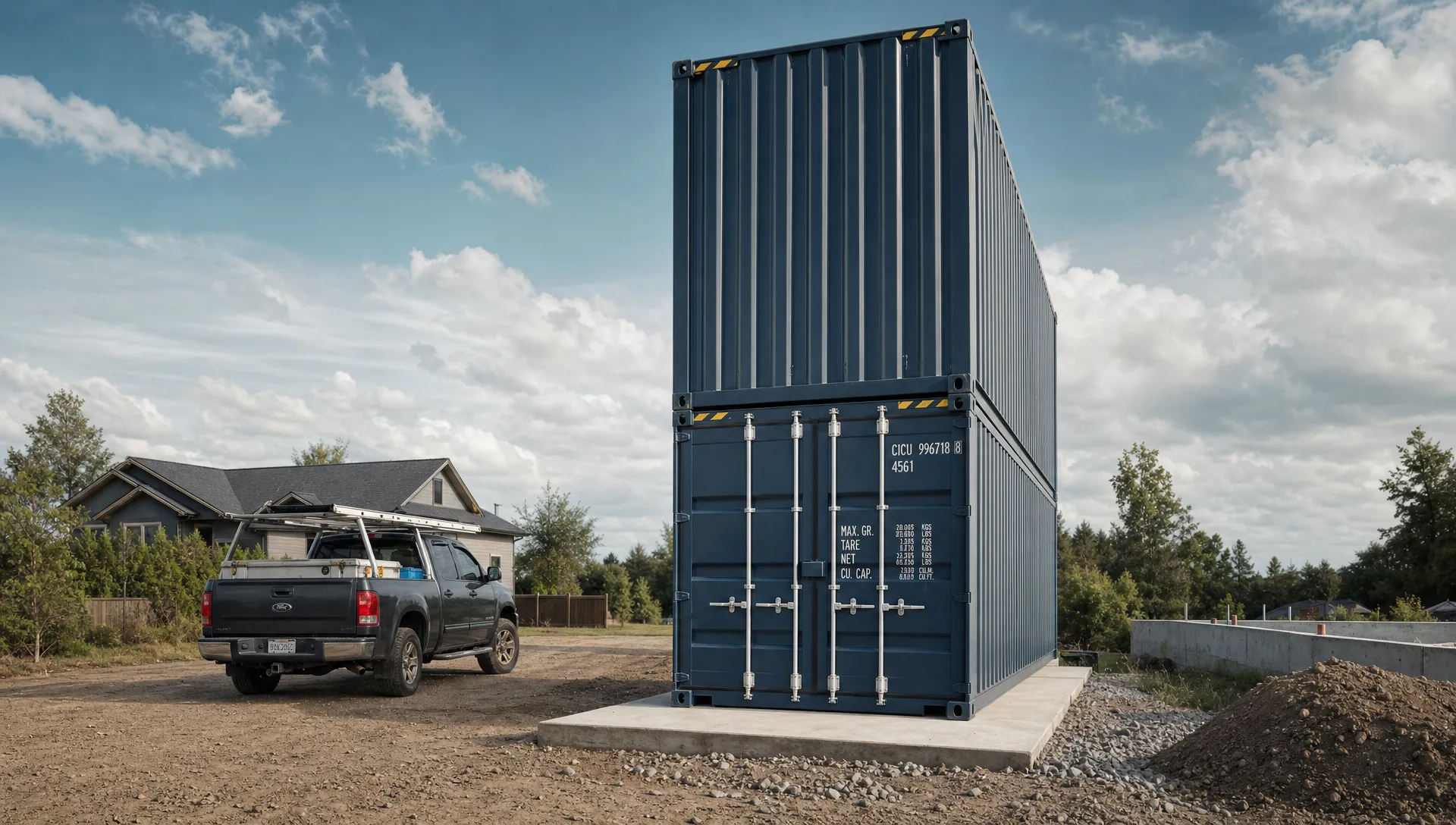
What to Know Before Buying a High Cube Container
A high cube container is a shipping container that is one foot taller than a standard container. Most high cubes are 9 feet 6 inches tall on the outside, which gives you about 8 feet 10 inches of interior height before insulation, flooring, or shelving. That extra height is the main reason buyers choose high cubes for storage, workshops, offices, shipping container homes, and container conversions.
Quick Answer: Buy a high cube container if you need more vertical clearance, plan to insulate or finish the interior, want to store tall equipment, or are building a container home or office. Before you order, confirm the size, condition grade, delivery access, total delivered cost, and local permit rules.
Key Takeaways
- A high cube is usually 9 feet 6 inches tall outside, compared with 8 feet 6 inches for a standard ISO container.
- The most common option is the 40ft high cube, but 45ft high cubes and some 20ft high cubes are also available.
- One-trip high cubes are best for clean builds and conversions, while used CWO or WWT units often make sense for storage.
- Delivery access matters as much as the container itself. A 40ft high cube may need 100 to 120 feet of straight clearance for tilt-bed delivery.
- If you plan to build a home, office, cabin, or pool, check local zoning, permitting, foundation, and engineering rules before buying.
What Is a High Cube Container?
A high cube container is an intermodal container with the same basic footprint as a standard cargo container, but with more height. Standard containers are usually 8 feet 6 inches tall outside. High cube containers are usually 9 feet 6 inches tall outside.
That extra foot sounds small on paper. On a job site, farm, ranch, or build site, it can make a big difference. It gives you more room for tall tools, palletized goods, overhead lighting, ceiling insulation, ductwork, garage-style storage racks, or finished living space.
High cubes are still ISO containers. That means they are built around standardized corner castings, steel frames, and exterior dimensions used in global freight. The International Organization for Standardization covers freight container sizing under ISO 668, which is the main dimensional standard for Series 1 freight containers.
You may hear high cubes called conex boxes, cargo containers, storage containers, or high cube shipping containers. In most buying conversations, those terms point to the same general product: a steel container with extra interior height.
High cube vs standard container
The main difference is height. Length and width are usually the same for equivalent standard and high cube models. A 40ft standard and a 40ft high cube both have an 8-foot exterior width and a 40-foot exterior length. The high cube gives you more vertical space.
| Container type | Exterior dimensions | Approx. interior height | Approx. capacity | Best fit |
|---|---|---|---|---|
| 20ft standard | 20' x 8' x 8'6" | 7'10" | 1,172 cu ft | Small storage, tight sites, frequent moves |
| 40ft standard | 40' x 8' x 8'6" | 7'10" | 2,389 cu ft | Bulk storage, job sites, general freight |
| 40ft high cube | 40' x 8' x 9'6" | 8'10" | 2,694 cu ft | Homes, offices, workshops, tall storage |
| 45ft high cube | 45' x 8' x 9'6" | 8'10" | 3,040 cu ft | Maximum storage volume, larger builds |
Dimensions vary slightly by manufacturer and door design. If you need exact clearances for equipment, shelving, or a container conversion, ask for the unit specs before finalizing your order.
For a deeper size comparison across 10ft, 20ft, 40ft, and high cube units, Outback Shipping Containers also has a full guide to cargo container sizes for storage, offices and homes.
High Cube Container Dimensions and Specs That Matter
Buyers often focus on length first. That makes sense, but height, door opening, tare weight, and payload capacity can matter just as much.
A 40ft high cube is the most common high cube container in the United States. It offers a strong balance of storage volume, availability, and cost per cubic foot. It is also one of the most popular starting points for container homes, mobile offices, workshops, retail units, and farm storage.
Common 40ft high cube specs
| Spec | Typical 40ft high cube measurement |
|---|---|
| Exterior length | 40' |
| Exterior width | 8' |
| Exterior height | 9'6" |
| Interior length | About 39'5" |
| Interior width | About 7'8" |
| Interior height | About 8'10" |
| Door opening width | About 7'8" |
| Door opening height | About 8'5" |
| Cubic capacity | About 2,694 cu ft |
| Tare weight | About 8,775 lb |
| Max gross weight | About 67,200 lb |
| Payload capacity | About 58,425 lb |
Tare weight means the empty weight of the container. Payload capacity means how much weight the container can carry when loaded, based on its rating. Max gross weight is the tare weight plus payload.
For storage buyers, cubic capacity and door height are often more important than payload. For shippers, contractors, and industrial users, payload capacity matters more. If you plan to move a loaded container, confirm the weight limits with your hauler, crane company, or logistics provider before loading it.
If you need a spec-by-spec breakdown, see Outback Shipping Containers’ guide to 40ft high cube shipping container dimensions.
Door height can be the deciding factor
The extra exterior height of a high cube also gives you a taller door opening. This helps if you plan to store skid steers, side-by-sides, tall machinery, stacked pallets, restaurant equipment, or workshop tools.
Measure your tallest item before you buy. Do not just measure the container interior. Measure the door opening too. Many buyers forget that equipment must fit through the doors before it can use the interior height.
Interior height after a build-out
If you are building a shipping container home, office, cabin, or studio, raw interior height is not the final ceiling height. You may lose several inches to floor framing, insulation, ceiling finishes, electrical runs, and HVAC.
That is why many builders prefer high cube units for living or working space. A standard container can feel tight after insulation and finishes. A high cube gives you more room to meet comfort needs without making the finished ceiling feel cramped.
When a High Cube Container Is the Right Choice
A high cube is not always required. But when you need height, it is usually worth pricing against a standard unit.
High cubes are especially useful for buyers who want more than basic ground-level storage. The added vertical space can improve function, resale appeal, and comfort.
Storage and job-site use
For contractors, farm owners, ranch operators, and small businesses, high cubes work well when stored items are tall or stackable. You can add pallet racking, lumber racks, tool cages, mezzanine-style storage, or overhead lighting with less headroom pressure.
A 40ft high cube is often the right fit for:
- Construction tools and materials
- Farm and ranch equipment
- Seasonal inventory
- Event equipment and fixtures
- Tires, furniture, and bulky retail goods
- Tall machinery or vehicle storage
If your items are heavy but not tall, a standard container may still be enough. If you want to stack vertically, work inside the container, or add shelving, the high cube becomes more useful.
Container homes, offices, and workshops
High cube containers are popular for container homes because they help solve one of the biggest design problems: ceiling height. Once you add insulation, flooring, plumbing chases, and lighting, every inch matters.
The same applies to modular offices and workshops. Workers need space to stand, move, install fixtures, and work comfortably. A high cube gives designers more room to run electrical, add wall framing, and improve ventilation.
Retail, hospitality, and rental builds
Property developers, Airbnb hosts, and entrepreneurs often choose high cubes for cabins, pop-up shops, food service units, pool houses, and other modular builds. The finished space can feel more open, which matters when the unit will be used by guests or customers.
If the project involves guests, employees, or public access, plan early for code compliance. Building codes, zoning, energy rules, accessibility rules, and permit requirements vary by city, county, and state. Always speak with the local building department before ordering or modifying a container.
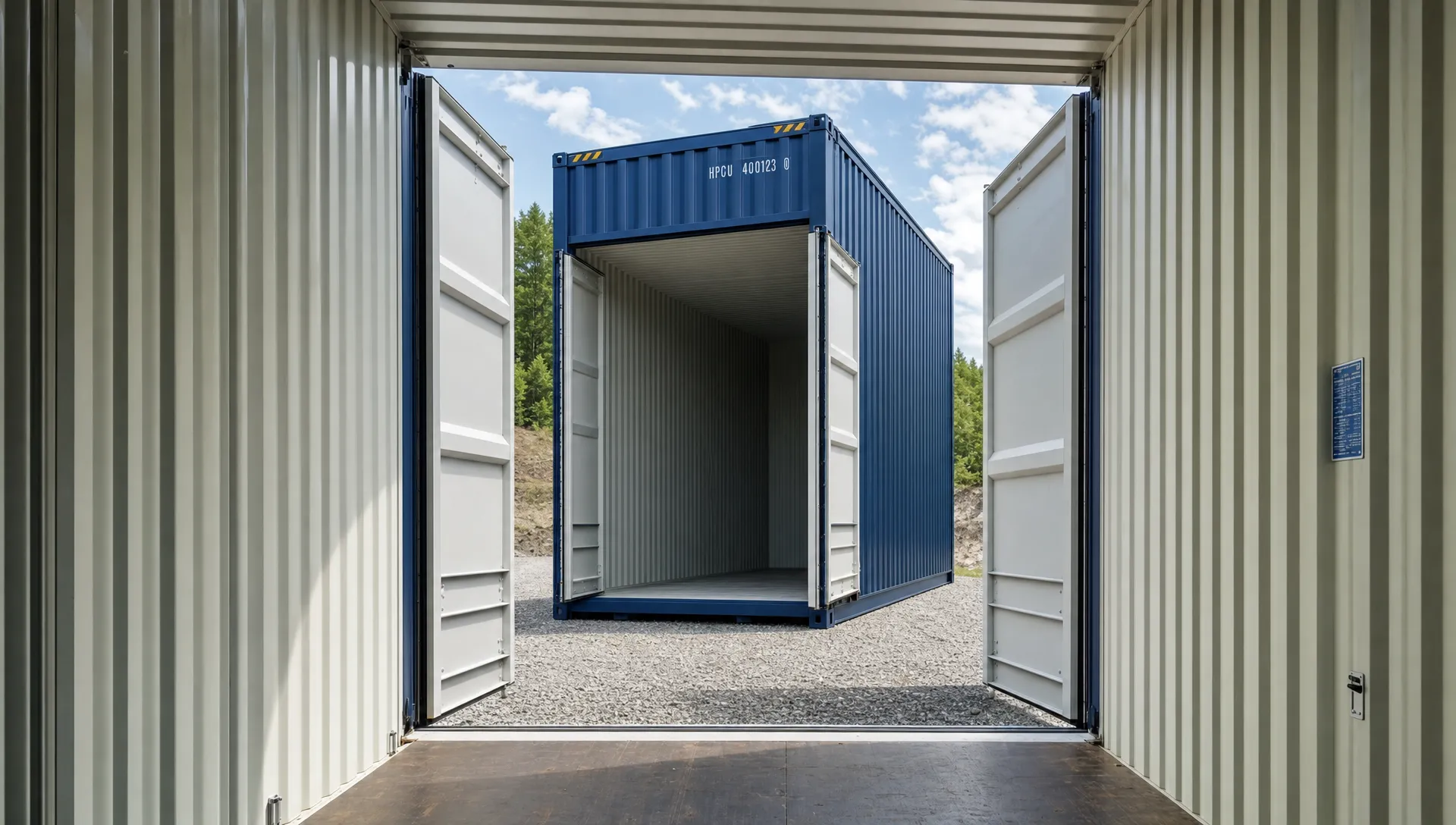
New, Used, CWO, WWT, and One-Trip: Which Condition Should You Buy?
Condition grade has a major effect on appearance, expected service life, and price. It also affects whether the container is suitable for storage, freight, or conversion.
Do not buy based on the word "used" alone. Used containers can range from clean cargo-worthy units to rough as-is boxes with floor damage, leaks, or door problems. Ask for the grade and what that grade means.
| Condition type | What it usually means | Best for | What to check |
|---|---|---|---|
| One-trip | Used for one cargo trip, newer condition, fewer dents | Homes, offices, pools, retail, clean storage | Minor transit marks, paint, door seals |
| CWO | Cargo worthy, structurally sound for cargo use | Shipping, industrial storage, heavy-duty use | CSC plate, frame, roof, floors, doors |
| WWT | Wind and watertight for storage, not always cargo approved | On-site storage, farms, job sites | Leaks, door gaskets, roof patches |
| Refurbished | Used container repaired and often repainted | Storage with cleaner appearance | Repair quality, coating, rust treatment |
| As-is | No strong condition guarantee | Low-budget, non-critical use | High leak and repair risk |
CWO stands for cargo worthy. It generally means the unit is structurally sound for freight use, subject to inspection and documentation. WWT means wind and watertight. A WWT container should keep out normal rain and weather when closed, but it may not be approved for international shipping.
One-trip high cubes are often the best choice for container homes, offices, pools, and custom modular builds. They cost more than older used units, but they usually save time on repairs, rust treatment, and cosmetic work.
Used WWT or CWO high cubes often make sense for storage. If you need a secure steel box for tools, feed, hay equipment, job-site materials, or extra inventory, a well-inspected used container can be a smart buy.
For current guidance on condition and market pricing, compare Outback Shipping Containers’ breakdown of one-trip vs used 40ft high cube cost.
What to Inspect Before You Buy
A high cube container is built to be tough, but used steel boxes live hard lives. They cross oceans, sit in ports, ride trucks and trains, and get loaded by heavy equipment. A careful inspection protects you from leaks, bad doors, weak floors, and surprise repairs.
If you cannot inspect the unit in person, ask for recent photos or video of the actual container. Stock photos are not enough for used equipment.
Exterior inspection
Start outside. Look at the roof, side walls, corner posts, crossmembers, and doors. Dents are common and not always a problem. Sharp creases, deep roof dents, heavy rust, and twisted frames are more serious.
Check these areas first:
- Roof seams and dents that may hold water
- Bottom rails and crossmembers for corrosion
- Corner posts and corner castings for structural damage
- Door hinges, locking rods, and handles
- Door gaskets for cracks, gaps, or missing sections
- Forklift pockets and underside frame if the unit has them
Surface rust is common on used containers. Heavy scaling rust, holes, soft steel, or rust around structural members is different. If the container will become a home or office, start with the cleanest shell your budget allows.
Interior inspection
Step inside during daylight and close the doors. If you see pinholes of light, water can likely enter too. Check the floor for soft spots, strong chemical odors, delamination, or major oil stains.
Most container floors are marine-grade plywood treated for freight use. For storage, that is usually fine if the floor is solid. For homes, offices, or hospitality units, many builders cover, seal, remove, or replace flooring depending on the project plan and local requirements.
Door operation
Bad doors are one of the most common headaches with used containers. Doors should open, close, seal, and latch without extreme force. If the frame is racked because the container sits on uneven ground, doors can bind even if the container itself is sound.
This is another reason site prep matters. A solid, level pad helps the doors work correctly after delivery.
Delivery, Site Prep, and Access Requirements
Delivery is where many first-time buyers get surprised. A container is large, heavy, and delivered by specialized equipment. A high cube is also taller, so overhead clearance matters.
Before you order, decide exactly where the container will sit. Measure the approach, not just the final pad. Look for gates, fences, tight turns, soft ground, tree limbs, overhead wires, slopes, and low bridges.
Common delivery methods
Most residential and job-site deliveries use a tilt-bed truck or roll-off trailer. The truck backs into position, tilts the bed, and slides the container onto the ground. This is efficient, but it needs room in a straight line.
Typical clearance needs vary by truck, trailer, site, and container length. As a planning rule, many 20ft deliveries need about 60 to 75 feet of straight clearance. Many 40ft deliveries need about 100 to 120 feet. Ask your supplier to confirm based on the equipment used in your area.
Crane, forklift, or side-loader delivery may be needed if the container must be placed over a fence, between buildings, beside a structure, or in a tight urban site. These services can change the total delivered cost.
Height and road clearance
A high cube container is 9 feet 6 inches tall before it is loaded on a trailer. Once on a truck, the total height can approach legal road limits in many states. Routes with low bridges, low wires, or restricted roads may need special planning.
Oversize and overweight rules can vary by state and route. The Federal Highway Administration freight program is a useful starting point for understanding freight movement, but your carrier or delivery team should confirm local requirements.
Site prep basics
Containers are strongest at the corner posts. The best pad supports those corners, keeps the unit level, and allows water to drain away.
Common site prep options include compacted gravel pads, concrete strips, concrete piers, and engineered foundations. For temporary storage, compacted gravel is often enough if the ground is firm and level. For homes, offices, pools, or permanent builds, use a foundation plan that meets local code and engineering requirements.
A good pad should:
- Keep the container level from side to side and end to end
- Support all four corners and avoid twisting the frame
- Drain water away from the floor and bottom rails
- Keep vegetation and soil away from the underside
- Leave room to open the cargo doors fully
Mid-project changes get expensive. If you plan to add windows, doors, decks, porches, utilities, or a second container later, leave room from the start.
If you already know a high cube is the right fit, Outback Shipping Containers can help you compare available units, delivery options, and financing through the Outback Shipping Containers online buying process.
Permits, Zoning, and Code Issues to Check Early
Permits are not just a container home issue. Some areas regulate storage containers on residential lots, farms, commercial sites, and construction sites. Other areas allow them with few restrictions. Rules vary widely.
Do not assume that because a container is movable, it is exempt. A county may treat it as temporary storage, an accessory structure, a commercial unit, or part of a permanent building. The same 40ft high cube can face different rules in two towns only a few miles apart.
Questions to ask your local office
Call your local building department, zoning office, or planning department before you buy. Ask direct questions and take notes.
Useful questions include:
- Are shipping containers allowed on this property type?
- Is there a time limit for temporary storage containers?
- Do setbacks apply from property lines, roads, or structures?
- Is a foundation required?
- Are exterior finishes, screening, or paint required?
- Are permits required for electrical, plumbing, insulation, or HVAC?
- Are engineered drawings required after cutting walls or adding openings?
For shipping container homes and offices, expect more review. Once you cut openings, add utilities, or use the unit as occupied space, it becomes a building project. Local code officials may require structural engineering, energy code compliance, fire safety review, and inspections.
CSC plates and building codes are different
A CSC plate relates to freight container safety for international transport. It does not mean the container is approved as a house, office, store, or rental cabin.
That distinction matters. A cargo-worthy ISO container may be strong enough for shipping, but building use can involve different loads, openings, foundations, and life-safety rules. If you are modifying the structure, involve qualified professionals early.
Pricing, Quotes, and Common Buying Mistakes
High cube container pricing changes by market, condition, location, size, availability, and delivery distance. A national average can be misleading because freight cost is a major part of the delivered price.
The quote that matters is the total delivered cost. That should include the container, delivery, taxes when applicable, placement limitations, and any modifications or upgrades.
What should be included in a quote
Ask for a written quote before paying a deposit. Make sure you know what is included and what is not.
A clear quote should show:
- Container size and type, such as 40ft high cube or 45ft high cube
- Condition grade, such as one-trip, CWO, WWT, or refurbished
- Whether the quoted unit is new, used, or the actual unit shown in photos
- Delivery address and delivery method
- Any limitations for rural, remote, or tight-access delivery
- Taxes, fees, and optional add-ons
- Payment terms and expected delivery window
Transparent pricing is especially important for first-time buyers. A cheap container can become expensive if delivery, crane work, repairs, or site delays are not included.
Red flags when buying online
Shipping container scams are common enough that buyers should be cautious. Be careful with listings that show only stock photos, refuse phone calls, push wire-only payment, or claim unusually low prices with no delivery details.
Also watch for vague condition claims. Phrases like "good shape" or "storage ready" are not the same as CWO or WWT. Ask what inspection standard is used and what happens if the unit arrives with leaks or serious damage.
Outback Shipping Containers supplies new, used, and custom containers nationwide with inspected wind and watertight units, online pricing, financing options, and delivery support. LeaseLink Containers serves as the leasing arm for customers who need flexible container access rather than a purchase.
Should You Buy a 20ft, 40ft, or 45ft High Cube?
Most high cube buyers compare 40ft and 45ft options. Some markets also have 20ft high cubes, but they are less common than standard 20ft units and 40ft high cubes.
The right size depends on your site, use case, budget, and delivery access.
20ft high cube
A 20ft high cube is easier to place on tighter sites and gives more height than a standard 20ft unit. It can work well for small workshops, compact storage, kiosks, utility rooms, or specialty builds.
The drawback is availability. In many areas, 20ft high cubes are harder to find than 40ft high cubes. That can affect price and lead time.
40ft high cube
A 40ft high cube is the default choice for many buyers. It offers strong cubic capacity without moving into the longer 45ft footprint. For storage, it gives room for aisles, racks, and bulk materials. For builds, it offers a practical shell for homes, offices, studios, and workshops.
It does need more delivery room than a 20ft container. If your site has narrow roads, tight gates, or limited straight-line access, confirm delivery before ordering.
45ft high cube
A 45ft high cube gives the most space in this group. It can be useful for larger storage needs, multi-room container builds, or commercial projects. The added length can also make floor plans feel less narrow.
The tradeoff is placement. A 45ft container is harder to maneuver, may cost more to move, and may not fit every site. Measure carefully and ask about delivery equipment before committing.
High Cube Container Buying Checklist
Use this checklist before placing an order. It can save you from buying the wrong size, wrong condition, or wrong delivery setup.
- Confirm the use: storage, freight, workshop, office, home, pool, cabin, or retail unit.
- Choose the size: 20ft, 40ft, 40ft high cube, or 45ft high cube.
- Verify exact dimensions if equipment or build plans depend on clearance.
- Pick the condition grade: one-trip, CWO, WWT, refurbished, or as-is.
- Ask for actual photos or a clear description of the inspection process.
- Check roof, floor, doors, gaskets, corner posts, rails, and signs of leaks.
- Confirm total delivered cost, not just the container price.
- Measure truck access, overhead clearance, turning space, and pad location.
- Prepare a level, well-drained foundation or gravel pad.
- Check zoning, permits, setbacks, and building code rules before modifying the unit.
If you want a broader pre-purchase checklist, the guide Before You Purchase a Shipping Container, Read This covers size, condition, delivery access, site prep, and total cost in more detail.
Frequently Asked Questions
What is the difference between a high cube container and a standard container?
A high cube container is one foot taller than a standard container. Most standard containers are 8 feet 6 inches tall outside, while high cubes are 9 feet 6 inches tall. The added height gives more interior clearance for storage, insulation, lighting, shelving, and finished build-outs.
Is a high cube container worth it?
A high cube is worth it if you need vertical space or plan to convert the container into a home, office, workshop, or retail unit. If you only need basic ground-level storage and do not plan to stack items, a standard container may be enough.
How tall is the inside of a 40ft high cube container?
A typical 40ft high cube has about 8 feet 10 inches of interior height. The door opening is usually about 8 feet 5 inches tall. Exact dimensions vary slightly, so confirm specs if you need to fit machinery, racks, or finished interior plans.
Can you use a high cube container for a home?
Yes, high cube containers are often used for shipping container homes because the extra foot of height helps with insulation, flooring, ceiling finishes, and utilities. Permit and code requirements vary by local jurisdiction, so speak with your building department before buying or modifying a unit.
Do high cube containers cost more than standard containers?
High cube containers often cost more than standard containers because they offer more volume and are in strong demand for storage and conversions. Exact pricing depends on size, condition, location, availability, and delivery distance. Always compare total delivered cost, not just the base container price.
What is the best high cube container size to buy?
For most buyers, the 40ft high cube is the best balance of space, availability, and usefulness. A 20ft high cube can work for tight sites, while a 45ft high cube provides more volume for larger storage or commercial builds. Delivery access may decide the final choice.
Ready to Compare High Cube Containers?
A high cube container is a strong choice when height matters. It gives you more usable space for storage, equipment, shelving, offices, workshops, and container homes. The key is to match the size and condition to your project before the truck arrives.
If you want help comparing new, used, one-trip, CWO, or WWT high cube options, start with Outback Shipping Containers. The team can help you review available inventory, delivery logistics, financing options, and the right container for your site.