International Shipping Container Sizes Explained Simply
International shipping container sizes explained: compare 20ft, 40ft and high cube dimensions, usable space, weight limits and buying checks.
International Shipping Container Sizes Explained Simply
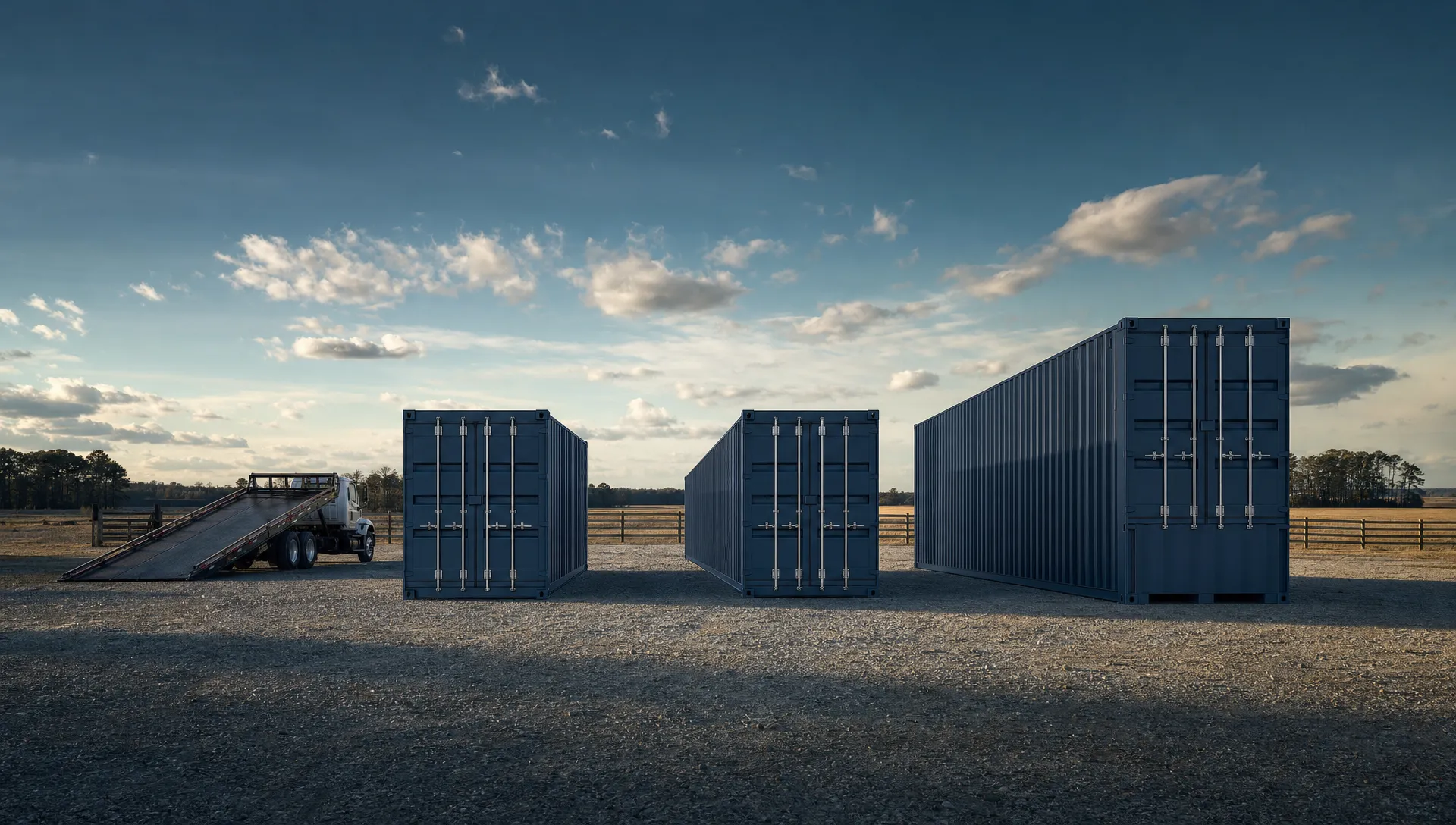
International shipping container sizes most often mean 20ft standard, 40ft standard and 40ft high cube containers. These units are generally 8ft wide outside. Standard containers stand 8ft 6in tall, while high cubes stand 9ft 6in tall. A 45ft high cube is another ocean-freight option, but availability depends on the carrier and route.
Quick answer: Start with a 20ft container for compact storage or smaller shipments. Choose a 40ft for roughly twice the floor area. Choose a high cube when you need another foot of height. Before buying, check the actual interior dimensions, door opening, weight rating and delivery access.
Key takeaways
- Container length is a size label, not a guarantee of usable interior space.
- A high cube adds height, not width, and does not automatically carry more weight.
- International freight approval, weatherproof storage condition and building-code compliance are different requirements.
- The right container must fit your cargo or floor plan and the route to your property.
The sections below explain what the measurements mean, which sizes travel internationally and what US buyers should verify before ordering.
How international shipping container sizes are standardized
An ISO container follows standards that help it move between ships, trains and trucks. Standard dimensions and corner fittings let transport equipment handle containers from different manufacturers.
ISO 668 defines the classification, external dimensions and ratings of Series 1 freight containers. It does not guarantee identical interior dimensions across every manufacturer or container design.
You may hear the same steel unit called a cargo container, intermodal container or conex box. Those terms do not tell you its exact size, condition or approval status.
Nominal length versus actual length
A “20ft container” is a nominal size. Its standard external length is approximately 19ft 10½in, not exactly 20ft. A standard 40ft container measures 40ft long outside.
The walls, floor and roof reduce the space inside. Door frames also create a smaller opening than the full interior cross-section.
For buyers comparing international shipping container sizes, the useful distinction is simple: exterior measurements determine placement and transport, while interior measurements determine what fits.
Where 10ft and 53ft containers fit
A 10ft container can be useful for a small property or equipment-storage area. However, 10ft units are much less common in mainstream ocean service than 20ft and 40ft units. Some retail 10ft containers are cut-down conversions, so confirm the construction and shipping approval of the specific unit.
A 53ft container usually serves North American domestic transport. Many are 8ft 6in wide, rather than the 8ft width common to ocean containers. Do not assume an ocean carrier accepts one because a truck or rail operator does.
If overseas transport matters, confirm carrier acceptance before purchasing either size.
Compare the most common container dimensions
The table below covers common dry-freight equipment. “Dry” means an enclosed container without active refrigeration. These are the international shipping container sizes most buyers encounter when comparing standard steel units.
External dimensions
| Container type | External length | External width | External height | Main distinction |
|---|---|---|---|---|
| 20ft standard | 19ft 10½in | 8ft | 8ft 6in | Compact footprint |
| 40ft standard | 40ft | 8ft | 8ft 6in | About twice the floor area of a 20ft |
| 40ft high cube | 40ft | 8ft | 9ft 6in | One additional foot of height |
| 45ft high cube | 45ft | 8ft | 9ft 6in | Five additional feet of length versus a 40ft |
These measurements describe conventional ISO dry containers. Specialized equipment, such as pallet-wide containers, can differ. Confirm the specification sheet rather than relying only on a listing title.
Typical interior dimensions and volume
Interior figures vary with the manufacturer, floor construction and door design. Treat these rounded measurements as planning estimates, not guaranteed clearances.
| Container type | Approximate interior length | Approximate interior width | Approximate interior height | Approximate volume |
|---|---|---|---|---|
| 20ft standard | 19ft 4in | 7ft 8in | 7ft 10in | 1,170 cubic feet |
| 40ft standard | 39ft 5in | 7ft 8in | 7ft 10in | 2,390 cubic feet |
| 40ft high cube | 39ft 5in | 7ft 8in | 8ft 10in | 2,700 cubic feet |
| 45ft high cube | 44ft 5in | 7ft 8in | 8ft 10in | 3,040 cubic feet |
A 40ft high cube offers roughly 13% more volume than a standard 40ft based on these estimates. It does not add floor area. That makes it useful for taller equipment, stackable inventory or a conversion that needs room for insulation and ceiling services.
Check usable space, doors and cargo fit
When comparing international shipping container sizes, check the narrowest point your cargo must pass through. A machine can fit inside the container yet fail to clear the door frame.
Nominal size is not usable space. Measure the item in its transport condition, including its pallet, crate, handles and protective packaging. Then allow room to move it safely.
Door clearance can decide the purchase
Typical dry-container door openings are about 7ft 8in wide. Standard-height doors are commonly around 7ft 6in tall, while high cube doors are commonly around 8ft 6in tall. Exact openings vary.
A piece of equipment that stands 7ft 8in tall may fit beneath a standard container's interior roof but not pass through its doors upright. Removing attachments or changing its loading orientation might solve the problem, but verify that before arranging delivery.
Also check the loading method. Forklift mast height, ramps and ground conditions can affect whether the move is practical.
Cubic capacity does not equal a packing plan
Volume helps compare sizes, but it does not tell you how many usable pallet positions or shelving bays you will get. Packaging dimensions, stackability and access aisles matter.
For storage, sketch the layout with shelves and a walkway. For freight, prepare a packing plan that accounts for load distribution and cargo restraint. A container packed to its physical limits may still exceed its weight rating.
Reefer containers need separate measurements. Insulated walls, refrigeration equipment and floor systems reduce usable space. Open-top and flat-rack units solve different loading problems, which our guide to container types, grades and uses explains in more detail.
Understand weight ratings and transport limits
International shipping container sizes describe dimensions, not a guaranteed weight allowance. Two containers with the same outside measurements can have different empty weights and rated capacities.
Read the markings and documentation for the actual unit. Do not calculate a shipment from a generic online chart alone.
Tare weight, payload and maximum gross weight
Tare weight is the weight of the empty container. Payload capacity is the permitted weight of its contents. Maximum gross weight is the combined weight of the container and everything loaded inside.
Payload capacity equals maximum gross weight minus tare weight. For example, suppose a container is rated at 67,200 pounds gross and has a tare weight of 8,500 pounds. The remaining allowance is 58,700 pounds for cargo, packaging and securing materials.
This is an example calculation, not the rating of every 40ft unit. A high cube's additional steel can increase tare weight, so extra volume does not necessarily mean extra payload.
Road transport may impose a lower limit
A container's structural rating is not permission to carry that weight on every US road. Truck and trailer weight, axle loading, bridge limits and route restrictions affect the legal transport load.
Ask the freight provider to confirm the permitted load for the planned route. Oversize or overweight movements may require permits or a different transport arrangement.
For domestic delivery of a purchased container, tell the supplier whether it will be empty or loaded. Delivery equipment selected for an empty unit may not be suitable for a loaded one.
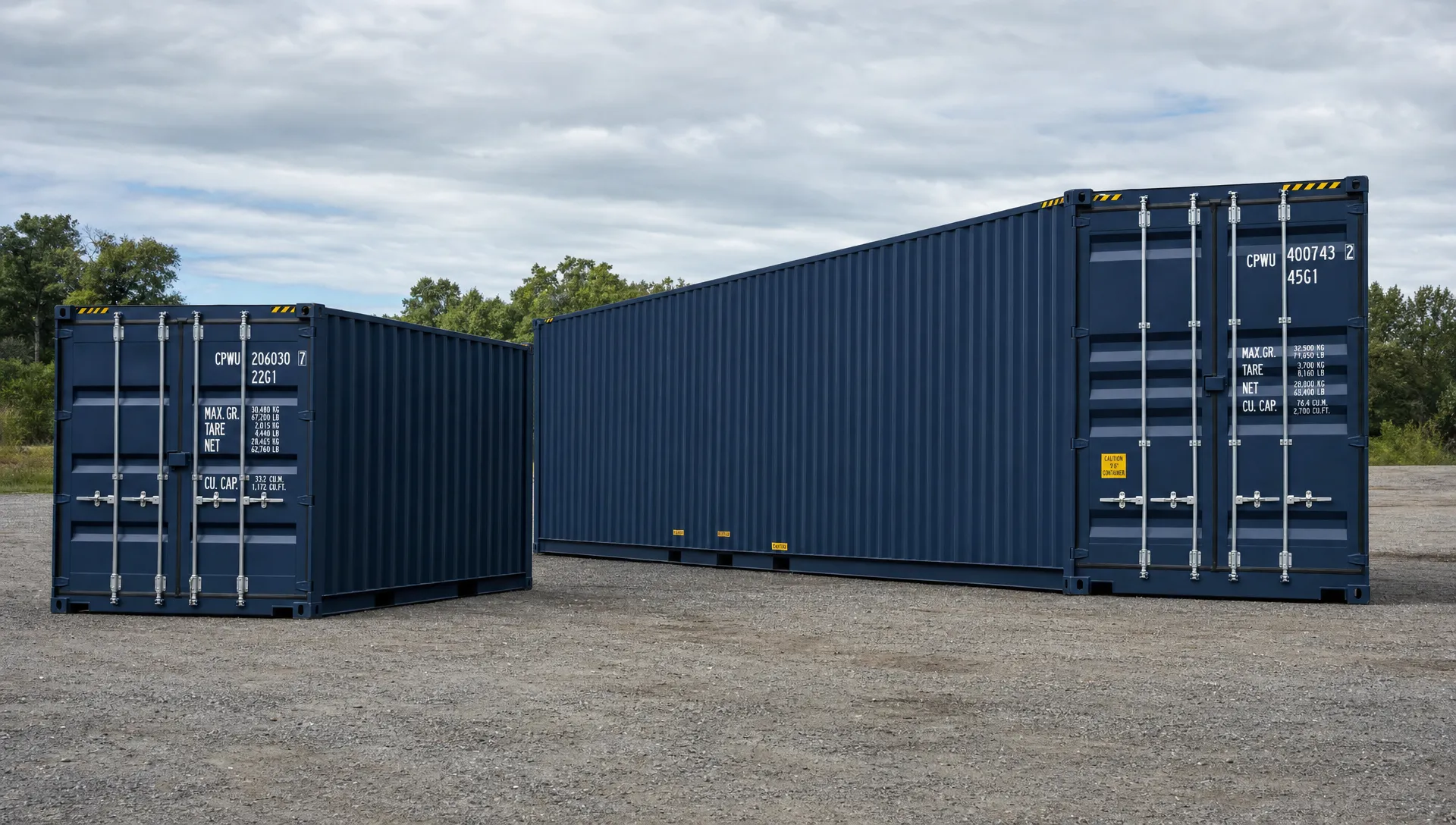
Before narrowing your order, compare the specific 20ft, 40ft and high cube dimensions against your largest item and available site space. Then ask for the measurements of the unit being quoted.
Match the container to your site or project
The best choice among international shipping container sizes depends on how you will use the space. A freight shipment, farm-storage installation and shipping container home have different priorities.
Choose the smallest practical unit that meets your working layout, not simply the smallest one that holds your belongings.
Storage, farms and job sites
A 20ft container often suits tools, parts and compact equipment. Its shorter footprint can make placement easier on a crowded property. Still, the delivery vehicle needs substantially more space than the container itself.
A 40ft container makes sense when you need long materials, multiple shelving zones or separate storage areas. Rear-door-only access can make items at the far end inconvenient to reach. Plan the storage layout before treating the extra length as an automatic improvement.
For a workshop, account for benches, equipment clearance, ventilation and exits. Storage capacity alone does not establish a safe working space.
Homes, cabins and modular offices
A bare 20ft shell has roughly 148 square feet of interior floor area. A bare 40ft shell has roughly 302 square feet. Finished space will be smaller after wall assemblies, partitions and service areas are installed.
High cube height gives a container conversion more room for insulation, flooring and ceiling systems. It does not guarantee that the finished ceiling meets local requirements. Calculate the complete assembly thickness before approving the layout.
Our comparison of shipping container sizes for homes covers the layout trade-offs. Permits, zoning and building-code requirements vary by state, county and municipality. Consult local authorities before buying a container for occupancy.
Site access and placement
Use exterior dimensions to mark the proposed footprint on the ground. Then add the space needed to open cargo doors, work around the unit and manage drainage.
International shipping container sizes do not describe the delivery truck's turning radius or unloading clearance. Ask the delivery team about road width, bends, slopes, overhead wires and the required unloading area.
A 40ft high cube may fit on the finished pad but still fail to reach it. Send current site photos and identify soft ground, gates, trees and overhead obstructions before scheduling delivery.
Verify the unit before you buy
Size is only one part of a sound purchase. Match the container's condition and documented approvals to its intended use, especially if it will return to international freight service.
WWT, CWO and CSC mean different things
WWT means wind and watertight. It describes weather resistance for storage, but it does not establish approval for ocean transport.
CWO means cargo-worthy. Suppliers use this designation for containers assessed as suitable for cargo service. Ask what inspection supports that assessment and whether additional survey or carrier approval is needed for your shipment.
CSC refers to the International Convention for Safe Containers. The International Maritime Organization's container safety guidance explains its safety approval and examination framework. A plate alone does not establish that a used container's examination status is current.
A one-trip container has generally made one loaded trip from its manufacturing origin. The term describes use history, not a promise of flawless paint or automatic building approval.
Confirm the details in writing
When ordering international shipping container sizes for a specific load or project, request the actual specifications rather than accepting a size label alone. For used units, ask whether photos show your assigned container or a representative example.
- Confirm the container type, exterior dimensions, interior clearance and door opening.
- Confirm tare weight, maximum gross weight and any documentation needed for freight use.
- Confirm condition, repairs, weatherproofing terms and whether modifications affect the intended use.
- Confirm delivery method, site requirements and the total quoted cost, including applicable delivery charges and taxes.
Compare quotes on the same basis. Condition, depot location, modifications and delivery distance can change the total cost. A low advertised unit price is not a complete delivered-price comparison.
Frequently asked questions
What are the standard international shipping container sizes?
The most common sizes are 20ft standard, 40ft standard and 40ft high cube. Conventional dry containers are 8ft wide outside. Standard height is 8ft 6in, while high cube height is 9ft 6in. A 45ft high cube is another option, subject to carrier and route availability.
What is the difference between a 40ft container and a high cube?
A standard 40ft container and a 40ft high cube have the same typical outside length and width. The high cube is one foot taller. It provides more cubic capacity and vertical clearance, but no additional floor area. Check its specific tare weight and payload rating separately.
How much usable space is inside a 20ft shipping container?
A typical dry 20ft container has about 148 square feet of bare interior floor area and around 1,170 cubic feet of volume. Manufacturer details affect the exact measurements. Shelving, insulation, partitions and access aisles reduce usable space, so plan around your finished layout rather than exterior dimensions.
Can any shipping container be used for international shipping?
No. Weatherproof storage condition alone does not establish suitability for international freight. The container needs appropriate safety approval, current examination status and acceptance by the carrier. Cut-down units, heavily modified containers and some domestic equipment may not qualify. Confirm the specific unit's documentation before booking a shipment.
Which container size is best for a container home?
A 40ft high cube is often a practical starting point because it offers about 302 square feet of bare interior floor area and extra height for finishes. However, site access, layout and local building requirements may favor another size. Obtain local guidance and a finished-space design before purchasing.
Choose a size with your delivery plan in mind
International shipping container sizes are a starting point, not a complete buying specification. Confirm usable space, access, condition and delivery requirements before committing to a unit.
When you are ready to compare new, used or custom options, explore the containers available through Outback Shipping Containers. Bring your cargo measurements, intended use and site details so the purchase and delivery plan can match the job.