20ft Container Price: New vs. Used Cost Factors
Understand 20 ft container price factors, from new vs. used condition to delivery and site prep. Compare quotes without hidden costs.
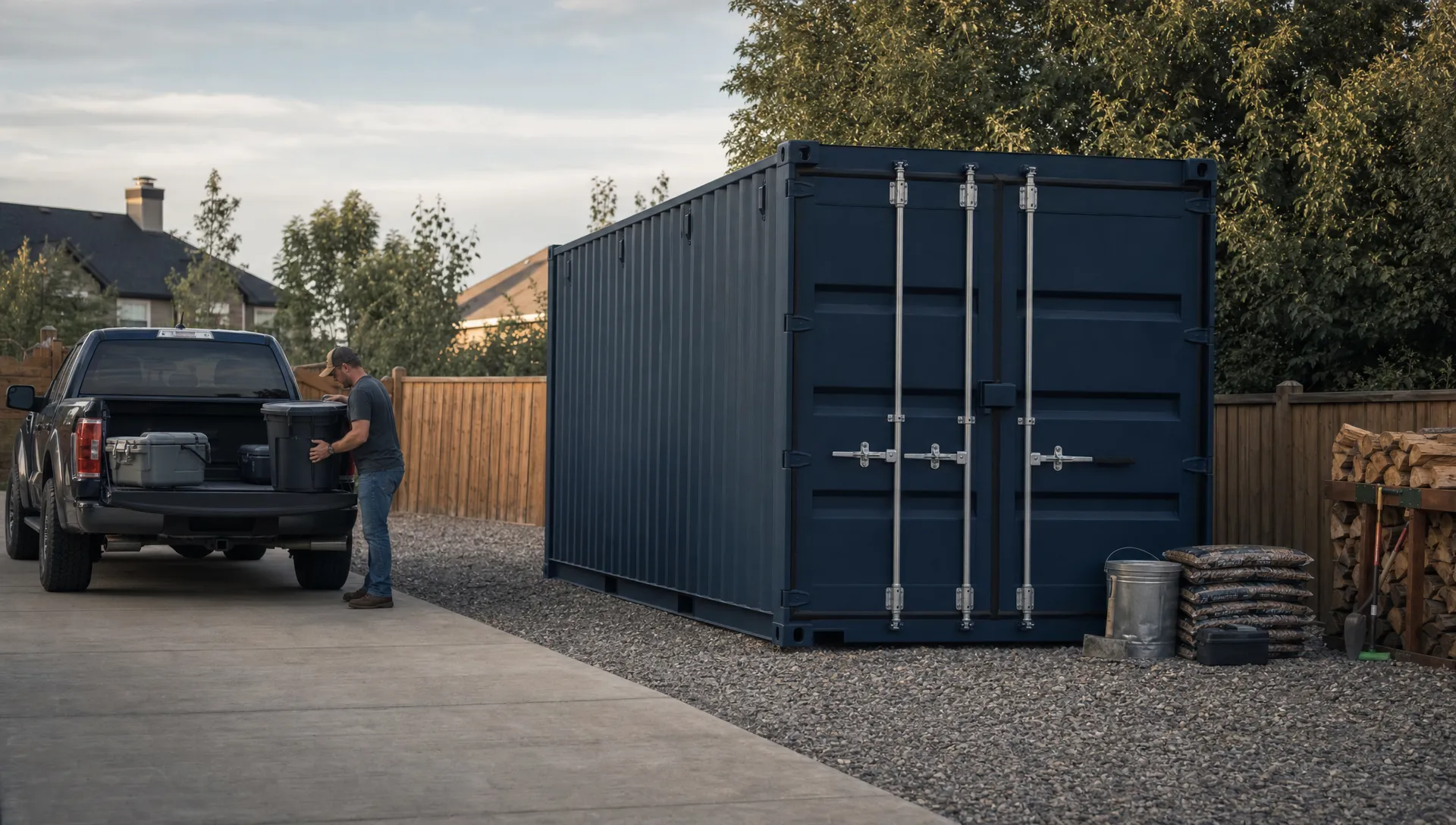
20 ft Container Price: New vs. Used Cost Factors
A 20 ft container price depends on condition, local inventory and delivery requirements. Used containers generally cost less upfront than new one-trip units, but repairs, freight and site preparation can narrow the difference. For a reliable dollar figure, request a dated quote for your ZIP code and compare the full delivered cost, not just the advertised container price.
Quick Answer: Choose used when secure storage matters more than appearance and the unit passes inspection. Consider one-trip when cleaner condition, reliable door operation and fewer initial repairs justify the premium. Neither option includes a finished office or home unless the quote specifically says so.
Key Takeaways
- Compare the same size, condition grade and delivery scope across suppliers.
- Wind and watertight describes storage condition, not automatic approval for ocean transport.
- Delivery, unloading and site work can change which quote offers better value.
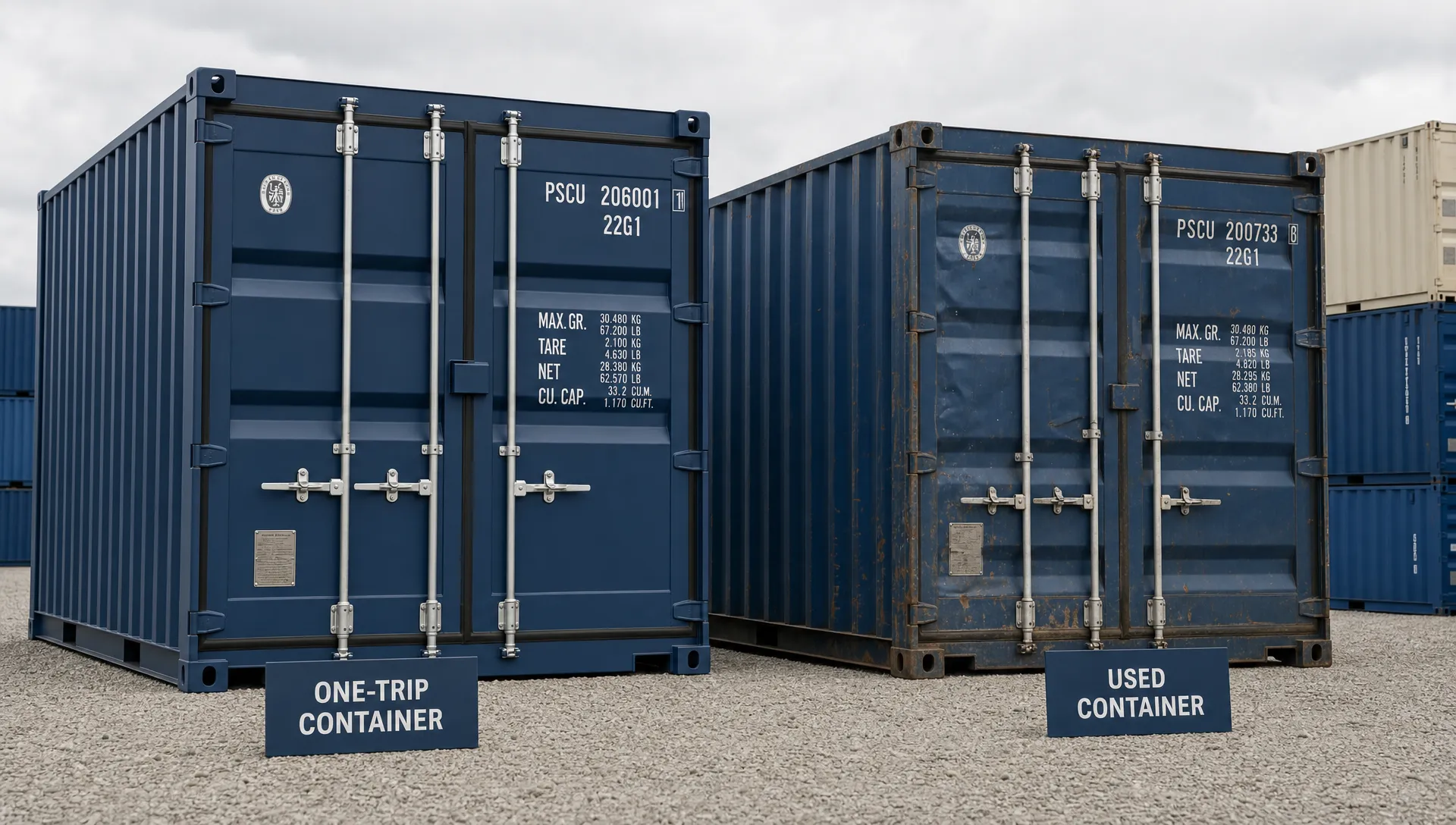
- One-trip containers can reduce repair work, but they are not completely unused.
- Get condition commitments, exclusions and the final total in writing.
New vs. used: what the condition premium buys
The first step in comparing a 20 ft container price is identifying exactly what the seller is offering. “Used” covers a wide range, from a sound storage unit with cosmetic dents to a damaged box needing substantial work.
A conex box, cargo container and intermodal container may describe the same general product. Those labels do not establish its condition or transport status.
| Condition | What you are buying | What can change the real cost |
|---|---|---|
| New or one-trip | A recently manufactured container that typically carried cargo on one shipment | Cosmetic expectations, included features and the premium over used inventory |
| Used wind and watertight (WWT) | A unit represented as keeping out wind and rain | Door seals, floor condition, corrosion and the scope of the seller's guarantee |
| Used cargo-worthy (CWO) | A unit assessed as suitable for cargo service | Inspection documentation, structural condition and transport requirements |
| Refurbished | A used container with some repairs or cosmetic work completed | Whether the work addressed underlying defects or only appearance |
| As-is | A unit sold with limited condition commitments | Unknown repairs, leaks, difficult doors and possible replacement costs |
One-trip does not mean untouched
One-trip containers can have handling marks or minor dents from their initial journey. Their usual advantage is less accumulated wear, not a promise of perfect paint.
For used units, inspect the roof, corner posts, door hardware and floor. Fresh paint alone does not prove that corrosion or leaks were properly repaired.
WWT and cargo-worthy are not interchangeable
WWT is useful for stationary storage, but it does not establish approval for international shipping. The International Maritime Organization's explanation of the CSC convention describes the safety approval and examination framework for containers used in international transport.
If you plan to ship cargo, confirm the required CSC plate, examination status and carrier acceptance. For a deeper condition comparison, see when a new or used 20ft container makes sense.
Specifications that change the quote
Before comparing another 20 ft container price, confirm that both listings describe the same configuration. Standard dry containers, high cube units and refrigerated containers are different products with different equipment and space requirements.
Standard dimensions and usable space
A standard 20ft ISO container has nominal exterior dimensions of 20 feet long, 8 feet wide and 8 feet 6 inches high. Its exterior footprint is 160 square feet.
Typical interior dimensions are approximately 19 feet 4 inches long, 7 feet 8 inches wide and 7 feet 10 inches high. That provides roughly 148 square feet of floor area before adding insulation, wall framing or other finishes. Exact measurements vary by manufacturer.
A high cube container is nominally 9 feet 6 inches tall, one foot taller than a standard-height unit. Confirm the actual size and availability rather than assuming every 20ft listing includes that extra height.
Weight, floors and included features
A standard empty 20ft dry container commonly weighs around 5,000 pounds. This empty weight is its tare weight; the actual figure appears on the container's markings or documentation.
Payload capacity is the rated maximum gross weight minus tare weight. Road transport limits can be lower, so do not assume the container's structural rating is also the legal hauling limit.
Check whether lockboxes, additional doors, ventilation or shelving are included. A lower base price can become a higher total once you add the features your project needs.
Delivery and site work belong in the budget
A low depot price does not necessarily produce a low delivered total. The same container can cost more to place at a remote ranch than at a property near the supplier's inventory.
Ask how the delivery charge is calculated
Distance matters, but it is only part of the calculation. Truck type, route restrictions, unloading equipment and site access also affect the quote.
A useful 20 ft container price comparison separates the unit charge from transportation and placement. Ask whether the quote includes unloading, whether special equipment is required and what happens if the driver cannot safely reach the planned location.
Tilt-bed placement and crane placement are different services. Confirm the method before paying so you can prepare the correct working area.
Confirm access before scheduling
The truck needs more than a clear 20-foot rectangle. It also needs an approach route, turning room and space to unload safely.
Provide driveway width, gate clearance, slope information and photos of the approach. Identify overhead branches, utility lines, soft ground and tight turns. Ask the delivery team for its required clearance rather than relying on a universal rule.
Wet ground can make a previously accessible site unsafe. Discuss weather-related rescheduling and any applicable charges before delivery day.
Budget for a level support area
Uneven support can twist the container enough to make its doors difficult to operate. Site preparation may include grading, drainage, compacted material or an engineered foundation, depending on the location and intended use.
Permanent placement, occupied structures and foundation work may require approvals. Requirements vary by state, county and municipality, so consult local planning and building officials before committing to the site.
When paying more for one-trip makes sense
The right choice depends on whether the premium solves a problem you actually have. A contractor storing rugged equipment may value a sound used unit more than fresh paint. A customer-facing office project may place greater value on exterior condition.
Calculate the premium against avoided work
Subtract the comparable used quote from the one-trip quote to find the price premium. Use quotes with matching delivery terms, then compare that difference with documented repairs, preparation work and likely downtime.
A higher 20 ft container price can be reasonable when it avoids immediate welding, door repairs or floor replacement. It is harder to justify if the used unit already meets your needs and the only difference is cosmetic.
Do not assume every used container needs expensive repairs. Equally, do not assume every one-trip unit is ready for your project without inspection.
Consider ownership costs without guessing lifespan
Divide the premium by your planned years of ownership to see its annualized purchase impact. This simple calculation excludes financing, maintenance and resale value, so treat it as one comparison tool rather than a complete ownership forecast.
There is no reliable remaining-life promise based only on the word “used.” Age, corrosion, maintenance history and local exposure all matter.
If your needs may expand, compare capacity before focusing only on condition. Our 20ft vs. 40ft container cost comparison helps explain why a larger unit can offer better space value when the site can accommodate it.
Storage and conversion projects need different budgets
Your intended use determines which defects matter most. A container that works well for farm storage may need substantial preparation before becoming an occupied workshop or shipping container home.
Before choosing a grade, compare Outback Shipping Containers' new and used container options and request pricing for the size, condition and delivery location your project requires.
For storage, prioritize weather protection and access
A storage-focused 20 ft container price should reflect a sound roof, usable doors and a suitable floor. Cosmetic dents may be acceptable if they do not affect function or structural condition.
Inspect the interior for daylight with the doors closed, while arranging the check safely with the seller. Also examine seals, floor damage, corrosion and evidence of previous leaks. A daylight check does not replace a documented condition assessment.
WWT does not mean condensation-proof. Moisture can still form inside a steel container, so sensitive contents may need ventilation, moisture control or a different storage solution.
For an office or home, price the complete conversion
The shell is only one component of a container conversion. Structural alterations, insulation, electrical work, plumbing, interior finishes and foundations create separate costs.
Cutting large door or window openings can require reinforcement. Have the design reviewed by qualified professionals before removing structural material.
Interior insulation reduces usable space, and climate affects the appropriate assembly. The U.S. Department of Energy's insulation guidance explains how insulation choices relate to climate and construction.
For occupied use, assess the floor's condition, coatings and available cargo history. One-trip status alone does not certify a container for residential occupancy. Confirm zoning, permits and applicable building requirements with local authorities before purchasing a shell.
How to compare a 20 ft container price quote fairly
Ask each supplier to quote the same specification. Otherwise, you may be comparing a used standard-height unit at a depot with a one-trip container delivered and placed on your property.
Request a written scope
A complete quote should identify the container, its condition commitments and the services included. Ask for representative photos or unit-specific photos, and confirm which type you received.
Use this short checklist when reviewing the document:
- Container details: Size, height, condition grade, included features and any known defects.
- Condition terms: Inspection scope, weather-tightness commitments and remedy if the unit does not match the agreement.
- Delivery scope: Origin, destination, unloading method and site-access requirements.
- Total charges: Transportation, applicable tax, requested modifications and any disclosed surcharges.
- Purchase terms: Quote expiration, payment schedule, cancellation terms and financing details when relevant.
Get the condition commitment in writing rather than relying only on phrases such as “good shape.” Ask what the seller considers acceptable dents, corrosion or floor wear.
For practical inspection and purchasing checks, review how to buy a 20ft shipping container without overpaying.
Compare financed totals, not just monthly payments
Financing changes cash flow, but it does not make two offers equally priced. Compare the down payment, APR, fees, term and total amount paid under the agreement.
Outback Shipping Containers offers financing options. Eligibility and terms should be confirmed for your purchase rather than assumed from an advertised monthly payment.
For temporary needs, compare buying with leasing. LeaseLink Containers is the company's leasing arm; ask about availability and terms, then include delivery and pickup charges in the comparison.
Verify the seller before sending payment
An unusually low 20 ft container price deserves a closer look at the seller and the offer. Confirm the business identity, written invoice, payment instructions and delivery arrangements before transferring funds.
Verify unexpected payment changes through an independently confirmed contact method. Photos alone do not prove ownership of the pictured container, and pressure to pay immediately is a reason to pause.
Frequently asked questions
How much does a 20 ft shipping container cost?
There is no single price that applies nationwide. Condition, inventory location, included features and transportation determine the quote. Used units generally cost less upfront than one-trip units. Request a dated, itemized quote for your ZIP code and confirm whether tax, unloading and requested modifications are included.
Is it better to buy a new or used shipping container?
Buy used when the container passes inspection and meets your storage needs without costly repairs. Consider one-trip when appearance, lower accumulated wear or reduced preparation work justify the premium. Compare actual condition and delivered totals, not age labels alone, because quality varies within both categories.
How much does it cost to deliver a 20ft container?
Delivery depends on travel distance, truck type, unloading method and site access. A nearby property with straightforward access differs from a remote site needing specialized placement. Give the supplier your address and site photos, then request written delivery requirements and an itemized transportation charge before scheduling.
Is a 20ft container half the price of a 40ft container?
Not necessarily. A 20ft container has half the nominal exterior footprint of a 40ft unit, but manufacturing, handling and transportation costs do not scale evenly with length. Compare delivered cost per usable square foot when capacity matters, while accounting for access and available placement space.
Can you turn a used 20ft container into a home?
Yes, but suitability depends on structural condition, floor assessment, design and local approvals. The shell price excludes insulation, utilities, finishes and foundation work unless specifically included. Requirements vary by jurisdiction, so consult local building officials and qualified design professionals before purchasing a container for residential use.
Can you finance a 20ft shipping container?
Outback Shipping Containers offers financing options, subject to the applicable eligibility requirements and terms. Compare the financed 20 ft container price using the down payment, APR, fees and total payments, not the monthly amount alone. Confirm which container, delivery charges and modifications the financing agreement actually covers.
Get a quote you can compare
The better purchase is the container that meets your needs at a clear, documented total. Match condition grades, verify placement requirements and separate necessary repairs from cosmetic preferences.
When you are ready, explore shipping container options from Outback Shipping Containers and request a quote for your ZIP code, intended use and delivery site. That gives you a practical basis for choosing between used and one-trip.