Save on Cost
By Outback Container Experts · Published July 17, 2026 · Last updated October 18, 2026
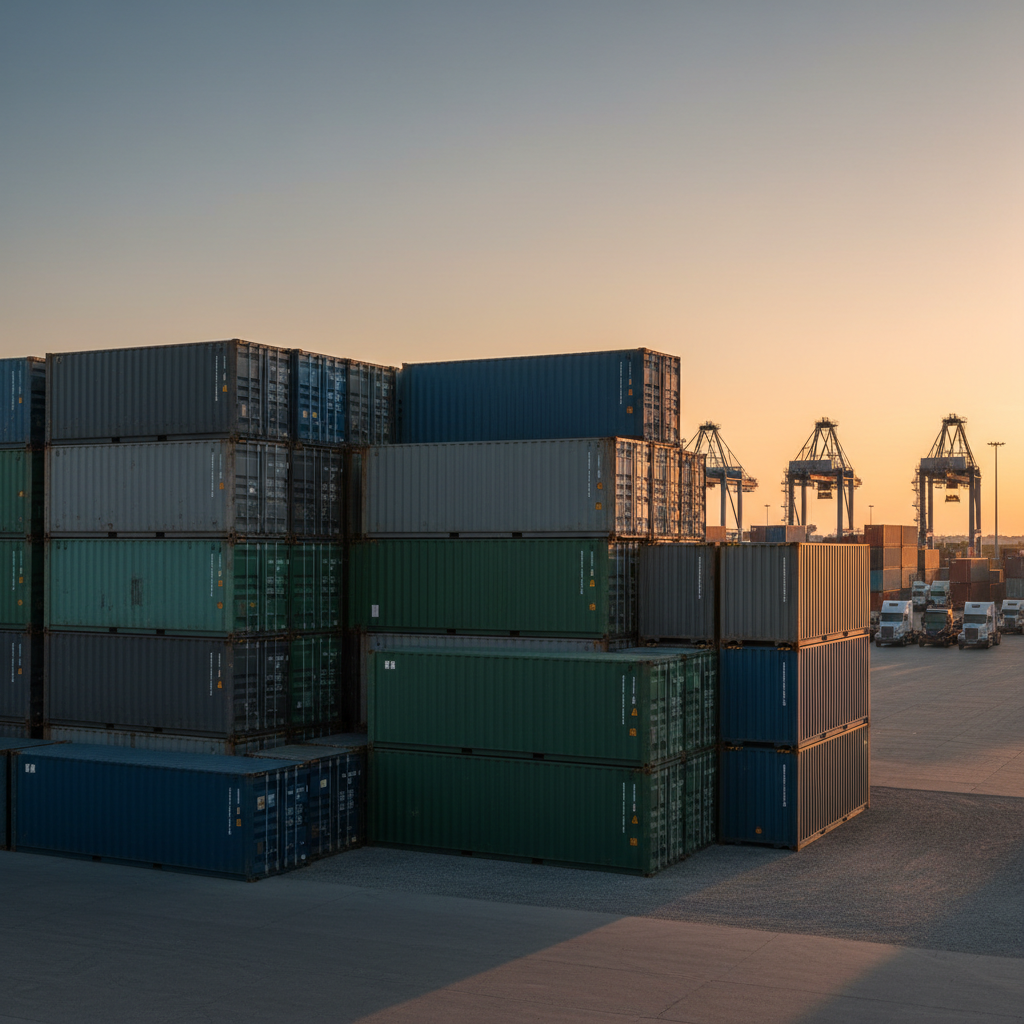
20ft vs 40ft container price guide 2026 — For US buyers in July 2026, the choice between a 20-foot and 40-foot unit often feels like a toss-up until you look at the raw data. While it's tempting to assume a 40ft unit costs double its 20ft counterpart, the reality of the global steel market and intermodal logistics tells a different story. In the current market, the cost per square foot for a 40ft container is significantly lower than a 20ft unit, yet the operational logistical hurdles—like delivery space and permitting—can quickly erase those gains if you aren't prepared.
Table of Contents
- 20ft vs 40ft container price guide 2026: Current Market Snapshot: Shipping Container Pricing 2026
- The High Cube Factor: 40ft High Cube vs 20ft Standard
- Logistics and 40 foot Container Delivery Cost
- Used vs One-Trip Container Price: Which is Right for You?
- Resale Trends: Why 20ft Units Hold Their Value
- Frequently Asked Questions
- Strategic Recommendations for 2026
Whether you are sourcing a 20ft new shipping container for a backyard workshop or a 40ft high cube for a commercial warehouse expansion, understanding the 20ft vs 40ft container price guide 2026 metrics is critical for your Q3 budget planning. This guide unpacks the nuances of the 'One-Trip' premium, the resale potential of each size, and why the height—not just the length—is the hidden variable in your total project cost.
20ft vs 40ft container price guide 2026: Current Market Snapshot: Shipping Container Pricing 2026
As of mid-2026, shipping container pricing has stabilized following the supply chain volatility of earlier years. However, industrial demand for on-site storage and the rising popularity of modular container offices have kept inventory tight in West Coast and Gulf Coast hubs. When evaluating a 20ft vs 40ft container price guide 2026 analysis, you must differentiate between 'One-Trip' (New) units and 'Used' (Cargo Worthy or WWT) units.
| Container Type & Size | Typical Price Range (2026 USD) | Sq. Ft. Area | Est. Cost Per Sq. Ft. |
|---|---|---|---|
| 20ft Used (WWT) | $1,800 – $2,600 | 160 sq. ft. | $11.25 – $16.25 |
| 20ft New (One-Trip) | $3,100 – $4,400 | 160 sq. ft. | $19.38 – $27.50 |
| 40ft Used (WWT) | $2,400 – $3,800 | 320 sq. ft. | $7.50 – $11.88 |
| 40ft High Cube (One-Trip) | $4,800 – $6,500 | 320 sq. ft. | $15.00 – $20.31 |
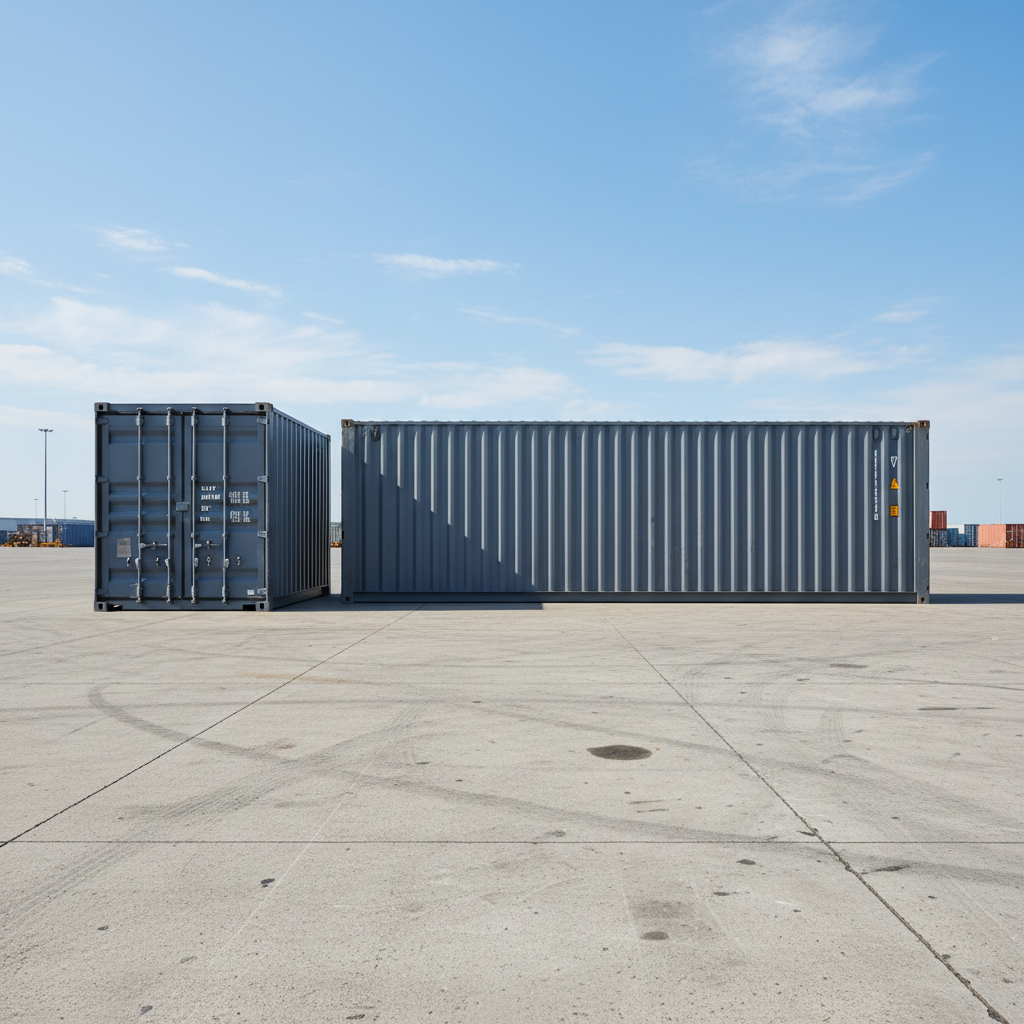
Tip: Notice the massive jump in value when moving to the 40ft size. While a 40ft unit provides double the square footage of a 20ft unit, it rarely costs double the price. For bulk storage, the 40ft high cube is almost always the best value shipping container size.
The High Cube Factor: 40ft High Cube vs 20ft Standard
One of the most frequent questions we receive is whether the extra foot of height in a High Cube (HC) unit is worth the investment. A standard container stands 8'6" tall, while a High Cube is 9'6". While 20ft containers are occasionally manufactured in high cube heights, they are rare and carry a heavy premium. Conversely, the 40ft high cube is the industry standard for international shipping, making them more abundant and often more affordable than 40ft standard height units.
- Vertical Storage: High cubes allow for an extra layer of palletized goods or taller machinery.
- Modification Potential: If you are building a container home, that extra 12 inches is vital for overhead insulation, HVAC ducting, and recessed lighting.
- Price Gap: Typically, the price difference between a 40ft standard and 40ft high cube in 2026 is only $200 – $500, despite offering 10% more cubic volume.
Logistics and 40 foot Container Delivery Cost
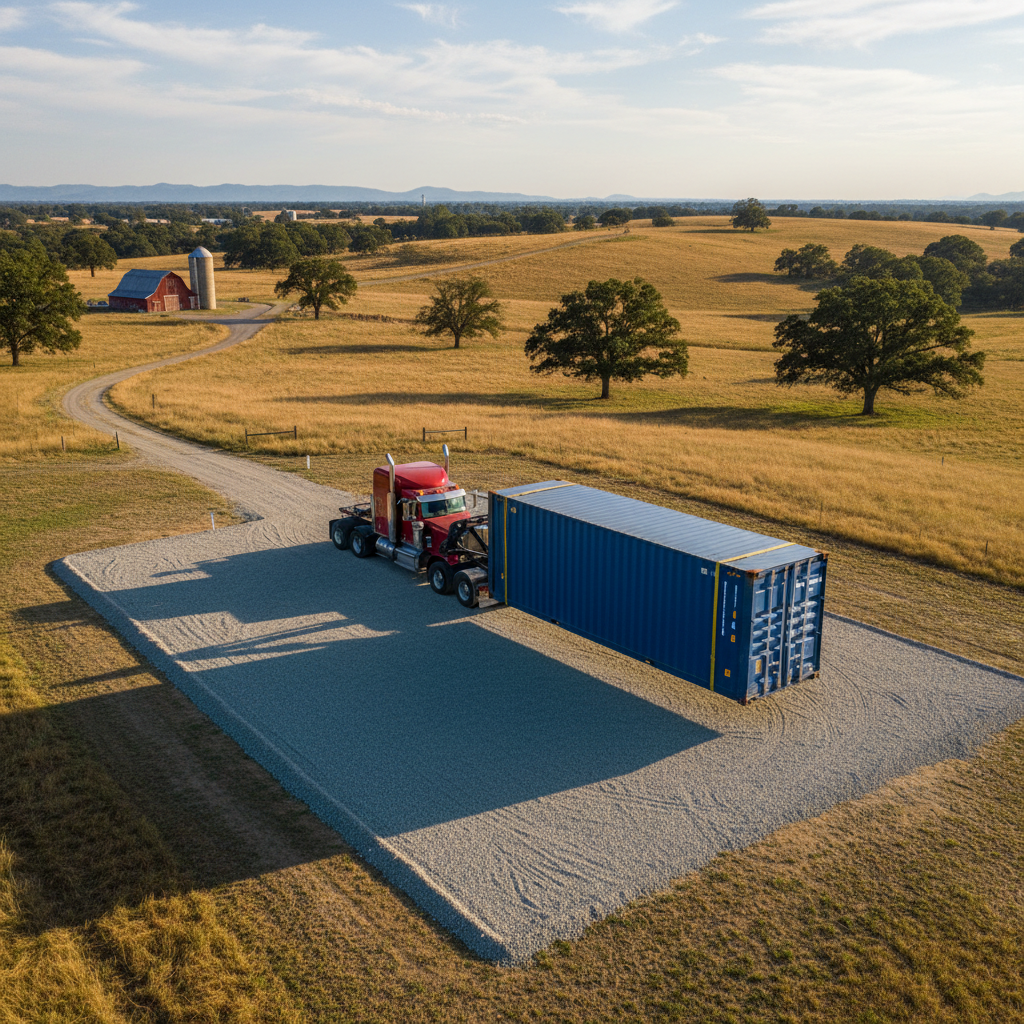
Price per unit is only half the equation. You must account for how that steel box reaches your site. A 20ft container can often be delivered on a smaller, more maneuverable tilt-bed truck. A 40ft unit requires a much larger truck (often a semi-truck with a 40-foot trailer) and a significantly wider turning radius.
For a 40ft delivery, you typically need 120 feet of straight-line clearance to drop the box. If your site has tight corners or soft soil, the shipping container delivery cost per mile can skyrocket due to the need for specialized equipment like a crane or a 'Mule' delivery system. Always consult a site prep checklist before finalizing a 40ft order.
Used vs One-Trip Container Price: Which is Right for You?
In 2026, the 'Used' market consists largely of units that have seen 10-15 years of ocean service. These units, known as Wind & Watertight (WWT), will have dents and surface rust but are structurally sound. Buying a used 20ft shipping container is the most budget-friendly entry point into the market.
However, for those with long-term asset management in mind, 'One-Trip' containers offer a superior shipping container resale value. These units are manufactured in Asia, loaded with cargo once, and then sold at their destination. They are virtually pristine and will outlast a used unit by decades. If you plan to resell the unit in 5 years, a One-Trip 20ft container often recovers 80% of its initial value, whereas a used unit may only recover 50-60%.
Tip: Don't buy a 40ft container just because the price per square foot is lower if you don't actually have the volume to fill it. A half-empty 40ft container is harder to heat, cool, and move than a full 20ft unit. Always match your size to your 2026-2028 growth projections, not just the current bargain.
Resale Trends: Why 20ft Units Hold Their Value
While 40ft units are better value upfront, the 20ft unit is the 'Goldilocks' of the secondary market. Because they can be moved by common 1-ton trucks with gooseneck trailers, the pool of potential buyers is much larger. If you are using a unit for a temporary construction site office, a 20ft container is much easier to liquidate on the private market than a 40ft unit.
Container delivery near you
We deliver to every state in the lower 48 plus Alaska and Hawaii. These local pages list pricing, metro coverage and typical lead times for the areas we run into most:
- Shipping containers near me — how we source from the depot closest to your ZIP code
- Shipping containers in North Carolina — pricing and delivery to Charlotte and Raleigh
- Shipping containers in Arizona — pricing and delivery to Phoenix and Tucson
- Shipping containers in Washington — pricing and delivery to Seattle and Spokane
- Shipping containers in Colorado — pricing and delivery to Denver and Colorado Springs
- Shipping containers in Tennessee — pricing and delivery to Nashville and Memphis
- Shipping containers Houston — local yard stock and lead times
Frequently Asked Questions
Common questions regarding the 20ft vs 40ft container price guide 2026 and logistics.
Strategic Recommendations for 2026
If you are ready to compare inventory for your project, our team can pull matching units from our nationwide depots to ensure you get the best freight rates possible. Whether you need a single storage box or a fleet of high cube containers, understanding these price drivers ensures you don't overpay for steel you don't need—or under-calculate the logistics of the steel you do.
Frequently Asked Questions
Is a 40ft container cheaper than two 20ft containers?
Yes, significantly. In 2026, a single 20ft One-Trip container costs roughly $3,500, while a 40ft High Cube One-Trip unit averages $5,200. Buying two 20ft units would cost $7,000, plus double the delivery fees, making the 40ft unit about 25% cheaper for the same total square footage.
How much does a 20ft shipping container cost in 2026?
A used 20ft Wind & Watertight container typically ranges from $1,800 to $2,600. A New 'One-Trip' 20ft unit ranges from $3,100 to $4,400 depending on your proximity to a major port like Houston, Savannah, or Long Beach.
What is the price difference between standard and high cube?
For 40ft units, the price difference is usually minimal, often between $200 and $500. High cubes are the industry standard for 40ft lengths, so they are more readily available than 40ft standard height units.
Which container size has the best resale value?
The 20ft container generally holds its resale value better as a percentage of original cost because it is easier for residential and small commercial buyers to transport and place on their property.
How much space do I need for a 40ft container delivery?
You need 100 ft for a 20ft (120 ft for a 40ft) of straight-line distance. This allows the truck and the 40-foot trailer to pull out from under the container as it is tilted onto the ground.
Is it better to buy a 20ft or 40ft container for storage?
It depends on your site. If you have the space, a 40ft unit offers the best storage container price comparison per square foot. However, if you have limited space or need to move the container frequently, the 20ft unit is the more practical choice.
Frequently asked questions
Is a 40ft container cheaper than two 20ft containers?
Yes, significantly. In 2026, a single 20ft One-Trip container costs roughly $3,500, while a 40ft High Cube One-Trip unit averages $5,200. Buying two 20ft units would cost $7,000, plus double the delivery fees, making the 40ft unit about 25% cheaper for the same total square footage.
How much does a 20ft shipping container cost in 2026?
A used 20ft Wind & Watertight container typically ranges from $1,800 to $2,600. A New 'One-Trip' 20ft unit ranges from $3,100 to $4,400 depending on your proximity to a major port like Houston, Savannah, or Long Beach.
What is the price difference between standard and high cube?
For 40ft units, the price difference is usually minimal, often between $200 and $500. High cubes are the industry standard for 40ft lengths, so they are more readily available than 40ft standard height units.
Which container size has the best resale value?
The 20ft container generally holds its resale value better as a percentage of original cost because it is easier for residential and small commercial buyers to transport and place on their property.
How much space do I need for a 40ft container delivery?
You need 100 ft for a 20ft (120 ft for a 40ft) of straight-line distance. This allows the truck and the 40-foot trailer to pull out from under the container as it is tilted onto the ground.
Is it better to buy a 20ft or 40ft container for storage?
It depends on your site. If you have the space, a 40ft unit offers the best storage container price comparison per square foot. However, if you have limited space or need to move the container frequently, the 20ft unit is the more practical choice.
About Outback Container Experts
This guide was prepared by the Outback Shipping Containers team, based on the questions our customers ask us most when buying, modifying and taking delivery of shipping containers. Learn more about us.
Ready to find your container?
Browse our in-stock shipping containers, container homes and custom builds, or ask our team for a free quote with delivery to your site.