Cargo Containers for Sale: 12 Checks Before You Pay
By Outback Shipping Containers · Published August 31, 2026 · Last updated October 18, 2026
Cargo Containers for Sale: 12 Checks Before You Pay
If you searched for cargo containers for sale near me, do not pay until you verify the seller, the exact unit, the condition grade, the delivery plan and the full delivered price. A cargo container can be a smart buy for storage, a job site, a farm, a workshop or a future container conversion. It can also become an expensive problem if you skip the inspection details.
Quick Answer: Before you pay for a cargo container, confirm the exact container number, condition grade, photos or video, door function, roof, floor, rust, certifications, delivery access, site prep, invoice terms and total delivered cost.
Key Takeaways
- A 20ft container is easier to place on tight residential, farm and job-site properties. A 40ft container gives more space but needs more delivery room.
- One-trip containers are usually the cleanest choice. Used wind and watertight units often give the best value for basic storage.
- Ask for exact-unit photos, not only sample photos. Check the container number, doors, roof, floor, rust and seals.
- The right price is the delivered price. Delivery equipment, distance, taxes, site access and add-ons can change the total.
- Permits, zoning and foundation rules vary by city and county. Check local requirements before ordering a container for long-term use.
What “Cargo Container” Means When You Are Buying
A cargo container is the same basic product many buyers call a shipping container, conex box, ISO container or intermodal container. The terms are often used the same way in the storage market, but they do not always mean the same condition or use case.
An ISO dry cargo container is built to standard dimensions so it can move by ship, rail and truck. ISO 668 defines key dimensions and ratings for freight containers, which is why most 20ft and 40ft units follow familiar outside measurements. You can review the standard through the International Organization for Standardization if you need formal reference details.
For most buyers, the main question is not the label. The real question is whether the container fits your site, keeps water out, has solid doors and matches your intended use.
| Container type | Common outside dimensions | Typical empty weight | Common use | What to verify |
|---|---|---|---|---|
| 10ft dry container | 10ft x 8ft x 8ft 6in | Varies by build | Small storage, tight sites | Many are modified from larger units, so confirm exact specs |
| 20ft dry container | 20ft x 8ft x 8ft 6in | About 4,800 to 5,300 lb | Home storage, tools, farm use, job sites | Door swing, floor condition and delivery access |
| 40ft dry container | 40ft x 8ft x 8ft 6in | About 8,000 to 8,800 lb | Bulk storage, equipment, workshops | More space needed for delivery and placement |
| 40ft high cube | 40ft x 8ft x 9ft 6in | About 8,600 to 9,200 lb | Container homes, offices, tall equipment | Extra height for transport clearance and site rules |
| 45ft high cube | 45ft x 8ft x 9ft 6in | Varies by unit | Larger storage or custom builds | More limited placement options and access needs |
Tare weight, payload capacity and max gross weight vary by container. Always check the CSC plate or manufacturer plate on the exact unit when weight ratings matter for shipping or heavy storage.
New vs Used: Match the Container to the Job
A new container and a used container can both be good choices. The better option depends on how visible the container will be, what you store inside, how long you plan to keep it and whether you want to modify it.
A one-trip container has usually made one cargo trip from the factory. It will still show minor handling marks, but it is often cleaner, newer and easier to use for offices, workshops, retail units and shipping container home projects.
A used container has spent more time in service. Many used units are still excellent for secure storage if they are wind and watertight. For farm equipment, construction tools and overflow business inventory, a solid used WWT container can be the practical choice.
| Condition term | What it usually means | Best fit | Buyer caution |
|---|---|---|---|
| One-trip | Newer container with limited cargo service | Clean storage, conversion, office, visible site | Still inspect for dents, paint scratches and door alignment |
| CWO, cargo-worthy | Suitable for cargo use when properly certified | Export, freight, heavy use | Ask what paperwork or inspection supports the claim |
| WWT, wind and watertight | Keeps out wind and water for storage | Tools, household items, farm storage, job sites | WWT does not always mean cargo-worthy |
| Refurbished | Used container with repairs or repainting | Better appearance on a budget | Ask what was repaired and whether roof, floor and seals were checked |
| As-is | No strong condition promise | Low-risk projects or parts | Higher chance of leaks, heavy rust or door issues |
If you want a deeper used-unit checklist, Outback Shipping Containers has a separate guide on how to buy used shipping containers with a simple checklist. Use that as a second pass if you are comparing several used units.
The 12 Checks for Cargo Containers for Sale Near Me
These checks apply whether you are buying from a local depot, an online supplier or a nationwide seller. They are simple, but they catch most of the expensive mistakes first-time buyers make.
1. Confirm the seller is real
Container scams often start with a price that looks too good and a seller who pushes fast payment. Verify the business name, website, phone number, physical service area and invoice process before you send money.
A real seller should be willing to explain delivery, condition terms and what happens if the unit arrives with a serious issue. If the seller only communicates by text, refuses an invoice or asks for unusual payment methods, slow down.
For a broader local shopping process, see Outback Shipping Containers’ guide on how to shop storage containers in your area.
2. Ask for the exact container number
Every standard intermodal container has an identifying number. It usually includes a four-letter owner code followed by six digits and a check digit. This number helps tie photos, paperwork and delivery details to a real unit.
Avoid paying based only on “representative photos.” Sample photos can show the general grade, but they do not prove the doors, floor or roof condition of the container you will receive.
3. Match the size to your site
A 20ft container is often the safest choice for homes, small businesses, farms and job sites with limited access. It offers about 160 square feet of floor area and is easier to place than a 40ft unit.
A 40ft container offers about 320 square feet of floor area. That extra space helps for pallet storage, construction materials, workshops and larger conversion projects. The tradeoff is delivery space. A 40ft unit usually needs a longer straight approach and more room for the truck to pull away.
High cube containers add 1 foot of height. That extra headroom matters for container homes, offices, gyms, workshops and tall shelving.
4. Verify the condition grade in writing
Do not accept vague terms like “good container” or “nice box” as a condition grade. Ask whether the unit is one-trip, cargo-worthy, wind and watertight, refurbished or sold as-is.
For storage, WWT is often enough. For freight use, ask about CWO status and the CSC plate. For a container conversion, inspect more closely because cutting walls, adding windows or finishing an interior can turn small defects into bigger problems.
5. Check the frame, rails and corner castings
The frame carries the load. Look at the corner posts, corner castings, top rails, bottom rails and crossmembers. Heavy bends, crushed corners or twisted rails can make a container hard to modify, stack or transport.
Small dents are normal on used containers. A bowed frame or damaged corner is different. If the unit does not sit square, the doors may bind and water may collect in the wrong places.
6. Inspect the roof for dents, holes and ponding
The roof is one of the most important inspection points. Deep dents can hold water. Standing water speeds up rust and can find small pinholes over time.
A simple light test helps. Stand inside the container during daylight, close the doors and look for light coming through the roof or seams. If light gets in, water can get in too.
7. Open and close the doors yourself when possible
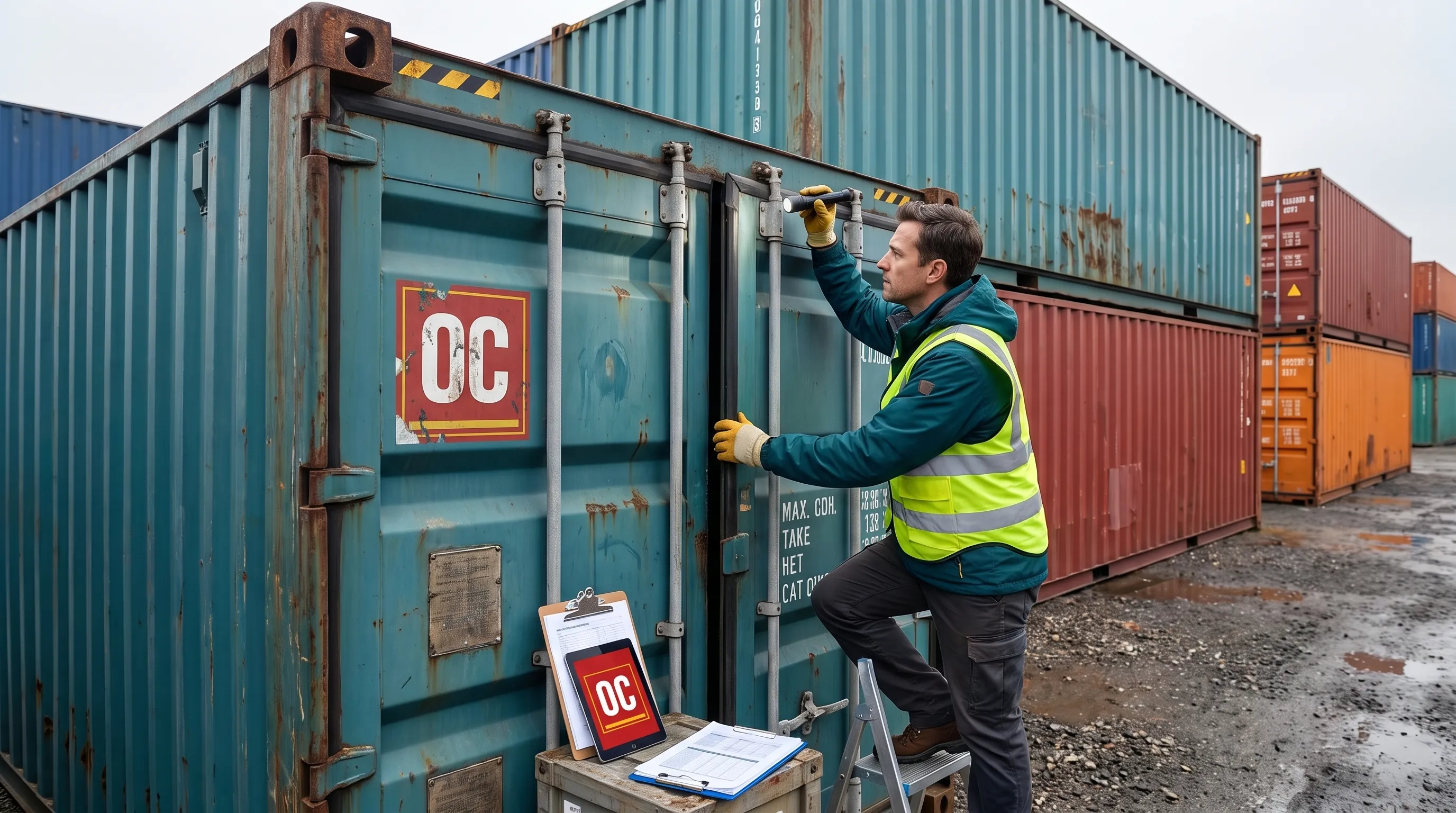
Container doors should open, close and latch without a fight. Check the locking rods, handles, hinges, cam keepers and rubber gaskets. Stiff doors can sometimes be adjusted, but badly bent doors may keep causing problems.
Door gaskets matter more than many buyers think. A small gap can let wind-driven rain enter the container, especially if the unit sits in an open field or job site.
8. Walk the floor and check for soft spots
Most dry cargo containers use thick marine-grade plywood floors. A good floor should feel firm underfoot. Watch for soft spots, delamination, oil stains, forklift gouges, strong odors and signs of water damage.
If you plan to build a shipping container home, office or retail space, ask more questions about the floor. Some buyers choose to seal, cover or replace flooring during a container conversion. Your local building department or contractor can advise what is acceptable for your project.
If you have narrowed your choice to a 20ft footprint, compare exact-unit options before calling ten random listings. A 20ft New Shipping Container, Wind & Watertight, Beige can make sense when you want a one-trip unit for cleaner storage or a future build. A 20ft Used Shipping Container, Wind & Watertight, Blue can be a practical fit when budget matters and you need inspected storage ready to ship.
9. Separate surface rust from structural rust
Surface rust is common on used containers. It often appears around scratches, lower rails, hinges and welded seams. Surface rust can usually be cleaned, treated and painted.
Structural rust is different. Look for flaking steel, holes, deep pitting, rust around the roof seams and heavy corrosion on bottom rails or crossmembers. Containers used near saltwater can show more corrosion, so inspect coastal units carefully.
10. Confirm the certification fits the use
A CSC plate matters if the container will be used for international shipping or certain cargo moves. A cargo-worthy claim should be backed by an inspection or paperwork, not only a sales description.
For simple ground storage, many buyers only need a wind and watertight container. If the container will travel loaded on public roads, your carrier also has to follow cargo securement rules. The Federal Motor Carrier Safety Administration explains general cargo securement requirements for commercial transport.
11. Get the delivery plan before you pay
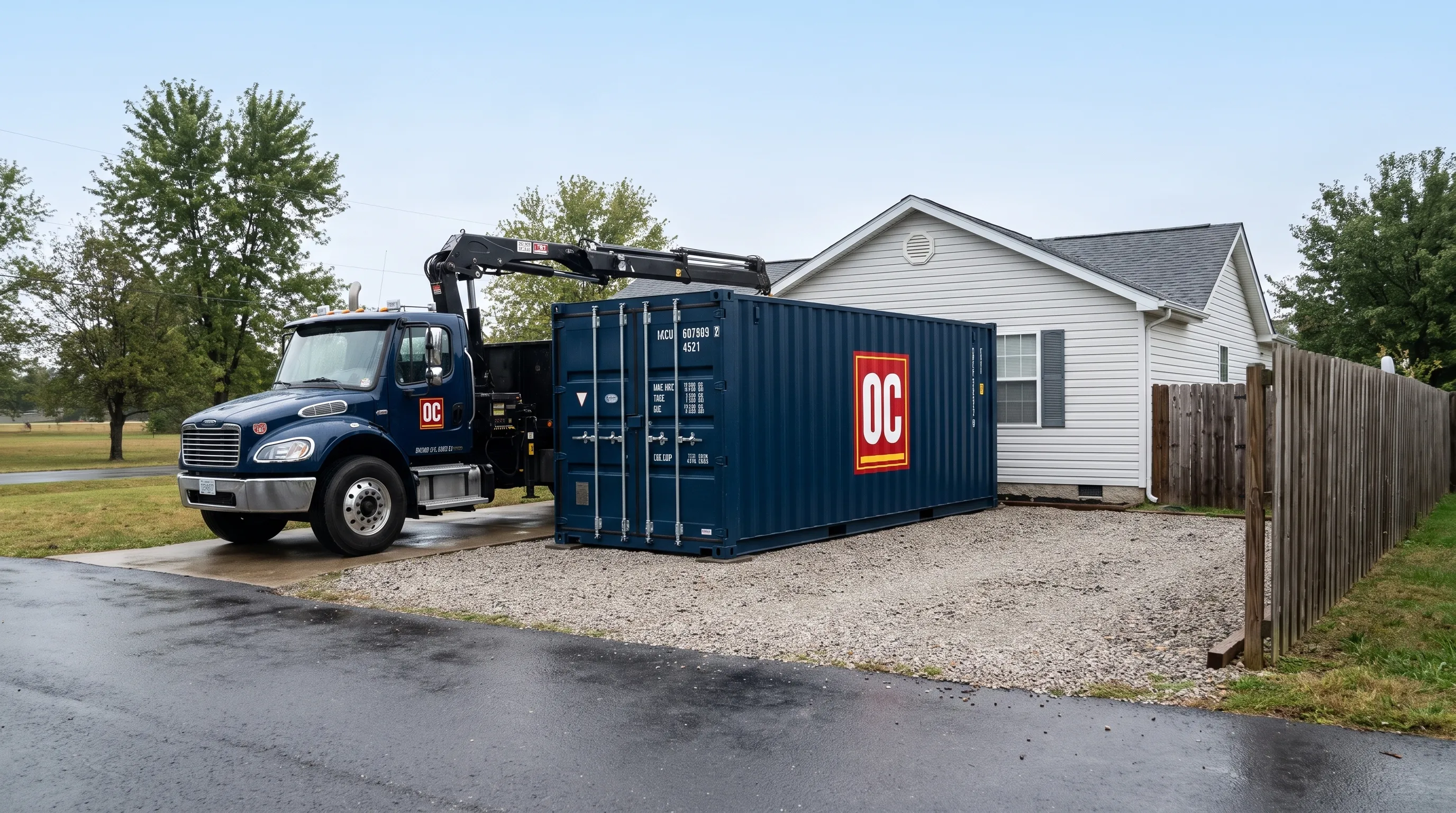
Delivery is where many container purchases go wrong. A container-only price does not help if the truck cannot reach your site or if the offload method is wrong.
Tilt-bed delivery is common for 20ft and 40ft containers. The truck tilts the bed and slides the container into place as it pulls forward. Side loaders and cranes may be needed when placement is tight, the ground is soft or the container must be placed over an obstacle.
Plan for enough room. A 20ft container delivery often needs 100 feet of straight clearance. A 40ft delivery often needs about 100 feet. Many trucks also need 12 feet of width and 14 feet of height clearance, but exact needs vary by carrier, equipment and site.
12. Review payment terms and paperwork
Before paying, ask for an invoice that lists the container size, condition, delivered price, delivery address, payment terms and any warranty or wind and watertight guarantee. If financing is involved, review the terms before you commit.
Ask what happens if the driver cannot safely deliver due to low branches, soft ground, blocked access or a steep driveway. Also confirm whether taxes, delivery fees, fuel surcharges or crane costs are included.
For a more detailed inspection process, Outback Shipping Containers also explains how to inspect a used shipping container for sale before you commit funds.
What a Delivered Quote Should Include
The best quote is clear enough that you can compare it line by line. A low advertised price can become expensive if delivery, equipment or site issues are left out.
| Quote line item | Why it matters | What to ask |
|---|---|---|
| Container size and type | Confirms you are pricing the right unit | Is it 20ft, 40ft, high cube, reefer, office or modified? |
| Condition grade | Sets the quality expectation | Is it one-trip, CWO, WWT, refurbished or as-is? |
| Exact unit details | Reduces bait-and-switch risk | Can I see the container number and exact-unit photos? |
| Delivery charge | Often changes by ZIP code and equipment | Is delivery included in the total price? |
| Offload method | Affects placement and site prep | Will it arrive by tilt-bed, side loader or crane? |
| Taxes and fees | Prevents surprise charges | Is this the final delivered total? |
| Modifications | Changes cost, timing and permit needs | Are vents, lock boxes, roll-up doors or windows included? |
| Financing terms | Affects total cost over time | What is due now and what is due later? |
This is also where nationwide support can matter. A supplier that understands rural delivery, job-site access and state-by-state logistics can save time compared with a seller who only quotes the container and leaves the hard parts to you.
Outback Shipping Containers sells new, used and custom containers across all 50 states, with transparent online shopping, inspected units and delivery support from purchase through placement. LeaseLink Containers is the leasing arm for buyers who decide renting fits their cash flow or project timeline better than ownership.
Permits, Zoning and Site Prep Before Delivery
For short-term storage, some properties need no permit. Others do. Rules can change by city, county, HOA, flood zone, agricultural zoning, commercial zoning and intended use.
A shipping container home, office, pool, cabin or retail conversion usually faces more review than a basic storage container. You may need zoning approval, building permits, engineered drawings, foundation plans, electrical permits, plumbing permits or energy-code compliance. Always check with your local building department before you buy for a permanent structure.
Site prep does not need to be complicated for basic storage, but it must be stable. A level gravel pad, concrete piers, railroad ties or concrete blocks can work in many storage setups when installed correctly. The goal is to keep the container level, support the corners, reduce standing water and keep doors working.
Do not place a container directly in a low spot where water collects. Good drainage extends the life of the floor, bottom rails and paint.
Frequently Asked Questions
Is it cheaper to buy or rent a shipping container?
Buying is often better for long-term storage or a permanent project. Renting can make sense for short construction jobs, seasonal inventory or temporary moves. Compare the full term cost, delivery fees, pickup fees and how long you need the container before deciding.
How much does a 20ft cargo container weigh?
A standard 20ft dry cargo container often weighs about 4,800 to 5,300 pounds empty. The exact tare weight varies by manufacturer and unit. Check the CSC plate or data plate on the exact container if weight affects transport, lifting or placement.
What is the difference between cargo-worthy and wind and watertight?
Cargo-worthy means the container is suitable for cargo use when properly inspected and certified. Wind and watertight means it should keep out wind and water for storage. A WWT container can be great for tools or household items, but it may not qualify for loaded freight movement.
Do I need a permit to put a shipping container on my property?
Maybe. Permit rules vary by city, county, state, HOA and use. Temporary storage may be simple in one area and restricted in another. Container homes, offices and pools usually need more review. Call your local building or zoning office before ordering.
What should I look for when buying a used shipping container?
Check the exact container number, roof, doors, gaskets, floor, rust, frame, corner castings and condition grade. Look for daylight inside the closed container, soft floor spots and heavy corrosion. Also confirm the delivered price and return process before sending payment.
How are cargo containers delivered?
Most storage containers are delivered by tilt-bed truck, side loader or crane. Tilt-bed delivery needs straight clearance because the truck pulls forward while the container slides off. Side loaders and cranes help with tighter sites, but they can cost more and need planning.
Ready to Compare Cargo Containers Before You Pay?
The safest purchase starts with clear specs, honest condition details and a delivery plan that fits your site. If you are comparing cargo containers for sale, start with inspected units and a quote that shows the full delivered cost.
You can review available container options and nationwide delivery support through Outback Shipping Containers. If you are not sure whether a 20ft, 40ft, high cube or custom container is the right fit, ask for help before you pay.
About Outback Shipping Containers
This guide was prepared by the Outback Shipping Containers team, based on the questions our customers ask us most when buying, modifying and taking delivery of shipping containers. Learn more about us.
Ready to find your container?
Browse our in-stock shipping containers, container homes and custom builds, or ask our team for a free quote with delivery to your site.